


Engineered for Excellence: Advanced Multi-Layer Composites
In industries where performance is non-negotiable, standard materials often fall short. The constant demand for components that are stronger, lighter, and more resilient requires a new generation of materials. Our Multi-Layer Composites are engineered to meet this challenge head-on. By strategically combining different material layers, we create a synergistic composite that outperforms traditional materials, providing a robust, reliable, and highly customizable solution for complex engineering problems.

Subtitle for This Block
Text for This Block
24
Years in Business
120
5-Star Reviews
2k
Active Customers
12
Counties Served
Our Offerings
Key Features of Our Multi-Layer Composites

Our composites are engineered to significantly reduce noise and absorb vibrations, ensuring smooth and quiet operation in machinery, vehicles, and industrial systems.
Designed with versatility in mind, these composites can be easily adapted for use in automotive, aerospace, construction, and other demanding industrial applications.
Built to withstand moisture, UV exposure, and extreme weather conditions, our composites ensure long-lasting durability in both indoor and outdoor environments.
By combining premium materials with efficient manufacturing processes, our composites deliver exceptional performance and reliability at a highly competitive cost.
LY TRUSTLINK
Our Advanced Material Solutions
Revolutionizing Industries with High-Performance, Lightweight Materials for the Future

Carbon Fiber Reinforced Polymers (CFRP)
The gold standard for high-performance applications requiring optimal strength-to-weight ratios. Our CFRP solutions feature:

Hybrid Fiber Composites
Combining multiple fiber types (carbon, glass, aramid) within a single matrix to balance performance, cost, and specific application requirements:

Bio-Based & Sustainable Composites
Meeting environmental goals without compromising performance:
Quality Assurance & Testing
Non-Destructive Testing
Ultrasonic inspection, X-ray imaging, and thermography to detect internal defects without damaging components.
Mechanical Property Validation
Comprehensive tensile, flexural, impact, and fatigue testing to verify performance specifications.
Environmental Testing
Moisture resistance, thermal cycling, UV exposure, and chemical compatibility assessments.
Microscopic Analysis
Void content measurement, fiber distribution analysis, and interlaminar bonding verification.
AI-Powered Quality Control
Machine learning algorithms for real-time defect detection and process optimization.
Certification & Compliance
Full compliance with aerospace (AS9100), automotive (IATF 16949), and industry-specific standards.
Multi-Layer Composites vs. Traditional Materials
Precision-engineered materials designed for demanding applications
| Feature | Multi-Layer Composites | Traditional Single Materials |
|---|---|---|
| Strength-to-Weight Ratio | ⭐ Exceptional (3-5x better) | ❌ Limited |
| Corrosion Resistance | ⭐Outstanding (Zero corrosion) | ❌ Prone to degradation |
| Temperature Range | ⭐ -196°C to +1000°C | ❌ Limited range |
| Customization | ⭐ Infinite configurations | ❌ Fixed properties |
| Installation Time | ⭐ 40-60% faster | ❌ Labor intensive |
| Service Life | ⭐ 50+ years | ❌ 10-20 years |
| Maintenance | ⭐ Minimal to none | ❌ Frequent required |
| Multi-functionality | ⭐ Multiple properties in one | ❌ Single function only |
| Production Efficiency | ⭐ Single operation bonding | ❌ Multiple assembly steps |
| Total Cost of Ownership | ⭐30-50% lower | ❌ Higher long-term costs |
Testimonials
Success Stories: Real Results from Real Clients
Read what our customers are saying about our multi-layer composite.
Implemented our PE-Al-PE multilayer composite pipe system with embedded aluminum barrier layer, providing oxygen barrier protection and excellent pressure resistance up to 95°C.

European Plumbing Systems Provider
Designed a 6-layer barrier film system combining PET/PA/EVOH/PE layers with aluminum foil, creating superior oxygen and moisture barriers while maintaining mechanical strength and printability.

Global Food & Beverage Company
Technical Specifications & Capabilities

Start Building with a Stronger, Lighter, Better Material
Don’t let material limitations hold back your next project. Discover how our multi-layer composites can provide the performance and reliability you need to innovate. Contact our engineering team for a consultation or to request a sample.
Our Latest Insights
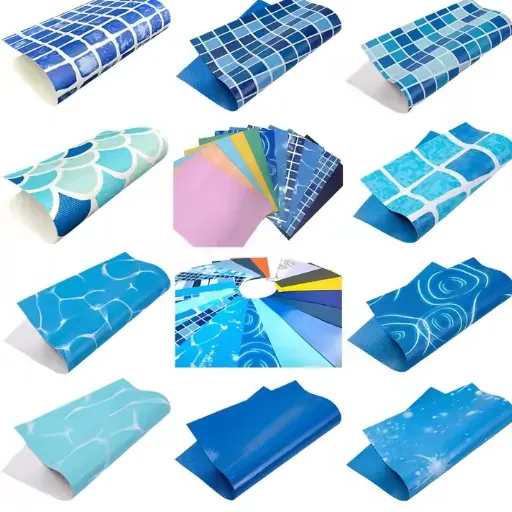
PVC Tarpaulin for Water Slides: Grades, Seams & Specs
The correct PVC tarpaulin for water slides is a PVC-coated, high-tenacity polyester fabric at 18 oz (610 gsm) as the accepted baseline, and 20 oz (650 gsm) or heavier for slides that run wet most of the season. The spec that matters is not the marketing label but three measurable numbers: coating weight, base-fabric denier,…
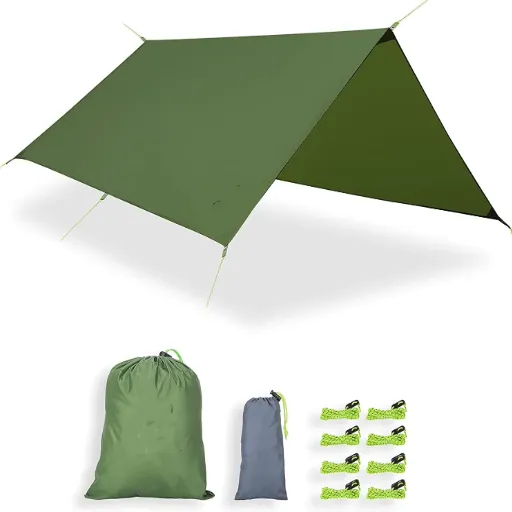
Lightweight Waterproof Tarp for Camping: Materials & Sizes
A lightweight waterproof tarp for camping comes down to a single trade-off: the fabric that carries best sheds rain least, and the fabric that sheds rain best carries heaviest. For ultralight backpacking, silnylon and silpoly win, at under 600 g for a full-size shelter. For car camping, base camp, and group shelters, a PVC-coated or…

How to Repair a Bounce House: Costs & When to Replace
Most bounce house damage is repairable, and the question that decides everything is whether the fix is worth it. A puncture in 18 oz commercial PVC is a 15-minute, roughly $25 field patch. A seam split on a lighter 15 oz unit can run $500 or more once you ship it out, which is when…
Frequently Asked Questions (FAQs)
Find answers to the most common questions about a multi-layer composite. If you can’t find what you’re looking for here, please contact us.
Multi-layer composite materials are engineered structures that combine two or more distinct layers of different materials, each selected for specific protective or functional properties. These layers are bonded together using advanced processes like co-extrusion, lamination, or adhesive bonding to create a single integrated structure that performs better than any single material could alone. Common layer combinations include polymers (PE, PET, PA), metals (aluminum foil, steel), fibers (carbon, glass, Kevlar), and specialty materials (EVOH barriers, aerogels). The result is a material that can simultaneously provide strength, flexibility, thermal insulation, corrosion resistance, and barrier protection.
Installation time varies by application, but multi-layer composites generally reduce installation time by 40-60% compared to traditional materials. For example: Plumbing systems: A 500-unit building that would take 6 weeks with copper pipes can be completed in 2.5 weeks Automotive trim: Single-operation bonding eliminates multiple assembly steps Construction panels: Pre-fabricated panels can be installed in hours instead of days The lightweight nature and flexible design of composites make handling easier and require fewer workers.
Multi-layer composites typically last 3-5 times longer than traditional materials: Plumbing pipes: 50+ years (vs. 15-20 for copper) Structural panels: 40-60 years (vs. 15-25 for traditional wood) Automotive components: Vehicle lifetime plus (vs. 5-7 years) Packaging materials: Maintains integrity throughout product shelf life The enhanced durability comes from corrosion resistance, superior adhesion between layers, and materials engineered to withstand specific environmental stresses.
Multi-layer composites typically last 3-5 times longer than traditional materials: Plumbing pipes: 50+ years (vs. 15-20 for copper) Structural panels: 40-60 years (vs. 15-25 for traditional wood) Automotive components: Vehicle lifetime plus (vs. 5-7 years) Packaging materials: Maintains integrity throughout product shelf life The enhanced durability comes from corrosion resistance, superior adhesion between layers, and materials engineered to withstand specific environmental stresses.
Absolutely! Customization is one of the biggest advantages of multi-layer composites. We can tailor: Number of layers: From 3 to 10+ layers depending on requirements Material selection: Choose from dozens of materials for each layer Layer thickness: Optimize for weight, strength, or cost Fiber orientation: Control directionality of strength properties Surface treatments: Add coatings, textures, or decorative elements Dimensions: Custom widths, lengths, thicknesses, and diameters Our engineering team works with you to design the optimal configuration for your specific performance requirements and budget.
Multi-layer composites offer several environmental benefits: Longer lifespan: Fewer replacements mean less waste over time Reduced material usage: Optimized designs use 30-40% less material Lower energy consumption: Lightweight materials reduce transportation emissions No toxic leaching: Unlike lead or copper, composites don’t contaminate water Recyclability options: Many polymer layers can be recycled (though mixed-material recycling remains challenging) Manufacturing efficiency: Single-operation processes reduce energy use We’re actively developing mono-material alternatives and improved recycling processes to further enhance sustainability.