

Revolutionary Membrane Fabric Technology
Discover cutting-edge membrane fabrics designed for durability, flexibility, and sustainability across diverse applications.

24
Years in Business
120
5-Star Reviews
2k
Active Customers
12
Counties Served
Our Offerings
Critical Challenges We Solve

Understanding the pain points in traditional membrane fabrics helps us deliver superior solutions
Conventional fabrics fail when exposed to sustained pressure or heavy rainfall. Water seeps through seams and stressed areas, compromising protection. Our microporous membranes feature billions of pores sized to block water droplets (>100μm) while permitting vapor molecules (<1nm), maintaining waterproofness up to 20,000mm water column pressure.
Users experience discomfort from trapped perspiration and humidity buildup inside garments during physical activity. Our advanced membranes achieve 74% void ratio with optimized pore structures, enabling rapid moisture vapor transmission rates while maintaining complete waterproof integrity.
Traditional membranes contain “forever chemicals” (PFAS) linked to cancer, birth defects, and environmental damage. We offer 100% PFAS-free and PFC-free alternatives using polypropylene, polyurethane, and bio-based polymers that deliver equal or superior performance without health risks.
Explore Our Membrane Fabric Categories
The membrane fabric industry is experiencing unprecedented growth driven by sustainability demands, technological innovation, and expanding applications across multiple sectors.
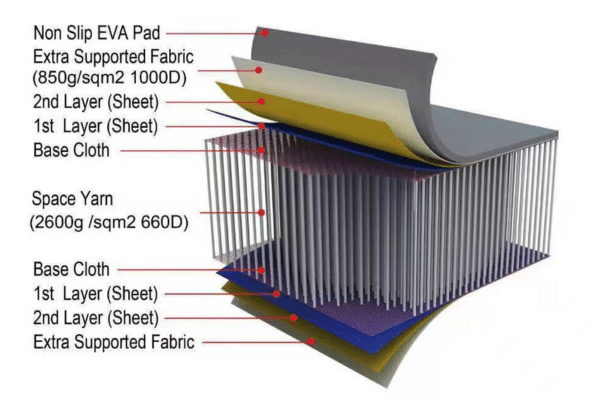
Tensile Structure Membrane
A Tensile Structure Membrane is an advanced composite material engineered for creating lightweight, free-form architectural structures. Composed typically of a woven base fabric, such as polyester or fiberglass, and coated with protective polymers like PVC or PTFE, this material is designed to be held in a state of tension.

Weather Barrier Membrane
Weather Barrier Membrane is a protective layer designed to shield buildings from external elements like wind, rain, and moisture while allowing water vapor to escape. It ensures durability, energy efficiency, and comfort by preventing water infiltration and reducing air leakage. Commonly used in walls, roofs, and foundations, it is essential for maintaining structural integrity and indoor climate control.
Quality Certifications & Standards
Comprehensive Solutions Portfolio
Cutting-edge membrane technologies engineered for performance, sustainability, and versatility

✅ Advanced Microporous Membrane Technology
Hydrophobic polypropylene membranes created through proprietary phase separation processes deliver exceptional performance without solvents or fluorinated materials.
✅ PFAS-Free Electrospun Nanofiber Membranes
Next-generation electrospinning technology creates ultra-fine fiber networks with superior air permeability and zero toxic chemicals.

✅ Hydrophilic Non-Porous Membranes
Polyurethane film technology, including innovative carbon-captured CO2-derived options for sustainable performance.

✅ Multi-Layer Lamination Systems
Professional lamination technology using PUR hot melt and other advanced bonding methods for superior composite fabrics.
Core Technologies:Understanding the science behind superior membrane performance
Phase Separation Process
Non-solvent induced phase separation (NIPS) creates controlled microporous structures. Polymer solution transforms into solid membrane through precisely managed solvent exchange, producing uniform pore distribution for consistent performance.
Electrospinning
Electric field draws polymer solutions into ultra-fine nanofibers (100-500nm diameter). This creates high surface area membranes with excellent breathability and lightweight characteristics ideal for packable gear.
Melt Extrusion
Polymer melts are extruded through precision dies and stretched to create oriented microporous films. Biaxial stretching produces uniform spherical pores with controlled size distribution for optimal waterproof-breathable balance.
Coating Technology
Advanced coating methods apply PTFE, PVC, or silicone to base fabrics. Knife coating, dip coating, and spray coating techniques ensure uniform coverage with precise thickness control for different performance requirements.
Lamination Methods
PUR hot melt adhesive technology bonds membranes to textiles without solvents. Flame lamination and adhesive-free methods provide alternatives for specific applications requiring chemical resistance or food contact approval.
Surface Modification
Plasma treatment, chemical grafting, and nanoparticle integration enhance membrane properties. Fluorine-free hydrophobic treatments provide water repellency without PFAS, while antimicrobial coatings add hygiene benefits.
Membrane Type Comparison
Choosing the right membrane for your application
| Membrane Type | Waterproofness | Breathability | Weight | Lifespan | Best For |
|---|---|---|---|---|---|
| Microporous PP | Excellent (20,000mm) | Outstanding (74% void) | Ultra-light (4g/m2) | 5-10 years | Outdoor sportswear |
| Electrospun Nanofiber | Very Good (15,000mm) | Excellent | Ultra-light (3-6g/m2) | 5-8 years | Packable gear |
| Hydrophilic PU Film | Excellent (when wet) | Good (best when wet) | Light (8-15g/m2) | 5-10 years | Active sportswear |
| PTFE (Architectural) | Outstanding | Good | Medium (400-1200g/m2) | 30+ years | Permanent structures |
| PVC Coated | Excellent | Moderate | Medium (350-900g/m2) | 15-20 years | Temporary structures |
| Silicone on Glass | Excellent | Good | Heavy (800-1500g/m2) | 30+ years | High translucency needs |
Testimonials
Customer Success Stories of Tensile Membrane
Read what our customers are saying about our Membrane Fabric. Discover honest reviews and testimonials on the quality, effectiveness, and versatility of our Membrane Fabric.
The technical support team helped us select the perfect membrane for our cycling apparel line. The balance of waterproofness and breathability is exactly what competitive athletes need. Sales have increased 45%.

Antonio Ferreira
“As a medical supplier, we need absolute reliability. The PU membrane provides excellent barrier protection while maintaining breathability for surgical gowns. Compliance with all health regulations and competitive pricing.”

dr. emily watson
Versatile Applications Across Industries
Serving industries worldwide with specialized membrane solutions

Upgrade to Sustainable Membrane Solutions!
Choose innovative, PFAS-free, and recycled materials for a greener future. Our advanced membrane fabrics are designed to meet the highest standards of sustainability, offering exceptional performance while reducing environmental impact. By opting for eco-friendly solutions, you contribute to a cleaner planet without compromising on quality or durability. Make the switch today and join the movement toward a more sustainable tomorrow!
Our Latest Insights
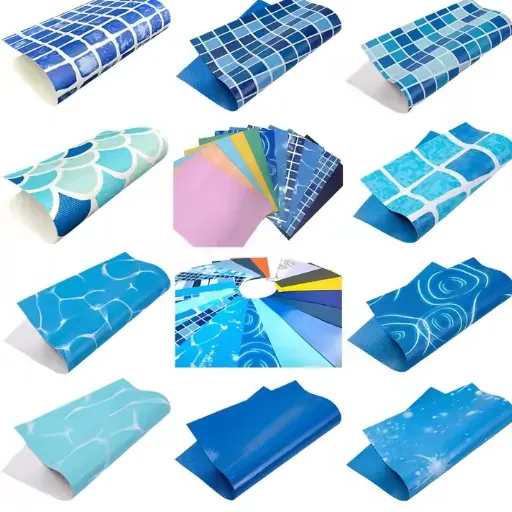
PVC Tarpaulin for Water Slides: Grades, Seams & Specs
The correct PVC tarpaulin for water slides is a PVC-coated, high-tenacity polyester fabric at 18 oz (610 gsm) as the accepted baseline, and 20 oz (650 gsm) or heavier for slides that run wet most of the season. The spec that matters is not the marketing label but three measurable numbers: coating weight, base-fabric denier,…
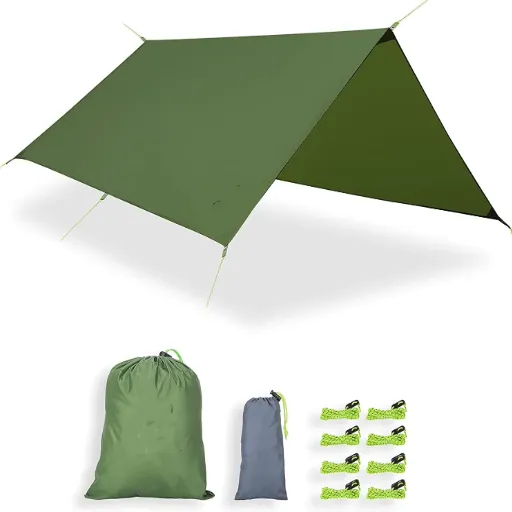
Lightweight Waterproof Tarp for Camping: Materials & Sizes
A lightweight waterproof tarp for camping comes down to a single trade-off: the fabric that carries best sheds rain least, and the fabric that sheds rain best carries heaviest. For ultralight backpacking, silnylon and silpoly win, at under 600 g for a full-size shelter. For car camping, base camp, and group shelters, a PVC-coated or…
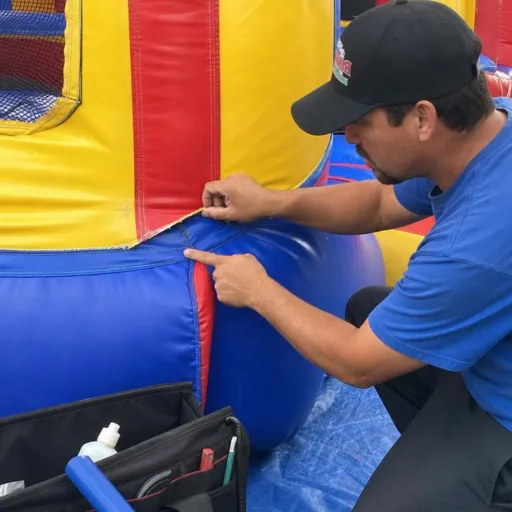
How to Repair a Bounce House: Costs & When to Replace
Most bounce house damage is repairable, and the question that decides everything is whether the fix is worth it. A puncture in 18 oz commercial PVC is a 15-minute, roughly $25 field patch. A seam split on a lighter 15 oz unit can run $500 or more once you ship it out, which is when…
Frequently Asked Questions (FAQs)
Find answers to the most common questions about PVC Inflatable Fabric. If you can’t find what you’re looking for here, please contact us.
Membrane fabrics work on the principle of size exclusion. Microporous membranes have billions of tiny pores (typically 0.1-10 micrometers) that are too small for liquid water droplets (100+ micrometers) to pass through, but large enough to allow water vapor molecules (less than 0.001 micrometers) to escape. Hydrophilic membranes absorb moisture vapor and transport it through the membrane via diffusion. This allows perspiration to evaporate while preventing rain penetration.
Yes, modern PFAS-free membranes match or exceed the performance of traditional PTFE-based materials. Polypropylene microporous membranes achieve a 74% void ratio with waterproofness to 20,000mm. Electrospun PFC-free membranes provide excellent breathability. The key difference is in the manufacturing process and polymer chemistry, not the end performance. Multiple award-winning products prove PFAS-free technology delivers professional-grade results.
Absolutely! We offer free sample swatches (A4 size) in our standard colors and specifications. For larger sample pieces (1-2 meters) or custom specifications, we charge the material cost plus shipping, which is refundable with your first order over 1,000 square meters. We can typically ship samples within 2-3 business days. Sample testing in your production environment is highly encouraged.
Lifespan varies by application and membrane type. Sportswear membranes typically last 5-10 years with proper care and can withstand 100+ wash cycles. Architectural PTFE membranes are designed for a 30+ year lifespan in permanent structures. PVC-coated fabrics offer 15-20 years for temporary installations. Proper maintenance, UV protection coatings, and quality manufacturing significantly extend membrane life.
2-layer construction bonds the membrane to the face fabric only, requiring a separate lining for comfort. It’s flexible and economical. 3-layer construction laminates the membrane between face fabric and inner lining, creating a single unified material that’s more durable and packable. The 4-layer adds an additional protective layer for extreme conditions or specialized applications. Choice depends on intended use, weight requirements, and durability needs.
Yes, especially newer designs focused on circularity. Mono-material constructions using all-nylon or all-polypropylene components can be 100% recycled through standard polymer recycling processes. Traditional multi-material laminates require specialized separation techniques. Bio-based membranes offer additional end-of-life options, including composting in some cases. Always check specific product specifications for recycling instructions.