

Premium Airbag Fabric Solutions
Advanced High-Strength Textiles for Life-Saving Safety Systems
Trusted by Leading Automotive Manufacturers Worldwide

Subtitle for This Block
Text for This Block
24
Years in Business
120
5-Star Reviews
2k
Active Customers
12
Counties Served
Our Offerings
Key Features of Airbag Fabric

Nylon 6.6 and Polyester fibers with deniers ranging from 210-840, offering a superior strength-to-weight ratio and chemical stability.
Silicon and neoprene coating options for enhanced impermeability and heat resistance. Uncoated options are available for lightweight applications.
Tailored fabric construction, density, and coating formulations to meet specific OEM requirements and safety standards.
Explore Our Specialized Airbag Fabric Categories
Explore our specialized airbag fabric categories: high-strength Nylon for superior tear resistance and energy absorption, alongside stable Polyester for low permeability and durability. Tailored for automotive, parachutes, and protective gear.

Nylon Airbag Fabric
The Nylon Airbag Fabric revolutionizes safety with high-strength, lightweight nylon 66 weave, offering superior tear and abrasion resistance, energy absorption, and heat stability. Silicone-coated for waterproofing and durability, it’s essential for automotive airbags, parachutes, and rugged protective applications.

Polyester Airbag Fabric
The Polyester Airbag Fabric boosts safety with high-strength, lightweight weave, delivering superior dimensional stability in humid environments, tear and abrasion resistance, low permeability, and high restraint. Cost-effective and durable, it’s crucial for automotive airbags, parachutes, and protective applications.
SHANDONG XINDERUN
Product Lineup for safety fabric
Comprehensive range of airbag fabrics designed for every application, from driver frontal airbags to advanced curtain systems. Each product is engineered to deliver maximum safety while meeting specific OEM requirements.

Marine Lifting Airbag
Marine Lifting Airbags are innovative tools widely used for ship launching, landing, and heavy object transportation. They serve as an efficient, cost-effective, and flexible alternative to traditional slipways and lifting equipment.

Marine Airbag Fabric
Marine Airbag Fabric is a specialized material used in the construction of marine airbags, which are essential tools for ship launching, landing, and heavy object transportation. This fabric plays a critical role in ensuring the durability, strength, and performance of the airbags.

nylon base airbag cloth
Nylon Base Airbag Cloth is a high-performance material used in the production of airbags for marine, industrial, and automotive applications. Known for its exceptional strength and durability, this fabric forms the backbone of airbag systems, ensuring safety and reliability in demanding environments.
Manufacturing Excellence
Raw Material Selection
Premium Nylon 6.6 and polyester fibers sourced from certified suppliers. Each batch undergoes molecular testing to ensure consistent quality and performance characteristics.
Yarn Production
High-tenacity yarns manufactured to precise denier specifications (210-840 dtex). Advanced spinning technology ensures uniform strength distribution and minimal defects.
Weaving Process
State-of-the-art rapier and air-jet looms with insertion rates up to 600 m/min. Precision tension control (±1 CN) ensures consistent fabric density and mechanical properties.
Coating Application
Advanced silicon or neoprene coating applied with precision add-on control (40-80 g/m²). Proprietary formulations provide optimal gas impermeability and heat resistance.
Quality Testing
Comprehensive testing includes tensile strength, tear resistance, air permeability, heat resistance, and accelerated aging. 100% inspection with automated defect detection systems.
Laser Cutting & Packaging
Computer-controlled laser cutting for precision and consistency. Fabrics packaged in controlled environments to prevent contamination and maintain optimal storage conditions.
Technical Specifications of Airbag Fabric
Detailed performance characteristics that define our industry-leading airbag fabrics. All specifications tested and certified to international standards.
| Specification | Standard Range | Premium Range | Testing Standard |
|---|---|---|---|
| Material Composition | Nylon 6.6, Polyester | Nylon 6.6, Aramid | ASTM D2256 |
| Yarn Denier | 420-840 dtex | 210-470 dtex | ASTM D1577 |
| Fabric Weight | 175-200 g/m² | 150-175 g/m² | ASTM D3776 |
| Thickness | 0.30-0.35 mm | 0.25-0.30 mm | ASTM D1777 |
| Tensile Strength (Warp) | 2,000-2,500 PSI | 2,500-3,000 PSI | ASTM D5034 |
| Tensile Strength (Weft) | 1,800-2,300 PSI | 2,300-2,800 PSI | ASTM D5034 |
| Tear Strength | 80-100 N | 100-130 N | ASTM D1424 |
| Air Permeability (Coated) | < 1 cm³/sec/cm² | < 0.5 cm³/sec/cm² | ASTM D737 |
| Heat Resistance | Up to 800°C | Up to 900°C | ISO 6941 |
| Deployment Time | 0.035-0.040 sec | 0.030-0.035 sec | FMVSS 208 |
| Leak-Down Time | 5-7 seconds | 7-10 seconds | SAE J2052 |
| Coating Weight | 70-80 g/m² | 40-60 g/m² | ASTM D3776 |
| Elongation at Break | 180-220% | 200-250% | ASTM D5034 |
| Aging Performance | 10 years | 12+ years | SAE J2052 |
Testimonials
What Our Customers Say About Airbag Fabric
Read what our customers are saying about our Airbag Fabric.
“Switching to their lightweight OPW technology helped us achieve our aggressive weight reduction targets for our new EV platform. The engineering support throughout the integration process was outstanding. We’ve seen zero field issues across 500,000+ vehicles.”

james mitchell
“The quality consistency is remarkable. We’ve been using their Nylon 6.6 fabrics for over 8 years across 15 vehicle models. Their ability to customize specifications for each application while maintaining strict quality standards sets them apart in the industry.”

sarah chen
Key Application Scenarios for Our Airbag Fabric

Discover premium automotive airbags designed to reduce impact and save lives.
Our Latest Insights
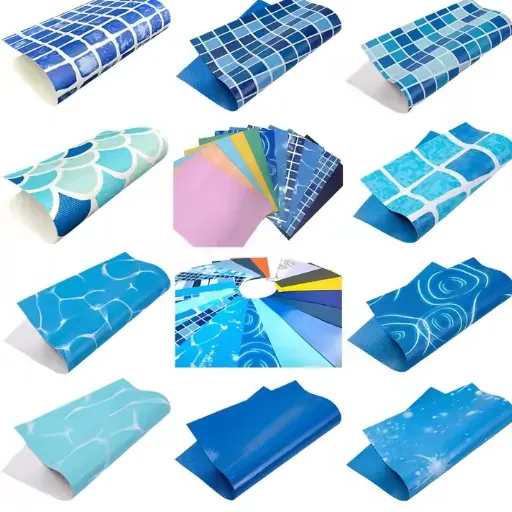
PVC Tarpaulin for Water Slides: Grades, Seams & Specs
The correct PVC tarpaulin for water slides is a PVC-coated, high-tenacity polyester fabric at 18 oz (610 gsm) as the accepted baseline, and 20 oz (650 gsm) or heavier for slides that run wet most of the season. The spec that matters is not the marketing label but three measurable numbers: coating weight, base-fabric denier,…
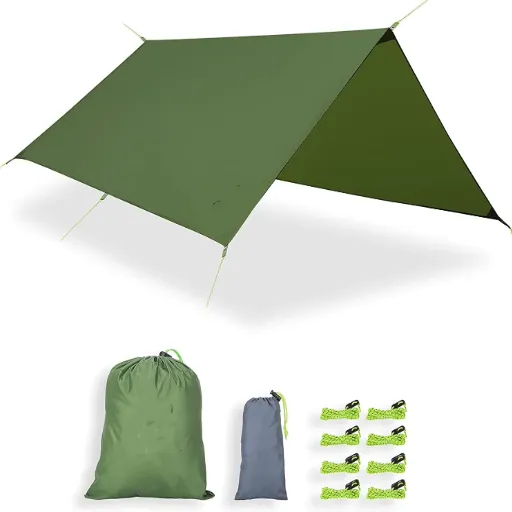
Lightweight Waterproof Tarp for Camping: Materials & Sizes
A lightweight waterproof tarp for camping comes down to a single trade-off: the fabric that carries best sheds rain least, and the fabric that sheds rain best carries heaviest. For ultralight backpacking, silnylon and silpoly win, at under 600 g for a full-size shelter. For car camping, base camp, and group shelters, a PVC-coated or…
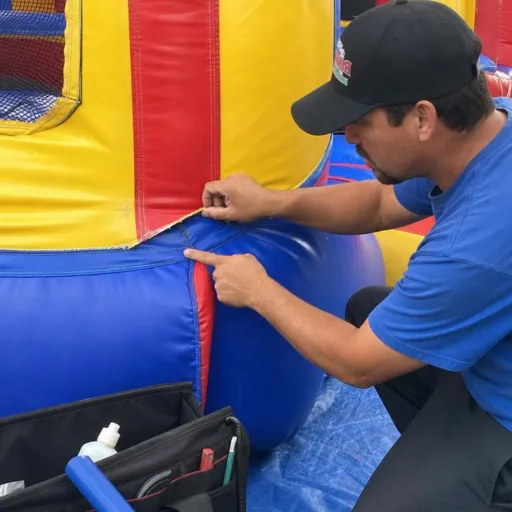
How to Repair a Bounce House: Costs & When to Replace
Most bounce house damage is repairable, and the question that decides everything is whether the fix is worth it. A puncture in 18 oz commercial PVC is a 15-minute, roughly $25 field patch. A seam split on a lighter 15 oz unit can run $500 or more once you ship it out, which is when…
Frequently Asked Questions (FAQs)
Find answers to the most common questions about Airbag Fabric. If you can’t find what you’re looking for here, please contact us.
Standard products: 4-6 weeks for production quantities (10,000+ meters). Custom specifications: 8-12 weeks including development, testing, and certification. We offer expedited service for urgent requirements. Prototype samples can be delivered in 2-3 weeks.
Standard fabrics: 5,000 meters per order. Custom specifications: 10,000 meters minimum for initial orders. For R&D and prototype development, we can accommodate smaller quantities (500-1,000 meters) at adjusted pricing. Volume discounts available for annual contracts.
Our quality system includes: (1) Raw material testing – 100% inspection of incoming yarn batches, (2) In-process monitoring – Real-time tension and density control during weaving, (3) Final inspection – Automated optical inspection systems detect defects at 0.1mm resolution, (4) Performance testing – Statistical sampling (1 per 1,000m) for mechanical and permeability testing, (5) Traceability – Complete batch tracking from yarn to finished fabric.
Yes! Our engineering team provides comprehensive support including: fabric selection consulting, folding pattern optimization, deployment simulation support, compatibility testing with inflators, documentation for regulatory submissions, and on-site integration assistance. We work closely with OEMs and Tier 1 suppliers throughout the development process.
Our sustainability program includes: (1) 100% recyclable uncoated fabric options, (2) Water-based coating formulations (eliminating VOCs), (3) Energy-efficient manufacturing (30% reduction since 2020), (4) Zero-waste to landfill achieved in 2023, (5) Sustainable packaging materials, (6) Carbon footprint reporting for all products. We’re committed to developing next-generation bio-based fabric alternatives.
Uncoated fabrics typically cost 15-20% less than coated alternatives due to eliminated coating process steps. However, total system cost depends on application requirements. For side airbags, uncoated fabrics offer superior value. For driver airbags requiring maximum gas retention, silicon-coated fabrics may provide better overall performance-cost ratio. We provide detailed cost analysis for each application.