

PVC Inflatable Fabric Specs & Sourcing Guide | LY TRUSTLINK
The best commercial bounce house material is 18–20 oz/yd² (610–650 gsm) PVC inflatable fabric built on a 1000D × 1000D high-tenacity polyester base. This specification delivers the tensile strength, tear resistance, and weld seam integrity that rental operators and OEM manufacturers need for products that withstand daily inflation cycles, UV exposure, and multi-user loading. Lighter materials cost less upfront but fail faster. Heavier fabrics extend service life from 3 years to 7+ years in commercial operation.
OEM manufacturers and rental operators evaluating PVC inflatable fabric face a specification maze. One supplier lists 550 gsm with a 1000D base. Another offers 650 gsm at 23×23 weave. A third quotes 18 oz without specifying denier at all. Without a clear framework for comparing these specifications, buyers default to price — and in the inflatable business, the wrong fabric costs far more than the right one.
This guide provides consolidated specification data, application-matched recommendations, and a procurement framework for commercial inflatable fabric. Whether you operate a rental fleet, manufacture OEM inflatables, or source fabric rolls by the thousand meters, you will find the performance data and decision criteria you need to specify with confidence. Contact LY TRUSTLINK today to learn more about our high-performance PVC coated fabric solutions for industrial and commercial applications.
Key Takeaways
- 18–20 oz/yd² (610–650 gsm) PVC inflatable fabric on a 1000D polyester base is the industry standard for commercial bounce houses and delivers 5–7+ year lifespans.
- Base fabric denier, coating weight, weld compatibility, and formulation additives are the four factors that determine inflatable performance and total cost of ownership.
- Batch-to-batch coating consistency is critical: inconsistent PVC formulations cause welding failures and pressure leaks that surface only in production.
- ASTM F963, EN71, and NFPA 701 certifications must be specified up front and documented in test reports — never assumed.
- Custom manufacturing enables precise spec matching for OEM products, with prototype samples available within 2–3 weeks.
What Is PVC Inflatable Fabric?
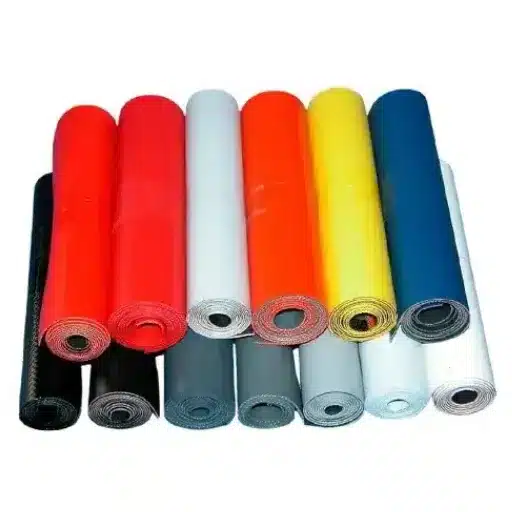
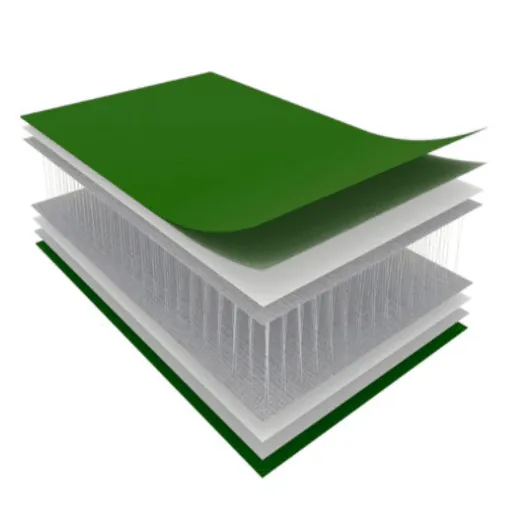
PVC inflatable fabric is a composite technical textile consisting of a high-tenacity woven polyester base fabric coated with virgin-grade polyvinyl chloride (PVC) resin, plasticizers, and stabilizers. The woven scrim provides tensile strength and dimensional stability. The PVC coating creates an airtight, waterproof barrier that can be welded into permanent seams.
This construction differs fundamentally from standard tarpaulin. Buyers sometimes ask whether PVC tarpaulin for inflatables is the same as truck cover material. It is not. A truck cover or pond liner prioritizes waterproofing and UV resistance. An inflatable fabric must add airtightness, flex fatigue resistance, and weld compatibility to that foundation. The coating formulation matters just as much as the base fabric. Virgin-grade PVC resin ensures chemical stability and consistent weld behavior. Recycled or blended resins introduce variable plasticizer ratios that compromise seam integrity and pressure retention.
For children’s products, the formulation must also exclude lead and restricted phthalates. ASTM F963 and EN71 compliance requires 3P/6P phthalate-free PVC — a specification that commodity suppliers often omit unless explicitly requested.
How PVC Inflatable Fabric Differs from Standard Tarpaulin
Standard PVC tarpaulin and inflatable-grade PVC share the same core chemistry but diverge in critical performance criteria. Tarpaulin optimized for waterproofing and UV blocking may use formulations that stiffen under repeated flexing or degrade under high-frequency welding heat. Inflatable-grade PVC incorporates:
- Cold-crack additives that maintain flexibility below -20°C
- UV stabilizers rated for constant outdoor exposure, not intermittent use
- Weld-compatible plasticizers that bond molecularly under RF or hot-air welding without off-gassing or delamination
- Lead-free and phthalate-free options for products subject to toy safety standards
When an OEM manufacturer specifies standard tarpaulin for an inflatable product, the result is predictable: seams that leak under pressure, coatings that crack after 200 inflation cycles, and product liability exposure that no operator can afford.
Learn more about the complete range of PVC coated fabric specifications in our technical guide →
Understanding PVC Inflatable Fabric Specifications
Base Fabric (Scrim) Construction
The base fabric — also called the scrim — is the structural skeleton of PVC inflatable fabric. High-tenacity polyester dominates commercial inflatables because it outperforms nylon in dimensional stability, UV resistance, and coating adhesion. Nylon absorbs moisture and elongates under load, making it unsuitable for pressure-retaining structures.
Denier measures the thickness of individual yarns. For inflatable applications, the relevant range is:
| Denier Rating | Yarn Thickness | Typical Use Case |
|---|---|---|
| 500D | Light commercial | Promotional inflatables, occasional-use products |
| 1000D | Commercial standard | Bounce houses, water slides, rental fleet units |
| 1500D | Heavy-duty commercial | High-traffic rentals, obstacle courses, marine craft |
Weave count — expressed as threads per inch in warp and weft directions — determines tear resistance and weld seam strength. A 20×20 weave on 1000D polyester is the minimum for commercial bounce houses. A 23×23 or 30×30 weave increases tear strength and distributes stress more evenly across welded seams.
The combination of denier and weave count directly determines how the fabric behaves under pressure. A 1000D × 23×23 base fabric delivers approximately 2,500 N/5cm tensile strength in the warp direction. That figure drops to roughly 1,600 N/5cm for 1000D × 20×20. For an inflatable structure supporting 1,000+ pounds of dynamic user load, that difference is not marginal. It is the difference between a unit that lasts one season and one that lasts five.
Coating Weight (GSM / oz/yd²) Explained
Coating weight — measured in grams per square meter (GSM) or ounces per square yard (oz/yd²) — indicates the total mass of the finished fabric including the PVC coating. For inflatable applications, weight correlates directly with puncture resistance, abrasion tolerance, and pressure capacity.
| GSM Range | oz/yd² Range | Thickness (mm) | Best Application |
|---|---|---|---|
| 490–550 | 15–16 | 0.45–0.50 | Light toys, promotional items, occasional residential use |
| 550–650 | 16–20 | 0.50–0.60 | Commercial bounce houses, dry inflatables, standard rental units |
| 650–780 | 20–23 | 0.60–0.75 | Heavy-duty rentals, water slides, wet/dry combos |
| 780–900 | 23–27 | 0.75–0.90 | Water parks, obstacle courses, high-traffic event structures |
| 900–1,450 | 27–42 | 0.90–1.40 | Inflatable boats, rafts, RIBs, rescue craft |
Industry-standard weight tolerance is +/- 10 gsm. Premium manufacturers hold +/- 5 gsm across production batches. That consistency matters because weight variation signals coating thickness variation — and inconsistent coating thickness produces inconsistent weld penetration. When Marcus Chen, operations director at an OEM inflatable manufacturer in Guangdong, received a 2,000-meter batch that varied from 585 gsm to 632 gsm, his HF welding line produced seams that passed visual inspection but failed pressure testing at 18 PSI. The batch had to be scrapped. The supplier had saved money by skipping in-process coating monitoring. Chen switched to a partner with documented +/- 5 gsm tolerance and batch-level tensile testing. His weld failure rate dropped to zero.
Surface Treatments and Inflatable-Specific Formulations
The base PVC formulation can be modified with additives that extend service life or meet regulatory requirements:
- UV stabilizers prevent polymer chain scission from solar radiation. Untreated PVC loses 30–50% of its tensile strength after 12 months of continuous outdoor exposure. UV-stabilized formulations retain 85–90% of initial strength after the same period.
- Cold-crack additives maintain flexibility in sub-zero conditions. Standard formulations become brittle below -20°C. Cold-resistant grades remain pliable to -30°C or lower.
- Flame-retardant formulations meet NFPA 701 (US) or EN 13501-1 / DIN 4102 B1 (Europe) for public event structures and indoor installations.
- Lead-free and phthalate-free PVC is mandatory for children’s products under ASTM F963 and EN71. REACH and RoHS compliance requires 3P/6P phthalate-free formulations for EU markets.
- Anti-mildew and anti-static treatments extend lifespan in humid climates and reduce dust accumulation on static-sensitive surfaces.
Performance Data for PVC Inflatable Fabric Applications
The performance of PVC inflatable fabric is defined by five measurable properties: tensile strength, tear resistance, airtightness, UV stability, and abrasion tolerance. Each property interacts with the others. A fabric with high tensile strength but poor tear resistance will fail at stress concentrations. A fabric with excellent UV stabilizers but weak coating adhesion will delaminate before UV becomes the limiting factor.
Tensile Strength and Tear Resistance by Fabric Weight
Tensile strength measures the force required to pull the fabric apart. Tear resistance measures the force required to propagate a tear once initiated. For inflatable structures, tear resistance is often the more critical metric. That is why tear resistant inflatable fabric is specified for high-traffic commercial units — punctures and stress concentrations initiate tears more frequently than they induce pure tensile failure.
| GSM | Base Fabric | Tensile Strength (N/5cm) | Tear Strength (N) | Best Application |
|---|---|---|---|---|
| 550 | 1000D × 20×20 | 1,500–1,700 | 180–220 | Light commercial, occasional rental |
| 610 | 1000D × 23×23 | 2,200–2,500 | 280–320 | Standard commercial bounce houses |
| 650 | 1000D × 23×23 | 2,500–2,800 | 320–380 | Heavy-duty rentals, high-traffic units |
| 780 | 1000D × 30×30 | 2,800–3,200 | 400–480 | Water slides, wet/dry combos |
| 900 | 1100D × 30×30 | 3,200–3,800 | 500–600 | Water parks, obstacle courses |
| 1,100 | 1100D × 30×30 | 3,800–4,500 | 600–750 | Inflatable boats, RIBs, marine craft |
The jump from 550 gsm to 650 gsm typically increases tear resistance by 50–70%. For a rental operator running 40 events per month, that translates to fewer field repairs, less downtime, and higher customer satisfaction. The upfront cost difference is typically 1–1–2 per square meter. The downtime cost of a mid-season seam failure is 200–200–500 in lost revenue per event — plus repair labor and material.
Airtightness and Pressure Retention
Airtightness is not a standard metric on most supplier data sheets, but it should be. Air permeability is measured in cubic centimeters per square centimeter per second (cm³/cm²/s) at a defined pressure differential. Quality inflatable fabric exhibits permeability below 0.05 cm³/cm²/s at 20 mbar. Commodity-grade material with inconsistent coating adhesion may register 0.15–0.30 cm³/cm²/s — three to six times higher.
Coating adhesion — measured as peel strength in Newtons — predicts long-term airtightness. A peel strength below 40 N indicates risk of delamination under flex fatigue. Premium inflatable fabric achieves 70–100 N peel strength per DIN 53357. At LY TRUSTLINK, every production batch is tested for coating adhesion, tensile strength, and tear resistance before release. If a batch does not meet the specification agreed with the customer, it does not ship.
UV Degradation and Weathering Performance
UV exposure breaks the polymer chains in PVC through photo-oxidation. The result is surface chalking, loss of flexibility, and declining tensile strength. ASTM G154 accelerated weathering testing simulates this degradation using UV-B lamps and controlled humidity cycles.
Standard PVC without UV stabilizers loses 50% of its initial tensile strength within 1,000 hours of exposure — equivalent to roughly 12–18 months of outdoor use in temperate climates. UV-stabilized formulations retain 85–90% of strength after 2,000 hours. For rental operators in high-UV zones such as Arizona, Queensland, or the Middle East, UV stabilization is not optional. It is a specification that determines whether a unit lasts two seasons or six.
Temperature operating range for standard inflatable-grade PVC is -20°C to +60°C. Cold-resistant grades with specialized plasticizer packages extend the lower limit to -30°C or -40°C. At the high end, sustained exposure above +60°C softens the PVC matrix and accelerates plasticizer migration. Storage in direct sunlight on hot surfaces can exceed this threshold, which is why proper deflation and shaded storage protocols matter for lifespan. Whether you need PVC coated fabrics for truck covers, tents, tarpaulins, or outdoor products, LY TRUSTLINK is ready to support your business with reliable manufacturing expertise.
PVC Inflatable Fabric Specifications by Application
Commercial Bounce Houses and Dry Inflatables
Commercial bounce houses represent the highest-volume application for PVC inflatable fabric and the most common use case for bounce house material worldwide. The specification must balance durability against weight, because heavier fabric increases shipping costs and setup difficulty.
Recommended specification:
- GSM: 550–650 gsm (18–20 oz/yd²) for standard units; 650–780 gsm for high-traffic rental fleets
- Base fabric: 1000D × 1000D minimum; 1000D × 23×23 preferred for commercial rental
- Critical properties: Tear resistant inflatable fabric with tear resistance above 280 N, weld seam strength matching parent material, UV stabilization rated for 2,000+ hours
- Safety requirements: ASTM F963 (US), EN71 (EU), lead-free / 3P phthalate-free formulation
- Expected lifespan: 5–7 years for 18–20 oz commercial-grade with proper cleaning, drying, and storage
For rental operators, the choice between 15 oz and 18 oz is not aesthetic. It is economic. Sarah Kim, owner of a 12-unit rental fleet in Texas, switched from 15 oz to 18 oz PVC in 2022. Her per-unit fabric cost increased by 180. Her annual repair rate dropped from 14 incidents to 3. At a 350 average repair cost, including labor and downtime, the heavier fabric paid for itself in the first rental season. By year three, she had saved 3,800 in maintenance on a fleet that generated 85,000 in annual revenue.
Water Slides and Wet/Dry Combo Units
Wet/dry inflatables built from heavy duty PVC tarpaulin face additional stress from water exposure, chlorine, and salt. Slide surfaces experience abrasion from users climbing and sliding. The fabric specification must account for these factors.
Recommended specification:
- GSM: 650–900 gsm (20–28 oz/yd²)
- Base fabric: 1000D × 23×23 minimum; 1000D × 30×30 for high-traffic slide surfaces
- Surface treatment: Embossed or matte anti-slip finish on slide and landing zones
- Chemical resistance: Chlorine and saltwater-compatible plasticizer package
- Reinforcement: Double-layer or reinforced strip at slide transitions, landing zones, and anchor points
Inflatable Boats, Rafts, and Marine Applications
Marine inflatables operate at higher pressures and face exposure to fuel, oil, and saltwater. The consequences of fabric failure are more severe than in a bounce house.
Recommended specification:
- GSM: 850–1,450 gsm (25–42 oz/yd²)
- Base fabric: 1100D × 1100D minimum; professional RIBs and rescue craft specify 1100D × 30×30 or higher
- Pressure rating: Fabric must support operating pressures of 2.5–3.5 PSI for boats; rescue craft may require higher
- Chemical resistance: Saltwater, fuel, and oil resistance per marine application standards
- Alternative materials: Hypalon (CSM) outperforms PVC in extreme UV and chemical exposure but costs 2–3× more and requires adhesive bonding rather than welding
For recreational and commercial fleet operators, PVC remains the standard due to weldability, repairability, and cost efficiency. Only military, expedition, and long-term deployment applications typically justify Hypalon.
Water Parks, Obstacle Courses, and Event Structures
Large-format structures built from heavy-duty PVC tarpaulin impose multidirectional loads and require fire retardancy in public venues.
Recommended specification:
- GSM: 650–1,100 gsm depending on structure size and expected user load
- Base fabric: 1000D × 23×23 to 1100D × 30×30
- Fire safety: NFPA 701 (US) or EN 13501-1 B1 (EU) certification required for public events and indoor installations
- Colorfastness: Pigment-stabilized formulation maintaining color integrity for 3+ years of outdoor exposure
- Anchor points: Reinforced D-ring patches welded with high-frequency bonding at 1.5× standard seam width
Learn more about NFPA 701-compliant blackout and event tent fabrics →
Specification Quick-Reference Table
| Application | Recommended GSM | Base Fabric | Key Treatments | Certifications | Expected Lifespan |
|---|---|---|---|---|---|
| Commercial bounce houses | 550–650 gsm | 1000D × 23×23 | UV-stabilized, lead-free | ASTM F963, EN71 | 5–7 years |
| Water slides / wet-dry combos | 650–900 gsm | 1000D × 30×30 | Anti-slip, chlorine-resistant | ASTM F963, EN71 | 4–6 years |
| Inflatable boats / rafts | 850–1,450 gsm | 1100D × 30×30 | Saltwater/fuel-resistant | Marine safety standards | 5–10 years |
| Water parks / obstacle courses | 650–1,100 gsm | 1000D–1100D × 30×30 | Fire-retardant, UV-stabilized | NFPA 701, EN 13501-1 | 4–7 years |
| Event structures / tents | 650–900 gsm | 1000D × 23×23 | Fire-retardant, colorfast | NFPA 701, EN 13501-1 | 5–8 years |
Welding and Seam Construction for PVC Inflatable Fabric
The PVC inflatable fabric is only half the product. The seam is the other half. An inflatable structure with perfect fabric and poorly welded seams will fail faster than one with average fabric and excellent seams.
High-Frequency (RF) Welding
High-frequency welding uses an electromagnetic field at 27.12 MHz to generate molecular friction within the PVC material. The heat develops internally, softening the PVC from the inside out. Pressure applied while the material cools produces a molecular bond that is often stronger than the parent fabric.
RF welding excels at airtight seals and thick materials. It is the standard for bounce house seams, D-ring patches, and airtight chambers in boats and rafts. Cycle times are typically 2–5 seconds per weld. The critical quality criterion is peel strength: a proper RF weld should not separate before the base fabric tears.
Hot Air Welding
Hot air welding directs a stream of heated air (up to 750°C) between overlapping fabric edges. Pressure rollers then compress the molten surfaces together. This method is ideal for long linear seams on large structures such as inflatable tents, water park courses, and event installations.
Working speeds range from 1–24 m/min depending on material thickness and temperature. Hot air welding handles complex curves and irregular shapes more flexibly than RF welding. The trade-off is slightly lower peel strength on very thick materials (>1.2 mm) where core heating may be insufficient.
Evaluating Seam Quality Before Production
Before committing to a production order, buyers should request sample welds and subject them to standardized testing:
- Peel test: Clamp both sides of a welded seam and pull at 180 degrees. The base fabric should tear before the weld separates.
- Pressure test: Inflate a sample chamber to 1.5× operating pressure and monitor for 24 hours. Air loss should not exceed 5%.
- Visual inspection: Weld penetration should be uniform across the full seam width with no voids, burn marks, or cold spots.
Batch-level coating consistency is essential for weld compatibility. A supplier who changes resin sources between batches without notifying the customer introduces variability that welding parameters cannot compensate for. That is why documented incoming inspection and batch traceability are non-negotiable requirements for OEM partnerships.
Certifications and Safety Compliance for Inflatable Fabrics
Procurement teams evaluating commercial inflatable fabric for children’s products or public event structures must verify compliance documentation before placing an order. Certifications are not automatic. They are formulation and testing choices that the manufacturer must make and document.
Product Safety Standards
Children’s inflatables sold in the United States must comply with ASTM F963, the Standard Consumer Safety Specification for Toy Safety. The standard specifies mechanical property requirements, flammability testing, and chemical content limits — including lead and phthalate restrictions.
In the European Union, EN71 governs toy safety. Part 1 addresses mechanical and physical properties. Part 3 specifies migration limits for certain elements, including lead and cadmium. Any inflatable fabric intended for children’s products must carry documented EN71 compliance.
Phthalate restrictions are increasingly stringent. REACH and RoHS in the EU limit 3P and 6P phthalates. California Prop 65 requires warning labeling for products containing listed chemicals. Lead-free and phthalate-free PVC formulations are available from qualified manufacturers. The key is specifying this requirement in the purchase order — not discovering a compliance gap at customs.
Fire Safety Standards
Public event structures and indoor installations require fire-retardant materials. The applicable standards vary by market:
| Market | Standard | Test Method | Application |
|---|---|---|---|
| United States | NFPA 701 | Small-scale and large-scale flame test | Tents, event structures, indoor inflatables |
| European Union | EN 13501-1 | Single burning item test | Public buildings, event venues |
| Germany | DIN 4102 B1 | B1 classification (difficult to ignite) | Tents, exhibition halls |
| Canada | CAN/ULC-S109 | Flame test for textiles | Public assemblies |
NFPA 701 compliance is available as a custom specification from LY TRUSTLINK. The fire-retardant additive is integrated during the coating process, not sprayed on as a surface treatment. This ensures the retardancy persists through abrasion, cleaning, and extended UV exposure.
Quality Testing Standards
Request these test methods in your supplier’s technical data sheet:
- ASTM D751: Standard test methods for coated fabrics — covers tensile strength, tear resistance, adhesion, and bursting strength
- EN ISO 1421: European standard for rubber- and plastics-coated fabrics tensile testing
- ASTM G154 / ISO 4892: Accelerated weathering and UV exposure testing
- DIN 53357: Coating adhesion (peel strength) testing
A credible supplier provides batch-specific test reports with actual measured values, not just specification ranges. If a supplier cannot produce test reports with dates matching your batch number, that is a signal to evaluate alternative sources. Looking for reliable PVC coated fabric suppliers? Reach out to LY TRUSTLINK for professional support and competitive manufacturing solutions.
Sourcing PVC Inflatable Fabric: What to Specify
The RFQ Checklist for Inflatable Fabric
A complete request for quotation eliminates ambiguity and protects both buyer and supplier. Include at minimum:
- Application: Bounce house, water slide, boat, water park structure, or other
- Dimensions: Roll width (up to 3.2m standard; custom widths available), roll length, total square meters
- GSM and base fabric: Exact target GSM with tolerance (e.g., 610 gsm +/- 5 gsm), denier, and weave count
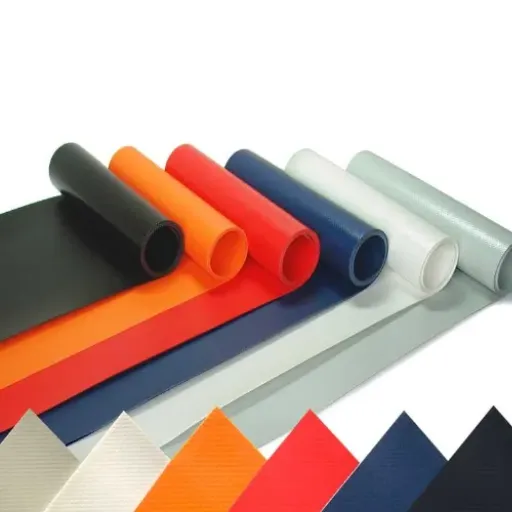
- Surface treatments: UV stabilization, flame retardancy, cold-crack resistance, anti-slip embossing, color (RAL or Pantone reference)
- Compliance requirements: ASTM F963, EN71, NFPA 701, REACH/RoHS, or other
- Welding method: RF welding, hot air welding, or both — this affects coating formulation recommendations
- Delivery requirements: Sample lead time, production lead time, shipping terms, destination port
Request a detailed specification sheet or custom quote from our engineering team →
Evaluating Supplier Capabilities
When sourcing PVC tarpaulin for inflatables, price per square meter is a poor sole criterion for supplier selection. Evaluate these factors:
- Production capacity: Can the supplier scale from prototype samples to 50,000+ square meter annual orders without compromising quality?
- Batch consistency: Does the supplier document incoming base fabric inspection, in-process coating monitoring, and final testing with batch traceability?
- Sample-to-production fidelity: Some suppliers send perfect samples from a pilot line and ship inferior production batches. Request a production sample from the actual line that will manufacture your order.
- Engineering support: Can the supplier recommend formulation adjustments for your specific application, welding equipment, and operating environment?
At LY TRUSTLINK, prototype samples ship within 2–3 weeks of specification confirmation. Production lead times are confirmed at order and updated proactively if any variable changes. That transparency is part of our commitment to being a reliable link in your supply chain — not a vendor who disappears after the deposit clears.
Total Cost of Ownership for Rental Operators
Rental operators who evaluate bounce house material on unit price alone miss the full economic picture. Consider these factors:
| Cost Factor | 15 oz (510 gsm) | 18 oz (610 gsm) | 20 oz (650 gsm) |
|---|---|---|---|
| Fabric cost per m² | 6–6–8 | 8–8–10 | 10–10–12 |
| Expected lifespan (commercial) | 2–3 years | 5–7 years | 6–8 years |
| Annual repair incidents (per 10 units) | 12–16 | 3–5 | 2–4 |
| Average repair cost (labor + material + downtime) | $300 | $300 | $300 |
| Annual repair cost (per 10 units) | 3,600–3,600–4,800 | 900–900–1,500 | 600–600–1,200 |
| 5-year total fabric + repair cost (per 10 units) | 12,000–12,000–16,000* | 8,500–8,500–11,500 | 8,600–8,600–10,800 |
*Includes one full replacement cycle at year 3.
The 18–20 oz fabric pays back its higher upfront cost within 18–24 months of commercial operation. Over a five-year horizon, it typically costs 25–40% less than lighter alternatives when repair and replacement costs are included. For a fleet operator running 20+ units, that delta is the difference between profitability and margin compression.
Custom PVC Inflatable Fabric Manufacturing
Standard catalog specifications do not fit every application. OEM manufacturers frequently require custom heavy duty PVC tarpaulin formulations, non-standard widths, or application-specific certifications. LY TRUSTLINK engineers fabric to order with full OEM and ODM capability.
Custom options include:
- Weight and thickness: Any GSM within the 300–1,500 gsm production range
- Base fabric: Denier and weave count matched to your load and flex requirements
- Width: Standard rolls to 3.2 meters; custom widths available by arrangement
- Color: RAL and Pantone matching for branded products
- Surface treatments: UV stabilization, flame retardancy, cold-crack additives, anti-slip embossing, anti-mildew, anti-static
- Compliance documentation: ASTM F963, EN71, NFPA 701, REACH, RoHS, CA Prop 65 — tested and certified per batch
Our engineering team supports projects from concept to certified delivery. We review your product design, operating environment, and welding process to recommend the optimal fabric specification. Prototype samples are available within 2–3 weeks. Minimum order quantities are flexible for prototyping and R&D phases, with scalable pricing for volume production.
Talk to an engineer about your custom inflatable fabric requirements →
Frequently Asked Questions
What is PVC inflatable fabric?
PVC inflatable fabric is a composite technical textile made from a high-tenacity woven polyester base fabric coated with polyvinyl chloride (PVC) resin, plasticizers, and stabilizers. The construction creates an airtight, waterproof material that can be welded into permanent seams for inflatable structures.
What is the best material for commercial bounce houses?
18–20 oz/yd² (610–650 gsm) PVC inflatable fabric on a 1000D × 23×23 high-tenacity polyester base is the industry standard for commercial bounce houses. This specification balances durability, weight, and weldability while delivering a 5–7 year lifespan under regular rental use.
How thick should bounce house material be?
Minimum 15 oz/yd² (510 gsm) for any commercial application. Rental operators and OEM manufacturers should specify 18–20 oz/yd² (610–650 gsm) for units that will see frequent use. Slide surfaces and high-abrasion areas benefit from 20–23 oz/yd² (650–780 gsm) material.
Is PVC inflatable fabric waterproof?
Yes. The PVC coating creates a molecular barrier that is inherently impermeable to water. Unlike water-resistant fabrics that rely on surface treatments, PVC inflatable fabric achieves true waterproofing through the polymer structure itself. Seam integrity — achieved through RF or hot-air welding — determines whether the finished product remains waterproof under pressure.
Can PVC inflatable fabric be repaired?
Yes. Permanent repairs are best performed by high-frequency or hot-air welding, which restores seam strength to parent-material levels. Field repairs on rental units can use adhesive patches designed for PVC-coated fabrics as a temporary measure until proper welding is available.
What is the difference between PVC and Oxford fabric for inflatables?
PVC inflatable fabric is a coated technical textile that is fully waterproof, weldable, and pressure-retaining. Oxford fabric is a woven nylon or polyester that is water-resistant but not waterproof, cannot be welded airtight, and absorbs moisture. Oxford is suitable for residential occasional use. PVC is required for commercial rental and OEM manufacturing.
How long does commercial bounce house PVC last?
Lifespan depends on weight and maintenance. 15 oz commercial-grade PVC lasts 2–3 years with regular use. 18–20 oz commercial-grade PVC lasts 5–7 years with proper cleaning, drying, and storage. Water slides and wet/dry units typically see 4–6 years due to chlorine and abrasion exposure.
Is PVC inflatable fabric safe for children?
Yes, when formulated with lead-free and phthalate-free PVC that meets ASTM F963 (US) and EN71 (EU) toy safety standards. Buyers must specify this compliance in the purchase order and request batch-specific test documentation. Not all PVC inflatable fabric is automatically toy-safe — compliance is a formulation and certification choice, not a default.
Conclusion
Base fabric density and coating weight determine PVC inflatable fabric performance and lifespan. Weld seam strength and airtightness are as critical as the fabric itself. Certifications must be specified up front and documented in test reports, never assumed. And total cost of ownership favors quality materials over the lowest unit price — 18–20 oz commercial-grade PVC pays back within two rental seasons and costs 25–40% less than lighter alternatives over a five-year horizon.
LY TRUSTLINK engineers PVC inflatable fabric to precise specifications for OEM manufacturers, rental operators, and commercial inflatable producers worldwide. We manufacture with virgin-grade PVC, high-tenacity polyester base fabrics, and multi-point quality inspection — because in your operation, a fabric failure is never just a fabric failure.
Request a custom specification or sample order from our engineering team →