
North America PVC Vinyl Coated Fabrics Market 2026 | Size & Guide
The North America PVC vinyl-coated fabrics market was valued at approximately $2.1 billion in 2025 and is projected to grow at a 3-5.5% CAGR through 2035, driven by sustained demand across transportation, construction, agriculture, and industrial applications. North America holds roughly 21-35% of global market revenue, with the United States accounting for the majority share supported by robust logistics infrastructure, ongoing construction investment, and stringent safety regulations that favor high-performance materials.
When Marcus Chen’s fleet of 120 curtain-sided trailers in Minnesota started showing seam failures at the six-month mark, his anticipated cost savings from a low-bid supplier evaporated into $47,000 of unplanned replacement and downtime expenses. The problem was not the curtain design. It was the specification of the PVC coated fabric itself: insufficient GSM weight for the load cycle, inadequate cold-crack resistance for sub-zero routes, and a coating formulation that degraded under road salt exposure. If you are responsible for sourcing coated fabrics in North America, you have faced this exact tension. The unit price on the purchase order rarely tells the full story.
This guide delivers verified market data, application-specific specifications, and a procurement framework that helps you evaluate suppliers on performance — not just price. You will learn the true size of the North American market, how coating processes affect field durability, which certifications matter for your application, and how to distinguish a reliable manufacturing partner from a commodity vendor. Whether you are specifying truck side curtains for a logistics fleet, pond liners for an aquaculture operation, or membrane fabrics for a construction enclosure, the material science decisions you make at procurement directly determine operational outcomes. Contact LY TRUSTLINK today to learn more about our high-performance PVC coated fabric solutions for industrial and commercial applications.
Key Takeaways
- The North America PVC coated fabrics market is valued at ~$2.1 billion (2025) and growing at 3-5.5% CAGR, with transportation accounting for roughly 30% of total demand.
- Transportation, construction, agriculture, and marine are the four dominant application sectors, each requiring distinct fabric specifications in GSM, tensile strength, and coating formulation.
- Domestic North American manufacturers offer 30-day bulk turnaround versus 60-90 days for Asian imports, but Asian producers hold a 20-30% cost advantage on commodity grades.
- Key quality standards include NFPA 701 (fire retardancy), ASTM D751 (coated fabric testing), and CAN/ULC-S109 for Canadian applications.
- Procurement decisions should evaluate cost-per-year of service life, not initial unit price — a 900gsm PVC tarpaulin with UV-stabilized coating typically delivers 5-8 years of outdoor performance versus 1-2 years for standard polyethylene alternatives.
What Are PVC Vinyl Coated Fabrics?
Definition and Construction
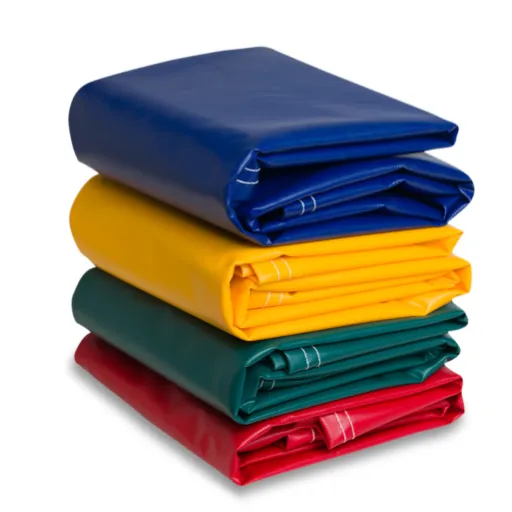
PVC vinyl-coated fabrics are engineered composite materials consisting of a woven base fabric — typically high-tenacity polyester — that is coated or laminated with a layer of polyvinyl chloride (PVC) polymer. The base fabric provides mechanical strength: tensile load capacity, tear resistance, and dimensional stability under tension. The PVC coating provides environmental protection: waterproofing, UV resistance, chemical stability, and — when formulated with additives — fire retardancy and antimicrobial properties.
The manufacturing process begins with a prepared textile substrate. High-tenacity polyester yarns are woven into a scrim or plain weave, then tension-stabilized to prevent shrinkage. The PVC compound — a blend of virgin PVC resin, plasticizers for flexibility, stabilizers for heat and UV resistance, and functional additives — is applied to the fabric surface through one of several coating methods. The result is a material that combines the structural integrity of a technical textile with the protective properties of a polymer barrier. Whether you need PVC-coated fabrics for truck covers, tents, tarpaulins, or outdoor products, LY TRUSTLINK is ready to support your business with reliable manufacturing expertise.
PVC Coating vs. Other Coatings
Not all coated fabrics perform equally, and the coating chemistry determines the operational envelope. Polyurethane (PU) coatings offer superior flexibility at low temperatures and better abrasion resistance in certain applications, but they generally cost 15-25% more than equivalent PVC formulations and degrade faster under prolonged UV exposure. Polyethylene (PE) coatings provide basic water resistance at low cost, but lack the tensile strength, tear resistance, and service life of PVC — making PE suitable for short-term consumer covers, not industrial applications.
Silicone coatings excel in extreme temperature environments (-60°C to +250°C) and are standard in aerospace and high-performance industrial settings. However, silicone-coated fabrics carry a significant price premium and are rarely specified for general tarpaulin, transportation, or construction applications where PVC delivers the optimal balance of performance and cost. For the majority of North American industrial buyers, PVC remains the default specification because it delivers predictable performance across a wide temperature and load range at a well-understood price point.
Base Fabric Types
The base fabric is the structural skeleton of any coated material, and its properties set the performance ceiling. High-tenacity polyester dominates the North American market, accounting for approximately 35% of PVC coated fabric volume. Polyester offers excellent dimensional stability, meaning the fabric does not stretch significantly under load, and it bonds reliably with PVC formulations. Nylon base fabrics provide higher abrasion resistance and are common in applications like inflatable structures and protective clothing, but nylon absorbs moisture and can degrade under prolonged UV exposure without proper stabilization.
Fiberglass base fabrics are specified for extreme fire-retardant applications and high-temperature environments. These materials do not burn and maintain structural integrity at temperatures that would melt polyester or nylon, but they are heavier, less flexible, and significantly more expensive. For most transportation, construction, and agricultural tarpaulin applications, high-tenacity polyester remains the pragmatic choice — delivering the strength-to-weight ratio and coating compatibility that procurement managers need.
Common Weights and Thicknesses
Fabric weight is expressed in grams per square meter (GSM) or ounces per square yard, and this single number is the most common specification point in procurement conversations. Lightweight PVC coated fabrics in the 200-350 GSM range suit temporary covers, light-duty banners, and indoor applications where mechanical loads are minimal. Mid-weight materials at 400-650 GSM handle standard truck curtains, agricultural covers, and general-purpose tarps. Heavy-duty specifications from 700-900 GSM and above are standard for long-haul truck side curtains, industrial machinery covers, and tensile structures where snow load, wind load, or tension forces are significant.
Weight alone does not tell the complete story. The coating-to-fabric ratio, the quality of the plasticizer formulation, and the density of the base weave all influence real-world performance. A well-engineered 500 GSM fabric with high-quality virgin PVC and UV stabilizers can outlast a poorly formulated 700 GSM alternative. This is precisely why procurement decisions based on GSM alone — without understanding the coating formulation and manufacturing process — lead to the kind of premature failures that Marcus Chen experienced with his fleet. Contact LY TRUSTLINK today and discover how our PVC coated fabric products can enhance the quality and durability of your projects.
North America PVC Coated Fabrics Market Overview
Market Size and Growth
The global PVC coated fabrics market is estimated at 2.1−2.5billionfor2025,withNorthAmericarepresentingapproximately21.7−352.1−2.5billionfor2025,withNorthAmericarepresentingapproximately21.7−357.3 billion in 2025. Within the PVC-specific segment, the North American tarpaulin application category alone is valued at approximately 600 million and is projected to reach 2.5 billion by 2035 at a CAGR of roughly 5.5%.
| Metric | Value | Source |
|---|---|---|
| Global PVC Coated Fabrics Market (2025) | $2.1-2.5 billion | Market Research Future, Metastat Insight |
| North America Market Share | 21.7-35% | Multiple industry reports |
| North America Coated Fabrics (Total, 2025) | $7.3 billion | Industry benchmarks |
| North America PVC Tarpaulin Segment (2025) | ~$600 million | Market Research Future |
| Projected CAGR (2025-2035) | 3.0-5.5% | Varied analyst estimates |
| US Coated Fabric Market (2026 est.) | $6.22 billion | Future Market Insights |
The variation in market size estimates reflects different scope definitions. Some analysts include only PVC-coated textiles in narrow industrial categories. Others incorporate a broader range of polymer-coated materials across transportation, protective clothing, and consumer applications. For procurement managers, the key insight is consistent across all sources: North America represents a large, stable, and growing market with sustained demand for high-specification coated fabrics.
Key Growth Drivers
Three primary forces are expanding the North American market. First, transportation and logistics infrastructure continues to grow. E-commerce expansion has increased freight volumes across every route class, and fleet operators are replacing tarp systems more frequently to maintain cargo security compliance. The North American truck tarp system market alone was valued at approximately $560 million in 2024, with the United States contributing the dominant share.
Second, construction and infrastructure investment — particularly in the United States — drives demand for scaffolding covers, debris containment, temporary enclosures, and tensile architectural membranes. Urbanization at an 83% rate across North America means construction activity is concentrated and continuous, requiring durable temporary materials that withstand repeated deployment.
Third, agricultural mechanization and the expansion of controlled-environment agriculture create steady demand for barn curtains, equipment covers, grain storage solutions, and aquaculture pond liners. These applications require materials that resist UV degradation, moisture, and biological growth across multi-year service cycles. PVC coated fabrics meet these requirements more cost-effectively than alternatives like EPDM rubber or HDPE geomembranes in many use cases.
Regional Sub-Markets
The United States dominates the North American market, driven by its massive logistics infrastructure, construction sector, and agricultural output. Key manufacturing clusters are concentrated in the Southeast and Midwest — regions with historical textile heritage and proximity to chemical feedstock production along the Texas Gulf Coast. The US market prioritizes high-specification materials, with buyers typically evaluating total cost of ownership rather than unit price alone.
Canada contributes a meaningful but smaller share, with demand concentrated in agriculture (Prairie provinces), resource extraction (Alberta oil sands, mining operations), and cross-border logistics. Canadian buyers must navigate additional compliance requirements including CAN/ULC-S109 fire standards, and cold-climate applications demand enhanced cold-crack resistance in coating formulations.
Mexico represents the fastest-growing sub-market, fueled by nearshoring trends, expanding manufacturing capacity, and logistics growth along the USMCA trade corridor. Mexican demand tends to be more price-sensitive than US demand, but the market is maturing rapidly as domestic manufacturers upgrade specifications to serve export-oriented clients.
Import vs. Domestic Production Trends
North America maintains a significant domestic coated fabric manufacturing base. Major producers including Seaman Corporation, Herculite Products, Heytex USA, and Spradling International operate production facilities within the region, supported by a network of smaller specialized manufacturers and fabricators. Domestic production offers advantages in lead time (typically 30 days for bulk orders versus 60-90 days for Asian imports), quality consistency, and compliance documentation.
However, Asian manufacturers — particularly in China and India — hold substantial market share in commodity-grade PVC coated fabrics. These producers offer 20-30% price advantages through scale economies and lower labor costs, and they increasingly serve North American buyers through factory-direct and distributor channels. The competitive dynamic is shifting as Asian producers improve quality and North American producers invest in automation to reduce cost gaps. For procurement managers, the decision between domestic and imported supply involves trade-offs among unit cost, lead time, customization capability, and compliance documentation requirements.
Market Challenges
The market faces three structural challenges. Raw material price volatility — particularly in PVC resin and petroleum-derived plasticizers — creates margin pressure and pricing uncertainty. Production costs can swing 10-15% based on feedstock prices, and manufacturers struggle to pass these fluctuations through to price-sensitive buyers.
Environmental regulations are tightening. California Proposition 65 requires chemical disclosure for certain plasticizers, and broader regulatory pressure is pushing the industry toward phthalate-free formulations, bio-based plasticizers, and recyclable alternatives. The European Union’s proposed PFAS restrictions have created uncertainty about long-term vinyl coating formulations, though North American regulations currently remain less restrictive.
Supply chain disruptions — from port congestion to geopolitical events affecting chemical feedstock flows — continue to create lead time uncertainty. Buyers who relied on just-in-time inventory strategies during the 2020-2022 period learned costly lessons about supply chain fragility. Many procurement teams now maintain larger safety stocks or dual-source critical materials, increasing working capital requirements but reducing operational risk.
Applications and End-Use Industries
Transportation and Logistics
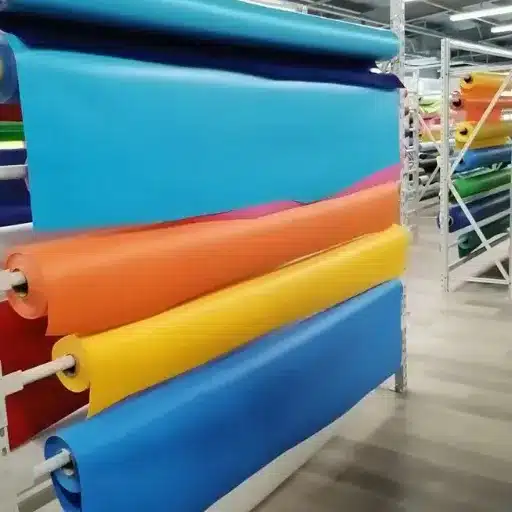
Transportation accounts for approximately 29-30% of total coated fabrics revenue in North America, making it the single largest application segment. Within transportation, PVC coated fabrics serve three primary roles: truck side curtains and trailer covers, railcar protective linings, and container tarpaulins. Each application imposes distinct mechanical and environmental loads on the material.
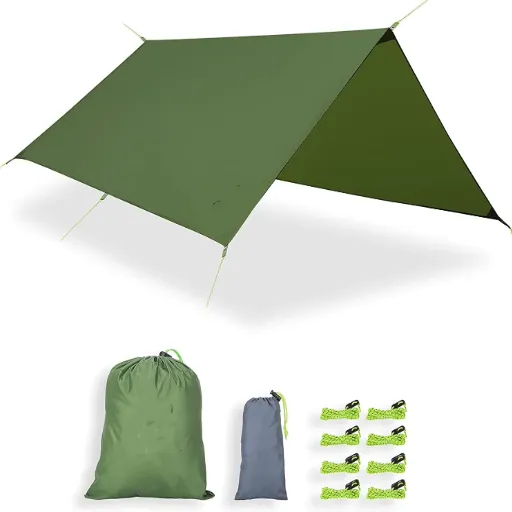
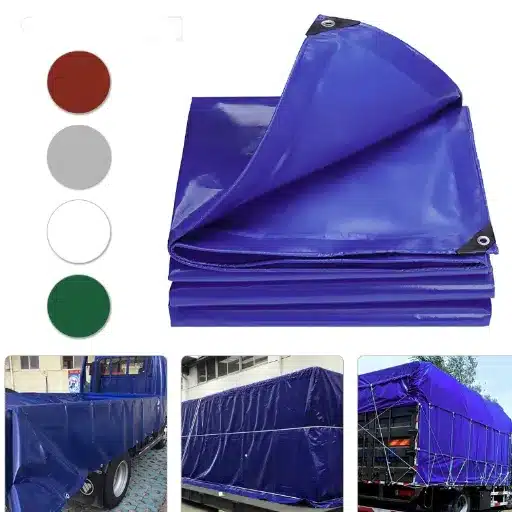
Truck side curtains require fabrics that resist wind flutter at highway speeds, withstand tension from ratchet and strap systems, and shed precipitation without water pooling. Standard specifications range from 450-900 GSM depending on curtain size, route conditions, and load type. UV stabilization is critical — curtains on over-the-road fleets can receive 8-12 hours of direct sun exposure daily, and unprotected PVC formulations begin showing surface degradation within 18-24 months.
When Sarah Okonkwo took over procurement for a Dallas-based construction logistics fleet, she inherited a supplier contract that specified 500 GSM truck curtains at 12 per square meter. Within eight months, she was processing warranty claims for color fading, edge fraying, and coating cracking on routes through Arizona and New Mexico. Her engineering team determined that the original specification lacked UV stabilizers and used a recycled-PVC blend with lower plasticizer quality. Switching to a 650 GSM virgin-PVC formulation with enhanced UV resistance raised her unit cost to 16 per square meter — but extended replacement intervals from 14 months to 48 months, cutting her annual fabric spend by 34%.
Agriculture and Aquaculture
Agricultural applications demand materials that resist moisture, UV radiation, and biological growth across seasonal cycles. Common uses include barn curtains for livestock ventilation control, grain pile covers, equipment storage tarps, and greenhouse shade screens. The operational challenge in agriculture is often seasonal intensity: a grain cover may sit idle for ten months, then face three months of constant wind, rain, and temperature cycling during harvest.
Aquaculture represents a specialized and growing sub-segment. Fish pond liners, shrimp farm containment systems, and tank covers require PVC coated fabrics that are food-safe, resistant to algae attachment, and compatible with prolonged water immersion. PVC tarpaulin pond liners typically outperform EPDM rubber alternatives in puncture resistance and ease of repair, while offering comparable service life at lower cost. David Park, who operates a 40-pond catfish farm in Florida, switched from HDPE geomembrane to reinforced PVC tarpaulin liners after experiencing seam failures in his HDPE installation. The PVC material allowed on-site welding repairs, whereas HDPE required specialized fusion equipment and technicians. His liner replacement costs dropped by 28% over a five-year cycle.
Construction and Industrial
Construction sites generate demand for multiple coated fabric products: scaffolding debris netting and weather protection, temporary building enclosures, concrete curing covers, and blackout tarpaulins for light-sensitive operations. These applications require fire-retardant formulations that meet NFPA 701 or CAN/ULC-S109 standards, particularly when used in conjunction with temporary heating equipment or near hot-work operations.
Blackout tarpaulins deserve specific attention. These specialized PVC coated fabrics incorporate an opaque middle layer that blocks 99-100% of transmitted light, making them essential for event tent installations, photographic darkrooms, construction light-deprivation applications, and agricultural photoperiod control. Standard PVC tarpaulins may block 70-85% of light depending on color, but true blackout performance requires engineered multi-layer construction.
Industrial applications extend to warehouse dock shelters, machinery covers, welding screens, and spill containment berms. Each use case imposes specific chemical resistance requirements — a cover protecting equipment from hydraulic fluid exposure needs different formulation priorities than a tarp shielding materials from rain.
Recreation and Advertising
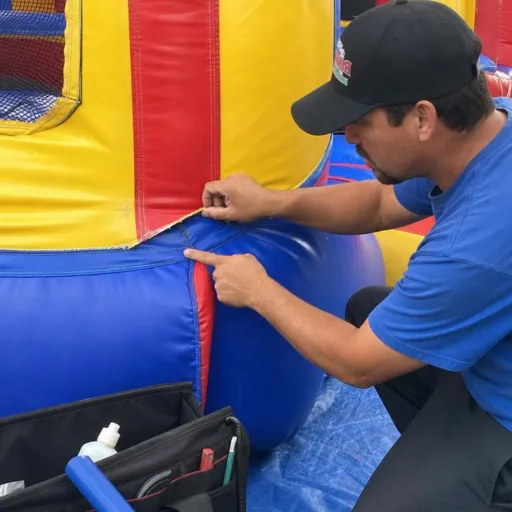
The recreation segment includes commercial inflatable structures (bounce houses, water park slides, obstacle courses), event tents, and temporary shade structures. PVC inflatable fabrics are typically specified at 15-28 ounces per square yard (approximately 500-950 GSM) depending on the inflation pressure and structural loads. These materials must deliver high tear resistance, compatibility with high-frequency welding, and — for consumer-facing applications — compliance with lead-free and phthalate-free requirements.
Advertising applications center on PVC flex banner material, a coated fabric designed for digital printing with solvent, eco-solvent, UV, and latex ink systems. The coating surface — glossy, matte, or semi-matte — determines print quality and ink adhesion. Frontlit banners (illuminated from the front) represent the largest volume, while backlit and blockout banners serve specialized display applications.
Marine and Pool
Marine applications include boat covers, bimini tops, enclosure curtains, and dock protection systems. These materials face constant exposure to saltwater, freshwater, and UV radiation — a combination that accelerates degradation in standard formulations. Marine-grade PVC coated fabrics incorporate enhanced UV inhibitors, mildew-resistant additives, and formulations that maintain flexibility across temperature extremes from tropical sun to near-freezing conditions.
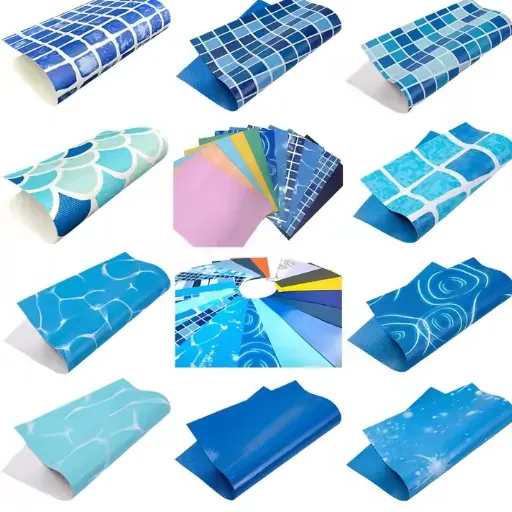
Pool liners and pool covers represent another significant category. Commercial pool liners must resist chlorine exposure, UV degradation, and mechanical abrasion from bathers and cleaning equipment. Winter safety covers require sufficient tensile strength to support snow loads while maintaining secure perimeter anchoring. The North American marine upholstery fabrics market — a related segment — was valued at approximately $550 million in 2026, with PVC-coated polyester representing roughly 45% of material adoption. Get in touch with LY TRUSTLINK to discuss your custom PVC coated fabric requirements and receive tailored production solutions.
Manufacturing Process and Quality Standards
Coating Methods
Three primary methods apply PVC coating to base fabrics, and the choice of method influences cost, coating uniformity, and performance characteristics. Knife-over-roll coating is the most common technique for industrial tarpaulin and technical fabric production. In this process, a doctor blade (knife) set at a precise gap spreads liquid PVC compound onto the fabric surface as it passes over a backing roll. The blade gap determines coating thickness, allowing tight control over finished weight. This method is versatile, handles a wide range of viscosities, and is cost-effective for medium-to-large production runs.
Dip coating immerses the fabric into a PVC plastisol bath, achieving complete saturation of the base material. This method produces highly flexible fabrics with excellent waterproofing because the coating penetrates the fabric interstices. However, dip coating offers less precise weight control and is less common for heavy-duty industrial applications where exact GSM specifications matter.
Calendar coating uses heated rollers to apply and fuse solid PVC compound onto the fabric surface. This method delivers the most uniform coating thickness and is standard for high-speed production of consistent-grade materials. Calendar lines can operate at higher speeds than knife-over-roll systems, making them economical for large-volume contracts. However, calendar coating requires higher capital investment and is less flexible for small-batch custom runs.
Fabric Preparation and Finishing
Before coating, the base fabric undergoes preparation to ensure proper adhesion and dimensional stability. Scouring removes oils, sizing agents, and contaminants from the weaving process. Heat-setting stabilizes the weave structure, preventing shrinkage during coating or in field use. Some fabrics receive a chemical primer or adhesion promoter to strengthen the bond between the textile substrate and the PVC layer.
After coating, the fabric passes through a curing oven where heat activates cross-linking in the polymer matrix and drives off solvents or water carriers. The finished material is then cooled, inspected, and wound onto rolls. Quality checkpoints during production include coating weight verification, visual defect inspection, and sample collection for laboratory testing.
North American Quality Standards
Compliance with recognized standards is non-negotiable for industrial and commercial applications. Three standards dominate the North American market:
NFPA 701 is the Standard Methods of Fire Tests for Flame Propagation of Textiles and Films. It evaluates how a fabric responds to ignition sources and is required for materials used in public assembly spaces, temporary structures, and construction sites where fire safety is regulated. Passing NFPA 701 requires specific formulation choices in the PVC compound — inherently flame-resistant additives that do not compromise coating flexibility or UV stability.
ASTM D751 provides test methods for coated fabrics, measuring properties including breaking strength, tear resistance, coating adhesion, and hydrostatic resistance. Procurement managers should request test reports against ASTM D751 when evaluating suppliers, as these objective measurements reveal more about real-world performance than marketing claims.
CAN/ULC-S109 is the Canadian standard for flame tests of flame-resistant fabrics and films. Materials sold into the Canadian market for regulated applications must demonstrate compliance, and the testing protocol differs in specifics from NFPA 701. Suppliers serving cross-border clients should maintain certification for both standards.
Performance Testing
Beyond standardized compliance testing, experienced buyers evaluate four core performance metrics. Tensile strength measures the force required to pull a fabric to rupture, typically expressed in Newtons per 5 centimeters (N/5cm). Heavy-duty PVC tarpaulins for truck curtains and tensile structures should deliver 2,000-4,000 N/5cm or higher depending on load requirements.
Tear resistance measures the force required to propagate a rip once initiated. This property is critical for applications where punctures are likely — construction sites with sharp debris, agricultural environments with equipment contact, or transportation where cargo may abrade the curtain surface.
UV degradation resistance determines how long a fabric maintains its structural properties and color integrity under sun exposure. Accelerated weathering tests per ASTM G154 or similar protocols simulate years of UV exposure in weeks. Premium formulations with UV stabilizers maintain 80%+ of initial tensile strength after 2,000+ hours of accelerated exposure.
Seam integrity is equally important as base fabric performance. High-frequency (RF) welding creates a molecular bond between overlapping fabric layers, producing seams that match or exceed base material strength. Hot-air bonding provides an alternative for field repairs and certain production applications. Sewn seams with reinforced stitching are acceptable for lower-stress applications but create potential failure points under heavy load.
Key Manufacturers and Competitive Landscape
Major North American Producers
The North American market is served by a mix of established domestic manufacturers and global producers with regional presence. Seaman Corporation, headquartered in the United States, is a leading manufacturer of engineered coated fabrics for transportation, environmental containment, and architectural applications. In January 2026, Seaman introduced next-generation PVC-coated fabrics with enhanced strength and outdoor performance — signaling continued innovation investment.
Herculite Products specializes in high-performance custom PVC fabrics and has accelerated R&D on eco-friendly formulations with reduced environmental impact. Their partnership with Renegade Plastics (August 2023) introduced recyclable agricultural barn curtain fabrics — an early sustainability-focused offering in the North American market.
Heytex USA serves industrial and transportation applications with a product range covering standard and custom specifications. The company was acquired by Freudenberg in September 2024, consolidating European-North American technical textile capabilities under a single corporate umbrella.
Spradling International focuses on coated fabrics for automotive, marine, and furniture upholstery markets. In February 2026, the company expanded its portfolio with advanced protective and weather-resistant solutions targeting transportation and outdoor applications.
Tex Tech Industries, Carolina Performance Fabrics, Snyder Manufacturing, and Worthen Industries round out the domestic manufacturing landscape, each serving specialized niches from aerospace and defense to general industrial supply.
Asian Manufacturers Serving North America
Global producers including Saint-Gobain (France), Serge Ferrari Group (France), Sioen Industries (Belgium), Continental AG (Germany), and Trelleborg AB (Sweden) maintain North American operations and distribution networks. These companies bring advanced coating technologies, extensive R&D capabilities, and established brand recognition to the regional market.
Chinese and Indian manufacturers compete aggressively on price, often serving North American buyers through factory-direct channels, trading companies, or regional distributors. Quality from Asian producers varies widely: some deliver specifications matching premium domestic products at significantly lower cost, while others cut corners on base fabric quality, plasticizer grades, or coating uniformity. The buyer’s challenge is distinguishing reliable suppliers from opportunistic traders.
Market Share and Specialization Breakdown
No single manufacturer dominates the full North American market. Instead, the competitive landscape is fragmented by application specialty. Seaman Corporation and Herculite Products lead in industrial and transportation fabrics. Spradling and Haartz Corporation hold strong positions in automotive and marine upholstery. Saint-Gobain and Serge Ferrari specialize in architectural membranes and high-performance technical fabrics.
For procurement managers, this fragmentation means that “market share” is less relevant than “capability match.” A manufacturer with 3% overall market share may be the optimal supplier for your specific application if their production line, formulation expertise, and quality systems align with your requirements. The evaluation framework matters more than brand recognition.
Sourcing PVC Coated Fabrics in North America
Domestic vs. Overseas Manufacturing Trade-offs
The domestic-versus-import decision is the most consequential sourcing choice most buyers face, and the optimal answer depends on application requirements, volume, timeline, and risk tolerance. Domestic manufacturing offers three clear advantages: shorter lead times (typically 2-4 weeks versus 8-12 weeks from Asia), easier quality verification and dispute resolution, and simpler compliance documentation for regulated applications.
Overseas manufacturing offers the familiar advantage of lower unit cost — typically 20-30% less for commodity specifications. However, this savings erodes when buyers account for ocean freight (volatile since 2020), customs duties and tariffs, inland transportation from port to facility, inventory carrying costs during extended lead times, and the operational risk of supply disruptions.
For buyers with predictable, high-volume requirements and the warehouse space to hold safety stock, Asian sourcing can deliver meaningful total-cost savings. For buyers with tight timelines, custom specifications, or low tolerance for quality variance, domestic or nearshore (Mexico) supply chains typically deliver better outcomes. Many procurement teams now use hybrid strategies: domestic supply for critical, custom, or time-sensitive orders; offshore supply for standard, high-volume, predictable-demand items.
Customization Capabilities
A primary differentiator among PVC coated fabric manufacturers is customization range. Not all producers can accommodate non-standard requirements, and buyers with specialized needs should verify capability before committing to a supplier relationship. Key customization dimensions include:
Weight and thickness: Standard products typically cover 300-900 GSM in 50-100 GSM increments. Custom runs outside this range or at intermediate weights require formulation adjustments and production line calibration.
Width: Standard roll widths are 1.5m, 2.0m, 2.5m, and 3.2m. Wider fabrics reduce seam requirements for large covers but require specialized coating equipment. Narrow strips for specific applications may also be available.
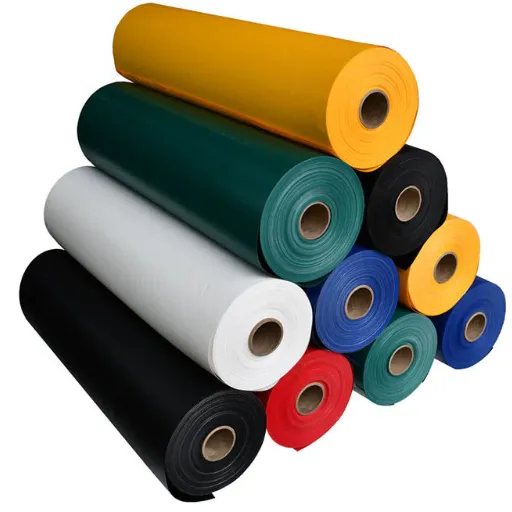
Color: Most manufacturers offer standard color ranges of 15-30 options. Custom color matching to Pantone or RAL standards is available from suppliers with in-house compounding capabilities, though minimum order quantities increase.
Functional finishes: UV stabilizers, fire retardants, antimicrobial agents, anti-static treatments, and low-temperature plasticizers can be incorporated into the coating formulation. Each additive affects cost, lead time, and minimum order requirements.
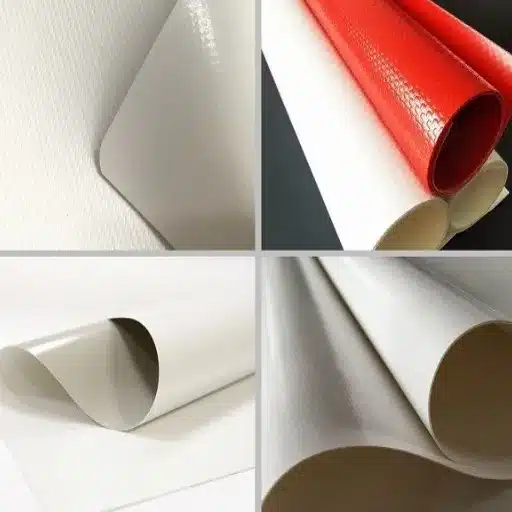
Surface texture: Glossy, matte, embossed, or printed surfaces serve different aesthetic and functional requirements. Flex banner applications need glossy surfaces for print compatibility, while industrial tarps often use matte finishes to reduce glare.
Certifications and Compliance Requirements
Procurement in regulated industries requires documentation that many commodity suppliers cannot provide. Buyers should verify that prospective suppliers maintain current test reports for the standards relevant to their application. Requesting third-party test reports (not in-house data) from accredited laboratories adds a layer of verification that reduces procurement risk.
For export-oriented buyers, additional compliance may be required. REACH compliance is essential for products entering the European Union. California Proposition 65 compliance requires disclosure of certain chemical constituents. RoHS compliance applies to electrical and electronic equipment applications. A qualified manufacturing partner should maintain documentation for all relevant regulatory frameworks and should be able to produce certificates of conformity on request.
Cost-Per-Year vs. Initial Purchase Price Analysis
The most common sourcing mistake is evaluating suppliers on unit price alone. A more useful framework is cost-per-year of service life, calculated as:
Cost-per-year = (Initial Purchase Price + Installation Cost + Maintenance Cost) / Expected Service Life in Years
Consider two truck curtain specifications for a fleet operating in the Southwestern United States. Option A costs 14persquaremeteranddelivers18monthsofservicebeforeUVdegradationreducesperformancebelowacceptablethresholds.OptionBcosts14persquaremeteranddelivers18monthsofservicebeforeUVdegradationreducesperformancebelowacceptablethresholds.OptionBcosts19 per square meter with enhanced UV stabilizers and delivers 48 months of service.
Option A cost-per-year: (14+14+2 installation) / 1.5 years = 10.67/yearOptionBcost−per−year:(10.67/yearOptionBcost−per−year:(19 + 2installation)/4.0years=2installation)/4.0years=5.25/year
The “expensive” option costs less than half as much over its service life. It also eliminates two replacement cycles, reducing labor costs, downtime, and administrative burden. When Sarah Okonkwo presented this analysis to her CFO, the conversation shifted immediately from “why are we paying more per meter?” to “why did our previous specification assume 18-month replacement was acceptable?”
Ready to evaluate your current fabric specifications? Talk to an engineer about your application requirements and receive a cost-per-year analysis tailored to your operating environment.
Pricing and Cost Factors
Raw Material Cost Drivers
PVC coated fabric pricing is fundamentally tied to three raw material inputs: PVC resin, plasticizers, and base fabric. PVC resin prices track petroleum and natural gas markets, since ethylene (a primary feedstock) is derived from petrochemical processes. Resin price volatility has increased since 2020, with swings of 15-30% within single fiscal years.
Plasticizers — the additives that give PVC flexibility — represent 25-35% of coating compound cost. Phthalate-based plasticizers have been the industry standard for decades due to cost and performance, but regulatory pressure is driving adoption of non-phthalate alternatives. These alternatives typically cost 10-20% more but eliminate regulatory risk in sensitive applications and markets.
Base fabric (high-tenacity polyester) pricing is influenced by petroleum markets (polyester is derived from PTA and MEG, both petrochemical products) and textile industry capacity. Supply chain disruptions in 2021-2022 created significant polyester price spikes, and while prices have normalized, the experience demonstrated the vulnerability of textile supply chains to global shocks.
Volume Pricing Tiers
Most manufacturers structure pricing in volume tiers that reflect production efficiency. Sample orders and prototypes (typically 50-200 meters) carry the highest per-meter cost due to setup and calibration overhead. Small production runs (500-2,000 meters) achieve moderate pricing. Full production volumes (5,000+ meters) unlock the most favorable pricing but require commitment to a single specification.
Buyers should understand that volume pricing is negotiable beyond published tiers for long-term contracts or guaranteed repeat orders. Manufacturers value predictable demand because it enables production planning, raw material procurement, and inventory optimization. A buyer willing to commit to quarterly orders at a defined volume can often secure pricing closer to the next tier threshold.
Shipping and Tariff Considerations
For imported materials, landed cost includes the product price plus ocean freight, marine insurance, customs duties, port handling, and inland transportation. Tariffs on PVC coated fabrics from China have fluctuated with trade policy changes, and buyers should verify current duty rates before making sourcing decisions.
The USMCA trade agreement provides tariff advantages for materials produced or substantially transformed in Mexico, Canada, or the United States. Nearshoring production to Mexico has gained traction as a strategy to access lower labor costs while maintaining shorter supply chains and favorable tariff treatment. For buyers evaluating Mexican suppliers, quality verification and logistics coordination are the primary considerations — the cost structure is typically intermediate between domestic US and Asian supply.
Future Trends and Innovations
Sustainable PVC Alternatives
Sustainability is reshaping the coated fabrics industry. Three innovation tracks are particularly relevant for North American buyers. First, phthalate-free plasticizers are becoming standard in applications with regulatory sensitivity or consumer contact. These formulations maintain performance while eliminating substances of concern.
Second, bio-based and bio-attributed PVC formulations are entering the market. Sioen Industries introduced bio-PVC through a mass balance approach in March 2025 — a significant milestone for the industry. While currently available at a premium, these materials offer a path toward reduced petrochemical dependence.
Third, recyclable PVC coated fabric systems are under development. The technical challenge is separating the PVC coating from the base fabric at end-of-life, since the two materials require different recycling streams. Herculite’s partnership with Renegade Plastics demonstrated an early solution for agricultural applications, and broader solutions are expected within the next 3-5 years.
Water-based coating systems are also gaining attention as alternatives to solvent-based processes. These systems reduce volatile organic compound (VOC) emissions during manufacturing, addressing both regulatory requirements and corporate ESG commitments.
Smart Fabric Integration
The integration of sensors and electronics into coated fabrics represents an emerging frontier. Smart tarpaulins with embedded load sensors, GPS tracking, and theft alarms are already deployed in high-value logistics applications. Over 1.3 million IoT-enabled tarp units were in service by 2025, and adoption is accelerating as sensor costs decline and logistics operators seek real-time cargo visibility.
For construction and industrial applications, smart fabrics with temperature sensors can monitor concrete curing conditions or detect overheating in temporary electrical installations. While these applications remain niche, they illustrate the trajectory of the industry: from passive protective materials to active monitoring systems.
Digital Printing Compatibility
The flex banner and signage segment continues to evolve with digital printing technology. UV-curable and latex ink systems require specific coating surfaces for optimal adhesion and color reproduction. Manufacturers are developing “universal” coating formulations compatible with multiple ink technologies, reducing inventory complexity for print shops and sign companies.
Digital printing also enables economic production of short-run custom graphics. A fleet operator can order 50 truck curtains with branded livery at a per-unit cost that was previously achievable only at volumes of 500+. This trend is driving demand for coated fabrics with consistent print surfaces and color stability across production batches.
Lightweight Materials for Transportation
Fuel efficiency regulations and the operational economics of logistics fleets are driving demand for lighter-weight coated fabrics that maintain structural performance. Every kilogram of weight reduction in a trailer curtain system translates to incremental fuel savings across millions of miles of operation.
Advanced base fabrics with higher tenacity-to-weight ratios, combined with optimized coating formulations, are enabling 10-15% weight reductions without sacrificing tensile strength or durability. These materials typically command a price premium but deliver measurable operational savings for high-mileage fleets.
Frequently Asked Questions
What does PVC coated mean?
PVC coated means a fabric has been covered with a layer of polyvinyl chloride polymer to add protective properties. The base fabric — usually polyester — provides structural strength, while the PVC coating provides waterproofing, UV resistance, and chemical protection. The coating is applied through industrial processes like knife-over-roll or calendar coating, then cured to form a permanent bond with the fabric.
Is PVC coated fabric waterproof?
Yes, properly manufactured PVC coated fabric is fully waterproof. The PVC polymer itself is impermeable to water, and quality manufacturing ensures complete coverage of the base fabric without pinholes or thin spots. Seam integrity is the critical factor: RF-welded seams create a watertight molecular bond, while sewn seams require additional sealing. PVC coated fabrics typically maintain waterproof performance for 5-8 years outdoors, depending on UV exposure and coating quality.
How long does PVC coated fabric last?
Service life depends on application, environment, and specification quality. Heavy-duty PVC tarpaulins (700-900 GSM) with UV-stabilized virgin PVC coatings typically deliver 5-8 years of outdoor performance in temperate climates. In high-UV environments like the Southwestern United States, unprotected formulations may degrade in 18-24 months. Cold climates demand plasticizers with cold-crack resistance to prevent brittleness at low temperatures. Proper tensioning, periodic cleaning, and prompt repair of minor damage all extend service life.
What is the difference between PVC and vinyl coated fabric?
In practical usage, the terms are often interchangeable. “Vinyl” in the industrial context typically refers to PVC (polyvinyl chloride), which is the most common vinyl polymer used in coated fabrics. Technically, “vinyl” encompasses a broader family of polymers including PVC, PVDC, and PVA. When a supplier describes material as “vinyl coated,” they almost always mean PVC coated. For specification purposes, buyers should request the exact polymer type and formulation details rather than relying on generic terminology.
What GSM is best for heavy-duty applications?
For heavy-duty industrial applications, 700-900 GSM (approximately 20-26 ounces per square yard) is the standard specification range. Truck side curtains for long-haul fleets typically use 650-900 GSM depending on curtain size and route conditions. Construction site enclosures and industrial machinery covers generally require 600-800 GSM. Tensile structures and architectural membranes may exceed 1,000 GSM for permanent installations. The correct specification depends on mechanical load, environmental exposure, and expected service life — not simply “heavier is better.”
Can PVC coated fabrics be recycled?
Traditional PVC coated fabrics are challenging to recycle because the PVC coating and textile base require different recycling processes. However, the industry is developing recyclable solutions. Some manufacturers now offer PVC-free alternatives or mono-material constructions that simplify end-of-life processing. Bio-based PVC formulations and mechanical recycling programs for clean post-industrial scrap are also advancing. Buyers with sustainability mandates should discuss recycling options with prospective suppliers, as capabilities vary significantly across manufacturers.
Conclusion
The North America PVC vinyl coated fabrics market is a $2+ billion sector that underpins critical infrastructure across transportation, construction, agriculture, and industry. Growth is steady, driven by logistics expansion, construction investment, and the operational necessity of durable protective materials. For procurement managers and operations engineers, the market offers abundant supplier options — but abundance creates complexity.
The buyers who achieve the best outcomes are those who evaluate suppliers on total cost of ownership, not unit price. They specify materials based on application requirements and validated performance data, not generic marketing claims. They build relationships with manufacturing partners who demonstrate transparent quality systems, consistent batch-to-batch performance, and responsive engineering support.
LY TRUSTLINK engineers protective fabrics for demanding applications worldwide. Our PVC coated fabrics are manufactured with high-tenacity polyester bases, virgin-grade PVC formulations, and multi-point quality inspection including tensile strength, tear resistance, and UV degradation testing. We support custom specifications across weight, color, width, and functional finishes — with prototype samples available and production lead times confirmed at order.
Get a custom quote for your PVC coated fabric requirements. Our engineering team will review your application, recommend specifications, and provide a cost-per-year analysis so you can make a procurement decision based on performance data — not guesswork.