
Top Applications for Waterproof Vinyl Tarps | LY TRUSTLINK
The top applications for waterproof vinyl tarps span six industrial sectors: transportation and logistics, construction and infrastructure, agriculture and aquaculture, marine and pool protection, industrial manufacturing, and temporary structures. Each application demands specific material specifications. The wrong choice creates operational risk. The right choice protects assets for years.
When Marcus Chen took over fleet procurement for a Midwest logistics company in 2024, he inherited a purchasing pattern that seemed sensible on paper. The operations team had been buying polyethylene truck covers at 45perunit,replacingthemeveryeightmonths.WhatthespreadsheetdidnotcapturewasthecostofafailedtarpduringaFebruaryicestorm:45perunit,replacingthemeveryeightmonths.WhatthespreadsheetdidnotcapturewasthecostofafailedtarpduringaFebruaryicestorm:12,000 in water-damaged electronics, a missed delivery contract, and three days of operational downtime. Marcus switched to a 900GSM PVC vinyl specification with welded seams and cold-crack resistance to -35°C. The per-unit cost tripled. The replacement cycle extended to seven years. Total cost of ownership dropped by 60%.
This guide maps the top applications for waterproof vinyl tarps to the exact specifications that industrial buyers need to evaluate. You will find GSM ranges, tensile strength benchmarks, compliance requirements, and failure modes for each sector. You will also understand when a custom specification is necessary, and how to communicate your operational requirements to an engineering team.
Key Takeaways
- Waterproof vinyl tarps serve six primary industrial sectors, each requiring distinct GSM ranges from 500GSM to 900GSM+.
- PVC vinyl outperforms polyethylene and canvas in lifespan (5–10+ years vs. 6–12 months for PE), delivering lower total cost of ownership despite higher upfront cost.
- NFPA 701 fire retardancy, ASTM structural compliance, and ISO 1421 tensile testing separate industrial-grade specifications from commodity products.
- Cold-crack resistance, UV stabilization, and seam welding quality are the three most common failure points in field conditions.
- Non-standard dimensions, weights, and certifications are achievable through OEM engineering partnerships — most buyers simply do not know to ask.
What Defines an Industrial-Grade Waterproof Vinyl Tarp
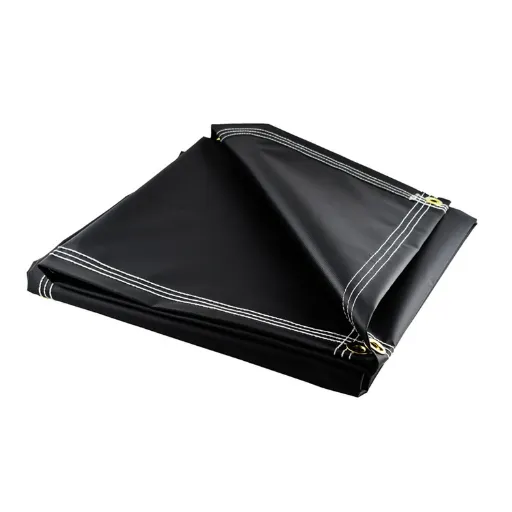
A waterproof vinyl tarp is not a single product. It is a category of engineered fabrics built from a high-tenacity polyester base mesh coated with virgin-grade polyvinyl chloride (PVC) on both sides. This construction creates a composite material that no natural fiber or woven polyethylene can match for durability, chemical resistance, and dimensional stability.
The polyester scrim provides tensile strength and tear resistance. The PVC coating provides the waterproof barrier, UV protection, and chemical resistance. The bond between these layers determines whether the fabric survives five years or five months. At LY TRUSTLINK, we use state-of-the-art coating and lamination technology with multi-point quality inspection, including tensile strength verification, tear resistance testing, and accelerated UV degradation analysis on every production batch.
Material Specifications That Matter
Industrial buyers should evaluate four parameters before approving any vinyl tarp specification:
- GSM (grams per square meter): Indicates fabric weight and density. Commercial-grade tarps range from 300GSM to 1,500GSM. Most industrial applications require 500GSM to 900GSM.
- Tensile strength: Measured in Newtons per 5 centimeters (N/5cm). Heavy-duty transport applications typically require 2,500N/5cm or higher in the warp direction.
- Tear resistance: Measured in Newtons. Panama weave constructions with reinforced scrim typically exceed 600N.
- Temperature flexibility: Cold-crack resistance determines performance in sub-zero conditions. Formulated PVC with cold-flex plasticizers maintains pliability to -30°C and below.
Compliance Standards That Remove Procurement Friction
Regulated industries require documented compliance. Vague claims like “fire resistant” or “safety certified” create delays in procurement approval. Specify the exact standard:
- NFPA 701: Fire retardancy for textiles and films used in public assembly, construction, and transportation.
- ASTM F1346-91: Safety standard for pool covers and liners.
- DIN 4102 B1: German fire behavior classification for building materials and temporary structures.
- ISO 1421: Tensile strength and elongation testing for rubber- or plastics-coated fabrics.
- REACH: EU chemical regulation compliance for environmental and human safety.
When your supplier can reference these standards by name and provide test reports, your procurement process accelerates. When they cannot, you are buying on faith. Request a spec sheet with full compliance documentation.
Application 1: Transportation and Logistics
Transportation is the most demanding environment for waterproof vinyl tarps. Materials must withstand highway wind loads, temperature swings from desert heat to mountain freeze, and constant mechanical stress from tensioning and release. A failure on the road does not just damage cargo. It creates liability.
Truck Side Curtains and Flatbed Covers
Truck side curtains, also called curtainsiders, require fabrics that balance flexibility with structural rigidity. A curtain that is too stiff will not roll smoothly. A curtain that is too light will balloon at highway speeds or tear at anchor points.
For standard curtainsider applications, we specify 650GSM to 900GSM PVC-coated fabric with a Panama weave scrim. The Panama weave pattern distributes mechanical stress across the fabric surface, reducing point-load tearing at grommets and welded seams. Tensile strength should exceed 2,800N/5cm in the warp direction to handle wind shear at 80+ km/h.
Fleet operators in regulated jurisdictions should specify NFPA 701 fire retardancy. This certification is mandatory for vehicles transporting certain hazardous materials and for fleets operating on government contracts.
Dump Truck and Construction Hauling Tarps
Dump truck tarps face a different challenge: abrasion. Sand, gravel, asphalt, and demolition debris create a grinding surface between the load and the cover. Standard tarps fail at the contact points within months.
We recommend 750GSM to 900GSM with an abrasion-resistant surface treatment and reinforced hems. All seams should be RF-welded or hot-air bonded, not sewn. Stitching creates perforation lines that become failure points under load movement. Welded seams create a continuous, impermeable bond.
Container Liners and Intermodal Protection
Container liners protect bulk cargo from moisture condensation during intermodal transit. Temperature differentials between day and night, or between climate zones, create condensation inside shipping containers. A properly specified PVC liner prevents this moisture from reaching the product.
For container applications, 500GSM to 650GSM with food-contact-safe formulations is standard. Cold-weather plasticizers are essential for routes through northern latitudes in winter. Explore our transportation-grade PVC tarpaulin specifications.
Application 2: Construction and Infrastructure
Construction sites expose tarpaulins to the harshest combination of stress factors: UV radiation, wind load, chemical contamination, and physical abrasion. Temporary structures must also meet building code requirements that commodity tarps cannot satisfy.
Scaffolding Enclosures and Site Wraps
Scaffolding enclosures serve two functions. They protect workers and materials from weather. They also contain dust, debris, and noise to maintain compliance with urban construction ordinances. In many jurisdictions, scaffolding fabric must carry NFPA 701 certification to remain on-site during welding or hot-work operations.
We specify 600GSM to 800GSM for scaffolding enclosures in moderate climates. For high-wind urban environments, increase to 900GSM with reinforced webbing at all anchor points. The fabric must pass DIN 4102 B1 or equivalent fire behavior testing. A site shutdown for non-compliant materials costs more than the price difference between certified and uncertified fabric.
In January 2025, a construction superintendent in Denver named Elena Voss faced a problem that her site budget had not anticipated. A municipal inspector flagged her scaffolding enclosure as non-compliant because the tarpaulin lacked documented NFPA 701 certification. The shutdown lasted two days. The delay penalty exceeded 18,000.Elenareplacedthecommoditycoverwithacertified750GSMspecification.Thetarpcostanadditional18,000.Elenareplacedthecommoditycoverwithacertified750GSMspecification.Thetarpcostanadditional220. The compliance documentation arrived with the shipment. She has not had a flag since.
Temporary Roofing and Weather Protection
Partially completed structures need temporary roofing that sheds water and snow load without pooling. PVC vinyl tarpaulins perform this function better than polyethylene because they maintain dimensional stability under load. PE tarps stretch and sag, creating water pockets that eventually tear through the material.
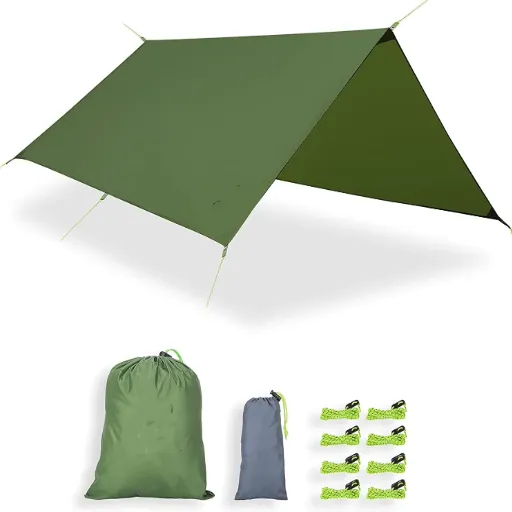
For temporary roofing, specify 700GSM to 900GSM with heat-sealed seams and reinforced grommets every 50 centimeters. The slope of the installation matters as much as the material. A minimum 15-degree pitch prevents standing water.
Equipment and Machinery Covers
Construction equipment represents capital investment that depreciates faster when exposed to moisture and UV. A proper cover extends operational life and reduces maintenance cycles.
Equipment covers typically use 600GSM to 800GSM with UV-stabilized coatings rated for 5+ years of sun exposure. Custom dimensions are common — excavators, cranes, and generators do not come in standard sizes. Our custom solutions engineering team supports bespoke dimensions with certified performance data.
Application 3: Agriculture and Aquaculture
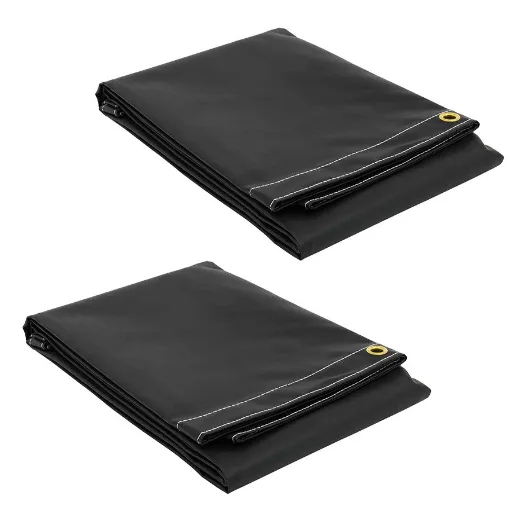
Agricultural applications demand chemical resistance, UV stability, and food-contact safety. Fertilizers, ammonia from livestock, and agricultural chemicals degrade standard materials rapidly. UV exposure in open fields accelerates this degradation.
Hay, Grain, and Crop Protection
Moisture is the enemy of stored harvest. A tarp that allows condensation to form underneath, or that leaks during rain, creates mold and spoilage. PVC vinyl provides a 100% waterproof barrier with no breathability — exactly what grain and hay storage requires.
For agricultural storage, we recommend 500GSM to 700GSM with UV stabilization and chemical-resistant formulations. The fabric must resist ammonia vapor from livestock operations and fertilizer residue from field equipment. Reinforced eyelets at 1-meter intervals allow secure tie-down across irregular pile shapes.
Livestock Shelters and Greenhouse Glazing
Temporary livestock shelters and greenhouse structures use clear or translucent PVC variants that allow light transmission while blocking wind and precipitation. These applications require food-contact-safe formulations that do not leach chemicals into the environment.
Clear PVC tarps for greenhouse use typically range from 400 GSM to 600 GSM. The transparency allows photosynthetic light through while the PVC barrier maintains internal temperature and humidity. For livestock shelters, opaque 600 GSM to 800 GSM provides better thermal insulation and wind blocking.
Aquaculture and Biofloc Tank Liners
Aquaculture operations use PVC tarpaulins as tank liners and pond enclosures. These applications require non-toxic formulations safe for fish and shrimp. Saltwater resistance is essential for marine aquaculture. Freshwater biofloc systems require resistance to biological fouling and ammonia buildup.
Tank liner specifications typically range from 700 GSM to 900 GSM with welded seam construction. A failed seam in a 50,000-liter tank is catastrophic. Hot-air welded seams create molecular bonds stronger than the base fabric. Request marine-grade liner specifications.
Application 4: Marine and Pool Protection
Marine environments combine three destructive factors: constant moisture, saltwater corrosion, and intense UV exposure. Materials that perform adequately on land often fail within one season in marine conditions.
Boat Covers and Marine Equipment Protection
Boat covers must shed rain and snow while allowing minimal moisture retention underneath. A cover that traps condensation against the hull creates blistering, mold, and hardware corrosion.
We specify 600GSM to 800GSM marine-grade PVC with UV inhibitors rated for tropical and subtropical exposure. The fabric must resist saltwater corrosion without surface cracking or plasticizer migration. Reinforced grommets and adjustable tensioning systems distribute wind load evenly across the cover surface.
Pool Liners and Safety Covers
Commercial pool liners require 100% waterproof construction, chemical resistance to chlorine and pH adjusters, and compliance with safety standards. ASTM F1346-91 defines the performance requirements for pool covers, including load-bearing capacity to prevent accidental submersion.
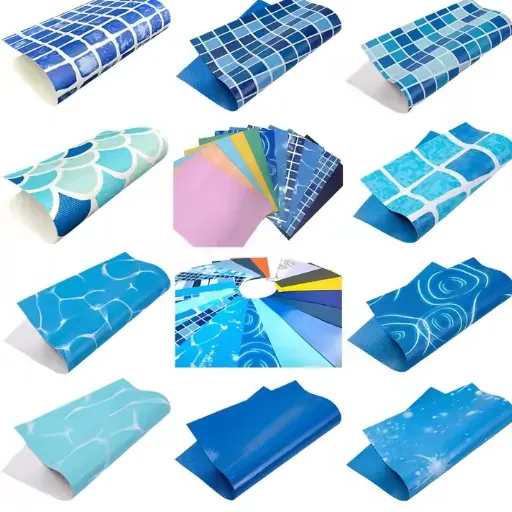
Pool liner specifications typically use 800GSM to 1,000GSM with reinforced seams and custom perimeter welding. Color stability matters for commercial facilities — UV-stabilized formulations maintain appearance for 5+ years of constant sun and chemical exposure. Explore pool liner engineering specifications.
Dock Enclosures and Inflatable Watercraft
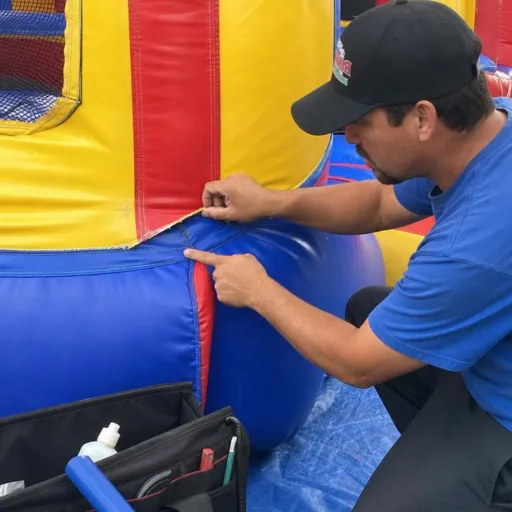
Dock enclosures and marine workspaces require welded PVC panels that create weatherproof volumes. Inflatable boats and floating platforms use specialized PVC formulations with high air-retention properties and puncture resistance.
These applications often require custom fabrication. Standard roll goods rarely match the dimensions and attachment requirements of marine structures. Our engineering team supports custom welding patterns, reinforced attachment points, and specialized valve integrations for inflatable applications.
Application 5: Industrial Manufacturing and Warehousing
Factory floors and warehouse operations use vinyl tarps for protection, containment, and spatial division. These applications prioritize chemical resistance and longevity over portability.
Machinery and Inventory Covers
Outdoor machinery storage and inventory yards expose equipment to rain, dust, and industrial fallout. A properly specified cover prevents corrosion and maintains resale value.
Manufacturing covers typically use 600GSM to 800GSM with oil-resistant and acid-resistant surface treatments. The fabric must withstand incidental contact with hydraulic fluid, cutting oil, and industrial solvents without surface degradation. Tensile strength of 2,500N/5cm or higher supports snow load in northern climates.
Temporary Partition Walls and Clean Enclosures
Factories use PVC curtain walls to create temporary clean rooms, paint booths, and welding enclosures. These applications require NFPA 701 fire retardancy and often translucent or clear panels for visibility.
Partition curtains typically use 500GSM to 700GSM with grommeted tops for sliding track systems. Static-dissipative formulations are available for electronics manufacturing environments.
Spill Containment and Environmental Protection
Spill containment berms and environmental liners use PVC for chemical resistance and weldability. A containment system is only as good as its seams. RF welding creates leak-proof joints that can be tested under pressure.
Containment applications require 800GSM to 1,200GSM with chemical compatibility verification against the specific substances being contained. Talk to an engineer about containment specifications.
Application 6: Events, Tents, and Temporary Structures
Event and architectural applications require PVC fabrics that combine structural performance with aesthetic quality. Color consistency, print compatibility, and light-blocking properties matter as much as tensile strength.
Event Tents and Canopies
Commercial event tents use PVC-coated fabrics for weatherproofing, fire safety, and branding. White and beige are standard for wedding and corporate events. Custom colors and printed logos require formulations with consistent surface texture for ink adhesion.
Event tent specifications range from 600GSM to 900GSM with NFPA 701 or DIN 4102 B1 fire certification. Wind load ratings should match local building code requirements for temporary structures. A tent that fails in a storm creates liability that far exceeds the fabric cost.
Stage Backdrops and Branded Enclosures
Stage backdrops and exhibition booths use blackout PVC or print-compatible flex fabrics. Blackout materials block 100% of light transmission for projection mapping and lighting control. Print-compatible surfaces accept UV and solvent inks without bleeding or fading.
Backdrops typically use 400GSM to 650GSM depending on size and wind exposure. Custom dimensions are standard — exhibition spaces do not follow predictable patterns.
Architectural Membrane Structures
Tensile architecture — permanent or semi-permanent membrane roofs and facades — represents the most technically demanding application for PVC-coated fabrics. These structures carry permanent building loads and must comply with structural engineering codes.
Architectural membranes typically use 1,000 GSM to 1,500 GSM with PTFE or PVDF surface treatments for self-cleaning and extended lifespan. Tensile strength requirements exceed 3,500N/5cm. These are not commodity products. They are engineered structural elements. Our architectural membrane engineering team supports project-specific certification.
Material Comparison: PVC Vinyl vs. Polyethylene vs. Canvas
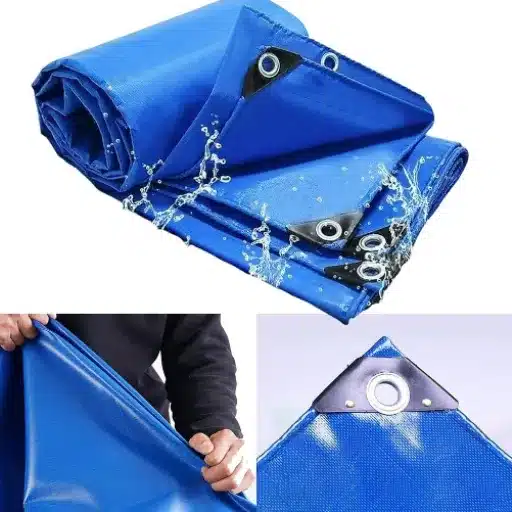
Procurement decisions often come down to unit price. This is a mistake. The relevant metric is total cost of ownership over the operational lifespan.
| Property | PVC Vinyl | Polyethylene (PE) | Canvas |
|---|---|---|---|
| Waterproofing | 100% impermeable | 100% impermeable | Water-resistant only |
| Typical lifespan | 5–10+ years | 6–12 months | 2–4 years |
| UV resistance | Excellent with stabilization | Degrades rapidly | Moderate |
| Tear strength | Superior (>600N typical) | Low (<150N typical) | Moderate (~250N) |
| Chemical resistance | Excellent | Poor | Poor |
| Cold-crack resistance | -30°C to -40°C | -5°C to -10°C | N/A (absorbs moisture) |
| Cost per unit | Higher | Lowest | Moderate |
| Cost per year of service | Lowest | Highest | Moderate |
The math is straightforward. A 45PEtarpreplacedtwiceyearlycosts45PEtarpreplacedtwiceyearlycosts90 per year. A 280 PVC tarpaulin lasts seven years and costs 40 per year. The higher upfront investment delivers lower lifetime cost, fewer replacement cycles, and reduced operational risk.
For buyers evaluating material options, we recommend requesting accelerated weathering test data from your supplier. Any manufacturer claiming a long lifespan should be able to provide laboratory evidence.
Common Failure Modes and How to Prevent Them
Even high-quality vinyl tarps fail when underspecified or improperly installed. Understanding the common failure modes helps buyers specify correctly and extend service life.
Underspecifying GSM for the Load
The most common failure is using a lightweight fabric for a heavy-duty application. A 400GSM tarp stretched over a grain pile in a windstorm will tear at the grommets. A 600GSM tarp on a flatbed doing 100 km/h will balloon and fatigue at the seams.
Prevention: Match GSM to the mechanical and environmental load. When in doubt, specify higher. The cost difference between 600GSM and 900GSM is marginal compared to the cost of replacement and downtime.
Ignoring Cold-Crack Ratings in Winter Climates
Standard PVC formulations become brittle below -10°C. In northern climates, a tarp that was flexible in September will shatter in January. Cold-crack resistance is determined by the plasticizer package in the PVC formulation, not the base fabric.
Prevention: Specify cold-flex plasticizers for any application exposed to sub-zero temperatures. Request DIN 53363 or equivalent cold-crack test data. Do not assume all PVC performs equally in winter.
Inadequate Seam Welding and Grommet Reinforcement
Sewn seams are perforation lines waiting to fail. A typical industrial tarp has hundreds of meters of seam. If the seam is stitched, every needle hole is a stress concentrator.
Prevention: Specify RF-welded or hot-air-welded seams for all heavy-duty applications. Verify that grommets are reinforced with welded webbing or hemmed bands, not just punched through single-layer fabric.
UV Degradation from Unstabilized Formulations
UV radiation breaks PVC polymer chains over time. The result is surface cracking, color fading, and loss of flexibility. Unstabilized PVC in constant sun exposure may show degradation within 12 to 18 months.
Prevention: Specify UV-stabilized formulations with documented accelerated weathering test results. A 5-year UV rating should be supported by QUV or Xenon Arc test data, not just a marketing claim.
How to Specify the Right Vinyl Tarp for Your Operation
Selecting the correct specification requires systematic analysis, not guesswork. Use this five-step framework for every procurement decision:
- Define environmental exposure: Document UV intensity, temperature range, moisture exposure, wind load, and chemical contact. Each factor influences material selection.
- Determine mechanical requirements: Calculate tension loads, snow loads, abrasion exposure, and impact risk. Match tensile strength and GSM to these requirements.
- Identify compliance requirements: List all mandatory certifications for your industry and jurisdiction. NFPA 701, ASTM, DIN, and ISO standards should be specified by name.
- Specify dimensions and hardware: Confirm exact dimensions including hem allowances, grommet spacing, and reinforcement patterns. Standard sizes rarely match industrial requirements precisely.
- Validate supplier quality control: Request batch testing data, material certificates, and weld strength verification. Consistent quality across production batches is essential for operational reliability.
If your requirements fall outside standard specifications, custom engineering is available. Our team supports bespoke weights, coatings, dimensions, and certifications with prototype samples typically available within 2–3 weeks. Start your custom specification.
Conclusion
Waterproof vinyl tarps are not commodity covers. They are engineered protective fabrics that safeguard assets, ensure regulatory compliance, and reduce long-term operational cost across six major industrial sectors. The difference between a tarp that lasts one season and one that lasts seven is not luck. It is specification.
Every application in this guide — from truck side curtains to architectural membranes — connects operational requirements to measurable material properties. GSM, tensile strength, cold-crack resistance, and compliance certification are not abstract technical details. They are the data points that determine whether your cover performs or fails.
LY TRUSTLINK manufactures heavy-duty PVC tarpaulins, laminated fabrics, and technical textiles for industrial applications worldwide. We do not sell products from catalog pages. We engineer solutions to operational requirements, with documented performance data and full compliance certification. If you are evaluating a new specification or replacing a supplier that has delivered inconsistent quality, our engineering team is available to review your requirements and recommend a solution built to your exact operational needs.
Request a Custom Quote — or Talk to an Engineer about your specific application requirements.
LY TRUSTLINK is a global manufacturer of PVC-coated technical fabrics, laminated fabrics, and engineered tarpaulin solutions. All products are manufactured under ISO-compliant quality management systems with full batch traceability and certification documentation.