
Is Tarpaulin Waterproof? A B2B Engineer’s Guide | LY TRUSTLINK
Yes, most modern tarpaulins are waterproof, but the degree of protection depends entirely on the material, construction, and intended application. PVC-coated polyester and polyethylene (PE) tarpaulins deliver genuine waterproofing with hydrostatic pressure resistance exceeding 1,000 mm H2O. Canvas and untreated fabrics offer only water resistance, which fails under sustained exposure.
A logistics fleet operator in Mumbai discovered this distinction the hard way. After covering a shipment of electronics with a 120 GSM PE tarp labeled “waterproof,” monsoon rains pooled on the surface for six hours. Water seeped through microscopic pinholes in the woven mesh, destroying $47,000 in inventory.
The investigation told a familiar story. The tarp was waterproof under light rain. But sustained tropical downpour combined with wind-driven spray overwhelmed it. The failure cost more than the tarps saved.
If you are responsible for sourcing protective fabrics, you already know that “waterproof” on a product label does not guarantee waterproof in the field. You need specifications you can verify, standards you can reference, and a supplier who understands that a tarp failure in your operation is never just a tarp failure. This guide breaks down exactly which tarpaulin materials deliver true waterproofing, what engineering factors determine performance, and what specifications to demand from your supplier. Get in touch with LY TRUSTLINK to discuss your custom PVC coated fabric requirements and receive tailored production solutions.
Key Takeaways
- PVC-coated polyester and PE tarpaulins are genuinely waterproof; canvas and untreated fabrics are only water-resistant and fail under sustained exposure.
- Seam construction, not fabric material alone, causes 60-70% of waterproof failures in the field.
- Hydrostatic pressure resistance (measured in mm H2O) is the engineering metric that separates truly waterproof materials from water-resistant ones.
- Industrial buyers should demand ISO 1421 tensile data, ISO 2411 coating adhesion results, and batch test certificates before approving any supplier.
- The right waterproof material depends on your application: 450-650 GSM PVC for truck curtains, 500+ GSM for marine, 150-300 GSM PE for short-term agricultural use.
The Direct Answer: It Depends on the Material
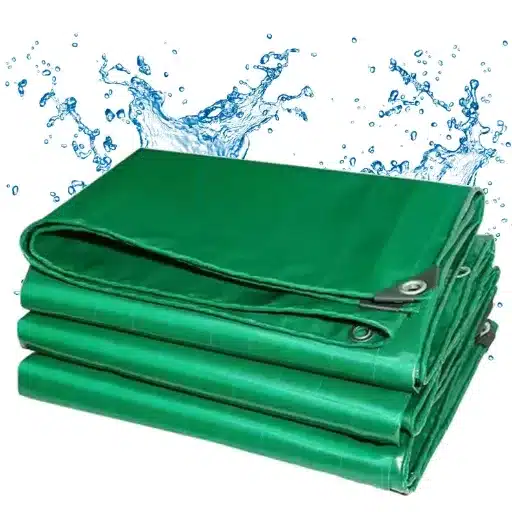
Not all tarpaulins are created equal. The term “tarpaulin” describes a broad category of protective fabrics, and waterproof performance varies dramatically across material types. Understanding these differences is the first step in making a procurement decision that protects your assets.
| Material | Waterproof Level | Typical GSM | Service Life | Best For |
|---|---|---|---|---|
| PVC-Coated Polyester | Fully waterproof (1,000-3,000+ mm H2O) | 450-1,300 | 5-15 years | Truck curtains, marine, permanent structures |
| PE (Polyethylene) | Fully waterproof (500-1,000 mm H2O) | 120-300 | 1-3 years | Temporary construction, agriculture, short-term covers |
| Canvas (Cotton/Duck) | Water-resistant only | 250-600 | 2-5 years | Breathable equipment covers, indoor storage |
| Oxford Fabric | Water-resistant to semi-waterproof | 150-420 | 2-4 years | Light-duty camping, event covers |
Why “Waterproof” Is a Spectrum, Not a Switch
In materials engineering, waterproofing is not binary. It is measured by hydrostatic pressure resistance. That is the height of a water column a fabric can withstand before moisture penetrates.
A material rated at 1,000 mm H2O resists the pressure equivalent of a 1-meter column of standing water. PVC-coated polyester routinely exceeds 2,000 mm H2O. PE tarps typically achieve 500-1,000 mm H2O. Canvas, even when treated, rarely exceeds 200 mm H2O.
This distinction matters in the field. A PE tarp blocks light rain for two hours. But during an eight-hour storm with wind-driven spray, it may allow water through. A PVC truck curtain rated at 2,000 mm H2O maintains its barrier through monsoon conditions and pooled water on the fabric surface. The difference is not marketing language. It is measurable engineering performance. Whether you need PVC coated fabrics for truck covers, tents, tarpaulins, or outdoor products, LY TRUSTLINK is ready to support your business with reliable manufacturing expertise.
How Waterproof Performance Is Engineered
True waterproofing is built into the fabric at the molecular level. Three engineering factors determine whether a tarpaulin will perform as specified: the coating barrier, the seam construction, and the base fabric integrity.
The PVC Coating Barrier
PVC-coated polyester achieves waterproofing through a complete encapsulation process. High-tenacity polyester scrim, the structural base, is coated on both sides with virgin-grade PVC using knife-coating or calendering technology. The PVC forms a continuous, impermeable film that bonds molecularly to the fabric surface.
The critical specification here is coating adhesion strength. Measured per ISO 2411, quality PVC coatings achieve 70-100+ N/5cm adhesion. This means the coating resists peeling forces equivalent to 70-100 newtons applied across a 5-centimeter width. Poor adhesion, common in lower-grade manufacturing, allows the coating to delaminate under flex stress, creating pathways for water ingress.
Coating thickness matters, but coating quality matters more. A 900 GSM tarp with poor adhesion will leak before a 650 GSM tarp with superior coating integrity. When evaluating suppliers, always request coating adhesion test data alongside the total GSM figure.
Seam Construction: The Weak Link
Here is a reality that many product pages omit: the fabric itself is rarely where waterproofing fails. Industry estimates suggest 60-70% of waterproof tarp failures originate at seams or grommets.
Heat-welded seams, created through radio frequency (RF) welding or hot-air bonding, fuse PVC layers into a continuous, watertight joint. The seam peel strength should match or exceed the fabric’s tensile strength. A properly RF-welded seam on 650 GSM PVC achieves peel resistance of 70+ N/5cm.
Stitched seams, by contrast, create hundreds of needle punctures through the waterproof barrier. Even when seam tape is applied, the mechanical stress of wind flapping and cargo movement eventually compromises the seal. For any application requiring guaranteed waterproofing, truck curtains, marine covers, permanent structures, demand heat-welded construction and specify seam peel strength in your purchase order.
Base Fabric Integrity
The polyester scrim beneath the coating provides the mechanical backbone that prevents coating fracture under load. Two specifications determine base fabric performance:
Yarn denier: Higher denier means thicker, stronger individual fibers. Industrial-grade tarps use 500D to 1300D high-tenacity polyester. Light-duty PE tarps may use 200D or lower.
Weave construction: Panama weave (basket weave) provides superior dimensional stability under tension compared to plain weave. Under sustained wind load, a Panama weave resists the stretching and distortion that cause coating micro-cracks.
When the base fabric stretches beyond the coating’s elongation limit, the PVC film cracks. Water enters through those cracks. Coating failure follows. A 900 GSM tarp with 1000D Panama weave base and knife-coated PVC construction will outperform a similarly weighted tarp with 500D plain weave and laminated coating every time.
Waterproof Ratings by Material Type
Each tarpaulin material achieves a different level of waterproof protection through distinct manufacturing processes. Understanding these differences allows you to match material to application with precision.
PVC-Coated Polyester: The Industrial Standard
PVC-coated polyester is the benchmark for heavy-duty waterproof protection. The manufacturing process coats high-tenacity polyester scrim with virgin PVC on both sides, creating a composite material with near-zero water permeability.
| Specification | Typical Range |
|---|---|
| Hydrostatic pressure resistance | 1,000-3,000+ mm H2O |
| Tensile strength (900 GSM) | 4,000 x 3,800 N/5cm (warp x weft) |
| Temperature range | -30C to +70C |
| UV-stabilized service life | 5-15 years |
| Coating adhesion (ISO 2411) | 70-100+ N/5cm |
For transportation and logistics, 450-650 GSM PVC with UV stabilization is the standard for truck side curtains and cargo covers. For marine and permanent structures, 900+ GSM with reinforced hems and Panama weave construction provides the dimensional stability required for long-term exposure.
PE (Polyethylene) Tarpaulin: Cost-Effective Waterproofing
PE tarps use a different approach. Woven HDPE mesh is laminated on both sides with LDPE film. The result is lightweight, fully waterproof, and costs far less than PVC.
The trade-off is durability. PE lacks the tensile strength and UV resistance of PVC. Standard PE tarps degrade under UV exposure within 12-24 months, becoming brittle and prone to tear. UV-stabilized grades extend this to 2-3 years, but they still do not match PVC longevity.
PE excels in applications where temporary waterproofing is sufficient: construction site covers for 6-month projects, agricultural crop protection during harvest season, emergency disaster relief. For multi-year industrial use, the replacement frequency makes PE more expensive than PVC over the total cost of ownership.
Canvas: Water-Resistant, Not Waterproof
Canvas, woven cotton or cotton-polyester blend, is naturally breathable but not waterproof. Untreated canvas absorbs water, becoming heavy and promoting mildew growth. Treated canvas with wax or silicone coating achieves water resistance: it repels light rain and splashes but saturates under sustained exposure.
The advantage of canvas is breathability. In applications where trapped moisture causes more damage than external rain, covering wooden equipment, hay storage, or any situation where condensation management matters, a water-resistant canvas cover may outperform a fully waterproof PVC cover that traps humidity underneath.
Canvas requires periodic re-treatment to maintain even its water-resistant properties. A procurement manager evaluating canvas should factor maintenance costs and re-treatment schedules into the total cost analysis. LY TRUSTLINK specializes in producing waterproof, weather-resistant, and long-lasting PVC coated fabrics for a variety of industries. Contact us for more information.
Oxford Fabric: The Middle Ground
Oxford fabric, a woven polyester with PU coating, occupies the space between canvas and PVC. Uncoated Oxford is water-resistant. With a heavy PU coating, it approaches semi-waterproof performance suitable for light-duty outdoor covers, camping equipment, and event tents.
For industrial B2B applications, Oxford rarely meets the durability and waterproof standards required. Its primary use case is consumer-grade products where weight and packability matter more than long-term weather resistance.
When Waterproof Tarpaulins Fail (and How to Prevent It)
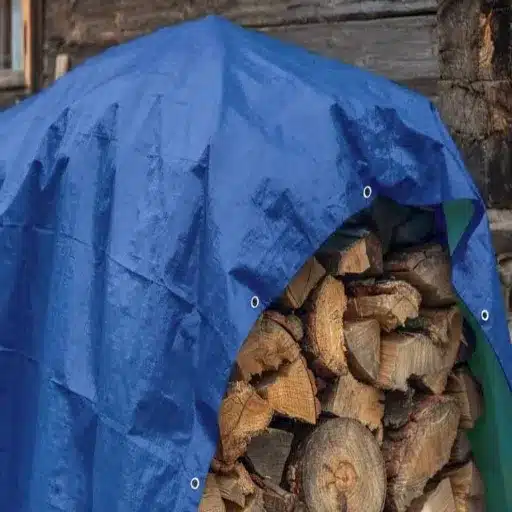
Even properly specified waterproof materials fail under certain conditions. Understanding these failure modes helps you specify, install, and maintain covers that perform as engineered.
Seam Degradation
Maria Chen, a site supervisor for a highway construction project in Calgary, learned about seam failure during a February ice storm. Her crew had installed 650 GSM PVC scaffolding covers with stitched seams to protect curing concrete. After three days of freeze-thaw cycling, the thread absorbed moisture, froze, and expanded. The seams split. Meltwater dripped directly onto the concrete surface. The delay cost four days.
The fix was straightforward: replacement covers with RF-welded seams. Heat-welded joints have no thread to absorb moisture and no needle holes to compromise the barrier. For cold-climate applications, welded seams are not optional, they are essential.
Coating Delamination
Coating delamination is invisible damage. The PVC layer separates from the base fabric. Water travels between the coating and the scrim. Common causes include:
- Poor adhesion from manufacturing: Insufficient bonding during the coating process
- Flex fatigue: Repeated folding and rolling in truck curtain applications
- Chemical exposure: Contact with oils, solvents, or de-icing salts
- Temperature cycling: Expansion and contraction stress at coating-fabric interface
Prevention starts with specification. Demand ISO 2411 coating adhesion data from your supplier. In high-flex applications like truck side curtains, specify materials with cold-crack resistance tested to -30C and coating adhesion above 80 N/5cm.
Installation-Related Leaks
A waterproof fabric installed incorrectly becomes a water-collection system. Three installation errors cause the majority of field failures:
Incorrect tension: Too tight and the coating experiences stress micro-cracks. Too loose and water pools in low points, creating hydrostatic pressure that exceeds the fabric rating.
Inadequate overlap: Joints between tarpaulin sections require sufficient overlap, typically 30-50 cm for industrial applications, with the upper layer positioned to shed water away from the seam.
Grommet failure: Standard brass grommets corrode in marine or salt-exposed environments. Aluminum or stainless steel grommets resist corrosion but cost more. In high-wind applications, grommet spacing of 50 cm or less distributes load and prevents tear initiation.
Environmental Accelerators
UV exposure degrades PVC polymer chains, reducing flexibility and coating adhesion. Non-UV-stabilized tarps lose 50% or more of their original tensile strength within 12 months of outdoor exposure. Always specify UV-stabilized grades for any outdoor application exceeding six months.
Chemical exposure accelerates degradation differently. Saltwater causes corrosion at metal grommets and fittings. Petroleum products soften PVC coatings. Acid rain attacks the polyester base. Match material specification to the chemical environment, not just the weather. At LY TRUSTLINK, we provide durable and customized PVC coated fabrics designed to meet the demands of global customers.
Specifications to Demand from Your Supplier
A procurement manager evaluating waterproof tarpaulin suppliers needs more than a product description. You need documentation that proves the material will perform as specified in your operational environment.
Non-Negotiable Test Standards
| Test Standard | What It Measures | Minimum Acceptable |
|---|---|---|
| ISO 1421 | Tensile strength and elongation | Per application (see GSM table above) |
| ISO 2411 | Coating adhesion | 70 N/5cm minimum |
| ASTM D5034/D5035 | Tensile properties of textile fabrics | Consistent with ISO 1421 |
| Hydrostatic pressure test | Waterproof resistance | 1,000+ mm H2O for PVC; 500+ mm H2O for PE |
Request test reports with actual batch data, not generic product literature. A reputable supplier provides certificates of compliance with every shipment, documenting that the specific batch delivered meets the specified standards.
Batch Testing and Quality Assurance
Multi-point quality inspection should cover:
- Tensile strength testing: Both warp and weft directions
- Tear resistance: Trapezoidal tear per ASTM D5587
- Seam integrity: Peel and shear testing on welded joints
- Weathering performance: Accelerated UV exposure per ASTM G154
- Coating uniformity: Thickness measurement across the roll width
A supplier who cannot provide batch-specific test data is not a partner, they are a vendor. In regulated industries where material failure carries safety and financial consequences, batch documentation is not a nice-to-have. It is a requirement.
Documentation for Procurement Approval
Before adding any tarpaulin supplier to your approved vendor list, require:
- Technical data sheet with component breakdown (base fabric GSM, coating weight GSM, total GSM, thickness)
- Batch test certificates from the last six months
- Third-party certification for NFPA 701 fire retardancy (where applicable)
- REACH and RoHS environmental compliance documentation
- Warranty terms with specific performance guarantees
CTA: Need help specifying the right waterproof material for your application? Talk to an Engineer →
Matching Waterproof Performance to Your Application
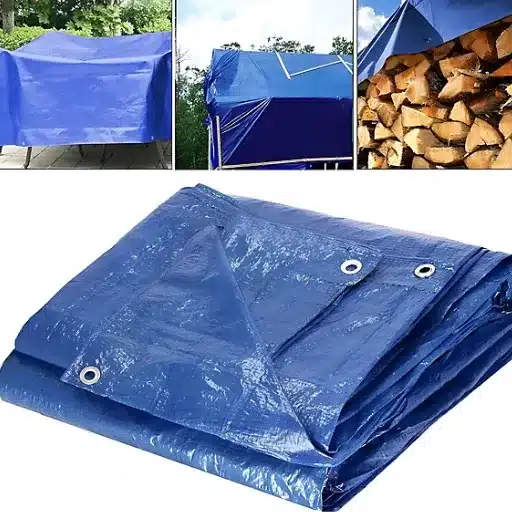
The right waterproof tarpaulin depends on what you are protecting, for how long, and under what environmental stress.
Transportation and Logistics
Truck side curtains and cargo covers face sustained wind load, UV exposure, and mechanical stress from loading operations. Specify 450-650 GSM PVC with high-tenacity 1000D polyester base, UV stabilization, and RF-welded seams. Rope-reinforced hems and aluminum grommets spaced at 50 cm intervals withstand the tension forces of highway speeds.
For flatbed tarps securing lumber or steel, 750-900 GSM provides the tear resistance needed for sharp-edged cargo. The additional weight, approximately 15-20% heavier than 650 GSM, pays back in reduced replacement frequency.
Construction and Infrastructure
Construction site enclosures operate in harsh environments with dust, debris, and variable weather. Short-term projects (under six months) may use 120-180 GSM PE tarps for cost efficiency. Multi-year infrastructure projects require 450+ GSM PVC with fire retardancy certification to comply with site safety requirements.
Scaffolding sheeting demands attention to both waterproofing and containment. A 650 GSM PVC with reinforced eyelets and welded seams prevents water ingress while containing dust and debris within the work zone. Fire retardancy per NFPA 701 is mandatory when using industrial heating equipment inside the enclosure.
Agriculture
Agricultural applications present a unique challenge: protecting crops and equipment from rain while managing condensation. For hay storage and equipment covers, the choice between waterproof PVC and water-resistant canvas depends on ventilation.
PE tarps at 150-300 GSM provide cost-effective waterproofing for seasonal crop protection. UV-stabilized grades prevent the rapid degradation that makes standard PE uneconomical for agricultural use. For permanent structures like tunnel greenhouses, 600-800 GSM PVC with anti-drip treatment directs condensation away from plants.
Marine and Pool
Marine applications demand the highest waterproof standards. Pool liners, boat covers, and dock enclosures face constant water contact, salt exposure, and UV degradation. Specify 500+ GSM PVC with 1000D base fabric, welded seams, and stainless steel or aluminum fittings.
For inflatable boats and pool structures, airtight welding standards are as critical as waterproofing. MIL-STD-204G compliance, where applicable, provides the military-grade assurance that recreational and commercial marine operators need.
Inflatables and Tensile Structures
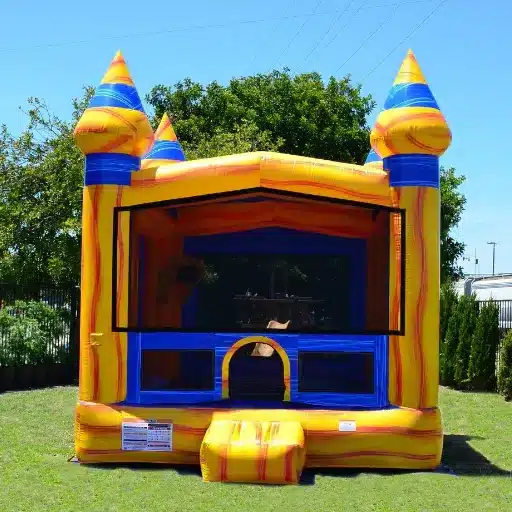
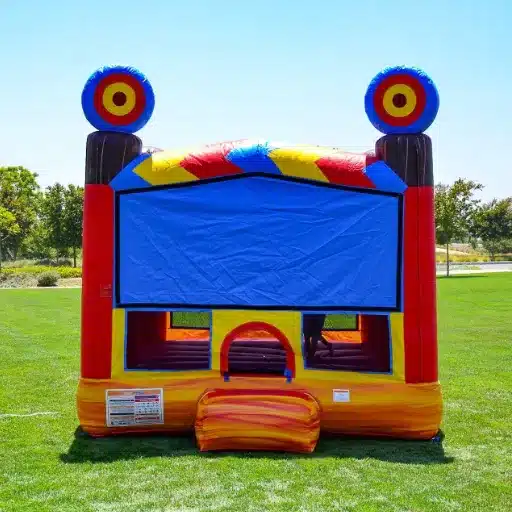
Bounce houses, event tents, and tensile architecture fabrics require waterproofing combined with structural integrity. Commercial-grade inflatable fabric at 450-650 GSM with cold-crack resistance to -20C maintains flexibility during outdoor deployment in varying temperatures.
Tensile structures, architectural membranes under permanent tension, use 900+ GSM PVC-coated polyester with PTFE or PVDF surface treatments for self-cleaning and extended UV resistance. These applications blur the line between temporary cover and permanent building envelope.
Waterproof vs. Water-Resistant: Understanding the Trade-Off
Choosing between waterproof and water-resistant materials requires understanding what you gain and what you sacrifice with each option.
When Waterproof Is Essential
Specify fully waterproof PVC or PE when:
- Complete moisture barrier is required (electronics, chemicals, moisture-sensitive materials)
- Prolonged outdoor exposure is expected (multi-year installations, transportation fleets)
- Heavy rain, pooling water, or wind-driven spray is likely
- Regulatory compliance mandates guaranteed protection
- Total cost of ownership favors durability over upfront savings
When Water-Resistant May Suffice
Consider water-resistant canvas or light-coated fabrics when:
- Breathability is critical to prevent condensation damage
- Coverage is short-term and temporary
- Budget constraints make PVC uneconomical for the application duration
- Indoor or sheltered use minimizes rain exposure
- Weight and portability matter more than longevity
The honest trade-off is this: no material is both fully waterproof and fully breathable. Waterproof PVC creates a complete barrier that also traps moisture underneath. Water-resistant canvas allows airflow but eventually saturates. The right choice depends on which risk, external water ingress or internal condensation, poses the greater threat to your assets.
Conclusion
Is tarpaulin waterproof? The engineering answer is: the right tarpaulin, properly specified and installed, delivers verifiable waterproof performance. PVC-coated polyester achieves hydrostatic resistance exceeding 2,000 mm H2O. PE tarps provide cost-effective waterproofing for temporary applications. Canvas and untreated fabrics offer only water resistance, which fails when your operation needs it most.
The difference between a tarp that protects and a tarp that fails comes down to three factors: material specification matched to application, seam construction that maintains integrity under stress, and supplier documentation that proves performance claims. A procurement manager armed with ISO test standards, batch certificates, and application-specific GSM requirements does not guess; they specify.
Your success is the measure of our own. At LY TRUSTLINK, we engineer protective fabrics with the specifications your operation demands and the documentation your procurement process requires. Every production batch is tested for tensile strength, coating adhesion, and seam integrity before shipment, because in your supply chain, a tarp failure is never just a tarp failure.
CTA: Ready to specify waterproof tarpaulin for your next project? Request a Custom Quote →