
Vinyl Tarp vs Poly Tarp: 2026 Industrial Buyer’s Guide
The vinyl tarp vs poly tarp decision comes down to service life versus upfront cost. Vinyl tarps (PVC-coated polyester) outperform polyethylene tarps in tensile strength, tear resistance, UV stability, and service life. Poly tarps (woven PE) cost less upfront and work well for short-term, low-risk coverage, but they degrade faster under continuous outdoor exposure.
Most procurement teams have seen a “heavy-duty” poly tarp fail at the worst moment. A logistics manager in Ohio once pulled a curtain-sider into a distribution center and found the 200 gsm PE cover split along a stress fold. Three months later, his team was swapping covers again; the tarps were cheap, but downtime was not.
This guide replaces marketing labels with measurable specifications. You will learn how PVC and PE tarpaulins differ in construction, mechanical performance, weather resistance, and total cost of ownership, and which standards to specify in your next RFQ. For a deeper dive into selecting the right heavy-duty tarp material, see our PVC tarpaulin buyer’s guide.
Key Takeaways
- The vinyl tarp vs poly tarp choice depends on service life versus upfront cost; PVC wins on strength and longevity, PE wins on initial price and weight.
- Vinyl/PVC tarps deliver roughly 3x the tensile strength of polyethylene tarps and typically last 5-10 years outdoors versus 1-3 years for PE.
- Poly tarps suit temporary, budget-sensitive coverage; PVC is the rational heavy duty tarp material for trucking, construction, and industrial operations.
- Heavy-duty should be defined by GSM, tensile/tear test values, seam construction, and compliance with standards such as NFPA 701, ASTM D751, and ISO 811.
- Total cost of ownership often favors PVC within 18-24 months for continuous-use applications.
What “Vinyl” and “Poly” Actually Mean
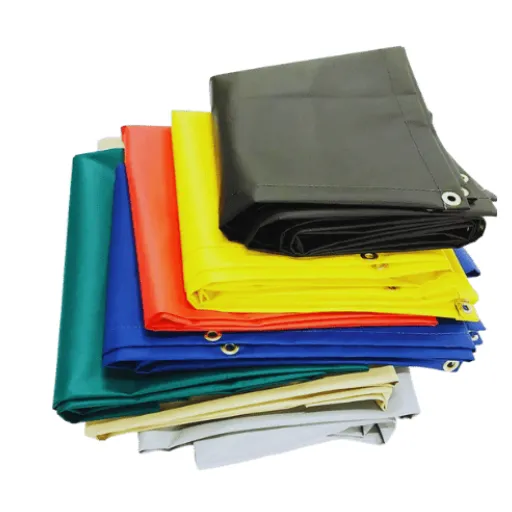
The terms are not interchangeable. The PVC tarp vs PE tarp distinction describes two different material systems with distinct base fabrics, coatings, and performance ceilings.
Vinyl / PVC Tarpaulin Construction
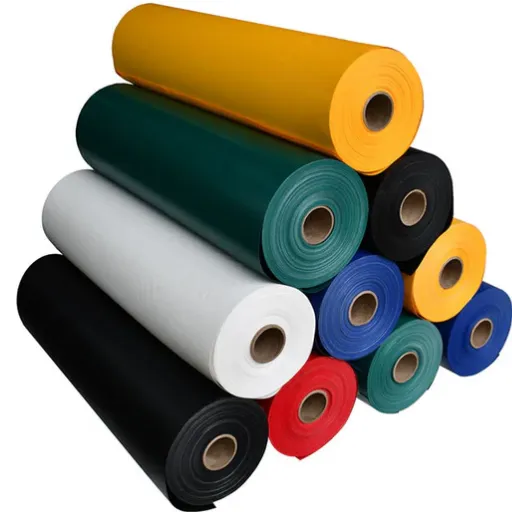
A vinyl tarpaulin starts with a high-tenacity polyester scrim coated with polyvinyl chloride (PVC), usually on both sides. Knife-coated PVC forms a thick, mechanically bonded layer. Laminated PVC uses heat and pressure to fuse PVC film onto the scrim. Both methods create a waterproof, UV-stabilized engineered fabric with weights ranging from 450 gsm for light commercial duty to 900+ gsm for heavy industrial use. RF-welded or hot-air bonded seams create a continuous, watertight envelope without stitch holes.
Poly / Polyethylene Tarp Construction
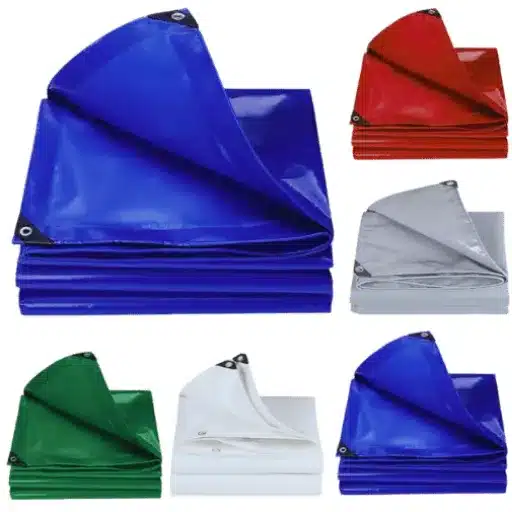
A poly tarp is made from woven polyethylene (PE) strands laminated with PE film. The weave provides tear resistance and the film coating provides the initial waterproof layer. Most consumer-grade blue or silver tarps fall into this category. UV-stabilized versions add inhibitors to slow sun degradation, but the base polymer remains susceptible to brittle failure over time. Standard weights run from 80 gsm for light-duty covers to 300 gsm for so-called heavy-duty PE tarps. Above that weight, PE becomes bulky and difficult to handle, which is why demanding applications usually shift to PVC.
Wondering if a tarp is truly waterproof? Contact LY TRUSTLINK for expert guidance and recommendations based on your specific application.
Vinyl Tarp vs Poly Tarp: Side-by-Side Performance Comparison
When buyers first approach the vinyl tarp vs poly tarp question, the fastest way to compare the two materials is to place the same specifications side by side. Use this table as a starting point for procurement discussions and RFQs.
| Specification | Polyethylene (PE) Tarp | Vinyl / PVC Tarpaulin |
|---|---|---|
| Base fabric | Woven HDPE / LDPE | High-tenacity polyester scrim |
| Coating | PE laminate | Virgin PVC, knife-coated or laminated |
| Typical weight | 100-300 gsm | 450-900+ gsm |
| Thickness | 6-12 mil (up to 20 mil) | 14-40+ mil |
| Tensile strength | ~1,200 psi | ~3,000 psi |
| Tear resistance | Moderate | High to very high |
| Abrasion resistance | Moderate | Excellent |
| Waterproof rating | 1,000-1,500 mm H2O | 2,000-10,000+ mm H2O |
| UV lifespan | 6-24 months continuous | 5-10+ years with stabilizers |
| Cold-crack resistance | Brittle below ~-10°C | Flexible to -30°C / -40°C |
| Chemical resistance | Limited | Excellent (oils, acids, solvents) |
| Weight (10×10 ft) | 1-3 lbs | 3-6+ lbs |
| Typical cost (10×10 ft) | 10−10−30 | 50−50−100+ |
| Service life | 1-3 years | 5-10+ years |
| Best applications | Temporary covers, camping, emergency roof patches | Trucking, construction, industrial storage, OEM |
Always request batch-specific test reports rather than relying on generic marketing ranges. If you’re comparing waterproof tarps or need help selecting the right material, LY TRUSTLINK’s specialists are here to answer your questions and provide reliable solutions.
Vinyl Tarp vs Poly Tarp: Tensile Strength, Tear, and Abrasion
Mechanical performance is where the vinyl tarp vs poly tarp distinction becomes clearest. A procurement team should not buy on feel or color; they should buy on verified test values.
Tensile Strength Benchmarks
Tensile strength measures how much force a fabric can withstand before it breaks. Industry tests include ASTM D5034 (grab test) and DIN 53354 (strip method). Values differ by weave density, coating weight, and base yarn denier, but representative ranges are well established. A 300 gsm PE tarp typically delivers tensile strength around 1,200 psi, while a 600 gsm PVC tarpaulin of comparable construction can reach 3,000 psi or higher. That margin matters when a tarp must hold tension across a trailer roof or resist wind loads on a scaffold enclosure.
Tear and Puncture Resistance
Tear resistance is measured by ASTM D4533 or DIN 53363 trapezoid tear tests, and puncture resistance is evaluated with ball or probe methods. Real-world stress concentrates at grommets, corners, and fold lines. A material that resists initial tearing also resists propagation once a small cut appears.
Vinyl tarps score higher on both tear and puncture resistance. In one industry comparison, vinyl puncture resistance exceeded 150 lbs while poly ranged from 40-60 lbs. Tear strength followed a similar pattern, which explains why PVC is specified for cargo covers and debris containment.
Abrasion Under Load
Abrasion happens whenever a tarp moves against cargo, framework, or itself. Wind flapping accelerates wear. PE film coatings abrade faster than PVC layers, especially when dirt or grit is trapped between folds. Once the PE film is compromised, the underlying weave loses waterproof protection and begins to wick moisture.
PVC’s thicker coating holds up longer under mechanical friction. For fleet curtains, construction wraps, and machinery covers that see daily handling, abrasion resistance directly predicts replacement frequency.
Waterproofing and Weather Resistance
Waterproofing is the primary reason most buyers need a tarp. The waterproof tarp comparison between PVC and PE is about how long the waterproof layer remains intact under sun, wind, and mechanical stress, not just the initial rating.
Waterproof Ratings and Hydrostatic Head
Hydrostatic head testing, governed by standards such as ISO 811 and AATCC 127, measures the water pressure a fabric can resist before leakage occurs. Higher numbers mean a more waterproof material.
PE tarps typically rate between 1,000 and 1,500 mm H2O when new, sufficient for light rain and temporary coverage. PVC tarpaulins commonly rate from 2,000 mm to well above 10,000 mm H2O, depending on coating weight. PVC seams can be RF-welded or hot-air bonded to eliminate stitch holes, while PE tarps are usually sewn or heat-sealed and seam failure is a common leak path.
For a deeper look at how waterproof ratings are tested, see our guide on how waterproof ratings are tested.
UV Degradation and Lifespan
UV radiation breaks polymer chains. PE is more vulnerable than PVC because polyethylene absorbs UV energy readily. UV-stabilized PE delays the process but does not stop it; a standard PE tarp may become brittle within 6-12 months of continuous outdoor exposure, and even UV-treated PE rarely exceeds 2-3 years of reliable service.
PVC formulations incorporate UV absorbers and stabilizers that protect the polymer backbone. Quality PVC tarpaulins retain flexibility and color for 5-10 years. For long-term installations, UV stability is often the deciding factor in the vinyl tarp vs poly tarp comparison.
Cold-Crack and Temperature Range
Cold weather reveals another performance gap. As temperatures drop, PE loses flexibility and can crack when folded or tensioned; standard PE tarps become stiff below approximately -10°C. Specialized cold-weather PE exists but adds cost and weight.
PVC tarpaulins with cold-weather plasticizers remain flexible to -30°C or -40°C, making them the standard for winter construction enclosures, cold-chain logistics, and any application where the cover must be handled in freezing conditions.
Weight, Handling, and Installation
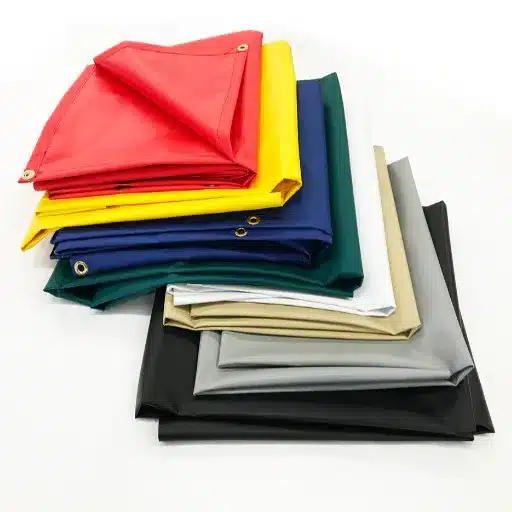
Weight is one area where PE wins. A 10×10 ft PE tarp weighs 1-3 lbs. A comparable vinyl tarp weighs 3-6 lbs or more. For one-person jobs, temporary camping, or emergency roof patches, that difference matters.
For industrial applications, the extra weight is usually an advantage. Heavier fabric stays in place under wind, distributes tension more evenly, and resists billowing on trailers and scaffolds. Vinyl tarps intended for heavy use typically have reinforced hems, corner patches, and closely spaced grommets, while PE tarps often use lighter grommets that can pull through under high wind or tension.
Need help matching fabric weight to your application? Our PVC tarpaulin buyer’s guide breaks down GSM selection for transportation, construction, and industrial use.
Cost Analysis: Upfront Price vs Total Cost of Ownership
The vinyl tarp vs poly tarp price gap is substantial at checkout. A 10×10 ft PE tarp costs 10−10−30. A vinyl tarp of the same size costs 50−50−100 or more. Budget buyers naturally lean toward PE. For short-term use, that is the correct choice.
For continuous or high-stakes applications, the math changes. Consider a fleet operation running 100 curtain-sider trailers.
A procurement team at a Midwest logistics company tracked replacement cycles across two fleets. One fleet used 200 gsm PE side curtains replaced every 8-10 months. The other used 650 gsm PVC curtains inspected quarterly. Over three years, the PVC fleet replaced 20% of its curtains while the PE fleet replaced nearly 90%. Labor, downtime, and cargo-claim costs widened the gap. The PVC fleet’s total cost per curtain over 36 months was lower, even though the upfront invoice was three times higher.
Purchase Price Ranges
- PE tarps: 10−10−30 for a 10×10 ft cover; bulk rolls lower per square meter
- PVC tarpaulins: 50−50−100+ for a 10×10 ft cover; custom sizes and certifications add cost
Replacement Cycle and Hidden Costs
Hidden costs include labor for removal and installation, downtime for equipment or vehicles, cargo damage from water ingress, safety incidents from failed containment, and the administrative burden of repeated purchasing. A tarp that lasts five years does not just save material cost; it reduces the operational interruptions that each replacement creates.
When Vinyl Pays Back
Vinyl typically pays back within 18-24 months for continuous-use applications. The payback period shortens when the covered asset has high value, downtime is expensive, the installation is hard to access, compliance requirements are strict, or weather exposure is severe.
Industry Applications: When to Choose Which
The vinyl tarp vs poly tarp choice depends on operational context, not on a universal ranking.
Transportation and Logistics
Truck side curtains, flatbed covers, trailer roofs, and cargo securement all favor PVC as the preferred truck tarp material. Highway speeds generate wind loads, cargo movement creates abrasion, and tie-down stress concentrates at grommets. Fleet operators need materials that last between maintenance intervals, not tarps that need replacement mid-route.
For detailed specifications on fleet-grade curtain-sider fabric, refer to our truck side curtain specifications guide.
Construction and Infrastructure
Scaffolding enclosures, temporary roofs, and equipment covers face UV, wind, and mechanical abuse. PE may work for a weekend weather hold, but for multi-month projects PVC is the rational specification, and fire-retardant PVC is often required to meet NFPA 701 or local safety codes.
Agriculture
Hay covers, grain protection, and equipment storage can use either material. PE is common for seasonal covers replaced annually. PVC is better for permanent or semi-permanent structures such as livestock shelters and machinery sheds where replacement is inconvenient.
Industrial Storage and Containment
Warehouse curtains, spill containment, equipment covers, and outdoor storage benefit from PVC’s chemical resistance and cleanability. Oils, solvents, and agricultural chemicals degrade PE faster than PVC. PVC can also be welded into custom shapes and containment berms that PE cannot match.
Certifications and Standards to Specify
Procurement teams in regulated industries need documentation. Do not accept vague claims. Specify the test method and request a report.
Fire Retardancy: NFPA 701, DIN 4102-B1, NF P92-503
NFPA 701 measures flame propagation of textiles and films. It is required for construction site tarps, event tents, stage curtains, and many public-assembly applications. DIN 4102-B1 is the comparable European standard, and NF P92-503 applies in France. If your project crosses borders, specify the standard for each jurisdiction.
Mechanical Testing: ASTM D751, ASTM D5034, ASTM D4533
ASTM D751 covers coated fabrics and includes tensile strength, adhesion, and hydrostatic pressure procedures. ASTM D5034 is the grab test for tensile strength of textile fabrics, and ASTM D4533 measures trapezoid tear resistance. These three tests together describe the mechanical envelope of a tarpaulin.
Weathering and Waterproofing: ASTM G154, ISO 811, AATCC 127
ASTM G154 uses QUV accelerated weathering to simulate UV exposure. ISO 811 and AATCC 127 measure hydrostatic head. A manufacturer serious about longevity should provide weathering data showing retained strength and color after a defined exposure period.
How to Verify Manufacturer Claims
Request third-party test reports from accredited laboratories such as SGS, Intertek, Bureau Veritas, or TUV. Confirm the laboratory holds ISO 17025 accreditation and that the report covers the exact SKU you are buying, not a generic certificate from five years ago. Batch-specific data is the only way to guarantee consistency across every order.
Custom Manufacturing Considerations
Stock tarps work for standard sizes and short-term needs. Custom manufacturing becomes necessary when dimensions, GSM, coating, color, or finishing must match an exact operational requirement, such as non-standard widths, specific GSM, knife-coated or laminated PVC, RF-welded seams, custom grommet spacing, fire-retardant or anti-mildew treatments, or OEM color matching.
For complex requirements, an engineering consultation is the right first step. Our custom tarpaulin manufacturer capabilities cover OEM and ODM projects from prototypes through volume production. Learn more about seam performance in our tarpaulin welding overview.
Maintenance and Inspection Best Practices
Even the best material fails prematurely if it is neglected. Inspect seams, grommets, and corners quarterly. Clean PVC with mild detergent and water, avoiding petroleum solvents that can extract plasticizers. Re-tension loose covers before wind events and store folded tarps dry and out of direct sun. PE tarps require less maintenance because they are replaced more often.
Frequently Asked Questions
What is the difference between vinyl and poly tarps?
Vinyl tarps are made from polyester scrim coated with PVC. Poly tarps are made from woven polyethylene strands laminated with PE film. Vinyl is heavier, stronger, more UV stable, and longer lasting, making it better for heavy-duty, long-term applications. Poly is lighter, cheaper, and better for temporary use. The right choice depends on use duration, asset value, and environmental exposure.
Which tarp is more waterproof, vinyl or poly?
Vinyl is more reliably waterproof over time. PVC-coated fabrics achieve higher hydrostatic head ratings and can be welded into continuous seams. PE tarps are waterproof when new but degrade faster under UV and mechanical stress.
How long does a polyethylene tarp last?
A standard PE tarp lasts 6-24 months under continuous outdoor exposure, and UV-stabilized PE may reach 2-3 years. Lifespan shortens in high-UV climates or under wind abrasion.
Which tarp is better for truck covers?
Vinyl/PVC is the standard for truck covers and curtain-sider trailers. It withstands highway wind, cargo abrasion, and tie-down stress far better than PE.
Can vinyl tarps be repaired?
Yes. Small cuts and punctures in PVC can be patched with PVC repair tape or heat-welded patches, and damaged seams can be re-welded. PE tarps can also be patched, but repairs rarely last because the surrounding material continues to degrade.
Why are poly tarps cheaper than vinyl tarps?
Poly tarps use lighter, lower-cost polyethylene resin and a simpler lamination process. That lower price reflects shorter service life and lower mechanical performance, not a failure of quality control.
Can vinyl or PVC tarps be used indoors?
Yes. PVC tarps work well indoors as warehouse curtains, equipment covers, containment barriers, and floor protection. They resist moisture, oils, and mildew better than PE in enclosed spaces where ventilation is limited. Ensure any indoor fire-safety requirements are met with the appropriate NFPA 701 or local standard.
Conclusion
The vinyl tarp vs poly tarp decision is not about finding the best material in isolation. It is about matching material specifications to operational requirements. Polyethylene tarps deliver low-cost, lightweight coverage for temporary jobs; PVC-coated polyester tarpaulins provide tensile strength, UV stability, and service life industrial operations depend on.
For procurement teams, the key is to define heavy-duty in measurable terms: GSM, tensile and tear test values, seam construction, and compliance with recognized standards. When specs are right, total cost of ownership usually favors PVC within two years for continuous-use applications.
If you are evaluating the poly tarp vs vinyl tarp question for fleet, construction, or industrial storage, our engineering team can review your specifications and recommend the right heavy-duty tarp material, weight, and certification package. Request a custom quote or download our PVC tarpaulin buyer’s guide to move from specification comparison.