
Blackout Tarpaulin: Engineering Total Light Control
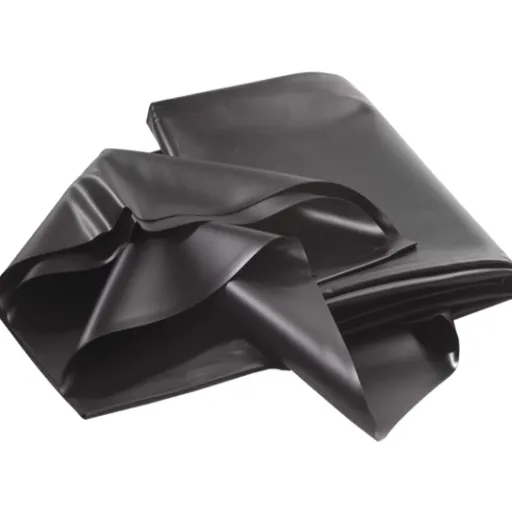
Blackout tarpaulin is a 100% opaque technical fabric engineered with multi-layer PVC coating and high-tenacity polyester reinforcement to eliminate light transmission entirely. Unlike standard shade cloth or dark-colored polyethylene sheeting, true blackout tarpaulin incorporates opaque interlayers that block all visible wavelengths, making it essential for operations where absolute darkness, privacy, or controlled photoperiods are non-negotiable.
When the lighting crew for a major European concert tour rolled into Madrid in June 2024, they discovered a critical problem. The venue’s backstage windows flooded the performance area with afternoon sun, threatening to wash out a million-euro projection mapping setup. Standard shade cloth cut the glare by 70%. The production demanded total elimination. A 650gsm blackout tarpaulin, rigged in under two hours, delivered complete light exclusion, and the show went on without a single pixel out of place.
If you manage an operation where ambient light compromises output, whether that is a photographic darkroom, an agricultural research greenhouse, or a temporary event venue, you understand that “mostly dark” is operationally useless. You need engineered materials that perform to specification, every time.
This guide breaks down the material science behind blackout tarpaulin construction, the specifications that determine performance, and how to select and deploy the correct weight and coating for your exact application. We will cover the lamination technology that creates true opacity, the industrial applications that depend on it, the certifications that matter, and the installation practices that ensure long-term performance. At LY TRUSTLINK, we provide durable and customized PVC coated fabrics designed to meet the demands of global customers.
Key Takeaways
- True blackout tarpaulin requires multi-layer PVC lamination with opaque interlayers, not simply dark-colored fabric.
- Industrial grades range from 450gsm to 900gsm depending on load requirements and environmental exposure.
- Critical applications include event production, agricultural photoperiod control, construction privacy screens, and military tactical operations.
- NFPA 701 fire retardancy and UV stabilization certifications are essential for safe deployment in most industrial environments.
- Proper tensioning and RF-welded or hot-air bonded seams determine whether a blackout installation performs reliably over time.
What Blackout Tarpaulin Is (and What It Is Not)
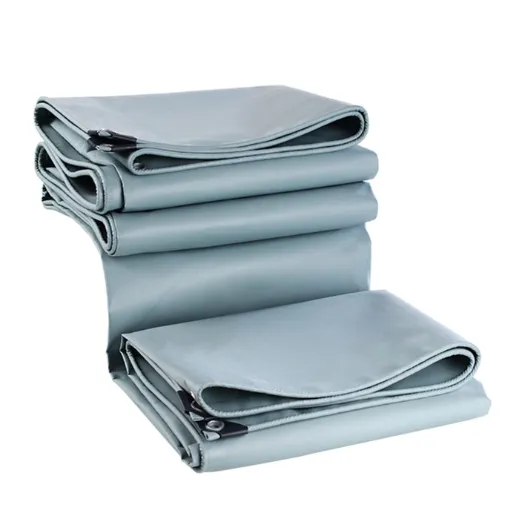
The term “blackout” gets applied loosely across the protective fabrics industry. Buyers frequently encounter products marketed as light-blocking that fail to deliver total opacity under field conditions. Understanding the structural difference between blackout tarpaulin and standard alternatives prevents costly specification errors.
Blackout tarpaulin is constructed from a high-tenacity polyester base mesh laminated between layers of virgin-grade PVC film, with an additional opaque interlayer specifically engineered to absorb and reflect all incident light. Standard dark-colored tarpaulins, by contrast, rely on pigment alone. Pigmented PVC reduces transmission but does not eliminate it. Under direct solar load, a standard 600gsm dark tarpaulin can still transmit 5–15% of visible light, enough to ruin a photographic exposure, trigger unwanted plant growth responses, or compromise the visibility of a tactical operation. Contact LY TRUSTLINK today to learn more about our high-performance PVC coated fabric solutions for industrial and commercial applications.
The Opacity Mechanism
The critical component in blackout tarpaulin is the opaque interlayer, typically a calendered PVC film loaded with light-absorbing mineral fillers and carbon black. This interlayer sits between the structural polyester scrim and the outer protective laminates. The outer layers provide mechanical protection, UV stability, and weather resistance. The inner opaque layer performs the light-blocking function.
This multi-layer construction is manufactured using thermal lamination or direct coating processes that bond the layers at the molecular level. The result is a unified technical fabric with no air gaps, no delamination risk under proper installation, and zero light transmission when tested to ASTM standards.
Blackout vs. Standard Tarpaulin
| Feature | Blackout Tarpaulin | Standard Heavy-Duty Tarpaulin |
|---|---|---|
| Light transmission | 0% | 5–15% (dark colors) |
| Construction | Multi-layer with opaque interlayer | Single or dual-layer coated |
| Primary use | Light exclusion, privacy, photoperiod control | Weather protection, cargo coverage |
| Weight range | 450–900gsm | 300–900gsm |
| Fire retardancy | NFPA 701 available | NFPA 701 available |
The distinction matters because specifying the wrong material leads to operational failure. A procurement manager sourcing cover fabric for a greenhouse light-deprivation system cannot substitute standard PVC coated fabric and expect the same biological outcome. The engineering requirements are fundamentally different.
Material Science and Construction
Every blackout tarpaulin begins with the same foundational decision: the base fabric. At LY TRUSTLINK, we engineer these technical fabrics on high-tenacity polyester scrim because polyester delivers the tensile strength, dimensional stability, and chemical compatibility that PVC coating demands.
The High-Tenacity Polyester Base
High-tenacity polyester yarn is woven into a scrim, a grid-like mesh that provides the mechanical backbone of the fabric. The denier of the yarn and the density of the weave determine the base fabric’s strength. For industrial blackout applications, we typically specify 1100D polyester with a plain or panama weave at densities between 9×9 and 18×18 threads per inch. This construction delivers tensile strength ranging from 2000N/5cm to 4000N/5cm depending on weight and weave configuration.
The polyester scrim does more than provide strength. It maintains dimensional stability across temperature ranges from -30°C to 70°C, ensuring the blackout tarpaulin does not shrink, stretch, or warp during installation or seasonal thermal cycling.
PVC Coating and Lamination Technology
The opaque interlayer is encapsulated between inner and outer PVC coatings applied through knife-over-roll or dip-coating processes. Virgin-grade PVC resin is compounded with plasticizers, UV stabilizers, fungicides, and the opaque filler package. The coating weight, measured in grams per square meter (gsm), directly correlates with durability, abrasion resistance, and lifespan.
For blackout tarpaulin, typical coating architectures include:
- 450gsm: Light-duty applications, indoor use, short-term deployment. Suitable for theatrical backdrops and temporary photographic enclosures.
- 650gsm: Standard industrial grade. Balanced weight for event production, agricultural curtains, and medium-term construction screening.
- 900gsm: Heavy-duty and architectural grade. Engineered for permanent or semi-permanent tensile structures, high-wind environments, and applications requiring maximum tear resistance.
All seams in critical blackout applications should be RF-welded or hot-air bonded. These methods create a molecular bond between overlapping fabric sections, producing a watertight, permanent seal that maintains opacity across the joint. Stitching, by contrast, introduces pinholes that compromise both waterproofing and light exclusion. Get in touch with LY TRUSTLINK to discuss your custom PVC-coated fabric requirements and receive tailored production solutions.
Industrial Applications and Use Cases
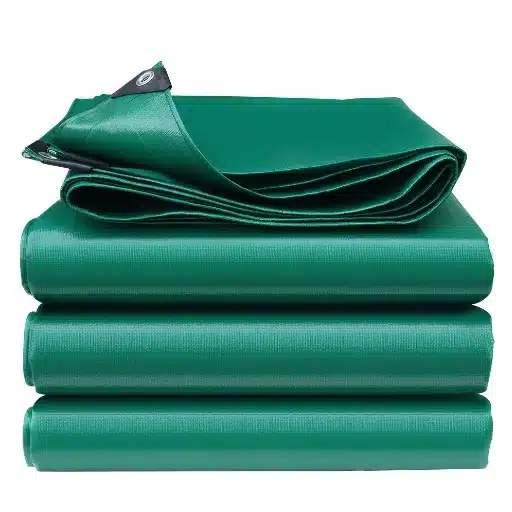
Blackout tarpaulin serves diverse sectors where light control translates directly to operational outcomes. The following applications represent the most demanding and technically precise deployments.
Event Production and Touring
Concert tours, corporate presentations, and theatrical productions depend on controlled lighting environments. Projection mapping, laser displays, and LED wall systems require absolute darkness to achieve their designed contrast ratios. Even marginal ambient light degrades image quality and undermines audience immersion.
Touring productions face an additional challenge: rapid installation and teardown. Blackout tarpaulin designed for event production incorporates reinforced eyelets at 50cm intervals and flexible 650gsm construction that folds compactly for transport. Crews can rig a 20-meter blackout screen in under an hour using standard tensioning hardware.
Agricultural Photoperiod Control
Dr. Elena Voss runs a commercial floriculture research facility outside Rotterdam, where she studies photoperiod manipulation in chrysanthemum cultivars. Her greenhouse operation requires precise 14-hour dark periods to trigger flowering on schedule. Even brief light leakage during the dark cycle (what plant physiologists call a “night interruption”) resets the plants’ internal clocks and delays harvest by weeks.
Standard agricultural shade nets could not achieve the zero-transmission threshold her research protocol demanded. Voss specified custom-fitted 450gsm blackout tarpaulin panels with RF-welded seams and weighted bottom hems. The installation eliminated all light infiltration. Her flowering synchronization improved from 82% to 97% consistency across the greenhouse complex, translating to predictable harvest scheduling and stronger contract fulfillment with her wholesale buyers.
Construction Site Privacy and Dust Containment
Urban construction projects in dense environments face dual challenges: visual privacy and particulate containment. A 40-story high-rise renovation in downtown Manhattan required a full-perimeter screening solution that prevented visual access to the work area while containing dust and debris within the site envelope. Standard construction netting provided visibility and dust control but offered no privacy.
The general contractor specified 750gsm blackout tarpaulin with NFPA 701 fire retardancy certification. The heavier weight withstood wind loads at elevation, while the opaque construction blocked sightlines from adjacent office towers and pedestrian walkways. The fire retardancy rating satisfied the city’s Department of Buildings requirements for temporary enclosure materials used in conjunction with hot-work operations.
Military and Tactical Applications
Tactical operations frequently require visual concealment and infrared signature management. Blackout tarpaulin engineered with specialized coatings can reduce near-infrared reflectance in addition to blocking visible light, supporting camouflage requirements in multi-spectrum observation environments. These specifications fall outside standard commercial grades and require custom engineering consultation.
Specifications and Certifications That Matter
Procurement professionals evaluating blackout tarpaulin for industrial use should verify the following parameters before approving a supplier relationship.
Tensile Strength and Tear Resistance
Tensile strength measures the force required to pull the fabric apart. For industrial blackout tarpaulin, look for:
- Warp tensile strength: Minimum 2000N/5cm for 650gsm grades
- Weft tensile strength: Minimum 1800N/5cm for 650gsm grades
- Tear resistance: Minimum 300N (trapezoid method) for standard industrial applications
These values ensure the fabric withstands wind loading, tensioning forces, and mechanical abrasion during installation and service.
UV Stabilization
UV radiation degrades PVC polymers over time, causing embrittlement, color shift, and eventual structural failure. Premium blackout tarpaulin incorporates UV absorbers and hindered amine light stabilizers (HALS) directly into the PVC compound during extrusion. This internal stabilization outperforms surface-applied treatments, which wear away with handling and weather exposure.
Well-formulated blackout tarpaulin maintains structural integrity and opacity for 5+ years under continuous outdoor UV exposure in temperate climates.
Fire Retardancy Compliance
For applications involving enclosed spaces, public venues, or construction sites with ignition hazards, fire retardancy is not optional. NFPA 701 is the standard specification for fire-resistant textiles and films used in public assembly, construction, and industrial settings. Blackout tarpaulin certified to NFPA 701 demonstrates self-extinguishing behavior when exposed to flame, with limited flame spread and low smoke emission.
Always request the manufacturer’s NFPA 701 test report. Do not accept vague claims of “fire resistant” without documented compliance to the specific standard.
Color Fastness and Surface Finish
Blackout tarpaulin is most commonly specified in matte black to minimize light reflection. However, custom colors are available for applications requiring specific aesthetic or camouflage profiles. Color fastness to light should meet ISO 105-B02 Grade 6 or higher to prevent fading and surface degradation.
Selecting the Right Blackout Tarpaulin for Your Operation
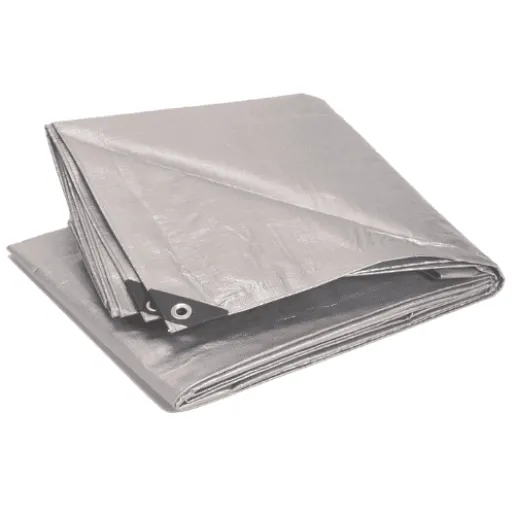
Material selection depends on three factors: environment, load type, and duration of deployment.
Weight Selection Guide
- 450gsm: Indoor or sheltered applications. Agricultural curtains, theatrical drops, and short-term event deployment. Not recommended for continuous outdoor exposure or high wind loading.
- 650gsm: The versatile industrial standard. Suitable for outdoor event production, medium-term construction screening, and agricultural installations in moderate climates.
- 900gsm: Heavy-duty and architectural applications. Permanent tensile structures, high-wind zones, marine environments, and applications requiring maximum mechanical durability.
Environmental Considerations
For cold climates, specify cold-crack resistant formulations rated to -30°C or lower. In tropical or high-humidity environments, anti-fungal additives prevent surface mold growth that degrades appearance and can compromise the PVC surface over time. Coastal and marine applications benefit from enhanced chemical stability formulations that resist salt-air corrosion.
Custom Dimensions and OEM Capability
Most industrial blackout applications require non-standard dimensions. Off-the-shelf rectangular sheets rarely fit complex architectural envelopes or agricultural greenhouse geometries. LY TRUSTLINK manufactures blackout tarpaulin to exact operational dimensions, with custom edge reinforcing, specialized grommet spacing, and integrated fastening systems designed for your specific installation hardware.
Need blackout panels cut to an irregular geometry or fitted with reinforced webbing loops instead of standard eyelets? Our engineering team supports your project from concept to certified delivery. Request a Custom Quote and send your dimensional drawings for technical review.
Installation and Maintenance Best Practices
Even the most advanced technical fabric requires proper handling to maximize service life and maintain opacity.
Tensioning and Structural Support
Blackout tarpaulin must be installed under consistent tension across the entire surface. Loose fabric flaps in wind, creating mechanical fatigue at anchor points and potentially allowing light infiltration at wrinkles and folds. Design your support framework, whether trussing, cable systems, or rigid frames, to maintain uniform tension between 200–400N per linear meter of edge depending on weight and span.
For large architectural spans, incorporate a slight catenary curve in the support structure. A perfectly flat installation traps rainwater and creates stress concentrations. A designed slope of 2–5 degrees sheds precipitation and reduces wind flutter.
Seam Integrity and Field Repairs
Factory-sewn seams are the most common failure point for light infiltration in blackout installations. Specify RF-welded or hot-air bonded seams for all production joints. If field repairs become necessary, use compatible PVC repair tape or patch material applied over the damaged area with hot-air welding equipment. Do not rely on adhesive tapes for permanent repairs in exposed installations.
Cleaning and Storage
Clean blackout tarpaulin surfaces with mild detergent and soft brushes. Avoid petroleum-based solvents, which can extract plasticizers from the PVC and cause premature embrittlement. Before storage, ensure the fabric is completely dry to prevent mold growth. Fold and store in a clean, dry environment away from direct sunlight and sharp edges.
Video: Professional installation techniques for industrial blackout tarpaulin systems, covering tensioning, welding, and framework design.
Conclusion
Blackout tarpaulin represents a specialized class of engineered technical fabric where material science directly determines operational success. Standard dark-colored covers cannot replicate the zero-transmission performance that multi-layer PVC lamination with opaque interlayers delivers. Whether your application demands absolute darkness for agricultural photoperiod control, visual privacy for construction operations, or light exclusion for precision event production, specifying the correct weight, coating, and seam construction eliminates the risk of performance failure.
The procurement decision comes down to three verifiable factors: documented tensile strength and tear resistance, certified compliance with relevant safety standards such as NFPA 701, and a supplier capable of manufacturing to your exact dimensional and hardware requirements.
At LY TRUSTLINK, we engineer blackout tarpaulin as a technical solution, not a commodity product. Every production batch is tested for tensile performance, seam integrity, and opacity before shipment, because in your operation, a specification failure is never just a fabric failure.
Ready to specify blackout tarpaulin for your next project? Talk to an Engineer about custom dimensions, weight selection, and certification requirements. We build to your exact operational specifications.