
PVC Flex Banner Specifications: A Buyer’s Guide
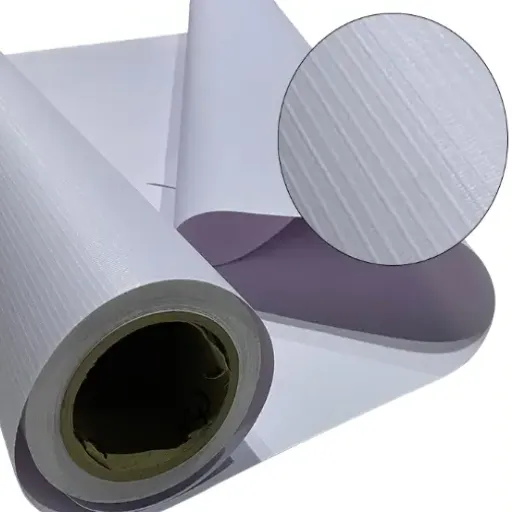
A PVC flex banner is a printable technical fabric engineered from high-tenacity polyester scrim laminated or coated with virgin-grade PVC, designed for large-format outdoor and indoor advertising. The right specification delivers 3-5 years of reliable service. The wrong specification tears, fades, or delaminates within months, often costing operators more in removal and replacement labor than the banner itself.
When Maria Chen, procurement director for a regional outdoor advertising fleet, sourced 340gsm laminated frontlit banners for a 12-month highway billboard contract, the unit price looked competitive at $0.32 per square meter. Four months later, wind shear along the interstate had torn the reinforced hems on 23 of 40 installations. The replacement cost, including crane rental and traffic control, exceeded the original material spend by 280%. The banners failed not because they were defective, but because the specification did not match the operational environment.
This guide gives you the specification data to prevent exactly that outcome. You will learn how base fabric denier, coating method, GSM weight, and compliance certification interact to determine real-world performance. You will understand the difference between frontlit, backlit, and blockout constructions, and you will know which printing technology each surface accepts. By the end, you will specify PVC flex banner material with the confidence of an engineer who has solved this problem before. Contact LY TRUSTLINK today to learn more about our high-performance PVC coated fabric solutions for industrial and commercial applications.
Key Takeaways
- PVC flex banner performance is determined by base fabric denier, coating method, and GSM weight, not price per roll.
- Frontlit banners suit externally illuminated displays; backlit banners require translucent construction for lightboxes; blockout banners use an opaque core layer for double-sided printing.
- Knife-coated banners deliver tensile strength above 1000 N/5cm and 3-5 year outdoor lifespans; laminated banners trade durability for lower cost.
- NFPA 701, DIN 4102 B1, and REACH compliance are non-negotiable for regulated installations in North America and the EU.
- Total cost of ownership calculations should include installation labor, replacement cycles, and potential contract penalties, not just material price.
What Is PVC Flex Banner Material?
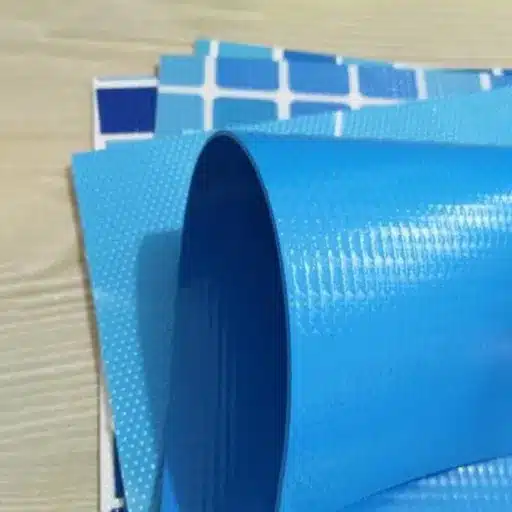
PVC flex banner material is a three-layer engineered textile. Two outer layers of PVC film encase a central reinforcement layer of woven high-tenacity polyester. The PVC provides waterproofing, chemical resistance, and a printable surface. The polyester scrim provides tensile strength, dimensional stability, and tear resistance.
The quality of a PVC flex banner begins with its base fabric. Denier ratings range from 200D economy grades to 1000D premium constructions. Thread counts such as 18×12, 9×9, or 18×18 determine how densely the polyester yarns are woven.
A 500x500D/9×9 base fabric delivers approximately 600-800 N/5cm tensile strength depending on coating method. A 1000x1000D/18×18 base can exceed 1000 N/5cm. These numbers matter. A banner spanning 5 meters across a billboard frame experiences substantial wind load. The base fabric either absorbs that load, or it tears.
The PVC compound itself is not generic. Virgin-grade PVC resin, combined with UV stabilizers, plasticizers, and flame-retardant additives, determines how the banner performs after 18 months of sun exposure.
Economy-grade banners often use recycled PVC with monomeric plasticizers that migrate out of the compound within 6-12 months. The result is surface cracking, reduced flexibility, and premature failure. Premium banners use polymeric plasticizers and advanced HALS (Hindered Amine Light Stabilizer) systems that maintain molecular integrity for 3-5 years.
Want to understand how coating technology determines banner lifespan? [Read our guide to PVC coated fabric manufacturing and quality testing protocols.]
Manufacturing Methods: How Construction Determines Quality
Not all PVC flex banners are built the same way. The manufacturing method determines tensile strength, coating adhesion, print surface quality, and long-term durability. There are three primary production processes: knife coating, calendering, and lamination.
Knife Coating
In knife coating, liquid PVC paste is applied directly to the polyester base fabric using precision blades. The coated fabric then passes through heated ovens at 160-220 degrees Celsius to fuse the PVC into a monolithic layer. This method produces the highest coating adhesion because the PVC penetrates the interstices of the polyester weave.
Knife-coated banners consistently exceed DIN 53357 peel strength requirements and deliver the longest outdoor service life. For heavy-duty billboard applications, knife coating is the recommended standard.
Calendering
Calendering presses pre-mixed PVC compound between heated rollers that fuse it to the base fabric under heat and pressure. This method offers excellent production consistency and cost efficiency for high-volume orders.
Calendered banners perform well for standard outdoor advertising and retail displays where extreme wind loads are not a primary concern. Tensile strength typically falls in the 500-700 N/5cm range for mid-weight constructions.
Lamination
Lamination bonds pre-made PVC films to the base fabric using adhesive (cold lamination) or heat-activated bonding (hot lamination). This is the most cost-effective method and produces excellent print surface quality.
However, the bond line between film and fabric represents a potential failure point under sustained mechanical stress. Laminated banners are well-suited to short-term promotions, indoor displays, and applications where cost optimization outweighs longevity requirements.
| Manufacturing Method | Tensile Strength | Coating Adhesion | Best Application | Relative Cost |
|---|---|---|---|---|
| Knife Coating | 800-1000+ N/5cm | Excellent | Billboards, long-term outdoor | Premium |
| Calendering | 500-700 N/5cm | Good | Standard outdoor, retail | Standard |
| Lamination | 400-600 N/5cm | Moderate | Indoor, short-term promotional | Economy |
When James Okonkwo, operations manager at a Lagos-based print house, switched his billboard fleet from laminated to knife-coated 510gsm frontlit banners, his replacement rate dropped from 34% annually to 8%. The per-roll cost increased by 40%, but his total material and labor spend fell by 22% over two years. The coating method directly determined his operational economics.
Frontlit, Backlit, and Blockout: Choosing the Right Banner Type
PVC flex banner material is manufactured in three primary constructions, each engineered for a specific illumination and display requirement. Selecting the wrong type produces poor visibility, wastes printing cost, or creates image bleed-through that looks unprofessional.
Frontlit Flex Banner
Frontlit construction is the most common type, accounting for approximately 57.5% of the global flex banner market. The banner is opaque, with a white printable surface that reflects light from external sources: sunlight, spotlights, or ambient building illumination.
Standard specifications range from 240gsm lightweight indoor grades to 510gsm heavy-duty outdoor constructions. Base fabrics typically run 200x300D/18×12 for economy grades up to 1000x1000D/9×9 for premium billboards. Frontlit banners accept solvent, eco-solvent, UV, and latex inks across glossy or matte finishes.
Applications include highway billboards, building wraps, construction site hoardings, fence banners, and retail storefront displays. For any externally illuminated installation, frontlit is the correct specification.
Backlit Flex Banner
Backlit banners use a translucent PVC construction that diffuses light from behind the image. When illuminated with LED or fluorescent light sources, the graphic appears to glow. This creates high visual impact in low-light environments and is the standard for lightbox displays.
Weight specifications typically run heavier than frontlit, from 500gsm to 610gsm, because the PVC compound must be formulated for light transmission without sacrificing structural integrity. Base fabrics such as 500x500D or 1000x500D provide the necessary dimensional stability. The critical specification is light transmission percentage, which should be uniform across the surface to prevent hot spots.
Applications include airport advertising, mall lightboxes, transit station displays, retail menu boards, and illuminated storefront signage. For any internally illuminated structure, backlit is mandatory.
Blockout Flex Banner
Blockout banners incorporate a grey or black opaque core layer between two white printable surfaces. This middle layer blocks 99.9% of light transmission, preventing image bleed-through when graphics are printed on both sides.
Specifications range from 280gsm to 510gsm. The blockout layer adds weight and rigidity, making these banners ideal for double-sided pole banners, street flags, hanging ceiling displays, and any installation where light could shine through from behind. Without the blockout layer, a backlit image or sunlight will ghost through the opposite side, creating a washed-out appearance.
| Banner Type | Weight Range | Light Transmission | Best For | Print Sides |
|---|---|---|---|---|
| Frontlit | 240-510gsm | 0% (opaque) | Externally illuminated displays | Single |
| Backlit | 500-610gsm | 20-40% (translucent) | Internally illuminated lightboxes | Single |
| Blockout | 280-510gsm | 0% (light-blocking core) | Double-sided displays, pole banners | Double |
GSM Weight and Tensile Strength: The Specifications That Matter
GSM (grams per square meter) is the most commonly referenced specification for PVC flex banner material. It indicates the total weight of the finished fabric, including base fabric and PVC coating. However, GSM alone does not determine quality. A 440gsm knife-coated banner with a 1000x1000D base outperforms a 440gsm laminated banner with a 200x300D base in tensile strength, tear resistance, and outdoor lifespan.
GSM Weight Guide by Application
240-340gsm (7-10 oz): Lightweight constructions for short-term indoor displays, trade show graphics, and temporary promotional events. Tensile strength typically 400-500 N/5cm. Expected outdoor lifespan: 3-6 months.
340-440gsm (10-13 oz): The industry standard for general outdoor advertising. This weight range balances cost, print quality, and durability for most billboard and building wrap applications. Tensile strength: 500-700 N/5cm. Expected outdoor lifespan: 12-24 months for laminated, 24-36 months for knife-coated.
440-510gsm (13-15 oz): Heavy-duty outdoor construction for long-term installations, high-wind environments, and large-format displays where mechanical stress is elevated. Tensile strength: 700-900 N/5cm. Expected outdoor lifespan: 36-60 months.
510-650gsm (15-19 oz): Premium and backlit constructions for maximum durability or specialized illumination requirements. Tensile strength: 900-1200 N/5cm. Expected outdoor lifespan: 48-72 months.
Tensile and Tear Resistance Standards
DIN 53354 defines the tensile testing protocol for coated fabrics. A 50mm sample is clamped and pulled until failure. The result is reported in Newtons per 5 centimeters (N/5cm). For reference, a 440gsm knife-coated banner on 500x500D/9×9 base fabric should exceed 800 N/5cm in both warp and weft directions.
DIN 53363 measures tear propagation resistance using a trapezoid or tongue tear method. This matters because a small nick in a banner under tension can propagate rapidly if tear resistance is low. Premium banners achieve 250-350 N/5cm tear resistance. Economy grades may fall below 150 N/5cm.
DIN 53357 measures peeling strength, the force required to separate the PVC coating from the base fabric. Knife-coated banners typically exceed 60 N/5cm. Laminated banners may test at 30-50 N/5cm, which is acceptable for indoor and short-term use but marginal for permanent outdoor installation.
Base Fabric Denier and Thread Count
The base fabric is the structural skeleton of the banner. Denier indicates yarn thickness; thread count indicates weave density. Common configurations include:
- 200x300D/18×12: Economy grade. Suitable for indoor and very short-term outdoor use.
- 300x500D/18×12: Mid-grade. Acceptable for standard outdoor applications up to 12 months.
- 500x500D/9×9: Heavy-duty. The 9×9 thread count creates a dense, stable weave for large-format prints.
- 1000x1000D/9×9 or 18×18: Premium. Maximum tensile strength for billboard fleets and extreme environments.
For large-format banners exceeding 3 meters in width, base fabric thread count becomes critical. A loose weave (18×12) allows the banner to stretch and distort under wind load, causing print misalignment at seams. A tight weave (9×9 or 18×18) maintains dimensional stability across the full width. LY TRUSTLINK specializes in producing waterproof, weather-resistant, and long-lasting PVC coated fabrics for a variety of industries. Contact us for more information.
Print Technology Compatibility
PVC flex banner material must be matched to the ink system used in production. Incompatibility produces poor adhesion, color shift, extended drying times, or premature ink degradation.
Solvent and Eco-Solvent Inks
Solvent inks dissolve into the PVC surface, creating a mechanical and chemical bond that is highly durable. Eco-solvent formulations use milder carriers with lower volatile organic compound emissions.
Both systems work effectively on glossy and matte PVC flex banner surfaces. Drying occurs through evaporation, typically within minutes. These inks are the standard for outdoor billboard production because they offer excellent weather resistance and color saturation.
UV-Curable Inks
UV inks cure instantly when exposed to ultraviolet lamps, enabling immediate handling and finishing. This dramatically increases production throughput. UV printing is compatible with all PVC flex banner types, though heat-sensitive lightweight banners (under 340gsm) may experience slight distortion under intense UV lamp exposure. UV inks deliver the highest abrasion resistance and are preferred for floor graphics, high-traffic retail displays, and applications where physical contact is likely.
Latex and Water-Based Inks
Latex inks use water as a primary carrier with resin encapsulation, making them the most environmentally friendly option. They require heat-assisted drying and perform best on banners with surface treatments optimized for water-based adhesion. Latex printing produces odor-free output, making it ideal for indoor retail and hospitality environments where solvent outgassing is unacceptable. Not all PVC flex banner surfaces accept latex inks equally; verify wetting tension (ASTM D2578, minimum 34 dyn/cm) before committing to large production runs.
| Ink Type | Drying Method | Best Surface | Durability | Environmental Profile |
|---|---|---|---|---|
| Solvent | Evaporation | Glossy/matte PVC | Excellent outdoor | Standard VOC emissions |
| Eco-Solvent | Evaporation | Glossy/matte PVC | Very good outdoor | Reduced VOC emissions |
| UV | UV lamp curing | All PVC types | Maximum abrasion | Low VOC, instant cure |
| Latex | Heat-assisted | Treated surfaces | Good indoor/outdoor | Water-based, odorless |
When the team at Meridian Display Solutions in Dubai began producing banners for a luxury retail chain, they assumed their standard solvent setup would work on the new matte-finish blockout material. The ink beaded on the surface.
A surface energy test revealed wetting tension of 28 dyn/cm, below the 32 dyn/cm threshold for reliable solvent adhesion. Switching to a corona-treated batch solved the issue. Print compatibility is a specification, not an assumption.
Compliance, Certification, and Regulatory Standards
Banner installations in regulated environments require documented compliance. Procurement teams operating in North America, the European Union, or for municipal contracts must specify certified materials or risk disqualification.
Fire Retardancy: NFPA 701 and DIN 4102 B1
NFPA 701 is the standard fire test for flame-propagation-resistant textiles in the United States. A banner passing NFPA 701 Test Method 2 (large-scale) self-extinguishes within 2 seconds after flame removal and exhibits char length under 6.5 inches. Many municipalities, event venues, and construction sites require NFPA 701 certification for all temporary fabric installations.
DIN 4102 B1 is the German classification for “hardly flammable” building materials. B1-rated PVC flex banners achieve this status through halogenated or phosphorus-based flame-retardant additives integrated into the PVC compound. B1 certification is mandatory for indoor advertising in Germany, Austria, and Switzerland, and is frequently specified across the EU.
Environmental Compliance: REACH and RoHS
REACH (Registration, Evaluation, Authorisation and Restriction of Chemicals) governs chemical substances in the European Union. PVC flex banners must comply with REACH Annex XVII restrictions, including limits on phthalate plasticizers, heavy metals, and certain flame retardants.
RoHS (Restriction of Hazardous Substances) restricts lead, mercury, cadmium, hexavalent chromium, and specific brominated flame retardants in electrical and electronic equipment. While RoHS directly targets electronics, many procurement frameworks extend RoHS-style substance restrictions to all materials in a supply chain.
Phthalate-free PVC formulations using citrate or adipate plasticizers are increasingly specified for indoor applications, retail environments, and any setting where human contact is frequent.
Weathering and UV Resistance
ISO 4892-2 defines accelerated weathering test protocols using xenon-arc exposure. Premium PVC flex banners are tested to 2000-3000 hours of accelerated exposure, correlating to 3-5 years of outdoor service in temperate climates. Tropical and desert environments accelerate UV degradation; specify HALS-stabilized compounds with UV absorber packages for these zones.
Cold climate performance is equally critical. DIN 53372 low-temperature flexibility testing verifies that banners remain pliable at -30 degrees Celsius. Banners that stiffen in cold become brittle and prone to cracking during installation and under wind flexure.
Need certified banner material for your next regulated installation? [Request our full compliance documentation package, including NFPA 701 test reports and REACH certificates.]
Selecting PVC Flex Banner for Your Application
The correct specification matches material properties to operational demand. The following recommendations are based on typical mechanical, environmental, and regulatory requirements.
Outdoor Billboard and Hoarding
Specify 440-510gsm frontlit, knife-coated, with 500x500D/9×9 or 1000x1000D/9×9 base fabric. Require UV-stabilized compound with 3-year minimum outdoor rating. For high-wind zones, increase to 510gsm with reinforced hems and welded edges rather than stitched hems. Grommet spacing should not exceed 500mm to distribute wind load evenly.
Retail and Indoor Display
Specify 280-340gsm frontlit or blockout with matte finish to reduce glare from overhead lighting. Flame-retardant certification (NFPA 701 or B1) is typically required for mall and venue installations. Latex-print-compatible surface treatment ensures odor-free output.
Lightbox and Backlit Display
Specify 500-610gsm backlit with uniform light transmission. Verify that the base fabric weave does not create visible grid patterns when illuminated. For menu boards and close-viewing applications, select a smoother surface finish to maximize perceived resolution.
Construction Site and Wind-Exposed Areas
Specify mesh PVC (perforated construction with 30-40% airflow) or 510gsm+ heavy-duty frontlit with reinforced corners. Mesh reduces wind load by allowing air passage, but print saturation is lower due to surface perforation. For solid banners, calculate wind load at local maximum gust speeds and ensure fastening hardware exceeds calculated tensile forces.
Event and Temporary Promotion
Specify 340gsm laminated frontlit for cost-optimized short-term use. These banners deliver acceptable print quality and 6-12 month outdoor durability at the lowest material cost. For single-weekend events, 280gsm economy grades are sufficient.
OEM and Custom Manufacturing Considerations
Standard roll widths range from 1.02 meters to 3.2 meters, with wide-format capability up to 5.1 meters on select production lines. Custom widths eliminate seams on oversized displays, which is critical for premium backlit installations where seam shadows would be visible.
Custom GSM and coating formulations allow buyers to optimize material for specific applications. A print house specializing in trade show graphics may require a 320gsm matte frontlit with enhanced latex ink adhesion. A billboard operator in coastal Florida may need a 510gsm knife-coated banner with additional anti-mildew additives and salt-spray resistance.
Private labeling and core branding are standard OEM services. Rolls can be produced with custom core diameters, branded wrapping, and printed lot numbers for supply chain traceability.
Minimum order quantities for custom specifications typically start at 3,000-5,000 square meters, depending on width and formulation complexity. Prototype samples for testing and client approval are available within 2-3 weeks. Production lead times are confirmed at order and tracked against committed delivery dates.
Quality assurance includes batch testing for tensile strength, tear resistance, peeling strength, and weight verification against the purchase specification. Mill test reports document every batch and provide the compliance traceability that procurement teams require for supplier qualification.
When Elena Voss, supply chain manager for a German event technology company, needed a custom 4.2-meter-wide backlit banner with B1 certification and phthalate-free formulation for a recurring automotive exhibition, standard catalog products could not meet all three requirements simultaneously. A custom OEM production run delivered the exact specification within 4 weeks, with full test documentation for her client’s compliance audit.
Installation, Maintenance, and Lifecycle
Even correctly specified banners fail when improperly installed or neglected.
Tension distribution is the single most important installation variable. Uneven tension creates stress concentration at grommets and corners, leading to tear initiation. Use tensioning straps or bungee systems that apply uniform force across the full perimeter. For rigid frame installations, ensure the frame is square and true; frame distortion transmits uneven load into the fabric.
Cleaning should use mild detergent and soft brushes only. Abrasive solvents, high-pressure washers, and stiff brushes damage the PVC surface and accelerate UV degradation. Clean banners annually in moderate climates, semi-annually in high-pollution or coastal environments.
Storage requires rolling, never folding. Fold lines create permanent creases that weaken the base fabric and produce visible print distortion. Store rolls horizontally in a cool, dry environment away from direct sunlight. Temperature extremes in storage can pre-age plasticizers, reducing flexibility before the banner is even installed.
Expected service life varies by specification tier:
- Economy laminated (240-340gsm): 6-12 months outdoor, 24-36 months indoor
- Standard knife-coated (340-440gsm): 24-36 months outdoor, 60+ months indoor
- Heavy-duty knife-coated (440-510gsm): 36-60 months outdoor
- Premium backlit (510-610gsm): 48-72 months in illuminated display
These figures assume temperate climates with standard UV exposure. Tropical, desert, or high-altitude environments reduce lifespan by 20-40% unless specifically stabilized for those conditions.
Conclusion
Selecting a PVC flex banner is an engineering decision, not a purchasing exercise. The specification, type, weight, coating method, and compliance certification together determine whether your installation delivers reliable service for years or fails within months at a cost far exceeding the material savings.
The four factors that matter are: (1) banner type matched to illumination method, (2) GSM and base fabric matched to mechanical load, (3) coating method matched to service life requirements, and (4) compliance certification matched to regulatory environment. When these four factors align, the banner performs as engineered.
For technical specifications, compliance documentation, or custom OEM manufacturing inquiries, contact our engineering team. We build PVC flex banner material to your exact operational requirements, with batch-tested consistency and transparent lead times. Your success is the measure of our own. Looking for reliable PVC coated fabric suppliers? Reach out to LY TRUSTLINK for professional support and competitive manufacturing solutions.