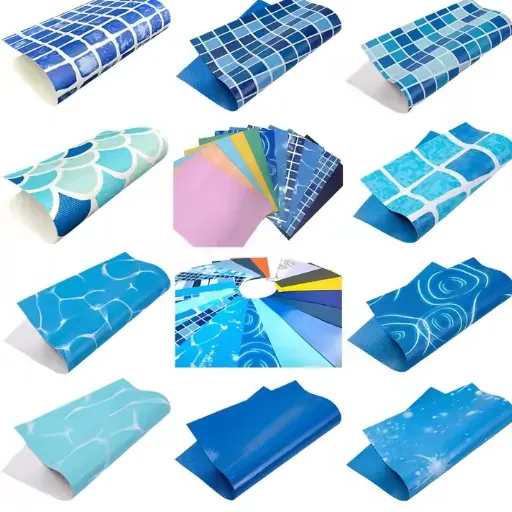

What Is Laminated Fabric? Technical Guide & Specifications
Laminated fabric is a composite textile created by bonding a pre-made polymer film to a base fabric using heat, pressure, and adhesives. For buyers asking what is laminated fabric, the answer depends on the application: it is an engineered material with controlled waterproofing, tensile strength, and dimensional stability, specified by the load it carries and the environment it faces, not by generic marketing labels.
Three years ago, Elena Torres, a procurement manager at a marine inflatable manufacturer in Halifax, approved a production run based on a supplier’s claim of “heavy-duty waterproof fabric.” The material looked identical to her previous laminated spec. During pressure testing, the seams split.
The film layer had delaminated from the base scrim at just 1.8 N/25mm peel strength, well below the 3.0 N/25mm her application demanded. The batch was scrap. Her line stopped for eleven days.
Elena’s mistake is common. Buyers evaluating laminated fabric encounter conflicting terminology, missing test data, and product pages that describe color options instead of adhesion values. This guide defines exactly what laminated fabric is, how it differs from coated alternatives at the structural level, and what specifications to demand on your next RFQ.
By the end, you will understand the manufacturing process, the performance metrics that predict field reliability, and the application contexts where lamination outperforms every alternative.At LY TRUSTLINK, we provide durable and customized PVC coated fabrics designed to meet the demands of global customers.
Key Takeaways
- Laminated fabric bonds a pre-made polymer film to a base fabric, creating a multi-layer composite with distinct structural advantages over single-layer coated materials.
- Superior air and liquid tightness make laminated fabric the specification of choice for inflatable structures, medical bladders, and liquid containment.
- Procurement teams should verify peel adhesion (ISO 2411), tensile strength (EN ISO 1421), and batch test reports before approving any supplier.
- The laminated-versus-coated decision depends on whether your operation requires airtight sealing and weldability or maximum flexibility and abrasion resistance.
- Common industry standards include NFPA 701 for fire retardancy, ASTM D751 for coated fabric testing, and REACH for environmental compliance.
Planning a custom specification? Review our engineered laminated fabric range or speak directly with our materials team about base fabric, GSM, and adhesion requirements.
What Is Laminated Fabric?
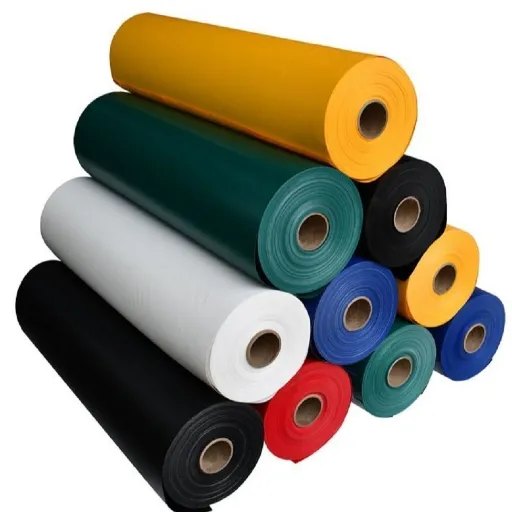
Laminated fabric is a multi-layer composite textile in which a pre-manufactured polymer film is bonded to a woven, knitted, or nonwoven base fabric through thermal fusion, pressure calendering, or adhesive application. Unlike coated fabrics, where liquid polymer is applied directly to the fabric surface, lamination preserves the base fabric and the film as discrete structural layers, each contributing distinct mechanical and chemical properties to the finished material.
The typical construction consists of three functional layers:
- Base fabric (scrim): High-tenacity polyester or nylon that provides tensile strength and dimensional stability. Common deniers range from 500D to 1000D depending on load requirements.
- Bonding interface: An adhesive or thermal fusion layer that determines peel strength and long-term delamination resistance.
- Polymer film: Extruded or calendered PVC, PU, PTFE, or polyethylene that delivers waterproofing, chemical resistance, and surface finish.
This layered architecture means laminated fabric behaves differently from coated alternatives under stress. When a coated fabric wears, the protective layer degrades directly into the base fabric. A laminated fabric offers layer redundancy: localized damage to the film does not immediately compromise the structural scrim beneath. Contact LY TRUSTLINK today to learn more about our high-performance PVC-coated fabric solutions for industrial and commercial applications.
How Laminated Fabric Is Manufactured
Raw Material Selection
The process begins with the base fabric. For industrial applications, we specify high-tenacity polyester with a plain or panama weave. The denier and thread count determine the core mechanical performance, a 1000D x 23 x 23 polyester scrim delivers approximately 2,700–3,200 N/5cm tensile strength, while a lighter 500D x 18 x 17 scrim achieves 1,400–2,000 N/5cm.
The polymer film is produced separately through extrusion or calendering. PVC films for industrial laminated fabric typically measure 0.3–0.8 mm in thickness. During compounding, manufacturers add plasticizers for flexibility, UV stabilizers for weathering performance, flame retardants for compliance, and pigments for color matching. The formulation determines whether the finished fabric remains flexible at -40°C or degrades within three years of sun exposure.
The Lamination Process
There are two primary industrial lamination methods:
Hot lamination subjects the base fabric and PVC film to temperatures between 100°C and 200°C under high pressure via heated calender rollers. The heat softens the film surface, allowing it to fuse directly to the fabric without additional adhesive. Hot lamination produces strong bonding and is preferred for heavy-duty industrial fabrics where peel strength exceeds 100 N/5cm.
Cold lamination operates at 80–100°C and relies on a separate adhesive layer applied between the fabric and the film. This method suits temperature-sensitive substrates and applications requiring specific chemical bonding agents. The trade-off is slightly lower peel strength and a thicker overall composite.
After bonding, the material passes through finishing stations. Embossing adds texture for anti-slip surfaces. Lacquering applies a protective topcoat that improves dirt resistance and color fastness. Edge sealing prevents moisture ingress at the fabric perimeter, which is a common initiation point for delamination. Whether you need PVC-coated fabrics for truck covers, tents, tarpaulins, or outdoor products, LY TRUSTLINK is ready to support your business with reliable manufacturing expertise.
Quality Control Points
A reliable manufacturing line tests every batch for three critical parameters:
- Peel adhesion (ISO 2411): Measures the force required to separate the film from the base fabric. Industrial laminated fabric should achieve minimum 2.5–4.0 N/25mm; premium specifications exceed 100 N/5cm.
- Thickness uniformity: Variation across the roll width must remain within ±0.02 mm to ensure consistent welding and seam performance.
- Dimensional stability: Heat-setting and tension control prevent shrinkage or elongation during installation.
Laminated Fabric vs. Coated Fabric: Engineering Differences
The laminated-versus-coated question is not academic. It determines whether your product survives five years in the field or fails at the first pressure cycle.
| Property | Laminated Fabric | Coated Fabric |
|---|---|---|
| Manufacturing | Pre-made film bonded to fabric | Liquid polymer applied directly to fabric |
| Structure | Discrete multi-layer composite | Monolithic integrated layer |
| Flexibility | Stiffer, more rigid | More pliable and foldable |
| Air/gas tightness | Superior (critical for inflatables) | Good, but permeable over time |
| Surface finish | Smoother, more uniform | Variable texture |
| Abrasion resistance | Good, but film can delaminate under stress | Superior (homogeneous surface) |
| High-frequency welding | Excellent | Moderate |
| Chemical resistance | Film acts as continuous barrier | Coating may vary in thickness |
Specify laminated fabric when your application demands airtight or liquid-tight integrity. Inflatable boats, medical air-pressure mattresses, liquid storage bladders, and high-speed door seals all rely on the continuous, uniform film layer that lamination provides. The weldability of laminated PVC also exceeds that of coated alternatives, because the film melts predictably under heat or radio-frequency energy.
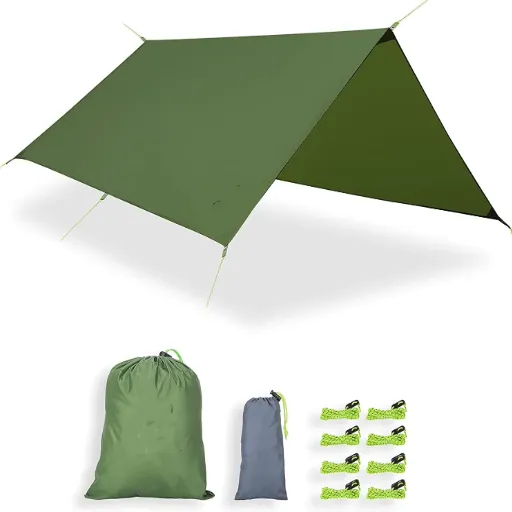
Specify coated fabric when your operation requires maximum flexibility, lighter weight, and superior abrasion resistance. Truck tarps, general construction covers, and temporary shelters typically perform better with knife-coated PVC, where the polymer integrates molecularly with the fabric fibers. Our complete PVC coated fabric specifications guide details the GSM and tensile benchmarks for these applications.
The operational risk is straightforward. A laminated fabric with inadequate peel strength will delaminate under cyclic stress or chemical exposure. A coated fabric with insufficient coating weight will wear through to the base scrim. Neither failure mode is acceptable in regulated industries.
Laminated Fabric Specifications and Performance Data
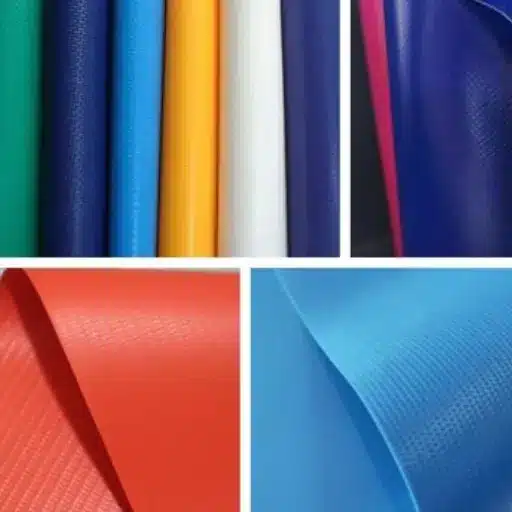
GSM and Thickness Ranges
Fabric weight, measured in grams per square meter (GSM), correlates directly with durability and structural rigidity:
| Duty Level | GSM Range | Typical Thickness | Common Applications |
|---|---|---|---|
| Light-duty | 150–320 | 0.3–0.5 mm | Packaging, medical drapes, light covers |
| Medium-duty | 320–600 | 0.5–0.8 mm | Industrial curtains, bags, recreational inflatables |
| Heavy-duty | 600–1,200+ | 0.8–1.5 mm | Marine inflatables, liquid tanks, architectural membranes |
LY TRUSTLINK manufactures laminated fabric across the full 300–1,300 GSM range, with custom formulations available outside standard catalog values.
Mechanical Properties
Tensile strength increases with base fabric denier and weave density. A 600D polyester laminated fabric typically achieves 2,800–4,000 N/5cm tensile strength in the warp direction. Tear resistance, tested to DIN 53363, ranges from 350 N for light-duty constructions to over 1,000 N for heavy-duty architectural grades.
Peel adhesion is the specification most buyers overlook, and the one that predicts delamination failure. Minimum industrial durability requires 2.5–4.0 N/25mm. At LY TRUSTLINK, our laminated fabrics consistently test at 100 N/5cm under ISO 2411, exceeding the market average of 60–80 N/5cm.
Environmental Performance
Standard PVC laminated fabric maintains flexibility from -30°C to +70°C. Arctic-grade formulations with specialized plasticizers extend cold-crack resistance to -40°C. UV stability depends on stabilizer load: standard formulations provide 3–5 years of continuous outdoor exposure, while UV-stabilized grades with hindered amine light stabilizers (HALS) maintain color integrity and mechanical properties for 10+ years.
Chemical resistance is generally excellent against acids, alkalis, and oils, though prolonged exposure to aromatic solvents can compromise the adhesive interface in cold-laminated products. Get in touch with LY TRUSTLINK to discuss your custom PVC-coated fabric requirements and receive tailored production solutions.
Industrial Applications of Laminated Fabric
Marine and Inflatables
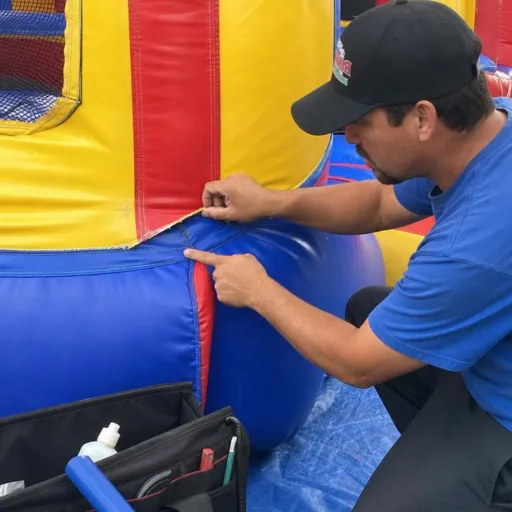
Inflatable boats, life rafts, and water bladders demand zero air permeability. A coated fabric might achieve initial tightness, but the porous nature of knife-applied polymer allows micro-leakage over time. Laminated PVC film provides a continuous gas barrier. When Marcus Chen, a product engineer at a commercial inflatable manufacturer in Vancouver, switched from a 550 GSM coated spec to a 650 GSM laminated alternative with hot-air welded seams, his pressure-decay failure rate dropped from 4% to 0.2%.
Medical and Healthcare
Anti-decubitus air-pressure mattresses, blood-pressure cuffs, and medical bladders require biocompatible film barriers and weldable seams. The smooth, uniform surface of laminated fabric allows clean high-frequency welding without pinholes. Medical-grade formulations also exclude phthalate plasticizers and heavy metals to meet REACH and biocompatibility standards.
Industrial and Protective
Heavy-duty tarpaulins for liquid containment, flexible intermediate bulk containers (FIBC), and industrial curtains rely on laminated fabric for structural rigidity and layer redundancy. If the outer film layer sustains abrasion damage, the base scrim maintains load-bearing integrity until repair or replacement.
Transportation and Logistics
Most truck side curtains use coated fabric for flexibility and wind-flap resistance. However, applications requiring air-tight partitioning, refrigerated curtain systems and dust-sealed cargo bays, specify laminated construction. The stiffer hand of laminated fabric also holds shape better in vertical curtain applications where sagging creates operational hazards.
What to Specify When Sourcing Laminated Fabric
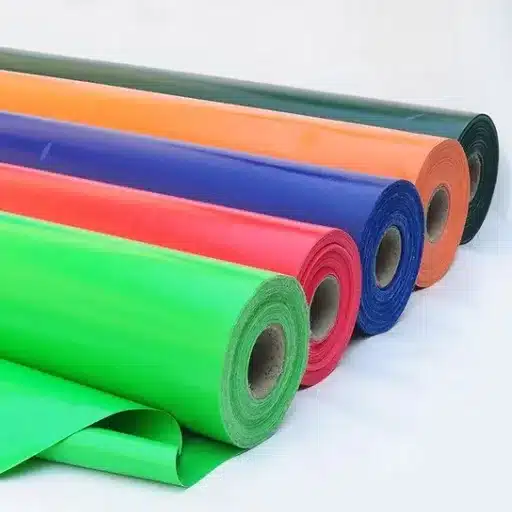
When you issue an RFQ, vague descriptions produce vague results. Specify these parameters explicitly:
- Base fabric denier and weave count: 500D x 18 x 17, 1000D x 23 x 23, or custom
- Total GSM and finished thickness: Including tolerance (±5 GSM for precision applications)
- Film composition and additives: Virgin PVC with UV stabilizers, flame retardants, or cold-weather plasticizers as required
- Peel adhesion minimum: Cite ISO 2411 test method and demand a batch report
- Width and color: Standard rolls run 1.5 m to 3.2 m; custom widths require MOQ confirmation
- Certifications required: NFPA 701, EN 13501-1, DIN 4102 B1, REACH, RoHS
Request a sample evaluation protocol before placing volume orders. Cut a 10 cm x 10 cm sample and attempt manual delamination at the edge. If the film separates with light hand pressure, the peel adhesion is insufficient for industrial use. Demand batch test reports with tensile, tear, and adhesion data, not just a generic certificate of conformity.
Red flags: Suppliers who cannot provide ISO 2411 peel strength data, who quote GSM without base fabric specifications, or who offer “one-size-fits-all” formulations for applications as diverse as medical bladders and construction tarps.
Sarah Okonkwo, a supply chain director for a European medical device OEM, learned this distinction the hard way. She received three sample rolls for an APM bladder project. Two suppliers provided glossy brochures and color swatches.
Only one delivered a batch report showing 3.6 N/25mm peel adhesion, 2,900 N/5cm tensile strength, and a REACH compliance certificate. That supplier has been her partner for four years. The other two are no longer on her approved vendor list.
If your requirements fall outside standard catalog values, custom laminated fabric solutions are available with engineering support from concept through certified delivery.
Common Standards and Certifications
Industrial laminated fabric must comply with standards that verify mechanical performance, fire safety, and environmental responsibility.
Mechanical testing: EN ISO 1421 and ASTM D751 define tensile strength and elongation test methods for rubber- and plastics-coated fabrics. ISO 13934-1 provides textile-specific tensile testing protocols. Tear resistance is quantified under DIN 53363 or EN ISO 13937-4.
Adhesion testing: ISO 2411 is the definitive standard for coating adhesion. A supplier claiming “strong bonding” without referencing this test method is not providing verifiable data.
Fire retardancy: NFPA 701 measures flame propagation for textiles and films used in public assemblies. EN 13501-1 and DIN 4102 B1 serve equivalent functions in European markets. Specify the standard your local regulator recognizes.
Environmental compliance: REACH restricts Substances of Very High Concern (SVHC) including certain phthalates and heavy metals. RoHS limits hazardous substances in electrical and electronic equipment, with relevance for fabrics used in automated door systems and medical devices.
Whether you need PVC coated fabrics for truck covers, tents, tarpaulins, or outdoor products, LY TRUSTLINK is ready to support your business with reliable manufacturing expertise.
Conclusion
Laminated fabric is not a generic description. It is an engineered composite specified by base fabric denier, total GSM, peel adhesion, and film formulation. Understanding what laminated fabric is, and how it differs from coated alternatives, allows procurement teams to match material specifications to operational requirements instead of relying on supplier marketing.
The right choice depends on your application context. If your operation requires airtight sealing, high-frequency weldability, or liquid-tight integrity, laminated fabric is the correct specification. If maximum flexibility and abrasion resistance matter more, coated fabric may be the better path.
At LY TRUSTLINK, we manufacture laminated fabric from 300–1,300 GSM with batch-tested peel adhesion, tensile strength, and dimensional stability. Our engineering team supports custom fabric engineering from specification development through certified delivery. If you are evaluating laminated fabric for your next project, talk to an engineer about your exact operational requirements.