
Airbag Fabric Plant Cost: 2026 Investment Guide
When Ravi Sharma, a project director at a Mumbai-based technical textiles group, presented his board with a feasibility study for entering the airbag fabric market, the first question was not about technology or customers. It was about capital. The board needed a credible number, not a theoretical estimate from a paywalled industry report, but verified data from real projects.
Ravi found that public disclosures from Autoliv, ZF, Kolon, and Toyobo contained enough hard data to build a defensible investment model. This article compiles that same data for anyone evaluating an airbag material manufacturing plant cost in 2026.
You will find a complete capex breakdown by production scale, verified investment examples from disclosed projects worldwide, equipment costs for each stage of production, operating expense factors, realistic ROI timelines, and the regulatory costs most feasibility studies overlook. Reach out to LY TRUSTLINK and discover professional solutions designed to help your business grow with confidence and efficiency.
Key Takeaways
- Airbag fabric plants range from 2M(pilot)to2M(pilot)to60M+ (full OEM), with $10–25M as the commercial sweet spot.
- Real disclosed projects: Autoliv Vietnam (154M),ZFWuhan(€150M),KolonVietnam(154M),ZFWuhan(€150M),KolonVietnam(48M), Toyobo Thailand (¥10B).
- Coating lines represent the largest single equipment category, accounting for 40–60% of total machinery investment.
- Payback periods run 2.5–4 years for OEM-scale facilities with secured contracts, and 3–5 years for mid-scale commercial plants.
- OEM qualification adds 500K–500K–2M and 2–3 years before first revenue, a cost often underestimated in initial planning.
How Much Does an Airbag Material Manufacturing Plant Cost?
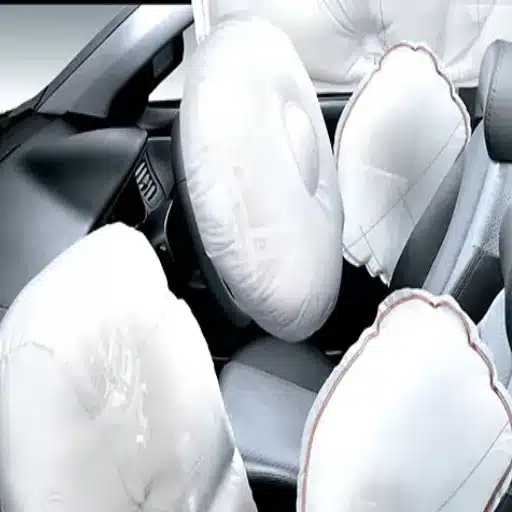
The answer depends on where in the value chain the plant starts and ends. A facility that weaves greige fabric from purchased yarn requires less capital than one that also coatings and slits finished rolls. A plant that produces OPW (one-piece woven) airbags adds jacquard weaving capacity, which carries a premium. The table below organizes investment by production tier.
| Production Scale | Total Investment | Annual Capacity | Scope |
|---|---|---|---|
| Pilot / R&D | 2M–2M–5M | 0.5–2M m² | Single process (weaving or coating), prototype production |
| Mid-Scale Commercial | 10M–10M–25M | 5–15M m² | Integrated weaving + coating + slitting, regional supply |
| Full OEM Scale | 25M–25M–60M+ | 15–40M m² | Full vertical integration, multi-line, global OEM qualification |
These ranges include equipment, installation, infrastructure, initial raw materials inventory, and working capital. Land and building costs vary too widely by region to include in a global estimate, they are discussed separately in the regional comparison section.
Want to understand the single largest equipment category in detail? Our airbag coating line equipment guide breaks down silk-screen, knife-over-roll, and dip coating systems with specification benchmarks.
Capital Equipment: The Core Investment
Equipment typically accounts for 50–70% of total project cost. Understanding each category allows planners to prioritize where capital delivers the most operational output.
Weaving Machines, From Yarn to Greige Fabric
Airbag fabric demands high-tenacity nylon 6,6 woven to tight tolerances. The looms that produce this fabric are not standard apparel machines.
Chinese manufacturers offer air-jet looms capable of handling 840D nylon 6,6 at 600+ RPM for approximately 14,000 per unit in small orders of 1–4 machines. Volume pricing drops to 18,000–19,000 at scale. European and Japanese suppliers such as DORNIER and Toyota charge 80,000–250,000+ per loom. Their machines deliver tighter tolerances and longer service life. Jacquard-equipped variants, required for OPW airbag production, add 5,000–15,000 per unit.
A mid-scale commercial plant running 50 looms at 1,600 mm width can produce 5–10 million square meters of greige fabric annually. At 20,000 average per loom, the weaving floor alone represents a 1M investment. Warping machines, beam handling, and yarn preparation add another 100,000–500,000.
The yarn specification matters as much as the machine. High-tenacity nylon 6,6 at 420D, 630D, or 840D denier is the industry standard, and the loom must handle these coarse, high-strength filaments without damaging the yarn structure.
Coating Lines, Silicone Application Systems
The coating line transforms woven greige fabric into deployable airbag material. This stage typically represents 40–60% of total equipment investment.
| Scale | Equipment Cost | Installation & Commissioning | Total |
|---|---|---|---|
| Pilot / R&D | 500K–500K–1.5M | 100K–100K–300K | 600K–600K–1.8M |
| Mid-Scale | 2M–2M–5M | 500K–500K–1M | 2.5M–2.5M–6M |
| Full OEM | 5M–5M–12M | 1M–1M–3M | 6M–6M–15M |
A full-scale automotive coating line runs 1.6–2.0 meters in web width at 20–30 meters per minute. The oven system alone draws 150–400 kW. Silicone coating dominates the market, though neoprene persists in legacy applications. The line includes unwinding, tension control, coating head (knife-over-roll or dip), drying ovens, cooling section, and rewinding with inline inspection.
Slitting, Rewinding & Inspection
After coating, master rolls slit to customer-specified widths. Slitting equipment runs 50,000–50,000–200,000 depending on automation level. Automated optical inspection systems, critical for detecting pinholes, coating voids, and contamination, cost 100,000–100,000–300,000. Rewinding and tension control stations add 30,000–30,000–100,000.
Testing Laboratory
No airbag fabric plant operates without a qualified laboratory. OEMs and Tier 1 suppliers audit testing capability before awarding contracts.
| Equipment | Cost Range | Purpose |
|---|---|---|
| Dynamic air permeability tester (TEXTEST FX 3350) | 30K–30K–80K | Simulates deployment conditions; measures permeability under pressure bursts |
| Universal testing machine (ZwickRoell or equivalent) | 25K–25K–100K | Tensile strength, elongation, tear resistance |
| Static air permeability tester | 5K–5K–20K | Backup and incoming QC |
| Environmental testing (thermal aging, humidity) | 10K–10K–50K | Simulates in-vehicle aging conditions |
| Total laboratory setup | 65K–65K–215K | — |
The dynamic permeability tester is non-negotiable for OEM qualification. Static testers cannot replicate the sudden pressure burst of airbag deployment, and OEMs know the difference.
Supporting Infrastructure
Beyond production equipment, the plant requires climate-controlled yarn storage (nylon 6,6 absorbs moisture, which affects weaving performance), compressed air systems, wastewater treatment for coating operations, and material handling equipment. Budget 200,000–200,000–500,000 for these supporting systems at mid-scale.
Want to understand the single largest equipment category in detail? Our airbag coating line equipment guide breaks down silk-screen, knife-over-roll, and dip coating systems with specification benchmarks.
Real-World Investment Examples (Verified Data)
The most credible way to benchmark airbag material manufacturing plant cost is to examine disclosed projects. The following table compiles verified investments from public filings, press releases, and government announcements.
| Company | Investment | Location | Year | Scale & Details |
|---|---|---|---|---|
| Autoliv | $154 million | Vietnam (Quang Ninh) | 2025 | 90,000 sqm site, up to 2,000 employees, airbag cushions and fabric, Manufacturing 4.0 |
| ZF Group | €150 million (~$166.5M) | China (Wuhan) | 2024 | 67,000 sqm, 1,200 employees, largest APAC airbag base, integrated R&D center |
| Kolon Industries | $48 million (KRW 70B) | Vietnam (Ho Chi Minh) | 2028 start | Fabric weaving, processing, coating; long-term supply contract with Autoliv |
| Toyobo | ¥10 billion (~$90–100M) | Thailand / Global | 2016–2020 | Multi-year expansion including new JV company with ¥3B capital |
| INVISTA | >$50 million | China (Shanghai) | 2008 | Airbag fiber production facility |
| Kolon Industries | $15.23 million (KRW 17B) | Vietnam | 2016 | Acquisition of airbag sewing facility from Hanyoung International |
These figures reveal an important pattern. The 48 million Kolon investment covers fabric production specifically, weaving, processing, and coating, not module assembly. The 154 million Autoliv facility and €150 million ZF base include broader airbag module manufacturing, R&D, and testing infrastructure. For a pure-play airbag fabric plant, the Kolon number is the most relevant comparable: approximately $50 million for a regional-scale, multi-process facility with a secured long-term customer contract.
A procurement team at a European Tier 1 supplier learned this lesson firsthand in 2023. Their initial feasibility study budgeted 8 million for a fabric plant based on generic textile industry benchmarks. After detailed equipment quoting and OEM qualification cost analysis, the realistic number climbed to 18 million. The 10 million gap came from three sources they had underestimated: coating line automation (3.5M additional), qualification testing and sample production (2M), and the working capital required to survive 90–120 day OEM payment terms (4.5M).
Airbag Material Manufacturing Plant Cost Breakdown by Scale

The following breakdown allocates costs across categories for each production tier. Percentages are approximate and shift based on automation level and geographic labor costs.
Pilot / R&D Scale (2M–2M–5M)
| Category | Cost Range | % of Total |
|---|---|---|
| Coating line (pilot) | 600K–600K–1.8M | 35–45% |
| Weaving machines (5–10 units) | 100K–100K–250K | 10–15% |
| Testing laboratory | 65K–65K–150K | 5–8% |
| Infrastructure & installation | 300K–300K–800K | 15–20% |
| Working capital | 500K–500K–1M | 20–25% |
Pilot facilities serve two purposes: R&D for new products and low-volume production for niche applications. They rarely achieve OEM qualification but provide a pathway to prove processes before scaling.
Mid-Scale Commercial (10M–10M–25M)
| Category | Cost Range | % of Total |
|---|---|---|
| Coating line (mid-scale) | 2.5M–2.5M–6M | 25–30% |
| Weaving machines (30–60 units) | 600K–600K–1.5M | 8–12% |
| Treatment equipment (heat setting, calendering) | 400K–400K–1M | 5–8% |
| Slitting, inspection, rewinding | 200K–200K–600K | 3–5% |
| Testing laboratory | 100K–100K–215K | 1–2% |
| Infrastructure & installation | 2M–2M–5M | 18–22% |
| Working capital | 3M–3M–8M | 25–35% |
This is the entry point for serious commercial production. A mid-scale plant can supply regional Tier 1 manufacturers and build the operational history required for global OEM qualification.
Full OEM Scale (25M–25M–60M+)
| Category | Cost Range | % of Total |
|---|---|---|
| Multiple coating lines | 6M–6M–15M | 22–28% |
| Weaving machines (80–150+ units) | 1.5M–1.5M–4M | 6–10% |
| Full treatment line | 800K–800K–2M | 4–6% |
| Slitting, inspection, logistics | 500K–500K–1.5M | 3–5% |
| Testing & R&D laboratory | 200K–200K–400K | 1–2% |
| Infrastructure & installation | 5M–5M–15M | 18–25% |
| Working capital | 8M–8M–20M | 25–35% |
Full OEM scale demands multiple production lines for redundancy, an on-site R&D facility for customer-specific development, and the quality systems to pass IATF 16949 and OEM-specific audits. The airbag material manufacturing plant cost at this scale reflects the infrastructure needed for global supply chain integration.
Looking for a dependable business partner? Get in touch with LY TRUSTLINK for responsive communication and customized service solutions.
Operating Cost Factors
Capital expenditure is only half the financial picture. Operating costs determine whether a plant generates returns or burns cash.
Raw Materials
Nylon 6,6 yarn is the dominant cost input. Global pricing averages approximately 5,000perton,withvolatilitytiedtopetrochemicalmarkets.Amid−scaleplantconsuming500–1,000tonsannuallyfaces5,000perton,withvolatilitytiedtopetrochemicalmarkets.Amid−scaleplantconsuming500–1,000tonsannuallyfaces2.5–5 million in yarn costs alone. Silicone coating adds another $1–3 per square meter depending on coating weight (typically 20–60 g/m²).
The global airbag nylon 6,6 yarn market reached approximately $781 million in 2025. Supply concentration among Toray, INVISTA, Hyosung, Asahi Kasei, and Toyobo means buyers have limited use on price. Long-term supply agreements reduce volatility but require volume commitments.
Energy & Utilities
Coating line ovens represent the largest energy draw. A full-scale line operating 150–400 kW continuously consumes significant electricity. At industrial rates, annual energy for a mid-scale plant typically runs 200,000–200,000–500,000. Climate control for yarn storage and compressed air for pneumatic systems add 50,000–50,000–150,000 annually.
Labor
Automation level determines headcount. A highly automated coating line requires 2–4 operators per shift. Semi-automated lines need 4–8. A full integrated plant including weaving, treatment, coating, and quality control employs 200–2,000 people depending on scale and vertical integration. Labor costs vary dramatically: Vietnamese manufacturing wages average 250–400/monthversus250–400/monthversus800–1,200 in China and $3,000+ in Western Europe.
Maintenance & Quality Systems
Plan 5–10% of equipment cost annually for maintenance, spare parts, and calibration. IATF 16949 certification costs 30,000–30,000–100,000 initially, with ongoing surveillance audits. OEM qualification, the process of proving fabric performance to automaker specifications, adds 500,000–500,000–2 million in testing, sample production, and engineering time.
Working Capital
This is the most underestimated cost category. OEM payment terms commonly run 90–120 days. Raw material inventory must cover 60–90 days of production. Combined, working capital requirements typically equal 15–25% of annual revenue. For a mid-scale plant generating 15–30 million annually, that is 15–30 million annually, that is 2–7 million tied up in receivables and inventory.
Revenue Potential & ROI Timeline
The airbag fabric market offers strong margins for qualified suppliers. According to Fortune Business Insights, the global automotive airbag fabric market was valued at approximately 33.83 billion in 2024 and is projected to reach 6.76 billion by 2033, growing at a 6.5% CAGR.
HMT New Materials, a publicly traded Chinese airbag fabric manufacturer, reported 31% gross margins on OPW (one-piece woven) fabric and 24% revenue CAGR in recent filings. Their automated coating lines delivered 28% ROI. These figures exceed typical textile industry averages of 12–18% gross margin.
| Metric | Typical Range |
|---|---|
| Gross margin (specialty / OPW fabrics) | 25–35% |
| Net profit margin (integrated operations) | 12–20% |
| Payback period (mid-scale, 70% utilization) | 3–5 years |
| Payback period (OEM scale, 85% utilization, secured contracts) | 2.5–4 years |
| Break-even capacity utilization | 60–70% |
Kolon Industries’ decision to invest 48 million in a new Vietnamese airbag fabric plant illustrates the ROI logic clearly. The facility secures a long-term supply contract with Autoliv, the world’s largest automotive safety supplier. Expected annual sales from 2030 reach approximately 34 million (KRW 50 billion). At that revenue level, with airbag fabric margins, the project achieves payback within the industry-standard 3–5 year window.
Evaluating fabric production for your own supply chain? Our engineering team can assess your volume requirements, specification needs, and cost structure. Talk to an engineer about your project parameters.
Regulatory & Certification Requirements
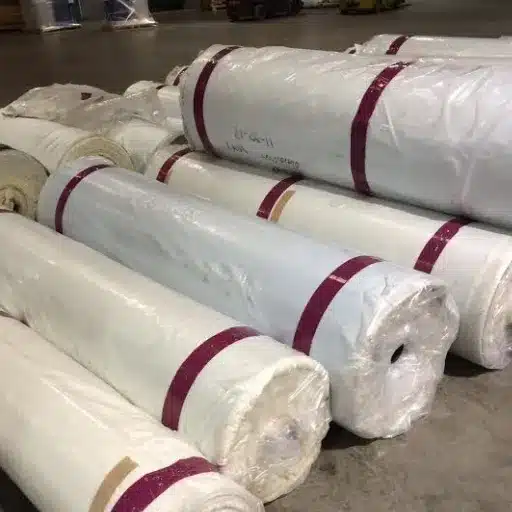
Airbag fabric is not a commodity textile. Regulatory and customer-specific requirements add cost and time that general textile manufacturers rarely anticipate.
IATF 16949 Quality Management
This automotive industry quality standard is mandatory for any supplier to major OEMs. Initial certification costs 30,000–30,000–100,000 depending on plant size and consultant support. Annual surveillance audits cost 10,000–10,000–25,000. The certification process takes 12–18 months from initial gap analysis.
OEM Qualification
Beyond ISO and IATF standards, each automaker maintains internal specifications for airbag fabric. Toyota, Volkswagen, General Motors, and others require separate qualification processes. Each involves:
- Submission of material data sheets and airbag material properties
- Production of qualification samples (typically 1,000–5,000 meters)
- Deployment testing under FMVSS 208 or ECE R94 protocols
- Aging and environmental testing (thermal, humidity, UV)
- On-site manufacturing process audit
Total qualification cost per OEM: 100,000–100,000–500,000. Timeline: 18–36 months. Many plants pursue 3–5 OEM qualifications simultaneously to diversify revenue risk.
Environmental & Safety Permits
Coating operations using solvent-based silicone require environmental permits for volatile organic compound (VOC) emissions. Wastewater treatment for cleaning operations needs approval. Fire safety compliance for oven systems and chemical storage adds inspection and equipment costs. Budget 50,000–50,000–200,000 for permits and compliance infrastructure depending on jurisdiction.
Regional Cost Comparison
Location choice affects every cost category: labor, land, equipment import duties, energy, and proximity to customers.
| Region | Equipment Cost | Labor Cost | Land/Construction | Logistics | Regulatory Complexity | Customer Proximity |
|---|---|---|---|---|---|---|
| China | Low | Medium ($800–1,200/mo) | Medium | Excellent | Moderate | Excellent (largest auto market) |
| Vietnam | Low | Low ($250–400/mo) | Low | Improving | Moderate | Good (growing, export-oriented) |
| India | Low | Low ($200–350/mo) | Low | Moderate | High | Good (domestic growth) |
| Southeast Asia | Low | Low–Medium | Low | Moderate | Moderate | Moderate |
| Europe | High | Very High ($3,000+/mo) | High | Excellent | High | Excellent (premium OEMs) |
| North America | High | Very High | High | Excellent | High | Excellent (Big Three + Tesla) |
China remains the dominant production hub, capturing roughly 60% of global airbag fabric capacity. However, Vietnam is attracting significant investment. Autoliv’s 154 million plant and Kolon Industries’ 48 million fabric facility both chose Vietnam for its competitive labor costs, improving infrastructure, and proximity to growing Southeast Asian automotive markets.
India offers government incentives through Production Linked Incentive (PLI) schemes for automotive components. The developing supplier base means less local competition but also less established logistics and technical support infrastructure.
Europe and North America carry the highest costs but offer proximity to premium OEMs, shorter logistics pipelines, and lower geopolitical risk for Western suppliers. A regional plant serving Jaguar Land Rover, BMW, or Mercedes typically justifies the cost premium through shorter lead times and closer technical collaboration.
Key Risk Factors for Investors
Every feasibility study should stress-test these five risk factors.
Long qualification cycles. A plant can be mechanically complete and still generate zero revenue for 18–36 months while pursuing OEM qualification. This timeline is non-negotiable and must be funded.
Customer concentration. The top five automotive OEMs control more than 50% of global airbag demand. Losing a single major contract can drop utilization below break-even.
Raw material price volatility. Nylon 6,6 is petrochemical-derived. A 20% spike in feedstock costs translates directly to margin compression unless contracts include price adjustment clauses.
Technology shift risk. OPW (one-piece woven) airbags are growing faster than traditional cut-and-sew designs. A plant configured only for flat woven fabric may face obsolescence without jacquard weaving capability.
Quality audit failure. A single major defect discovered in the field can trigger suspension of supplier status. The financial impact extends beyond the immediate recall to lost future revenue and reputation damage.
Evaluating fabric production for your own supply chain? Our engineering team can assess your volume requirements, specification needs, and cost structure. Talk to an engineer about your project parameters.
Frequently Asked Questions
How much does an airbag fabric manufacturing plant cost?
A pilot facility starts at approximately 2 million. A mid-scale commercial plant capable of regional supply typically costs 10–25 million. A full OEM-scale integrated facility with multiple production lines and R&D capability runs 25–60 million or more.
What is the minimum investment to start airbag fabric production?
The practical minimum is 2–3 million for a pilot operation focused on either weaving or coating. However, OEM qualification requires proven production history and quality systems, meaning most serious entrants budget 10 million or more.
How long is the payback period for an airbag fabric plant?
Mid-scale plants with 70% utilization and 95% first-pass yield typically achieve payback in 3–5 years. Full OEM-scale facilities with secured long-term contracts and 85% utilization can achieve 2.5–4 years.
What equipment is needed for airbag fabric manufacturing?
The core equipment includes warping machines, high-tenacity weaving looms (air-jet or rapier), textile treatment lines (scouring, heat setting, calendering), silicone coating lines, slitting and rewinding systems, and a testing laboratory with dynamic air permeability and tensile testing capability.
Is airbag fabric manufacturing profitable?
Yes, for qualified suppliers. Gross margins of 25–35% on specialty and OPW fabrics exceed typical textile industry averages of 12–18%. The barrier is qualification, not demand; the market is growing at 6.5% CAGR with stable long-term OEM contracts.
How long does OEM qualification take?
Typically 18–36 months per automaker. The process includes material data submission, sample production, deployment testing under FMVSS 208 or ECE R94, environmental aging tests, and on-site manufacturing audits. Many plants pursue multiple OEMs simultaneously.
What coating is used on airbag fabric?
Silicone coating dominates the market with over 70% share due to superior heat resistance, chemical compatibility with nylon 6,6, and long-term aging stability. Neoprene persists in legacy applications but has declined from 45% market share in 2010 to approximately 25% today. Learn more in our guide to automotive airbag coating technologies.
Conclusion
The airbag material manufacturing plant cost question has no single answer. Disclosed projects range from Kolon Industries’ 48 million Vietnamese fabric facility to ZF Friedrichshafen’s €150 million integrated production and R&D base in Wuhan. What matters is matching the investment scale to the operational ambition: pilot facilities prove processes for 2–5 million, mid-scale plants supply regional Tier 1 manufacturers for 10–25 million, and full OEM-scale operations compete for global contracts at 25–60 million or more.
The numbers that separate profitable operations from costly mistakes are not in the equipment list. They hide in working capital requirements, the 18–36 month qualification timeline, and raw material price swings. These factors compress margins only after the first year of production. Any feasibility study that stops at CapEx is incomplete.
For procurement teams evaluating in-house versus outsourced fabric production, for investors assessing the technical textiles space, and for engineers planning facility expansion, the data is now in the open record. Use it to build a model that reflects reality. Account for more than machines. Account for the full cost of becoming a qualified link in the automotive safety supply chain.
Ready to explore airbag fabric manufacturing capabilities for your project? Request a custom quote or speak with our engineering team about equipment specifications, material selection, and production planning.