
Airbag Textile Treatment: Heat Setting, Calendering & QC Guide
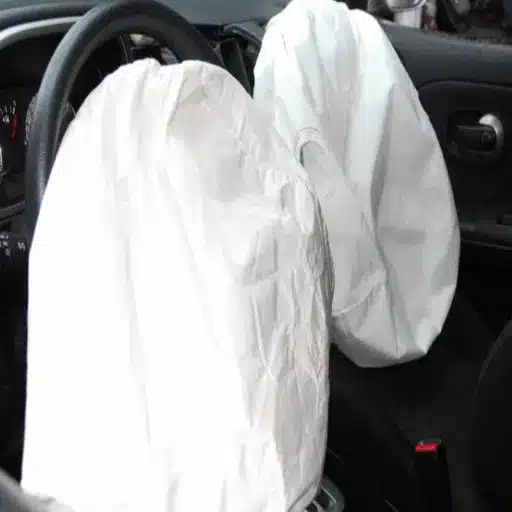
Airbag textile treatment is the post-weaving processing sequence (scouring, heat setting, calendering, and tension-controlled finishing) that prepares woven fabric for silicone coating and final cut-and-sew assembly. Treatment determines coating adhesion, air permeability uniformity, and dimensional stability, the three properties that decide whether a deployed airbag holds gas, holds shape, and holds together.
A pinhole in a deployed airbag rarely starts at the coating. By the time silicone hits the fabric, the outcome (adhesion, permeability uniformity, deployment burn-through risk) is already 80% decided by what happened in the textile treatment line.
That is the part of the supply chain most procurement teams underweight. Coating gets audited because coating is visible. Treatment gets underweighted because it sits between weaving and coating, often inside the same vendor, on equipment most buyers never see. The consequence shows up downstream as silicone delamination at 6-month aging, deployment burn-through in pyrotechnic test, or permeability variance that pushes lot acceptance rates below threshold.
This guide walks the four treatment stages used in modern automotive airbag fabric manufacturing, the parameters that matter at each stage, and the QC criteria a Tier 1 procurement engineer should put into an audit checklist before approving a fabric supplier. It assumes you are sourcing for a regulated automotive program (FMVSS 208, ECE R94, or OEM internal standards) where deployment performance is contractual.
Key Takeaways
- Airbag textile treatment covers four stages: scouring and desizing, heat setting, calendering, and tension-controlled finishing. Each stage directly affects downstream coating performance.
- Heat setting in the 180 to 195 degrees Celsius window for nylon 6,6 locks in dimensional stability and prevents in-vehicle shrinkage at cabin temperatures up to 90 degrees Celsius.
- Calendering is the single most important determinant of air permeability, the property OEMs test most aggressively. The ISO 9237 target window for coated airbag fabric is typically 0.3 to 1.5 L/dm²/min.
- Three of the most common airbag fabric failures (silicone delamination, deployment burn-through, permeability variance) trace back to treatment, not coating.
- A supplier audit that covers coating but skips treatment misses the upstream determinants of finished-airbag performance.
What Is Airbag Textile Treatment?
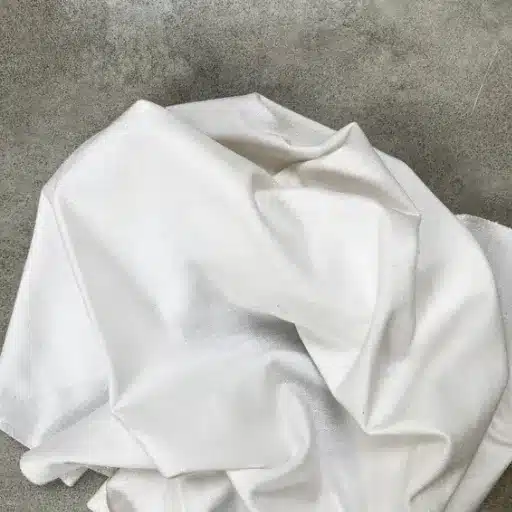
Airbag textile treatment is the sequence of thermal, mechanical, and chemical processes applied to greige (loom-state) airbag fabric after weaving and before coating. Its purpose is to transform raw woven fabric into a substrate that meets three downstream requirements: precise air permeability within the OEM-specified window, dimensional stability through coating cure and in-vehicle thermal exposure, and surface readiness for silicone or alternative coating adhesion.
This differs significantly from apparel or upholstery finishing. Treatment for an airbag fabric is engineered around a single high-stakes event (deployment in 20 to 50 milliseconds at temperatures that can exceed 300 degrees Celsius at the inflator interface) and a long latent service life inside a vehicle interior that cycles between minus 40 and plus 90 degrees Celsius for ten or more years.
Within the automotive airbag fabric value chain, treatment is the stage where most of a finished fabric’s performance specification is locked in. The yarn determines the upper bound of tensile strength. Weaving determines fabric architecture. But treatment determines whether that potential is delivered uniformly across every meter of every roll shipped.
Scouring and Desizing: Removing Weaving Residues
The first treatment stage removes everything that should not be there. Greige fabric carries sizing agents applied to warp yarns before weaving (typically starch derivatives or synthetic sizes for nylon 6,6 and polyester), spin finishes from yarn production, dust, and trace lubricants from loom mechanics.
These residues are incompatible with silicone coating chemistry. Residual sizing reduces surface energy and prevents the coating from wetting the fabric uniformly. The visible failure mode is silicone delamination, often appearing weeks or months after coating, when adhesion has slowly degraded across a contaminated interface.
Process parameters
Typical scouring uses an aqueous bath with non-ionic surfactants at 60 to 80 degrees Celsius, with residence time tuned to fabric weight and sizing chemistry. Critical parameters include surfactant selection (compatible with downstream silicone), bath temperature, mechanical agitation, and rinse-water purity. Hard-water residues can leave their own coating adhesion problems.
Quality control
Two tests confirm scouring effectiveness. An extractables test (typically Soxhlet extraction or solvent rinse with gravimetric analysis) quantifies residual organics. A wettability test (drop test or contact-angle measurement) confirms that the fabric surface will accept coating. A scoured fabric should wet within seconds. If a water droplet beads on the surface for more than five seconds, downstream coating adhesion is at risk.
Heat Setting: Locking In Dimensional Stability
Heat setting is a thermal relaxation step that releases stresses introduced during yarn drawing and weaving. Without it, the fabric will continue to shrink whenever exposed to heat, including during coating cure (typically 150 to 200 degrees Celsius) and across the vehicle’s service life.
For high-tenacity nylon 6,6 airbag yarn, the heat setting window sits between 180 and 195 degrees Celsius. Above 195, the polymer approaches thermal degradation and tensile strength declines measurably. Below 180, residual stresses remain and dimensional stability is incomplete. The window for high-tenacity polyester is shifted higher, typically 190 to 210 degrees Celsius, reflecting the higher melting point of PET.
Process parameters
Heat setting runs on a tenter frame (stenter) where the fabric is held at controlled width by edge pins and conveyed through a hot-air oven. Three parameters carry most of the outcome:
- Temperature: precise control within plus or minus 2 degrees Celsius across the fabric width.
- Residence time: typically 30 to 90 seconds, balanced against line speed and oven length.
- Overfeed and tension: small overfeed in the warp direction (allowing controlled shrinkage) combined with width control via tenter pins.
Variability in any of these creates uneven dimensional stability across the roll, which appears later as coating-cure distortion or in-vehicle storage shrinkage.
Quality control
The acceptance test is hot-air shrinkage per ISO 5077 or equivalent OEM protocols. Typical specification is less than 1.0% shrinkage after exposure to 150 degrees Celsius for 30 minutes, measured in both warp and weft directions. Suppliers that cannot consistently deliver below 1.0% should not be approved for primary supply.
Calendering: Surface Engineering for Coating Adhesion

Calendering is the most consequential treatment stage and the one most procurement audits miss. The fabric passes between heated rolls under controlled pressure, which smooths the surface, controls thickness, and (critically) closes inter-yarn interstices to a defined air permeability target.
Air permeability is the property OEMs test most aggressively, and the property that calendering controls most directly. Specifications for coated airbag fabric typically fall between 0.3 and 1.5 L/dm²/min measured per ISO 9237 at 100 Pa. Variance within and between rolls is a major lot acceptance failure mode.
Process parameters
The calender stack typically uses a heated steel roll opposing a high-density composite roll. Four parameters dominate the outcome:
- Nip pressure: determines how aggressively interstices close.
- Roll temperature: typically 150 to 180 degrees Celsius for nylon, softens fiber surfaces enough to deform under pressure without melting.
- Roll hardness and surface finish: directly affect fabric surface profile and coating wetting behavior.
- Line speed: must be matched to nip residence time for consistent compression.
Mike, a coating line supervisor at a North American Tier 2 fabric mill, traced a six-week silicone pickup variance issue to a single steel roll on his calender that had drifted 8 degrees Celsius low at one bearing. The downstream effect was a 12% increase in coating consumption on the affected edge of the roll, plus a sustained permeability variance that flagged at Tier 1 incoming inspection. The fix was a thermocouple replacement and roll re-balance. The lesson: calender temperature uniformity is not a back-burner maintenance item.
Quality control
Three tests gate calendering output: thickness measurement (caliper, multiple points across width), air permeability per ISO 9237 (multiple points, calculated as coefficient of variation across roll width and length), and visual inspection for surface defects (gloss bands, creases, edge differentials). A well-calendered roll shows permeability CV under 5% across width.
Want a process audit against these criteria? Talk to an LY TRUSTLINK engineer to compare your current supplier’s calendering controls to industry benchmarks.
Tension Control and Line Geometry
Tension control is the connective tissue between treatment stages. The fabric must enter scouring, heat setting, and calendering at consistent tension, leave at consistent tension, and reach the downstream coating line with no inherited stress imbalance.
When tension varies, the visible defects include skewed weave geometry, width variation, edge curl, and most importantly, localized permeability stripes that only become visible during deployment testing. By that point, the lot is already cut, sewn, and assembled.
Modern lines use dancer rolls, load-cell tension feedback, and edge guides at every transition. The audit question is whether tension control extends through every transition point or whether there are exposed sections where fabric tension is uncontrolled. Open zones between modules are a common source of inherited defects.
How Treatment Affects Coating Adhesion and Deployment
The coating line inherits everything treatment did, or failed to do. Three of the most common finished-airbag failure modes trace upstream to treatment, not to the silicone coating itself.
Silicone delamination
When silicone coating peels from fabric, the cause is usually residual sizing or surfactant from inadequate scouring. The defect often does not appear at incoming inspection. It appears after thermal aging or after the cured silicone sees its first humidity cycle. Root cause analysis points back to bath chemistry and rinse effectiveness.
Deployment burn-through
During deployment, hot inflator gases impinge on the cushion surface. If the fabric has retained dimensional stress from inadequate heat setting, that stress concentrates around seams and reinforced areas. The result is fabric thinning at exactly the locations that need maximum strength, leading to localized burn-through.
Permeability variance
Inflation dynamics depend on a consistent air permeability across the cushion. When calendering varies, deployment timing varies, and cushion pressure profile varies. OEM pyrotechnic test protocols catch this, but only after expensive late-stage rejection.
Diane, a procurement manager sourcing fabric for a new SUV platform launch, rejected three otherwise-qualified suppliers after pyrotechnic test results showed permeability variance outside the OEM window. All three suppliers had certified coatings. Two of the three were eventually traced to inconsistent calendering, one to inadequate tension control through heat setting. The cost of the failed qualification, in tooling delay and program slippage, exceeded the cost of a more rigorous pre-qualification audit by a factor of more than thirty.
Post-Treatment Quality Control Audit Checklist
These are the QC measurements a procurement engineer should expect to see, with documented historical control charts, before approving an airbag fabric supplier:
- Tensile strength retention: minimum 90% of greige fabric baseline, warp and weft.
- Hot-air shrinkage: less than 1.0% per ISO 5077, 150 degrees Celsius for 30 minutes.
- Air permeability: within OEM-specified window, CV less than 5% across roll width per ISO 9237.
- Surface energy: minimum 38 mN/m, confirming coating compatibility.
- Thickness uniformity: plus or minus 3% of nominal across roll width.
- Visual inspection: zero major defects (creases, edge tears, contamination) per IPC or equivalent classification.
A supplier that cannot produce six months of consistent data against these criteria has a process control problem, not a one-time excursion. That is the kind of finding that should pause a supplier approval.
Treatment Differences: Nylon 6,6 vs. Polyester Airbag Fabric

| Parameter | Nylon 6,6 | High-Tenacity Polyester |
|---|---|---|
| Heat setting temperature | 180 to 195 °C | 190 to 210 °C |
| Sensitivity to over-heating | High (degradation above 195 °C) | Moderate (broader window) |
| Calendering response | Higher fiber deformation at lower temperature | Requires higher roll temperature |
| Hot-air shrinkage target | < 1.0% | < 0.8% |
| Coating adhesion (silicone) | Excellent with proper surface preparation | Requires surface activation in some formulations |
| Cost position | Higher raw material cost | Lower raw material cost |
The dominant OEM choice remains nylon 6,6 for primary airbag applications. Polyester appears in cost-sensitive secondary applications and emerging markets, but the treatment process must be re-tuned, not just substituted. The relationship between yarn chemistry and treatment parameters is one of the reasons material substitution decisions belong with engineering, not procurement alone.
How LY TRUSTLINK Supports Airbag Fabric Programs
LY TRUSTLINK manufactures coated technical fabrics for industrial and automotive applications, and supports OEM and Tier 1 programs from material specification through certified delivery. Our approach to airbag-grade textile treatment is built around three principles: documented process control at every stage, full traceability from yarn lot to finished roll, and direct engineering support for program qualification.
For procurement teams evaluating airbag fabric suppliers, we welcome process audits, share control-chart history, and configure treatment parameters against your OEM specification rather than to a generic standard. Request a quotation or talk to an engineer to discuss qualification requirements for your program.
Frequently Asked Questions
What is airbag textile treatment?
Airbag textile treatment is the post-weaving processing sequence (scouring, heat setting, calendering, and tension-controlled finishing) that prepares woven fabric for coating and final airbag assembly. It determines coating adhesion, air permeability, and dimensional stability.
Why is airbag fabric heat set?
Heat setting relieves residual stresses from yarn drawing and weaving so the fabric will not shrink during coating cure or in-vehicle service. Without it, fabric shrinks unpredictably and coating delaminates as the substrate moves under cured silicone.
How does calendering affect airbag deployment?
Calendering closes inter-yarn interstices to a controlled air permeability target. Deployment dynamics (timing, peak pressure, cushion shape) depend on uniform permeability. Variance in calendering translates directly into deployment variance and OEM test failures.
What is the difference between airbag fabric treatment and coating?
Treatment is the preparation of woven fabric (cleaning, thermal stabilization, surface engineering). Coating is the application of a silicone or alternative polymer layer on the prepared substrate. Treatment determines whether coating will adhere uniformly and perform consistently.
Does OPW (one-piece woven) airbag fabric require the same treatment?
OPW airbag fabric requires a modified treatment protocol. Heat setting and calendering must be adapted to the three-dimensional weave architecture, with tension control specifically tuned to avoid distorting the integrated seam zones.
Conclusion
Airbag textile treatment is the upstream determinant of finished-airbag performance. Scouring removes coating-incompatible residues. Heat setting locks in dimensional stability across the vehicle’s thermal service life. Calendering engineers the air permeability that controls deployment dynamics. Tension control ties the line together.
A supplier audit that covers coating but skips treatment misses where the failures actually originate. For procurement engineers sourcing airbag fabric for regulated automotive programs, the treatment line is where rigorous process control either exists or does not. There is no way to recover at coating what was lost at calendering or heat setting.
For program teams qualifying new airbag fabric suppliers, or operations teams investigating field defects, request a process audit to compare your current supplier’s documented controls against industry benchmarks.