
Automotive Airbag Coating: Silicone, Neoprene & Next-Gen
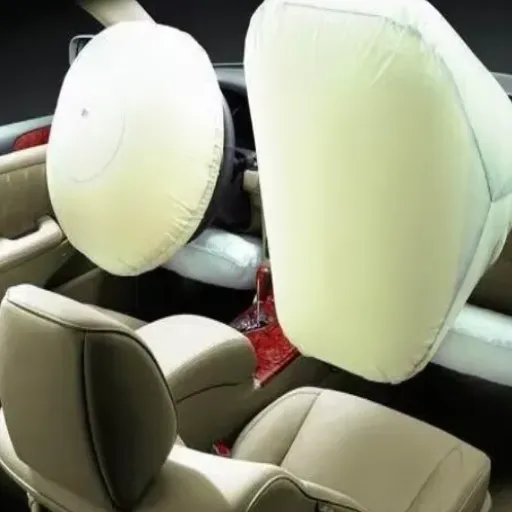
However a typical silicone elastomeric coat f airbags installed in vehicles is everick wrapping material typically applied in 30 to 80 g/m2 for regulating respiration and protecting the nylon other than that used for the seam in the vehicle from exposure to the elevated temperature air, of growth, probably over 300C. This thin elastomeric film in essence converts a swath of the woven textile into a piece of equipment that is capable of withstanding upon rapid explosion of gas 20-30 milliseconds.
An ordinary inflatable safety bag inflates in 20Msec, nearly the duration of a wink. In that span of time only, the adherent technology of the fabric will decide its destiny as a bag – whether it will expand to its expected dimension or sera from thermal or in certain suspended effects of pressure. For example, if you are responsible for supplying vehicle safety components, there is no compromise over the airbag cloth to be used. Detailing on the other hand involves the understanding of how the coat performance differs depending on which product it is applicable to, why has silicone been consistently the seamed divisions out neoprene at some point and which newer compositions exist which have even captured top automotive original equipment manufacturers markets.
In order to evaluate the supplier in detail concerning the supply capability, the air bag coating technologies in automotive industry required in the manufacturing and the critical dimensions impacting procurement need to be clarified comprehensively. The user shall be taken through such aspects as; what silicone in the market eras, why is neoprene observed in some old models, air bag coating weight based on the type of airbag and what are the materials and technologies that are changing the supply chain.
Key Takeaways
- Silicone elastomeric coating is the dominant automotive airbag coating technology, offering superior heat resistance and chemical compatibility with nylon 6,6 at roughly half the weight of legacy neoprene systems.
- Coating weight ranges from 20 g/m² for passenger airbags to 80 g/m² for driver-side applications requiring maximum heat shielding near the inflator.
- Neoprene coatings generate hydrochloric acid during aging, which degrades nylon fibers, a primary reason the industry transitioned to silicone beginning in the early 1990s.
- Side curtain airbags demand the lowest permeability of any type, often requiring multi-layer silicone coatings or very low add-on weight formulations with advanced gas-retention properties.
- Water-based silicone and UV-curable coating technologies are entering the market, driven by sustainability mandates and manufacturing efficiency goals.
Need guidance on airbag coating specifications for your program? Our engineering team can review your OEM requirements and recommend the right coating technology for your application. Contact us for a technical consultation.
What Is Automotive Airbag Coating and Why Does It Matter?
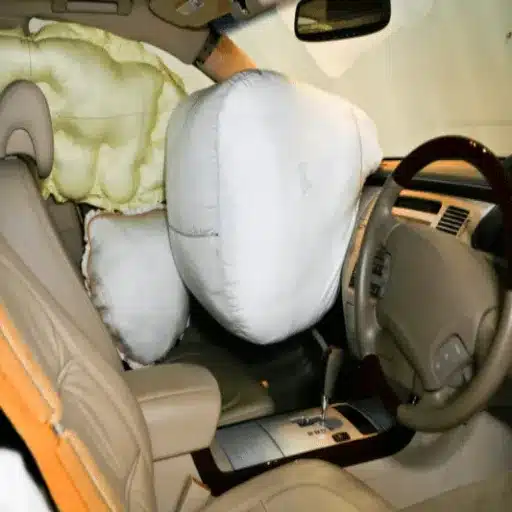
Techniques for coating the airbag or gas generators highlight the steps that should be taken towards providing functionality including, but not limited to, aesthetically pleasing aesthetics, mechanical design requirements, appropriate cost, important performance parameters, logistical efficiency, and physical properties of the materials used. Materials (preferably polymers) used for the Airbag deployment system and its components.
An airbag is disclosed which is characterized by the gas generator bonded to the lower chamber such that compressed gas can be supplied from the gas generator to the lower chamber. The upper face of the fabric has been flamed by a flame coming out from the cylinder. MANGPELLAO-R., and that location is herein depicted in huge red enamel letters “Mangpllao-R. Aerodrome._space system”. In this situation, all films must be applied. The tensile cover will also separate off from the lampholder.
The covering typically found on airbags of cars is made from silicon based adamant polymers, one of these polymers referred to as Polymethylhydrosiloxane or PDMS siloxane, which is hard and rubbery, is a silicone. It is applied on the fabric by the process of knife-over-roll, extrusion, dipping, and spraying solutions. Also, it can survive the temperatures as well as the pressure as it does not adhere optimally to the walls.
Elena Chen, upon joining the procurement team of a Tier 1 airbag module supplier in Detroit, was asked to qualify a new coating formulation for a one-off side curtain airbag order. Specifically, the requirement was for a silicon coating with an additional weight of 30-50 g/m², air permeability not exceeding a prescribed limit, and that would not change under the influence of 120 degrees Centigrade for 400 hours. She soon realized that not all silicone dispersions are equal – the factors that contributed to differentiation of a quality supplier from a supplier that did not pass qualification were incorporation of the dispersion with additives, application technique and constant reproducibility of batches. This is an example, why proposition of airbag raw materials without detailed knowledge of the complexities of coating technology is a waste.’
For readers new to airbag material composition, our guide on what airbags are made of provides a complete breakdown of fabric, coating, and inflator components.
Silicone Coating: The Industry Standard for Automotive Airbags
In the automotive airbag sector, silicone elastomers are the unrivaled choice based upon the mechanical and chemical consideration. The use of polydimethylsiloxane (PDMS) as the primary elastomer provides excellent performances from the temperature range of -50°C to 180°C. Compatibility with nylon 6,6 fibers presents little-to-no challenge in this formulation as they would not interact with the coating in any way. Besides, they offer high levels of non-blocking properties leading to elimination of talc dust and the problems associated with its high use in the previous generation neoprene systems.
Around the time of the early 1990s, change began to take place from neoprene to silicone. Research company conducted by both American and European automakers found out that the neoprene fabric produced hydrochloric acid during thermal aging. This acid caused damage to the woven nylon fabric. The sentence reads that in such targetings silicone, provides the same, and in the majority of cases, better heat protection at half the usual amount of the overlay. Less overlaying materials result in a faster folded module. A gift every structuralist would be happy to receive.
Application Methods
Three primary methods apply silicone coating to airbag fabric:
Knife-over-roll coating is the most common industrial process. A doctor blade spreads liquid silicone across the fabric surface as it passes over a backing roll. This method offers precise control over coating weight and uniform coverage across wide fabric widths.
Dip coating immerses the fabric in a silicone bath, allowing complete saturation of the weave structure. This method is often used for applications requiring very low permeability, though it typically adds more weight than knife-over-roll.
Spray coating applies silicone through atomized nozzles, useful for complex geometries or targeted application zones. It is less common for flat woven fabrics but finds use in specialized airbag designs.
For a detailed look at the machinery behind these processes, see our article on airbag coating line equipment and manufacturing systems.
Specification Benchmarks
Typical silicone coating specifications for automotive airbag applications include:
- Add-on weight: 30 to 80 g/m², depending on airbag type and proximity to the inflator
- Elongation-at-break (first layer): ≥400%
- Tear strength (second layer, where applicable): ≥30 kN/m
- Operating temperature range: −50°C to +180°C
- Air permeability: Variable by design, typically very low for side curtain applications
Leading silicone coating suppliers include Wacker Chemie AG (ELASTOSIL®), Dow (SILASTIC™ SE 6777 LSR), and BSCT, which has developed six generations of advanced silicone technology adopted by major airbag module manufacturers globally.
For a deeper technical exploration of silicone chemistry, formulation variations, and performance testing protocols, see our dedicated guide to silicone coating for airbag fabric.
Neoprene and Alternative Coating Technologies
Neoprene was the original automotive airbag coating material, adopted when airbag technology scaled to industrial production in the mid-1980s. By the end of that decade, virtually all North American and European automakers used neoprene-coated fabrics for driver-side airbags. The material met initial performance requirements. Long-term reliability proved problematic.
Why Neoprene Was Phased Out
Neoprene provides adequate heat resistance and gas retention. It requires significantly more mass to achieve protection equivalent to silicone, typically more than double the coating weight. This produces a heavier, stiffer fabric that is harder to fold into compact modules.
More critically, neoprene generates hydrochloric acid as it ages thermally. This acid attacks nylon 6,6 fibers, weakening the fabric over the vehicle’s service life. Neoprene-coated fabric also requires talc dusting to prevent self-adhesion (blocking), creating particulate contamination in the manufacturing environment and vehicle interior after deployment.
Polyurethane Coatings
Polyurethane formulations, including materials such as Lubrizol’s Estane® series, have emerged as alternatives for specific applications. Polyurethane offers strong adhesion to synthetic substrates and can be formulated for good abrasion resistance. Trade-offs include generally lower heat resistance compared to silicone and more limited long-term aging data in automotive airbag applications. Polyurethane coatings remain a niche option rather than a mainstream replacement.
Uncoated Airbag Fabric
Some airbag applications, particularly passenger-side cushions, use uncoated fabric. The larger surface area of a passenger airbag creates lower internal gas pressure during inflation. The gas has more time to cool before contacting the fabric.
Uncoated fabric is lighter, easier to recycle, and avoids coating-related manufacturing complexity. However, it is not suitable for driver-side or side curtain applications, where heat exposure and permeability requirements are more demanding.
For details on the textile finishing processes that prepare fabric for coating, or that substitute for coating in uncoated designs, refer to our article on airbag textile treatment processes.
Coating Selection by Airbag Type

Not all automotive airbag coatings are interchangeable. The optimal coating technology and weight depend on the airbag’s position in the vehicle, its proximity to the inflator, and the specific deployment dynamics required.
Driver Airbags
Driver-side airbags sit closest to the inflator and must withstand the highest heat exposure. They must also fold into the smallest module volume, typically in the steering wheel center.
Silicone coating at 50 to 80 g/m² is the standard. The coating must provide maximum heat shielding while maintaining enough flexibility to allow compact folding. Stiffness in the coated fabric translates directly into packaging challenges.
Passenger Airbags
Passenger airbags are larger and deploy with cooler, lower-pressure gas. The fabric has more surface area to retain inflation gas without a coating barrier. Many passenger airbag designs use uncoated fabric with a heavier base weight and tighter weave to achieve adequate gas retention. Where coating is specified, lighter silicone formulations at 20 to 40 g/m² are typical.
Side Curtain Airbags
Side curtain airbags present the most demanding coating requirements. They must retain a majority of inflation gas for at least five seconds to meet rollover protection standards. This demands extremely low permeability.
Silicone-coated fabrics with very low add-on weights achieve this performance. Some designs use multi-layer coatings. The coating must be uniform across the full curtain width, typically 2 to 4 meters, with no pinholes or thin spots.
Knee Airbags
Knee airbags deploy rapidly into a compact space below the dashboard. Light silicone coating at 30 to 50 g/m² balances rapid deployment with adequate heat protection.
| Airbag Type | Coating Technology | Add-On Weight | Heat Shielding | Permeability Requirement |
|---|---|---|---|---|
| Driver | Silicone | 50–80 g/m² | Critical | Very Low |
| Passenger | Uncoated or Light Silicone | 0–40 g/m² | Moderate | Moderate |
| Side Curtain | Silicone (often multi-layer) | 30–60 g/m² | High | Extremely Low |
| Knee | Light Silicone | 30–50 g/m² | Moderate | Low |
When Marcus Reeves, a quality engineer at an airbag module assembly plant, reviewed test data from a recent production lot, he noticed a pattern in deployment test failures. Side curtain units from one batch were showing inconsistent inflation timing.
Root cause analysis traced the issue to coating weight variation; certain zones measured 22 g/m² where the specification required 35 to 45 g/m². The thin spots created localized permeability spikes that allowed premature gas escape. The incident underscored why coating uniformity matters as much as average coating weight.
Coating Weight, Coverage, and Quality Specifications
Coating weight, also called add-on weight, is the most critical specification for automotive airbag coating. It is measured in grams per square meter (g/m²) and directly impacts gas retention, heat shielding, and foldability.
Standard Coating Weight Ranges
- Light: 20 to 35 g/m², passenger airbags, some curtain applications
- Medium: 35 to 55 g/m², standard driver airbags
- Heavy: 55 to 80 g/m², high-heat proximity applications, some specialty designs
Key Quality Tests
Airbag coating quality is verified through a battery of standardized tests:
Air permeability (ASTM D6476) measures how much gas passes through the coated fabric under defined pressure differentials. Lower values indicate better gas retention.
Mass per unit area (ASTM D3776 / ISO 3801) verifies that coating weight falls within the specified tolerance band. Most OEMs require ±10% or tighter.
Heat aging resistance subjects coated fabric to elevated temperatures (typically 120°C) for extended periods (200 to 400 hours) to simulate vehicle service life.
Adhesion testing confirms that the coating remains bonded to the fabric substrate after thermal cycling and mechanical flexing.
Low-temperature flexibility ensures the coating does not crack or delaminate at temperatures as low as −40°C.
Common Coating Defects
Even minor coating inconsistencies can cause airbag failure. The most common defects include:
- Pinholing and micro-voids: Small gaps in the coating that create localized permeability spikes
- Uneven add-on weight: Variation across the fabric width that produces inconsistent performance
- Delamination: Separation of the coating from the fabric after aging or flexing
- Excessive stiffness: Poor foldability that complicates module packaging and can affect deployment dynamics
Need support interpreting OEM coating requirements or validating supplier test data? Consult our engineering team for technical guidance on airbag material specifications and quality verification.
Emerging Coating Technologies and Sustainability Trends
The automotive airbag coating landscape is evolving. Regulatory pressure, sustainability mandates, and manufacturing efficiency goals are driving investment in next-generation coating technologies.
Water-Based Silicone Systems
Solvent-based silicone coatings have dominated the market for decades. Water-based silicone formulations are emerging as a lower-VOC alternative. These systems reduce emissions during manufacturing and align with increasingly strict environmental regulations in the European Union and North America. Performance parity with solventless systems remains a focus of ongoing R&D, particularly for applications requiring extreme heat resistance.
UV-Curable Silicone Coatings
Ultraviolet-curable silicone coatings offer significantly faster curing times compared to thermal oven systems. This reduces energy consumption and increases production line throughput. According to Elkem Silicones, UV LED curable silicone technology is advancing rapidly for industrial textile applications. Adoption in automotive airbags is still emerging, with formulators working to validate long-term aging performance for safety-critical applications.
Nanoparticle-Enhanced Coatings
Research published in the Journal of Industrial Textiles (Salma Ali et al., 2022) demonstrated that nylon 6,6 fabric coated with a PVA and SiO₂ nanoparticle composite achieved enhanced heat resistance and mechanical properties. While not yet commercially mainstream, nanoparticle-enhanced coatings represent a potential path toward reduced coating weight with maintained or improved performance, a significant advantage for electric vehicle applications where every gram of weight reduction matters.
Sustainability Drivers
Automakers are increasingly prioritizing recyclable materials across vehicle systems. Uncoated airbag fabrics are easier to recycle than coated alternatives. This creates pressure to either eliminate coatings where possible or shift toward more environmentally compatible formulations. Electric vehicles demand lighter components everywhere. Coating technologies must deliver required performance at the lowest possible add-on weight.
For a visual overview of how advanced coating technology integrates into airbag fabric manufacturing, see the demonstration below:
[YouTube Embed: Airbag Fabric Manufacturing and Coating Process, Technical Overview]
How to Evaluate an Airbag Coating Supplier
Selecting a coating supplier for automotive airbag production requires more than comparing price lists. The coating is a safety-critical component, and supplier capability directly impacts production yield, validation timelines, and long-term liability.
Essential Evaluation Criteria
Automotive quality certifications are non-negotiable. Any coating supplier must hold IATF 16949 certification at minimum. ISO 9001 is expected. Request documentation of their most recent audit results.
Coating formulation expertise should span the full range of silicone technologies your applications require. A supplier with only one standard formulation may not support your full product portfolio. Ask about their R&D capabilities and whether they can customize formulations for specific OEM requirements.
Application method compatibility matters if you operate your own coating line. The supplier’s coating must be compatible with your equipment, viscosity, curing temperature, and pot life all affect production feasibility.
Testing and validation support separates qualified suppliers from commodity providers. A capable supplier provides batch test data including coating weight, air permeability, heat-aging results, and adhesion values. They should also support your OEM validation testing with technical expertise.
Red Flags
- No IATF 16949 certification or expired audit status
- Inability to provide batch-level test data with traceability
- Single-formulation approach with no customization capability
- No long-term aging data beyond basic shelf-life claims
- Reluctance to support OEM validation testing or provide sample batches for qualification
RFQ Essentials
When requesting quotes for automotive airbag coating, specify:
- Airbag type and deployment requirements
- Target coating weight range and tolerance
- Required test reports (permeability, heat aging, adhesion, low-temperature flexibility)
- Compliance with target OEM material specifications
- Batch consistency documentation and statistical process control data
- Prototype sample availability and lead time
David Okonkwo, a supply chain director working for a European company involved in airbag module production was in a position to evaluate three such suppliers for a new platform. The problem was that only one of them managed to provide reasonably consistent in time data in respect of the batches over one-year production period. The vacancies that were occupied by the other two were taken by the bidders: who had even suggested a relatively loew award price levels. Though they were below the clamp load standard deviation level established for his OEM’s company specifications. He picked the vendor with proven process & equipment control, a strategy that was later proven to be correct as no coating related rejections were witnessed in a total of fifty thousand parts where validation testing was carried out. The lesson here is that in airbag production processes, the purchase of the coating is not just about the product specification and standards.
Building a reliable supply chain for automotive safety materials requires partners who understand the difference between meeting a specification and consistently performing within it. Request a technical consultation to discuss your airbag coating requirements and qualification process.
Conclusion
The Automotive Sector has witnessed the progressive shift from the 1980’s neoprene standards to more particular and exact silicone formulations that predominate the industry today. The most appropriate coating to be applied depends on the type of the airbag, the level of heat resistance, the gas barrier permeability requirements, and the compaction of the packaging, as opposed to issues such as brand name or relevance of the ergonomic design.
The Silicone based elastomeric coatings are still used in driver and side curtain applications in the case of pressing requirements of heat resistance and stability of store&release vis-à-vis gas. The Neoprene material is advancing for the phase type airs and should not be applied for some new adjustments. The uncovered fabrics show that the passenger aerospace bags do not have to be coated, which qualifies them for support of the eco-friendly programs which are recycling based. Water-based and UV-curable coatings are currently still expending their capabilities and are likely to take a much more important position with further environmental constraints.
From the perspective of a procurement / engineering group, the key is to focus on the requirements and allow the participants to avoid changes and disputes at all costs. These include the add-on weight range, permeability targets, and aging requirements. Instead of looking solely at supplier cost, determine how well they can reliably meet these specifications and whether or not they can provide process control information and proof of an automotive-grade quality system.
The layer on an airbag covering upon comprises micro-thickness of not more than a few millimeters, yet the features of its service entail very little process time. In a state of crash, there is no other consideration but the profound respect for painting equipment which is the most important in every crushing accident.
If your team is evaluating automotive airbag coating specifications or qualifying suppliers for an upcoming program, contact our engineering team for a technical consultation. We can review your OEM requirements, discuss coating technology options, and provide sample materials for validation testing.