
Waterproof Tarp for Roof Leaks: Emergency Protection & Installation Guide
The best waterproof tarp for roof leak protection is a heavy-duty reinforced tarp made from PVC-coated high-tenacity polyester or reinforced polyethylene, sized with at least 4 feet of overhang beyond the damaged area and secured using the board-batten method. PVC tarps deliver superior UV resistance, tear strength, and service life, while reinforced PE tarps offer a lighter, lower-cost option for short-term coverage.
A roof leak never arrives on schedule. When storm damage tears off shingles or a contractor’s repair is days away, the tarp you choose becomes the difference between a controlled delay and cascading water damage. Most buyers default to the cheapest roll at the hardware store. That decision often backfires when wind lifts a corner, water pools in a sag, or UV exposure turns the fabric brittle within weeks.
This guide explains how to select, size, and install a waterproof tarp for roof protection using material specifications and field-tested methods. You will learn which tarp materials hold up under real roof exposure, how to secure them without creating new leak points, and when a temporary roof covering is the right call versus a permanent repair. Need more information about waterproof tarp performance in harsh weather conditions? Get in touch with LY TRUSTLINK for expert consultation and product support.
Key Takeaways
- PVC-coated polyester tarps outperform polyethylene for long-term roof exposure, with service life measured in years rather than weeks.
- A roof tarp must extend at least 4 feet past the damaged area on all sides and run over the ridgeline to shed water.
- The board-batten method creates the most secure attachment because it fastens through wood, not through the tarp itself.
- Standard poly tarps are temporary solutions; plan permanent repairs within 30 to 90 days for PE and 6 to 12 months for heavy-duty PE.
- FEMA Operation Blue Roof provides free emergency covering in federally declared disasters for eligible primary residences.
When to Use a Waterproof Tarp for Roof Protection
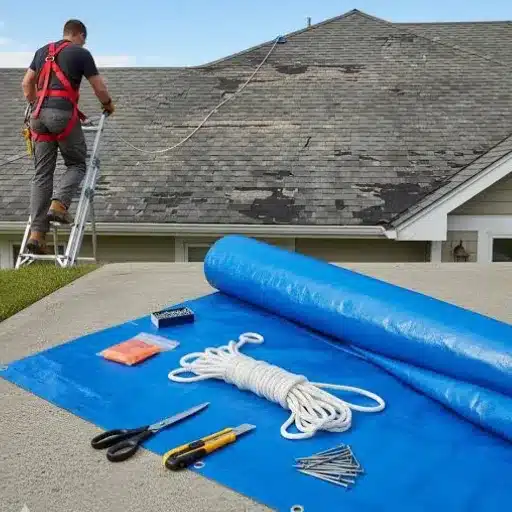
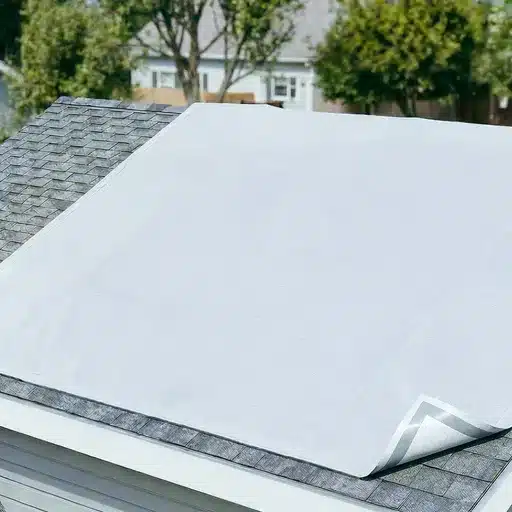
A waterproof tarp for roof protection is a temporary barrier, not a permanent roof replacement. Use it when weather or scheduling creates a gap between damage and repair.
Emergency Storm Damage Scenarios
High winds, hail, and falling branches can strip shingles, puncture decking, or tear flashing. When water is entering the structure and a roofer cannot arrive immediately, a roof leak tarp stops active intrusion. The goal is not to fix the roof. The goal is to buy time without letting the damage spread to insulation, drywall, and structural lumber.
Waiting for Permanent Roof Repair
Even outside storm season, roof leaks can appear from failed flashing, cracked vents, or aging underlayment. If a repair is scheduled days or weeks out, a properly installed temporary roof covering prevents the problem from growing. This is especially important in climates where daily rain or melting snow would otherwise keep the interior wet.
Construction and Renovation Protection
Contractors use waterproof roof tarps to protect partially completed work from unexpected weather. An open roof deck during a renovation, a skylight opening before installation, or a chimney removal in progress all benefit from a reliable cover. In these cases, the tarp may need to stay in place for weeks, which makes material choice more critical.
Duration Expectations
Treat any roof tarp as a bridge, not a destination. Standard poly tarps are rated for short-term use. Heavy-duty PE tarps can last a season. PVC roof tarps can remain serviceable for months to several years if tensioned and inspected. The right specification depends on how long you need coverage and what weather the tarp must survive.
Choosing the Right Waterproof Roof Tarp
Selection starts with the application, not the price tag. A tarp that works for a weekend camping trip will fail on a roof in a thunderstorm. The variables that matter are size, material, thickness, waterproof rating, and UV stability.
Size: Measuring Damage and Adding Overhang
Measure the damaged section, then add at least 4 feet of overhang on every side. This ensures water running off the tarp does not re-enter at the edge. On a sloped roof, the tarp should also extend far enough over the ridgeline so the peak is covered and water drains down the opposite slope. For larger damaged areas, choose a single tarp rather than piecing smaller ones together. Every seam and overlap is a potential leak path.
Material: PVC-Coated Polyester vs Reinforced Polyethylene
The two dominant materials for waterproof roof tarps are PVC-coated high-tenacity polyester and reinforced polyethylene. PVC tarpaulin uses a woven polyester base fabric coated on both sides with virgin-grade PVC. The result is a flexible, impermeable membrane with high tear and tensile strength. Reinforced PE tarps use a woven HDPE scrim laminated between layers of LDPE film. They are lighter and less expensive but less durable under sustained UV and wind load.
For more detail on how these materials differ at the molecular level, see our guide on waterproof tarp materials.
Thickness and Weight: MIL, GSM, and Denier Explained
Tarp thickness is expressed in mils (one thousandth of an inch) or weight in grams per square meter (GSM). For roof applications, 10 to 12 mil is the minimum for short-term emergency use. Twelve to 16 mil is suitable for extended projects. Eighteen mil and above is commercial-grade. In GSM terms, look for 250 GSM or higher for roof duty, with 400 to 900 GSM common for PVC industrial tarps. Denier describes fiber thickness in the woven base. Higher denier indicates thicker, stronger yarns.
Waterproof Rating: Hydrostatic Head for Roof Applications
Hydrostatic head measures how much water pressure a fabric can resist before leaking, expressed in millimeters of water column. A true waterproof fabric exceeds 1,500 mm hydrostatic head. Quality PVC tarpaulin commonly exceeds 10,000 mm. For a roof leak tarp, higher hydrostatic head provides a safety margin against wind-driven rain and standing water. Learn more about how these ratings work in our article on tarp waterproof ratings.
UV Resistance, Color, and Heat Buildup
UV radiation degrades polymers over time. A tarp without UV stabilizers can become brittle and crack within months. Silver and white tarps reflect more solar energy, reducing heat buildup beneath the cover. Dark colors absorb heat, which can accelerate aging and increase interior temperatures. For extended use in sunny climates, specify UV-stabilized material and a reflective color.
| Feature | PVC-Coated Polyester | Reinforced PE | Standard Blue Poly |
|---|---|---|---|
| Best Use | Long-term / industrial | Medium-term / emergency | Short-term / emergency |
| Thickness | 14-28+ mil | 8-16 mil | 3-8 mil |
| Weight | 400-900 GSM | 150-250 GSM | 70-120 GSM |
| Hydrostatic Head | 2,000-10,000+ mm | 1,500-3,000 mm | 1,000-1,500 mm |
| UV Lifespan | 5-15 years | 1-3 years | 1-6 months |
| Tear Resistance | High | Moderate | Low |
Roof Tarp Materials Compared: PVC vs HDPE vs Canvas
Not every waterproof tarp is suitable for a roof. Material construction determines how the tarp handles tension, UV exposure, and repeated wet-dry cycles.
PVC Tarpaulin: Long-Term Waterproofing and Durability
PVC tarpaulin is built from a high-tenacity polyester base fabric coated with virgin-grade PVC. The coating fills the weave and creates a continuous waterproof membrane. Seams can be RF-welded or hot-air bonded, producing a joint as strong as the surrounding material. PVC resists UV, mold, and abrasion better than polyethylene. It remains flexible across a wide temperature range and can be manufactured in weights from 400 to 900 GSM depending on load requirements. For contractors and facility managers who need a cover to last through a full project season, PVC is the rational choice.
When Carlos Martinez, a restoration contractor in Florida, responded to a hurricane-damaged warehouse roof, he specified 600 GSM PVC tarpaulin with RF-welded seams. The cover remained in place for eight months while insurance adjusters and repair crews coordinated the rebuild. A lighter PE tarp would have required multiple replacements, each one exposing the interior to rain and adding labor cost.
HDPE / Reinforced Polyethylene: Emergency and Short-Term Use
Reinforced polyethylene tarps use a woven HDPE scrim laminated with LDPE film. They are lighter, easier to handle, and cheaper than PVC. For emergency deployment after a storm, they work well when a permanent repair is only days or weeks away. However, the PE film is vulnerable to UV micro-cracking and flex fatigue at fold lines. Standard reinforced PE lasts roughly 6 to 12 months outdoors. Heavy-duty silver PE can approach 2 years in mild conditions. For anything beyond short-term coverage, the cost savings often disappear through replacements.
Canvas: Breathable but Not Roof-Leak Appropriate
Canvas tarps are water-resistant, not waterproof. Untreated cotton canvas swells when wet, which slows water penetration but does not stop it. Treated canvas can achieve some waterproofing through wax or silicone, yet it cannot match the hydrostatic head of a coated synthetic. Canvas also absorbs moisture and holds weight, making it a poor choice for roof applications where pooling water and wind uplift are concerns. Canvas has its place in breathable equipment covers and ground sheets, but it is not the right material for stopping an active roof leak.
Material Comparison by Performance
| Property | PVC Tarpaulin | Reinforced PE | Canvas |
|---|---|---|---|
| Waterproof | Yes | Yes when new | Water-resistant only |
| UV Lifespan | 5-15 years | 6 months-2 years | 1-2 years with treatment |
| Tear Strength | 2,500-4,000 N | 1,500-2,500 N | 800-1,500 N |
| Seam Type | RF-welded / hot-air | Heat-sealed | Sewn |
| Weight | Heavy | Light-Medium | Medium |
| Best Roof Use | Long-term, industrial | Emergency, short-term | Not recommended |
How to Install a Waterproof Tarp on a Roof
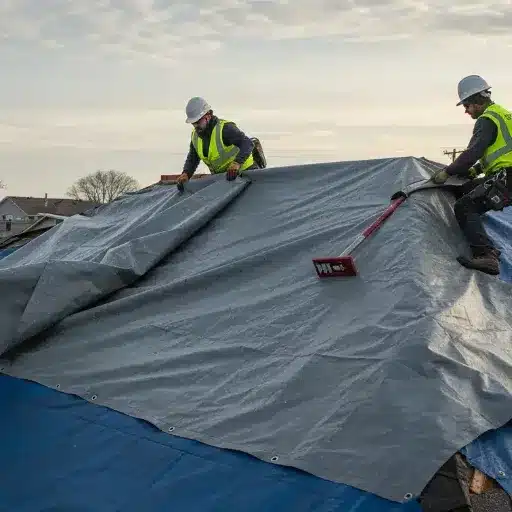
Installation matters as much as material. A premium PVC roof tarp will fail if it is loose, poorly anchored, or positioned so water runs underneath.
Safety First: Harness, Ladder, Spotter, and Weather
Never work on a roof during high winds, rain, or lightning. Wear non-slip shoes, gloves, and eye protection. On slopes greater than 6:12 pitch, use a harness, roof anchor, and lifeline. Work with at least one helper on the ground to steady the ladder and manage the tarp. If the roof is unstable or the damage is extensive, call a professional roofer.
Tools and Materials Needed
For a typical board-batten installation, you will need:
- Tarp sized with adequate overhang
- 2×4 lumber boards, 2 feet longer than the tarp edges
- 3-inch deck screws or roofing nails
- Cordless drill or hammer
- Utility knife
- Heavy-duty rope or bungee cords with UV resistance
- Sandbags for perimeter ballast on flat roofs
- Safety harness, ladder, and spotter
Step-by-Step Board-Batten Installation Method
The board-batten method is the professional standard because it avoids nailing directly through the tarp. Direct fastening creates holes that become leak points.
- Clear debris from the damaged area and surrounding roof surface.
- Unfold the tarp and center it over the damage, running it over the ridgeline on sloped roofs.
- Wrap the edge of the tarp around a 2×4 board so the fabric is sandwiched against the roof deck side.
- Fasten the board through the tarp wrap and into the roof decking, not just the shingles.
- Repeat along all four edges, pulling the tarp taut as you go.
- Add a second perpendicular board across the center if the roof is large or exposed to high winds.
This approach distributes load across a wide surface and keeps the waterproof membrane intact.
Securing With Grommets, Ropes, and Sandbags
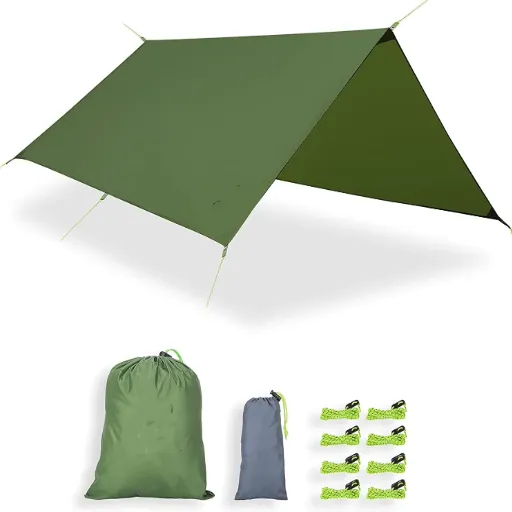
If the tarp has reinforced grommets, use rope or heavy-duty bungees to tie down corners and edges. On flat roofs where penetrating the membrane is not possible, sandbags placed at the perimeter can hold the tarp in place. Keep tension even across the entire surface. Wrinkles and folds create wind catch points and water pockets.
Ridgeline Positioning for Water Runoff
On a pitched roof, always drape the tarp over the peak. Water must flow down the slope and off the edges, not pool against the uphill side of the cover. If the tarp ends below the ridgeline, rain can run under the top edge and continue into the building.
Wind-Proofing and Tension Management
Wind uplift is the leading cause of roof tarp failure. A loose tarp flaps, and each flap cycle weakens the fabric and fasteners. Tension the cover drum- skin-tight. Check tension after the first storm and again weekly during extended use. Replace any fastener that has loosened or pulled free.
For a visual walkthrough of these steps, Lowe’s provides a step-by-step video tutorial on how to tarp a roof.
Avoiding Common Roof Tarp Failures
Most roof tarps fail at the seams, edges, or attachment points long before the fabric itself gives out. Anticipating these failure modes prevents the emergency from recurring.
Water Pooling and Sagging
A sagging tarp collects water. The added weight stretches the fabric, pulls fasteners, and eventually finds the lowest point to leak through. Maintain tension and create slope. On flat roofs, add a support frame or intermediate boards to preserve a drainage plane.
Wind Uplift and Flapping
Wind catches loose material and generates lift. Over time, this motion fatigues the fabric and tears grommets. The board-batten method and regular tension checks are the best defense. Avoid relying on adhesive tarps alone in high-wind zones.
Grommet Tear-Out
Grommets concentrate stress at a small point. If the tarp is not tensioned evenly or if wind loads spike, the grommet can rip through the reinforced edge. Using boards to distribute load reduces this risk significantly.
Seam and Edge Leaks
Heat-sealed PE seams can split when the film becomes brittle. Sewn canvas seams leak unless sealed. RF-welded PVC seams are the most reliable because the weld creates a molecular bond across the joint. Inspect seams regularly during long-term deployments.
UV Degradation Timelines
UV exposure is silent damage. A tarp that looks fine can have micro-cracks in the coating that allow water through. Standard poly tarps begin degrading within weeks. Reinforced PE shows wear within months. UV-stabilized PVC maintains performance for years. Plan inspections based on the material’s expected lifespan, not its appearance.
How Long Can a Tarp Stay on a Roof?
Duration depends on material, climate, and installation quality. No tarp is a permanent roof.
Standard Poly Tarps: 30 to 90 Days
Thin blue or green poly tarps are designed for temporary duty. In full sun, they can become brittle within 30 to 90 days. Use them only for short bridges to permanent repair.
Heavy-Duty PE Tarps: 6 to 12 Months
Reinforced silver or heavy-duty PE tarps can remain serviceable for 6 to 12 months, and sometimes up to 2 years in mild conditions. They are a practical choice when a repair is delayed by supply chains or insurance processing.
PVC Tarpaulin: Months to Several Years
Heavy-duty PVC roof tarps can last from months to several years depending on weight, coating quality, and maintenance. A 600 GSM PVC tarpaulin with UV stabilizers and welded seams is often used for long-term construction covers, industrial applications, and disaster recovery where replacement is difficult or costly.
Inspection and Maintenance Schedule
Inspect the tarp after every significant storm and at least monthly during extended use. Look for tears, seam separation, fastener loosening, and water pooling. Re-tension as needed. Document the condition with photos for insurance purposes.
FEMA Operation Blue Roof and Emergency Standards
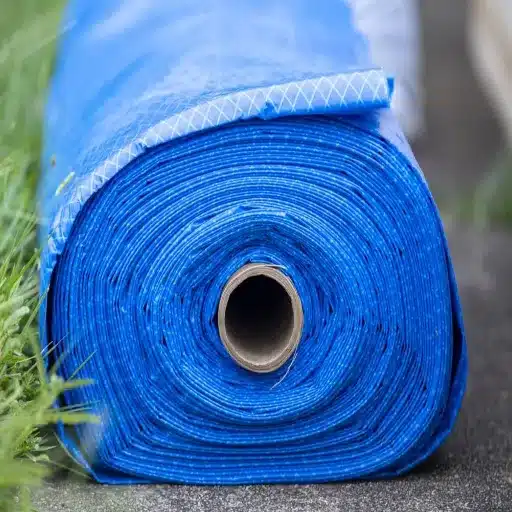
In federally declared disaster areas, FEMA coordinates with the U.S. Army Corps of Engineers to install temporary roof coverings at no cost to eligible homeowners.
What Operation Blue Roof Covers
Operation Blue Roof provides fiber-reinforced sheeting to reduce further damage until permanent repairs can be made. It is not a repair program. The covering is temporary and does not restore the roof to its pre-storm condition. Homeowners can apply at BlueRoof.us or by calling 1-888-ROOF-BLU.
FEMA-Grade Tarp Specifications
FEMA emergency roof tarps are typically 6 to 10 mil polyethylene, often 8 mil for field kits. They are UV-stabilized, waterproof, and reinforced at the edges. Some kits meet CPAI-84 or NFPA 701 flame-retardant standards. These specifications are designed for rapid deployment and short-term protection, not multi-year exposure.
When to Apply and Eligibility
Eligibility is limited to primary residences in counties covered by a federal disaster declaration. The home must have no more than 50 percent of its roof framing damaged. Flat roofs, metal roofs, clay or slate tiles, asbestos shingles, and vacation homes are generally not eligible. Occupants must sign a Right of Entry form allowing crews to access the property.
Difference Between FEMA Kits and Commercial Roof Tarps
FEMA kits are distributed for free in emergencies and installed by government crews. Commercial waterproof tarps are purchased directly and can be specified in heavier weights, larger sizes, and PVC construction for longer service life. If your property does not qualify for Operation Blue Roof, or if you need coverage beyond the standard 30-day emergency window, a commercial-grade PVC roof tarp is the stronger option.
Cost Comparison: Tarp vs Emergency Roof Repair
Cost analysis should include the cover, installation labor, monitoring, and the risk of failure. The cheapest tarp is rarely the cheapest solution.
Material and Installation Costs by Tarp Type
Standard poly tarps cost the least per square foot but require replacement most often. Heavy-duty PE tarps cost more upfront but last longer. PVC tarpaulin has the highest initial cost but the lowest cost per year of service when the installation must remain for months. Installation labor is similar across materials, so a tarp that lasts four times longer often delivers four times the value.
When a Tarp Is False Economy
A tarp becomes false economy when it fails before the permanent repair is complete. Water damage to insulation, drywall, electrical systems, and inventory can exceed the cost of a better tarp by orders of magnitude. For commercial buildings, the cost of downtime, relocation, and liability often dwarfs the material price.
When the operations team at a distribution center in Ohio faced a winter roof leak, they initially covered the opening with a standard blue tarp to save money. The tarp tore in a wind gust after three weeks, releasing water onto a pallet of electronics. The damaged inventory and production delay cost more than a 600 GSM PVC cover would have cost from the start.
Insurance Documentation and Reimbursement
Document the damage, the temporary covering, and all receipts. Many insurance policies cover emergency tarping as part of mitigation. Photos showing the tarp in place, the date installed, and the condition over time strengthen a claim. Keep records of any professional installation or inspection.
Custom and Industrial Roof Tarp Solutions
Standard sizes do not fit every roof. Complex geometries, large commercial buildings, and regulated industries often require custom-engineered covers.
Non-Standard Roof Dimensions and Shapes
Industrial roofs may have parapets, HVAC equipment, skylights, and irregular footprints. A custom-fabricated PVC roof tarp can be cut and seamed to fit these features precisely. RF-welded seams and reinforced edges ensure the cover performs as a single waterproof membrane rather than a patchwork of smaller tarps.
Bulk Procurement for Contractors and Disaster Relief
Contractors, restoration companies, and disaster relief organizations need consistent supply in large quantities. Working with a manufacturer that can produce uniform rolls, pre-sized kits, or custom dimensions reduces field labor and ensures every crew has the same specification.
Fire-Retardant and Certified Options
Some sites require flame-retardant materials. NFPA 701 and CPAI-84 are common fire-performance standards for temporary structures and covers. Specifying certified PVC tarpaulin keeps the project compliant with site safety requirements and reduces insurance friction.
When to Specify PVC Tarpaulin for Demanding Applications
Specify PVC tarpaulin when the cover must remain in place for more than a few weeks, when wind or snow loads are significant, or when failure would cause serious operational or safety consequences. Our heavy-duty PVC tarpaulin is engineered with high-tenacity polyester reinforcement and virgin-grade PVC coating for exactly these conditions.
For non-standard dimensions, certified fire-retardant grades, or bulk procurement, request a custom quote and our engineering team will match the specification to your roof and exposure requirements.
Conclusion
A waterproof tarp for roof protection is only as good as the specification behind it and the installation method holding it down. Standard poly tarps work for brief emergencies. Reinforced PE tarps extend coverage to a season. PVC tarpaulin delivers the durability, UV resistance, and seam integrity that long-term roof protection demands.
The right choice depends on how long the cover must perform, what weather it will face, and what failure would cost. Measure carefully, anchor with the board-batten method, and inspect regularly. When the application is critical or the dimensions are non-standard, specify a custom-engineered PVC solution that you can install and trust.
Need help selecting a waterproof roof tarp for your project? Contact our engineering team for specifications, custom sizing, and certified options built to your exact operational requirements.