
Best Waterproof Tarp by Application: Spec Buyer’s Guide
The best waterproof tarp depends on what you need to protect, for how long, and under what conditions. For industrial, construction, and transportation applications, PVC-coated polyester tarpaulin in the 450–900gsm range delivers the highest waterproof rating and longest service life. For camping, emergency shelter, or short-term residential coverage, PU-coated nylon or heavy-duty polyethylene tarps offer adequate protection at lower cost.
That distinction is where most buying guides fall short. They rank products by brand or price without asking whether the specifications match the job. A procurement manager sourcing fleet covers and a weekend camper need entirely different waterproof ratings, tensile strengths, and seam constructions. Buying the wrong specification costs more than buying the wrong brand. It leads to cargo damage, site downtime, equipment replacement, and failed inspections.
In this guide, we match application requirements to material, weight, waterproof rating, and construction specs. You will learn how to read technical data sheets, when PVC tarpaulin is the rational choice, and when a lighter material is sufficient. The goal is not to sell a tarp. The goal is to help you specify one that will not fail in your operation. If you are unsure how waterproof ratings are measured, read our complete guide to tarp waterproofing. Not sure which waterproof tarp is best for rain, construction, or outdoor storage? The LY TRUSTLINK team is ready to help you choose the right solution.
Key Takeaways
- The best waterproof tarp is the one whose specifications match the application, not the most expensive or heavily marketed option.
- PVC-coated polyester tarpaulin (450–900gsm) is the standard for construction, trucking, and long-term industrial exposure.
- Hydrostatic head rating, seam construction, and tensile strength matter more than thickness claims or “heavy duty” labels.
- Polyethylene tarps work for temporary coverage but degrade within 1–3 years under UV exposure.
- Canvas is breathable and repairable but water-resistant, not fully waterproof, without regular treatment.
What “Best Waterproof Tarp” Means: A Specification Framework
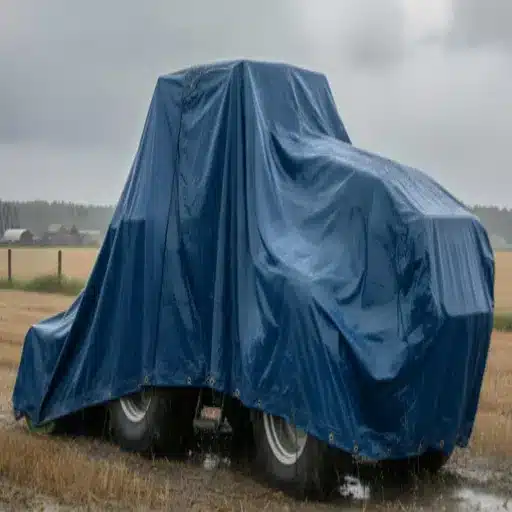
The word “best” is meaningless in procurement without a specification. A tarp can be the best for one application and a liability for another. The right question is: what performance thresholds does your application require?
Waterproof vs. Water-Resistant vs. Water-Repellent
These terms are not interchangeable. Waterproof means water cannot pass through the fabric under sustained pressure. Water-resistant means the fabric sheds light rain or spray but may leak under pooling or prolonged exposure. Water-repellent means the surface resists wetting but offers no protection against standing water.
Most polyethylene tarps are waterproof when new. Canvas tarps are typically water-resistant unless treated. Mesh tarps are water-repellent at best by design. Knowing which category you need prevents costly mismatches.
Why Specifications Matter More Than Marketing Labels
Retail packaging often uses terms like “heavy duty,” “super duty,” or “ultra strong” without data. In contrast, a technical data sheet lists GSM, hydrostatic head, tensile strength, tear resistance, and seam type. Those numbers tell you whether the tarp can handle your load, climate, and exposure duration.
For a fleet manager, the wrong tarp means damaged cargo and compliance violations. For a site supervisor, it means water ingress into scaffolding or equipment. Specifications translate directly into operational risk.
Five Criteria for a Best-Fit Tarp
- Waterproof rating: measured by hydrostatic head in millimeters.
- Material: PVC, PE, canvas, or coated nylon.
- Weight and construction: GSM, denier, weave count, and coating method.
- Durability: tensile strength, tear resistance, UV stability, and temperature range.
- Application fit: grommet spacing, seam type, fire retardancy, and size.
If a supplier cannot provide clear data in these five areas, you are buying on faith. Engineers do not buy on faith. Looking for a durable waterproof tarp for commercial or industrial use? Contact LY TRUSTLINK today to discuss your needs and receive a customized recommendation.
How to Choose the Right Waterproof Tarp
The following steps translate an operational requirement into a specification sheet that suppliers can quote against.
- Define the application: construction enclosure, truck cover, grain storage, camping shelter, or event tent.
- Set the waterproof threshold: 1,500mm hydrostatic head for light rain; 5,000mm+ for heavy rain or sustained exposure.
- Match weight to duty class: under 200gsm for temporary; 450–650gsm for heavy duty; 650–900gsm for industrial.
- Choose seam construction: welded seams for critical waterproofing; stitched seams only when breathability or cost dominates.
- Check climate requirements: UV stabilization for outdoor storage; cold-crack rating for freezing conditions.
- Calculate lifecycle cost: include replacement frequency, labor, and failure risk, not just purchase price.
This framework keeps the decision on data rather than marketing claims.
Waterproof Tarp Materials Compared
Choosing the best waterproof tarp starts with material selection. Each option has a valid use case, but the performance gap between them is substantial. Heavy duty tarp specifications start at 450gsm for PVC and 12 mil for PE.
PVC / Vinyl-Coated Polyester
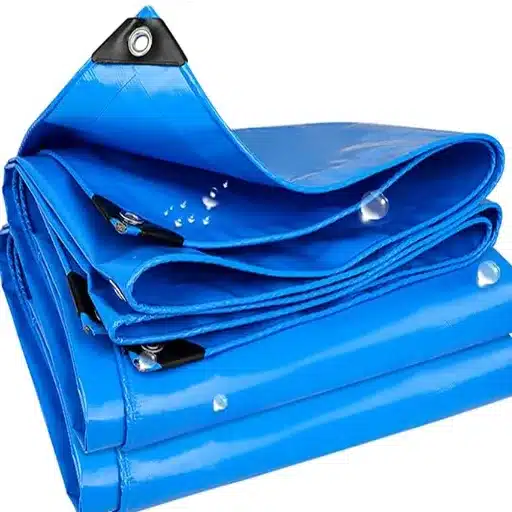
PVC-coated polyester, often called vinyl tarpaulin, is the most waterproof and durable option for commercial and industrial use. The PVC coating creates a continuous moisture barrier, while the high-tenacity polyester scrim provides structural strength. Seams can be heat-welded or RF-welded, which preserves waterproof integrity at the joints.
Typical specifications:
- Weight: 450–900gsm
- Hydrostatic head: 5,000mm+
- Tensile strength: 1,500–2,500 N/5cm
- Lifespan: 5–10+ years with UV stabilization
- Best for: Truck covers, construction enclosures, industrial equipment, marine protection
A 650gsm PVC tarpaulin with a 1000D × 1000D base fabric routinely delivers longitudinal tensile strength around 1,980 N/5cm and hydrostatic pressure resistance above 50 kPa. That is the specification threshold for demanding, load-bearing applications.
Polyethylene (PE) Tarps
PE tarps are lightweight, low-cost, and fully waterproof when new. They consist of a woven HDPE or LDPE scrim laminated with polyethylene film. They work well for temporary coverage, but UV exposure degrades the film over time, causing micro-cracks and seam failure.
Typical specifications:
- Weight: 80–300gsm
- Hydrostatic head: 1,500–10,000mm when new
- Tensile strength: 500–1,400 N/5cm
- Lifespan: 6 months to 3 years depending on grade and UV exposure
- Best for: Short-term covers, emergency protection, light agricultural use, camping
PE is not a bad material. It is simply the wrong material when long-term outdoor exposure or mechanical stress is expected.
Canvas Tarps
A waterproof canvas tarp is actually water-resistant unless treated with wax or silicone. Untreated canvas is water-resistant because cotton fibers swell when wet, tightening the weave. Treated or waxed canvas improves water shedding but still falls short of true waterproofing.
Typical specifications:
- Weight: 270–680gsm (8–20 oz/yd²)
- Hydrostatic head: 0–1,000mm depending on treatment
- Tensile strength: Moderate
- Lifespan: 2–5 years with maintenance
- Best for: Equipment covers where condensation control matters, heritage or aesthetic applications
Canvas is the right choice when breathability is more important than absolute waterproofing. It is the wrong choice when pooled water or sustained rain is expected.
Silnylon and Coated Nylon
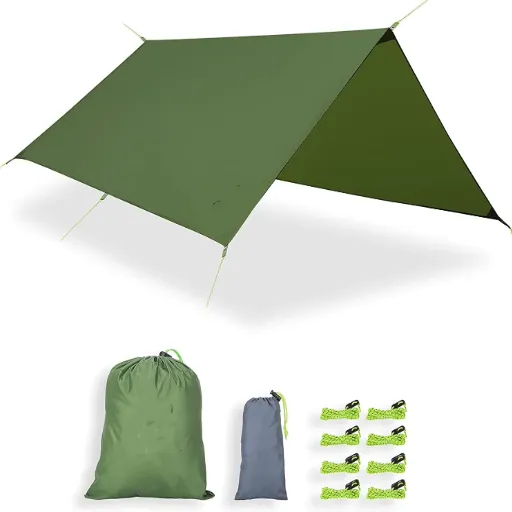
Silicone- or PU-coated nylon is the standard for backpacking and camping tarps. It is lightweight, packable, and can achieve hydrostatic head ratings of 2,000–20,000mm depending on the coating.
Typical specifications:
- Weight: 30–210gsm
- Hydrostatic head: 2,000–20,000mm
- Tensile strength: Moderate to high for the weight
- Lifespan: 3–10 years depending on coating and storage
- Best for: Ultralight camping, hammock shelters, emergency kits
These materials are excellent for personal outdoor use but lack the abrasion resistance and load-bearing capacity of PVC for industrial work.
| Material | Hydrostatic Head | Typical Lifespan | Best For |
|---|---|---|---|
| PVC-coated polyester | 5,000mm+ | 5–10+ years | Construction, trucking, industrial, marine |
| Polyethylene (PE) | 1,500–10,000mm | 6 months–3 years | Temporary covers, camping, emergency use |
| Canvas (treated) | 0–1,000mm | 2–5 years | Breathable equipment covers, aesthetic use |
| Silnylon / PU nylon | 2,000–20,000mm | 3–10 years | Backpacking, hammock shelters, lightweight recreation |
Need a deeper comparison of these materials? Read our detailed guide on PVC vs polyethylene vs canvas tarp performance.
How to Read Waterproof Tarp Specifications
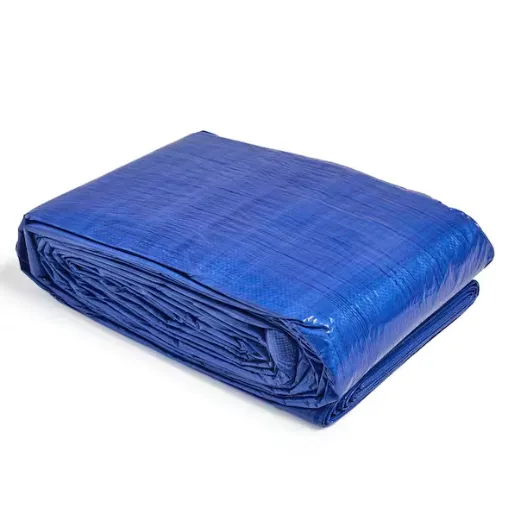
A data sheet is only useful if you know what each number means on a tarp waterproof rating sheet. Here is how to read the specs that separate the best waterproof tarp from an underperforming one.
GSM and oz/yd²: What Weight Actually Tells You
GSM stands for grams per square meter. It measures fabric weight, not thickness. Higher GSM generally indicates a denser base fabric and more coating, which correlates with higher strength and durability.
- Light duty: under 200gsm
- Medium duty: 200–450gsm
- Heavy duty: 450–650gsm
- Industrial duty: 650–900gsm+
Oz/yd² is the imperial equivalent, common for canvas and PE tarps in North America. A 12oz canvas tarp is roughly 407gsm.
Mil Thickness: When It Matters and When It Misleads
Mil thickness measures film thickness in thousandths of an inch. It is useful for comparing PE tarps: a 12-mil tarp is thicker than a 5-mil tarp. However, mil does not convert directly to GSM, and it says little about base fabric strength or coating quality. A thick but poorly coated PE tarp can still fail quickly in UV.
Hydrostatic Head Rating: The Lab Number Behind “Waterproof”
Hydrostatic head measures how much water pressure a fabric can withstand before leaking, reported in millimeters of water column. The test follows standards such as ISO 811 or AATCC 127.
- Under 1,500mm: water-resistant
- 1,500–5,000mm: waterproof for most rain and brief pooling
- 5,000–10,000mm: highly waterproof, suitable for heavy rain and sustained exposure
- 10,000mm+: extreme waterproofing, common in premium outdoor gear
Solid PVC and PE films can exceed 10,000mm easily. The real failure point is usually the seam, not the fabric.
Tensile Strength and Tear Resistance
Tensile strength measures the force required to pull the fabric apart, reported in N/5cm or lbf/in. Tear resistance measures how well the fabric resists tear propagation. Both are tested under ASTM D5034, ISO 1421, or similar methods.
For truck side curtains and load-bearing covers, look for tensile strength above 1,500 N/5cm. For light-duty ground sheets, 500 N/5cm may be adequate.
Seam Construction
Seams are the weakest point in any tarp. The construction method determines whether the seam leaks or splits under load.
- Heat-sealed seams: common in PE tarps; creates a fused bond but can split under flex stress.
- RF-welded seams: uses radio frequency to create a molecular bond in PVC; highly durable and waterproof.
- Hot-air welded seams: bonds PVC with heated air; strong and suitable for field repairs.
- Stitched seams: common in canvas and budget tarps; creates needle holes that can wick water unless sealed or taped.
For critical waterproofing, welded seams outperform stitched seams.
Temperature Range and Cold-Crack Resistance
Waterproofing depends on coating flexibility. In freezing temperatures, stiff coatings crack and leak. Premium PVC tarpaulin is typically rated to -25°C, with specialized grades rated to -40°C. PE tarps become brittle faster in cold. Always confirm the operating temperature range if the tarp will see winter exposure.
Grommets, Hems, and Corner Reinforcement
Grommet spacing determines how evenly tension is distributed. Industrial tarps typically place grommets every 1 meter or 18–24 inches. Reinforced hems with rope or webbing prevent edge tear-out. Reinforced corners are essential for high-wind applications.
Want a full breakdown of what makes a tarp truly heavy duty? See our guide to heavy duty waterproof tarp specifications.
Best Waterproof Tarp for Construction Sites
Construction sites demand tarps that resist abrasion, support loads, comply with safety standards, and survive repeated handling.
Required Specifications
For scaffolding covers, debris containment, and equipment protection:
- Material: PVC-coated polyester
- Weight: 450–650gsm
- Fire retardancy: NFPA 701 or equivalent where required
- Seams: heat-welded or RF-welded
- Grommets: reinforced, spaced every 1 meter or less
Why Stitched Seams Fail on Job Sites
Construction tarps are dragged over sharp edges, flapped by wind, and loaded with debris. Stitched seams create perforations that wick water and act as tear initiation points. A welded seam distributes stress across the bond line rather than concentrating it at needle holes.
Compliance and Safety Considerations
Many jurisdictions require fire-retardant materials for temporary enclosures and scaffolding covers. A reinforced tarp with NFPA 701 certification meets both safety and durability requirements. Always confirm local requirements before specifying. Non-compliant covers can halt work and create liability exposure.
Mini-story: Maria, a site supervisor in Chicago, specified standard PE tarps for a winter scaffold enclosure. After six weeks of freeze-thaw cycles and wind, the stitched seams split and water saturated the work area below. The remediation cost exceeded the price difference to 650gsm PVC welded-seam covers by a factor of four. She now specs PVC with NFPA 701 certification for every winter job.
For construction-grade protection, explore our heavy-duty PVC tarpaulin options engineered for site safety and long-term exposure.
Best Waterproof Tarp for Trucks and Transportation
Truck tarps must withstand highway speeds, wind gusts, cargo abrasion, and constant tension changes. The wrong specification creates road hazards, compliance failures, and cargo damage.
Required Specifications
For flatbed covers, lumber tarps, and truck side curtains:
- Material: PVC-coated polyester
- Weight: 500–900gsm depending on load and route
- Tensile strength: 1,500 N/5cm minimum
- UV stabilization: required for open-cab routes
- Seams: RF-welded or hot-air welded
Wind Load and Tie-Down Requirements
A waterproof tarp cover at highway speed behaves like a sail. Grommets must be reinforced, and tension must be distributed evenly. Rope-in-hem construction adds strength along the edges. D-rings are sometimes used in place of grommets for heavy flatbed loads.
Sizing Formula
For a flatbed load, the finished tarp size should cover:
Load width + (2 × drop height) + overlap allowance
For side curtains, measure the trailer frame and allow for tensioning hardware. A poorly sized tarp flaps, pools water, and tears at anchor points.
Mini-story: A logistics fleet manager in Rotterdam tracked replacement costs across two routes. One fleet used 180gsm PE tarps replaced every 8 months. The other used 650gsm PVC side curtains with RF-welded seams replaced every 7 years. The PVC fleet’s cost per kilometer for tarp coverage was 62% lower, even though the initial purchase price was higher.
For fleet-specific specifications, request a custom quote with your load dimensions and route conditions.
Best Waterproof Tarp for Agricultural Use
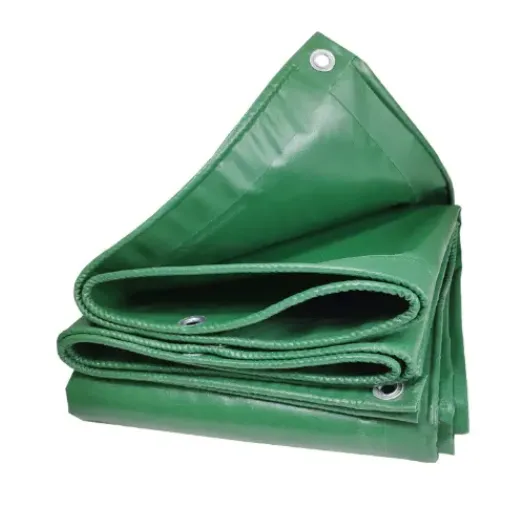
The right waterproof tarp for agriculture depends on the asset and exposure. Grain and hay covers, equipment shelters, livestock protection, and greenhouse glazing each place different demands on weight, UV stability, and breathability.
Required Specifications
- Grain and hay covers: UV-stabilized PE, 200–260gsm, or PVC for multi-season use
- Equipment shelters: PVC 450–650gsm for abrasion and weather resistance
- Livestock protection: PVC or treated canvas, depending on breathability needs
- Greenhouse applications: clear or translucent PE/PVC with UV stabilization
Condensation and Breathability Trade-Offs
PVC is fully waterproof but can trap condensation under equipment covers. Canvas allows moisture to escape but is not fully waterproof. For stored machinery, a ventilated PVC cover or a canvas body with a PVC ground sheet can balance both needs.
Seasonal Storage Considerations
UV exposure is the primary aging factor for agricultural tarps. A UV resistant tarp with a 500 Kly rating typically lasts 5–10 years in outdoor storage. Even quality PE tarps lose flexibility after 2–3 seasons of intense sun.
Best Waterproof Tarp for Camping and Outdoor Recreation
The best waterproof tarp for camping prioritizes weight, packability, and sufficient waterproofing for expected conditions. For camping in sustained rain, a tarp for rain protection needs at least 3,000mm hydrostatic head.
Required Specifications
- Ground sheets and tent footprints: PE or PU-coated nylon, 2,000–5,000mm hydrostatic head
- Hammock rain flies: silnylon or PU-coated polyester, 2,000–10,000mm
- Group shelters: coated nylon or polyester, 3,000–10,000mm, reinforced tie-outs
Weight vs. Durability Trade-Off
Ultralight tarps under 500g sacrifice abrasion resistance. For basecamp or car camping, heavier fabrics last longer. For backpacking, every gram matters, so users accept shorter lifespan and more careful handling.
When Recreational Specs Are Insufficient for Commercial Use
A 2,000mm rain fly is excellent for a backpacker but insufficient for a truck cover or construction enclosure. The fabric weight, seam strength, and grommet reinforcement are not designed for mechanical loads or prolonged UV exposure. Do not spec recreational tarps for industrial work.
Best Waterproof Tarp for Events and Emergency Protection
The right waterproof tarp for events balances rapid deployment, reliable waterproofing, and often specific aesthetic or safety features. Event tents, stage covers, and ground protection each have different finish and certification requirements.
Event Tents and Ground Covers
For event tents, stage covers, and ground protection:
- Material: PVC 400–650gsm
- Finish options: blackout, white, or custom colors
- Fire retardancy: NFPA 701 or equivalent
- Seams: welded for weather tightness
Emergency Roof Tarps
Storm-damaged roofs need immediate coverage. The right emergency tarp is large enough to overhang the damaged area, reinforced at corners, and secured without causing further roof damage. PVC is preferred for extended emergency use because it resists UV and wind better than PE.
Disaster Relief
Pre-sized tarp kits with reinforced grommets, high-visibility colors, and clear installation instructions speed deployment. A waterproof tarp for emergency response must be large enough to cover damage, strong enough to survive wind, and simple enough to install without specialized tools. Organizations often order custom sizes and colors to match logistics and identification protocols.
Every project has different waterproofing requirements. Contact LY TRUSTLINK to find the ideal tarp solution backed by professional service and industry experience.
Waterproof Tarp Specification Quick-Reference by Application
| Application | Recommended Material | Weight | Hydrostatic Head | Expected Lifespan | Key Features |
|---|---|---|---|---|---|
| Construction site cover | PVC-coated polyester | 450–650gsm | 5,000mm+ | 5–10 years | Welded seams, NFPA 701 option, reinforced corners |
| Truck / flatbed cover | PVC-coated polyester | 500–900gsm | 5,000mm+ | 5–10 years | High tensile strength, UV stabilized, rope-in-hem |
| Agricultural equipment | PVC or UV-stabilized PE | 200–650gsm | 1,500–5,000mm+ | 2–10 years | UV inhibitors, abrasion resistance |
| Camping / backpacking | Silnylon or PU nylon | 30–210gsm | 2,000–10,000mm | 3–10 years | Lightweight, packable, reinforced tie-outs |
| Event tent / ground cover | PVC-coated polyester | 400–650gsm | 5,000mm+ | 5–10 years | Custom colors, FR option, welded seams |
| Emergency roof protection | PVC or heavy-duty PE | 200–650gsm | 1,500–5,000mm+ | 1–5 years | Rapid deployment, overhang, wind securement |
Lifecycle Cost: Why the Cheapest Tarp Is Rarely the Best Value
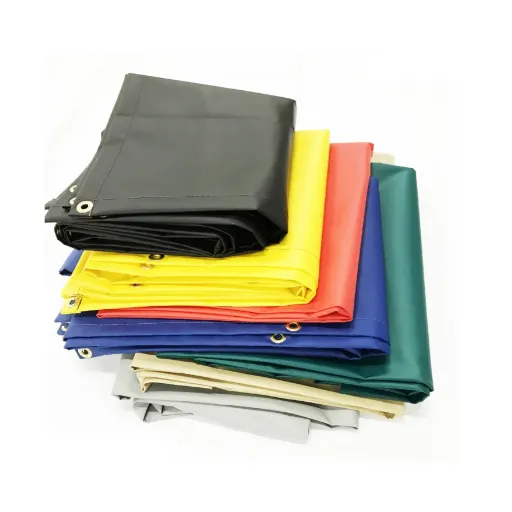
Sticker price ignores replacement frequency, labor for installation and removal, downtime, and damage from failure. A lower upfront cost often produces a higher total cost of ownership.
Cost-Per-Year Analysis
A cheap 80 GSM blue PE tarp might cost $10 and last only one season. A 650 GSM PVC tarp might cost $80 and last 8 years. Although both average about $10 per year, the PE tarp requires annual replacement labor and has a much higher risk of failure, making the PVC tarp the more cost-effective long-term option.
For commercial operations, the math is sharper. A commercial waterproof tarp failure on the road can cause cargo damage, traffic violations, and schedule delays. A construction tarp failure can flood a work area. The cost of the right specification is small compared to the cost of the wrong one.
Typical Price Ranges by Material
| Material | Typical Price Range (USD) | Expected Lifespan | Cost Per Year |
|---|---|---|---|
| PE tarp (light duty) | 10–10–50 | 6 months–1 year | 10–10–100 |
| PE tarp (heavy duty) | 30–30–120 | 1–3 years | 10–10–120 |
| Canvas (treated) | 40–40–200 | 2–5 years | 8–8–100 |
| PVC tarpaulin | 80–80–500+ | 5–10+ years | 8–8–100 |
Prices vary by size, weight, coating grade, and certification. The table shows why lifecycle analysis often favors PVC for multi-year operations.
When Upgrading to PVC Tarpaulin Pays for Itself
PVC becomes the rational choice when:
- The tarp is exposed to sun, wind, or mechanical stress for more than one season.
- The application is load-bearing or safety-critical.
- Fire retardancy or compliance certification is required.
- Downtime or replacement labor is expensive.
Mini-story: A procurement officer in a municipal fleet switched from 200gsm PE tarps to 650gsm PVC side curtains after calculating annual replacement and labor costs. The PVC covers cost 4.5 times more upfront but lasted 7 times longer. The break-even point arrived in 18 months. After that, the city saved both material budget and crew hours every year.
When to Choose Custom Manufacturing
Standard sizes and weights work for many applications, but operations with non-standard dimensions, reinforcement requirements, or certification needs require custom fabrication.
Non-Standard Dimensions and Reinforced Zones
Large equipment, irregular loads, and architectural installations often need tarps with custom cutouts, additional grommets, reinforced patches, or welded D-rings. Off-the-shelf tarps force compromises in coverage and durability.
OEM/ODM Capabilities and Prototyping Timelines
For distributors and OEM manufacturers, custom specifications include weight, coating type, color, printed branding, and roll dimensions. Prototype samples typically take 2–3 weeks. Production lead times are confirmed at order based on volume and complexity.
Certification Requirements
Regulated industries may require test reports for tensile strength, tear resistance, fire retardancy, or environmental compliance. A custom manufacturer can produce to certified standards and provide documentation that off-the-shelf products often cannot.
If your application does not fit standard catalog specifications, talk to an engineer about your requirements. Specification conversations before production prevent failures after installation.
Frequently Asked Questions
What is the most waterproof tarp material?
PVC-coated polyester is the most waterproof tarp material for industrial and commercial use. It achieves hydrostatic head ratings above 5,000mm, can be RF-welded at seams, and resists UV, chemicals, and abrasion over a 5–10 year lifespan. For ultralight recreation, silicone-coated nylon can reach 10,000mm or higher but lacks mechanical durability.
Are all tarps 100% waterproof?
No. Many tarps are only water-resistant or water-repellent. Untreated canvas, mesh tarps, and lightweight nylon without coating will allow water through. Even waterproof materials can leak at seams, grommets, or damaged areas. Always verify the hydrostatic head rating and seam construction.
How thick should a waterproof tarp be?
Thickness depends on the material and application. For PE tarps, 12–16 mil is suitable for medium-duty outdoor use, and 20+ mil for heavy-duty. For PVC, GSM is the more reliable indicator: 450–650gsm for heavy-duty, 650–900gsm for industrial. Do not rely on mil thickness alone for PVC.
What is better, PVC or PE tarp?
PVC is better for long-term, load-bearing, and weather-exposed applications because of its strength, UV stability, and welded-seam capability. PE is better for temporary, lightweight, and budget-sensitive coverage. The right choice depends on duration, mechanical stress, and climate.
How long does a waterproof tarp last?
Lifespan varies by material and exposure. Cheap PE tarps last 6–12 months outdoors. Heavy-duty PE tarps last 1–3 years. PVC tarpaulin lasts 5–10+ years with UV stabilization. Canvas lasts 2–5 years with maintenance. Storage conditions and UV exposure have a major impact.
Can you make a non-waterproof tarp waterproof?
You can improve water resistance with sprays, waxes, or seam sealers, but these treatments rarely match factory-applied coatings. Canvas can be waxed or treated with silicone/PU sprays. PE tarps are difficult to re-waterproof once the film degrades. For critical applications, replacing with a properly specified waterproof tarp is usually the better investment.
What is the longest-lasting tarp material?
PVC-coated polyester tarpaulin is the longest-lasting waterproof tarp material for industrial and commercial use. With UV stabilization and welded seams, it typically lasts 5–10 years or more. Silicone-coated nylon can last a similar timeframe in recreational use but cannot handle mechanical loads or prolonged UV exposure like PVC.
How do I choose the right waterproof tarp?
Start with the application, then match the specification. Define the load, climate, and exposure duration. Choose a material and GSM that fit the duty class. Verify the hydrostatic head rating and seam construction. Finally, calculate lifecycle cost rather than sticker price.
What size tarp should I get?
Measure the area to cover and add an overlap allowance on all sides. For flatbed loads, use the formula: load width + (2 × drop height) + overlap. For ground covers, add at least 30–60 cm beyond the footprint. When in doubt, order slightly larger. A tarp that is too small cannot be stretched to fit.
Conclusion
The best waterproof tarp is not a single product. It is the specification that matches your application. Construction sites, trucking fleets, agricultural operations, and camping trips each require different materials, weights, waterproof ratings, and seam constructions.
For demanding, long-term, and load-bearing applications, PVC-coated polyester tarpaulin in the 450–900gsm range is the engineering standard and the rational choice for any heavy duty waterproof tarp procurement. For temporary or lightweight coverage, PE or coated nylon may be the rational choice. The key is to read the specification sheet, understand the test methods, and calculate lifecycle cost rather than sticker price.
At LY TRUSTLINK, we engineer protective fabrics to exact operational requirements. If your project needs custom dimensions, certified materials, or technical guidance on specification, contact our engineering team for a consultation or custom quote.