

Film Production Tarpaulin: Studio & Location Covering Solutions
Film production is a whole coalesce of different elements wherein every single aspect place its part — the director’s vision being the biggest one among these and the tiniest prop on the set being the smallest one. An unnoticed but highly significant character in the film world is the tarp which gets the limelight only when things go wrong. The best covering solutions can either make or ruin your production be it a busy outdoor location or a studio with a controlled setting. Tarpaulins are multifunctional, long-lasting, and vital for safeguarding the gear, managing the light, and coping with the weather which is sometimes unpredictable. This article will discuss the reasons for considering tarpaulins to be an inseparable partner in a film production process, giving you the very practical tips you will need for smooth shooting regardless of the setting.
The Importance of Tarps in Film Production
Protecting Equipment and Gear
Every film production always considered keeping equipment and gear safe as one of the top priorities. Tarpaulins will act as a dependable cover, guarding against dust and dirt as well as the particles that may eventually ruin the expensive equipment. During outdoor shoots especially—where the environment is less predictable—tarps take on an important role in that they ensure that cameras, lights, and audio gear remain in top condition.
The weather is frequently one of the hardest-to-manage aspects of a set, and tarps come in handy as a major factor to lessening weather effects. No matter whether it is rain out of the blue, blazing sun, or strong winds, tarps will have a different role as the barrier that keeps the delicate equipment away from the water, the heat and possible impact damage. Furthermore, they are quite easily set up and can be modified to cover the areas where they are most needed, thus, allowing for responsive and practical quick actions in line with the changing weather conditions.
Moreover, tarpaulins are indispensable for the shooting environment to be controlled. They could be utilized to block bright sunlight or to make shade, thus, guaranteeing the filming getting the right lighting conditions. By keeping the equipment’s integrity and providing adaptability in a range of scenarios, tarps play a significant role in cutting risks and delays, thereby, giving smoother and more efficient production workflows.
Creating Temporary Shelters
Temporary shelters have many applications and are always there when needed, protecting both people and equipment from the elements when conditions are uncertain. They are commonly found in disaster response initiatives, on construction sites, at outdoor events, and in military operations. These shelters are by far the best response and most practical, providing safety, privacy, and a functional workspace by using the adverse weather conditions such as extreme heat, heavy rain, and strong winds to their advantage.
Tarpaulins are the first choice for temporary shelter because they are flexible, strong, and waterproof. A shelter can be set up with ease and speed, using poles, ropes, or frames, which makes them suitable in emergency situations. Their light weight allows for easy transport and storage thus making them a very practical method even in the setting up of shelters in remote areas or areas with limited resources.
Temporary shelters are not only needed in emergencies but also are very useful in recreational activities like camping or outdoor gatherings. They provide nice areas for rest, cooking, and storing of supplies, thus the weather may not be an impediment to an enjoyable experience. Temporary shelters are always there as a key plus adaptable resource for providing comfort and protection in any environment whether it is critical or leisure ones.
Ensuring Smooth Operations in High-Pressure Situations
Getting through high-pressure situations without major problems means clear communication, good planning, and being able to change plans when needed. Communication is the biggest factor to keep the team in sync and that the whole group knows what their tasks and responsibilities are. Basic, short, and easy to understand commands will not only keep the atmosphere around the event calm but also invite swift responses in the heat of the moment. A single decision-making system or person directing the traffic can ease the efforts and bring down the uproar.
Proper planning significantly contributes to readiness for high-pressure events. The teams have to outline alternative ploys and take part in regular training or even simulated challenges with the same where this problem is coming up in the awareness of the team. This training lessens mistakes, gives people more trust and lets them be able to act and do the right thing very fast and effectively when in a situation that is unexpected. Moreover, it is important to have the required tools and resources so that there is no time lost in delays.
To be flexible is yet another major aspect of coping with pressure in the operations field. Things may quickly take a different turn; hence teams need to be able to move their plans and think outside the box so as to arrive at a solution fast. The quality of problem-solving can be improved a lot in uncertain situations if a team-based atmosphere that encourages quick decision-making and dependency on group expertise is there. Tweaking communication, preparation, and adaptability just a notch up will result in the smooth running of operations even in the harshest of the situations.
Diverse Uses of Tarps on Set

Waterproof Solutions for Outdoor Filming
Outdoor filming incurs the risk of unforeseen factors such as rain, humidity, or snow already affecting the equipment and the schedule. Tarps become an indispensable alternative for shielding moisture-damaged high-value pieces of equipment, for instance, cameras, lenses, and lighting setups. Today’s waterproof tarps come in a wide range of materials such as polyethylene and vinyl, which present strong protection and resistance to tearing and abrasion, making them able to survive the most unfavorable conditions on set.
Moreover, tarps are not just a singular thing but they can also take many different roles as they can be used for the crew, props or set covering and making them invisible. The polyethylene tarps are not only lightweight but they are also the most powerful solutions to rain formations whereas the heavy-duty vinyl tarps act as the long-term protectors from the wetness caused by heavy rains. The crews can thus work all day long and their productivity will not be affected much by the weather since they have this kind of flexibility.
Employing waterproof measures like tarps is still a good thing in terms of money for the shoot. It would be better to use less costly tarps rather than waiting for production to get delayed or going for the rent of the expensive specialized equipment. Way upon integrating this practical tool into outdoor setups, productions are no longer afraid of the weather interfering with their creative vision; they just march on with full confidence to realize their artistic head with no worries of setbacks due to the weather.
Enhancing Set Design with Tarps
Tarps are considered an essential part of the set design for the film, television, and theater industry. The versatility of these materials enables them to be used in different ways such as, giving realistic backdrops, creating fully enclosed spaces which can simulate particular environments, etc. For example, heavy-duty tarps can be used for making strong surfaces like rocks or streets, while the translucent ones would give diffused lighting for those specific mood-required scenes. The long-lasting nature and numerous uses of tarps make them the perfect choice for designers who think of making and setting up versatile and immersive backgrounds.
One advantage of tarps is that they are a very effective means of controlling the atmosphere of the scene. By applying the tarps in the right places the lighting conditions can be changed by use of the director and set designer. Black-out tarps which are the ones usually blocking both natural and man-made light are the ones that create exact shadows and contrasts required for dramatic moments. At the same time, radiant tarps might make possible the fact that one can work in the dark without losing the tone of the film by using the sound and light equipment that costs so much but is not so effective in bringing about that tone. This control gives the set producer the opportunity to coordinate with the production’s artistic director concerning every aspect of the set.
The entertainment industry is a major contributor to environmental pollution, yet at the same time its producers and directors are increasingly opting for eco-friendly sources of power, and tarps is one such source when they are repurposed and maintained. To be practical, accurately weatherproof tarps can guard the most sensitive parts of the set against the forces of wind, rain, and sun, thereby preserving the integrity of the set and cutting down on the expense of frequent replacements. Through the use of tarps, it is not only logistical efficiency that is gained but also aesthetics and functionality of the set designs. Thus tarps are great as they are no more just necessary but filthy modern productions indispensable tools.
Using Tarps for Lighting Setups
Tarps are essential for managing lighting setups in production, as they provide solutions that are both practical and creative. Outdoors, lighting control is really difficult, for the reason that the weather is very unpredictable and the changes of natural light may alter the scene’s mood and tone that the director had planned. Fortunately, the use of tarps is one way through which filmmakers can soften the light through diffusion and thus achieve a more uniform, gentle lighting effect which is crucial for high-quality shots. This is often the case when filmmakers give preferences to the using of heavy-duty whites, translucent or silver tarps since they easily do the very opposite of what is required by the cinematographic vision thus they are more versatile in their roles.
Another thing is that tarps can easily create temporary tents or rigs, which can act both as a source of shade and a support for the lighting used. This is a very handy trick that may diminish the number of expensive tools that are not only specialized but also high maintenance , thus resulting the entire production being more friendly in terms of budget. Even on sets with artificial lighting, tarps can work as blackout materials to prevent window light from leaking in or as reflective backs that can intensify the artificial light. They are not only invisible but also very effective in guiding the light where it is most needed which in turn means very tight control of the visual story.
In addition to their technical advantages, tarps enhance the safety of lighting on the set. By keeping the electrical equipment dry, tarps prevent the hazards that come with moisture which in this case may be people getting hurt as a result of the crew and cast being around the area so they may be unprotected. The use of weather-resistant tarps with flame-retardant features is particularly important since such tarps not only offer lighting protection but they also meet safety requirements. All in all, tarps become an indispensable part of the lighting setups as they show how much a simple, low-cost tool can upgrade the production quality considerably while still keeping the operational efficiency and safety standards.
Types of Tarps Available in the Industry
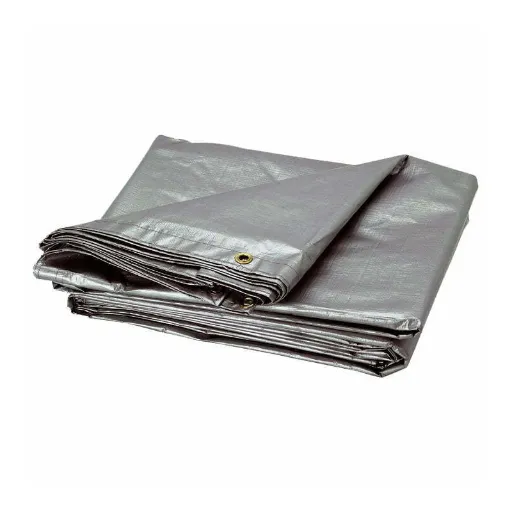
Vinyl Tarps: Durability and Versatility
Industries such as construction, agriculture, entertainment, and logistics have found vinyl tarps to be a great product for their incredible durability and versatility. These tarps are made from heavy-duty vinyl-coated fabrics that are impervious to tearing and abrasion and also resistant to extreme weather conditions, hence they can be very good for outdoor use in the extreme weather areas. Their resistance to sunlight, chemicals, and mold gives them a longer life and more dependability in both outside and inside applications.
Vinyl tarps have one major quality which is their being waterproof and it makes them necessary for water damage protection of different things like equipment, goods, or buildings. To illustrate, construction sites employ vinyl tarps to protect machines from rain, and at the same time farmers rely upon them to cover plants and stop them from rotting. They also find frequent application in the transportation industry where truck covers are used to keep cargo safe and secure during the journey even in bad weather. Their flexibility is shown in the custom-sized options, grommets for safe fastenings, and reinforced hems for more strength, all of which cater to numerous user needs.
Innovativeness in the manufacturing of vinyl tarps has been the factor that further strengthened their performance. The application of new coatings and treatments has increased their fire and extreme temperature resistance, thus including them in the film and production sectors. The arrival of newer lightweight but very strong options gives businesses the chance to select between tarps that are both easy to move and durable. Be it weatherproofing, security for sensitive materials, or temporary enclosures, vinyl tarps are still the dependable and cost-effective solution for many professional and industrial applications.
Canvas Tarps for Heavy-Duty Use
Canvas tarps are strong, breathable and versatile and are hence considered ideal for heavy-duty and rugged environments. They are made of woven cotton or polyester fabric and they are mostly used in construction, agriculture and transportation industries because of their strength and non-abrasive qualities. The main benefit of these tarps is their breathability which allows for the escape of moisture while under protection; hence the risk of condensation and mildew is reduced. This aspect of covering the mentioned materials is especially valuable if they will be utilized to build the like and humid trapped will be avoided.
Recent innovations in coating technology have opened new avenues of application for canvas tarps, they can now be waterproof or flame resistant depending on the needs of the users. Fire resistant canvas tarps are suitable for welding or firefighting scenarios and provide reliable protection in high-risk areas. Besides, the environment-conscious buyer will be pleased to know that canvas tarpaulins are biodegradable and recyclable thus their disposal will not be as problematic as that of single-use plastics.
For the elderly who are seeking very tough but at the same time versatile canvas tarps are still there to help and support with their performance that is confirmed by decades of usage. Their unsurpassed usability turns them into the most popular choice for both modern and traditional applications and consistently satisfy industries that demand durability and reliability.
PVC Tarps for Waterproof Needs
PVC tarps are the best option for every application where waterproofing up to par and durability are needed to be superior. Polyvinyl chloride is used to make these tarps, which are intended to keep water out completely thus being perfect for shielding materials and equipment in wet or humid areas. They are widely utilized in construction, farming, and picnics, where rain or moist air is part of the ambiance.
The factor that gives PVC tarps a competitive edge is the long life span, which is achieved through their ability to endure not only the weather but also the UV light, chemicals, and physical wear as well. Their glossy surface is also a contributing factor as it simplifies the cleaning process and reduces maintenance, thereby increasing the usability and the lifespan.
For example, these tarps are very popular due to their great tensile strength and flexible character that enable them to cover even the most irregularly shaped objects perfectly. No matter if you are safeguarding the goods against rain during transit or making temporary open-air shelters, you can always count on PVC tarps for their waterproofing and protection reliability that is second to none.
Choosing the Right Tarp for Your Production
Factors to Consider: Material and Size
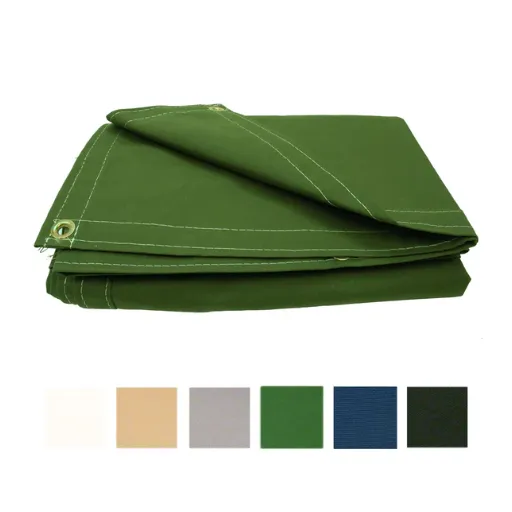
Choosing the proper tarp skirts around the issue of material selection more than anything else. PVC tarps, for instance, work great in situations where the toughest- such as, protection from water and UV rays- is required. They are able to withstand even the roughest environments, hence why they are the go-to materials in industries, heavy-duty construction, and outdoor logistics projects. Then again, the Polyethylene tarp comes as a lightweight, economical alternative but best suited for short-term light applications like covering machines, wood, or temporary outdoor storage. If you learn about the advantages and shortcomings of each tarp material, you will be able to make a choice that is tailored to the exact requirements of your production process.
The tarp size is the next important thing to think about. You must measure specifically the space or the items that you are going to cover in order to get the best coverage and usage. If a tarp is smaller than the area it is supposed to protect, it will not be able to work properly- hence leaving the covered items to be damaged by environmental factors that the tarp is supposed to protect them from, such as rain, wind, or sun. On the contrary, a tarp that is too big may lead to waste, such as extra material bulk and trouble in securing it properly. Take into account not only the physical sizes but also the layout and position of the items that need the cover to provide the optimum result.
Also, it is good if you can augment your material and size knowledge with other information and maybe new market data, if relevant, to fine-tune your selection method. For example, one of the materials used in tarp production might be a new super-durable or elastic one that could even increase the tarp performance in certain applications. Being updated on the eco-friendly and multi-purpose trend, for instance, could also be beneficial for your industry or sustainability goals. By giving careful consideration to both materials and size along with the newest advances in the market, you will be able to select with confidence that the tarp solution is specifically for you.
Expert Tips for Selecting the Best Tarp
- Understand Your Application Needs: The first thing to do is to look at the specific application for the tarp. Heavy-duty tarps with high mesh counts and reinforced grommets are the ones you should go for if your project is a heavy one requiring a lot of stress and pulling. For camping or outdoor purposes, materials that are lightweight but still offer low resistance to weather will work better. The tarp will not be subject to unnecessary abuse, thus longevity is assured if you use the right type of tarp according to its intended application.
- Consider Material Strength and Weather Resistance: The tarp’s material is one of the biggest factors that determine its performance. Polyethylene tarps are an excellent example of this as they are very robust and often water-resistant too. Thus, they are the perfect choice for covering areas that are subject to extreme weather conditions. On the contrary, canvas tarps allow air and moisture to pass through and, therefore, they are for use, for instance, in covering equipment that is likely to get damp. That said, when buying such materials, it is advisable to include UV protection if the sun is going to be their main element for a long time.
- Factor in Size and Thickness: Tarps are available in different sizes and thicknesses. Take the exact measurements of the area where the tarp is to be placed and include the overlapping area to avoid any parts that will left uncovered. For heavy-duty use, thicker tarps (which are measured in mils) should be the choice as they are more puncture and abrasion resistant. Thus, picking the right size and thickness can lead to less frequent replacements.
- Inspect Reinforcements and Grommet Positioning: One of the things you should check for is the strength of the corners and the stitching used in the seams; this is particularly important if the tarp is to be subjected to a lot of pulling or if it is going to be under a lot of strain. The positioning of the grommets, besides being important for the strength of the fastening, is also important in that; the closer the grommet spacing is, the more flexible securing options there are and the lower the likelihood of tearing from strong winds or heavy use.
- Eco-Friendly Options for Sustainability Goals: At the same time the world is getting more and more concerned about the environment, it is still very much worth considering to go for eco-friendly tarps that are made of recycled or biodegradable materials. Not only do these options help to lessen the impact on the environment, but they also serve to support the company’s or the individual’s sustainability goals.
- Stay Updated on New Innovations: Innovative breakthroughs in tarp manufacturing that include things like fire-retardant coatings or hybrid tarps that can be used for different purposes are appearing all the time. Keeping yourself updated regularly on the most recent innovations in this area will mean that you not only get access to the best products that give you efficiency and versatility but also that you are able to keep one step ahead of your competitors. Additionally, building good relationships with the suppliers or manufacturers could provide the researcher with valuable insider information on these technological advancements.
With expert advice and your own research into the latestmarket developments combined, you are then capable of making right decisions, selecting a quality tarp and also creating its use and durability in your application to the fullest.
Comparing Costs and Quality
Higher costs often correlate with better quality in specific contexts, but inefficiencies and poor practices can lead to high costs without quality improvements.
|
Key Point |
High Cost |
Low Cost |
|---|---|---|
|
Quality |
Often better |
May compromise |
|
Efficiency |
Can vary |
Typically higher |
|
Sustainability |
Depends on ROI |
More sustainable |
|
Customer Impact |
Higher satisfaction |
Risk of dissatisfaction |
|
Examples |
Premium services |
Budget options |
Special Applications: Tarps for Outdoor Movies

Setting Up a Projector Movie Screen
Projector and tarp screen combining to create an outdoor movie experience will not only provide high quality projection but also make the whole evening experience a night to remember. The first thing you need to do is the selection of the topmost and most suitable tent. Opting for a thin and light-colored tarp like white is extremely advisable for the projection’s optimum situation. It would be crucial for the tarp to be smooth with no wrinkles so that the whole set could be free of any disturbances induced by wind or motion. Be utilizing bungee cords, ropes, or very strong clamps this can be done.
Projector’s throw ratio is the basis for the distance it should be placed from the tarp. Short-throw projectors may suit smaller spaces but standard projectors would be good in bigger setups. Adjust projector’s height and angle so that the image is perfectly aligned with the screen without distortion. For sound, external speakers connect via Bluetooth or audio cables. It is gain provided by the speakers that takes audio quality to the next level making it just immersive.
Maximizing visibility should be made a priority, hence the screen and projector should be set up in a shaded or dark part of the location that is not so far away from competing ambient light sources. Nighttime watching gives the best contrast and image sharpness thus making the experience similar to that of a cinema. Apart from providing a lot of fun, comfortable seating options such as blankets, cushions, or folding chairs can be a way to creators’ aid in increasing the viewers’ enjoyment.
Utilizing Tarps for Drive-In Cinema Experiences
Tarps are one of the foremost factors to creating a drive-in cinema that leaves a very nice experience in the viewers’ minds. Their flexibility is such that they can be put to different uses, for example, they can serve as a large, smooth projection surface, protect the equipment during the rain, or make the space around the screening area cooler in hot weather. It is always wise to invest in high-quality tarps(especially the ones made of long-lasting and weatherproof materials) because such investments will surely guarantee their use in a wide range of conditions without the need for frequent replacements.
The usage of a tarp for projection purposes requires the choice of a white or light-colored tarp with less texture so that distortions on the image quality will be at their lowest. Wrinkles are removed by tightly stretching the tarp over a sturdy frame before being presented to the public so that the resultant picture is clear and professional. A tarp can be made very stable by tying it with bungee cords or using heavy-duty clamps that are strong enough to hold it against wind or movement.
Tarps are a solution that is both practical and economical thus being suitable for the event organizers that want to create an extraordinary outdoor cinema environment without pouring too much money into it. Through combining the above-mentioned uses with sincere planning, tarps have the potential to improve your drive-in cinema setup by providing both comfort and functionality for every viewer.
Innovative Uses for Projection Screens
The evolution of projection screens has been remarkable as they have progressed from the traditional role of classroom and office use to become essential tools in many different areas of the industry besides just business and leisure. A good example of where the use of projection screens has advanced greatly is in the home theater systems that are becoming more and more immersive. The delivery of film-like visual quality is now a reality in one’s home due to the pairing of ultra-high-definition projectors with high-quality screens that have technological advancement in the projection industry. Along with this, there is also the possibility of a viewer experiencing the film, sports, or gaming events through a new level of clarity and scale that the best TVs are still unable to replicate. In addition, if the view is being blocked by the projector or the screen is a distraction in the room, it is possible to use either a foldable or motorized screen which allows the screen to be hidden from view.
Projection screens have also gained another very popular application in outdoor events, where people enjoy pop-up movie nights and other events. Along with the use of portable projectors, outdoor screens have the ability to change backyards or open-air auditoriums into cinemas. The use of advanced materials such as water-proof and inflatable screens has made it easier to host outdoor screenings and the good news is that eventually no one will have to sacrifice the quality of the image. Moreover, cutting-edge features such as anti-glare surfaces make viewing easier even in places where total darkness is not possible. Event organizers and companies presenting new products have also been using projection screens to create live-streamed experiences, branding displays, or non-motorized media installations that can attract the audience’s attention.
In addition to entertainment, projection screens are also quickly becoming an essential tool that is being used in professional environments to foster collaboration and engagement. The use of interactive projection screens is making it possible for team members to conduct brainstorming sessions, show presentations and share ideas interactingively It can be said that such screens are a turning point in sectors like education as they do not only make the learning process more attractive and participatory but also more effective. Furthermore, they are even called the primary tools in the medical field where high-definition diagnostic imaging is used to be displayed with utmost accuracy during surgery or diagnosis. These divergent applications evidence that projection screens are adaptable to different environments and hence are the tools of choice for boosting productivity and creativity. As a result of the combination of high-tech solutions with the thoughtful implementation of projection, the boundary of their functionality and usability still keeps getting pushed.
References
-
Totally Impermeable Film (TIF) Reduces Emissions in Agriculture
This study highlights the use of impermeable tarps, which can also be relevant for controlling environmental conditions in film production. -
A Standardized Approach for Estimating the Permeability of Tarps
This document provides insights into the permeability of tarps, which can be useful for understanding their application in controlled environments like film sets. - Click here to read more.
Frequently Asked Questions (FAQ)
Q: What is a film production tarp and why is it important on set?
A: A film production tarp, one of the most critical elements on a film set, is a large plastic covering that the production usually made from poly or heavy duty tarps. It is mainly used to protect the equipment, create controlled lighting, or, for outdoor shoots, provide a temporary movie screen tarp. It is like an umbrella but a big one that keeps the rain off the equipment and the actors.
Q: How do I choose between standard heavy duty tarps and high-end custom tarps for film and photography projects?
A: The decision is based on your production needs: standard heavy duty tarps and poly tarps are suitable for general protection and good for distorting DIY solutions, while high-end custom tarps provide seamless treatments, long-lasting performance, and specialized sizes for lighting rigs, projector screen setups or aesthetic requirements for a cinematic shoot. You can either reach us or your tarp supply vendor to talk about specifications and lead times.
Q: Can a tarp be used as a projector screen or movie screen tarp for outdoor activities and open skies shoots?
A: Certainly, With appropriate surface treatment and right tensioning, a film production tarp can indeed be used for projecting images or as a movie screen tarp for open skies events. If you want the best image quality, opt for a seamless matte finish custom tarp or from recognized suppliers, a specialized projector screen tarp, and then set up lighting rigs and projectors to reduce hotspots and reflections.
Q: What are the best practices for rigging tarps on set to protect gear and crew members from unpredictable weather?
A: use grommets, ratchet straps, and reinforced tie-points to secure; position them to throw off water; make walkways for crew members under tarps; camp out with layered heavy duty tarps against the wind. When using tarps outdoors in unpredictable weather, plan for drainage and keep lighting rigs and electrical equipment high and dry.
Q: Are there DIY options for creating a temporary backdrop or seamless screen with a film production tarp?
A: A seamless backdrop from poly sheets or custom tarps cut to size, mounted on a frame, and tensioned to remove wrinkles can be a solution for the DIY filmmakers and photographers. It is best to use color-matched matte poly materials and consider post-production touch-ups to achieve a professional and cinematic finish.
Q: How do custom tarps improve long-lasting performance compared to off-the-shelf tarp supply products?
A: Custom tarps are customized in terms of material, thickness, and reinforcement to the specific production needs—thus giving them durability, UV resistance, and precise grommet placement for heavy-duty use. They probably last longer through repeated rigging, exposure to elements, and transport than their generic counterparts.
Q: Which tarp materials are best for film production uses like light diffusion, privacy, and weather protection?
A: Poly tarps are the king of the weather protection because they are versatile and also can be used for DIY light diffusion, heavy duty canvas or laminated tarps give tarp privacy and wind resistance. When it comes to light diffusion and the art of cinematic lighting, go for the material that has consistent translucency; if waterproofing and durability are your concern then go for heavy duty tarps with reinforced edges and UV stabilizers.
Q: How do tarps factor into overall production workflow from on-set use to post-production considerations?
A: Tarps are like protective shields around the equipment as well as controlled environments on set which in turn help in reducing retakes and protecting expensive gear—thus saving time and money even before reaching post-production. Using consistent, high-quality materials (custom tarps or high-end heavy duty tarps) helps keep the color grading, compositing, and finishing pipeline clean and. This cleans up the whole workflow for a photographer or film crew.