
PVC Flex Banner: Specs, Print Compatibility & Sourcing Guide
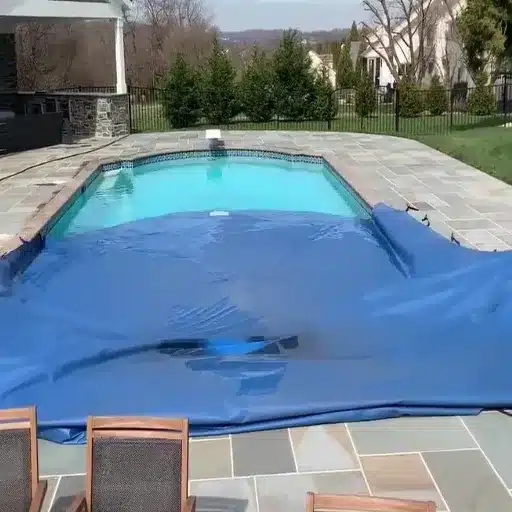
The article along with the statement says that after Precision Print Solutions from Manchester agreed to the national retail chain, one-year-long campaign, they faced no problems. The work on the national retail campaign first base in line Precision Print Solutions was therefore its Manchester business unit and a simple UV printed front lit banner of 1200m2 installed across some transit shelters. Eight weeks later, the client’s phone was ringing off the hook. The banner had faded away. The largest panels were curving and expanding at the seams. The banner material had cracked around the renforced seams for three locations. It was not that the printer was broken nor the ink was bad. The installation was also done professionally. The banner was torn because as usual the strength of the base cloth on the banner could not hold the pressure mounted on the tension lines due to the structurally unstable coating.
You have probably faced the chemical sciences even if you have ever purchased a large format banner. A lot of customers perceive pvc flex banner as a simple product and will purchase it as long as the per millimetre price is appealing, but they do not realize how the strength of the base fabric, the type of the coating, the finish of the banner, and even the temperature to which the banner will be put can affect the quality of the print, how long the installation will last, and in the same manner the returns on the investments made towards advertisement of a specific product.
This is a manual that suggests the necessary product characteristics, materials and information concerning print ability that a purchaser should consider when looking for a better quality fabricated banner that is able to withstand longer amounts of exposure to different environmental conditions which need to be considered when making the animals. It will also explain the science of the banner fabrics within the print technology lab both to printed fabrics and those printed in-house and the economics involved in it.
Fiery arts: need to study the subject very quickly? Then, study the material and if the raw material is prepared for the campaign, ask for a technical datasheet with exact tensile strength, ink characteristic, and UV blockage data components for the specified targets.
What Is PVC Flex Banner? Material Architecture Explained

PVC banner is a great example of what’s known as technical fabrics and, also, is often characterized by durability. It exhibits one of the most useful properties like large format UV printing or outdoor use fabric usually attained with standard tarpaulin depending on the purpose function defined (for example storage tent or awning, decorative product for interior embroidery or printing etc.).
The provided content is separated into two top-level paragraphs for each consideration. Moreover, the first one is dedicated to the main terms and, respectively, their definition, such as higher strength threads. This polymeric material allows storage printing of printed materials on a computer.
The success of the service taken by the base fabric-coating combination. The basics of base fabric like the warp and weft density add value to the direct tensile strength and the resistance to tearing. The ink consumption in the materials is computed in the units GSM (grams per square meter). In such fashion, here come all the necessities including frontlit banner 340gsm and frontlit banner 440gsm with the same weighing, also have the same appearance but the difference coatings as well as plasticizer balancing and UV inhibitors, yet still keeping the colors for one season and five forces.
Frontlit, Backlit, and Blockout: Structural Differences
Inventing and associating with the marketing types is not accurate. These are different types of material engineering depending on the difference in the light environment in which they are used.
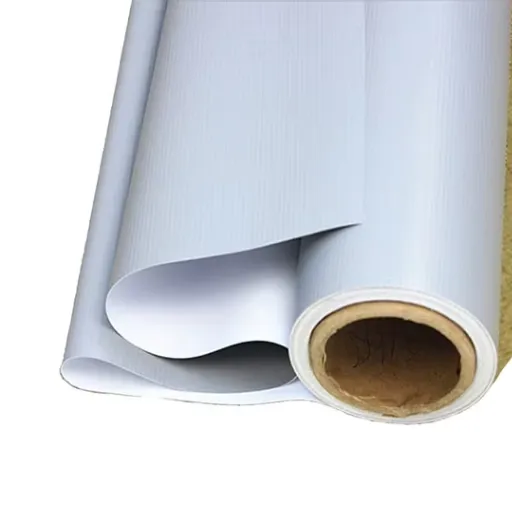
Becoming more specific, frontlit banner material is a soft PVC coated substrate on the front or both sides with white reflection surfaces. This means that it can be placed and displayed outside, or it is exposed to a source of light (natural or artificial) directly on the front. These are the usual materials for hoardings, mesh building wrap prints and so on.
The backlit flex banner actually uses a translucent PVC formulation which disperses or softens light from the rear. The formulation used in the coating is such that the light at the surface is evenly distributed without hot spots. Examples include light boxes, bus shelter ads, and applications incorporating the ideal light source at the back of the banner at user venues.
Banner substrates such as blockout banner material feature a very deep black interlayer sandwiched between two white PVC layers. Such a design offers 100% light blocking which can be useful for high contrast displays or under direct sunlight. This black layer is usually an independent film placed within two PVC layers or made with a pigment loaded core layer.
PVC Flex Banner Specifications by Application
Selecting the correct GSM grade and construction type is not guesswork. It is an engineering decision driven by installation environment, illumination method, and campaign duration.
Standard Outdoor Advertising: Frontlit 280–340gsm
For billboards, building wraps, and fence banners intended to last from 6 to 18 months, the material usually used is the frontlit 280 to 340gsm one. The base material is generally a high tenacity woven type of some 200D x 300D or 300D x 500D counts at 18 x 12 or 18 x 18 weaving threads/cm respectively. As for the laminating side, the weight may vary from 180 to 220 g/m2 of that particular layer while a combination of the layers of the fiber and densifying – polymer adds up to the fabric weight and results in 280 to 340 gsm, respectively.
To analyze this specification, a fabric with a warp tensile breaking force 800N/5cm or more and filling tensile breaking force of 700N/5cm or more should be considered. Also, tear resistance should be more than 120N. The reason is that the force is induced by the wind on a 3m x 6m size of the billboard may be considerable and applied at the anchor points. If the fabric is not strong enough it will not be able to hold the applied pressure, which will lead to seam and eyelet cracking.
Backlit Displays and Lightboxes: 340–440gsm
Backlit surfaces necessitate greater mass of the coat for a few kinds of purposes. In the first place, the translucent system must not maintain its integrity upon a decrease in the pigment’s concentration. Last but not least, illumination source needs to spread evenly across inclination angle including the hemispherical one.
Conventional backlit systems involve a sublayer cloth of a 500D × 500D type with impersonal weights within the range of 340–440g. It is also of critical importance not to permit complete emission of light energy since this results in light spots, while a failure to transmit incident light affects the brightness of the displayed image. The recommended percentage for transmission in normal light is indicated by companies worth listening to.
Blockout Banner Material: 440–510gsm
When the Summit Outdoor Advertising installation team showed up at a Dubai highway site, they noticed some ghosting on one part of a double-sided display. The immediate cause was the morning sun glaring through a common white banner material and producing a silhouette of the reverse graphic at the front. The remedy required a complete re-installation which incorporated the use of block out banner material comprising of a central layer of extremely dark and opaque blacks.
Utilization of blockout internals to a standard material aids in preventing the incursion of the light or sound to controlled ambient due to this application. Blockout banner weight in substance may start with 440gsm having a 300D x 500D base and three different coating configurations; white front core and black faced reverse. More substantial 510gsm quality levels are significant and use enhances the overall opacity achieved by making the base fabrics denser, parallel to the increase in core thickness. While analyzing blockout material, it is important to ask for the opacity test results. A good blockout material should have a 100% opacity even with a normal intensity of a backlight.
Heavy-Duty and Long-Term Installations: 440gsm+
In other words, for building wraps, bridge banners, and installations for which exposure exceeds 24 months, 440gsm and heavier grades must be used. Over these weight grades, it is a requirement to add higher levels of UV stabiliser packages, typically in the form of HALS and UV absorbers at 1.5 – 3 % by coating weight. The fabric base develops into 500D × 1000D or 1000D × 1000D fabric for maximum tear resistance.
Print Compatibility: Matching Banner Material to Your Ink System

Ink adhesion is a surface chemistry problem. The PVC coating must present a surface energy and porosity profile compatible with your ink system. Mismatch here is the single largest cause of print defects in large-format banner production.
Solvent and Eco-Solvent Inks
So, what happens when you use the printer to print directly to a banner that is made of PVC? In this type of embodiment, that overlay is important since it acts as the medium where the printing takes place.
Basically, it is known that solvent inks penetrate into the PVC surface, carrying pigment to the coating layer where evaporation removes the water and precipitated color shall be enclosed in the polymer network. To make such a phenomenon ubiquitous, a coating of a specific porosity is required where no further porous structure will hinder the operation, however, the pores should not be open enough to cause bleeding and feathering due to capillary driven liquid flow.
UV-Curable Inks
The resistance of ultraviolet inks involves photopolymerization, as it floats on the surface of the substrate. This involves complex interactions of the interfacial stress between the ink blend and the PVC covering. Also, adhesive backings that meet the requirements of the ink should contain optical brighteners, modified acrylic or poly urethan polymers as the medications facilitate a crosslinking with the ink.
This means that without these adhesives, UV ink is in buttresses under flexing. For example, this is very important when it comes to taut-tension-drape banners or roll-up banners that are continually reconfigured due to the nature of the stand.
Latex and Water-Based Inks
One of the elements of a plasticized coating is a structure capable of retaining vapor of water and glycol while permitting the dispersion of the pigment in the coating to the surface. Itaro has PVC banner material which has challenged compatibility with latex ink printing process. If you will use equipment, which supports only such paint, do point that laminated vinyl banners should have proper surface for latex inks to colors. In this case, it is normally a functional matte porous layer which is applied on the polymer bed of PVC film.
Common Print Defects and Their Material Causes
Reasons such as bleeding or spreading of ink: High porosity due to Coating or different absorption intensity on the same line due to varying thickness of coating.
Peeling or lack of bond: This is often a challenge caused by the difference in bonding energy between the ink and the coating and is mostly found in articles utilizing compounded PVC with distribution of additives that is not homogenous.
Change in colour observed between different rolls: This is on account of the difference in levels of substances that influence the color of the fabric or the coating including optical whiteners.
The formation of pin holes in the coated subtrate: This is due to inadequate coating or bubbles produced during the laminating process.
Such problems are avoided because LY TRUSTLINK employs a technique that carefully controls the formulation of coating compositions. In the priorly specified manner each produced batch is full of surveyed on key indicators of quality such as surface tension, porosity, and whiteness index. This enables printers who often process repetitive jobs and hybrids to plan more efficiently and this way eliminate the possibility of relapse, as evidenced by the additional prices in the cost.
Manufacturing Quality: What Separates Engineered Banner Fabric from Commodity Alternatives
The difference between a premium pvc flex banner and a commodity product is not visible in a sample swatch. It reveals itself six, twelve, or twenty-four months after installation, in color retention, seam integrity, and resistance to cracking.
Base Fabric Quality: High-Tenacity Polyester vs. Standard Polyester
By definition, base fabric provides reinforcement to the support. High tenacity polyester fibers have a greater degree of molecular alignment that those of regular polyester fibers. This higher orientation translates into the capacity of the former containing higher strength which is reflected in the higher values of the fiber’s tenacity per denier. For example, a 500D high tenacity yarn can provide in many instances an equivalent or better tensile strength than a similar yarn based on 1000D standard polyester, but of a lesser weight ratio.
One also needs to bear in mind the manner of installation handling. It will be more difficult to preload heavy banners, to handle logistics, and their existence will increase the stress loads on the accelerator premises. These are the one time effects which come into action only, once materials are deployed. Mean while, high tenacity base fabrics resolve specific tensile requirements within equally heavier loads, optimized for both installation times and strength requirements.
Virgin-Grade PVC vs. Recycled Compound
Virgin PVC is a vinyl material that is fragmented from the virgin polymerization raw feedstock with the desired chain length, molecular weight distribution, and the required level of additives. Recycled PVC or compound PVC (with a particular reinforcement to PVC) encompasses regrind material with an undetermined history and degree of UV degradation, plasticized with different plasticizers and containing molecularly disturbed polymers.
This is manifested as unwelcome consumer behavior. Thus, compared to vinyl powder coatings, plasticized compounds in PVC form tend to lose their softeners due to the processes that take place in them, recur spalling, allow deterioration of the decal, and at the same time change the colour of the coating. After exposure to the UV radiation for example, a compound grade PVC banner may exhibit some degree of surface cracking involving even as short as 18 months, while any virgin-grade equivalent would be flexed way beyond this time, up to 60 months.
Coating Uniformity and Its Effect on Print Consistency
Inaccuracy of coating thickness on banner roll may lead to uneven distribution of print examples. This effect is particularly evident in areas with single tones where it results in striping. In other cases where images are involved, the difference is with the shades.
The best companies ensure that the variation in coating thickness does not exceed ±5% on the whole width of the toll particularly lengthwise. This is a controlled knife-over-roll or dip coating process incorporating an on-the-fly thickness measuring method. However, ordinary manufacturers tend to settle towards a higher percentage of ±15%, which is good for lower grade artworks but not so appropriate when it comes to viewing from a distance.
Quality Control Testing Protocols
Every production batch of engineered banner fabric should be tested for:
- Tensile strength (ASTM D751): Minimum thresholds in warp and weft directions
- Tear resistance (ASTM D751, trapezoid method): Resistance to tear propagation under load
- Adhesion (ASTM D751): Bond strength between coating and base fabric
- UV accelerated aging (ASTM G154 or equivalent): Color retention and tensile retention after simulated exposure
- Cold-crack resistance: Flexibility at specified low temperatures
The situation faced by Maria Chen, procurement manager at a large-format print house in Toronto, was rather challenging. The former supplier of banners had a serious problem – sometimes a good, sometimes a bad final product. In one case, once everything was printed out beautifully, in the next case when any background was printed, streaks appeared. In another attacking case, this product began to crack at the ends four months after it was mounted outdoors. When she chose to work with a manufacturer who conducted tests of each batch and used pure PVC replacement-grade resins, the carrier was reduced from 12% to less than 2%. The purchase price per square meter unit was 8% higher. In the end, the total production cost decreased by 18%.
Installation Engineering: Ensuring Banner Longevity in the Field

Even the best banner material fails if installed without regard for wind load, tension distribution, and seam engineering.
Wind Load and Tensioning Principles
Every flag can be referred to as a sail. It means the flags pulled by wind on its front side generate a power that grows with quarter of a wind speed. For example, a three-meter by six-meter flag at a speed of sixty kilometers per hour will have a total of 1200N power that is attached to it. However, at a speed of one hundred kilometers per hour, this power will exceed even 3300N.
Providing that the tension is optimum, this force will be evenly distributed in regard to all connectors. Where the banner is too slack, relaxation stresses shall be built up that will cause deformations in boththe material and, and the paint adhered to such material. But putting up a tensioned banner in excessive state would overburden the fasteners, rings, and stitchings, leading to a potential tear or puncture.
The banner is neither too slack nor too tight because the proper tensioning shall enable the banner to remain flat and drum-tight without causing deformation within an area often referred as in-plane strain limit which is up to 15-20% lower than the rated tensile strength of the fabric.
Grommet Spacing and Reinforcement
Spacing between grommets must and should fall between a range of 500mm and 800mm along every edge. However, unequal spacing technique is acceptable on horizontal runs of longer length with greater probability of exposure to wind forces that may induce movement and vibration of the advertising wall. Significant concentration of stress is avoided through reinforcing of every grommet by welding a supplementary piece of material in order to resist pullout.
Banners exceeding 50 square meters, select keder rail systems, or rope-edge tensioning for the perimeter installation in lieu of point fixed installations. One reason being that these systems distribute the load evenly along the entire length of the edge at any point, reducing the possibilities for stress altitude at particular points of the fixations.
Hot-Air Welding vs. Sewing for Large-Format Seams
Each stitch when created also creates a point of puncture in the coating. They become potential water entry areas and therefore a problem when the coated material is under load. This is because, the hot air welding technology helps melt the PVC and create a strong bond with no spaces at all.
Notwithstanding the panels created, hot-air welds preserve 80%-90% of the fundamental tensile strength of the cloth. The relationship of stitched seams is usually in the range of 60-70%. These proportions are crucial in windy cases, for this determines if this very seam is rather sewn or maybe left as open.
Edge Reinforcement and Hem Construction
The complete tension banner in the system LifeGuard, drawing a circle on The length of the major axis covering the banner made of life cloth modified WFP ve WVDPTOT drivers or FD4UW/G Gl old CPJ of equipment, mountains including tents children and where like necessitates the provision of tension technology. In this configuration, D-rings and tension cables are attached at the radius of respectively 5 m and 3 m from inflatable supports and connector brackets.
Maintenance and Cleaning
In the process of caring for PVC banner material, mild soap solutions and brushes should be used a d as little as possible, while use of petroleum-based solvents is contraindicated because they can attack the plasticizers and lead to embrittlement. It is also possible to clean PVC-covered tarpaulins with a pressure (or steam) washer, however, as it is with hoses, directinsulation pipes should be done at maximum settings without keep em spaced.
It is recommended to perform inspections once every three months. Look out for any loosened fixing points, fraying along the edges and damage to the covering. Once a lesser problem is recognized, it can be attended to by fabric repairs but such measures should be taken in a rush for fear of a major problem of falling walls.
Custom Manufacturing and OEM Capabilities
Not every application fits standard roll widths, GSM grades, or surface finishes. Print shops serving niche markets, vehicle wraps, architectural displays, inflatable advertising structures, often require specifications outside commodity catalogs.
Custom Roll Widths and Lengths
60-inch (1.52m), 81-inch (2.05m), 87-inch (2.2m), 98-inch (2.5m), 126-inch (3.2m), 200-inch (5.0m). Custom roll widths are available to eliminate panel edges on an enlarged canvas printing. The width is often fixed at roll points in any case but still can be lowered down to 5.1m in case the manufacturer’s equipment (coating line and loom) enables it.
Normally, the increase in roll lengths is from 50m to 100m since there is wastage created due to the target job sizes in high volume bulk production.
Custom GSM and Coating Formulations
In addition to standard grades of 280, 340, 440 and 510 gsm, grades of custom coating weights can be selected for specific purposes. Those are greater than 600 gsm for projects located in high winds. And those designs in less breezy locations usually employ 220 gsm Economy grades topped with extended UV decay protection.
Moreover, when needed the surface finish of the paper can be changed: grained – for minimizing reflection in the image for higher coloration, matte – for eliminating glare from photography, anti-glare.
Private-Label and White-Label Manufacturing
OEM partners can specify core color, edge marking, roll labeling, and packaging. This supports print shops and distributors building their own brand presence in local markets.
Certification Support
Banner material for regulated environments may require:
- NFPA 701: Fire retardancy for indoor signage and event banners
- REACH: Chemical compliance for European markets
- RoHS: Restriction of hazardous substances for electronic display integration
- B1/DIN 4102: German fire classification for architectural installations
A capable manufacturer provides certification documentation with every batch, not just a generic compliance statement.
Need banner material engineered to your exact specification? Start your custom order with custom width, GSM, surface finish, and certification support.
Sourcing Checklist: How to Evaluate a PVC Flex Banner Manufacturer

Procurement managers evaluating banner material suppliers should verify the following before committing to volume orders:
- Base fabric specification: Request denier, weave construction, and tensile strength data. Verify that “high-tenacity” polyester is specified, not standard polyester.
- PVC grade confirmation: Specify virgin-grade PVC. Request certification or supplier declaration. Compound or recycled PVC should be rejected for outdoor advertising applications.
- Coating weight tolerance: Confirm ±5% or better thickness consistency across roll width and length.
- Batch testing documentation: Every production batch should have tensile, tear, adhesion, and whiteness test reports. Generic annual certificates are insufficient.
- UV stabilization data: Request UV aging test results showing tensile retention and color shift after 1000+ hours of accelerated exposure.
- Ink compatibility verification: Test print on sample material with your specific ink system before volume commitment.
- Seam strength data: For welded-seam applications, request weld strength as percentage of base fabric tensile strength.
- Roll quality inspection: Check for edge alignment, core integrity, and absence of coating defects (pinholes, bubbles, foreign inclusions) on receipt.
- Lead time stability: Confirm production lead times and batch-to-batch availability. A manufacturer who delivers inconsistent lead times will disrupt your production schedule.
- Technical support access: Can you speak directly to an engineer about custom requirements? Or are you limited to sales representatives reading from a catalog?
Warning signs of commodity-level manufacturing include vague specifications (“heavy duty” without GSM or tensile data), refusal to provide batch test reports, and inability to explain coating chemistry beyond generic marketing language.
Conclusion
The quality of a PVC flex banner is upwards and engineered way from calculating grams per square meter. It includes how strong the base fabric used is how chemical composition of the top coating is, how it is applied, and the total combined statistics of a particular manufacturer and its application in use. How effectively the print will last after installation varies from the design until setup efforts as well as what extent the organization needs the performance data from its external campaigns.
Break make a banner constructions contingent on which: each for information requires and needs frontlit, backlight behind it, or double sided displays or that information or advertising which make use of that graphical element have that kind banner construction. And an assurance that the inks do not interfere with the burying in any adverse plasticizer interaction and the editors should also perform a more formal geological evaluation. Components fabricated from a solid form of material are also according to more informations forced to have batches of more strict different confirms and material tensile strength, tear and uv resistant after aging related indicators will be available too. And as in the case of civil engineering, the application of safe tension in the regard for the integrity of the building, the use of welded joints, and reinforcing anchors makes one less concerned about the quality of the work but rather the inconveniences the job will cause if there were field failures.
Becoming as less effective in development as it costs less is a misdirection in this aspect. To counter this, engage the manufacturer as a developer. Shifting the paradigm. Deny them the opportunity to equate the fabric of the banner to a one-time receptacle that is supposed to be thrown away disregarding the fact that she is a full-color printed substrate.
Request a Sample Order to evaluate our batch-tested PVC flex banner material with your ink system and application requirements. Engineering consultation and custom specification support are available for volume and OEM partnerships.