
Tear Resistance in Tarpaulins: Testing & Performance Ratings
When discussing the tear resistance of tarpaulins, this factor is a key consideration in determining their effectiveness in certain environments. There are specific exercises or situations where only exceptionally durable tarpaulins can be used, for instance, construction processes, transportation, agriculture, or even outdoor activities. However, how is this tear resistance evaluated, and what standards and specifications are sought after in the tarp of choice? This article takes that direction and discusses the tear resistance of tarpaulins, including how they are tested and how these scores match actual working conditions. It will enable you to purchase the right material and maintain it so it does not degrade over time.
Understanding Tear Resistance in Tarpaulins
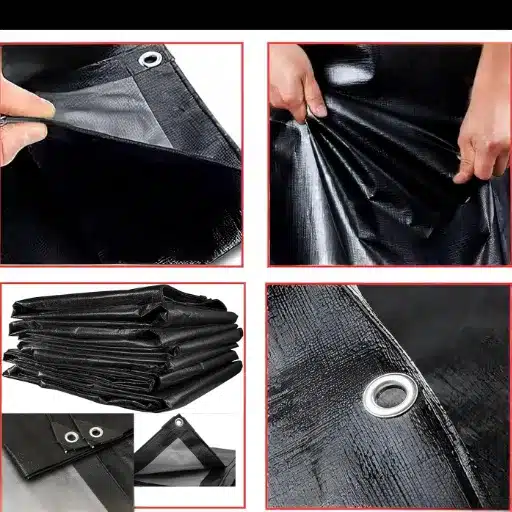
When we talk about tear resistance, we refer to a material’s capacity to withstand forces that pull it apart. It is an essential aspect for tarpaulins, as they are subjected to severe weather conditions, stress, and heavy loads.
Objective tests are commonly used to assess tear resistance, such as the trapezoidal tear test and the tongue tear test. The mechanism consists of notching or perforating an area of the sample to be tested, and applying forces until a tear is initiated and then extended. This outcome is often reported as force per unit width, for example, in pounds or newtons.
Aim for rated tarpaulin options with high tear-resistance ratings. Polyethylene materials and PVC-coated fabrics are known tough fabrics that are commonly reinforced with woven lines for enhanced performance. Opting for a tarpaulin with high tear resistance is beneficial in the long run for harsh environments.
What is Tear Resistance?
Tear resistance can be defined as the competence of any material to resist the force as it tries to propagate an already existing tear. It is particularly essential for all materials subjected to loads, especially when durability is paramount.
Tear resistance of a material is often determined by standardized test procedures, such as the Elmendorf and Trapezoid tests, which measure a material’s ability to withstand applied force. Some factors include the constituent fibers, the weave structure, and the coating on the material, which might influence resistance to tearing.
Materials with high tear resistance include PVC-coated fabrics, polyester, polyethylene, and a host of other materials commonly used in the construction, protective gear, and transport industries to ensure products withstand harsh conditions.
Importance of Tear Strength in Tarpaulins
Tear strength plays a significant role in any tarp. It is a measure of how long a tarpaulin will last and how well it withstands external elements. High tear strength will prevent any breakage or damage to the tarps during heavy blows and loads, or when they come into contact with sharp-edged objects.
This is especially relevant to construction, farming, and transport, where the tarpaulins are in active use. Materials such as polyethylene or PVC-coated polyester contribute to the mentioned qualities of tarpaulins, as they are hard to tear, thereby extending their lifespan, reducing replacements, and cutting costs.
Moreover, high tear strength improves the weatherproofing and protective functions of tarps, making them effective at covering equipment, vehicles, or crops from the weather.
Tear Propagation and Its Impact on Tarpaulin Performance
Tear propagation is defined as the advancement of a cut or a tear in a material because of the loads applied. For tarpaulins, this is particularly concerning because it directly affects the material’s lifespan and performance. A tear as small as a prickle can spread fast.
Significant reinforcement of weaves, or even reinforced coatings, prevents the propagation of the tear and the degradation of the fabric’s strength framework. Materials like PE and PVC are used because they resist tension well and retain tear resistance even after the orientation of forces.
In a nutshell, tear propagation control extends the tarpaulin’s lifespan and enables it to withstand extreme conditions and wear and tear.
ASTM Testing Methods for Tarpaulin Tear Resistance

ASTM specifies several test methods for determining the tear resistance of tarpaulins. ASTM D2261 is one such method that measures the tearing strength of fabrics using the tongue tear test. ASTM D1424 is another method that determines the tear strength by using an Elmendorf tear tester. These methods allow accurate gauging of tarpaulin durability and resistance to tearing, making them ideal for situations where durability is essential. It is in the best interests of manufacturers and consumers to strictly follow the above standards for choosing the best tarpaulins for particular uses.
Overview of ASTM Standards
ASTM regulations are a set of generally accepted rules that establish acceptable levels of quality, safety, and effectiveness for products, materials, systems, and services. The development of these standards is carried out based on agreements and various sectors use them for testing and certification purposes. With regards to tarpaulins, ASTM standards D2261 and D1424 provide detailed methods of measuring tearing force and resistance, respectively. Such standards help manufacturers produce practical, long-lasting products, while consumers use them to purchase appropriate products that meet their needs.
Common Test Methods for Measuring Tear Resistance
- Tongue Tear Strength (ASTM D2261)
This is a test in which a fabric with a slit is pulled apart using a tensile testing machine to measure its tear strength. - Trapezoid Tear (ASTM D5587)
This involves cutting a trapezoidal piece of fabric and applying force to measure the force and work required to make the tear continue. - Elmendorf Test (ASTM D1424)
This uses a pendulum device that measures the fabric’s tear resistance by simulating the work required to extend a tear. - Tension Tear Resistant Test (ISO 13937-2)
This test measures the force required to tear a fabric sample using the grab-and-tensile method, assessing its tear durability. - Circular Distension Test (ASTM D3787)
The device forces a steel ball through the fabric to test puncture or tearing resistance under radial loading.
Interpreting Test Results for Tarpaulin Quality
Understanding product quality is necessary for both consumers and sellers, and in the case of tarpaulin, factors such as tension, thickness, and other characteristics are essential to its quality. The higher the value, the more pulling stresses the material can handle; in other words, the greater the tensile strength, the more loads the tarpaulin can take without being torn.
Tear resistance describes the durability within specific parameters. Excellent or high load resistance during burst or penetration implies that the material will maintain a history of good handling. Assess whether the tarpaulin fulfills its purpose by comparing these metrics against an industry-specific benchmark.
It is highly recommended to use only tarps that pass satisfactory tests on all critical aspects for prolonged use.
Mechanical Properties of Tarpaulins
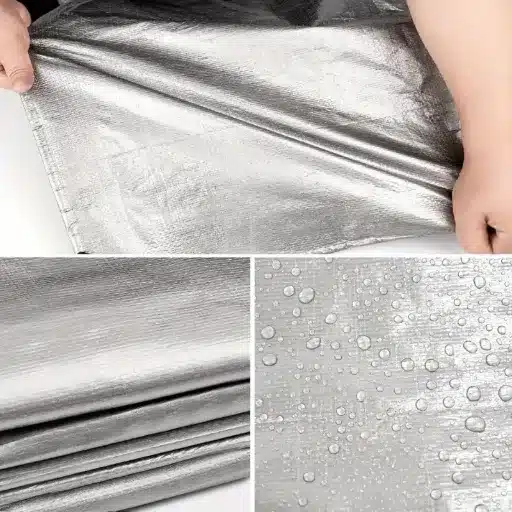
Tarpaulins vary in their mechanical properties of tensile strength and tear resistance, which are critical points in understanding their durability and efficacy. Tensile strength describes the stress or the force stretching resistance of a material before failure, while tear resistance deals with the resistance of a material to the propagation of an existing cut or tissue defect. These characteristics are critical, as they help meet the constraints required for the tarpaulin to withstand harsh use and for a long time. Including these, as well as the ball-bursting performance measures, will allow one to agree or disagree with the appropriateness of the tarpaulin in its working context.
Understanding Mechanical Properties Related to Tear Resistance
Tarpaulins’ tear resistance is affected by major factors: the structure, the purpose material, or the coatings. Tarps with better tear resistance must be made from strong, durable polymers such as polyethylene or PVC.
Additionally, a denser weave helps add strength and reduces the risk of material tearing under stress. Coating substances such as vinyl or laminate also aid in surface control and promote environmental stress durability that would otherwise cause structural weakening.
Over time, it is also essential to check and repair any damage, as this will help preserve the tarpaulin’s original tear resistance.
Role of Elastomers in Tarpaulin Durability
There is no doubt that the sturdiness and plasticity of tarpaulins are partly attributable to elastomers. These are kinds of polymers distinguished by their tenacity, i.e., their capacity to elongate and return to their original size and shape under force.
In cases where elastomers are part of the tarpaulin formulation, resistance to cracking and wear from friction and mechanical forces generated during regular use or under unfavorable environmental conditions is improved. Recent developments in this field enabled the invention of thermoplastic elastomers (TPEs), which exhibit much higher thermal and ultraviolet stability, thereby extending the product’s usage span.
Adding elastomers ensures the material is strong yet very light and easy to use; consequently, it is a crucial aspect in developing durable tarpaulins.
Comparing Thermoplastic and Rubber Tarpaulins
Thermoplastic tarpaulins are lightweight, recyclable, and cost-effective, while rubber tarpaulins are durable, weather-resistant, and elastic.
Applications of Tear-Resistant Tarpaulins
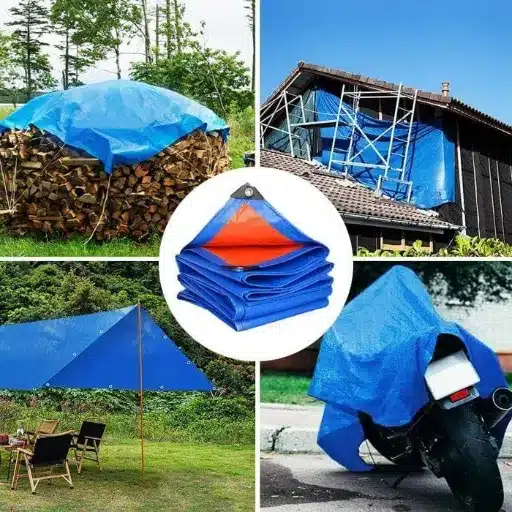
🏗️ Construction Sites
Used to cover scaffoldings, gear, other equipment, and building materials to protect them against a variety of weather conditions.
🚚 Transportation
Used in the development of cargo to be trucked or transported in a trailer or container. Safe brake canvases have been used most of the time.
🌾 Farming
Benefits are seen in storing grains, covering hay stacks, as well as crops which mainly protect against the sun or heavy downpour of rain.
⛺ Outdoor Activities
Often used to create tents, canopies, and other temporary structures designated for an occasion, show, fair, or exhibition.
🚨 Disaster Relief
Include tent-like structures, floor sheets, and tents for relief-oriented purposes. They are most tear-resistant and easy to handle when they are out in the disaster zone.
Tarpaulins in Construction: Meeting Tough Conditions
Tarpaulins, useful for a multitude of applications in harsh climates due to their dependable, all-purpose nature – especially in construction – are indispensable. This is because, fundamentally, they are most often used to cover or protect various parts of the work site, preventing rain, wind, or dust from interfering with work.
The tarpaulin’s versatility enables it to also function as a temporary roof, cover scaffolding, or construct enclosed areas for people to work safely, no matter how inclement the conditions may be. Being waterproof and tear-resistant make them an essential asset for any construction site use.
Use of Tear-Resistant Tarpaulins in Agriculture
In modern agriculture, tear-resistant tarpaulins are essential tools, providing adequate, multipurpose protection for produce, equipment, and livestock. Harvested crops must be protected from adverse weather such as rain, hail, and sun for their quality to remain intact, and durable tarpaulins are mainly applied for this purpose.
Farmers use them to make temporary storage tents, cover silage pits, cover animals and machines, among other things. Needless to say, such tarpaulins are also helpful in stabilizing the ground, preventing soil erosion and weed growth during agricultural activities, thanks to their resistance to water and ultraviolet (UV) light.
The tear resistance makes them suitable for harsh use in farming, making these tarpaulins less costly and more valuable in such endeavors.
Transportation and Logistics: The Role of Tarpaulins
Tarpaulins are highly useful for transportation and logistics management. They serve to ensure that the goods being moved over distances are protected. These are tough, weatherproof covers commonly used to protect cargo on vehicles such as trucks, trailers, and shipping containers from rain, snow, and the sun’s heat.
They also include features to help tie down the load—that helps ensure the product is safely contained during transport—thus avoiding accidents and damage to the load.
With new material compositions and design developments, present-day tarpaulins are lighter and more adaptable, meeting many logistics requirements. There is an indication of increased attention to new types of tarpaulins engineered for sectors such as goods transportation and construction, among others. Given the need to improve efficiency and minimize waste, tear resistance and flexibility are indispensable for logistics in the contemporary supply chain.
Choosing High-Quality Tarpaulins
It is necessary to consider the material’s quality, the extent of exposure to the elements, and the intended application when choosing the perfect tarp. Reinforced polyethylene or PVC tarps are preferred to prevent rapid wear and tear. Durability should be considered in terms of UV resistance as well. To avoid issues, check that the grommets are tightly fitted to the tarp and that it is the appropriate size for proper use.
💡 Tips for Selecting Durable Tarpaulins
- ✓ Select an Appropriate Fabric Go for robust materials, such as polyester-supported polyethylene, to enhance tear resistance and withstand various weather conditions.
- ✓ Pay Attention to the Coating Ensure you choose tarpaulins with waterproof microns and a UV-stabilized coating for protection from the elements.
- ✓ Carefully Examine Grommets Buy a tarpaulin with good, rust-resistant grommets at reasonable intervals to hold the cover firmly in place.
- ✓ Mind the Gauge The tarps are rated in microns, so thicker, reinforced tarpaulins have a higher thickness gauge and last longer in harsher environments.
- ✓ Examine Edge Reinforcement Look for stitching or sewing using the sewn border, and even the weld, to limit grommet shedding.
Factors Affecting Tarpaulin Tear Resistance
🔹 Type of Material
In the case of tarps, the type of material, for example, polyethylene, canvas, and vinyl, plays a crucial role as it affects the tear resistance of the tarp.
🔹 Fabric Structure
Fabric tarps with denser weaves are stronger and better able to withstand high stress without tearing.
🔹 Qualities of Coating
Tarp coatings that are waterproof or UV-resistant, with high-quality materials, improve the tarp’s performance and protect it from ripping.
🔹 Edge Strength
Any tarp with edge-hem reinforcement, such as double-stitching or heat sealing, is less likely to tear from rough use.
🔹 Usage Conditions
Exposure to elements such as the sun or load can affect the tensile strength of the material.
Quality Control Measures for Tarpaulin Production
To implement quality assurance in cover fabrication, ensure due process is followed diligently at every stage of production to meet the desired standards for both tear resistance and cover performance.
Starting with sourcing materials, the best raw materials are always preferred; for example, materials that are heavily knitted and coated with advanced components are selected, and every material is tested for strength and resistance properties before any production.
The needs of different thicknesses and the precision of stitching and cutting are achieved through modern production technology, which minimizes weak points and enhances overall adhesion to the coating. Because large spills and heavy loads can occur at any point, tarpaulins undergo intermittent load tests to determine whether they are likely to last as long as specified.
Last but not least, proper handling and packaging are employed to prevent product breakage during warehousing, loading, or unloading, ensuring the product reaches the client in one piece without much issue every time it is packaged.
📚 Reference Sources
ASTM International
ASTM provides globally recognized standards for testing materials, including tarpaulins. Relevant standards include ASTM D5733 (Trapezoid Tear Test) and ASTM D2261 (Tongue Tear Test).
Textile Research Journal
This peer-reviewed journal covers research on fabric performance, including tear resistance and testing methods.
Journal of Industrial Textiles
This journal focuses on technical textiles, including studies on the durability and tear resistance of tarpaulin materials.
ScienceDirect
A comprehensive database of academic papers, including studies on material testing and performance ratings for tarpaulins.
SpringerLink
SpringerLink hosts a wide range of engineering and material science research, including articles on tear resistance and fabric testing.
❓ Frequently Asked Questions (FAQs)
How do you explain a tarpaulin’s tear resistance and what’s the significance for such fabrics?
The tear resistance of a tarpaulin is the resistance of the material to tearing or cutting in two even when it has been stretched to the limit or if a pointed object has been applied to it. The purpose of high tear-resistance on tarpaulins is so that they do not fail in environments where greater strength is required and workers are frequently using them. High tear resistance is so significant in areas like transport and construction which involve extensive usage of tarpaulins often with surfaces that are abrasive and have sharp edges. Selecting a tarpaulin with very high tear resistance is very important because it prevents product loss and catastrophic events. It also determines how often a given product will be used, thus facilitating long-term cost-effectiveness. Most high-quality tarpaulins are manufactured to resist tearing by incorporating reinforcing fibers or coatings.
Which methods are used to verify the tear-resistance of tarpaulins?
In most cases, the tear resistance of a tarpaulin is assessed in laboratories using standardized tests, such as the trapezoidal or tongue tear tests. There are various tests designed for different materials and purposes, but most, such as ASTM and ISO tests, are geared toward measuring tensile strength in a specifically controlled laboratory environment. When stress or load is applied to a sample of the material, the derived facts enable a manufacturer to develop a quantitative index of tear resistance for a given product. Engaging in proper testing opens the door to building credibility across various product and brand types. This aids consumers’ product choices by suggesting durability. It helps understand the testing procedures and standards for continuous product improvement.
How important is the rating or properties of tarpaulins?
It is easy to compare various tarpaulins based on factors such as tear resistance, tensile strength, heat resistance, and water permeability using performance ratings. The values for these ratings are predominantly set up and derived from independent laboratories in a standardized manner and using specific testing protocols. Adequate performance implies greater trustworthiness and the ability to operate in extreme conditions. During the assessment of tarpaulin, published studies from accredited organizations or the manufacturer regarding ratings must be sought. This is because performance ratings enable customers to determine whether the tarpaulin will meet their needs. Moreover, these ratings anchor the insurance and the product’s certification.
What are the factors that cause a tarpaulin to have high tear resistance?
When searching for tarpaulins with superior tear strength, several factors come into play, including material type, weave type, and textile reinforcement. This is because high-density polyethylene and polyvinyl chloride woven materials have enhanced structural properties. Besides, in constructions woven with interlacing threads, there is greater resistance to tearing. When it comes to factors that contribute to degradation over time, it would be hard to ignore environmental factors, such as prolonged exposure to sunlight, changes in temperature, and humidity. Choosing the right materials and proper maintenance, however, enables one to minimize tarpaulin wear and tear and increase its longevity. It should be noted, though, that factors affect the use of the tarp.
Where will customers find the recommended options with the highest tear resistance?
To choose a good tarpaulin with good tear resistance and overall performance, the first step is to check the manufacturer’s product specifications, ratings, and descriptions. Check whether a qualifying body, such as ASTM or ISO, that provides standardized tests, offers any certification. Reading product reviews or seeking advice from industry professionals when special products are expected is also an option. For each of these, it is a good idea to consider ways to increase durability, for instance, by checking for reinforced edges, robust grommets, or multilayer designs. After comparing several products based on ratings and composition, you will finally select the best tarpaulin that meets your requirements. Often, buying a quality product at the beginning saves a lot of money over the period as replacing the old one is less frequent.