
Acoustic Properties: Sound Absorption & Noise Reduction
The significance of the knowledge of the acoustic properties of given materials is always at the core of designing given interiors and exteriors for noise protection. Tarpaulin is durable and versatile but largely used for the wrong purposes when it comes to soundproofing or reducing noise problems. The objective of this article is to explain how tarpaulin works as a sound barrier and why it is so effective at reducing noise transmission. Each of these aims especially to everyone from engineers looking for sound control interventions to those who are just interested in the applied uses of materials for some reason – the ultimate guide as to why tarpaulin, is an amazing solution for noise control.
Understanding Acoustic Properties of Tarpaulins
What Are Acoustic Properties?
Acoustic properties are defined by how a material responds to sound waves, whether it is to soak, rebound, or transmit sound. These properties help in determining how a particular material controls sound in a certain space, which otherwise would lead to increased noise levels, echo and elevated sound quality. Numerous features contribute to the acoustic efficiency of any given material including its weight, its volume, the three-dimensionalness of that fabric, the very nature (materials’ structural and making details) of that material.
Those materials that are able to absorb sound effectively are used to lessen echo in spaces by suppressing incoming sound waves or absorbing some of the sound energy. In contrast, such materials with acoustical properties that cause sound waves to bounce off are the materials that increase sound rather than decrease it. The appropriate method of sound controlling measures requires the combination of both of these parameters depending on the function for which the material is to be used.
The heatproof coatings are designed in a way that they serve as a barrier to the sound matter during its dissipation process. Tarpaulins of this thickness possess excellent acoustic properties in terms of noise reduction since noise that penetrates its surfaces is minimized through the absorption of waves, and inoperable surface areas (dead air spaces) cause damping of noise. Efficiency of the insulators may also be subjected by different designs in case that the insulators are used for different purposes such as for construction or industrial purposes that enhance various temporary noise diminution devices.
How Tarpaulins Help in Sound Absorption
Tarpaulins serve the dual role of cushioning surfaces and obstructing sound waves by absorbing some of the excess energy that they possess due to this bouncing. The structure of these materials is rigid as well as stretched that they attenuate sound waves so as to not convey noise to other platforms through to any extent excessive. This functions makes tarpaulins very much necessary in places where relatively lower levels of noise are wanted such as during construction or when there are operations indoors.
Whether tarpaulins will be able to work as absorptive or soundproofing material will depend on a number of factors, which include but not limited to the materials, layering and vacuum attachment. It also surpasses thinner versions and those having few layers due to the entrapment and dissipation of sound waves. This construction material when used with tensioned setups provides barriers that in turn help in addressing noise control problems.
Furthermore, any temporally controlled or semi-permanent structures, will require these supportive systems. Are made up of large (spongy or padded) and hard surfaces such as documentaries noise transmission control enhancement tarpaulins. Therefore, It is from this point of view that Their various forms of interior decoration and external surfaces are of major importance Being easy to use is an added bonus. They are therefore particularly useful in their function as noise control devices in these situations which present a problem of noise. Also, this type of system (tarps) helps to reduce the level of noise in enclosed areas even further. That is to say, it is possible to install the tarps in such a way as to optimize its acoustic properties even further by placing it on panels filled with sound absorbent materials or heat insulators.
Types of Tarpaulin Materials and Their Insulation Properties
Acting as construction material, canvas is very essential in providing some level of weather insulation. Insulation is a process that limits the conduction of heat and sound as well as acoustics so as to enhance noise insulation. This article focuses on different canvas materials with their properties including most canvas materials and what makes the so efficient when used in insulation and noise reduction:
1. Polyethylene
Sometimes referred to as PE tarps are durable, lightweight and impervious to water or leaks, which makes them applicable in almost all activities in industries and homesteads. They rather have a not too strong ple light insulation because they keep out or divert some air or moisture and also control temperature slightly. Thermal insulation from exposure on the other hand, can be improved when poly ‘R’ layer base is built below the PE tarp.
2. PVC (Polyvinyl Chloride) Properly Developed Types
Some form of heat insulation is offered with these types of tarpaulin that are usually forced. PVC tarpaulins do not have very high thermal resistance however they have a better thermal resistance compared to the polyethylene tarpaulins. The most basic improvement in these tarpaulins is the addition of polyester fabric which will enhance the thermal resistance. Additional layers will also add some extra improvement although in some instances such may come with seam or joint problems especially if done while walking under a standing canopy.
3. Acoustic
In a multipurpose space, acoustic properties of a textile are mainly intended for sound control, which is generally not a major concern. On the other hand, when the space is exposed to high noise levels, the absorption of sound becomes of greater importance. PVC tarpaulins are thicker and sturdier, thus providing better insulation from temperatures and acoustic properties. PVC tarps because of their thickness and strengthened material can be used in heavy duty situations like sound insulation, exertional noise, borders against hot weather, etc., in a good way. They prefer using them in heavy duty applications thanks to the existent properties that are fire and light resistant.
In the specific context and with clear goals in view, picking tarpaulins of the right category and the various thermal insulators that go with such tarpaulins, the performance of these benefits of sound control and temperature control can be enhanced to the highest degree possible.
Applications of Acoustic Tarpaulins in Various Industries
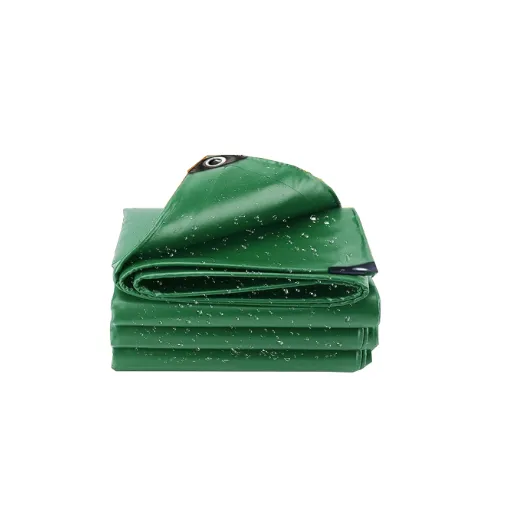
Construction: Reducing Industrial Noise
The building and construction sector is associated with relatively high levels of industrial noise from the use of heavy machinery, power tools, and demolition work and this presents difficulties to workers, nearby communicants, and in some cases, the law. Use of acoustic properties tarpaulins is critical in cases of sound levels reduction where the tarpaulins can absorb and the noise and apply to construction following the required patterns. The following details cover the use of Noise Control Tarpaulin for Noise reducing in these Applications:
- Noise Control for Noise-Producing Equipment: Department store also uses the acoustic Tarpaulins to encompass noise producing facilities like compressors, generators and the various jackhammers to control noise by stopping the noise from reaching the air. Research has shown that good acoustic installation is capable of providing 20-25dB of noise reduction; this is because the acoustic enclosure is a passive noise control device.
- Sandwich Panes Frozen Within Open Walls: These tarps are placed on frames in order to build instant noise-deflector walls around the active sections of the site. These walls diminish the noise generation point and spread to the far off places such as houses and business centers.
- Safety Zones for the Workers: The acoustic tarpaulins in connection with workers have been specifically planned to reduce noise to protect the people working in construction from working for years in noise levels that go over 85dB for 8hrs which is the OSHA standard and/or permissible levels.
- Facilitating Social Acceptance: Acoustic tarpaulin screens protect the surrounding environment from construction noise pollution in a peaceful manner, which also enhances rooftop and/or outdoor environmental noise compliance to local ordinances by avoiding excessive noise.
- Soundproof Tents on Wheels: Truck sound absorbing tents out of tarpaulin with soundproofing spaces can be used in and outside the building for holding conference meetings or soft tests of the equipment, which are necessary for performing one’s duties as noise is hardly captured in the work enhanced environment.
Thanks to the mentioned approaches which complement each other, construction zone authorities’ tasks are alleviated regarding performance and safety ducts fulfillment when it comes to such issues as combating excessive generation of noise and its limitations.
Event Management: Creating Sound Barrier Environments
The management of events is also very much about how well the noise levels are contained, to the extent that the operation is not interrupted nor the audience seen neglecting noise ordinances. This calls for implementing sound barriers solutions that are efficient and flexible enough to suit a wide range of different event scenarios. Following are the five different solutions in detail employed for sound barrier environments in an event condition:
- Temporary Acoustic Panels: These are acoustic panels that are either combined or segmented and place around the stage, stalls, or outside space to reduce excess noise levels. They are covered with materials such as dominant rigid glass wool and foam composites, which offer sound absorption coefficients that fall within the range of 0.7 and 0.9, based on their material and thickness of the panel.
- Noise Cancellation Tents: Placing event tents which possess sound reducing fabrics, mostly layered tracks of vinyl and sound softening cores assists in cutting out unwanted external noise up to 35 decibels (dB). This measure is most useful in cases of VIP or private functions since the acoustics are then restricted.
- Sound Curtains for Equipment Enclosures: Noisy machinery, for example; air-conditioning systems and generators, is surrounded by tough noise curtains. These noise-cancelling soundproof curtains made of quilted fiberglass insulation and mass-loaded vinyl (MLV) in addition to this can find themselves achieving the noble cause of noise reduction between 20 and 30 decibels; ideal for pain – free and uninterrupted cooking perfomances and speech delivery.
- Loudspeakers Within Locality Only: In highly regulated environments, powerful directional loudspeakers are specifically designed to provide focused sound energy thus minimising the disruption caused by general noise in the other areas rather than in the intended audience only. The systems are characterized by the use of beamforming which is a very accurate process.
- Vegetation-Based Sound Barriers: While it remains to be seen in practice it is possible to use thick hedges or green walls with certain species of sound trees or plants as a supplement to noise walls. It does not work as well as artificial barriers, However, in such cases, one may notice that vegetation will easily reduce noise levels by 5 to 10 decibels and will enhance the visual experience of the guests even more.
Thanks to these alternatives, event organizers protect themselves from legal repercussions, improve the comfort of the audience and smoothly organize all kinds of events.
Manufacturing: Enhancing Noise Control
For manufacturers, noise regulation is an important aspect to consider in the work environment in order to protect employees, achieve the regulatory noise level, and increase productivity. Below are five ways how noise control in factories is carried out in depth:
- Use of Shielding and Sound Barrier: If there is machinery or equipment known to be loud, the noise level can be reduced by putting acoustic shielding around it which can be effective by 20 to 30 dB. This shielding is mainly made of sound absorbing composite metal and foam panels, shielded by layers of dampening insulation to block out sound penetration.
- Vibration Damping Devices (Vdd): Vibration without doubts is one of the main contributors to manufacturing equipment noise. Examples of isolation systems involve rubber mounts, spring isolators, and dampening pads – all of which isolate the machinery from the surfaces and consequently hinder the transfer of noise. On the other hand, subsequent studies have shown that vibration isolation is effective in reducing the noise levels by approximatelly 15-20 dB depending on the equipment as well as the layout.
- Utilization of Silencers and Mufflers: Air exhaust, compressors and pneumatic tools apply silencers and mufflers to mitigate airflow noise especially dynamic airflows. The effectiveness of such devices is credited to their designing mechanism on suppression of sound waves and it has been reported that these devices lower noise in constructions up 25 dB.
- Improvement towards Low Noise Equipment: Acoustic properties of older machines can be improved by phasing out the old and replacing them with the new designs which are noise-optimised. Advanced engineering techniques such as noise reducing motor geometries and precision fitting components are often employed by the new machinery manufacturers. Adoption of the less noisy models of the machines result in a 10 – 15 dB reduction of the noise emanating from the machines.
- Protection of employees from noise: Although, the control of noise at source and its transmission remain the most useful approaches, use of ear defenders or ear plugs liable to noise cancellation provides important protection for employees. When the use of ear plugs or ear muffs is in use the noise exposure is subtracted by 25–35 decibels which helps in meeting OSHA requirements as well as noise induced hearing loss.
Proper management of this approach will enable the manufacturers to contain the noise and also promote health and safety standard in organization and also increases efficiency.
Advantages of Using Acoustic Tarpaulins

Cost-Effectiveness Compared to Traditional Soundproofing
When it comes to effective noise-reduction solutions, acoustic tarpaulins significantly minimize expenditure when compared with conventional methods of sound insulation. Looking at the structure and the workability of these coatings, it brings various finance cuts down in the practice without sacrificing the effect of noise controlling. Five basic points that suggest the more economical advantages of using these contradictory methods of preventing noise are listed below:
- Low Cost of Materials: Acoustic tarpaulins are created from cheaper to produce materials that are light and flexible unlike their hard counterparts such as acoustic absorbing panels or boards, concrete or even heavy soundproofing materials.
- Simplicity in Mounting: Mounting of acoustic tarpaulins does not even call for high engagement of labor or any equipment. Unlike many other sound proofing methods that require some expertise or even structural changes when applied, acoustic tarpaulins can simply be placed over or suspended thereby; saving on the cost of labor.
- Mobility and Multi-used: In contrast to rigid soundproofing units, soundproofing tarpaulins are able to be mobilized and utilized for other projects or sites. This eliminates the necessity for investing in soundproofing products again at each new location.
- Lower Maintenance Costs: In conventional soundproof constructions, maintenance, renovation, or modification may be required throughout the lifetime of the installation. This is not the case for acoustic tarpaulins, which are instead more rigid, require less care and are resistant to damage which makes them cheaper to maintain in the long run.
- Flexibility for Temporary Use: In the case of temporary job locations or functions, many can use tariffs as acoustic properties manageable solutions to permanent soundproofing. This permits the firm to maintain the normal noise levels offsetting the cost of substantial permanent installations.
So in that regard, this phenomenon demonstrates how, from a monetary point of view, it is more efficient to use acoustic tarpaulins hence, making their use a favorite among many industries that have to mitigate the noise disturbance at low cost.
Versatility Across Different Applications
Acoustic tarps are extremely flexible, which means they can be used in many different applications and industry sectors. This is attributed to the fact that they are very light, easy to erect, and have good acoustic properties. Listed below are five major areas where this type of tarps can be used effectively:
- Building Sites: Noise control is a problem especially in building sites where noise pollution is totally going full scale due to heavy construction equipment and tools. It is said within a decade a good acoustic barrier will be prohibiting noise to the level of 20-30db and confirming that workers and residents in the nearby areas will not be breached as well as the rules because of noise pollution.
- Manufacturing Facilities: In order to effectively enclose the machinery, acoustic tarpaulins have become a common sight in factories and industrial plants, as the equipment is of a high decibel range. The soundproofing capabilities of the machines limit worker exposure to noise levels that are above comfortable limits which, as per the guidelines of occupational health safety, is a necessary adaptation for functionality as well.
- Outdoor Spaces Used as Venues: Acoustic tarpaulin is very useful in many types of sound control measures, for example within concerts or many other open air events, which are temporary and would result in noise level violations. Local noise regulations get inner and air space from sector noise adequately. Crowds described by event organizers with these noise control tactics don’t bother communities as much as they usually would when noise control tactics are absent.
- Its different in Airports: Along firmed freestate mechanisms inside and outside airports, some manage to use the acoustics of the tarpaulin to absorb any repair or construction noises for instance trains and airports. During such works, these barriers cause a big difference in pollution level of noise effecting the passengers and commercial and family resident places within reach.
- Refurbishment works: Many homeowners and businesses utilize sound damping protective covers such as acoustic tarpaulins in order to help contain and also manage outside noise with nearby sites during any renovation process. They offer quite the advantage in busy streets where noise regulations are tighter thus, proving to be quite a useful tool in preserving a healthy coexistence with the locality.
Although the use of acoustic properties is understandable in terms of proper functioning of industries or aligns with all the requirements imposed by the noise legislation, it adds warmth and comfort meaning such usage is widespread in all spheres.
Ease of Installation and Portability
Acoustic tarps offer numerous advantages, one of them being ease and efficiency of use, without compromising on quality. This is largely thanks to their modular nature and usage of advanced materials, which allows them to adapt to various uses and users. Listed below are five known characteristics explaining how simple it is to set up and carry an acoustic tarp:
- Compact Constructions: Given their considerable strength of possessing noise control capabilities, most acoustic tarps are of light weight material which requires less physical effort in handling processes including installations. Practical, as more may also mean higher costs since another worker may be needed in some cases.
- Components Based Design: The design of these tarps is such that they can be snap-on or bolt-in and remove easily, consisting of several small sections. Such modularity provides benefits such as easy adjustment to the 3D shapes for the ceiling, walls, etc. Also, this useful quality manipulation is a structure attending on both small scale and large scale (e.g., internal and external).
- Fabrication That Can Be Contorted: Acoustic tarpaulins may be folded or rolled without tearing up the contents, hence making it very easy to transport them to and from the job site. This flexibility is very useful in operations and where there is a need to move projects from one location to another very often.
- Easy Mounting Features: Most of the designs are manufactured with grommets, straps, or Velcro already in place in order to attach them to the surface in a matter of seconds for instance to scaffolds, temporary walls, or fences. These features make the process of installation easy and do not consume a lot of time.
- Efficient Storage Solutions: Acoustic tarpaulins when not engaged in active use, may be rolled up and placed anywhere without taking too much space. This consideration makes it useful in service industries where warehouses or spaces for inventories are scarce, thus saving cost.
All these pragmatists elements brought together in acoustic tarpaulins mean that while the technology may be advanced there is always humancentered design built into it allowing optimum utilization in complex industrial or commercial settings.
Practical Tips for Maximizing Performance of Tarpaulins

Installation Best Practices
In order to utilize acoustic tarpaulins effectively and for the long term taking them into use, correct fixing is an essential technique. First, this confirms assessment of the fixing environment looking into the surface type, conditions of the surroundings and the acoustic properties needed in that room. It is always advisable to keep all surfaces to be fixed to clean and dry so as to remain in a high performance state.
To fix the tarpaulins and also reduce the chances of resonance or movement during usage, use only neat and strong fasteners such as heavy grommets, keys or enhancing straps. It is possible to use fasteners with even intervals around the edges which will help in the prevention of any tear in the areas thus prolonging the material’s efficiency. On the same note, make sure the tension is well balanced throughout the surface when it comes to acoustic properties or when focusing on tension to the fabric so that no sagging is observed.
In cases where installations are made outdoors, environmental factors such as wind pressure, rainfall among others should be taken into account. The installations should include wind resistant attachment methods and water shedding angles in order to prevent performance deterioration in bad weather. In cases where temperatures cause an expansion and a contraction of material, a provision should be made within the installation steps to provide for small such displacements.
Furthermore, these installations are advised to be checked regularly after the periodic interventions. Assess the level of wear and tear, the degree of tightness and the level of dilapidation of these materials to prevent breakage. It is important to carry out these measures as they promote consistent acoustic performance thus avoiding any possible replacement of this equipment in the future. Such steps ensure that people understand how to optimise the advantages of the use of the acoustic properties of the tarpaulins in any situation.
Maintenance Tips for Longevity
Cleaning is essential to ensure that acoustic tarpaulins serve for a longer time than expected. So, when cleaning the tarpaulins, make sure that the detergents used do not wear off the material but remove dirt, grease, and other last traces of contamination in an orderly manner. Avoid using strong chemicals that may alter the acoustic properties or destroy any protective surfaces. After washing, allow the tarpaulins to dry completely before storing to avoid moisture, which promotes the growth of mold or mildew, hence, weakening the fabric.
The longevity of these products is directly related to the weather conditions under which they are kept. If you are not able to store acoustic tarpaulins flat all the time, try to fold and place them in dry, cool, and ventilated spaces, following manufacturers’ instructions to minimize creasing and tension to the fabric. If the tarpaulins are stored unused for a long time, it is desirable to use blankets or place them in tightly closed containers to ensure that sunlight, moisture, or any pests do not gain access to them.
Regular checkups and instant fixing of minor damages such as tears or fraying edges in the acoustic tarpaulins ensure their longevity and performance.
Using Tarpaulins for Outdoor Sound Control
Acoustic tarpaulins are specifically focused on sound proofing or concealing specific spaces, within which sound control has to be maintained. On construction sites, soundproof buildings; or in any sites with heavy equipment, heavy materials are commonly the ‘silencer’ tarpaulin. These are mainly an acoustic fabric barrier material. In such cases, their communication effectiveness is primarily attributed to the STC ratings. Acoustic tarpaulins have acoustic properties that can be expressed through the Sound Transmission Class that varies between values of 20 and 30, yet some can reach higher, depending on the number of layers, and the gauge of the materials used in manufacture.
Additionally, its design and installation also influences its effectiveness. Even though the use of this tarpaulin is most effective when situated close to the noise source, it is important to ensure that there are no gaps between various sole features that may allow any take off sound waves. Such proposals can either be incorporated within a modular construction or be attached to available fencing so as to suit a wide range of site conditions that are weighted according to the criteria of relevance. Besides, the effect of acoustic properties may also be increased by not using tarpaulins alone but in conjunction with other means, for instance, sound barriers or shrubs.
When looking for tarpaulins for sound reduction measures, one should take into account aspects such as how long the material will manage to serve prior to being replaced, how easily it can be altered by weather conditions, or whether it falls beyond the permissible levels legislated locally for noise. High-end variants normally incorporate features like grommets that have been reinforced, coverings that stop entry of water as well as surfaces which do not dane easily in the sun for they are specifically designed to last longer outdoors. Using their acoustic properties in an intelligent design, windows users are able to except a lot of help with regard to the sound control preservation whilst adhering to the relavent regulations.
The Growing Demand for Acoustic Solutions

Why Tarpaulins Are Becoming Essential in Modern Spaces
More and more often, tarpaulins in modern premises turn out to be indispensable due to their versatility and convenience. Tarpaulins are mainly utilized for protection from weather elements or as canopies even more than the functional purpose that efflorescences corrosion which cover goods during transportation. Lately, this description has transformed as tarpaulins are designed to have excellent acoustic properties thus helping towards the control of noise in the cities, factories, as well as, in activities. Increasing urbanization is of great concern to many currently, because graft and other canvas ceiling covers which are fitted in many construction sites, factories or music festivals and concerts are greatly sought after to avoid the laws of the region and for the comfort of the people as well.
Apart from these, the latest tarpaulins are made from improved high density Polyethylene/ PVC fabric that enhances strength, water proof abilities and resist Ultraviolet light. This makes them ideal for exposed areas where the conditions are harsh. Advanced tarpaulins can be flame retardant or anti–static varieties that ensure safety for industrial activities. This all-purpose characteristic increases usage in different contexts causing market penetration in both business and home settings.
Besides tarpaulin sheets are very strong and can bear temperature and situations of any weather and can be used in various areas. They can also be installed in areas prone to extreme weather among others. Water resistant, fire retardant and also external UV light cannot penetrate these fabrics. Basic functions of tarpaulins could be available in other kinds but the aforementioned unique designs make tarpaulins much more desirable than the others.
Addressing Noise Challenges in Urban Environments
Among others population pressure, transport facilities and industries are major causes of noise and a city usually exhibits high levels of noise. The high level of exposure to noise pollution has been associated with various health problems such as loss of hearing, heart problems and stress due to the same factors. Therefore, the need for effective noise control measures is critical in not only urban planning but also in the design of the modern infrastructure.
Tarpaulins have been put to a very important use-sound control. These sheets act as a barrier which prevents decibels from escaping. This is particularly important because many metropolitan areas have high decibel levels. Due to developments in materials, tarpaulins come with incorporative acoustic properties. They help in the decreasing of noise levels with the help of sound waves and the features of the tarpaulin. For instance, in construction, loud appliances are often used often to the detriment of those around and soundproof tarpaulins such as layered pvc or layered with few layers of polythene are very common to such areas.
Furthermore, noice control tarpaulines have bestapplicatyion in the hosting of industries, and particularly public events, to facilitate containment of unwanted sounds within the event space without compromising on the acoustic properties. These materials are very cost-effective, have various designs available, and are easy to transport and work with, and as a result, they contribute to the people’s ever growing demand for noise control in the contemporary world so much. With more technological advancement accompanied by tarpaulins, they offer innovative integrated solutions that expand and are more environmentally friendly urban nightmares.
Future of Acoustic Tarpaulin in Noise Reduction Strategies
When talking about noise reduction strategies, the acoustic tarpaulin still has a chance of transforming into something more futuristic, mainly with reference to the incorporation of some state-of-the-art inventions and material science. As investigating nanotechnology is welcome and tarpaulin fabrics that hold much better sound absorbing abilities are currently being produced due to nanostructuring, the layup. Such nanomaterial will increase the sound attenuation of the tarpaulin within a greater range of frequencies, thus providing greater noise control enhancement in various settings.
Also, research and development of AI based dynamic models and simulations help optimize the composition of acoustic tarpaulins. Today designs of novel acoustic properties can be obtained for any given urban simulation for resonance and absorption patterns can be closely estimated so that site specific issues can be addressed correctly. Eco friendly materials like bio polymers and other similar improvements are increasingly targeted at lowering the impact of these solutions.’saked modules thus becoming of much importance.
The present works have brought attention to the promises of acoustic properties, as derived from the implementation of sound mats, which can cut noise levels drastically, even by 40-50%, in specified situations as opposed to conventional solutions. Through their timely use and deployment, these acoustic enhancements are enabled through the help of sensors and can incorporate real-time noise monitoring and manipulation. Such a development acts to further enhance the potential resources acoustic properties in these curtains can be seen to provide in line with the radiation pollution reduction plans and urban policy making due to the fact that these measures are likely to be practiced across the world.
References
-
Analysis of the Acoustic Conditions in Tent Structures
This academic paper explores the acoustic properties of materials like PVC tarpaulin in tent structures. -
Acoustic Tomography of Concrete Using a James Instruments
A detailed study on acoustic wave techniques, which can provide insights into material properties. - Click here to read more.
Frequently Asked Questions (FAQ)
Q: What is the purpose of the sound insulating tarpaulin?
A: The purpose of the sound insulating tarpaulin is to provide a barrier to the noise and to some extent sound absorbing function as well. For this reason heavy duty tarpaulins; pvc coated tarps or poly tarps, come in a multilayer mess of tarpaulin fabric. This includes tarpaulin fabric such as a pe, or a polyester over which a PVC coating is bonded. These tarps can be used as sound barrier tarpaulins or soundproof tarps for construction site or industrial noise control as they lower the noise and assist in further noise mitigation.
Q: In what ways does a sound barrier work and how do these ways rely on the features and functions of a tarpaulin curtain?
A: By preventing the passage of sound due to their individual mass and the intermediate acoustic property, sound wall tarpaulins help reduce noise. When more than one layer of tarps or those with PVC coatings are used, they add to the acoustic properties by dampening and bouncing the sound waves which reduces the noise outside. It is very important to make sure that there are no spaces or holes during installation to ensure effective soundproofing and noise control.
Q: Is it possible to use tarpaulins on a building site in line with the noise control measures?
A: Very much so. Tarps that are marketed for use as tarpaulins and noise problems can also be employed for construction purposes as explanation with sound dampening tarps. In many construction projects, manufacturers offer industrial tarp products which are construction heavy duty tarps and barrier tarps to control the external noise level impeding to neighbors as well as individual noise standards and noise regulations purposes.
Q: Can a poly tarp or a tarpaulin made of PVC provide effective sound reduction, especially traffic noise, when used outside?
A: Yes, a poly tarp or a PVC tarp can aid in sound reduction when used outdoors but only if the item in question is specifically designs for soundproofing. Noise barrier tarp is made thick with PVC coated layers in order to enhance the barrier material’s mass and its lifespan as well as its performance in deflecting noises from external sources including traffic and industry. It would be unfair to expect any barrier to completely block out the whole space in terms of sound, however, with the appropriate use of enclosures and multiple layers, this noise would only be at considerably diminished levels.
Q: Which characteristics would enable the recognition of a noise barrier tarp and soundproof tarp from a manufacturer?
A: Seek out heavy weight, PVC-coated or comprised of multilayers, heavyweight tarp, and protection-heavy covers for the purpose of acoustic insulation. This includes additional treatment such as flame retardant materials and high-quality fabrics that enhance protection against weathering. It is beneficial to anticipate how designs that are easy to assemble and panel designs that can be fitted in to enclose any opening or gap, can be utilized inside homes where sound insulation is desired or agricultural machinery inserts.
Q: To what extent do insulation properties contribute to the improved acoustic performance of a tarp?
A: Tarpaulins keep noise from escaping not only because they are thicker but because they combine themselves with insulation to prevent the transmission of sound and heat. The inserted insulation can also reduce the sound waves that help in clear conventional resonance, thereby enhancing both the sound absorption as well as sound insulation. Insulated tarpaulins with pvc coating or with several layers are more effective in noise reduction in areas where sound sabotaging and insulation are called for.
Q: Can barrier tarps be utilized to curtail noise pollution generated from building activities even in home environments?
A: Yes. It is possible to erect barrier tarps around a construction project in a residential area and reduce the noise reaching the homes that are in close proximity of the construction site. Effective noise management calls for the use of tarpaulins that have the required weight and are installed continuously with patches ensuring the absence of any openings; using massive tarps in conjunction with other sound-proofing materials helps for sound transfer minimization to dwellings.
Q: What are some helpful installation tricks of tarpaulin for sound proofing adventure?
A: To achieve full soundproofing, the tarps should be set up seamlessly to create an enclosure with closed edges to avoid any spaces or openings through which sound may escape. There can be several layers or a mix of pvc coated and noise absorbing panels as well as heavily weighted tarps being staked down to fight against the wind, as well as night guards directed on a threat towards the noise protected area. When dealing with long-term solutions, there is a variety of industrial tarpaulins that ensure prevention of noise along with resistance from tear and tough weather.
Q: Is it true that using tarpaulin as soundproofing does have its issues and when is it appropriate for one to bring in the experts to help assist with the problem??
A: Though effective in reducing noise, tarpaulins also have some disadvantages. They work by primarily attenuating and reflecting sound rather than serving as complete acoustic barriers. In some cases, more sophisticated sound attenuation strategies may be required as there are some very low-frequency noises that may be too strong to contain or there are complex transmission paths. If one requires compliance with critical noise standards, industrial acoustics control or has a long-term excessive noise problem dealing approach – he is advised to seek noise control tarpaulin manufacturer expertise or engaging an acoustics consultant.