
Commercial Bounce House Material: Specs, Grades & How to Buy
Commercial bounce house material is 18 oz PVC-coated polyester, about 610 gsm, laminated to a 1000D x 23 x 23 high-tenacity scrim with tear resistance of at least 240 to 280 N. Anything under roughly 500 gsm, which is about 15 oz, sits at the residential line no matter how a listing describes it.
Ravi ran a four-unit rental route outside Leeds. In March he replaced two worn inflatables with units advertised as commercial grade at a price around 20 percent under every other quote he had seen. By August, both units had blown seams at the anchor points and he was refunding two booked weekends. He weighed a cut-off sample against a known 18 oz offcut. It came in near 15 oz.
That gap between the label and the material is the whole problem. You already know “commercial grade” doesn’t mean much on its own. What you need is the set of numbers that actually qualifies commercial-grade material, a grade comparison you can hold a supplier to, and the checks that tell a real 18 oz specification from a lighter roll with a confident description.
This guide covers the material stack, the specs that matter, how commercial and residential grades differ, and how to verify a claim before you wire a deposit.
Key Takeaways
- Commercial bounce house material is 18 oz (about 610 gsm) PVC over a 1000D x 23 x 23 polyester scrim, with tear resistance of 240 to 280 N. Below about 500 gsm (15 oz), you are buying residential-grade fabric.
- Fabric weight, scrim denier, and coating quality drive durability together. A heavy label on a 500D scrim still fails at the seams.
- Across one rental fleet, 15 oz units generated 12 to 16 seam and patch repairs per 10 units per year. The 18 oz units in the same fleet ran 3 to 5.
- Verify on two levels. Check the documents (certifications in the supplier’s own name, lot-referenced test reports), then check the material by hand (drape, cut edge, anchor count, weight).
- The unit price is the least durable part of the deal. A documented 18 oz baseline protects your repair budget and your schedule.
What Commercial Bounce House Material Actually Is
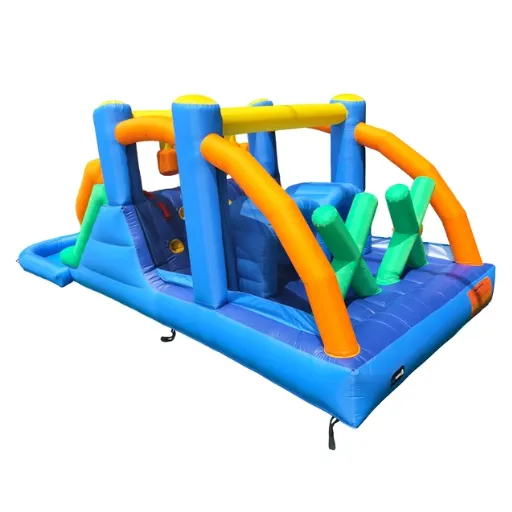
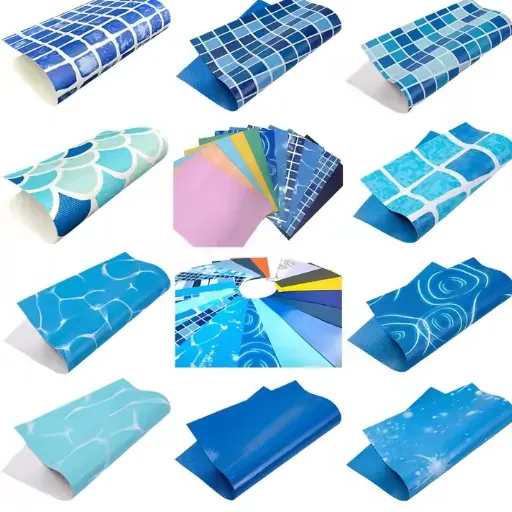
Commercial bounce house material is a laminated composite, not a single fabric. A woven high-tenacity polyester scrim carries the mechanical load, and a PVC coating applied to both faces supplies the air-tight, waterproof, weldable surface that holds pressure and sheds water.
The scrim sets how much abuse a unit survives, and it’s measured in denier and weave count. Commercial grades run a 1000D yarn at a 23 x 23 threads-per-inch weave.
Denier describes the thickness of each yarn; the weave count describes how tightly those yarns are packed. Higher denier on a tighter weave resists tear longer under repeated inflation, which is the load a rental unit sees every weekend.
The coating sets whether the unit keeps air and stays seam-tight. Coating weight is measured in grams per square meter, which buyers usually quote as ounces per square yard. The conversion is fixed: 18 oz equals roughly 610 gsm. Suppliers mix the two units on purpose, quoting whichever number reads better for the market they are selling into.
Specifying material for a new inflatable? Our engineering team reviews your load, weld method, and target market, then recommends a coating weight and scrim construction to match. See our commercial inflatable fabric range.
The Specs That Qualify as Commercial Bounce House Material
A commercial grade is a threshold, not a slogan. The baseline below is the specification we build to, and it is the number to put in front of any supplier who claims a unit is commercial grade.
| Material grade | Weight | Approx. gsm | Scrim | Tear resistance | Typical use |
|---|---|---|---|---|---|
| Residential | 8 to 12 oz | 270 to 410 | 500D to 600D | Under 200 N | Backyards, occasional use |
| Light commercial | 15 oz | ~510 | 800D to 900D | 200 to 240 N | Low-duty rental, promotional units |
| Commercial | 18 oz | ~610 | 1000D x 23 x 23 | 240 to 280 N | Standard rental fleet |
| Premium commercial | 20 oz | ~650 to 680 | 1100D to 1300D | 280 N and above | Water slides, heavy-duty units |
The 18 oz commercial baseline is the number that matters most for a rental fleet. It handles repeated inflation, it holds a heat-welded seam under load, and it survives the UV exposure that breaks down lighter fabric in a single summer. Below it, you are measuring the useful life of a unit in a few seasons rather than five to seven years.
The oz, gsm, and denier conversion
Three units get used interchangeably, and only one of them describes strength.
- Ounces per square yard (oz/yd²) measures coating weight. This is the headline number buyers compare.
- Grams per square meter (gsm) is the same measurement on a different scale. Multiply oz by about 33.9 to reach gsm; 18 oz is roughly 610 gsm.
- Denier measures the scrim yarn, not the coating. A 1000D scrim is the structural minimum for commercial duty. A heavy coating on a 500D scrim is still a weak unit.
When a quote leads with gsm and hides the denier, ask for both. The two together describe the fabric; either one alone does not.
Commercial vs Residential Bounce House Material
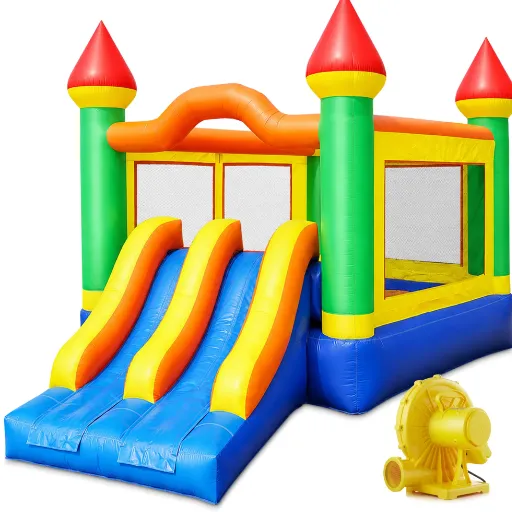
The fastest way to read a spec sheet is to compare the two grades on one axis. This is the comparison that separates a unit priced for a backyard from a unit priced to survive a rental schedule.
| Specification | Residential | Light commercial | Commercial |
|---|---|---|---|
| Fabric weight | 8 to 12 oz (270 to 410 gsm) | 15 oz (~510 gsm) | 18 oz (~610 gsm) |
| Scrim denier | 500D to 600D | 800D to 900D | 1000D x 23 x 23 |
| Tear resistance | Under 200 N | 200 to 240 N | 240 to 280 N |
| Seam construction | Stitched or light weld | Heat weld | RF or hot-air welded |
| Fire standard | None required | NFPA 701 recommended | NFPA 701 for indoor use |
| Expected lifespan | 2 to 3 years | 3 to 5 years | 5 to 7 years (8 with maintenance) |
| Repair incidents per 10 units per year | 6 to 10 | 12 to 16 | 3 to 5 |
The lifespan numbers track material grade directly, and so does the repair load. Heavier fabric moves fewer units into repair stock, which is where the real cost sits. A rental operator who standardized on 18 oz over 15 oz described the change in plain terms: the upcharge per unit was recovered within the first season in avoided patching and refunded bookings.
That trade is not always obvious at order time. A 15 oz unit costs less at the invoice and more every month it operates.
Why PVC Carries a Commercial Duty Cycle
PVC dominates commercial inflatables because the material is engineered to take three specific kinds of punishment: repeated inflation cycles, welded seams under pressure, and constant UV exposure. Each one maps to a part of the construction.
Scrim in the load path
Every inflation event puts the scrim under tension. A 1000D x 23 x 23 weave distributes that load across more yarn than a lighter construction, so no single thread carries a disproportionate share. That distribution is the difference between a material that flexes for years and one that tears at the highest-stress point, usually an anchor or seam junction.
Seams and welding
A seam is where a bounce house fails first. Commercial units use RF or hot-air welded seams that fuse the PVC coating into a continuous membrane, so the seam carries the same pressure the fabric does. Stitched seams rely on thread and pinholes, which is why they’re acceptable on light residential units and unsuitable for a commercial unit running on a schedule.
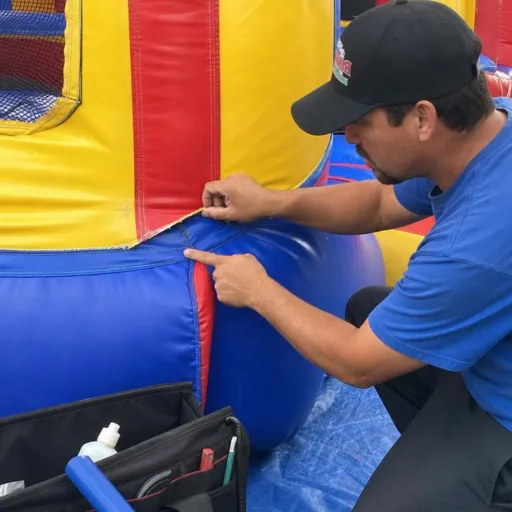
When you inspect a unit, pull the seam flat. A correct weld looks continuous and shows no stitch line.
UV and weathering
Ultraviolet exposure breaks the chemical bonds in untreated PVC, and the failure shows up as flaking, then cracking, then a leak. UV inhibitors added to the polymer during compounding slow that chain. The stabilizers matter as much as the coating weight: an 18 oz fabric with a weak UV package will fail in direct sun faster than the weight suggests. Ask what UV-stabilization the coating carries, not just its thickness.
Dry units versus wet and water-slide units
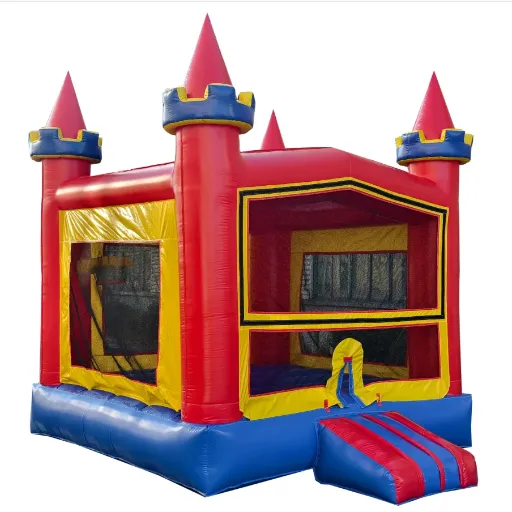
Dry units and wet units are not the same specification. A water slide runs constant water contact, which stresses anti-mildew treatment and seam integrity at the same time. Higher moisture exposure calls for a heavier coating, a 20 oz premium grade on the highest-duty units, and an anti-mildew additive in the compound. Buying a dry-only specification for a wet application is a common and expensive mistake.
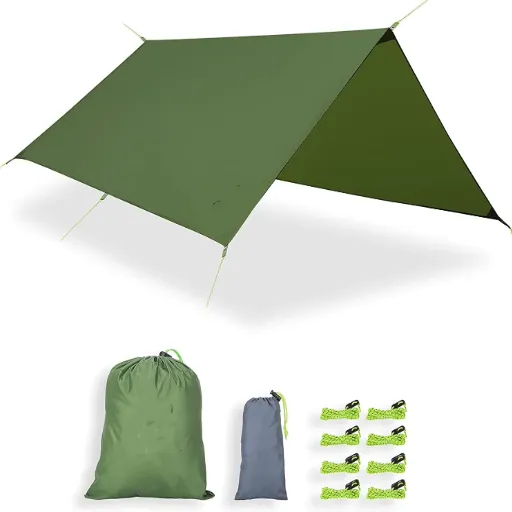
Explore tailored tarpaulin solutions for inflatable castles with LY TRUSTLINK.
How to Verify Commercial Bounce House Material Before You Buy
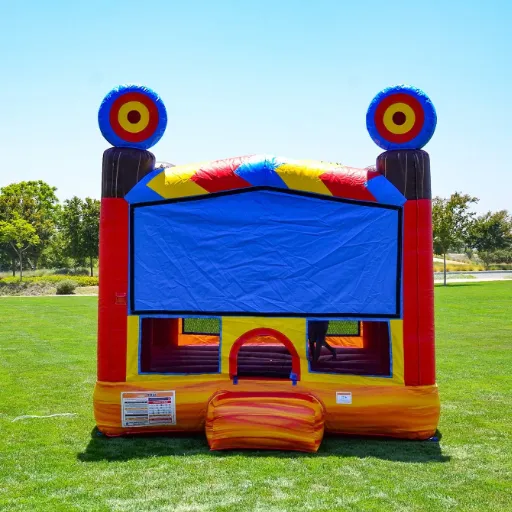
A specification on a page describes a sample. It does not describe the roll in the container. Verification works on two levels: the documents and the material itself.
Document checks
- Certifications in the supplier’s own name. A test report issued to a different company proves nothing about your order. Ask for the certificate and read the named entity.
- Lot-referenced test reports. Request test data tied to your production lot number and date, not a generic report from a previous run.
- Named standards, not adjectives. Ask for ASTM F2374 for inflatables and NFPA 701 for fire retardancy by name. Review the fire standard at nfpa.org and the material and toy safety standards at astm.org.
- A retained sample. Have the mill seal a sample from your run and keep a matching sample yourself. A dispute about weight becomes a measurement instead of an argument.
Hands-on checks
Documents can be borrowed. The material cannot. These checks need no lab and no spec sheet.
- Weigh a sample. Cut a known area and weigh it against a known 18 oz offcut. Weight is the single hardest specification to fake across a whole container.
- Inspect the cut edge. A genuine commercial weave shows a dense 1000D scrim under the coating. A loose, open weave on the cut edge signals a lighter construction than the label claims.
- Count the anchor points. Commercial units carry more reinforced D-rings and tie-downs than residential ones. Sparse anchors on a heavy unit is a sign the frame was specified for a lighter fabric.
- Feel the drape. Heavier fabric hangs with more body and returns less stiffly when folded. A roll that folds like a bedsheet is a residential weight.
- Pull a seam. A welded seam holds flat and continuous. A stitched seam shows thread and pinholes.
The hands-on method catches what a document review misses, because a trading desk can forward a certificate and cannot fake the weight of the roll in your hands. Our what commercial grade actually means guide walks through the same verification logic from the buyer’s side.
Priya, an importer in Rotterdam, ran this sequence on a first container ordered through a new supplier. The documents were clean and the price was competitive.
On delivery, her cut-edge check showed a scrim lighter than the 18 oz specification, and a weighed sample confirmed a roll running near 30 gsm under the agreed tolerance. She had the retained sample to prove it, and the supplier replaced the run. Without the physical check, she would have shipped commercial-price units built on residential weight.
Ready to test the material on your own line? We send production-line samples, not library swatches, so you can weigh, weld, and load-test the exact construction before you commit to a container. Request a sample order.
Commercial Bounce House Material: Frequently Asked Questions
What is commercial bounce house material made of?
Commercial bounce house material is a high-tenacity polyester scrim laminated or coated with PVC on both faces. The scrim supplies tensile and tear strength, and the PVC coating makes the fabric air-tight, waterproof, and weldable. Commercial grades use an 18 oz coating over a 1000D x 23 x 23 scrim.
Is 15 oz or 18 oz vinyl commercial grade?
18 oz is the commercial standard. At roughly 610 gsm on a 1000D scrim with 240 to 280 N tear resistance, 18 oz holds up to repeated inflation, welded seams, and daily UV exposure. 15 oz sits at the light-commercial line and fails several times more often per unit in normal rental use.
What is the difference between commercial and residential bounce house material?
Weight, scrim, seams, and expected life separate the two. Residential fabric runs 8 to 12 oz on a 500D to 600D scrim with stitched seams and a two to three year life. Commercial fabric runs 18 oz on a 1000D scrim with welded seams and a five to seven year life.
How long does commercial bounce house material last?
Commercial grade material lasts roughly five to seven years of regular rental use, and eight or more with proper cleaning, drying, and storage. Intensive daily use shortens that to three to five years. UV exposure, seam quality, and storage practice move the number more than any single other factor.
How can I tell if a bounce house is really commercial grade?
Check the material, not the marketing. Weigh a sample against a known 18 oz offcut, inspect the cut edge for a dense 1000D scrim, count the reinforced anchor points, and pull a seam to confirm it is welded rather than stitched. Then confirm the supplier holds certifications in its own name.
Does commercial bounce house material need to be fire retardant?
For indoor commercial use, yes. NFPA 701 fire retardancy is required by code in most indoor venues and is a condition of many insurance policies. Ask for the NFPA 701 test report in the supplier’s own name, not a general safety declaration.
Conclusion: Buy to the Number, Not the Label
The specification comes down to five decisions you can write down and defend:
- Set the grade at 18 oz and about 610 gsm.
- Confirm the scrim at 1000D x 23 x 23.
- Require tear resistance of 240 to 280 N.
- Specify welded seams and a documented UV package.
- Verify the lot by hand, using a weighed sample and a cut-edge check.
Do those five things and the label stops being a sales term. It becomes a specification you held a supplier to, and a repair budget you can plan around.
The unit price on a quotation is the least durable part of the deal. Coating weight that holds across every lot, a seam that stays continuous under pressure, and documentation your own customers and insurers will accept are what decide whether a purchase was a good decision two years later. For the full material stack behind these numbers, start with our complete bounce house fabric guide, then compare grades in the 15 oz vs 18 oz PVC vinyl comparison and check the compliance side in our bounce house safety standards guide.
If you are specifying commercial bounce house material for a new product line or replacing a supplier who has drifted, our engineering team will review your application, recommend the grade and coating to match, and send samples from the production line before you commit. That is how a supply relationship starts on the right footing: send us your specification and request a quote.