
Tensile Structure Maintenance Guide: Schedule & Standards
Tensile structure maintenance is the ongoing inspection, cleaning, tension monitoring, and repair of membrane roofs, canopies, and facades to preserve their design life and structural safety. A well-maintained tensile membrane structure can last 30–50 years for PTFE-coated glass fiber and 10–25 years for PVC-coated polyester, while neglected systems often require replacement decades earlier.
What if the membrane roof over your stadium, airport terminal, or logistics canopy is quietly accumulating the very failures that will cost you 60–70% of the original investment to fix? Facility managers often treat tensile structures as “install and forget” assets because they look self-supporting and elegant. That assumption is expensive. Tensile membrane maintenance is low-effort compared to traditional roofing, but it is not zero-effort. Small issues like coating chalking, ponding water, or loose cable fittings compound quickly when ignored, turning routine tensile structure maintenance into an emergency repair.
This guide explains the complete tensile structure maintenance process. You will learn how often to inspect different membrane types, how to clean PVC and PTFE safely, what mistakes cause premature failure, and how maintenance records affect warranty and lifecycle planning. By the end, you will have a practical schedule you can put into operation immediately, plus a clear sense of when to call an engineer. The goal is to make tensile structure maintenance a predictable operating expense rather than a surprise capital project. Whether you are planning a stadium canopy, commercial shade structure, or landmark membrane project, LY TRUSTLINK can provide tailored design and manufacturing support from concept to completion.
Key Takeaways
- Tensile structure maintenance includes monthly visual checks, annual professional inspections, and a full engineering review every three years.
- PVC-coated polyester requires cleaning every 6–18 months; PTFE-coated glass fiber is largely self-cleaning and only needs attention every 3–8 years.
- Annual preventive maintenance typically costs 2–5% of the original structure cost, while deferred maintenance can push replacement to 60–70% of initial investment.
- ASCE 55-16 requires a maintenance schedule to be included in tensile membrane structure design documents.
- Ponding water is the fastest path to structural overload: one square meter of standing water adds approximately 1,000 kg of dead load.
What Is Tensile Structure Maintenance?
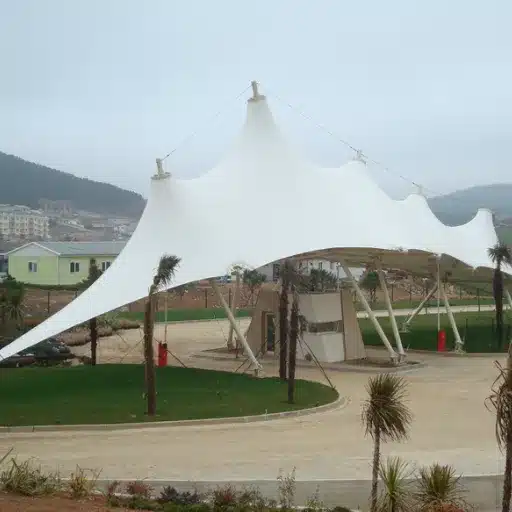
Tensile structure maintenance is the set of scheduled activities that keep a tensioned membrane and its supporting framework in design condition. It covers visual inspections, mechanical checks, fabric cleaning, tension adjustment, minor repairs, and documentation. Unlike conventional flat-roof maintenance, tensile membrane maintenance depends on geometry. The fabric must remain under calculated pre-stress. If slack develops, wind loads create flutter, ponding becomes likely, and the structure can move outside its engineered load path. Every tensile structure maintenance plan should therefore include periodic tension verification, not just visual checks, because geometry is load-bearing.
The maintenance program also differs by material. PVC-coated polyester, PTFE-coated glass fiber, and ETFE foil systems each have distinct cleaning chemistry, inspection priorities, and failure modes. Understanding those differences is the foundation of cost-effective tensile fabric maintenance and long-term tensile structure maintenance success.
Material quality at the manufacturing stage directly affects how much maintenance a structure will need over its life. Membranes with uniform coating thickness, welded seams backed by factory test records, and UV-stabilized topcoats resist degradation longer than commodity alternatives. LY TRUSTLINK supplies engineered membrane fabrics with documented specifications so that facility teams know exactly what they are protecting from day one. Selecting the right membrane at the outset is the single highest-leverage decision in any tensile structure maintenance strategy.
How Often Should Tensile Structures Be Inspected? A Tensile Structure Maintenance Schedule
A practical tensile structure maintenance schedule depends on environment, structure type, and membrane material. A coastal stadium roof exposed to salt spray needs closer attention than a covered walkway in an arid climate. ASCE 55-16, the standard for tensile membrane structures, requires project design documents to include a maintenance schedule. The table below is a starting point for any owner-operated tensile structure maintenance program and reflects common industry practice from major membrane contractors.
| Inspection Type | Frequency | Focus Areas | Responsible Party |
|---|---|---|---|
| Owner visual check | Monthly or quarterly | Debris, ponding, tears, loose cables, drainage | Facility staff |
| Professional inspection | Annually | Fabric tension, hardware, coating condition, seams | Membrane specialist |
| Engineering assessment | Every 3 years | Structural analysis, load-path verification, remaining life | Structural engineer |
| Post-event inspection | After storms, snow, or impact | Tears, displaced panels, damaged masts or cables | Specialist + engineer if needed |
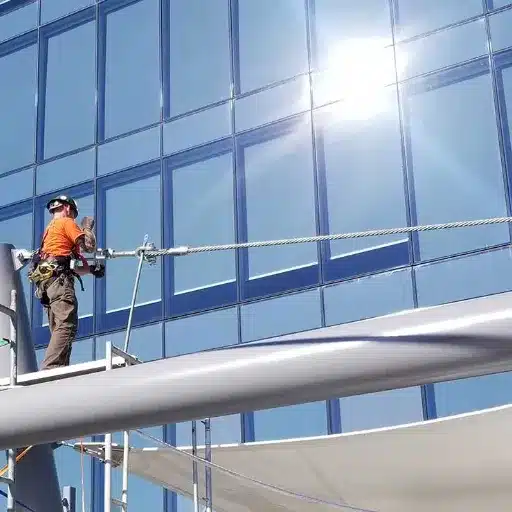
Monthly visual checks can be performed from the ground or an adjacent roof using binoculars. Facility staff should look for leaves blocking valleys, new wrinkles or slack areas, water pooling after rain, and any visible abrasion near frames or cable contacts. These simple observations are the front line of tensile structure maintenance. Annual professional inspections require trained access, either by rope access technicians or mobile platforms, so the fabric can be touched and photographed close up. Combining owner checks with professional visits creates the layered defense that tensile structure maintenance demands. Treat this annual visit as the core tensile membrane inspection for the year.
The three-year engineering assessment is the inspection that many owners skip and later regret. A structural engineer reviews whether the structure still behaves as modeled, whether pre-stress has degraded, and whether local building-code loads have changed. That assessment is also the right time to update maintenance records, adjust the tensile structure maintenance plan, and re-evaluate the original design life. Updating the plan after each assessment keeps the program aligned with actual field conditions.
Ready to reduce lifetime maintenance burden before construction starts? Review our tensile structure installation guide to see how proper pre-stress and detail design affect inspection outcomes.
Tensile Structure Maintenance by Membrane Material
Each membrane material has a maintenance personality. Treating PTFE like PVC, or PVC like a tarp, is a common cause of premature failure. The right tensile fabric maintenance approach starts with knowing which material is on the frame.
PVC Tensile Membrane Maintenance
PVC-coated polyester is the workhorse of tensile fabric structures: canopies, temporary event roofs, awnings, and many commercial buildings. It is flexible, weldable, and cost-effective, but it requires regular cleaning to prevent mildew, pollutants, and topcoat degradation. This is the most common form of tensile membrane maintenance for commercial canopies. Facility teams performing PVC tensile membrane maintenance should always verify the topcoat condition before selecting cleaning chemistry.
- Cleaning frequency: every 6–18 months in normal environments; every 3–6 months in high-pollution or coastal areas.
- Cleaning chemistry: pH-neutral mild detergent or proprietary PVC membrane cleaner; deionized water for final rinse.
- Pressure limit: maximum 1,000 PSI with a wide fan tip, held 12–24 inches from the surface.
- Topcoat watch: PVDF or PVF topcoats protect the PVC from UV. Chalking, whitening, or powdering signals that the topcoat is degrading and re-topcoating should be evaluated.
- Lifespan: 10–25 years depending on base fabric quality, coating system, and maintenance discipline. Consistent PVC tensile membrane maintenance is the difference between a 12-year canopy and a 22-year canopy.
PTFE Membrane Maintenance
PTFE-coated glass fiber is the premium choice for permanent architectural roofs. Its surface is microscopically porous in a way that sheds dirt when rainwater flows across it. This self-cleaning property makes PTFE membrane maintenance relatively light, but the material is also more fragile to foot traffic and impact. Because PTFE membrane maintenance is infrequent, owners sometimes forget that access protocol matters as much as cleaning chemistry.
- Cleaning frequency: every 3–8 years, depending on the environment; rainwater typically performs most of the work.
- Cleaning chemistry: warm water and a soft brush; specialized PTFE-compatible cleaners for localized stains.
- Critical rule: never walk directly on a PTFE membrane. Use certified access boards, crawl boards, or rope access that loads the cable network, not the fabric.
- Slope requirement: low-slope PTFE panels do not self-clean well. Design and maintenance must ensure adequate drainage angles.
- Lifespan: 30–50 years with proper maintenance. The long tensile structure lifespan possible with PTFE is one reason the material dominates permanent stadium and airport roofs.
ETFE Cushion and Foil Maintenance
ETFE foil systems are not fabric in the traditional sense. They are pneumatic cushions made from thin ETFE film, often used for atriums, greenhouses, and sports facilities. Maintenance focuses on the air supply and the integrity of the foil.
- Air system checks: weekly or monthly verification of blower pressure, backup blower function, and inflation sensors.
- Foil inspection: visual checks for punctures, tears, or localized thinning, especially at weld seams and clamping points.
- Cleaning: gentle wash with water and a soft sponge; avoid abrasive pads and petroleum-based cleaners.
- Repair: small punctures can be patched with ETFE tape; larger damage usually requires cushion replacement. ETFE systems are the exception to many tensile structure maintenance rules because the air supply, not the fabric tension, is the primary concern.
A procurement team at a northern European logistics hub learned this distinction the hard way. They specified PTFE for a permanent canopy but treated it like PVC during a snow event, sending maintenance staff onto the membrane with shovels. The glass-fiber substrate cracked under point loads and foot traffic. The resulting panel replacement cost exceeded the original annual tensile structure maintenance budget by a factor of ten. The correct approach would have been to use a roof rake or heated de-icing system from below, or to specify a membrane and access plan matched to the tensile structure maintenance method.
Bring your architectural vision to life with LY TRUSTLINK. Contact our membrane structure specialists to discuss custom tensile solutions engineered for performance, durability, and visual impact.
Tensile Structure Cleaning: Safe Methods for Membrane Roofs
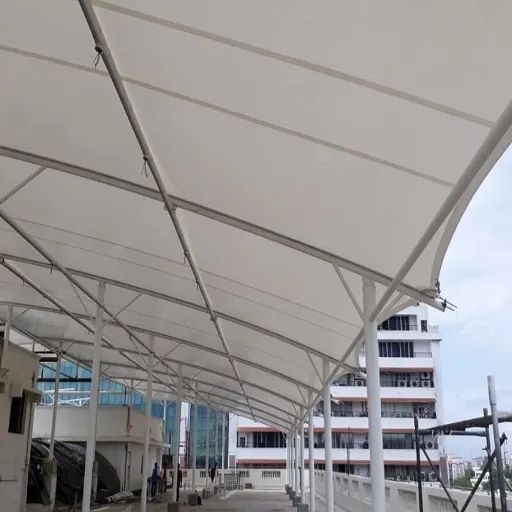
Tensile structure cleaning is the most visible part of any maintenance program, and it is also where the most damage is done. Aggressive methods can strip topcoats, abrade the fabric, or force water into seams. A consistent tensile fabric maintenance cleaning routine extends service life and preserves optical and fire-performance properties. When in doubt, choose the gentler method; conservative tensile structure cleaning almost always costs less than repairing avoidable damage.
General Cleaning Principles
Start with the gentlest method that will achieve the result. Use low-pressure water, soft brushes, and pH-neutral detergents. Work from the top of the slope downward so dirty water does not flow over already-cleaned areas. Avoid cleaning in direct midday sun, which can cause cleaning agents to dry on the surface and leave residues. These principles apply to every tensile structure cleaning program, regardless of membrane type.
Contaminant-Specific Methods
| Contaminant | Recommended Approach | Avoid |
|---|---|---|
| Dirt and dust | Low-pressure rinse with water | High-pressure direct jet |
| Grease or oil | Citrus-based degreaser, then rinse | Petroleum solvents on PVC |
| Mold or mildew | pH-neutral cleaner with mildewcide; brush gently | Bleach or chlorine products |
| Tree sap | Warm water and soft brush; specialized sap remover | Scraping with hard tools |
| Bird droppings | Soak with water, then gentle wipe | Letting acids sit for long periods |
Equipment and Pressure Limits
Pressure washing is possible, but it must be controlled. The generally accepted maximum for PVC and PTFE membranes is 1,000 PSI, though many contractors prefer to stay below 50 bar, approximately 725 PSI. Use a wide fan tip, keep the nozzle 12–24 inches from the surface, and maintain a consistent angle. Never point the jet directly at seams, welds, or cable-clamp interfaces. Proper equipment selection is a core skill in professional tensile structure cleaning.
What Never to Use
Avoid petroleum solvents, aromatic hydrocarbons, strong acids or alkalis, abrasive powders, and wire brushes on any tensile membrane. These chemicals can dissolve PVC plasticizers, damage PTFE coatings, or scratch optical ETFE surfaces. Using the wrong chemistry is one of the most expensive tensile structure maintenance mistakes because the damage is often irreversible. If you are uncertain about a cleaner, test it on a small hidden panel first and wait 24 hours.
Need membrane specifications that match your maintenance plan? Explore our tensile structure materials guide to compare PVC, PTFE, and ETFE options for your project.
Common Tensile Structure Maintenance Mistakes
Even experienced facility teams make predictable errors. The following mistakes appear repeatedly in forensic inspections and warranty claims, and avoiding them is one of the fastest ways to improve tensile structure maintenance outcomes.
Pressure Washing Incorrectly
High-pressure washing with a narrow nozzle or zero-degree tip can cut through coating and base fabric in seconds. It can also drive water past seams and into the building envelope. This is one of the most damaging tensile structure cleaning mistakes because the repair often requires panel replacement rather than simple patching.
Using Petroleum Solvents on PVC
Solvents such as gasoline, kerosene, or aromatic thinners attack the PVC coating and plasticizers. They cause swelling, cracking, and premature embrittlement.
Walking on PTFE Membranes
PTFE-coated glass fiber is strong in tension but brittle under point loads and foot traffic. Maintenance personnel must use crawl boards or work from the cable network.
Ignoring Ponding or Slack Areas
Pooled water is not just a leak risk. One square meter of water 100 mm deep adds roughly 1,000 kg of dead load. Over time, ponding stretches the fabric, alters the load path, and can overload masts and cables.
Missing Cable and Mast Corrosion
Stainless steel hardware in coastal or chemically aggressive environments can still corrode, especially if the specification was lower than 316 grade or if crevices trap moisture. Cable fittings, turnbuckles, and mast base plates need scheduled inspection.
Delaying Seam Repairs
A small seam opening often becomes a tear under wind load. Factory re-welding or a compatible patch should be applied as soon as the defect is documented.
When a municipal canopy in Florida ignored slack panels after a tropical storm, the situation escalated quickly. Wind gusted under the loose fabric, creating a flapping cycle that propagated a 150 mm seam tear into a 3-meter panel failure within two weeks. The emergency repair and traffic disruption cost four times what a scheduled post-storm inspection and seam re-weld would have cost. It was a textbook failure of reactive rather than preventive tensile structure maintenance.
Tensile Structure Repair vs. Replacement
Not every defect requires a full panel replacement. The decision depends on damage size, location, material, and remaining design life. A disciplined tensile structure maintenance program catches defects while they are still small enough to patch. Waiting until damage is visible from the ground usually means the repair has become a replacement.
Small Punctures and Tears
Minor cuts in PVC membranes can often be repaired with a compatible patch kit applied to a clean, dry surface. The patch should be rounded at the corners to avoid peel initiation. For PTFE, factory welding is usually required because site adhesives do not bond reliably to the coating.
Seam Failures
Seam failures are structural. They indicate that the weld, pre-stress, or load path has exceeded capacity. Seam repair almost always requires a membrane contractor with welding equipment and factory-compatible materials.
Cable Replacement
Cables that show corrosion, broken strands, or end-fitting deformation must be replaced. Cable replacement is not a patch job; it requires re-tensioning the structure and verifying that the new forces match the original engineering.
Panel Replacement vs. Full Roof
When coating degradation, widespread cracking, or repeated repairs accumulate, panel replacement becomes more economical than ongoing patching. If the support structure and cables remain sound, replacing individual panels can restore decades of service life. If the frame is corroded or the geometry has shifted, a full roof replacement may be necessary. For help framing the financial decision, see our tensile structure lifecycle cost analysis.
When to Call an Engineer
Call a structural engineer whenever you observe ponding that does not drain, large tears, displaced masts, unusual movement under wind, or any change in the structure’s geometry. These are not cosmetic issues; they are signs that the tensile force balance has changed. Involving an engineer early is the safest way to protect your tensile structure maintenance investment.
Tensile Structure Maintenance Cost Breakdown

Budgeting for tensile structure maintenance is straightforward once you understand the relationship between preventive spending, tensile structure lifespan, and replacement risk. The goal is to spend a small percentage of capital cost each year to avoid a large replacement bill later.
Annual Maintenance as a Percentage of the Initial Cost
Annual preventive maintenance, including inspections and cleaning, typically costs 2–5% of the original structure cost. That figure includes labor, access equipment, cleaning agents, and minor repairs. For a structure that originally cost 500,000, expect 500,000, expect 10,000–$25,000 per year.
Replacement Cost
Neglecting maintenance often leads to replacement costs of 60–70% of the initial investment, and sometimes more if the support frame is also affected. The difference between 5% annual maintenance and a 65% replacement bill is the financial case for discipline. Extending tensile structure lifespan by even ten years through proper care typically returns many times the maintenance spend.
Cost Factors
- Access: Rope access is usually cheaper than scaffolding or mobile platforms, but it requires certified technicians.
- Material: PTFE cleaning is less frequent but requires specialized labor and access protocols.
- Environment: Coastal, industrial, and high-pollution sites accelerate cleaning cycles and hardware replacement.
- Structure size and complexity: Large roofs with multiple valleys and penetrations take more time to inspect thoroughly. A detailed tensile structure maintenance budget should therefore be built from the specific geometry, not from a generic percentage alone.
For a deeper look at lifecycle economics, see our tensile structure cost guide.
Documentation, Standards, and Tensile Structure Lifespan Planning
Maintenance records are not just paperwork. They protect warranty coverage, support insurance claims, and inform future design decisions. Good documentation is what turns a reactive repair program into a predictable tensile structure maintenance strategy.
ASCE 55-16 Requirements
ASCE 55-16, Tensile Membrane Structures, requires that design documents include a maintenance schedule. Owners should keep a copy of that schedule and document each inspection, cleaning, repair, and modification. If a warranty dispute arises, the manufacturer or installer will ask for this record. Treating documentation as part of the tensile structure maintenance workflow, rather than an afterthought, protects both warranty and asset value.
ASTM E84 and Fire Safety
Membrane materials are tested for surface burning characteristics under ASTM E84. Maintenance activities must not compromise fire performance. Avoid applying untested coatings, adhesives, or cleaning residues that could alter flame-spread ratings.
NFPA 701 Compliance Records
For textile membranes used in public assembly spaces, NFPA 701 fire-test records should be retained. Any replacement fabric must carry the same or better flame-propagation classification.
Maintenance Records and Warranty
A complete maintenance file should include the original design drawings, the ASCE 55-16 maintenance schedule, inspection reports with photographs, cleaning logs, repair documentation, and correspondence with engineers or contractors. This file becomes the basis for lifecycle planning, warranty defense, and resale due diligence. Investors and insurers increasingly ask for this documentation before they will underwrite a tensile structure maintenance program.
In cold climates, membrane selection also affects what maintenance is required during winter. Our guide to laminated fabric in cold environments explains how cold-crack resistance and seam integrity reduce seasonal failure modes.
Frequently Asked Questions About Tensile Structure Maintenance
How often should tensile structures be inspected?
Facility staff should perform visual checks monthly or quarterly. A professional tensile membrane inspection should happen annually, and a structural engineer should conduct a full assessment every three years. Post-event inspections are required after severe storms, heavy snow, or any impact. Consistent tensile membrane maintenance depends on this layered inspection rhythm.
How do you clean a tensile membrane roof?
Use low-pressure water, a soft brush, and a pH-neutral detergent. Work from the top down and avoid petroleum solvents, bleach, and abrasive tools. PVC membranes typically need cleaning every 6–18 months, while PTFE membranes are largely self-cleaning and may only need attention every 3–8 years. Proper tensile fabric maintenance preserves both appearance and fire-performance properties.
What is the lifespan of a tensile structure?
With proper tensile structure maintenance, PVC-coated polyester can last 10–25 years and PTFE-coated glass fiber can last 30–50 years. ETFE cushion systems can also reach multi-decade service life when the air supply and foil integrity are maintained. These tensile structure lifespan ranges assume documented inspections and material-appropriate cleaning.
Can you pressure wash tensile fabric?
Yes, but only with care. Stay below 1,000 PSI, use a wide fan tip, and keep the nozzle 12–24 inches from the surface. Never direct high-pressure water at seams, welds, or hardware.
When should a tensile membrane be replaced?
Replace the membrane when coating degradation is widespread, cracks appear across multiple panels, repeated repairs no longer make economic sense, or the fabric has lost too much pre-stress to remain safe. A structural engineer should verify the decision.
What standards govern tensile structure maintenance?
ASCE 55-16 requires a maintenance schedule in tensile membrane structure design documents. ASTM E84 covers surface burning characteristics, and NFPA 701 applies to flame propagation of textile membranes used in public assembly spaces.
What causes tensile membrane failure?
The most common causes are ponding water, slack fabric that flutters in wind, ignored seam damage, corrosion of cables or masts, improper cleaning chemistry, and foot traffic on PTFE. Most failures trace back to deferred or incorrect tensile fabric maintenance. A robust tensile membrane maintenance program eliminates most of these failure modes before they escalate.
Tensile structure maintenance is not complicated, but it is specific. The structures that reach their full design life share three habits: regular visual checks, material-appropriate cleaning, and disciplined documentation. Those that fail early usually share one trait: deferred attention.
Start with the inspection schedule in this guide. Match cleaning methods to your membrane type. Budget 2–5% of initial cost annually for preventive care. And treat ponding, slack, and seam issues as engineering concerns, not cosmetic ones. Done consistently, this level of care is what separates a thirty-year asset from a fifteen-year liability. The best tensile structure maintenance programs are boring, repetitive, and quietly profitable.
LY TRUSTLINK manufactures engineered membrane fabrics and supports owners, contractors, and engineers with technical specifications, seam documentation, and replacement-compatible panels. If you are planning a new tensile structure or reassessing the tensile structure maintenance strategy for an existing one, request maintenance-compatible membrane specifications from LY TRUSTLINK.