
Heavy Duty Waterproof Tarp: Industrial Buyer’s Spec Guide
The best heavy duty waterproof tarp for demanding applications is a PVC-coated polyester tarpaulin in the 450–900gsm range. It should have welded seams, UV stabilization, and tensile strength above 1,500 N/5cm. For construction sites, trucking fleets, and industrial outdoor storage, this specification reliably outperforms polyethylene and canvas alternatives. The exact grade you need depends on load stress, climate exposure, and compliance requirements.
“Heavy duty” is one of the most overused labels in the tarpaulin market. A retail store may call a 120gsm polyethylene sheet heavy duty because it has reinforced corners. A logistics fleet, however, needs a material that will not tear at 100 km/h wind speeds or crack after two winters. The gap between those two products is enormous, and the only way to close it is to stop reading labels and start reading specifications.
This waterproof tarp buying guide explains what a heavy duty waterproof tarp actually is, how to read a technical data sheet, and which specifications matter for construction, transportation, agriculture, and industrial applications. By the end, you will be able to specify a tarp like an engineer and verify that what you receive matches what you ordered. Wondering if a tarp is truly waterproof? Contact LY TRUSTLINK for expert guidance and recommendations based on your specific application.
Key Takeaways
- A true heavy duty waterproof tarp starts at 450gsm and is usually PVC-coated polyester, not polyethylene or canvas.
- Waterproofing depends on hydrostatic head rating and seam construction; 5,000mm+ and welded seams are the industrial baseline.
- Tensile strength, tear resistance, UV stabilization, and cold-crack rating are the four mechanical properties that predict field life.
- Always request batch-specific test reports and third-party certifications such as NFPA 701 for fire-retardant applications.
- PVC tarpaulin often costs less per year of service than heavy-duty PE because it lasts 5–10 years versus 1–3 years.
Need help specifying the right material for your operation? Talk to an engineer about custom heavy duty waterproof tarpaulin specifications.
What “Heavy Duty Waterproof” Actually Means
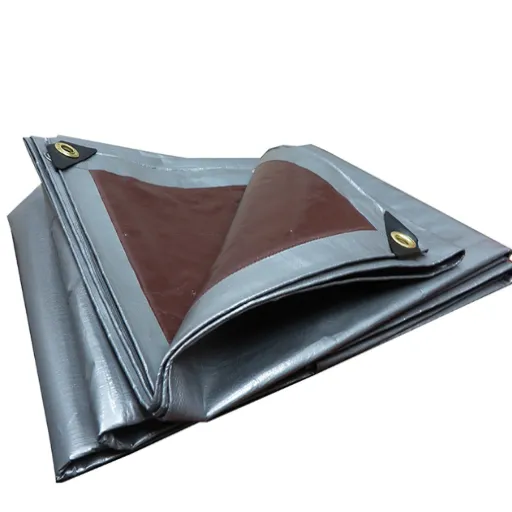
A waterproof tarp is a flexible cover engineered to block liquid water under sustained pressure. A heavy duty waterproof tarp adds mechanical strength, UV resistance, and reinforced hardware so it can survive long-term outdoor exposure under load. In procurement terms, it is a technical fabric selected by specification, not a commodity picked by size and color.
Waterproof, Water-Resistant, and Water-Repellent Are Not the Same
These three terms describe different levels of protection. Procurement teams often confuse them, which leads to covers failing the first time water pools on the surface.
- Waterproof: No water passes through the fabric under normal use, including pooling. PVC-coated polyester tarpaulin is waterproof.
- Water-resistant: Sheds light rain but may leak under sustained or pressurized water. Heavy PE tarps fall here after aging.
- Water-repellent: Surface resists wetting but offers no meaningful barrier. Untreated canvas is water-repellent at best.
For assets exposed to heavy rain, snow, or standing water, only a waterproof material is acceptable. If you need a primer on the underlying mechanics, read our guide on how tarp waterproofing actually works before specifying a heavy-duty grade. If a supplier cannot provide a hydrostatic head rating, the product is probably not truly waterproof.
Why Specifications Matter More Than Labels
The word “heavy duty” has no standardized meaning. One supplier’s heavy duty might be 200gsm PE. Another’s might be 900gsm PVC. The only reliable way to compare products is to compare numbers on a technical data sheet.
The most important numbers are:
- GSM (grams per square meter): fabric weight and coating density
- Hydrostatic head (mm H₂O): waterproof pressure rating
- Tensile strength (N/5cm or lbf): resistance to stretching under load
- Tear strength (N or lbf): resistance to propagation after a puncture
- UV resistance (hours): predicted life under solar exposure
- Cold-crack rating (°C): lowest temperature where the fabric remains flexible
A procurement manager who asks for these six values will quickly separate engineering-grade suppliers from resellers.
How to Read a Technical Data Sheet
A credible technical data sheet lists test method, value, and unit for every claim. For example, “tensile strength: 2,000 N/5cm, ASTM D5034” tells you how the number was measured. A claim without a test method is marketing, not engineering.
When reviewing a data sheet, check that:
- Values are stated with units.
- Test standards are referenced.
- Separate values are given for warp and weft directions.
- UV, fire, and chemical claims reference recognized standards.
- The document is dated and, ideally, batch-specific.
If a supplier offers a one-page brochure instead of a data sheet, treat it as a starting point, not proof.
Need more information about waterproof tarp performance in harsh weather conditions? Get in touch with LY TRUSTLINK for expert consultation and product support.
Heavy Duty Tarp Materials Compared
The three most common materials for heavy-duty covers are PVC-coated polyester, polyethylene, and treated canvas. Each has a valid use case, but only one is suitable for long-term, load-bearing, fully waterproof industrial work.
PVC-Coated Polyester, The Industrial Standard
PVC-coated polyester, often called vinyl tarpaulin, is the professional choice for construction, trucking, marine, and industrial storage. A high-tenacity polyester scrim provides the structural backbone, while a virgin-grade PVC coating creates a continuous waterproof barrier. This is why PVC coated polyester tarpaulin is the default industrial choice when failure is expensive.
Typical properties:
- Weight: 450–900gsm for heavy duty; 900–1,500gsm for super heavy duty.
- Thickness: 0.4–1.2mm.
- Hydrostatic head: 5,000–10,000mm+.
- Tensile strength: 1,500–4,000+ N/5cm.
- Lifespan: 5–10+ years with UV stabilization.
- Seams: heat-welded, RF-welded, or hot-air welded.
PVC tarpaulin can be manufactured with fire-retardant additives, UV stabilizers, anti-mildew treatments, and custom colors. It is also repairable by heat welding, which extends service life. For the complete engineering data sheet context, see our deep-dive on PVC coated fabric technical specifications.
Heavy-Duty Polyethylene, When Temporary Coverage Is Enough
Polyethylene tarps are lighter and cheaper than PVC. They work well for short-term coverage, emergency response, and seasonal agricultural protection. However, PE degrades rapidly under UV and becomes brittle in cold weather.
Typical properties:
- Weight: 120–305gsm for “heavy duty” retail grades.
- Thickness: 6–20 mil.
- Hydrostatic head: 1,500–5,000mm when new.
- Tensile strength: 350–1,400 N/5cm.
- Lifespan: 6 months to 3 years outdoors.
- Seams: stitched or heat-sealed.
PE is rational when the cover will be replaced frequently or when weight and cost matter more than longevity. It is not the right choice for multi-year industrial installations.
Treated Canvas, Breathable but Not Fully Waterproof
Canvas is a woven cotton fabric, sometimes treated with wax or PU for water resistance. It is breathable, repairable, and aesthetically traditional. It is not, however, fully waterproof without a coating or membrane, and it is much heavier than synthetic alternatives for a given strength.
Typical properties:
- Weight: 300–610gsm (10–18 oz/yd²).
- Water resistance: 0–1,000mm hydrostatic head.
- Tensile strength: moderate, depending on weave.
- Lifespan: 2–5 years with maintenance.
- Best for: breathable equipment covers, aesthetic applications, light weather protection.
Canvas makes sense when condensation control is more important than absolute waterproofing. For pure waterproof protection under load, PVC is the better engineering choice.
Material Comparison by Performance
| Property | PVC-Coated Polyester | Heavy-Duty PE | Treated Canvas |
|---|---|---|---|
| Waterproof rating | 5,000–10,000mm+ | 1,500–5,000mm | 0–1,000mm |
| Tensile strength | 1,500–4,000+ N/5cm | 350–1,400 N/5cm | 500–1,500 N/5cm |
| UV lifespan | 5–10+ years | 6 months–3 years | 2–5 years |
| Cold-crack rating | -30°C to -40°C | -10°C to -20°C | Limited |
| Seam type | Welded | Stitched/heat-sealed | Stitched |
| Repairability | Heat-weldable | Tape or replace | Sew/patch |
| Best application | Industrial, trucking, marine | Temporary, seasonal, emergency | Breathable covers |
Not sure which material fits your exposure conditions? See our detailed vinyl tarp vs poly tarp vs canvas comparison, or review our waterproof tarp selection by application.
Key Specifications to Specify Before Buying
Once you have selected a material, the next step is to define the exact grade. These heavy duty tarp specifications determine whether the tarp performs for one season or ten.
Weight: GSM and oz/sq yd Duty Classes
GSM is the most common way to classify tarpaulin weight. It directly correlates with coating thickness, tensile strength, and durability.
| Duty Class | GSM Range | Typical Use |
|---|---|---|
| Light duty | Under 200gsm | Camping, gardening, temporary home use |
| Medium duty | 200–450gsm | Seasonal agriculture, light equipment |
| Heavy duty | 450–650gsm | Construction, logistics, industrial covers |
| Industrial duty | 650–900gsm | Truck side curtains, scaffolding, long-term storage |
| Super heavy duty | 900gsm+ | Membrane structures, extreme load applications |
For most industrial waterproof covers, 450–650gsm is the practical starting point. Truck side curtains and load-bearing covers usually require 600–900gsm.
Thickness: Mil Ratings and Their Limitations
Mil thickness measures film thickness in thousandths of an inch. It is commonly used for PE tarps but is less meaningful for PVC-coated fabrics because the base fabric scrim contributes most of the mechanical strength.
For PE tarps:
- 5–8 mil: light duty
- 10–14 mil: medium duty
- 16–20+ mil: heavy duty
For PVC tarpaulin, ask for GSM and base fabric denier rather than mil thickness. A thin, high-density PVC coating on a 1000D polyester scrim can be stronger than a thick, low-density coating on a weaker base.
Base Fabric: Denier and Weave Count
The base fabric is the structural layer inside the coating. Two numbers describe it:
- Denier (D): fiber thickness. Higher denier yarns are stronger. Industrial tarps commonly use 500D, 840D, or 1000D polyester.
- Weave count: threads per inch in warp and weft. A 20×20 weave is tighter and stronger than an 18×18 weave on the same denier.
A 1000D × 1000D, 20×20 polyester scrim is a common industrial standard for heavy-duty truck covers and construction tarps.
Waterproof Rating: Hydrostatic Head Explained
Hydrostatic head measures the height of a water column a fabric can resist before leaking. Higher numbers mean better waterproofing.
| Rating | Performance |
|---|---|
| Under 1,500mm | Water-resistant, not waterproof |
| 1,500–5,000mm | Waterproof for most rain |
| 5,000–10,000mm | Highly waterproof, handles pooling |
| 10,000mm+ | Extreme waterproofing, permanent exposure |
Quality PVC tarpaulin typically exceeds 5,000mm and often reaches 10,000mm. Heavy PE tarps may start at 3,000mm but decline as the coating degrades. For a full breakdown of how hydrostatic head, MIL specs, and spray ratings are measured, see our guide to tarp waterproof ratings explained.
Tensile Strength and Tear Resistance
Tensile strength measures how much force the fabric can withstand before breaking. Tear resistance measures how much a small rip will propagate. Both matter in wind, tensioning, and load-bearing applications.
| Material | Typical Tensile Strength | Typical Tear Strength |
|---|---|---|
| 450gsm PVC | 1,500–2,000 N/5cm | 200–400 N |
| 650gsm PVC | 2,000–3,000 N/5cm | 300–500 N |
| 900gsm PVC | 3,500–4,000+ N/5cm | 450–600 N |
| Heavy PE | 350–1,400 N/5cm | 50–250 N |
For truck covers and construction enclosures, tensile strength above 1,500 N/5cm is a sensible minimum.
Seam Construction: Welded vs. Stitched
Seams are the most common failure point in waterproof covers. Stitched seams create needle holes that wick water. Welded seams fuse the material together, eliminating leak paths.
- Heat-welded seams: use hot air or wedge welding; strong and waterproof.
- RF-welded seams: use radio frequency to bond PVC at a molecular level; excellent for custom shapes.
- Hot-air welded seams: common for on-site installation and repair.
For any application where waterproofing is critical, specify welded seams. Stitched seams are only acceptable if the holes are sealed or if the cover is temporary and non-critical. If you are maintaining an existing cover rather than buying new, our guide to seam sealing techniques for tarps covers tape, liquid sealers, and hot-air welding.
UV Resistance, Cold-Crack Rating, and Temperature Range
UV exposure is the leading cause of premature tarp failure. Without UV stabilizers, PE tarps can become brittle within months in high-sun environments. PVC tarpaulin should include UV inhibitors and be rated for 500+ hours of accelerated weathering.
Cold-crack rating tells you the lowest temperature at which the fabric remains flexible. Standard PVC is often rated to -30°C; premium cold-weather grades reach -40°C. A logistics fleet operating in northern climates should not assume a standard-grade tarp will survive winter.
Grommets, Hems, and Corner Reinforcement
Hardware quality determines how well a tarp survives tensioning and wind.
- Grommets: Brass, stainless steel, or aluminum, spaced 0.5–1 meter apart. Closer spacing is better for high-wind or load-bearing use.
- Hems: Should be reinforced with rope or webbing, double-folded, and welded or double-stitched.
- Corners: Should have reinforced patches to distribute stress.
When a tarp tears in the field, it usually tears at a grommet or corner first. Reinforced hardware is not optional for heavy-duty use.
Performance Testing: What Heavy Duty Should Prove
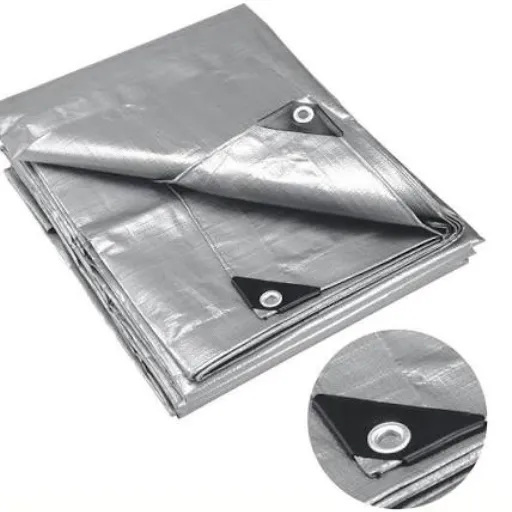
Suppliers make claims. Testing laboratories prove them. Before approving a heavy duty waterproof tarp for your operation, understand which tests validate which claims.
ASTM D5034 Grab Tensile Strength Testing
ASTM D5034 measures the breaking force and elongation of textile fabrics using a partial-width grip. For tarpaulins, it is the standard method for reporting tensile strength in warp and weft directions.
A typical test uses a 100mm wide specimen, 75mm gauge length, and 300mm/min test speed. Results are reported in Newtons per 5cm or pound-force. When comparing products, make sure both were tested to the same standard.
ASTM D2261 and ASTM D4533 Tear Resistance
ASTM D2261 is the tongue tear test. ASTM D4533 is the trapezoidal tear test. Both measure how a fabric resists tear propagation after an initial cut. Tear strength is especially important in wind, where a small puncture can become a large rip.
For truck covers and construction tarps, a tear strength above 200 N is advisable; 400 N or higher is preferred for high-wind applications.
ASTM G154 UV Weathering Exposure
ASTM G154 uses fluorescent UV lamps and moisture cycles to simulate outdoor weathering. It does not predict exact outdoor lifespan, but it allows comparison between materials. A PVC tarpaulin rated for 1,000+ hours of G154 exposure will generally outlast one rated for 500 hours.
Hydrostatic Head Testing (AATCC 127 / ISO 811)
Hydrostatic head testing applies increasing water pressure to the fabric until leakage occurs. AATCC 127 and ISO 811 are the two most common methods. Results are reported in millimeters of water column. For industrial waterproof covers, 5,000mm is a reasonable minimum.
NFPA 701 Fire Retardancy for Commercial Sites
NFPA 701 is the U.S. standard for flame propagation of textiles and films. It is required for tents, stage backdrops, construction enclosures, and many public-space applications. The standard has two test methods:
- Method 1: for fabrics weighing 21 oz/yd² or less.
- Method 2: for heavier fabrics and multi-layer assemblies.
Heavy-duty tarpaulins usually must pass Method 2. Always request a current, batch-specific NFPA 701 test report rather than accepting a generic fire-retardant claim.
Heavy Duty Waterproof Tarps by Application
This section maps industrial waterproof tarp specifications to construction, trucking, agriculture, marine, and storage use cases. The right specification depends on what you are covering, where, and for how long.
Construction Site Enclosures and Scaffolding Covers
Construction sites need tarps that block weather, contain debris, and sometimes comply with fire codes. PVC-coated polyester in the 450–650gsm range is typical. For scaffolding wraps and temporary enclosures, specify welded seams, reinforced hems, and NFPA 701 or equivalent fire retardancy.
When a general contractor in Calgary wrapped a 12-story building with 550gsm PVC for a winter enclosure, the material remained flexible through -25°C nights and stayed watertight through spring thaw. The same site had previously used heavy PE tarps that cracked and leaked within one season, requiring two mid-winter replacements.
Truck, Trailer, and Fleet Cargo Protection
Truck side curtains, flatbed tarps, and trailer covers must resist wind, mechanical stress, and constant UV exposure. Common specifications include:
- Material: PVC-coated polyester
- Weight: 600–900gsm
- Tensile strength: 1,500 N/5cm minimum
- UV resistance: 500+ hours
- Grommets: reinforced, every 0.5–1 meter
- Seams: welded
For high-speed curtain-sider trailers, a 900gsm material with a 1000D × 1000D, 20×20 or 23×23 weave is often specified to handle tensioning and aerodynamic loads.
Need truck side curtain specifications? See our PVC tarpaulin truck side curtain guide.
Agricultural Equipment and Crop Coverage
Agricultural use spans hay covers, grain pile covers, equipment shelters, and livestock protection. PE tarps are common for short-term crop covers because they are lightweight and low cost. For multi-season equipment protection or high-value grain storage, PVC tarpaulin is more cost-effective.
- Grain covers: 200–260gsm UV-stabilized PE for one season; 450gsm+ PVC for multi-season use
- Equipment shelters: 450–650gsm PVC
- Livestock: PVC or treated canvas depending on ventilation needs
Marine and Outdoor Storage
Marine covers face constant moisture, salt, and UV. PVC tarpaulin with UV stabilization and anti-mildew treatment is the standard for boat covers, dock covers, and outdoor machinery. Weight typically ranges from 450gsm for fitted covers to 900gsm for extreme exposure.
Industrial Machinery and Warehouse Protection
Factory equipment, raw materials, and outdoor inventory need covers that resist dust, moisture, and UV. PVC tarpaulin with welded seams and reinforced grommets is the typical choice. For long-term storage, specify a material with a 5+ year UV rating and a cold-crack rating below your lowest expected temperature.
Emergency and Disaster Relief Deployment
Emergency tarps must deploy quickly and survive unpredictable conditions. Heavy PE is often used for short-term roof patching and shelter coverage. For extended disaster recovery, PVC tarpaulin provides better durability and waterproofing.
Standards and Certifications Procurement Teams Should Request
Documentation removes risk. A supplier that cannot provide test reports is a supplier that cannot prove consistency.
ISO 9001 and Quality Management Documentation
ISO 9001 certification indicates that the manufacturer follows documented quality management processes. It does not guarantee product quality, but it does mean there is a system in place for consistency and traceability.
REACH / RoHS Chemical Compliance
For European and environmentally regulated markets, REACH and RoHS confirm that the material does not contain restricted substances. This is especially important for products used near food, water, or sensitive environments.
NFPA 701, EN 13501-1, and DIN 4102 B1 Fire Standards
Fire-retardant requirements vary by region and application:
- NFPA 701: United States standard for textiles and films
- EN 13501-1: European classification system for construction products
- DIN 4102 B1: German standard for building materials, commonly required in Central Europe
Specify the standard your project requires, and request a test report that matches your region and application.
Third-Party Test Reports: SGS, TÜV, UL
Independent laboratories such as SGS, TÜV, and UL issue test reports that manufacturers cannot easily fabricate. A batch-specific report from one of these organizations provides the highest level of confidence that the material meets the claimed specification.
Red Flags in Marketing Language
Be cautious of claims that cannot be verified:
- “Military grade” without a MIL-PRF or DEF-STAN reference
- “Heavy duty” without GSM or tensile data
- “100% waterproof forever”, no material lasts forever
- “Fireproof”, the correct term is fire-retardant or flame-resistant
- “Best on the market” without comparative test data
A technically credible supplier welcomes specification questions and provides documentation.
Lifecycle Cost: Why the Cheapest Tarp Is Rarely the Least Expensive

Unit price is easy to compare. Total cost of ownership is what matters. A cheaper tarp that fails prematurely costs more in replacements, labor, and damaged assets.
PE vs PVC Cost-per-Year Comparison
Consider a 6m × 8m cover used outdoors year-round:
| Cost Factor | Heavy PE Tarp | PVC Tarpaulin |
|---|---|---|
| Initial cost | 80–80–150 | 250–250–400 |
| Expected lifespan | 1–2 years | 7–10 years |
| Replacements in 10 years | 5–10 | 0–1 |
| Labor to install/replace | 10× | 1–2× |
| Asset damage risk | Higher | Lower |
| 10-year total estimate | 800–800–1,500+ | 300–300–500 |
In many applications, PVC becomes the lower-cost option over a multi-year horizon. The break-even point depends on climate, handling, and the cost of failure.
Hidden Costs of Premature Failure
When a tarp fails, the costs extend beyond the replacement cover:
- Cargo damage: water, UV, or contamination of covered goods
- Equipment damage: rust, mold, or freeze-thaw damage
- Labor: removal, replacement, and site downtime
- Schedule delays: weather exposure halting construction or logistics
- Compliance issues: failed inspections due to inadequate fire or safety coverage
A logistics fleet operating in Dubai learned this lesson when substandard tarps degraded within six months under intense UV, leading to $47,000 in cargo damage. The cost of the failed material was a fraction of the downstream loss.
When Heavy-Duty PE Is Sufficient
PE is the rational choice when:
- The cover will be replaced within one season
- Weight and portability matter more than longevity
- The budget is constrained and failure has low consequences
- The application is temporary emergency coverage
When PVC Tarpaulin Is the Only Rational Choice
PVC is the right choice when:
- The cover must last multiple years outdoors
- Wind, snow, or mechanical loads are significant
- Fire retardancy or compliance documentation is required
- Failure would damage high-value assets or disrupt operations
- The total cost of ownership matters more than the purchase price
When to Order a Custom Heavy Duty Waterproof Tarp
Standard sizes and specifications do not fit every operation. Custom manufacturing becomes necessary when off-the-shelf products introduce compromise.
Non-Standard Dimensions and Reinforced Zones
Large equipment, irregular loads, and permanent installations often require custom dimensions. A custom manufacturer can also add reinforced patches at high-stress points, custom grommet spacing, and welded D-rings where standard products would fail.
Certified Materials for Regulated Industries
If your project requires NFPA 701, EN 13501-1, DIN 4102 B1, or other certifications, a custom manufacturer can build the material to the exact certified specification and provide the supporting documentation.
Prototyping and Batch Consistency
Before committing to a large order, request prototype samples. Test them in your actual environment for waterproofing, flexibility, and seam integrity. A reliable manufacturing partner will confirm production lead times and maintain batch-to-batch consistency.
Need a custom specification for your next project? Request a custom heavy duty waterproof tarpaulin quote.
Frequently Asked Questions
What GSM is considered heavy duty for a waterproof tarp?
Heavy duty generally starts at 450gsm. Industrial applications often use 600–900gsm, while super heavy duty applications may require 900gsm or more.
How long does a heavy-duty PVC tarp last compared to PE?
A quality PVC tarpaulin typically lasts 5–10 years outdoors. Heavy-duty PE tarps usually last 1–3 years, depending on UV exposure and handling.
Are welded seams better than stitched seams?
Yes, for waterproof applications. Welded seams eliminate needle holes that can wick water. Stitched seams are acceptable only if sealed or used in non-critical, temporary applications.
Can a heavy-duty tarp be repaired and stay waterproof?
PVC tarpaulin can often be repaired with heat welding or specialized patching, restoring waterproof integrity. For step-by-step instructions by material, see our waterproof tarp repair guide. PE tarps are harder to repair effectively and are usually replaced.
How do I size a heavy-duty waterproof tarp for a truck or load?
Measure the length, width, and drop height of the load. Add overlap for tie-down engagement, typically 15–20% per dimension. For flatbeds, a common formula is: load width + 2 × drop height + 24 inches of overlap.
What fire-retardant certification should I request?
In the United States, request NFPA 701. In Europe, request EN 13501-1 or DIN 4102 B1, depending on the country and application. Always request a current, batch-specific test report.
Is a thicker tarp always stronger?
Not necessarily. For PVC-coated fabrics, the base fabric denier and weave count contribute more to strength than coating thickness. A 650gsm PVC tarp with a 1000D scrim is usually stronger than a thicker tarp with a weaker base fabric.
Conclusion
A heavy duty waterproof tarp is not defined by its label. It is defined by GSM, hydrostatic head, tensile strength, tear resistance, UV rating, and seam construction.
For procurement managers and operations engineers, those specifications are the difference between a cover that protects assets for years and one that fails at the first storm. PVC-coated polyester tarpaulin in the 450–900gsm range remains the engineering standard for construction, trucking, industrial storage, and marine applications. It costs more upfront than polyethylene, but the longer service life and lower failure risk usually make it the lower total-cost option.
Before you place your next order, ask for the technical data sheet. Verify the test standards. Request batch-specific certifications. Then match the specification to the operational reality of your site, fleet, or facility. The right heavy duty waterproof tarp is the one engineered for your exact conditions.
Ready to specify a heavy duty waterproof tarpaulin for your operation? Talk to our engineering team about custom weights, coatings, dimensions, and certified materials built to your exact requirements.