
ARP Waterproof Rating: Tarp Waterproof Rating Guide
If you searched for an “ARP waterproof rating,” you almost certainly meant “tarp waterproof rating.” The letters A, R, and P sit directly beside T, A, R, and P on a QWERTY keyboard, which is why search engines return tarp-related results. There is no consumer or industrial fabric standard called an ARP waterproof rating; the only formal “ARP” use in waterproofing is SAE ARP, which governs aerospace shipping covers. This guide explains how a tarp waterproof rating is actually measured and how to specify the right protection. For a broader foundation, see our complete guide to tarp waterproofing and ratings.
Key Takeaways
- “ARP waterproof rating” is not a real standard; it is almost always a typo for “tarp waterproof rating.”
- The meaningful metric for tarps is hydrostatic head, measured in millimeters of water column pressure (mm H₂O).
- Industrial waterproofing requires a rating of at least 5,000 mm H₂O with RF-welded or heat-sealed seams.
- Always request a technical data sheet and third-party test reports to verify a supplier’s waterproof claim.
- Match the waterproof rating to the application: trucking, construction, agriculture, marine, and recreation each demand different thresholds.
The following sections explain what a tarp waterproof rating really measures and how to interpret supplier claims.
Is “ARP Waterproof Rating” a Real Standard?
The Typo Explanation (Most Likely)
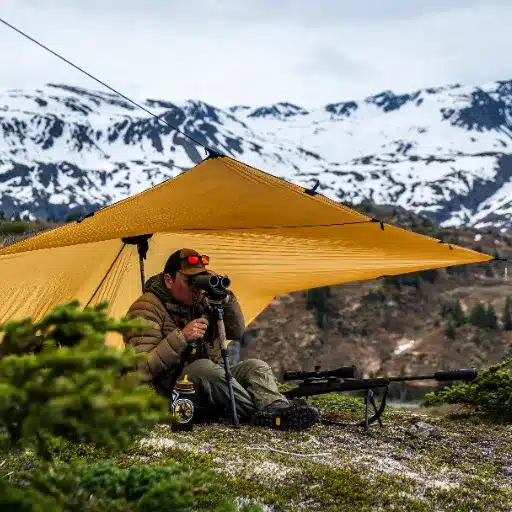
On a QWERTY keyboard, T sits one row above and slightly to the right of A, so it is easy to hit ARP instead of TARP. E-commerce listings occasionally carry the typo into titles such as “Arp Sheet Cover” or “Arp Waterproof Transparent Tarp.” Search engines then associate the misspelled term with legitimate tarp products.
A confused buyer can waste hours searching for a standard that does not exist. Suppliers sometimes hide vague specifications behind unfamiliar acronyms. At LY TRUSTLINK, we treat the typo as a signal that the buyer needs clarity.
The SAE ARP Exception (Rare)
SAE stands for the Society of Automotive Engineers, and ARP means Aerospace Recommended Practice. SAE ARP 4166 and SAE ARP 4732 are real standards, but they describe flexible shipping and storage covers for aerospace components, not consumer or industrial tarpaulin performance. These documents specify barrier properties and construction for transportation packaging. You can review the official SAE ARP 4166 standard page to confirm the scope.
When It Might Mean IP Rating
Some buyers confuse ARP with IP ratings such as IP65 or IP67. IP ratings classify protection against solids and liquids for electrical enclosures, not textiles. A tarp is not tested under the IEC 60529 ingress-protection code. When you are researching a tarp waterproof rating, the correct metric is almost always hydrostatic head, not an IP code.
Looking for a durable waterproof tarp for commercial or industrial use? Contact LY TRUSTLINK today to discuss your needs and receive a customized recommendation.
How Tarp Waterproof Ratings Are Actually Measured
The real language of a tarp waterproof rating is pressure resistance. Hydrostatic head measures how tall a column of water a fabric can hold before leakage, expressed in millimeters of water column (mm H₂O). A rating of 5,000 mm H₂O means the fabric withstands the pressure exerted by a 5,000 mm column of water before any droplet passes through.
Hydrostatic Head Test (AATCC 127 / ISO 811)
The AATCC 127 and ISO 811 test methods clamp a fabric sample over a sealed water chamber and gradually increase pressure. Technicians record the pressure at which three droplets appear on the underside. For outdoor applications, this is the most relevant metric because it simulates standing water, pooling, and wind-driven rain.
A higher number indicates a greater safety margin. A 10,000 mm H₂O PVC-coated polyester withstands hours of ponding; a 1,500 mm H₂O PE tarp will leak under sustained pressure. Always pair hydrostatic head with the test method: “5,000 mm H₂O per ISO 811” is precise; “waterproof” is a marketing claim.
Spray Ratings (AATCC 22 / ISO 4920)
Spray tests measure surface water repellency, not true waterproofness. They evaluate how well a fabric sheds water before it soaks in. For tarps, the hydrostatic head test remains the authoritative measurement.
Coating Adhesion and Seam Integrity
A fabric can test well in the lab and still fail in the field. The weakest points are usually the seams and the coating-to-fabric bond. RF-welded seams use high-frequency electromagnetic energy to fuse PVC-coated fabrics at the molecular level, creating a watertight bond stronger than the surrounding material. Stitched seams, unless sealed with heat tape or liquid seam sealant, can leak at pressures as low as 800 mm H₂O. UV, flex fatigue, and abrasion can also separate the waterproof layer from the base scrim over time.
Tarp Waterproof Rating Chart
The following chart maps hydrostatic head ratings to practical performance levels, so you can compare any tarp waterproof rating at a glance.
| Rating (mm H₂O) | Classification | Real-World Performance | Typical Materials |
|---|---|---|---|
| 0-1,500 | Water-resistant/water-repellent | Light spray, brief drizzle | Untreated canvas, light PE |
| 1,500-5,000 | Waterproof | Steady rain, short-term pooling | Laminated PE, light PVC |
| 5,000-10,000 | Highly waterproof | Heavy rain, ponding, wind-driven rain | Heavy PVC-coated polyester |
| 10,000+ | Extreme waterproofing | Permanent exposure, high pressure | Premium PVC, marine-grade vinyl |
For industrial use, LY TRUSTLINK recommends a minimum of 5,000 mm H₂O with welded seams. Applications with permanent water exposure, such as marine covers, should target 10,000 mm H₂O or higher. For help selecting the right class, our industrial waterproof tarp specifications page provides guidance.
Waterproof Ratings by Tarp Material
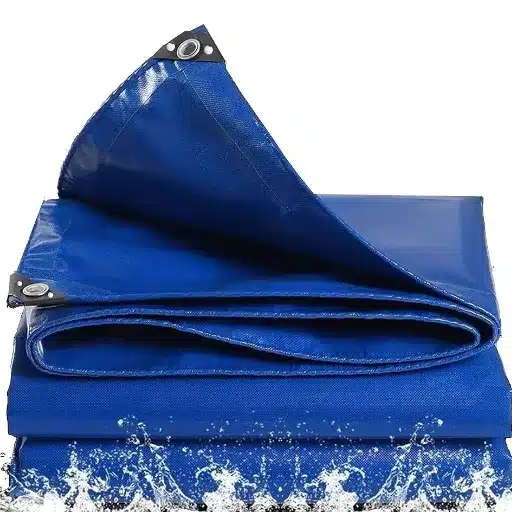
Not all tarps deliver the same waterproof performance. The base fabric, coating type, and seam construction determine the effective tarp waterproof rating.
PVC-Coated Polyester (Vinyl Tarpaulin)
PVC-coated polyester is the workhorse of industrial waterproofing. Base weights range from 300 gsm to 900 gsm. Hydrostatic head ratings for quality PVC tarpaulin typically fall between 5,000 and 15,000 mm H₂O. With UV stabilizers and RF-welded seams, these fabrics last 5 to 10+ years outdoors. Explore our PVC tarpaulin specifications for a full breakdown.
Polyethylene (PE) Tarps
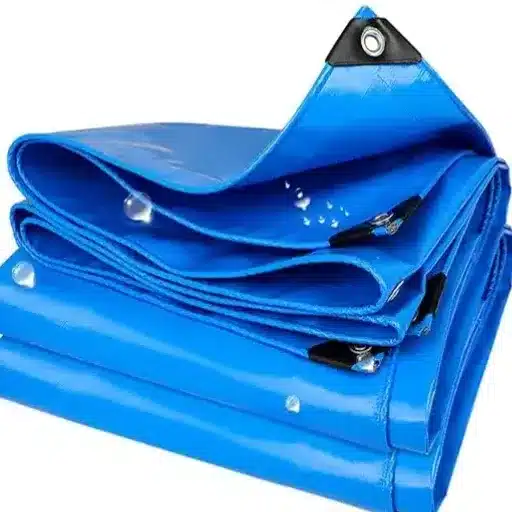
Woven polyethylene tarps are lightweight and inexpensive, making them popular for short-term coverage. New PE tarps can achieve 1,500 to 5,000 mm H₂O, but performance degrades rapidly under UV exposure. Standard blue poly tarps typically last 6 to 12 months outdoors. PE suits temporary covers and seasonal agricultural use, but it is not a reliable long-term industrial solution.
Canvas Tarps
Canvas is breathable, strong, and abrasion-resistant, but it is not fully waterproof. Treated canvas may reach 0 to 1,000 mm H₂O, enough to shed light mist. It works well for equipment covers where condensation control matters more than total water exclusion. Canvas should not be specified for permanent rain exposure or ponding water without an additional waterproof backing.
Mesh Tarps
Mesh tarps are designed for airflow, shade, and debris containment, not waterproofing. The open weave allows water to pass through intentionally, so a mesh tarp has a hydrostatic head rating close to zero by design. Specify mesh only when drainage and ventilation are the priority.
Standards and Certifications to Request
A supplier’s claim becomes credible when backed by recognized test methods. Request documentation for the following standards where relevant:
- ISO 811 / AATCC 127 — hydrostatic head testing for waterproof fabrics.
- ASTM D751 — coated fabrics testing, including thickness, adhesion, and low-temperature properties.
- ASTM D5034 — tensile strength of textile materials.
- ASTM D4533 — tear resistance of woven fabrics by the trapezoid method.
- ASTM G154 — accelerated UV weathering to predict outdoor lifespan.
- NFPA 701 / DIN 4102-B1 — fire retardancy for temporary structures and public venues.
- REACH / RoHS — chemical compliance for restricted substances.
The ASTM D751 standard evaluates coating adhesion, which directly affects long-term performance. You can also consult AATCC test methods for hydrostatic head protocols used in North American labs.
How to Verify a Supplier’s Waterproof Rating Claim
When a supplier quotes a “waterproof rating,” treat it as the beginning of the conversation. Vague claims obscure the difference between a lab-tested value and a marketing estimate.
Ask for a Technical Data Sheet (TDS)
A technical data sheet should list base fabric, coating weight, hydrostatic head rating, tensile strength, tear strength, and UV-stabilization hours. If the TDS does not cite a test method, the number is not verifiable. A reputable manufacturer provides batch-specific data rather than generic literature.
Request Third-Party Test Reports
Independent testing from SGS, Intertek, Bureau Veritas, or TÜV adds credibility. These reports confirm that a sample was tested according to ISO 811 or ASTM D751 by an accredited laboratory.
Look for ISO 17025 Lab Accreditation
ISO 17025 is the international standard for testing laboratory competence. A report from an ISO 17025-accredited lab carries more weight than an in-house certificate because the lab’s procedures and equipment are independently audited.
Distinguish Batch-Specific Data from Generic Marketing Claims
A manufacturer may publish a hydrostatic head range based on historical data, but your shipment may differ. Always request a certificate of analysis for the specific production lot. This is especially important for imported materials where quality variation between batches can be significant.
Mini-story: Maria Chen’s spec review. Maria Chen, procurement manager for a Midwest logistics fleet, received a quote listing an “ARP waterproof rating.” She could not find the standard in any database, so she asked for a revised TDS using ISO 811 hydrostatic head data. The revised sheet showed only 1,800 mm H₂O with stitched seams, insufficient for monsoon-season freight. She switched to a 6,500 mm H₂O PVC-coated polyester with RF-welded seams and avoided a wet-load claim.
Still have questions about waterproof tarps, materials, or custom sizes? The LY TRUSTLINK team is always available to help you find the best waterproof solution for your business.
Matching Waterproof Rating to Your Application
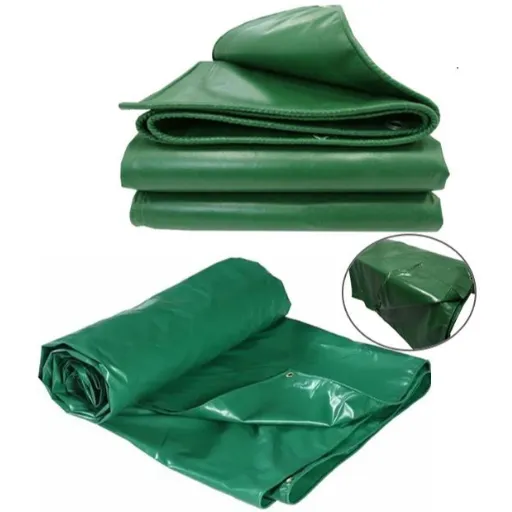
The right waterproof rating depends on exposure severity, duration, and the cost of failure. The following guidance matches the tarp waterproof rating to common use cases.
Transportation and Logistics
Truck side curtains and cargo covers must resist wind-driven rain at highway speeds and handle snow loads. We recommend a minimum of 5,000 mm H₂O for regional transport and 8,000 to 10,000 mm H₂O for long-haul or open-deck operations. Seams should be RF-welded or hot-air bonded, and grommets should be reinforced. Learn more about fleet-grade waterproof side curtain fabric for logistics applications.
Construction and Scaffolding
Construction covers face abrasive dust, tool contact, and standing water. A rating of 5,000 to 8,000 mm H₂O is typical for scaffolding sheeting. If the cover remains in place longer than 12 months, specify UV stabilization and a high coating weight.
Agriculture and Equipment Storage
Agricultural tarps cover hay, grain, tractors, and irrigation equipment. For seasonal crop protection, 3,000 to 5,000 mm H₂O may be adequate. For equipment storage that must survive winter storms, target 5,000 to 8,000 mm H₂O with welded seams.
Marine and Pool Protection
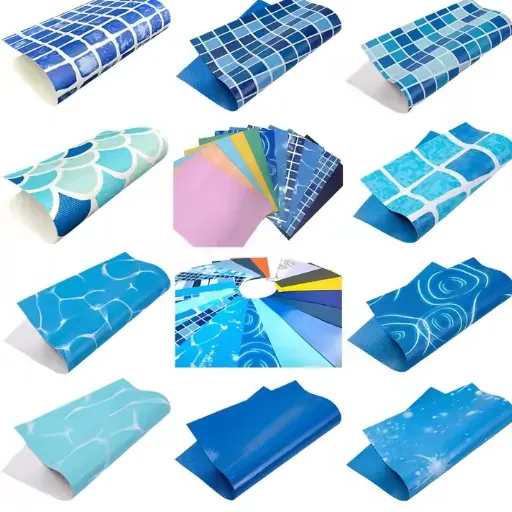
Marine environments are the most demanding because the fabric is in constant contact with water, salt, and UV. Boat covers, pool tarps, and marine upholstery should use 10,000+ mm H₂O PVC or marine-grade vinyl with UV inhibitors and mildew-resistant coatings.
Camping and Recreation
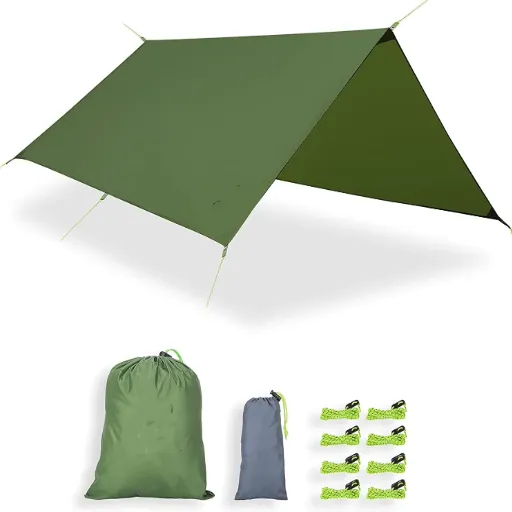
Recreational tarps and canopy covers typically require 2,000 to 5,000 mm H₂O. Lightweight PE or PU-coated nylon works for weekend camping, while commercial canopies benefit from PVC-coated polyester in the 5,000 to 8,000 mm H₂O range.
Mini-story: Jake Torres learns about seams. Jake Torres, a Florida scaffolding contractor, bought a “100% waterproof” blue poly tarp rated at 3,000 mm H₂O for a multi-month renovation. Within three months, stitched seams leaked during thunderstorms and UV exposure made the fabric brittle. The tarp tore along a grommet line during a tropical storm. Jake replaced it with a 7,500 mm H₂O PVC-coated polyester cover with RF-welded seams that survived the rest of the project.
Whether you need a fully waterproof tarp or a water-resistant option, LY TRUSTLINK can provide tailored product advice to match your project requirements.
Frequently Asked Questions
Is there an official ARP waterproof rating?
No. “ARP waterproof rating” is not a recognized consumer or industrial fabric standard. It is almost always a typo for “tarp waterproof rating.” The only formal ARP standards in waterproofing are SAE ARP documents for aerospace shipping covers.
Why do some products list “Arp Waterproof”?
This is typically a typo carried over from manufacturer listings, especially on international marketplaces. Always verify the actual hydrostatic head rating.
What is the best waterproof rating for a heavy-duty tarp?
For heavy-duty industrial use, look for a minimum of 5,000 mm H₂O with welded seams and UV stabilization. Severe applications such as marine or permanent exposure should target 10,000 mm H₂O or higher.
Is 5,000 mm waterproof enough for industrial use?
Yes, 5,000 mm H₂O is the common industrial baseline for truck covers, scaffolding, and equipment storage. It handles heavy rain and wind-driven spray. For standing water or high-pressure exposure, choose a higher rating.
Do IP ratings apply to tarps?
No. IP ratings classify enclosures for electronics, not fabrics. Tarps are rated by hydrostatic head, spray resistance, and seam integrity.
How long does a waterproof rating last?
The rating lasts as long as the coating and fabric remain intact. UV exposure, flex fatigue, abrasion, and chemical contact degrade waterproofing over time. A quality PVC tarpaulin can maintain its rating for 5 to 10 years; a standard PE tarp may degrade within 6 to 12 months.
Can a tarp be 100% waterproof?
A tarp can be highly waterproof, but “100% waterproof” is a marketing phrase, not a testable engineering value. Always request a hydrostatic head rating, seam details, and test reports.
What is the difference between water-resistant and waterproof tarps?
Water-resistant tarps repel light moisture but eventually soak through under pressure. Waterproof tarps, especially those with high hydrostatic head ratings and welded seams, block water even under pooling and heavy rain.
Mini-story: Elena Voss validates UV data. Elena Voss, an agricultural equipment dealer in Germany, needed covers for tractors stored outdoors year-round. One supplier quoted “10,000 mm H₂O” but provided no UV data. Another offered 6,000 mm H₂O with 3,000 hours of ASTM G154 UV testing. Elena chose the second option because UV resistance matched the actual failure mode of her previous covers. The fleet stayed dry after two winters.
Conclusion
The term “ARP waterproof rating” does not exist as a meaningful standard for tarpaulins or technical fabrics. It is almost always a typo for “tarp waterproof rating,” and the confusion can lead buyers to accept vague specifications. The correct way to evaluate any tarp waterproof rating is through hydrostatic head testing to ISO 811 or AATCC 127, combined with seam construction, coating adhesion, and UV-stabilization data.
At LY TRUSTLINK, we engineer protective fabrics as a supply chain partner, not a one-time vendor. Our PVC-coated polyester tarpaulins are built to documented standards, with batch-tested hydrostatic head ratings and RF-welded seams that perform in the field. If you need help selecting a waterproof rating for transportation, construction, agriculture, or marine use, talk to our engineering team. Request a custom quote and specify the protection your operation actually needs.