
Tarp Seam Sealer Guide: How to Seal, Repair & Prevent Leaking Tarp Seams
The right tarp seam sealer depends on your tarp’s material: polyurethane or silicone liquid sealers work on canvas and nylon, heat-activated seam tape is the only reliable option for polyethylene, and PVC tarps demand solvent-based vinyl cement or hot-air welding. Match the chemistry to the substrate, and a field repair can restore 60–80% of original seam performance.
That answer sounds simple. Getting it wrong is expensive.
When Marcus, a fleet manager for a regional freight operator in the Pacific Northwest, pulled into a weigh station during a November storm, he found water pooling inside his trailer. The 900gsm PVC tarp covering a $34,000 lumber load had not failed at the fabric body. It had failed along one 3-meter sewn center seam, where needle holes had been wicking water for weeks.
The fabric still passed a hydrostatic head test. The seam did not. Marcus’s situation is the norm, not the exception: in our quality control reviews, seams and grommets account for the overwhelming majority of field leak reports, while coating failure accounts for very few.
If you manage tarps for transport, construction, agriculture, or aquatic facilities, you have likely faced the same problem. This guide explains why seams leak, which tarp seam sealer actually bonds to which material, how to apply it for a permanent repair, and when factory RF-welded seams are the only defensible specification. We will cover tape, liquid sealers, and welding, with a full compatibility matrix and a repair-versus-replace framework you can apply to your own operation.
For broader context on how tarp waterproofing works across all materials, see our complete guide to tarp waterproofing.
Key Takeaways
- Tarp seams leak through needle-hole wicking, stress concentration, and coating fracture, not through the fabric body.
- Polyethylene (HDPE) tarps reject most adhesives due to low surface energy (~31 dynes/cm); only heat-activated seam tape bonds reliably.
- PVC and vinyl tarps accept solvent cements (such as HH-66) and hot-air welding, achieving 85–100% of base-fabric strength at the seam.
- Canvas seams respond best to polyurethane sealant or re-waxing after re-stitching with a wicking-resistant thread path.
- A properly executed field seal restores 60–80% of seam performance; factory RF welding remains the only method that matches base-fabric hydrostatic ratings.
Why Tarp Seams Leak (and Why the Fabric Usually Doesn’t)
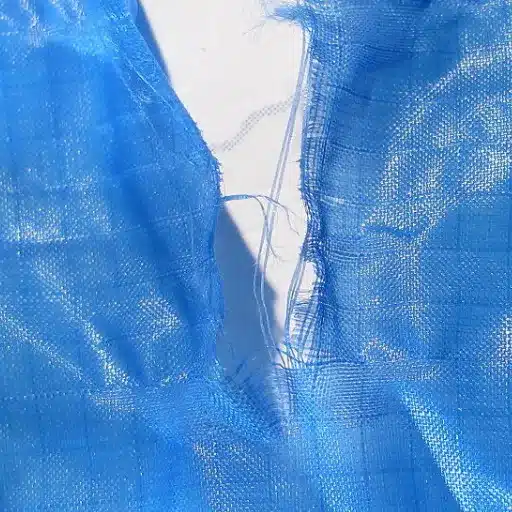
Tarp seams leak because stitching creates needle holes that wick water through capillary action, seam lines concentrate mechanical stress that fractures coatings, and folded seam allowances create creases where waterproof films crack under repeated flexing. The fabric body, with no penetrations and uniform stress distribution, rarely fails first.
Capillary Wicking Through Needle Holes
A sewing needle punching through coated fabric creates a channel 0.6–1.2mm in diameter. Water does not need pressure to pass through; capillary action pulls it along the thread path and through the needle bore. A single 3-meter sewn seam contains roughly 1,500 to 2,400 needle holes, each one a potential leak point.
Stress Concentration at Seam Lines
Under tension, a tarp distributes load across its full surface, except at seams. There, two or more layers of fabric carry the load through stitching or a bond line. The result is localized stress that can run 2–3 times higher than the surrounding fabric. This is why seams stretch, pucker, and eventually split before the body fabric shows wear.
Coating Fracture Along Fold Creases
Every sewn or overlapped seam requires folding the fabric. PVC and polyethylene coatings are flexible, but repeated folding along the same crease fatigues the polymer film. Micro-cracks form, water migrates along the crack, and the seam begins to weep even when the stitch line remains intact.
Seam Leak vs. Grommet Leak: Diagnose Before You Seal
Before applying any tarp seam sealer, confirm the leak location. Water traveling along a seam line and dripping from a grommet is often misdiagnosed as a grommet failure. Hose-test the tarp section by section: mark wet paths with chalk, then trace them back to their origin. Sealing the wrong point wastes material and leaves the real leak active.
Types of Tarp Seams and How They’re Sealed at the Factory
Understanding factory seam construction tells you what a field repair can and cannot replicate.
| Seam Type | Process | Typical Use | Hydrostatic Performance | Common Failure Mode |
|---|---|---|---|---|
| Heat-sealed | Hot air or wedge melts PE layers together | Economy poly tarps | Moderate; varies with dwell time | Seam peel under shear load |
| Sewn, untaped | Stitched with polyester thread | Canvas, light covers | Low; wicks at needle holes | Needle-hole wicking |
| Sewn + taped | Stitching covered with heat-activated tape | Mid-tier vinyl, awnings | Good if tape adhesion holds | Tape edge lift |
| RF welded | Radio-frequency energy fuses PVC molecularly | Premium PVC tarpaulin | Matches base fabric | Rare; abrasion through weld |
| Hot-air welded | 400–600°C air fuses PVC overlap | PVC, technical membranes | Near base-fabric rating | Operator skill variability |
| Overlap + adhesive | Solvent or PU adhesive bond | Economy fabrication | Variable | Adhesive creep, UV degradation |
Per ASTM D751 seam-strength testing, a properly executed RF weld retains 85–100% of base-fabric tensile strength. Adhesive-bonded field seams typically retain 40–60%. That gap drives every repair-versus-replace decision later in this guide.
Tarp Seam Sealer Types: Tape, Liquid, and Weld
Three families of tarp seam sealer exist, and each operates on a different bonding mechanism. Choosing a waterproof seam sealer for tarps starts with understanding which mechanism your tarp material can accept.
Tarp Seam Tape
Tarp seam tape is a polymer film or fabric strip with a heat-activated or pressure-sensitive adhesive. Heat-activated tape, applied with an iron or heat gun at 120–180°C, is the standard for polyethylene tarps and tent fabrics. Pressure-sensitive tape suits emergency field repairs but degrades under sustained UV exposure.
- Best for: Poly tarps, nylon, polyester tent fabrics, temporary repairs on any material
- Working time: Immediate; full bond after cooling
- Service life: 1–3 seasons outdoors
Liquid Seam Sealers
Liquid sealers penetrate stitch holes and cure into a flexible waterproof film. Chemistry matters more than brand:
- Polyurethane (PU): Excellent adhesion to canvas, nylon, and polyester. Cures in 24–48 hours. Remains flexible to roughly -30°C.
- Silicone: Best for silicone-coated fabrics; mediocre adhesion to PVC or PE. Cures in 12–24 hours.
- PVC solvent cement: Contains tetrahydrofuran (THF) that partially dissolves PVC surfaces, creating a chemical weld. The correct choice for vinyl tarp seam sealer applications. Sets in 4–24 hours.
- Hybrid polymers (MS polymer): Broad compatibility, good UV stability, slower cure of 24–72 hours.
Field Hot-Air Welding for PVC
A handheld hot-air welder running 400–600°C can fuse PVC tarp seams in the field, achieving near-factory bond strength. It requires surface preparation, consistent travel speed, and practice on scrap material. For load-bearing truck tarps or containment applications, professional welding or factory re-fabrication is the responsible path.
Products That Don’t Work on Tarps
Consumer search data shows persistent interest in general-purpose rubberized coatings and silicone caulk for tarp repair. These products fail on tarps for predictable reasons: silicone caulk does not bond to polyethylene, rubberized spray coatings crack at fold lines within weeks, and cyanoacrylate adhesives go brittle under flex. If a product is not specified for coated fabrics, assume it will fail.
How to Seal Tarp Seams by Material
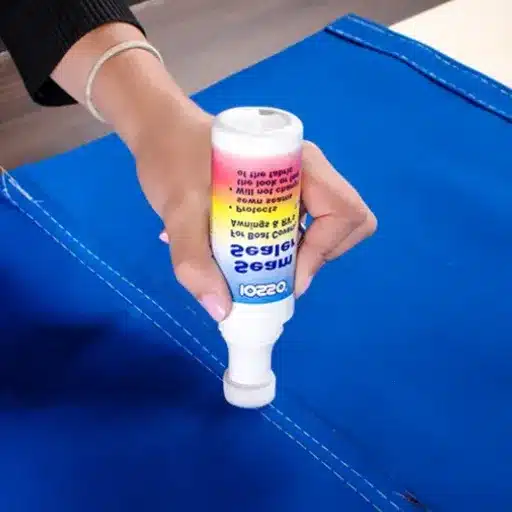
The substrate determines the method. Here is the material-by-material protocol our engineering team recommends.
Sealing Polyethylene (HDPE) Tarp Seams
Polyethylene’s surface energy of approximately 31 dynes/cm is too low for most adhesives to wet out and bond. Liquid sealers bead up and peel.
- Clean the seam with isopropyl alcohol and dry fully.
- Apply heat-activated seam tape centered over the stitch line.
- Run a heat gun at 150–180°C with steady 5–10cm/second travel, following immediately with a pressure roller.
- Allow 24 hours before loading the seam.
For a torn heat-sealed factory seam, re-weld with a wedge welder if available; tape is the fallback.
Sealing Canvas Tarp Seams
Canvas accepts liquid sealers readily because its woven cotton surface wets out.
- Re-stitch any failed seam with bonded polyester thread before sealing; sealer alone cannot carry structural load.
- Apply a thin bead of polyurethane sealant directly over the stitch line, pressing it into needle holes with a gloved finger or seam roller.
- Feather edges 10–15mm beyond the stitch line.
- Cure 24–48 hours, then re-wax the surrounding canvas if the tarp is wax-treated.
Rachel, who operates a 14-unit glamping site in coastal Oregon, followed this protocol on canvas wall tents that had begun weeping at ridge seams after two seasons. She re-stitched six seams over two days, sealed with PU, and re-waxed. The tents passed three subsequent winter storm cycles without a single drip report, extending canvas service life by an estimated three seasons at a materials cost under $90.
Sealing PVC / Vinyl Tarp Seams
PVC is the most repair-friendly coated fabric because solvent cements chemically fuse to it.
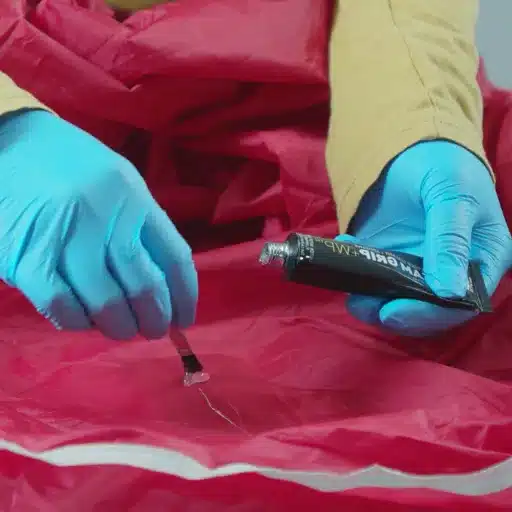
- Clean with methyl ethyl ketone (MEK) or isopropyl alcohol; lightly abrade with 120-grit for mechanical key.
- Apply PVC solvent cement (such as HH-66) to both surfaces in a thin, even coat.
- Mate the surfaces within 2–5 minutes and apply firm roller pressure.
- For a structural seam, overlay a 50mm PVC patch strip over the repair using the same cement.
- Full cure takes 24 hours; the bond reaches roughly 85% of base-fabric strength.
For a deeper look at how PVC tarpaulin achieves its waterproof rating at the factory level, read: Is tarpaulin waterproof? And if you are repairing because a broader waterproofing treatment failed, our guide to DIY tarp waterproofing methods covers sprays, waxes, and coatings in detail.
Sealing Mesh Tarp Seams
Mesh tarps are designed for airflow and shade, not waterproofing. Seam sealing is appropriate only when the goal is structural stitch reinforcement, using PU sealant on the stitch line. Attempting to waterproof mesh defeats its engineering purpose.
Need a spec sheet for a tarp that never needs field seam sealing? Talk to an engineer about an RF-welded PVC tarpaulin built to your load and exposure requirements.
Tarp Seam Sealer Comparison: Cure Time, Bond Strength, and Compatibility
| Sealer Type | Base Chemistry | Poly (HDPE) | Canvas | PVC/Vinyl | Full Cure | Bond Strength vs. Fabric | Temp Range |
|---|---|---|---|---|---|---|---|
| Heat-activated tape | Thermoplastic film | ✓ Best option | ✓ | Conditional (patch only) | On cooling | 50–70% | -20°C to 70°C |
| PU liquid sealer | Polyurethane | ✗ Poor adhesion | ✓ Best option | Conditional | 24–48 hr | 40–60% | -30°C to 80°C |
| Silicone sealer | Siloxane | ✗ | Conditional (silicone-coated only) | ✗ | 12–24 hr | 30–50% | -50°C to 150°C |
| PVC solvent cement | THF/PVC resin | ✗ | ✗ | ✓ Best option | 4–24 hr | 60–85% | -20°C to 60°C |
| Hot-air weld | Thermal fusion | ✓ (wedge welder) | ✗ | ✓ Professional grade | Immediate | 85–100% | Matches fabric |
Video walkthrough: For a visual demonstration of heat-gun seam tape application and PVC solvent welding, see the embedded tutorial below.
Repair vs. Replace: When Seam Sealing Makes Sense
A $20 tube of tarp seam sealer is the right tool in specific circumstances and the wrong one in others.
Seal when: the tarp is under two years old, the fabric body passes a hose test, the damaged seam is under 30% of total seam length, and the application is non-critical (equipment covers, ground sheets, temporary enclosures).
Replace when: the tarp carries load (truck, trailer, scaffold sheeting), protects high-value cargo, provides containment, or must meet a compliance standard. Also replace when seam damage is widespread, because labor cost on extensive re-sealing quickly exceeds the cost of a new cover.
Specify factory RF-welded seams when: the application is safety-critical or compliance-governed. Construction site enclosures and event structures in many jurisdictions require NFPA 701 flame-retardancy certification, and field-applied sealers are not covered by the tarp’s original certification. A field repair on a certified tarp can void its compliance documentation, creating procurement and liability exposure.
For a full decision framework covering holes, coatings, and edge damage beyond seams, see our waterproof tarp repair guide.
Grommets, Corners, and Edge Sealing: The Overlooked Leak Sources
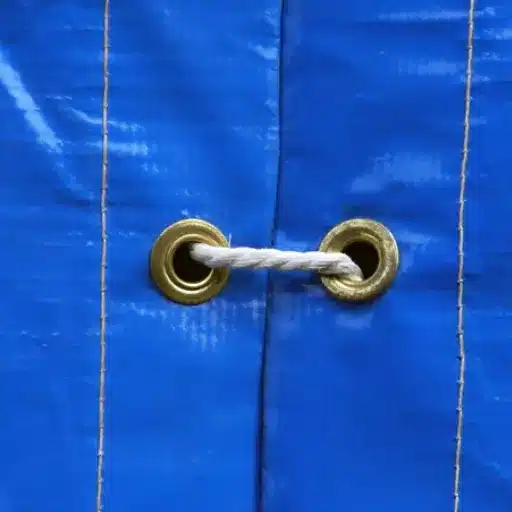
Seams get the attention, but grommet rows and corners generate a comparable share of leak reports.
Grommet perimeters leak when the grommet bore stretches or the setting washer loosens. Seal the perimeter with a small ring of PU sealant on the fabric-to-grommet interface, never inside the bore itself. Better yet, specify reinforced grommet patches or D-ring tabs on new tarps; distributing point load across a 100mm patch nearly eliminates grommet-initiated leaks.
Corners concentrate the highest stress on any tarp. Devon, maintenance lead at a municipal aquatic facility, traced a recurring pool cover leak to a single corner where two seams and a grommet converged. Rather than re-sealing annually, his team added a welded PVC reinforcement patch at all four corners. The cover completed two full winter seasons with zero leak maintenance, at a one-time repair cost of roughly $40 in material.
Edge hems wick water where stitching penetrates the hem fold. A continuous bead of PU sealer along the hem stitch line, applied once at first sign of weeping, prevents progressive wicking that otherwise travels meters into the cover body.
Whether you need a fully waterproof tarp or a water-resistant option, LY TRUSTLINK can provide tailored product advice to match your project requirements.
Frequently Asked Questions
Does Flex Seal work on tarp seams?
Rubberized spray coatings adhere poorly to polyethylene and crack at fold lines within weeks of outdoor flex. They may provide a temporary cosmetic fix on a stationary canvas tarp, but they are not a durable tarp seam sealer. Use material-matched methods from the compatibility table above.
How long does tarp seam sealer take to cure?
Polyurethane sealers need 24–48 hours for full cure, silicone 12–24 hours, and PVC solvent cement 4–24 hours. Heat-activated seam tape bonds on cooling but should rest 24 hours before the seam carries load. Curing below 10°C or above 80% humidity extends these times significantly.
Can you sew a tarp and keep it waterproof?
Yes, if you seal the stitch line afterward. Sewing creates needle holes that wick water by capillary action, so an unsealed sewn seam is never waterproof. Stitch with bonded polyester thread, then apply PU sealant (canvas) or heat-activated tape (synthetics) over the full stitch line.
What is the strongest tarp seam sealer?
For PVC and vinyl tarps, hot-air welding produces the strongest seam at 85–100% of base-fabric tensile strength, followed by PVC solvent cement at 60–85%. For canvas, polyurethane sealer over a re-stitched seam is the strongest practical option. On polyethylene, no liquid sealer bonds reliably; heat-activated tape is the ceiling.
How do you seal seams on a vinyl tarp permanently?
Clean with MEK, abrade lightly, apply PVC solvent cement to both surfaces, mate under roller pressure, and overlay a 50mm PVC patch strip for structural seams. A properly executed solvent weld on PVC approaches factory RF-weld performance and lasts the remaining service life of the tarp.
Can a sealed seam match a factory RF weld?
No. Field-applied sealers restore 40–85% of original seam performance depending on method and material, while RF welding molecularly fuses PVC layers into a monolithic bond at 85–100%. For containment, transport, and compliance-critical applications, factory-welded seams remain the only fully defensible specification.
Conclusion: Match the Sealer to the Substrate
A tarp’s waterproof rating is only as strong as its weakest seam, and the weakest seam is only as strong as the repair method you choose. The protocol is consistent: diagnose the true leak point, match tarp seam sealer chemistry to the substrate, prepare the surface rigorously, and respect cure times. Heat-activated tape for polyethylene, polyurethane for canvas, solvent cement or welding for PVC. That single compatibility principle prevents most failed repairs.
For non-critical covers, a $20 field seal done correctly extends service life by seasons. For load-bearing, containment, or compliance-governed applications, field sealing is a bridge to replacement, not a substitute for it. Specify RF-welded seams at the factory, and seam maintenance stops being a recurring line item.
LY TRUSTLINK manufactures PVC tarpaulin with RF-welded and hot-air-bonded seams tested for tensile strength, tear resistance, and hydrostatic performance on every production batch. If your operation depends on tarps that hold their seal without field maintenance, request a custom quote or ask our engineering team for seam-strength test data on your target specification.