
Eco-Friendly Tarpaulins: Sustainable Materials & Recycling
The necessity for eco-friendly solutions is at its peak, and tarpaulins, even if they are simple products, are changing to meet the challenge. Traditional tarpaulins, which were usually produced with materials that could not be recycled and were harmful to the environment, are gradually being replaced with cutting-edge sustainable options. The transformation of tarpaulins is the focus of this article, which also discusses the use of sustainable materials and the role of recycling in minimizing the negative effects on the environment. If you are a business owner or an eco-friendly consumer, you will find these insights useful in making educated choices and at the same time, you will be supporting a greener future.
Introduction to Eco-Friendly Tarpaulins
Definition of Eco-Friendly Tarpaulins
Eco-friendly tarpaulins are not only the most durable and versatile sheeting materials but they also come with the least negative impact on the environment as their production is from sustainable or recyclable resources. Generally speaking, the production of traditional tarpaulins is from non-biodegradable and heavily polluting materials, PVC for instance, while the eco-friendly option is biodegradable, recycled or made from non-toxic-treated materials like canvas or polyethylene which are regarded as low-impact. The performance level of the two is the same, but the environmental impact is significantly lesser with the eco-friendly options.
The shift towards eco-friendly tarpaulins is in step with the accelerating movement in the world that is aimed at a waste production ban and the non-renewable resources’ overuse reduction. These tarpaulins as they are recyclable and biodegradable, add value to the circular economy ensuring that the materials are kept in use and the waste is reduced. More than that, the selection of the environmentally-friendly tarpaulins not only spares the ecosystems from contamination but also cuts the greenhouse gases production in the case of the classic plastic-based tarps coming in and going out of the sockets.
The eco-friendly tarpaulins idea can therefore be embraced by some businesses and individuals to not just cut their carbon footprint but to also back practices that are environmentally friendly. Regardless of their purposes whether for construction, transportation or agriculture, these tarpaulins provide the users with an option that is practical, eco-friendly and no compromise on functionality or longevity. Consumers can take a significant step in going towards the direction of a cleaner and greener future by choosing the eco-friendly materials.
Importance of Sustainable Tarps in Today’s Market
Incorporating tarps made from sustainable materials into businesses has become imperative because of the global demand for more responsible alternatives throughout different industries. Traditional tarpaulins, which are often made of materials that can’t decompose, become a major source of waste and pollution. On the other hand, eco-friendly tarps are made of recyclable or biodegradable materials, thus occupying less landfill space and consuming fewer natural resources to produce.
The demand for sustainable tarps is growing, mainly because of the increasing awareness of environmental issues and the introduction of stricter regulations aimed at cutting down on carbon emissions. The mentioned sectors—construction, agriculture, and transportation—are more and more attracted by these solutions not only for their long-lastingness and practicality but also for contributing to sustainability. Their wide usage assures that traditional tarp options with performance still can be replaced.
Furthermore, the use of sustainable tarps could be interpreted as the corporate social responsibility strategy and might even lead to better recognition of one’s brand as a good one. The ones who go with eco-conscious materials, be it companies or individuals, will show that they care about the planet, and this will draw in like-minded consumers and partners in business. The green practices trend not only helps the environment but also positions sustainable tarps as an essential tool in creating a more sustainable and responsible global economy.
Overview of Heavy Duty and Biodegradable Options
Heavy-duty tarps are built to last and provide the utmost performance in the toughest conditions. Their composition often includes polyethylene, vinyl, or canvas that grants them the ability to withstand the effects of rain, sun, and wind besides also being hard to rip or scratch. The tarps are more than reliable whenever the construction area is operating, in factories, or when storing outdoors for a long time, as they are invincible to the elements. Their existence makes it possible for users to see this as the cheaper option in the long run due to their repeated and long-term use.
In contrast, the biodegradable version of tarps comes with a positive environmental impact as such products are made of biodegradable materials which when discarded into nature or compost, will decompose safely without causing any harm to the ecosystem. Most biodegradable tarps are made from either plant-based fibers or naturally sourced materials that are treated in a specific way to render them biodegradable. These tarps can be recommended for coverage during the short yet frequent agricultural, gardening, or outdoor applications. Besides the decreasing of waste, the end-users can also be part of the eco-friendly-part practices by opting for biodegradable tarps.
Key Consideration:
When it comes to heavy-duty vs. biodegradable options, the decision really stems from the intended use and environmental considerations. Heavy tarps are the ones to go for in a situation where strength of the canvas and long-lasting use are required, whereas the biodegradable tarps are ideal for projects that are environmentally friendly and have a short lifespan. Both kinds of tarps are essential in covering different aesthetic and functional aspects while taking the industry one step closer to adopting greener and efficient practices.
Benefits of Eco-Friendly Tarpaulins
Reduced Carbon Footprint Compared to PVC Tarpaulins
Lower Manufacturing Emissions
The production process of eco-friendly tarpaulins usually employs less energy-consuming methods compared to PVC, leading to a significant drop in greenhouse gas emissions.
Biodegradable Materials
These tarps are produced from such natural or compostable plant fibers, like jute or organic cotton, that they completely decompose without leaving any harmful residues behind, which is not the case with PVC that takes years and years to break down.
Recyclable Options
The majority of green tarpaulins are created with the end of life being recycling only, thus less waste and less resource requirement for disposal or even replacement are two things that the eco-friendly tarpaulins have virtually eliminated.
Fewer Toxic Chemicals
Eco-friendly alternatives are free of hazardous materials like PVC which might even release harmful chemicals such as dioxins during its life cycle thereby making it safer for both humans and nature.
Energy Efficiency in Use
Their lightweight and durable design can require less energy for transportation and maintenance, thereby further reducing their overall carbon footprint compared to heavier, less sustainable PVC tarps.
Health and Safety: Non-Toxic Materials
The application of non-toxic materials offers manifold health and safety benefits by minimizing exposure to harmful substances and making the surroundings eco-friendlier. Here are five main points that illustrate the advantages of non-toxic materials:
- 1. Reduced Chemical Exposure
Non-toxic materials do not include the harmful substances such as phthalates, formaldehyde, or volatile organic compounds (VOCs) that are usually present in traditional construction and manufacturing products. This drastically reduces the risk of respiratory problems, skin irritations, and even chronic health issues.
- 2. Improved Indoor Air Quality
The use of non-toxic materials in the product manufacturing process guarantees that there are fewer pollutants released into the air. This, in turn, results in cleaner indoor air, particularly in closed areas, and a decrease in the incidence of diseases linked to air pollution.
- 3. Safer for Vulnerable Groups
The groups of people that are most affected by toxins include children, pregnant women, and those suffering from weakened immune systems. The use of non-toxic materials secures their health and safety by decreasing the exposure to dangerous chemicals.
- 4. Environmentally Friendly Disposal
The disposal of non-toxic materials is less problematic since they do not generate any hazardous waste or harmful byproducts that might contaminate the soil or the water, hence the decomposition or recycling processes are eco-friendly. This is one way of reducing the pollution that local wildlife and ecosystems suffer from.
- 5. Compliance with Safety Regulations
A number of industries and governments have recently begun to impose very strict regulations regarding the use of hazardous materials. The selection of non-toxic materials guarantees conformance with these regulations thus eliminating the legal risks involved and at the same time, fostering corporate social responsibility.
The use of non-toxic materials is thus a win-win situation by not only safeguarding the health of individuals and communities but also helping to create a cleaner and more sustainable environment.
Recyclability and End-of-Life Considerations
The recyclable nature of materials and their handling after use are paramount to sustainable product design and eco-friendliness. If we consider those areas, we will be able to cut the waste produced to a large extent, save the resources, and lessen the impact on the environment. The following are the five principal elements of consideration:
- 1
Material CompositionThe composition of the material determines the recycling process to a large extent. Aluminum, glass, and some plastics (e.g., PET) are among the most recyclable materials, while mixed or composite materials tend to be problematic. To give an illustration, glass and aluminum are almost infinitely recyclable with no decline in quality.
- 2
Ease of DisassemblyProducts engineered with a modular design or simple structure will be easier to take apart, thus, the chances of recycling the separate parts will increase. An example is the electronic devices that have batteries that can be easily removed and screws that are standardized; such devices facilitate smooth recycling operations.
- 3
Presence of Hazardous SubstancesThe presence of some toxic or hazardous substances may hinder the recycling process or require special treatments. A case in point is lead-acid batteries that are very recyclable in designated facilities but need care while handling because of the hazardous lead parts.
- 4
Availability of Recycling InfrastructureThe existence of local or global recycling schemes will greatly influence the material recyclability of the product. For instance, although paper is recyclable, if there are no recycling facilities in a particular location, it will probably end up being dumped in landfills instead of being recycled.
- 5
Biodegradability and CompostingFor some materials, especially bioplastics and organics, biodegradation or composting at the end of their life cycle offers an alternative to recycling. For example, polylactic acid (PLA) plastics can be composted at industrial sites thus reducing the number of plastics sent to landfills.
The industries can upgrade their end-of-life plans, get more out of the materials, and contribute to a sustainability-centered circular economy by appraising and employing these elements.
Types of Sustainable Materials for Tarpaulins
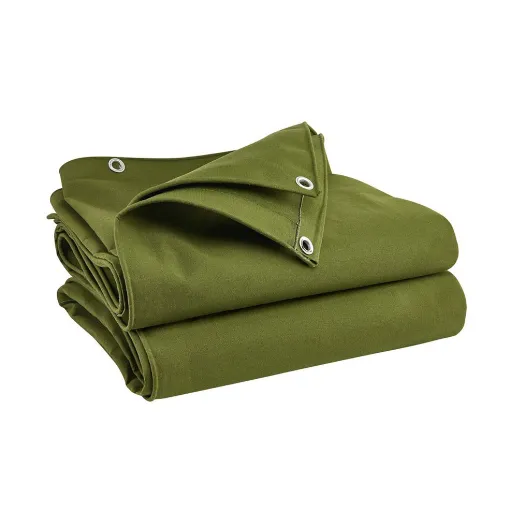
Recycled Polyethylene (rPE) Tarpaulins
Recycled Polyethylene (rPE) tarpaulins are a green alternative that is capable of overcoming the disadvantages of normal tarpaulins and, at the same time, resolving the environmental problem. It is plastic waste from both consumers and the industrial sector that is used in making rPE tarpaulins, thus bringing down the requirement for virgin polyethylene and lessening the adverse effects of plastic making on the environment. Besides, these tarpaulins give up nothing in terms of durability, tear resistance, and weatherproof capabilities when compared to conventional polyethylene while taking part in waste reduction.
Key Statistics:
The latest technologies developed for recycling have not only improved but also increased the efficiency of polyethylene recovery. Advanced sorting and washing facilities have pushed the rates of polyethylene recovery beyond 90%, which means very few contaminants left and the same consistent material for making the tarpaulin. On top of that, production of rPE releases less greenhouse gases than that of virgin polyethylene, hence it is a green option for industries focusing on being eco-friendly.
The agricultural, construction, and logistics industries, among others, are choosing rPE tarpaulins because they are cost effective and friendly to the environment. The global production of polyethylene waste is expected to rise to over 80 million metric tons per year by 2030, thus, using rPE in products like tarpaulins is one of the most significant actions towards plastic waste management and the establishment of a circular economy.
Organic Cotton Canvas Tarps
Organic cotton canvas tarpaulins are a green alternative to the plastic ones presenting all the same properties, such as durability and sustainability, and suiting different kinds of uses. Being 100% organic cotton, the tarp is chemically and pesticide free, thus committing to nature-friendly practices. The organic cotton being grown not only lessens water consumption by about 91% compared to regular cotton but also makes the soil and the organisms in it, healthier. Thus, organic canvas tarps are an ideal choice for industries as well as individuals who want to reduce their ecological footprint without compromising on quality and usability.
The main selling point of organic cotton canvas tarps is their ability to breathe. Organic cotton is responsible for the plus side since it allows for airflow while plastic tarps act oppressively, suffocating the moisture underneath and encouraging mildew growth. Organic cotton further ensures that no damage is done to the stored products, whether they are goods, equipment, or produce. This quality makes the tarps particularly suitable for use in agriculture, where the need for good ventilation is imperative. Moreover, more or less the whole range of organic cotton tarps undergoes treatment with natural waxes or oils that add to their water-resistance capability and thus, they can be counted on even when the weather is hostile.
Switching to organic cotton canvas tarps also is a sign of commitment to the eco-friendly production practices. Organic cotton growing usually goes along with fair-trade practices, thus securing the workers and the farmers not only fair pay but safe working conditions as well. Hence, the forest of sustainable and socially responsible demand for the products that are both eco-friendly and ethically sourced is slowly growing and organic tarps are becoming the favored choice in such varied sectors as agriculture, building, and the leisure of outdoors. Producers and consumers opting for cotton canvas instead of synthetic ones thus become a part of a more equitable and sustainable future.
Biodegradable Polymers for Tarpaulin Production
The use of biodegradable polymers is changing the production of tarpaulin by providing the option of eco-friendly materials instead of traditional plastics. These polymers are made to biodegrade and thus cause a lesser environmental impact over time. One of the most commonly used biodegradable materials in tarpaulin is polylactic acid (PLA), polyhydroxyalkanoates (PHA), and starch-based blends which are made from renewable resources like corn, sugarcane, or other plant-based materials.
The most significant thing about these biopolymers is their capability to withstand the demands of durability for tarpaulin use while still being compostable under industrial or natural conditions. For instance, some research studies have reported that PHA and PLA have very good mechanical properties (e.g. tensile strength and flexibility) which render them suitable for heavy-duty and outdoor applications. Moreover, the development of processing techniques is one of the contributing factors to the improved performance parameters of the mentioned materials, thereby promoting wider acceptance in different industries.
Incorporating biodegradable polymers in tarpaulin production will be a double win for companies as they will not only decrease their carbon footprint but also help the environment by reducing plastic waste and supporting global sustainability goals. This transformation does not only cater to the rising consumer preference for eco-friendly options but also meets the requirement of new laws directed at single-use plastics and non-biodegradable materials.
Applications of Eco-Friendly Tarpaulins

Use in Agriculture: Ground Cover and Crop Protection
Eco-friendly tarpaulins are essential to the sustainable agricultural methods, presenting a wide range of advantages for the ground cover and crop protection. These plastic-free materials can be deployed as mulch that prevents weed growth, conserves the soil, and keeps it moist thereby increasing the yield of the crop and minimizing the dependence on the use of chemicals. In addition, farmers put these tarpaulins to use during the fallow periods to cover the earth and still reap the benefits of running water and excellent soil during rains and winds.
On particularly frosty, snowy, and very sunny days, replacing nature’s inclement weather with eco-friendly tarpaulins will protect sinks from accidental damage. They might then serve not only as protective covers for produce during transportation and storage but also as a means of keeping the produce unharmed and viable without using single-use plastic substitutes. Due to significant advancements in polymer technology, it has become possible to produce tarpaulins with different thicknesses, durability, and biodegradability that suit the diverse needs of modern-day agriculture.
Moreover, the utilization of biodegradable tarpaulins is a significant contributor to the pastoral sustainability movement as it greatly reduces the environmental impact of farming. Traditional plastic tarpaulin that can last for hundreds of years in the environment is no match for the biodegradable tarpaulins that decompose naturally at the end of their service life and do not create any long-lasting residue. Their usage practices keep farmers in line with the new sustainability standards and at the same time facilitate the nurturing of our planet resources hence being an inevitable equipment in green agriculture practices.
Construction Industry: Heavy Duty Tarpaulins
Heavy-duty tarpaulins have become a mainstay in the construction sector as a consequence of their remarkable qualities including durability, flexibility, and a vast array of uses. Mainly, these tarpaulins have been assigned the task of protecting the construction site—its equipment, materials, and workers—from the harsh environmental factors like rain, wind, and sunlight. Their robust nature guarantees a long life and wear resistance even in extreme conditions. Moreover, heavy-duty tarpaulins are created with strong materials like polyethylene or PVC that have undergone waterproofing, UV resistance, and flame retardant treatments which make them perfect for the demanding construction environment.
The versatility of heavy-duty tarpaulins in the construction site is one of their main merits. Their usage can be varied and they can be used in the forms of scaffolding covers, temporary roofing, ground covers or even wraps for securing materials such as lumber and steel. This flexibility permits construction projects to go on without interruption and weather or environmental factors not to cause delays. For example, during the rainy season, heavy-duty tarpaulins can protect the essential materials from being damaged by the moisture, thus saving the company from the costs of repairs or replacements. In addition, the provision of reliable coverage reduces the risk to the workers and improves their safety.
The increasing attention on sustainability has encouraged the production of heavy-duty tarpaulins to get new innovations. Manufacturers are now presenting green alternatives which include the use of recycled materials, and production of tarpaulins that can be recycled after consumption. This is in line with the construction industry’s wider goals of sustainability and reduction of waste without the compromise of performance standards. Moreover, the use of advanced design and material technology to produce lighter yet stronger tarpaulins that will not be difficult to transport and manage has also opened new doors for the evolving needs of modern construction practices. These changes confirm that heavy-duty tarpaulins are still evolving to meet the specific needs of modern construction practices.
Logistics and Transportation: Waterproof Tarpaulin Solutions
Waterproof tarps are one of the most important assets for the transportation and logistics sectors. They enable protection against the elements and the environment during the whole time the goods are in transit. These tarps are made for extremely reliable waterproofing and thus no damage occurs due to heavy rain, snow, or humidity—a very important factor when transporting sensitive goods like batteries, silks, or food. Besides that, top-quality tarps are also UV resistant, which means that they will last longer and kill the sun’s rays during the transportation of the goods through already hot parts of the world.
The versatility of waterproof tarps has a substantial impact on their usefulness in the transportation sectors. They can be offered in various sizes and fabrics, and thus they can be made for covering the whole range of cargo like freight, container, and truck. Moreover, the very strong edges, places to tie down securely, and fabrics that are tough to rip are some of the characteristics that make tarps suitable for the heavy-duty conditions that are common in the transport industry. This adaptability not only makes the process faster but also lowers the expenses of the material being damaged, so tarps become a cost-friendly investment for logistics firms.
The development of technology has already played a major role in improving the performance of tarps in the logistics sector. Tarps of today come with better coatings that provide more longevity and waterproofing, and they also have a light weight design which makes the handling and installation easy. Furthermore some manufacturers are adding the smart features like the RFID tagging for tracking of cargo and inventory management. All these innovations are also in line with the challenge of sustainable materials because a lot of the current day tarpaulins are made from recyclable or eco-friendly fabrics. This collectively signifies how the waterproof tarpaulin’s utility is constantly being transformed that they are still relevant and trustworthy amid an ever-transforming logistics network.
Environmental Impact of Traditional Tarpaulins

Data on the Environmental Footprint of PVC Tarpaulins
The use of polyvinyl chloride (PVC) tarpaulins has raised a lot of environmental issues mainly due to their production process and disposal problems at the end of their life. The creation of PVC includes using chlorine and other additives, and VOCs are sometimes released as a byproduct during the process of making PVC. Moreover, PVC is non-biodegradable which means it will stay in the environment for a very long time (even decades), thus contributing not only to waste in the landfills but also to the potential pollution of microplastics when it eventually breaks down into smaller pieces.
There is evidence that most PVC tarpaulins contain very high levels of plasticizers (like phthalates), which easily migrate into water or soil raising the likelihood of ecosystem contamination and, subsequently, human health risks. On the contrary, one of the disposal solutions for PVC tarpaulins, which is incineration, given that it is done carelessly, may lead to the emission of dioxins and/or other hazardous substances that will further pollute the atmosphere and be a threat to humanity’s health globally.
Nonetheless, the impacts listed above have prompted the scraps to innovations such as recyclable PVC materials and campaigns to better collection and recycling practices. Even with these actions taken, the total environmental impact of PVC tarps continues to be a problem thus providing weight to the argument for sustainable development and eco-friendly manufacturing practices to be given higher priority.
Comparison with Eco-Friendly Alternatives
Among the eco-friendly substitutes for tarpaulin are hemp, biodegradable materials, bamboo, cotton, and low-carbon coated fabrics, which have the properties of being both sustainable and long-lasting.
Long-Term Effects on Ecosystems and Waste Management
The ecosystems and waste management in the long run will face substantial and multifaceted impacts of PVC tarpaulins. The non-biodegradable characteristic of PVC tarpaulins delays their disposal for up to a hundred years or more and thus they become a source of land and marine pollution. Not only does solid waste accumulation underground take away valuable space but also it can lead to the release of toxic chemicals to the surroundings which can kill biota and make water sources unsafe for drinking. The most notorious of these pollutants that can leach from landfills are phthalates and dioxins, and their presence in soils and waters can be detrimental to aquatic life and eventually to plant and animal health as well as to the whole ecosystem’s biodiversity.
On the waste management perspective, the lack of proper recycling facilities for PVC materials is among the factors that hinder the environmental impact reduction. Despite the fact that recycling technologies are getting better and better, PVC’s global recycling rates are still low. Moreover, the burning of plastics, which is often the wrong way to dispose of, makes the situation even worse as it contributes to the release of pollutants that can end up in the air, thus affecting the quality of air and putting people’s health at risk.
Closed-loop recycling system implementation and promotion of the adoption of alternative materials with environmental impacts lower than that of conventional materials are the crucial measures to lessen these long-term impacts. The collaboration among the industries, the government, and the environmentalists will be the main factor to ensure the sustainability of waste management practices through innovation.
References
- Environmentally Responsible Nomads – Discusses sustainable principles for renovation, including eco-friendly materials, hosted by Auburn University.
- Soil Solarization: An Eco-Friendly Approach – Explores eco-friendly methods like soil mulching with tarps, available on Academia.edu.
- Anti-Flammable Properties of Cotton Fabrics – Examines the use of cotton in industrial products, including tarpaulins, with eco-friendly enhancements, available on Academia.edu.
- Click here to read more.
Frequently Asked Questions (FAQ)
Q: What is the definition of an eco-friendly tarpaulin, and what is the difference between this and the traditional tarpaulin made from petroleum?
An eco-friendly tarpaulin is a protective tarpaulin sheet that has been produced with the least possible environmental impact because it does not use any of the petroleum-derived plastics like traditional PE or polyester synthetic tarps but rather recycled or bio-based materials. These eco tarps will slowly make the use of virgin petroleum feedstocks for production and wastage less and are made for outdoor conditions, having good UV-resistance, and being reused, thus, having the lower lifecycle impacts when compared to the conventional ones that may take hundreds of years to decompose.
Q: Which are the materials used to produce eco-friendly tarpaulins?
The materials are often recycled HDPE, recycled PE, bio-based polymers, and blends of natural fibers made from plant sources. Some eco-friendly options go for a less impactful alternative instead of polyester or they combine recycled polyester with natural fibers to come up with a tarpaulin sheet that offers durability as well as a small environmental footprint. The specific blend of materials determines GSM (grams per square meter), strength, and UV resistance and wind resistance of the tarp.
Q: Are eco-friendly tarpaulins strong enough for outdoor use and to withstand natural disasters?
Many eco-friendly tarpaulins are made to resist UV rays, tearing, and natural disasters. Manufacturers are testing for tensile strength and providing reinforcement for large scale usage in tarpaulin deployment. Proper care and practices copiously reduce lifespan, allowing them to clash with strong winds and prolong sun exposure while generating less waste than, for example, single-use synthetic tarps.
Q: What is the process of recycling and reusing that the company performs with the reusable eco tarps?
Reuse is a major concept: the eco-friendly tarpaulin that is to be reused can be cleaned, mended, and creatively changed into another product. At the end of its service life, it is possible to collect recyclable materials such as HDPE or recycled PE and use them for making new tarpaulin sheets. This kind of practice not only saves the earth from more wastage but also reduces the need for virgin material to be produced and finally gives a better life cycle assessment compared to the disposal of tarps that are going to be buried for hundreds of years in a landfill to decompose.
Q: What is the criteria the procurement teams need to keep in their mind while selecting an eco-friendly tarpaulin?
Among the factors that procurement should consider are Greenhouse Gas emissions of materials used, recyclability, GSM rating for needed resistance, UV-resistant coatings, documented LCA data, and certifications proving the percentage of recycled content or bio-based content. Think of the number of times you expect to reuse it, its repairability, and what goes on in terms of its performance during high winds and in emergencies. Giving preference to those tarpaulins that have a clear end-of-life plan will help in reducing the waste generated in supply chains.
Q: Is it true that eco-friendly tarpaulin would won’t let UV light penetrate, thus maintaining its outdoor life for long?
Most of the eco-friendly tarpaulins are either treated or chemically formulated to have a double function of being UV resistant and insulating against ultraviolet light degradation. The combination of materials and coatings has a profound effect on how much strength and color the tarp retains under long outdoor use. Proper maintenance like cleaning and storing also aids in preventing early failure and thus prolonging the effective life of the tarp.
Q: How environmentally friendly are synthetic tarps such as PE and polyester in comparison to eco ones?
Synthetic tarps made of PE or polyester are traditionally thought of as durable, low-cost, and long-lasting but still may derive from petroleum and thus contribute to the environmental burden in a non-renewable way, particularly if they are not recycled. Eco-friendly options still want to reduce the use of virgin petroleum-based feedstocks by incorporating the use of recycled HDPE, recycled polyester, or bio-based components which improve the LCA and lessen the time of materials to degrade in landfills.
Q: What are the most effective methods for proper maintenance that will yield the longest lifecycle and lowest waste?
Good maintenance involves regular cleaning, sealing of small tears, storage in a dry place away from direct prolonged UV light, and checking of grommets and seams. Following the recommended care practice helps the tarpaulin sheets be reusable, minimizes the chance of wastage, and prolongs the time before the need to replace comes calling. When replacement becomes inevitable, opt for take-back or recycling programs. Through these, the materials can be reprocessed instead of being left to take hundreds of years to decompose.
Conclusion
The shift toward eco-friendly tarpaulins represents a significant step in addressing environmental challenges across multiple industries. From recycled polyethylene to organic cotton canvas and biodegradable polymers, sustainable alternatives offer the same durability and performance as traditional options while dramatically reducing environmental impact.
As awareness grows and regulations tighten, the adoption of eco-friendly tarpaulins will continue to accelerate. Whether used in agriculture, construction, or logistics, these sustainable solutions demonstrate that environmental responsibility and practical functionality can coexist harmoniously.
By choosing eco-friendly tarpaulins, businesses and individuals contribute to a circular economy, reduce waste, and support a cleaner, greener future for generations to come. The time to embrace sustainable practices is now—and eco-friendly tarpaulins are an essential part of that transformation.