

Indoor vs Outdoor Tarpaulin: Application-Specific Selection
Choosing the right tarpaulin for your needs requires a good understanding of the differences between indoor and outdoor applications. This could mean safeguarding indoor possessions against wear and tear, or protecting outdoor equipment from the elements; in any case, the selected tarpaulin type can be a game changer. This guide takes a look at the main factors affecting this decision, thus leading you to the right tarp for every situation. From the durability and the composition of the materials to the specific use cases, we will cover all the important things that you need to know that will make your investment very effective. Keep reading to find out how to make a good choice that is already adjusted to your specific needs.
Understanding Tarpaulin Types
What is a Tarpaulin?
A tarpaulin, more commonly called a tarp, is a large piece of flexible and tough material that is made to shield one from different elements like rain, wind, and sun. Most of the time, tarps are made from plastics known as polyethylene, canvas, or vinyl, each one having its own level of strength and weather resistance. Because of their unique features and the variety of applications, both industrial and domestic use of tarps is very wide-ranging and common.
Height of tarpaulin is that it’s a waterproof or water-resistant surface; thus, it can be used outdoors. Those tarps that have been reinforced with metal grommets at the edges are tied down securely, so they do not shift or get damaged while covering the object. Furthermore, among many different sizes, thicknesses, and colors, the users can easily find the right one for their purpose whether it may be for construction, camping, or farming.
More clearer type of tarpaulins understanding means more appropriate applications identification. To illustrate, the light ones made of polyethylene are low-cost and skilled in temporary coverage, however, the tough ones made of vinyl are usually chosen in industrial settings where their strength and durability are mandatory. Users who select the right tarp for the intended purpose can expect the greatest effectiveness and longest service life, and thus, tarpaulins turn out to be a practical and valuable solution in many situations.
Indoor vs Outdoor Tarps
Indoor tarps are lightweight and less durable, while outdoor tarps are heavy-duty, weather-resistant, and designed for harsh conditions.
| Aspect | Indoor Tarps | Outdoor Tarps |
|---|---|---|
| Durability | Low | High |
| Weatherproof | No | Yes |
| Material | Light fabric | Heavy vinyl |
| Weight | Lightweight | Heavy |
| Usage | Indoor only | Outdoor & indoor |
| Resistance | Limited | High |
| Applications | Storage, decor | Construction, farming |
Common Materials Used in Tarpaulins
Different materials are used in the production of tarpaulins, with each material having its own particular application. The most frequently used materials are polyethylene, vinyl, and canvas. Polyethylene tarpaulins are light in weight, waterproof, and resistant to tearing. These tarps are widely used for temporary water protection because they are the cheapest among all.
Vinyl tarpaulins are the strongest and the most durable among all. They are perfect for outdoor areas subjected to weather extremes, chemicals, and abrasions that last for industrial settings or long outdoor use, or just covering large machinery and equipment.
Canvas tarps, made of heavy and strong cotton or polyester, are highly breathable and durable. They do not allow water to get through completely but rather resist it and are hence, suitable for items that require ventilation to evaporate moisture and ward off mildew. Canvas tarpaulins are mostly used in the building industry, farming, and as drop cloths in painting and redecorating. An informed understanding of these materials’ features allows users to choose the right tarp for their purpose.
Waterproof Capabilities
Waterproof vs Water-Resistant Tarps
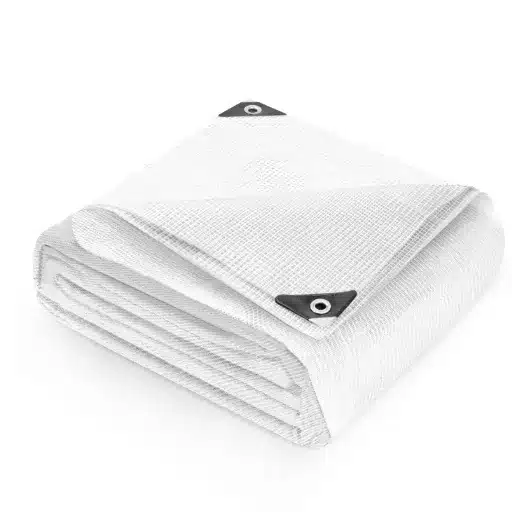
Waterproof tarps completely block water, while water-resistant tarps repel moisture but may allow water to seep through over time.
| Aspect | Waterproof Tarps | Water-Resistant Tarps |
|---|---|---|
| Water Block | Complete | Partial |
| Material | Vinyl, Poly | Canvas, Polyester |
| Durability | High | Moderate |
| Breathability | No | Yes |
| Usage | Extreme weather | Light rain |
| Cost | Higher | Lower |
| Applications | Outdoor, heavy-duty | Indoor, mild conditions |
Choosing Waterproof Tarps for Specific Applications
It is very important to take into account the material, durability, and the appropriateness of the tarp for the environment when waterproof tarps are being selected for specific applications. Below, you will find five different applications of the waterproof tarps wherein they are most effective:
1. Construction Projects
Waterproof tarps are very useful in covering construction materials, such as lumber, concrete, and machinery, and thus, protecting them from rain and severe weather. Heavy-duty polyethylene tarps are usually the ones that get chosen in the construction industry for their durability, tear resistance, and ability to last even in harsh conditions.
2. Camping and Outdoor Activities
In the case of camping, waterproof tarps can be used for covering tents, providing temporary shelter, or even serving the purpose of ground cover. They are very light, very easy to carry, and very good at protecting from the rain and moisture.
3. Transportation and Hauling
Waterproof tarps are the ultimate cargo protectors used by truck drivers and haulers during the transit of the goods. They are used to cover such things as furniture, machines, and agricultural products, thus, making sure that all of them are not damaged even through the weather changes.
4. Agricultural Protection
Farmers usually cover their crops, hay, or produce with waterproof tarps to effectively prevent spoilage resulting from rainfall or heavy dew. This type of tarps is commonly UV resistant and built to withstand long periods of time under the direct sun.
5. Event and Temporary Structures
Outdoors, the temporary structures of various events like weddings, markets, etc., or festivals are under the protection of waterproof tarps, which not only serve as covers but also create indoor places for seating. Without a doubt, they are the reason for the comfort of the venue as they effectively cut off the unexpected rain.
All these applications in different fields guide the users to decide which kind of waterproof tarp is suitable for their specific needs thus assuring them efficiency and long-term value.
UV Protection in Outdoor Tarps
UV protection is one of the most important features of outdoor tarps and it is very necessary in regions where there is an excess of sunlight and the UV index is at its highest. Ultraviolet rays when exposed for a long period can break down the tarp materials to the point that they lose their color or strength or even become brittle. The best outdoor tarps are the ones that have UV-resistant coatings applied to them, which is good for the longevity of the tarp as well. Besides, the quality of the tarp is also maintained because of these treatments; thus, they are perfect for long-term outdoor use as they give the desired benefits and the good look of the tarp too.
Modern production methods have significantly enhanced the manufacture of tarps from materials such as polyethylene and vinyl that come with UV stabilizers. These stabilizers have the capability of absorbing or redirecting harmful UV radiation which indeed results in the preservation of the tarp’s structural integrity. For example, polyethylene tarps that are UV-treated are widely employed in agriculture for protecting the crops or the livestock; that is why unprotected tarps would be destroyed under the sun so quickly. Similarly, travelers and campers regard UV-resistant tarps as essential gear for providing shade and comfort during their outdoor adventures.
The new scientific research on the UV treatment of outdoor materials stresses the need for eco-friendliness in material used and no-performance drop. Less toxic UV inhibitors are taking up install base in tarp manufacture, they are the cause of the gradually reduced dependence on the harmful chemicals. Furthermore, certain standards like ASTM G154 and ASTM D4329 are the ones that test the UV durability of tarp materials and thus give us an idea of their performance rating. Hence, the users investing in UV-resistant outdoor tarps are not only the ones who protect their valuables but also the waste reducers and the ones who increase the overall utility of these versatile products.
Factors to Consider When Selecting a Tarpaulin

Evaluating Material Choices: PVC vs PE Tarpaulin
PVC tarpaulins are more durable, tear-resistant, and heavy-duty, while PE tarpaulins are lightweight, cost-effective, and easier to handle.
| Aspect | PVC Tarpaulin | PE Tarpaulin |
|---|---|---|
| Durability | High | Moderate |
| Weight | Heavy | Lightweight |
| Cost | Higher | Lower |
| Tear Strength | High | Moderate |
| Waterproof | Yes | Yes |
| UV Resistant | Yes | Yes |
| Flexibility | Moderate | High |
| Applications | Heavy-duty | Temporary use |
Portability and Storage Solutions
Portability and storage are the crucial factors when it comes to the selection of tarpaulin, especially for users requiring versatility and convenience. Light weight tarps like those made from polyethylene (PE) usually have the advantage in portability because of their lesser weight and their ability to fold up really small. This makes them perfect for jobs where handling or transport is done frequently. The heavier and tougher tarps made from PVC, however, could provide more durability but would still be less portable and perhaps even bulkier. Hence, one would need to think about the intended use of the tarp and how often one needs to move it before making a purchase decision.
Proper storage solutions are essential in prolonging the life of your tarpaulin. Properly placed tarps in a cool, dry area away from sunlight and moisture will ensure good performance over a long period. Being exposed to harsh conditions during storage can ruin the material, cutting off its life and UV resistance. In addition, if the tarp is neatly folded or rolled before storage, that would prevent creases or weak areas from forming which could ruin the tarp. For the larger or thicker tarps, it may be worthwhile to get storage bags or cases that are heavy duty as this will reduce confusion and make transport easier.
Lastly, the tarp’s dimensions should be measured against the available storage space. Large tarps may need storage areas or racks made to their specifications, especially if they are to be used in an industrial or large-scale setting. For a smaller setting, tarps that are compact with grommets or ties attached can be easily bundled and secured. The issue of portability and storage should be dealt with according to the specific requirements of each project so that the tarpaulin can be both functional and convenient to use. If these factors are prioritized, it would mean less time and effort for the user but the practical value of the tarp will be maximized.
Cost-Effectiveness of Different Tarpaulin Options
The cost-effectiveness of tarpaulin options is evaluated in a way that one sees an upfront cost but also an eventual payout in performance and durability over time. A high-density polyethylene (HDPE) tarp, for example, has a price tag that is higher than that of a poly tarp of lesser weight. Nonetheless, the very aspect of the tarps being costly yet strong and resistant to UV, water, and tear gradually makes them through their use and duration a cost-efficient choice for heavy-duty projects outdoors. On the other hand, if one is considering small or temporary needs, then inexpensive poly tarps can be economical; but, again, the tarps will not last that long and hence will need to be replaced forever, while lesser quality ones.
The selection of tarpaulin made must be in accordance with the requirements of the respective application so that no money is wasted unnecessarily. In its agricultural use, tarps with anti-condensation features or thermal insulation can indirectly bring down operational costs by more efficient covering of crops or livestock. Likewise, fire-retardant tarpaulins are indispensable in industrial applications where safety regulations must be complied with, even if the costs at the outset are higher. The selection of specialized options that meet one’s specific needs often results in greater cost-effectiveness than the selection of an all-purpose tarp that may quickly get worn out and unable to provide the required protection.
Finally, taking into account maintenance and repair costs can lead to a better understanding of the overall value of a tarp. Tarps featuring reinforced seams, rust-proof grommets, and state-of-the-art coatings may demand a larger initial investment but will also ensure that there will be no regular repair or replacement expenses. Similarly, the use of eco-friendly tarpaulins, which are made of recycled or biodegradable materials, can also prove to be an investment in sustainability in the longer term. When you take all these factors into account and align them with your particular use case, then you can have both the economic and practical benefits of your tarpaulin investment.
Commercial Use of Tarps
Choosing the Right Tarpaulin for Business Needs
When I am to select the appropriate tarpaulin for my business, the first thing that I do is to pinpoint the exact needs of my operations. For example, if it is for covering goods, then the size, weight, and durability of the tarp will be very high. Likewise, if it is for providing shelter, then the size, weight, and durability of the tarp will not be that high. By analyzing these attributes, I will be able to choose a tarpaulin that will take care of my business needs without charging me for the features that I do not want.
Next, the substance of the tarpaulin and its quality is what I consider. I am mostly attracted to reinforced polyethylene or polyvinyl chloride (PVC) tarps for heavy-duty operations since they get to last longer and are less likely to get torn during the roughest conditions. Furthermore, I am aware of UV and water resistance when the tarp is likely to be in the sun or rain for a long time, thus ensuring longevity and reliable performance in the long haul.
Finally, I check the cost-effectiveness status of the options available and their sustainability. Although price is given a lot of importance, I still consider it in light of possible savings in maintenance, repairs, or replacements. I always go for the eco-friendly options that do not only help in meeting sustainability goals but also lessen the environmental impact and show a responsible approach to business practice as this is the way for good corporate image. Thus, if the tarpaulin I pick is both practical and useful for my business needs, it is because of these steps.
Applications in Various Industries
The usage of tarpaulins is very wide spread and they are highly versatile in that aspect, they owe this to their durability, weather-resistance and flexibility. Described below are the five industries that benefitted more by using tarpaulins:
🏗️ Construction Industry
Tarpaulin protection is a standard operation to cover the whole area of a construction site and this is especially true for the common use of tarpaulins in the construction site besides protecting building materials and shielding workers from the elements, the construction sector is as such. At least 60% of construction projects are reported to have utilized tarps for site safety and protection.
🌾 Agriculture Industry
Tarpaulins are a farmer’s best friend when it comes to covering the harvesting process, housing animals, and creating makeshift storage areas. They are able to combat rain and UV exposure thus becoming indispensable for the agricultural sector.
🚚 Transportation and Logistics
Tarpaulins are part of the truck drivers’ daily life in transportation; they cover the goods and are on the trailers, and even the ships to avoid damage from rain, wind, and dust. They are one of the main reasons that the product loss during transit is significantly decreased, with research reporting up to 25% less damage for covered goods.
🎪 Event Management
The event industry employs tarpaulins for creating temporary shelters, stages, and backdrops. Their ease of deployment, combined with their weatherproof properties, makes them perfect for outdoor events such as music festivals and fairs.
🏭 Manufacturing and Warehousing
Tarpaulins are used to help, inside factories and warehouses, as dividers, dust covers, or temporary barriers. They protect and keep products clean, particularly in situations where dust or debris could damage either equipment or stock.
These examples point to the crucial position to which tarpaulins have been assigned in the industries mentioned. Hence, tarpaulins are still promoted as a solution to many scenarios.
Benefits of Using Tarpaulins in Commercial Settings
💪 Durability and Longevity
Making tarpaulins from materials like canvas or polyethylene ensures that they are very strong and will not easily succumb to the daily grind. The longevity of tarpaulins guarantees that one will not have to bear the replacement costs of businesses that use them due to their consistent performance throughout their lifetime.
☔ Weather Resistance
Outdoor applications in extreme climatic conditions would call for the use of commercial tarps that are usually found to be both waterproof and UV-resistant. The tarpaulins are able to provide the protection required by the goods, machinery, or even the workspace during rain, sun, or wind thus ensuring the continued operation and at the same time preventing products from getting damaged.
💰 Cost-Effectiveness
Tarpaulins are the least expensive option when compared to a permanent installation or specialized covers. Their multifunctionality and reusability factor in making them the economically soundest choice for the companies that want to be in control of their budgets.
🔄 Versatility Across Industries
Tarpaulins are universal no matter the industry, their use can be modified for different applications in the transport sector, construction, agriculture, and storage. Protecting, covering the ground, and enclosing are among the many functions performed by tarpaulins, thus they are a versatile tool to support diverse day-to-day operations.
📦 Ease of Use and Portability
Tarpaulins are easy to carry around and set up due to their light weight and simple construction. This adaptability is of great importance to the companies that need to have a quick setup or frequently change places in versatile environments.
Best Practices for Tarpaulin Use

How to Properly Maintain Your Tarpaulin
Taking care of your tarpaulin in the right way will for sure consume more time and thus it will be able to function and run for a longer duration. First thing, do it regularly to avoid the dirt, grime and mold from building up and making your tarpaulin uncleaned. A soft-bristle brush with soapy water should be used as the mixture is made of mild soap and water to scrub with gentleness the area that has any debris. Harsh chemicals or abrasive tools should not be used as they may harm the tarpaulin material and the protective coating will be weakened. After the cleaning was done, it is time for rinsing with clean water and then allowing to air dry completely before folding or storing. This is to prevent the moisture problems like mildew that would result from the improper handling of the tarpaulin.
The appropriate storage is very important as well for the tarpaulin’s life spanning its entire period of use. Plan to store it always in a cool and dry place, far from the sun rays which can lead to the material being of less quality in the long run. To keep away from creases or tears, fold the tarpaulin neatly along the natural lines and do not put heavy weights on top of it. If your tarpaulin is provided with grommets or other metal components, make sure they are checked for rust or wear when the tarpaulin is stored, and if it is sometimes necessary, consider applying rust-resistant products to them.
Frequent inspection and minor repairs are the most important for long-term maintenance. Before each use, look for any signs of wear and tear, like small holes, frayed edges, and weakened grommets. Small holes must be patched quickly using repair tape or adhesive patches specially made for tarpaulins. In case of severe damage, professional repair kits or services may be required. By being proactive and tackling minor problems easily and quickly you are likely to enjoy a long-lasting and reliable tarpaulin for your operational needs.
Storing Tarps for Longevity
The tarpaulin great storage is very important in keeping it durable and efficient all the time. However, before putting away your tarp, do a complete cleaning and drying of it first. The presence of dirt, fluff, or water even on a small part of the surface can cause the growth of mold or mildew which then leads to the decay of the material. Wash your tarp with a soft brush and mild soap and then dry it completely in an open and airy place. Skipping this step could mean a great reduction in the tarp’s life because moisture trapped inside is one of the major causes of deterioration.
When your tarp is clean and dry then fold it up very neatly along its seams so that there will be no unnecessary creases and weak points forming. The folding should start by doing it in half and then continue to do so until the tarp is compact but not too compressed. For the folding tarp, breathing, waterproof bag or container for long-term storage is the right choice. It is best not to use plastic bags because they can trap condensation and this will lead to moisture accumulation.
Besides, it is a good practice to check the tarps stored periodically to make sure they are still in good condition. Look for signs of pests like nests or chewed material and take care of any problems that arise right away. If tarps are stored for a long time, rotate their positions so that no area gets too much weight or pressure. By doing proper cleaning, drying, folding and storage, the usability of your tarpaulins will be extended and your investment in these tools will be safeguarded.
Tips for Maximizing Tarpaulin Protection
-
✓ Reinforced Grommets and Accessories to Be Used
The tarps with the grommets that are reinforced should be invested in because they will lessen tearing in the process of securing them. Use the heaviest duty ropes, bungee cords, or ratchet straps for a long-lasting and very stable anchoring, especially during windy conditions.
-
✓ Choose the Right Material for the Task
Tarps are available in different materials such as polyethylene, canvas, or vinyl. Choose one based on the purpose—polyethylene for waterproofing, canvas for allowing ventilation, or vinyl for tough protection. Using the right material means also having better protection and the lifespan of the tarp is directly related to its durability.
-
✓ Protect Against UV Damage
Long time of tarpaulin under light can make it less tough eventually. Look for tarps with the tag of UV-resistant for incapacity of the product. On the other hand, one might consider the spraying with the UV-protective spray as an alternative to prolong the product’s life.
-
✓ Add Edge Reinforcements
When it comes to tarpaulins, the corners are the first to give in to wear and tear. Strengthen the corners with duct tape or sew another layer of fabric and you will have a great deal of durability and no fraying problem.
-
✓ Store Properly in a Dry, Cool Location
Hot and humid places are not the right ones for storing the tarps because the latter can suffer from decay and their dimensions can alter as well due to the conditions. So, the placement should be in a cool and dry area and it should not be the case of putting heavy things on top that can ruin the integrity of the tarp.
-
✓ Inspect Regularly for Damage
Rip, hole, or weak spot inspections should be included in your routine. If the damage is minor, repair it with tarp tape or patches and so on, ensuring the tarp stays functional.
-
✓ Avoid Contact with Sharp or Abrasive Surfaces
To prevent damage, do not allow the tarp to contact sharp edges, rocks, or any rough surface while setting it up. If the risk is noted, then put a layer of protections underneath, like foam or fabric.
Doing the above will not only make your tarps last longer but also keep them working well and trustable for different purposes, while at the same time minimizing the chances of wear and tear as well as that of damage.
📚 References
-
Boston University Blog: Discusses the versatility and durability of tarpaulins for both indoor and outdoor applications.
-
Iowa State University Extension and Outreach: Explains the use of tarpaulins and other coverings to protect plants, highlighting their application in outdoor environments.
- Click here to read more.
❓ Frequently Asked Questions (FAQ)
Q: How should I go about deciding between indoor and outdoor tarpaulin application-specific selection?
A: First of all, you need to look at environmental factors, protection level required and if you need outdoor protection or just protection against dust indoors then you will be in a position to select indoor vs outdoor tarpaulin application-specific selection. For outdoor areas use heavy-duty tarps which have reinforced edges and are waterproof so they can bear the extreme weather; indoor use needs a good quality tarpaulin or clear vinyl tarps that can give both protection and visibility excellently. An informed decision requires matching of tarpaulin sheets and thickness at least that of the level recommended for your application according to your needs.
Q: What characteristics of material are the most critical ones for outdoors and rough weather?
A: The most important characteristics of the material selected for the outdoor and rough weather are the nature of being waterproof, UV resistance, and having reinforced edges to prevent tearing. Heavy-duty tarps or tarps of thickness at least 8-10 mil (or thicker for industrial use) are made to withstand wind, rain and prolonged sun exposure offering better quality and durability. Always think about the whole durability and whether the tarpaulin cover is going to be the one for harsh weather conditions so that it provides great protection.
Q: Are there any different recommendations for indoor tarps, such as dust protection or light spill containment?
A: Definitely. Indoor tarps are much lighter than their outdoor counterparts and mainly focused on protection against dust, paint or moisture rather than complete outdoor protection. Clear vinyl tarps work best where visibility is a concern in indoor applications, while thinner quality tarpaulin sheets can be used for storage and temporary covers as they are no more than a hassle. When considering the best indoor tarp, think about how much protection you are going to need and if breathable or waterproof would be the most appropriate quality.
Q: What criteria do I use to select tarpaulins for industrial use as opposed to outdoor spaces of the home or garden?
A: In the factory, a heavy-duty tarpaulin with reinforced edges, corrosion-resistant grommets, and a guaranteed waterproof nature should be chosen; all these characteristics together ensure that the tarpaulin will be durable and will still be able to protect under a challenging or continuous usage scenario. However, in home or garden outdoor spaces, it may be sufficient to use lighter but durable tarps—just remember to prioritize wind, UV exposure and expected wear and tear as environmental factors while selecting the right tarp. A solution based on load, frequency, and exposure will assist in selecting the best tarpaulin.
Q: What do you think thickness and material grade should be in making the right tarp selection?
A: Thickness and material grade have a direct influence on the level of protection and durability. Tarps that have a thickness of not less than 6-12 mil are usually the common thresholds: thinner sheets are for indoor or short-term use, while thicker heavy-duty tarps are outdoor protection and harsh weather conditions. Quality tarpaulin often describes fabric weave, coating type and tensile strength—these determine whether tarps will effectively protect against the elements and satisfy your level of protection requirements.
Q: Is it possible to tailor or customize tarpaulin covers for specific applications?
A: To answer the question, yes. A number of manufacturers customize tarpaulin cover dimensions, reinforced edges, grommet placement, and material selection for particular applications. A tailor-made tarpaulin can indeed be the perfect tarp solution customized to fit machinery, vehicle covers, temporary shelters or bespoke industrial use. The custom options allow for excellent protection and a solution that is suited to the specific environmental factors and operational needs.
Q: Should environmental impact and maintenance play a role in selecting the right tarpaulin?
A: Always take the environmental impact into consideration when you are making your material choice—PVC-coated tarps are long-lasting but not eco-friendly, whereas some polyethylene or recycled options are the opposite. Maintenance comes into the picture and is one of the ways you can extend the life of your tarpaulin—wash the sheets, do not let them be subjected to UV stress for a long time where unnecessary, and if they get wet store them dry to avoid mildew. These actions will protect and increase the lifespan of your tarpaulin, hence, you will not only be making a decision based on your needs and sustainability goals but also will be helping the environment.