
PVC Coated Fabric Truck Tarpaulin: GSM & Spec Guide
The right PVC coated fabric truck tarpaulin is a double-sided PVC coating bonded over a high-tenacity woven polyester scrim, spec’d by duty: 650 to 750 gsm for general flatbed covers, 900 gsm and up for side curtains and severe freight. GSM is the shorthand for a truck tarp grade. The scrim denier, the weave, the coating weight, and the topcoat underneath decide whether that cover lasts 3 years or 10.
Here is the trap buyers walk into. Search “pvc coated fabric truck tarpaulin” and you land on marketplace listings that quote “650 gsm, waterproof, UV resistant” and stop there. Two rolls can both weigh 650 gsm and still differ by 40 percent or more in tear strength and UV life, because the material is a system of variables, not one number. Nobody on the exact-match page explains which grade fits a curtain-sider versus a flatbed, what test methods back the numbers, or what the choice does to a fleet budget over five years.
We manufacture and batch-test PVC coated fabric, and this guide is the specification briefing we hand to fleet procurement managers, owner-operators, and curtain converters. By the end you can read a truck tarp spec sheet and know which numbers matter, pick the right construction for side-curtain, flatbed, or dump duty, tell a coated fabric from a budget polyethylene cover on a cost-per-year basis, name the standards worth demanding, and send a sourcing request a coating line can actually quote. For the wider equipment picture, our truck tarpaulin systems guide for fleet managers covers hardware, tensioning, and full trailer coverage.
Key Takeaways
- A PVC coated fabric truck tarpaulin is an engineered composite: a polyester scrim carries the load, a double-sided PVC coating provides waterproofing, and a topcoat controls UV life. GSM is a starting point, never the whole spec.
- Match the grade to the duty: 650-750 gsm for general flatbed freight, 750-900 gsm for heavy and long-haul loads, 900 gsm and up for curtain-siders and dump service.
- A curtain wall and a flatbed cover are different engineering problems. Curtains need dimensional stability for tens of thousands of flex cycles; flatbed covers need tear and edge performance where the load cuts.
- Standard UV-stabilized PVC truck tarps last about 5 years; premium 900 gsm grades run 5-10 years outdoors. A 15-minute quarterly inspection can extend a curtain fleet’s replacement interval from about 3.2 to 5.8 years.
- A tarp protects cargo and controls spillage, but under FMCSA cargo securement rules it is not a tie-down. Restraint hardware does that job.
What Is a PVC Coated Fabric Truck Tarpaulin?
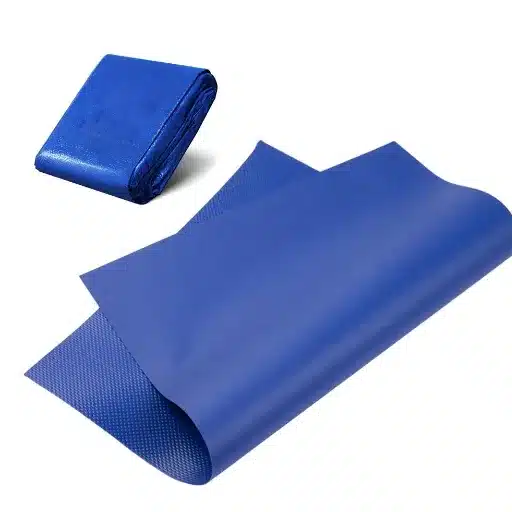
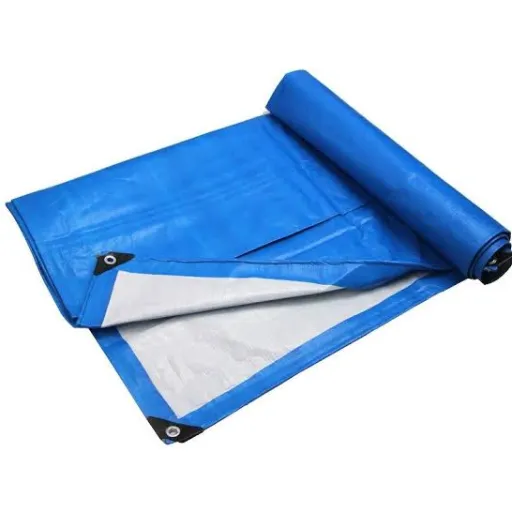
A PVC coated fabric truck tarpaulin is a waterproof truck cover made from a high-tenacity woven polyester base fabric coated on both sides with plasticized polyvinyl chloride and finished with a protective topcoat, typically specified between 450 and 1,050 gsm. The polyester scrim supplies the tensile and tear strength, the PVC coating supplies the waterproof barrier, and the topcoat protects the compound from UV and makes the surface easier to clean.
The label hides the real structure. A 650 gsm regional truck cover and a 1,050 gsm mining flatbed cover are not the same product sold at different weights. They are different engineered grades of one material family, built to carry different loads and weather different service lives. Think of the grade as a recipe: change the yarn, the weave density, the coating chemistry, or the topcoat and you change what the fabric will survive. The same reasoning runs through our full PVC tarpaulin product range, where a banner-grade 340 gsm sheet shares the family name with a 1,200 gsm industrial sheet and behaves nothing like it.
Two neighboring materials get grouped into this conversation and both confuse the spec. Polyethylene (PE) is a woven single-layer sheet, cheap and fine for short-term cover, but it does not weld into seams the way PVC does and it degrades fast under UV. Canvas is woven cotton or poly-cotton that breathes, which helps with condensation, but it is water-resistant rather than waterproof unless it is treated. We cover each of them honestly in the material comparison below, because the cheapest per-square-meter fabric is the most expensive decision when a fleet replaces it every season.
The Five Specs That Define a Truck Tarp Grade
Reading a truck tarp spec sheet comes down to five variables that act together. Change any one and the others shift.
Scrim denier and yarn. Denier measures yarn linear density. The transport standard is 1000D x 1000D high-tenacity polyester at roughly 20 x 20 threads per inch. Specifying 1000D x 1300D raises tear strength for aggressive freight, while lighter 500D yarns belong to light covers, not road service. Higher denier means more load capacity at the cost of weight and price.
Weave density and structure. Threads per inch and the weave pattern control how a cut or snag behaves. A balanced plain weave distributes load evenly. Panama and rip-stop weaves add tear-propagation control, which is why curtain fabrics use them; a small tear hits a reinforcement and stops instead of running the length of the trailer wall. Our tensile strength testing and tear resistance resources explain how each number is produced and what it predicts in service.
Total weight (gsm). Grams per square meter is the figure every listing quotes because it is easy to measure and easy to compare. It includes the scrim plus the coating. It is the most useful single number, provided you verify the scrim underneath, because the same gsm can hide a weak yarn or a thin coating.
Coating weight and adhesion. The PVC layer is what makes the sheet waterproof and weldable. A truck-grade coating is applied on both faces by knife coating, which presses liquid PVC into the scrim so the two fuse into one material. Adhesion is reported in newtons per 5 centimeters, and a truck grade should post adhesion above 80 N/5cm so the coating does not peel from the base fabric at a folded corner. Coated construction differs from film lamination, where a pre-made PVC film sits on the surface instead of bonding into the yarn; welded truck curtains favor coated fabric for exactly that reason.
Topcoat chemistry. The final layer seals in plasticizers, slows UV attack, and sets the surface finish. Matte topcoats reduce glare on a driver’s mirrors; gloss and lacquer topcoats give fleet graphics a surface to print on. Cold-flex plasticizers in the compound keep the sheet pliable on winter routes, which we detail in the cold-crack section below.
The representative table below shows how those variables land in real grades. Treat the tensile and tear figures as typical ranges to benchmark, because the exact numbers depend on the test method (ASTM D751 or EN ISO 1421) and on the specific construction.
| Grade | Total weight | Typical thickness | Tensile (warp, N/5cm) | Tear (N) | Best-fit truck use |
|---|---|---|---|---|---|
| Light commercial | 450-650 gsm | 0.40-0.50 mm | 1,800-2,500 | 150-220 | Regional curtains, light occasional covers |
| Standard flatbed | 650-750 gsm | 0.50-0.60 mm | 2,200-3,200 | 220-300 | General-freight flatbeds, fleet sweet spot |
| Heavy flatbed | 750-900 gsm | 0.60-0.75 mm | 2,800-3,500 | 260-370 | Steel, lumber, long-haul, abrasive cargo |
| Severe duty | 900-1,050 gsm | 0.69-0.90 mm | 3,500-4,200+ | 320-400+ | Curtain-siders, dump and aggregate wet loads |
How GSM Drives Truck Tarpaulin Selection
GSM is how most buyers compare quotes, so let us be precise about what the tiers mean and where each one wins. The bands below are the working shorthand across the transport fabric industry.
| Application | Recommended GSM | Why this tier |
|---|---|---|
| Light / regional side curtains, occasional covers | 450-650 | Low cycle count, short hauls, lighter handling |
| General-freight flatbeds, standard commercial | 650-750 | The balanced fleet grade; strong enough for daily road service, light enough to fold and stow |
| Heavy flatbed: steel, lumber, machinery | 750-900 | Heavier cargo edges and longer exposure need more tear and abrasion resistance |
| Curtain-siders, dump / aggregate, severe duty | 900+ | High open-close cycles, wet abrasive loads, and dimensional stability under tension |
Two cautions keep buyers out of trouble. First, heavier is not automatically better. If a 650 gsm construction meets the tensile, tear, and weathering duty for the route, a 900 gsm sheet only adds mass, freight cost, and handling strain. The correct decision follows the cargo and duty cycle, not a reflex that more weight equals more safety. Second, the math on roll mass is unforgiving. A sheet’s weight in kilograms equals its area in square meters times its gsm divided by 1,000, so a 900 gsm cover weighs roughly 38 percent more than the same cover at 650 gsm. On a curtain-sider that means two crew members instead of one on a changeout, and extra freight cost on every roll a converter ships.
That is why the durable play on a flatbed is often to keep the sheet at 650 to 750 gsm and move the durability to the edges, where the load actually cuts. Reinforced hems, welded corner pads, and double-stitched tie-down zones stop the failure modes that kill a cover, at a fraction of the weight and cost of upgrading the whole sheet. Our edge and corner reinforcement guide walks through when to reinforce versus when to up-weight.
Side Curtains vs Flatbed Tarps: Two Different Engineering Problems
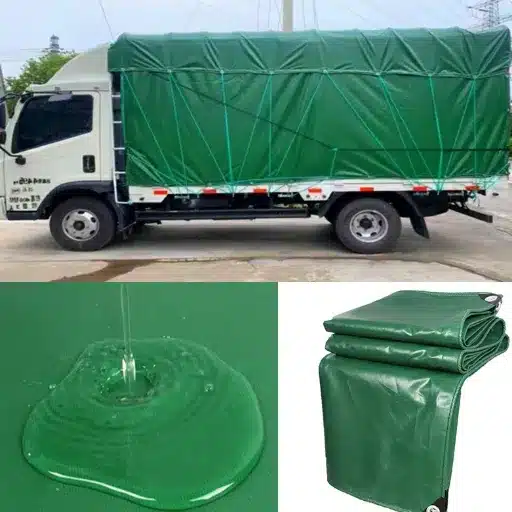
Ask for “a PVC truck tarp” and a fabric supplier has no idea what to quote, because a curtain wall and a flatbed cover solve opposite problems. This distinction is where the exact-match marketplaces go silent.
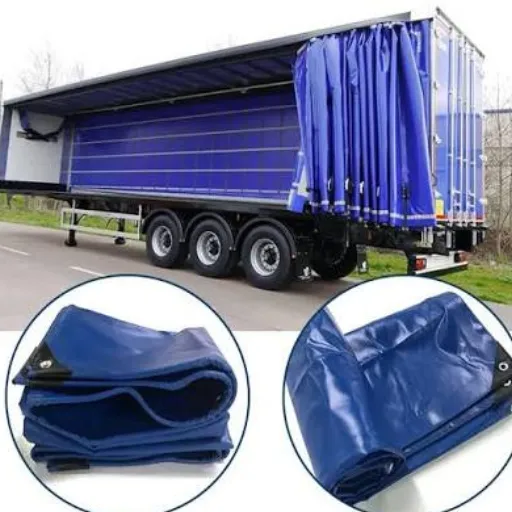
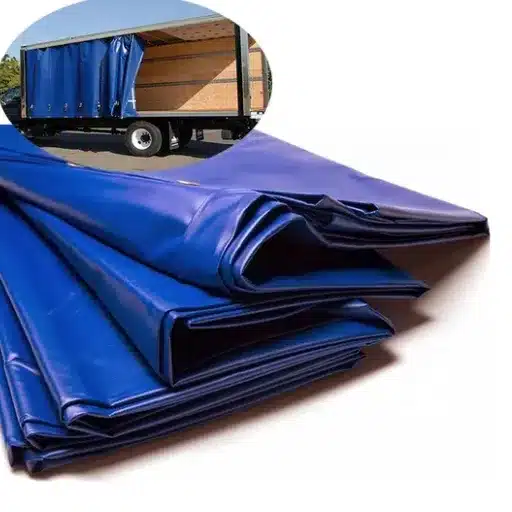
A curtain-sider wall hangs under tension across a rigid frame and opens and closes thousands of times over its life. That service punishes dimensional stability; the fabric has to hold its shape so it does not sag and catch, resist puncture where cargo presses the wall, and carry printed fleet branding without cracking at the crease lines. The fabric that does this job is usually a 900 gsm class sheet on a Panama or rip-stop weave, with a lacquer topcoat for print. For the hardware and procurement side of that build, our truck side curtain fabric page connects the material to the tensioning and rail systems around it.
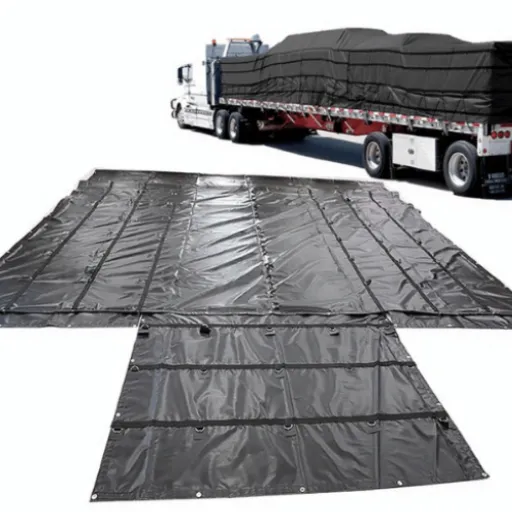
A flatbed cover is a different object. It is deployed and removed by hand, folded and stowed on nearly every load, and lashed against cargo edges that can be sharp. Its failure points are tears at tie-down straps and abrasion where the cover rubs the load. The engineering answer is a 650 to 750 gsm sheet with the reinforcement concentrated at the perimeter, because nobody wants to haul a 38 percent heavier sheet just to protect two edges.
| Decision | Curtain-sider wall | Flatbed general cover |
|---|---|---|
| Property that matters most | Dimensional stability, flex endurance | Tear, abrasion, handling weight |
| Typical weight | 850-950 gsm | 650-750 gsm |
| Preferred weave | Panama or rip-stop (tear control) | Balanced plain weave |
| Surface finish | Lacquer for print and dirt-shedding | Matte or gloss, low priority |
| Typical failure mode | Sag, crease cracking, puncture | Edge tears at tie-downs |
| What drives replacement | Cycle count, branding wear | Cargo abrasion, UV |
The same label, two products. When you spec a truck tarpaulin, say which one you mean, because a curtain wall ordered at flatbed weight will flap and wear out, and a flatbed cover built like a curtain wall will be too heavy to handle without lasting longer where it matters.
PVC Coated Fabric vs PE, Canvas & Mesh for Truck Covers
Not every truck load needs a waterproof PVC sheet, and pretending otherwise overpays for some routes. Compare the four options on the numbers that matter to a fleet: service life in truck duty, cold behavior, weldability, and cost per square meter.
| Material | Truck-service life | Waterproofing | Cold behavior | Rough price per m2 | Best use |
|---|---|---|---|---|---|
| PVC coated fabric | 5-10 years by grade | Full, weldable seams | Pliable to -30 C, cold grades to -40 C | $2.50-8.00 | Fleet standard: side curtains, flatbeds, dump covers |
| Polyethylene (PE) | 6-18 months in road duty | Good at first, seams are stitched | Stiffens and cracks | $0.50-1.20 | Temporary and budget covers, sub-18-month service |
| Canvas | 2-5 years with care | Water-resistant, breathes | Holds stiffness when wet | $2.00-4.00 | Loads needing condensation control |
| Mesh | 3-7 years | Not waterproof | Stays open | $1.50-3.50 | Dry aggregates, dump bodies, wind relief |
PE is not a cheap version of PVC. It is a different material with a different job. Under continuous truck exposure, a polyethylene cover is often replaced every 6 to 18 months, while a PVC cover from the same trailer runs 5 to 10 years. The full PVC vs PE tarpaulin comparison breaks down the 12-point spec difference and the break-even math, which usually lands between 18 and 30 months of service. Canvas and mesh win where the cargo demands them; mesh is the right call for a dry aggregate trailer where wind relief beats waterproofing, and canvas suits loads where trapped condensation damages the goods more than a little water ingress would.
The number that should drive the choice is cost per year of service, not price per square meter. A 1.00 PE sheet replaced three times in five years is more expensive than a 6.00 PVC sheet that serves the same trailer for the same period, before you count the labor of the changeouts and the loads exposed between failures.
Certifications, UV Aging & Cold-Crack Testing for Truck Tarpaulins
A truck tarp fabric is only as good as the standards it can document, and this is where thin marketplace listings fall apart. Four areas matter for road service.
Flame retardancy. Where a fleet hauls for regulated facilities or crosses borders, ask for the fire standard the fabric actually meets. North American buyers look for NFPA 701. European and export fleets see DIN 4102-B1/B2 and EN 13501-1, often class B-s2,d0. FR additives belong inside the PVC compound, not sprayed on the surface, so a genuinely flame-retardant fabric keeps its rating as the surface wears. A rating is a documented, testable product.
Cargo securement context. Under FMCSA cargo securement rules in 49 CFR 393.100, a tarpaulin protects cargo and controls spillage, but it is not a cargo securement device. The strongest 900 gsm PVC on the trailer does not reduce the tie-down count. Spec a cover as protection and keep the restraint hardware doing the restraining; that separation keeps a fleet compliant and an inspector satisfied.
UV aging. Sun exposure is the slow killer of every outdoor polymer. The industry measures it with accelerated weathering, ASTM G154 or ISO 4892 (QUV), which exposes the fabric to repeating UV and moisture cycles and tracks tensile retention over hours. A UV-stabilized truck grade should show controlled degradation across thousands of QUV hours, not a cliff after a season. Our UV resistance of PVC tarpaulins page explains what the hours mean in real outdoor years.
Cold-crack. Winter routes punish tarpaulins that go brittle. When plasticizers freeze, the sheet cracks under wind or handling load. Standard truck grades hold flexibility to roughly -30 C, and cold-climate grades with specialized plasticizers go to -40 C. If the fleet runs northern corridors, specify the cold-flex grade and say so on the RFQ. The mechanics are covered in our cold-crack resistance resource, including why coastal salt and road salt accelerate the same failure.
Ask for the test report, not the adjective. A batch report that names the lot and shows measured tensile, tear, adhesion, and gsm values against the standard method is a verifiable product. A one-line “UV resistant” claim is not.
How Long Does a PVC Truck Tarpaulin Last?
Lifespan tracks grade, and it pays to be honest about the spread because it changes the purchase math. A standard 650 to 700 gsm commercial truck cover in continuous outdoor service runs about 3 to 5 years. A premium 850 to 900 gsm grade, properly maintained, runs 5 to 10 years. High-strength engineered curtain fabrics built for daily cycling sit at the top of that range. The full breakdown of failure timing is in our how long PVC tarpaulins last guide.
What actually kills a truck tarp, in order: UV degradation that embrittles the surface, cold-crack in winter, abrasion at edges and tie-downs, road salt and chemical exposure, improper storage folded wet, and seam failure. Notice that plain wear is rarely first. Most premature failures are environmental or at the edges, which is why the reinforcement logic from the flatbed section and the maintenance below change a fleet’s real cost more than the grade sticker.
Maintenance is where documented fleets separate themselves. A logistics operator running curtain-siders put a 15-minute quarterly wash and inspection on each trailer: rinse the fabric, check the seams and straps, catch small tears early, and store the spare covers dry. That routine extended the fleet’s curtain replacement interval from about 3.2 years to 5.8 years, because the covers were retired for UV and seam age rather than for small damage that grew into failures. Fifteen minutes a quarter is the cheapest durability upgrade in trucking.
Small damage should be repaired, not ignored. PVC welds cleanly, so a patch and a hot-air or high-frequency weld restore a cover to service quickly when the coating around the damage is still sound. Retire a cover when the coating surface has widespread degradation or a seam fails structurally; at that point patching spends money on a fabric whose useful life is gone. We detail the technique in our tarpaulin welding resource.
What a Truck Tarp Fleet Really Costs
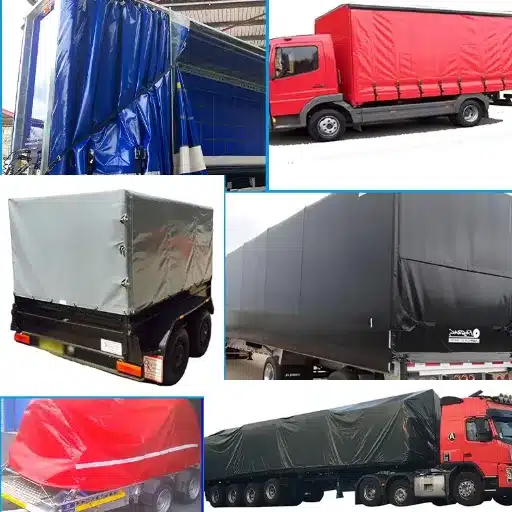
A 24 by 27 foot flatbed tarp covers roughly 60 square meters, and the five-year math on that one trailer shows why grade choice is a budget decision, not a line item. Run the numbers at bulk prices. A 90 to 200 gsm polyethylene cover costs about 0.60 to 1.20 per square meter and needs replacement two or three times a year in road service. A 750 gsm PVC cover costs roughly $3.80 per square meter and serves the same trailer for five or more years.
Per trailer over five years, the PE route spends about $360 a year on material alone, roughly $1,800 total, against about $228 a year for a single PVC install amortized, roughly $1,140. The PVC cover pays back its higher ticket inside the first two years, and a 20-truck fleet saves real money on top of the labor it no longer spends wrestling covers on and off every few months.
The upgrade cases go further. One procurement director moved a curtain fleet from 650 gsm commodity fabric to engineered 900 gsm PVC. The unit cost rose 35 percent, which sounds like a budget hit until the results: the replacement interval roughly doubled from 2.5 years past 5, unplanned downtime fell about 80 percent, and total cost of ownership dropped 22 percent. The covers stopped being the thing that pulled trucks out of service.
The same logic fixed a steel-beam hauler whose 650 gsm covers kept tearing on sharp beam edges. The fix was not a blanket up-weight to 1,050 gsm. It was 900 gsm fabric with reinforced hems and welded corner pads, at a 35 percent higher initial price. Tear incidents went to zero and the covers lasted roughly three times longer, because the reinforcement landed exactly where the loads cut.
A single cargo-damage event can erase years of cheap-tarp savings. One Chennai fleet ran 200 gsm PE covers through monsoon season, lost about $12,000 in cargo to water damage, and spent four months in an insurance dispute over whether the cover was adequate for the risk. A switch to 750 gsm PVC with welded seams ended the failures. The cheaper fabric was the expensive decision.
The Truck Tarpaulin RFQ Checklist
Whether you buy finished tarps or PVC-coated fabric rolls to build curtains in-house, a sourcing request that names the specification gets a usable quote. The list below is what our engineers want to see.
- Total weight with a tolerance, for example 650 gsm +/- 20 gsm, not just “650 gsm.”
- Base fabric: yarn denier and weave, such as 1000D x 1000D at 20 x 20, or a Panama rip-stop for curtains.
- Coating: double-sided PVC, target adhesion above 80 N/5cm, and coated rather than film-laminated construction if the part will be welded.
- Topcoat and finish: matte, gloss, or lacquer for print, plus UV stabilizers and cold-flex plasticizers where routes demand them.
- Compliance: the fire standard to certify (NFPA 701, DIN 4102, or EN 13501-1) and the cold-crack target in degrees C.
- Format: roll width and length for converters, or finished dimensions with hem, welded seams, edge reinforcement, and grommet or D-ring spacing for ready-made tarps.
- Documentation: a batch test report showing tensile warp and weft with the test method, tear, adhesion, and verified gsm, plus UV and cold data.
Request a pre-production sample and read it against the report. Any coating-line manufacturer should answer how it verifies gsm, how it tests adhesion, and how it ties results to the lot number; if a supplier cannot describe that process, it cannot document what it is selling. Our custom truck tarpaulin manufacturing page covers OEM and ODM options, custom widths, and RAL colors, and the quality-control resource explains the batch testing behind every claim we make.
Ready to spec against a real material? Our engineers will walk your duty cycle, recommend a grade and construction, and send production samples with batch test reports before you commit. Talk to an engineer or request a quote on custom PVC-coated truck tarpaulin fabric.
FAQ
How many GSM should a truck tarpaulin be?
General-freight flatbed covers run 650 to 750 gsm. Heavy flatbed service for steel, lumber, or abrasive cargo runs 750 to 900 gsm. Curtain-sider walls and dump and aggregate duty use 900 gsm and up. Choose the lightest construction that meets the cargo and duty cycle, then add edge reinforcement rather than blanket up-weighting.
What is the best material for truck tarpaulins?
For daily road service and a 5 to 10 year life, PVC coated fabric over a 1000D high-tenacity polyester scrim is the standard. Polyethylene suits temporary covers under 18 months. Canvas suits loads that need condensation control, and mesh suits dry aggregates. Match the material to the route, not to habit.
Is PVC or PE better for a truck tarpaulin?
PVC wins for continuous truck duty. It welds into waterproof seams, stays pliable in cold, and lasts 5 to 10 years, against 6 to 18 months for polyethylene. PVC costs 2 to 4 times more per square meter but reaches cost parity within 18 to 30 months of service.
What is a PVC coated fabric truck tarpaulin made of?
A high-tenacity woven polyester scrim coated on both sides with plasticized PVC and finished with a protective topcoat. The scrim carries tensile and tear loads, the coating provides the waterproof barrier, and the topcoat controls UV life and cleanability.
How long does a PVC truck tarpaulin last?
Standard 650 to 700 gsm commercial covers last about 3 to 5 years outdoors. Premium 850 to 900 gsm grades run 5 to 10 years. UV, cold-crack, and edge abrasion end most covers before plain wear does, and quarterly inspection extends the interval.
Can PVC truck tarpaulins be welded or repaired?
Yes. PVC welds cleanly with hot-air or high-frequency welding, so small tears and seam damage are repairable while the surrounding coating is sound. Retire a cover when surface degradation is widespread or a seam fails structurally.
Conclusion
A PVC coated fabric truck tarpaulin is a spec family, not a single product. Scrim denier, weave density, coating weight, and topcoat chemistry decide whether a cover lasts 3 years or 10, and GSM is where the reading starts, never where it ends. Match the grade to the duty: 650 to 750 gsm for general flatbeds, 750 to 900 for heavy freight, 900 and up for curtain-siders and dump service. Reinforce the edges where the load cuts, demand test reports instead of adjectives, and run the cost-per-year math instead of the price per square meter.
Start with the numbers on your worst trailer. If the fleet replaces covers every season or loses cargo to water, the grade is the problem, not the supplier. Our engineers will spec a PVC-coated truck tarpaulin fabric against your actual duty cycle and send samples with the batch test report attached. Request a custom quote or ask us to match a spec sheet you are already buying; the comparison will show you what the label was hiding.