
PTFE vs PVC Membrane: Specs & Costs | LY TRUSTLINK
PTFE-coated fiberglass is the premium choice for permanent tensile structures. It delivers 25–30+ year lifespans and Class A fire ratings. PVC-coated polyester is the practical choice for budget-sensitive or shorter-term projects where design flexibility and color options matter.
The decision isn’t about which is “better” in absolute terms. It’s about which membrane fits your project’s design life, fire code, environmental exposure, and total cost of ownership.
When a procurement team selects the wrong membrane, the consequences extend far beyond the initial invoice. A stadium roof that degrades prematurely can trigger a multi-million-dollar replacement. A canopy that fails a fire inspection can delay handover by months. The membrane determines whether your tensile structure performs for a decade or for a generation.
In this guide, we compare PTFE vs PVC membrane, and the broader PTFE vs PVC tensile membrane question, across the specifications that matter for procurement. You’ll get a clear decision framework and a supplier checklist for your next tensile architecture project.
Key Takeaways
- PTFE-coated fiberglass delivers 25–30+ year lifespans and Class A/A2 non-combustible fire ratings, making it the standard for stadiums, airports, and permanent landmarks.
- PVC-coated polyester offers lower upfront cost and greater design flexibility, with lifespans of 10–25 years depending on topcoat quality and climate.
- PTFE tensile strength typically ranges 6,000–10,000+ N/5cm, roughly double the 3,000–6,000 N/5cm common for PVC.
- Lifecycle cost analysis shows PTFE reaching cost parity with PVC around year 18–22, then delivering lower total cost over 30 years.
- Material selection should be driven by design life, fire code, UV exposure, and maintenance access, not material cost alone.
This tensile membrane material comparison focuses on the specifications procurement teams actually use to specify materials.
What Is the Difference Between PTFE and PVC Membrane?
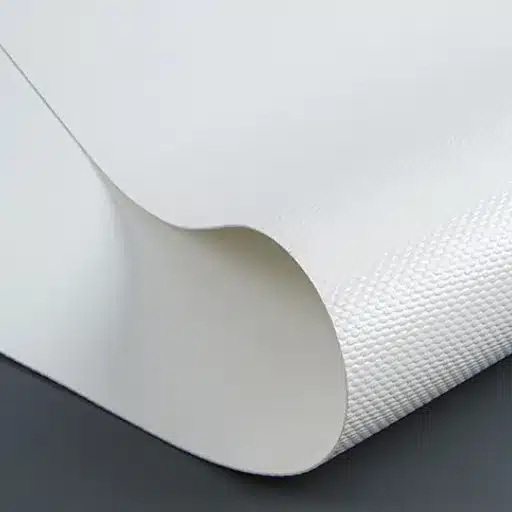
PTFE vs PVC membrane comes down to base fabric and coating chemistry. PTFE-coated fiberglass uses a woven glass-fiber substrate with PTFE resin. PVC-coated polyester uses a woven polyester substrate with PVC plastisol, usually topped with PVDF or acrylic.
PTFE delivers longer lifespan, higher tensile strength, and non-combustible ratings. PVC delivers lower cost, more color choice, and easier fabrication.
PTFE (polytetrafluoroethylene) membrane is a woven fiberglass fabric coated with PTFE resin. PVC (polyvinyl chloride) membrane is a woven polyester fabric coated with PVC plastisol, often protected by a PVDF or acrylic topcoat. The base fabric is the fundamental difference: fiberglass gives PTFE its dimensional stability and high-temperature tolerance, while polyester gives PVC its flexibility and lower cost.
The two materials serve different ends of the tensile architecture market. PTFE is specified when the structure must last decades with minimal maintenance and meet the strictest fire codes. PVC is specified when the project needs an economical, color-customizable membrane that can be fabricated and installed quickly.
| Property | PTFE-Coated Fiberglass | PVC-Coated Polyester |
|---|---|---|
| Base fabric | Woven E-glass fiberglass | High-tenacity polyester |
| Coating | PTFE resin | PVC plastisol + PVDF/acrylic topcoat |
| Typical weight | 900–1,500 gsm | 650–1,350 gsm |
| Tensile strength | 6,000–10,000+ N/5cm | 3,000–6,000 N/5cm |
| Lifespan | 25–30+ years | 10–15 years basic; 15–25 years with PVDF |
| Fire rating | Class A/A2 non-combustible | Class B/B1 flame-retardant |
| Light transmission | 5–15% diffuse | 4–15% depending on grade |
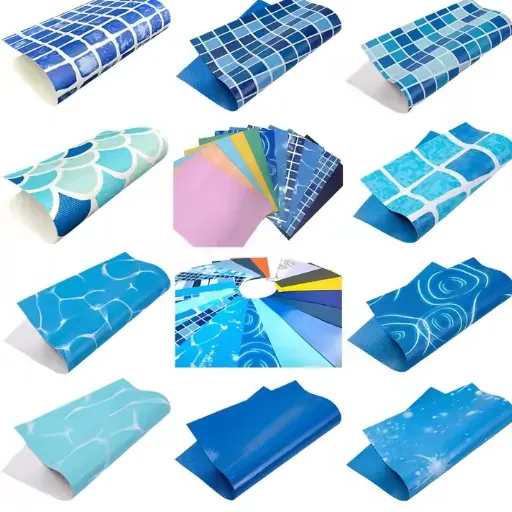
| Color options | White/sandy only | Full color range |
| Self-cleaning | Excellent | Good with PVDF topcoat |
| Material cost per m² | $80–180 | $10–75 |
| Installed cost per m² | $250–650 | $40–130 |
This table is the starting point. The sections below explain why these specifications translate into very different procurement decisions.
Material Specifications Compared
Tensile Strength and Structural Performance
PTFE-coated fiberglass consistently delivers tensile strength of 6,000–10,000+ N/5cm, with some architectural grades exceeding 10,000 N/5cm in both warp and weft. PVC-coated polyester typically ranges from 3,000–6,000 N/5cm, with premium grades approaching the lower end of PTFE performance. This is the core structural difference when evaluating PTFE coated fiberglass vs PVC coated polyester for a tensile application.
The difference comes from the base yarn. Glass fiber has a higher modulus than polyester, meaning it stretches less under load and holds prestress more reliably over time. PTFE also exhibits significantly lower creep, the slow deformation that causes a membrane to lose tension years after installation. For large-span structures where deflection limits are tight, PTFE’s stiffness is a structural advantage.
For smaller canopies, walkways, and temporary event structures, PVC’s strength is usually sufficient. The material’s greater elasticity also makes it more forgiving during installation, especially on complex curved forms.
Fire Safety and Building Code Compliance
Fire performance is often the deciding factor for public buildings. PTFE-coated fiberglass achieves Class A or A2 non-combustible ratings under EN 13501-1 and DIN 4102, and it passes ASTM E84 with low flame spread and minimal smoke. The fiberglass base won’t ignite, melt, or drip.
PVC-coated polyester with a PVDF topcoat typically achieves Class B or B1 flame-retardant ratings. It self-extinguishes when the flame source is removed, but it can emit hydrogen chloride and dense smoke during combustion. For high-occupancy venues such as stadiums, airports, and transit hubs, many building codes mandate Class A materials, which effectively rules out standard PVC.
For less stringent applications, commercial-grade PVC with NFPA 701 certification is widely accepted. Always confirm the required fire classification with the project’s structural engineer and local authority before selecting a membrane.
UV Resistance and Weathering
PTFE is effectively immune to UV degradation. It reflects approximately 98% of solar radiation and retains tensile strength after 10,000 hours of accelerated weathering. This is why PTFE roofs installed in the 1970s, including the Munich Olympic Stadium, are still in service.
PVC relies on UV stabilizers and topcoat systems for longevity. Without a quality PVDF topcoat, PVC can lose 15–25% of its tensile strength after 5,000 hours of accelerated exposure. In high-UV climates such as the southern United States, Middle East, or Australia, premium PVC-PVDF grades are essential, and PTFE becomes even more cost-competitive.
Self-Cleaning and Surface Chemistry
PTFE’s extremely low surface energy, with a contact angle greater than 110 degrees, gives it a non-stick, hydrophobic surface. Rainwater beads up and carries away dirt and pollutants. In most environments, PTFE requires cleaning only every 5–8 years.
PVC has a higher surface energy, with a contact angle of 80–90 degrees. It cleans reasonably well with a PVDF topcoat, but it accumulates dirt more readily and typically needs active cleaning every 2–4 years. In polluted or coastal environments, the cleaning interval shortens.
Looking for innovative membrane architecture that combines aesthetics with functionality? Contact LY TRUSTLINK to explore bespoke solutions designed around your project’s specific requirements.
Cost Analysis: Initial Investment vs Lifecycle Cost
Material cost is where most procurement conversations about PTFE membrane cost vs PVC start, but it’s rarely where they should end. For a full PTFE vs PVC membrane evaluation, installed cost, maintenance, and replacement cycles matter as much as the material price per square meter.
PTFE membrane material typically costs 80–180perm2,withinstalledcostsrangingfrom80–180perm2,withinstalledcostsrangingfrom250–650 per m² depending on project complexity, steelwork, and labor. PVC membrane material costs 10–75 per m², with installed costs of 40–130 per m².
The upfront gap is significant. On a 10,000 m² canopy, choosing PVC over PTFE can reduce initial membrane expenditure by several hundred thousand dollars. However, that saving must be weighed against replacement timelines.
A basic PVC membrane may need replacement in 10–15 years. A PVC-PVDF grade can last 15–25 years. PTFE is designed for 25–30+ years and often exceeds 30 years with minimal intervention. Over a 30-year building lifecycle, the cost of two PVC replacements, scaffolding, site access, and operational disruption frequently exceeds the initial premium for PTFE.
When Elena Vasquez, a procurement director for a European logistics group, modeled a 12,000 m² canopy over 30 years, she found that PTFE reached cost parity with PVC-PVDF around year 20 and delivered approximately €340,000 in savings by year 30. The analysis excluded the operational value of zero roof downtime, which was critical for a 24/7 distribution hub.
| Cost Factor | PTFE-Coated Fiberglass | PVC-Coated Polyester |
|---|---|---|
| Material cost per m² | $80–180 | $10–75 |
| Installed cost per m² | $250–650 | $40–130 |
| Expected lifespan | 25–30+ years | 10–25 years |
| Cleaning interval | Every 5–8 years | Every 2–4 years |
| Replacement cycles over 30 years | 0 | 1–2 |
| Typical 30-year TCO | Lower for permanent structures | Higher due to replacements |
For projects with a design life under 15 years, PVC usually wins on pure cost. For projects with a 25+ year horizon, PTFE is typically the lower-risk financial choice.
Want to see how these costs apply to your project? Talk to an engineer about custom tensile membrane materials and receive a specification review based on your design life and climate.
When to Specify PTFE Membrane
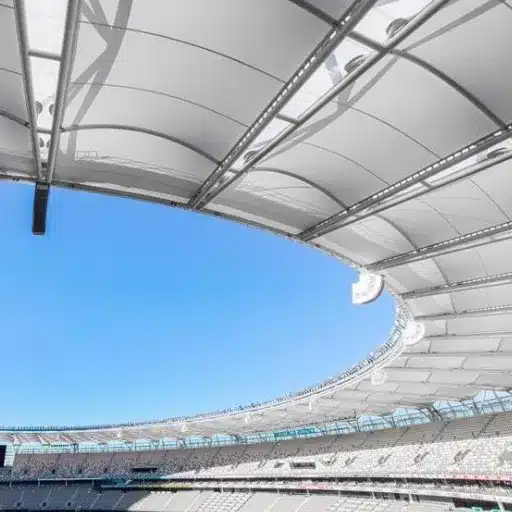
PTFE is the non-negotiable choice for projects where the following conditions apply.
Permanent Public Buildings and Landmarks
When the structure is intended to define a skyline or serve as a civic asset for decades, PTFE’s durability and self-cleaning surface reduce long-term liability. Museums, convention centers, and cultural pavilions frequently specify PTFE because the roof must remain visually crisp and structurally sound for a generation.
Stadiums, Airports, and Transportation Hubs
These projects combine three requirements that favor PTFE: very large spans, high occupancy, and stringent fire codes. PTFE’s tensile strength allows longer cable-spaced panels, while its Class A fire rating satisfies life-safety requirements that PVC can’t meet.
Harsh UV, Chemical, or Temperature Environments
Industrial exhaust enclosures, facilities near coastal salt spray, and structures in desert or tropical climates all stress membrane materials. PTFE’s chemical inertness and temperature tolerance, from -100°C to +260°C, make it the engineered solution for these conditions.
When the Meridian Stadium procurement team initially selected a lower-grade PVC membrane to cut costs, they faced a $2.3 million replacement bill within eight years after premature UV embrittlement and coating delamination. The replacement project required partial deconstruction of the support structure. For permanent venues, the wrong membrane is never a small mistake.
When to Specify PVC Membrane
PVC is the practical choice when the project profile prioritizes budget, flexibility, or shorter design life.
Budget-Sensitive Commercial Canopies and Walkways
For shopping centers, parking structures, school-covered outdoor learning areas, and retail walkways, PVC-PVDF delivers 15–25 years of service at a fraction of PTFE’s initial cost. The performance is appropriate for the design life, and the capital savings can be allocated elsewhere.
Temporary or Semi-Permanent Structures
Event venues, exhibition halls, and seasonal installations rarely need 30-year materials. PVC’s lower cost and easier fabrication make it ideal for structures with a planned service life of 5–15 years.
Complex Geometries and Custom Colors
PVC is significantly more flexible than PTFE and can be folded, shipped, and field-adjusted with greater ease. It is also available in hundreds of colors and printable surfaces, which matters for branding, wayfinding, and architectural expression. PTFE is produced primarily in white or sandy tones, with custom colors available only at substantial premium and limited availability.
Procurement Checklist: What to Demand from Your Membrane Supplier
Whether you specify PTFE or PVC, the supplier’s quality control and documentation process matters as much as the material grade. Use this checklist during your architectural membrane fabric selection process.
- Batch-specific test reports covering warp and weft tensile strength, tear resistance, coating adhesion, and accelerated UV aging. Stock certificates aren’t enough.
- Fire compliance documentation specific to the material batch, including NFPA 701, EN 13501-1, DIN 4102, or the standard required by your local code.
- Technical Data Sheet (TDS) with weight, thickness, light transmission, and temperature range for the exact grade supplied.
- Custom capability confirmation if your project requires non-standard weights, coatings, colors, or roll widths.
- Prototype sample program with A4 or larger swatches from the production batch before full-scale manufacturing.
- Lead time transparency with confirmed production schedules and export documentation timelines.
- Warranty terms that clearly define coverage, exclusions, and claims procedures.
LY TRUSTLINK supplies PVC-coated polyester and PTFE-coated fiberglass membranes with batch-level testing and certification documentation. Our engineering team supports projects from concept through certified delivery, including custom specifications for non-standard tensile applications.
Common Mistakes When Choosing Between PTFE and PVC
Selecting on Material Cost Alone
The membrane is typically 30–40% of the total installed structure cost. Saving 20% on the membrane by downgrading from PTFE to PVC can double lifecycle cost if it forces an early replacement. Always model total cost of ownership over the design life.
Ignoring Climate and UV Exposure
A basic PVC membrane in Phoenix or Dubai will age differently than the same membrane in Northern Europe. Specify UV-stabilized grades or PTFE for high-solar environments.
Underestimating Lifecycle Maintenance
Cleaning access, scaffolding costs, and operational downtime are real budget lines. PTFE’s near-zero maintenance requirement is a major advantage for hard-to-access roofs.
Accepting Generic Specifications Without Batch Data
Generic product datasheets don’t guarantee the performance of the roll on your project. Demand batch-specific test reports and traceability from raw yarn to finished membrane.
Frequently Asked Questions
What is the difference between PTFE and PVC membranes?
PTFE membrane uses a woven fiberglass base coated with PTFE resin, while PVC membrane uses a woven polyester base coated with PVC plastisol. PTFE offers longer lifespan, higher tensile strength, and non-combustible fire ratings. PVC offers lower cost, greater flexibility, and a wider color range.
Which is better: PTFE or PVC membrane?
Neither is universally better. PTFE is better for permanent structures with 25+ year design lives and strict fire codes. PVC is better for budget-sensitive projects, temporary structures, and designs requiring complex curves or custom colors.
How long does PTFE membrane last vs PVC?
PTFE-coated fiberglass lasts 25–30+ years, with proven installations exceeding 50 years. PVC-coated polyester lasts 10–15 years in basic grades and 15–25 years with a quality PVDF topcoat.
Is PTFE membrane fireproof?
PTFE-coated fiberglass is non-combustible due to its fiberglass base. It achieves Class A/A2 fire ratings without flame-retardant additives. PTFE itself is chemically inert and doesn’t support combustion.
Does PTFE membrane self-clean?
Yes. PTFE’s low surface energy creates a hydrophobic, non-stick surface. Rainwater washes away most dirt and pollutants, so professional cleaning is typically needed only every 5–8 years.
Why is PTFE more expensive than PVC?
PTFE costs more because of the glass-fiber substrate, specialized coating process, and more demanding fabrication requirements. However, its longer lifespan and lower maintenance often produce lower total cost of ownership for permanent structures.
Can PVC membrane be recycled?
PVC is recyclable in many regions through established vinyl recycling programs. PTFE recycling is more difficult because the glass fiber and PTFE coating are hard to separate. Both materials should be handled according to local environmental regulations at end of life.
What colors are available for PTFE vs PVC?
PTFE is available primarily in white or sandy tones. PVC is available in a full range of colors, including custom-matched shades and printable surfaces.
Which membrane is better for stadiums and large venues?
PTFE is the standard choice for stadiums, airports, and large public venues because of its non-combustible fire rating, long lifespan, and ability to span large distances with minimal support.
How do you clean and maintain PTFE vs PVC membranes?
PTFE usually requires only rainwater rinsing and occasional professional cleaning every 5–8 years. PVC typically requires active cleaning every 2–4 years, with more frequent attention in polluted or coastal environments.
Conclusion
The PTFE vs PVC membrane decision comes down to design life, fire code, climate, and total cost of ownership. PTFE-coated fiberglass is the engineered choice for permanent landmarks, high-occupancy public buildings, and harsh environments where failure isn’t an option. PVC-coated polyester is the practical, cost-effective choice for commercial canopies, temporary structures, and projects where flexibility and color matter.
Procurement teams that model lifecycle cost, demand batch-specific test data, and match the membrane to the project’s real requirements avoid the expensive mistake of replacing a roof that was under-specified from the start.
For a deeper technical comparison of all tensile membrane options, see LY TRUSTLINK’s spec guide to PVC, PTFE, and ETFE. When you’re ready to specify materials for your next project, request a custom quote and our engineering team will review your design life, load requirements, and compliance needs.
Sources consulted: MakMax Australia, PTFE vs PVC Membrane Comparison, Tension Structures, PTFE Fiberglass to PVC Membranes, TarpChina, Architectural Membrane Procurement Guide