
Waterproof Canvas Tarp: 7 Specs Industrial Buyers Need
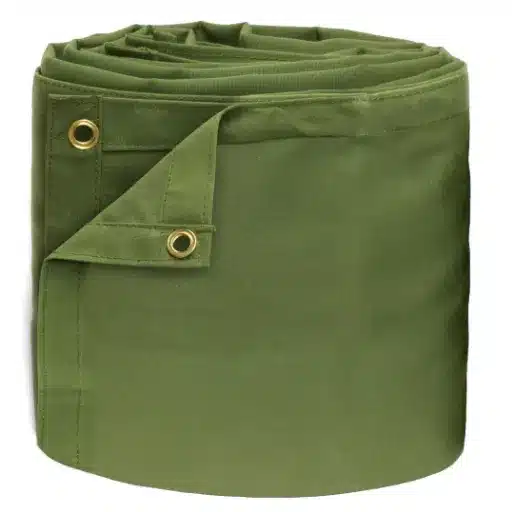
A waterproof canvas tarp is rarely fully waterproof in the way industrial buyers need. Most canvas tarps are water-resistant or water-repellent, not impermeable. For true waterproofing under sustained rain or pooling water, PVC-coated polyester tarpaulin is the stronger specification. Canvas wins when breathability, condensation control, and quiet handling matter more than absolute water blockage.
That distinction costs operations money every year. A procurement manager searching for “waterproof canvas tarp” often receives marketing language instead of measurable specs. Ounce weight, hydrostatic head ratings, and re-treatment intervals get buried beneath vague claims like “heavy duty” and “all-weather.” The result is a tarp that looks right on paper but fails in the field.
In other words, the wrong specification takes labor, assets, and deadlines with it.
We wrote this guide for buyers who need to specify canvas covers with confidence. You will learn how canvas waterproofing actually works, how to read weight and treatment specs, when canvas outperforms synthetics, and when to upgrade to PVC. Every recommendation is grounded in test standards, field performance, and total cost of ownership. Still have questions about waterproof tarps, materials, or custom sizes? The LY TRUSTLINK team is always available to help you find the best waterproof solution for your business.
Key Takeaways
- Most canvas tarps are water-resistant, not waterproof; hydrostatic head ratings typically fall between 0 and 1,000 mm H₂O, while PVC tarpaulin reaches 5,000–10,000+ mm.
- Specify canvas by ounce weight and GSM: 16 oz (~542 gsm) is the practical minimum for industrial use, and 18 oz (~610 gsm) is better for long-term or high-wind exposure.
- Wax and paraffin treatments last 18–24 months factory-applied; silicone or PU sprays need reapplication every 4–6 months.
- Canvas is the right choice for moisture-sensitive equipment, lumber curing, and agricultural covers where breathability prevents condensation damage.
- PVC-coated polyester is the better specification for sustained rain, ponding water, chemical exposure, and fleet logistics covers.
- Use this waterproof canvas tarp guide to match ounce weight, treatment, and certification to your exact application.
What “Waterproof Canvas Tarp” Actually Means

The phrase “waterproof canvas tarp” creates confusion because it combines two ideas that often conflict. Canvas is a woven cotton or cotton-polyester fabric. It is naturally breathable. Waterproofing, in industrial terms, means water cannot penetrate under measurable pressure. Therefore, those two properties sit at opposite ends of the same spectrum.
Untreated canvas resists light rain through fiber swelling. When cotton fibers absorb moisture, they expand and tighten the weave. That slows water entry but does not stop it. Under sustained rain, wind-driven spray, or pooling water, untreated canvas eventually saturates. Laboratory hydrostatic head testing measures the water pressure a fabric withstands before leakage. This test places untreated canvas in the 0–1,000 mm H₂O range. By comparison, a quality PVC-coated polyester tarpaulin consistently tests at 5,000–10,000+ mm H₂O.
Treatments can improve canvas performance. Factory-applied wax, paraffin, silicone, or polyurethane coatings raise the hydrostatic head and help water bead on the surface. Even then, treated canvas generally tops out near 1,000 mm H₂O with PU coatings, or 200–500 mm H₂O with waxes. That is enough to repel heavy rain for a period, but not enough to guarantee zero leakage under ponding or high-pressure spray.
For a deeper look at how waterproof ratings translate into procurement decisions, see our guide on how hydrostatic head ratings work.
Waterproof vs. Water-Resistant vs. Water-Repellent
These terms are not interchangeable. They describe different levels of protection, and misunderstanding them leads to specification failure. For the measurable thresholds that separate marketing claims from verified performance, see our guide to waterproof vs. water-resistant tarps.
- Water-resistant: The fabric slows water penetration but will eventually soak through. Untreated canvas is water-resistant.
- Water-repellent: A surface treatment causes water to bead and roll off. Waxed or silicone-treated canvas is water-repellent. Performance degrades as the treatment wears.
- Waterproof: Water cannot penetrate the material under defined pressure, assuming intact seams and grommets. Factory-coated canvas with PU or PVC layers can approach this, but true waterproofing in industrial use belongs to PVC, vinyl, and RF-welded synthetics.
The trade-off is breathability. The more waterproof a fabric becomes, the less moisture vapor it allows to escape. Canvas retains value precisely because it occupies the breathable end of that spectrum.
Waterproof Canvas Tarp Weight and Specification Guide
Weight is the first specification buyers should check when specifying a waterproof canvas tarp. Canvas tarp weight is expressed in ounces per square yard (oz/yd²). The metric equivalent is grams per square meter (GSM). Heavier fabric generally means tighter weave, higher tear resistance, and longer service life. However, it also means less flexibility and higher shipping cost.
Ounce Weight vs. GSM Conversion
| oz/yd² | Approx. GSM | Typical Use |
|---|---|---|
| 8–10 oz | 270–340 gsm | Drop cloths, dust covers, light camping shelters |
| 10–12 oz | 340–407 gsm | General equipment covers, garden covers, temporary shade |
| 12–16 oz | 407–542 gsm | Boat covers, machinery covers, lumber and firewood storage |
| 16–18 oz | 542–610 gsm | Heavy-duty truck covers, industrial site covers, high-wind areas |
| 18–20 oz | 610–680 gsm | Extreme-duty industrial, mining, marine, permanent outdoor structures |
| 20–24 oz | 680–815 gsm | Heritage projects, theatrical backdrops, specialized heavy-wind installations |
For industrial procurement, 16 oz is the practical minimum. Lighter weights are fine for indoor storage or short-term covers, but they do not hold up to wind whip, abrasion, or repeated tensioning. For most buyers, a 16 oz canvas tarp is the practical minimum for industrial use, while an 18 oz canvas tarp is preferable for permanent or high-wind installations.
Weight Selection by Application
10–12 oz canvas works for light-duty, portable use. Campers, painters, and contractors use it for ground cloths and temporary shade. It folds easily and travels well, but it lacks the body to survive industrial loads.
12–16 oz canvas is the standard range for equipment and machinery covers. It resists abrasion better than lighter weights and still offers reasonable portability. For example, a fleet yard in Houston storing backup generators can use this weight range if the covers are removed and reinstalled regularly.
16–18 oz canvas is where industrial specifications begin. This weight handles truck covers, scaffold enclosures, and site covers that face wind and daily handling. The fabric is stiff enough to tension properly and resist tearing at grommets. A waterproof canvas tarp in this weight range will outlast lighter options in continuous outdoor use.
18–20 oz+ canvas is reserved for extreme-duty or permanent installations. Mining operations, marine storage, and long-term outdoor structures use this weight class. It is less portable but far more durable.
Key Specs to Verify Beyond Weight
A waterproof canvas tarp specification should include more than ounce weight. Procurement teams should request the following data:
- Hydrostatic head rating: Tested to ISO 811 or AATCC 127. Factory-treated canvas should report a number, not just a marketing claim.
- Grommet spacing and material: Standard spacing is 24 inches. High-wind applications need 18-inch spacing. Brass or stainless steel grommets resist corrosion longer than plain steel.
- Hem and corner reinforcement: Double-stitched hems with reinforced corners extend service life under tension.
- Seam construction: Stitched seams are common but can leak. Heat-sealed or taped seams improve water resistance.
- UV and mildew treatments: Cotton is vulnerable to both. Factory UV inhibitors and mildew-resistant finishes are essential for outdoor use.
- Fire-retardant certification: For construction sites and regulated facilities, specify ASTM D6413 or NFPA 701 compliance. ASTM D6413 requires after-flame time of 2 seconds or less and char length under 100 mm.
- Mildew resistance: A factory-applied mildew-resistant finish extends service life in humid or stored-wet conditions.
When you evaluate a supplier, ask for batch test reports. Consistent performance across orders matters more than a single impressive specification sheet. In addition, LY TRUSTLINK documents tensile strength, tear resistance, and coating adhesion for every production run, because a cover is only as reliable as its weakest batch.
Canvas Tarp Waterproofing Treatments Compared
Not all waterproofing treatments perform the same way. The right canvas tarp waterproofing choice depends on how much water resistance you need, how often you can re-treat, and whether breathability is a priority. The treatment applied to a waterproof canvas tarp determines how long it stays water-repellent and how much maintenance it requires.
Wax and Paraffin Coatings
Wax-based treatments are the traditional method for making canvas water-repellent. A blend of beeswax and paraffin is heated, applied to the fabric, and worked into the fibers with heat. Factory applications use heated rollers that drive the wax deeper into the yarn. That is why factory-waxed canvas outlasts most DIY jobs.
Factory-waxed canvas typically achieves a hydrostatic head of 200–500 mm H₂O and needs re-waxing every 18–24 months under normal use. DIY wax applications usually last 6–12 months. Wax reduces breathability slightly but preserves more airflow than plastic coatings. It also gives canvas the characteristic firm hand and heritage appearance of waxed canvas.
Silicone and Polyurethane Sprays
Spray treatments are faster and easier than waxing. A silicone spray maintains high breathability but needs reapplication every 4–6 months. Polyurethane sprays create a stronger barrier, sometimes reaching 500–1,000 mm H₂O, but they reduce breathability and can stiffen the fabric over time.
These sprays are useful for field touch-ups or for tarps that see intermittent rain. They are not a permanent solution for industrial covers exposed to constant weather.
Oil Treatments
Linseed oil and similar treatments give canvas a flexible, soft feel. They provide short-term water resistance and are common in heritage marine and military applications. However, oil-treated canvas is more flammable, attracts dirt, and requires frequent reapplication. For modern industrial use, wax or synthetic coatings are usually the better specification.
Treatment Selection Summary
| Treatment | Hydrostatic Head | Breathability | Re-Treatment Interval | Best For |
|---|---|---|---|---|
| Untreated canvas | 0–1,000 mm H₂O | Full | None | Drop cloths, dust covers, indoor use |
| Silicone spray | 200–400 mm H₂O | High | 4–6 months | Field touch-ups, camping, light covers |
| Wax / paraffin (factory) | 200–500 mm H₂O | Moderate | 18–24 months | Equipment covers, truck tarps, outdoor storage |
| Wax / paraffin (DIY) | 200–400 mm H₂O | Moderate | 6–12 months | Budget maintenance, small tarps |
| PU coating | 500–1,000 mm H₂O | Lower | 12–24 months | Higher water resistance where breathability is less critical |
For a step-by-step reproofing process, see our guide on how to re-waterproof a tarp.
When to Choose Canvas vs. PVC vs. Polyethylene
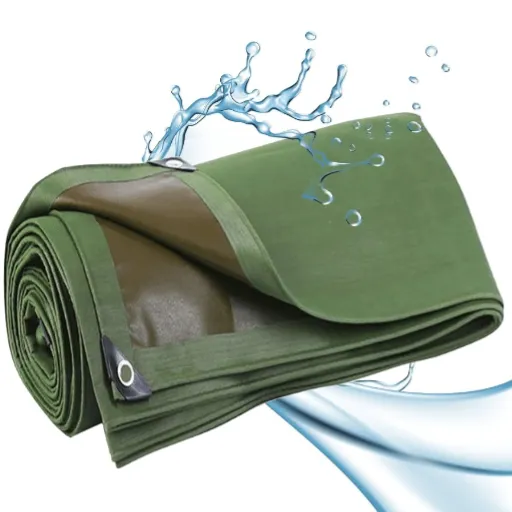
Material selection should start with the operational requirement, not the lowest unit price. Deciding whether a waterproof canvas tarp or a synthetic cover is right for the job starts with the environment, not the sticker price. Each material solves a different problem.
Performance Comparison
| Material | Waterproofing | Durability | Breathability | Typical Lifespan | Cost Per Year* |
|---|---|---|---|---|---|
| Canvas (treated) | Water-resistant to 1,000 mm H₂O | Good | High | 5–10 years with maintenance | 12–12–60 |
| Polyethylene (PE) | 1,500–10,000 mm H₂O | Moderate | None | 6 months–3 years | 10–10–100 |
| PVC-coated polyester | 5,000–10,000+ mm H₂O | Excellent | None | 5–15+ years | 5–5–50 |
*Based on a 10×12 ft cover over its expected service life, including replacement and maintenance.
Best Applications for Canvas
Canvas excels where breathability prevents damage. Moisture-sensitive equipment, such as precision tools or electronics, can rust or corrode under a fully waterproof cover that traps condensation. Canvas allows vapor to escape, keeping the covered asset drier over time.
Lumber and firewood storage is another natural fit. Green wood releases moisture as it cures. A PVC cover traps that vapor and promotes mold. A treated canvas cover sheds rain while allowing the wood to breathe.
Agricultural operations use canvas for hay, equipment, and livestock shelter covers where airflow reduces heat and humidity. Heritage projects, theatrical sets, and painting drop cloths also favor canvas for its natural appearance and quiet handling. For matched specs by use case, see our waterproof tarp specifications by application.
When to Upgrade to PVC Tarpaulin
Specify PVC-coated polyester when the application demands true waterproofing. Fleet and logistics covers, construction site enclosures, long-term outdoor storage, and any environment with chemical or oil exposure call for PVC. The material is fully waterproof, UV-stabilized, abrasion-resistant, and far easier to clean. If a waterproof canvas tarp cannot handle the environment, PVC-coated polyester is the next specification to evaluate.
For help matching material to application, see our best waterproof tarp by application guide.
Mini-story: Maria, a procurement officer for a Midwest construction firm, ordered 16 oz treated canvas tarps to cover rebar and lumber through the winter. By February, repeated freeze-thaw cycles had saturated the canvas. The rebar rusted, and the lumber swelled. The following year, she specified PVC-coated polyester for the rebar and kept canvas only for the green lumber stack. Replacement costs dropped by 34%, and site inspectors no longer flagged water-damaged materials.
Waterproof Canvas Tarp Buying Checklist for Industrial Buyers
A waterproof canvas tarp purchase becomes straightforward when you specify every detail up front. Use this checklist to align supplier quotes and avoid surprises.
- Dimensions: Specify cut size or finished size. Cut size is the fabric before hems and grommets. Finished size is the usable area, usually 1–2 inches smaller per side. Allow 3–5% shrinkage after the first wetting.
- Weight: State the minimum ounce weight or GSM required for the application.
- Treatment: Define wax, silicone, PU, or untreated. Request hydrostatic head test data.
- Grommets: Specify material, spacing, and reinforcement. Standard is 24 inches; high-wind areas need 18 inches.
- Seams: Request double-stitched, reinforced, or taped seams depending on water resistance needs.
- Certifications: Confirm ASTM D6413, NFPA 701, or other site-required standards.
- Customization: Ask about colors, reinforced corners, branding, and non-standard sizes.
- Quality assurance: Require batch test reports for tensile strength, tear resistance, and coating adhesion.
- Lead time and packaging: Confirm production schedule, roll or folded delivery, and labeling.
For buyers with non-standard requirements, request custom canvas tarp specifications or speak with our engineering team about OEM and ODM manufacturing. Our team supports projects from concept to certified delivery, with prototype samples typically available within 2–3 weeks.
Maintenance, Re-Waterproofing, and Storage
Canvas requires more maintenance than synthetic tarps. Ignoring that reality turns a 10-year cover into a 2-year cover. A waterproof canvas tarp requires scheduled inspection, gentle cleaning, and re-treatment to reach its full service life.
Inspection Schedule
Inspect canvas tarps before each season and after severe weather. Look for torn fabric, loose grommets, worn fold lines, and areas where the coating has thinned. Seams and grommets are the first failure points.
Cleaning Without Damaging Coatings
Clean canvas with mild soap, lukewarm water, and a soft brush. Avoid harsh detergents, bleach, and pressure washers. These strip wax and silicone treatments and weaken cotton fibers. Rinse thoroughly and allow the tarp to air-dry completely before storage.
Re-Waterproofing Timeline
The re-treatment interval depends on the method and exposure level:
- Silicone spray: every 4–6 months
- DIY wax: every 6–12 months
- Factory wax or paraffin: every 18–24 months
- PU coating: every 12–24 months
Re-treat before the fabric begins to absorb water. The water-bead test is simple: sprinkle water on the surface. If it beads and rolls off, the treatment is intact. If it darkens the fabric or soaks in, it is time to re-treat.
Mildew Prevention and Storage
Never store canvas wet. Mildew feeds on cotton fibers and weakens the fabric. Dry the tarp in shade, then roll it loosely and store it in a cool, ventilated space. Avoid sharp folds, especially on waxed canvas, because repeated creasing cracks the coating.
Lifecycle Cost: Canvas vs. PVC
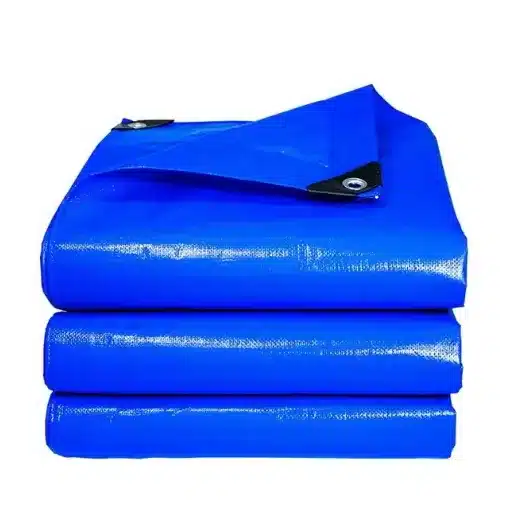
Sticker price rarely tells the full story. For industrial buyers, total cost of ownership includes purchase price, re-treatment labor, replacement frequency, and the cost of protecting the assets underneath. Comparing the lifecycle cost of a waterproof canvas tarp against PVC-coated polyester often reveals which material is the better investment.
Upfront Cost vs. Cost Per Year
A 10×12 ft treated canvas tarp typically costs 60–60–180. A comparable PVC-coated polyester tarp runs 80–80–250. Over 10 years, the canvas tarp may need re-treatment two to four times and replacement once. The PVC tarp often lasts the full decade with minimal maintenance.
| Material | Upfront Cost (10×12 ft) | Lifespan | Est. 10-Year Cost | Cost Per Year |
|---|---|---|---|---|
| Treated canvas | 60–60–180 | 5–10 years | 180–180–400 | 18–18–40 |
| PVC-coated polyester | 80–80–250 | 10–15+ years | 80–80–250 | 5–5–25 |
These ranges assume outdoor industrial use. Milder conditions extend canvas life; harsh conditions shorten it.
When Canvas Is the Better Investment
Canvas is the right financial choice when breathability prevents damage that a waterproof cover would cause. Moisture-sensitive equipment, green lumber, and agricultural curing are clear examples. Canvas is also preferable for short-term or rotational covers where the lower upfront cost matters more than decades of service.
For environments with sustained rain, ponding water, chemicals, or UV exposure, PVC usually delivers the lower cost per year and the lower operational risk.
Mini-story: A logistics fleet manager named James covered flatbed steel coils with treated 18 oz canvas to protect them from road spray. After three months, condensation trapped under the covers caused surface rust on precision-finished coils. James switched to breathable canvas with a silicone treatment for short-haul loads and PVC-coated covers for long-haul routes. The mixed specification reduced rust claims by 60% without overspending on unnecessary waterproofing.
FAQ: Waterproof Canvas Tarp Questions
Below are the most common questions buyers ask when evaluating a waterproof canvas tarp for industrial use.
Are canvas tarps waterproof?
No. Most canvas tarps are water-resistant or water-repellent, not fully waterproof. Treated canvas repels rain through fiber swelling and surface coatings, but sustained rain or standing water can eventually penetrate.
How long do canvas tarps last outside?
High-quality treated canvas lasts 5–10 years outdoors with proper maintenance. Untreated canvas may degrade within 1–2 years due to UV damage and mildew.
What is the best weight for a heavy-duty canvas tarp?
For industrial use, 16 oz/yd² (~542 gsm) is the practical minimum. For long-term outdoor, high-wind, or marine use, specify 18 oz/yd² (~610 gsm) or heavier.
Can you make a canvas tarp completely waterproof?
Factory PU or PVC coatings can bring canvas close to waterproof, but at the cost of breathability. For true waterproofing, PVC-coated polyester tarpaulin is the more reliable specification.
How do you re-waterproof a canvas tarp?
Clean the tarp, repair damage, dry it completely, then apply a wax, silicone, or PU treatment. Test with a water-bead test after curing. Re-treatment intervals range from 4–6 months for sprays to 18–24 months for factory wax.
Canvas vs. vinyl: which is better for equipment covers?
Canvas is better when breathability and condensation control matter. Vinyl is better for full waterproofing, UV resistance, abrasion resistance, and long-term outdoor exposure.
Are canvas tarps breathable?
Yes. Breathability is one of canvas’s main advantages. It allows moisture vapor to escape, reducing condensation and mildew under the cover.
What does cut size vs. finished size mean?
Cut size is the fabric dimension before hems and grommets. Finished size is the usable dimension after hems and reinforcements, usually 1–2 inches smaller per side.
What is the most waterproof canvas tarp?
A factory PU-coated canvas tarp comes closest to fully waterproof, often reaching 500–1,000 mm H₂O on the hydrostatic head test. However, no canvas tarp matches the waterproofing of PVC-coated polyester, which routinely tests at 5,000–10,000+ mm H₂O. If absolute waterproofing is required, specify PVC rather than canvas.
Are canvas tarps fire retardant?
Canvas can be treated to meet flame-resistance standards such as ASTM D6413. It is not fireproof, but treated canvas self-extinguishes once the ignition source is removed.
How do you prevent mildew on canvas tarps?
Dry the tarp completely before storage, clean it regularly, and store it in a ventilated area. Mildew-resistant treatments also help.
For more detail on material waterproofing across all tarp types, see our complete waterproof tarp guide.
Conclusion
A waterproof canvas tarp is a valuable industrial cover when it is specified for the right job. Its breathability protects moisture-sensitive equipment, lumber, and agricultural assets in ways that fully waterproof materials cannot. But canvas is not a substitute for PVC tarpaulin in environments with sustained rain, ponding water, chemicals, or extreme UV exposure.
The key to a successful procurement decision is to look past marketing labels. Specify by ounce weight, hydrostatic head rating, treatment type, grommet spacing, and required certifications. Then, calculate total cost of ownership, including re-treatment and replacement, rather than comparing sticker prices alone.
At LY TRUSTLINK, we engineer protective fabrics for demanding environments worldwide. Whether you need treated canvas for breathable equipment covers or PVC-coated polyester for fully waterproof fleet protection, our team can help you specify the right material and deliver consistent quality across every batch.
Ready to specify your next cover? Talk to an engineer or request a custom quote with your exact weight, treatment, and certification requirements.