
Bounce House Safety Standards: ASTM, EN 14960 & NFPA 701
Bounce house safety standards are the testing and design requirements that commercial inflatable amusement devices must meet to be considered safe for public use. They are led by ASTM F2374 in the US, EN 14960 in Europe, NFPA 701 for fire retardancy, and the CPSIA and REACH chemical regulations. Each standard tests specific properties of the device, and at its core each one is a test of the fabric the unit is built from.
That last point matters more than most buyers realize. Bounce houses sent an estimated 113,000 children to US emergency rooms between 2003 and 2013, and 93 percent of those injuries happened in moon bounces. The standards that govern the industry exist because a seam that bursts under load, a fabric that ignites, or a coating with unsafe chemistry can injure a child and end a business. Yet most operators can recite the acronyms on a spec sheet without knowing what any of them actually verify.
We manufacture and batch-test the PVC inflatable fabric these standards are written to evaluate, so we can decode them from the material side. By the end of this guide you will know what each major standard tests, how the US and European frameworks differ, how to read a test report instead of a marketing certificate, and how fabric specification determines whether a unit passes or fails. For the complete construction breakdown of a finished unit, start with our guide to what bounce houses are made of.
Key Takeaways
- Four standards matter most: ASTM F2374 (US structural/operational), EN 14960 (European structural), NFPA 701 Method 2 (fire retardancy), and CPSIA/REACH (chemical safety).
- The current US edition is ASTM F2374-24; many listings still cite the prior F2374-22, so verify which edition a certificate references.
- NFPA 701 Test Method 2 is required for inflatable amusement fabrics by the ICC International Fire Code, not just recommended.
- A certification is downstream of the material: the tensile, tear, fire, and chemistry requirements in the standards are met by specific fabric specs, not by labels.
- Never accept a certificate in place of a test report. A report should be model-specific, issued by an ISO 17025-accredited lab, and match the standard edition for your market.
Why Bounce House Safety Standards Exist
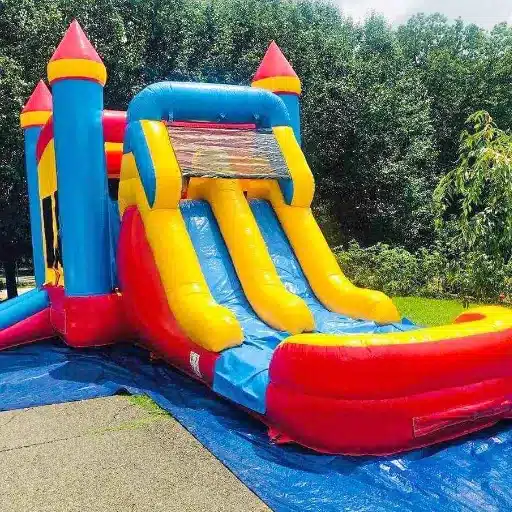
The numbers behind the regulations are the reason to read this article seriously. The US Consumer Product Safety Commission’s most recent comprehensive report counted an estimated 113,272 emergency-room-treated injuries associated with inflatable amusements from 2003 to 2013, and the yearly totals rose sharply over that period, from 31,069 in 2003 to 2007 to 82,203 in 2008 to 2013. A study published in the journal Pediatrics counted 64,657 children under 17 treated for inflatable bouncer injuries from 1990 to 2010, a 15-fold increase over that span. The reported fatalities are far lower, 12 deaths across the CPSC’s 11-year window, but nearly all involved wind events. Since 2000, more than 130 weather-related bounce house incidents have been recorded worldwide, injuring 479 people and killing 28 children.
The failures behind those statistics map directly to the standards. Seam or fabric splitting, blower disconnection, anchoring failure in wind, overcrowding, and falls are each addressed by a specific requirement in a specific standard. When a standard says a material must reach a certain tensile or tear strength, it is attempting to prevent the seam failure that sends children to emergency rooms. When a fire standard requires a fabric to self-extinguish, it is attempting to prevent a crowded indoor unit from becoming a flash fire.
That is the frame to hold onto: bounce house safety standards exist because a fabric failure in this application has real, measured human cost. The commercial-grade material that the rental industry builds around is one part of the answer, and we decoded that label in our guide to what commercial-grade bounce house material actually means. The standards themselves are the operating manual.
The 4 Standards That Govern Bounce House Safety
There are more standards than most spec sheets list, but four families matter most to a buyer or operator. This table is the fast reference.
| Standard | Region | Status | What It Covers |
|---|---|---|---|
| ASTM F2374-24 | US (commercial) | Voluntary, but required by insurers and many municipalities | Design, manufacture, operation, and maintenance of commercial inflatable amusement devices |
| EN 14960-1:2019 | EU and UK | Mandatory (CE mark / UKCA) | Safety of inflatable play equipment for children 14 and under, used for bouncing and sliding |
| NFPA 701 | US and international | Code requirement under the ICC International Fire Code | Flame propagation of textiles; Method 2 applies to heavy coated inflatable fabrics |
| CPSIA and REACH | US / EU | Mandatory | Chemical safety: lead, phthalates, and restricted substances in children’s-use products |
Two related standards round out the picture. ASTM F2729-18 covers residential home-use inflatables, which are explicitly excluded from F2374. AS/NZS 3533.4 is the Australian and New Zealand standard, which mirrors EN 14960 across most technical requirements. Netting and mesh openings fall under ASTM F2375. The key distinction to remember is between material standards, which test strength, fire, and chemistry, and design-and-operation standards, which test anchoring, occupancy, and maintenance. The material must pass the first group for the second group to be possible.
ASTM F2374-24: What the Primary US Standard Actually Tests
ASTM F2374 is the standard practice for the design, manufacture, operation, and maintenance of inflatable amusement devices, and it is the benchmark that US insurers and municipalities reference. The current edition is F2374-24, published in 2024 and replacing the widely cited F2374-22. A further revision is already in development, so always confirm which edition a certificate references.
Design and Manufacture Requirements
The standard sets the structural requirements a unit must meet. Fabric must reach a minimum tensile strength, roughly 18 MPa in the reference values, and seams must hold their rated load. Anchoring points are specified with the load they must withstand, blowers must maintain continuous inflation, and impact mats are required at entrances and exits on higher platforms.
Labeling and Occupancy
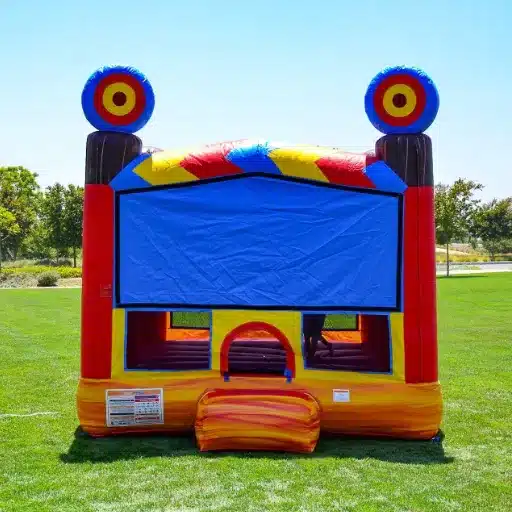
Every compliant unit must carry a permanent placard near the entrance listing both the age class and the weight class. A placard showing only one of the two is non-compliant. The placard is the legally operative rating for the event, and the label, the manual, and the manufacturer’s specification sheet must all agree. If they conflict, the unit should not be operated until the manufacturer confirms the correct rating in writing.
Operation and Maintenance
The standard also governs the operational side: daily inspection before each use, documented annual inspection, operator training, and records that an inspector can audit. Several states have begun adopting F2374 into binding regulation. Maryland’s rules, effective March 2026, adopt F2374-22 for inflatables manufactured after January 2026, set shutdown at 15 mph sustained wind or 25 mph gusts lasting more than 3 seconds, and raise minimum anchor weights to 75 lb for bounce rides and 500 lb for tall slides over 15 feet. If you are comparing inflatable castle fabric suppliers, contact us to evaluate material performance, customization options, and production costs for your application.
EN 14960: The European Standard for Inflatable Play Equipment
In Europe and the UK, the governing standard is the EN 14960 series, and unlike ASTM F2374, it is mandatory. A unit sold in the EU must carry a CE mark backed by an EN 14960 certificate, and in the UK a UKCA mark backed by a BS EN 14960 certificate. Both require independent testing by an accredited body such as TÜV Rheinland or SGS.
The base standard, EN 14960-1:2019, applies to inflatable play equipment for children 14 and under where the primary activity is bouncing or sliding. It covers materials, including fabric, thread, netting, zips, and dangerous substances; design requirements for anchorage, structural integrity, access and egress, entrapment prevention, and wall containment; user numbers and supervision; and inspection, maintenance, and marking. It also defines test methods, including the tear-strength test and entrapment tests for head and neck, clothing, and fingers. Additional parts cover bouncing pillows, snappies, and bungee runs.
The most important difference from the US system is status. ASTM F2374 is a voluntary practice that became de facto mandatory through insurers and codes. EN 14960 is a harmonized European standard that is required for market access. For a buyer, an EN 14960-certified unit signals EU-ready quality even when operating in markets where it is not legally required.
NFPA 701: The Fire-Retardancy Requirement for Inflatable Fabric
Fire retardancy is a material requirement, and it is the one most often misunderstood. The National Fire Protection Association’s NFPA 701 standard measures how quickly textiles and films propagate flame. The ICC International Fire Code explicitly requires Test Method 2 for fabrics used in inflatable amusement devices, and fire marshals in most US jurisdictions require documentation before an inflatable is installed indoors. This is not a nice-to-have; it is a code requirement.
Test Method 2 is the large-scale vertical burn test for heavy, coated materials over about 700 grams per square meter, which is exactly the weight class of commercial inflatable PVC. Specimens roughly 125 by 1200 millimeters, both flat and folded, are exposed to an angled burner flame for about 2 minutes. To pass, the material must self-extinguish within 2 seconds after the flame is removed, limit char length to under 17.1 inches for flat specimens and 41.3 inches for folded specimens, and produce no drips that ignite material below.
A fabric meets Method 2 through its formulation, not a post-manufacture treatment. Flame-retardant additives are built into the PVC compound so the barrier is present at every point of the coating. The closely related CPAI-84 standard for tents and temporary structures is frequently co-required for event inflatables, and a supplier should be able to produce a separate fire test report for the standard you need. For context on why the code draws this line, the fire-safety requirements for bounce houses are summarized by the European flame retardants association PINFA.
CPSIA and REACH: Chemical Safety for Children’s-Use Fabrics
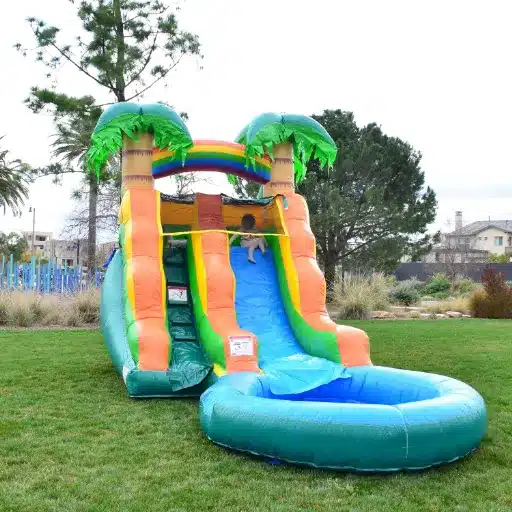
A unit can pass every structural test and still fail the only requirement that matters to a child’s health. Chemical compliance governs the substances in the material, and for a product children climb inside, it is mandatory.
In the United States, the Consumer Product Safety Improvement Act (CPSIA) sets a lead limit below 100 ppm in substrate material and prohibits eight phthalates at concentrations above 0.1 percent in children’s toys and child care articles. Children’s-use products must be third-party tested and carry a Children’s Product Certificate (CPC). There is also a newer, easily missed requirement: imported CPSC-regulated products must file their certificates electronically through the Automated Commercial Environment, with the rule now in effect since July 8, 2026. Importers who do not file face holds at entry. In the EU, the REACH regulation governs the same chemistry, and EN 71-3 sets migration limits for export markets.
Here is where the material science connects to compliance. Phthalate compliance is a function of the plasticizer system in the PVC, not the marketing. Virgin-grade PVC with a lead-free, phthalate-free plasticizer system meets CPSIA and REACH limits and performs better in the field, because it does not rely on the heavily filled or recycled formulations that degrade early. Recycled or heavily filled PVC is harder to certify and more prone to premature failure, which is why the compliance conversation and the durability conversation lead to the same material decision. We go deeper on this in our guide to lead-free and phthalate-free PVC for inflatables, and the full chemistry belongs in a dedicated article in this series.
US vs EU vs Global: How the Standards Compare
Buyers operating in multiple markets need to know which standard applies where, and whether one certification satisfies another. This table is the short answer.
| Market | Standard | Mandatory? | Material Emphasis |
|---|---|---|---|
| United States | ASTM F2374-24, NFPA 701, CPSIA | Voluntary, but required by insurers and municipalities | Tensile about 18 MPa, tear and seam strength, flame retardancy, lead and phthalate limits |
| Europe and UK | EN 14960-1 plus parts, CE/UKCA, REACH | Mandatory | Materials, entrapment, tear test methods, anchorage, wind loading, chemical limits |
| Canada | TSSA requirements, including NFPA 701 Method 2 | Regulatory | Flame retardancy plus structural compliance |
| Australia and NZ | AS/NZS 3533.4 | Regulatory | Mirrors EN 14960 across most technical requirements |
A common misconception is that one certificate covers every market. It does not. An ASTM F2374 certificate does not satisfy EN 14960 in the EU, and a CE marking is not a substitute for a US compliance package. A serious supplier should be able to document compliance against the standard for each market it sells into. That is a reasonable thing to ask for, and an evasive answer is a red flag. Need inflatable castle tarpaulin fabric in custom specifications? Share your required width, weight, coating, and quantity with us for a project-specific quotation.
How Material Choice Determines Compliance
Every standard above is, at its core, a test of the material. The certification is downstream of the fabric. This is the part of the conversation that rental operators and exporters rarely explain, because they do not manufacture the material. The mapping below is how the requirements translate into fabric specifications.
| What the Standard Requires | The Fabric Spec That Passes |
|---|---|
| Tensile strength, about 18 MPa | 1000D x 23 x 23 high-tenacity polyester scrim with PVC coating |
| Tear resistance, 240 to 280 N minimum | Dense scrim weave plus a consistent coating bond |
| Seam and peel strength | RF- or hot-air-welded seams that fuse a molecular bond, not stitched-only seams |
| Fire retardancy, NFPA 701 Method 2 | Flame-retardant PVC formulation stable through the plasticizer system |
| Chemical safety, CPSIA/REACH | Lead-free, phthalate-free virgin PVC plasticizer system |
| Anchoring load | Reinforced D-rings with multi-layer PVC patches rated to the load |
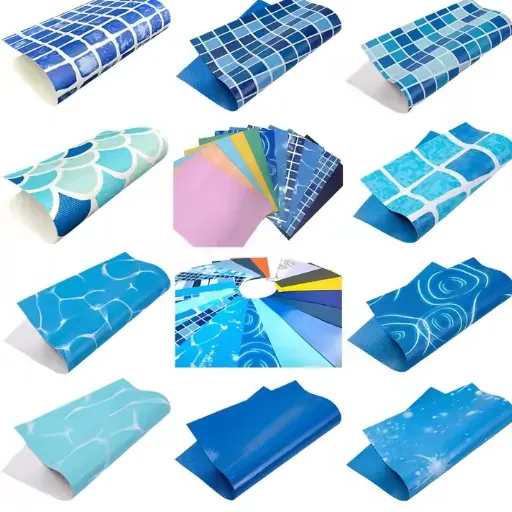
The sentence that resolves most of the confusion in this industry is this: 18 oz is a material specification, not a standard. It is how a fabric meets the strength and duty-cycle requirements that the standards imply. A light residential-grade fabric cannot be certified as commercial regardless of the label, because it cannot pass the tests. That is why the verification conversation and the material selection conversation are the same conversation. For the full spec and test-method detail behind these numbers, see our PVC inflatable fabric specifications guide.
How to Verify a Bounce House Safety Certification
A certificate is a summary. A test report is the evidence. Too many buyers stop at the first, and that gap is where unverified claims live. Use this checklist to confirm a certification before you rely on it.
- Ask for the test report, not just the certificate. The report is the detailed record of the actual test.
- Confirm the report is model-specific. It should name the exact unit model, not cover an entire product catalog.
- Check the lab. It must be an ISO 17025-accredited third party such as SGS, Intertek, TÜV SÜD, or Bureau Veritas, with a verifiable accreditation number.
- Match the standard to your market: ASTM F2374 and NFPA 701 for the US, EN 14960 with CE/UKCA and REACH for Europe and the UK, AS/NZS 3533.4 for Australia.
- Verify the edition cited, such as ASTM F2374-24 or EN 14960-1:2019. A stale edition or no edition at all is a red flag.
- Request the fire test report and the chemical test report separately. A claim of “fire resistant” or “safe” alone is not documentation.
- Inspect the unit. The entrance placard must list both age class and weight class, and the label, manual, and spec sheet must agree.
- Watch for red flags: blanket “CE certified” claims, because CE is a marking and not a certification; one certificate covering a whole catalog; unverifiable labs; refusal to share reports; and “safety certified” with no standard named.
Marcus runs an event company that lost a school contract because his insurer would not extend coverage to his inflatables. He had certificates, but they were generic, named no lab, and covered his entire catalog. When he switched to a supplier that produced model-specific test reports from an accredited lab for the fire and chemical requirements, the coverage hold cleared in two days. The paperwork was the difference between winning and losing the contract. Ready to source inflatable castle tarpaulin fabric directly from a manufacturer? Contact us with your requirements and get a customized solution for your next order.
Anchoring, Wind Safety, and Operating Standards
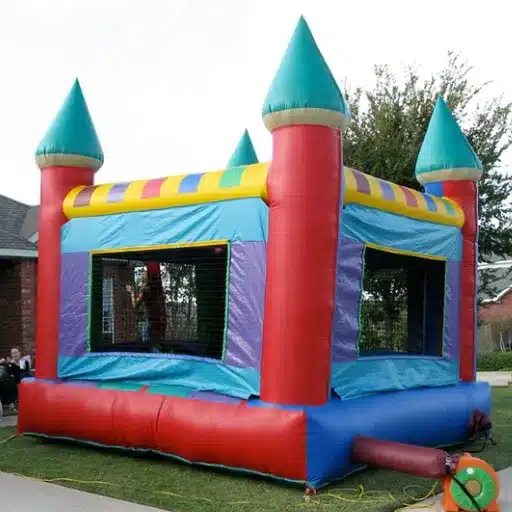
The structural and material standards protect the unit itself. The operating standards protect everyone inside it, and wind is the highest-stakes variable. The common operational ceiling is 25 mph, and the recommended best-practice shutdown threshold is 15 mph sustained. When a unit is left inflated in rising wind, the anchors become the entire safety system.
Anchoring requirements follow from the standard. Commercial units should have a minimum of six anchor points, each with a stake or weight rated to the load, and the D-rings they attach to should be reinforced with multi-layer PVC patches. Blowers on commercial units are continuous-duty units, roughly 1.0 to 1.5 horsepower and about 1,000 CFM for a standard bounce house, connected to GFCI-protected outlets as the CPSC requires.
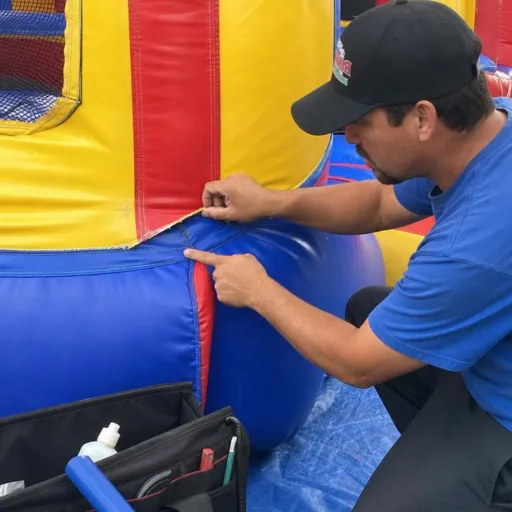
Inspection is the part operators skip, and it is the part the standards emphasize. A daily inspection before every use checks seams, stitching, D-rings, zippers, and blower connections. A documented annual inspection covers structural integrity and wear. Keep the log. It is the first thing an inspector asks for, and the only proof that a unit was maintained to the standard between purchases. For the seam and welding construction behind a durable unit, see our guide to how a bounce house is constructed.
What This Means for Insurance and Procurement
Compliance is not paperwork for its own sake; it is a procurement and insurance issue. Major liability underwriters maintain approved-manufacturer lists that require documented ASTM F2374 compliance, and some extend the requirement to fire and chemical reports. Uncertified or under-verified equipment can raise premiums by 200 to 300 percent or be denied coverage outright. For a rental operator, that is not a compliance footnote; it is a cost line and a gate to clients.
Verified test reports are also procurement use. A buyer who can hand a certificate of compliance, a fire report, and a chemical report to a procurement team removes the friction that delays approvals and disqualifies suppliers. The same reports protect the operator in an incident investigation, because they show the unit met the standard at the time it was manufactured.
Need certified fabric for your units? Our engineering team manufactures 18 oz and 20 oz PVC inflatable fabric and can provide production-line samples plus test documentation before you commit. Request a specification sheet or sample order.
FAQ
What are the safety standards for bounce houses?
The four that matter most are ASTM F2374 for US commercial inflatables, EN 14960 for European and UK markets, NFPA 701 for fire retardancy, and CPSIA and REACH for chemical safety. ASTM F2729-18 covers residential units, and AS/NZS 3533.4 covers Australia and New Zealand.
Is ASTM F2374 mandatory?
It is a voluntary standard in the United States, but it has become de facto mandatory because insurers and municipalities require it. Several states now adopt it into binding regulation.
What is the difference between ASTM F2374 and EN 14960?
ASTM F2374 is a US practice covering design, manufacture, operation, and maintenance of commercial inflatables. EN 14960 is a mandatory European standard for inflatable play equipment used by children 14 and under. One certificate does not satisfy the other.
Does my bounce house need NFPA 701?
If it will be used indoors or at events, yes. The ICC International Fire Code requires NFPA 701 Test Method 2 for inflatable amusement fabrics, and fire marshals require documentation before indoor installation.
What does NFPA 701 Test Method 2 require?
Heavy coated fabrics are exposed to a burner flame for about 2 minutes and must self-extinguish within 2 seconds, limit char length to under 17.1 inches flat and 41.3 inches folded, and produce no igniting drips.
Are bounce house materials safe for kids?
Yes, when the material is lead-free and phthalate-free and complies with CPSIA and REACH. Always request the chemical test report, not a general “safe” claim.
How do I verify a bounce house safety certification?
Request a model-specific test report from an ISO 17025-accredited lab, match the standard to your market, verify the edition, and inspect the placard to confirm it lists both age class and weight class.
What wind speed is unsafe for a bounce house?
The common ceiling is 25 mph, with 15 mph sustained recommended as the shutdown threshold. Anchor the unit at every point and evacuate if wind approaches the limit.
Conclusion
Bounce house safety standards are not labels. They are specific tests on specific materials: ASTM F2374-24 and EN 14960 govern design and operation, NFPA 701 Method 2 governs fire, and CPSIA and REACH govern chemistry. At the center of all four is the fabric, because every one of those standards is, at its core, a test of the material the unit is built from. Understanding bounce house safety standards means knowing what each one verifies, which market it applies to, and how to read the evidence rather than the marketing.
The practical steps are straightforward. Confirm the current edition of the standard for your market. Request model-specific test reports from an accredited lab. Match the fire and chemical documentation to the standard you need. And inspect the placard and the anchors before every event. When you do, you have done what the standards are actually designed to make possible: operated a unit that can be trusted.
When you need certified PVC inflatable fabric, our engineering team tests every production batch for the tensile, tear, fire, and chemical properties the standards demand. Request a specification sheet or sample order, or talk to our team about custom inflatable fabric manufacturing for OEM and ODM projects.