
Flatbed Truck Tarps: Size Chart, Drops & 18 oz GSM Specs
Flatbed truck tarps come in five cargo-specific types, and the number that decides whether one fits is the drop, the length of fabric hanging down each side. A lumber tarp typically runs a 6 to 8 ft drop with an end flap. A steel tarp runs a 4 ft drop, four-sided, with no flap. Get the drop wrong and the load rides with its top corners exposed, which is where water enters.
Danny runs a 2019 flatbed out of Ohio and learned that in March. He tarped an 8 ft lumber load with the 6 ft drop set he had used for two years. The sides covered fine; the top two feet of every corner sat bare. It rained at his first weigh station, the receiver rejected two units, and the tarp had done nothing wrong. The drop had.
This guide works from the load backward: the five types, the sizing formula, the fabric specs, and the federal rule most drivers get wrong. For the fleet-wide picture, see our complete truck tarpaulin guide.
Key Takeaways
- Finished width equals deck width plus twice the load height plus tie-down overlap. An 8 ft 6 in deck under an 8 ft load needs about 24.5 ft before overlap, which is why 24 by 27 is the standard lumber size.
- Lumber tarps have end flaps and a 6 to 8 ft drop. Steel tarps are four-sided with no flap and a 4 ft drop. The difference is construction, not fabric.
- 18 oz (about 610 GSM) on a 1000D base is the practical floor for daily flatbed duty.
- A tarp is weather protection, not load securement. 49 CFR 393.100 never names covers as a securement device, and strapping the load comes first.
- A 24 by 27 at 18 oz carries about 81 lb of base fabric. Plan the crew around that.
What Are Flatbed Truck Tarps?
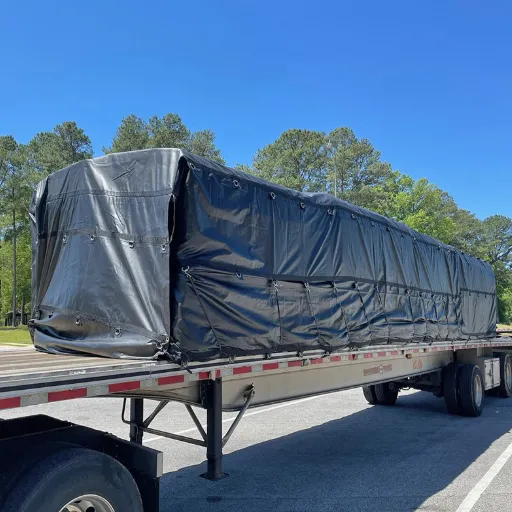
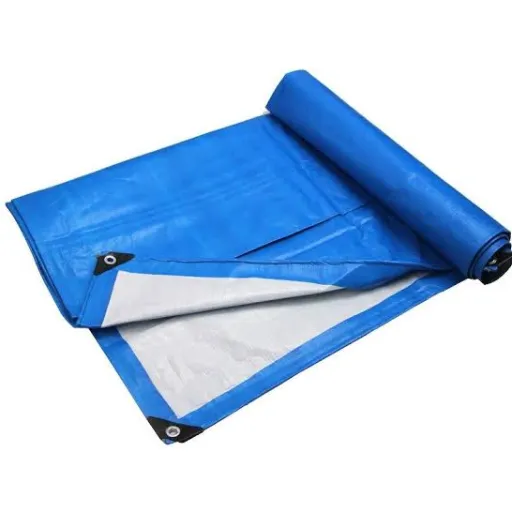
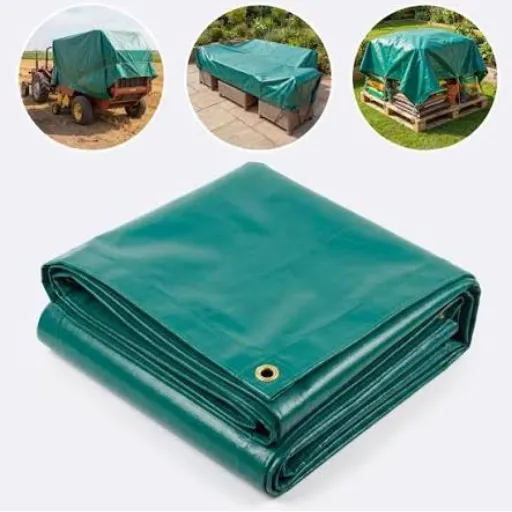
Flatbed truck tarps are engineered fabric covers sized to wrap an open-deck load, protecting it from rain, road spray, UV, exhaust soot, and debris. They are cut and reinforced for a specific load geometry, then tensioned with straps, bungees, or winches.
The trailer sets the starting dimensions. A standard US flatbed deck is 102 in (8 ft 6 in) wide, in 48 ft or 53 ft lengths, about 5 ft off the ground. Against a 13 ft 6 in legal overall height, that leaves roughly 8 ft 6 in of usable load height. What a flatbed tarp does not do is hold the load.
Specifying for a fleet rather than one truck? Send us your trailer and cargo profile for a recommended cut with test data.
The Five Flatbed Tarp Types and What Each One Is For
The type names describe a cut, not a fabric. All five are typically PVC-coated polyester. What separates them is how the panels are joined, how deep the drop runs, and whether the ends are closed. A smoke tarp, or nose tarp, is a small sheet over the front of the load shielding finished goods from soot.
| Type | Cargo | Construction | Typical drop | Common sizes |
|---|---|---|---|---|
| Lumber tarp | Lumber, plywood, drywall, tall rectangular units | Two side drops plus an end flap; often supplied in pairs | 6 to 8 ft | 20×27, 24×27 |
| Steel tarp | Sheet steel, rod, pipe, cable, low-profile machinery | Four-sided, no end flap | 4 ft | 16×20, 16×24, 16×27 |
| Coil tarp or coil bag | Steel and aluminum coils, round loads | Fitted, rounded top with side access | Fitted to coil | 4 to 7 ft wide, 4 to 8 ft long |
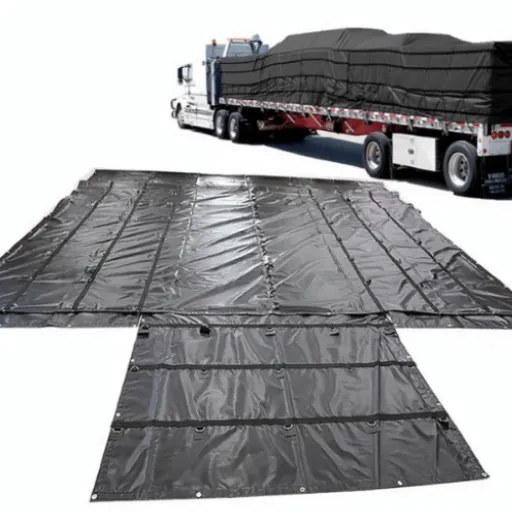
| Machinery tarp | Irregular equipment, oversized items | Custom cut, high D-ring density | Varies with profile | Built to the machine |
| Smoke or nose tarp | Front of any load | Small flat sheet | None | About 10×12 ft |
Lumber Tarps
Lumber tarps are the largest covers in routine fleet use, and the end flap defines them. The flap closes over the butt ends of a lumber unit, otherwise the most exposed surface.
Steel Tarps
Steel tarps are shorter and shallower because steel loads are low profile. They are four-sided, with closed ends, and no flap. The priority shifts to puncture resistance, because banding and cut edges concentrate load on a small fabric area.
Coil Tarps and Coil Bags
A coil needs a fitted cover, not a draped rectangle. Excess fabric on a round load flaps at highway speed and abrades against the coil edge until it fails. Reinforcement at the contact points matters more than raw fabric weight: a 650 GSM coil cover with proper reinforcement outlasts a 900 GSM sheet allowed to slap.
Machinery Tarps
Machinery tarps are cut to the machine, so there is no standard drop. The lever is D-ring density: more attachment points let the fabric follow an irregular shape without bridging a gap and drumming.
Sizing Flatbed Truck Tarps: The Drop Formula and Size Table
Tarp sizing is arithmetic, and finished width is not deck width.
Finished width = deck width + (2 x load height) + tie-down overlap
Take an 8 ft 6 in deck under an 8 ft load with 1.5 ft of overlap for hem and hardware. That is 8.5 + 16 + 1.5, or 26 ft. Round to the nearest standard size and you get a 24 by 27 with an 8 ft drop, which is why that size dominates the market. In metric, a 2.5 m deck under a 4 m load with 1.5 m of overlap needs about 12 m of finished width. Two corrections prevent most sizing errors. Cut size is not finished size: hemming, welding, and hardware consume 3 to 6 percent, so specify finished dimensions. And seam placement matters: a seam on a high-wear corner fails before one on a flat panel.
Choosing the drop from load height
| Load height above deck | Recommended drop | Why |
|---|---|---|
| Under 4 ft | 4 ft | Covers the load and reaches the rub rail without dragging |
| 4 to 6 ft | 6 ft | Standard mid-height lumber and palletized freight |
| 6 to 8 ft | 8 ft | Tall lumber units and stacked building materials |
| Over 8 ft | 10 ft | Over-height or permit loads |
Two constraints override the table. The drop must reach past the deck edge and cover the rub rail, or the bottom edge lifts in crosswind. It must also never drag on the deck or catch on winches.
How many tarps cover a 48 ft or 53 ft deck
A 48 ft deck takes two tarps, rear first, with 1 to 2 ft of overlap. A 53 ft deck needs two long tarps or a third piece. Install the rear tarp first with its flap at the tail, then lay the front over it.
Fabric Specification for Flatbed Tarps
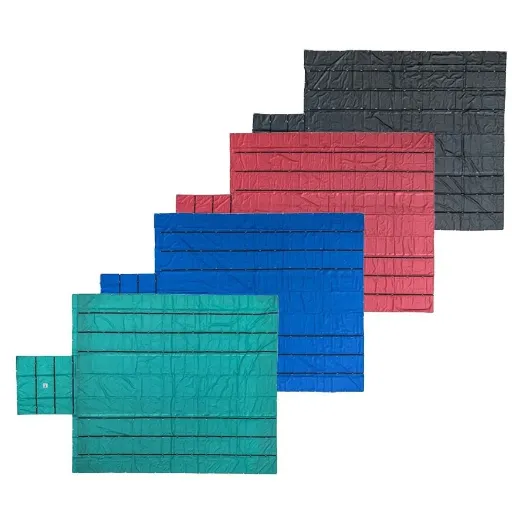
A flatbed tarp works in the harshest position on the vehicle. It is exposed on all four sides, takes the full wind load at highway speed, and flexes continuously. That duty cycle sets the fabric floor.
| Cargo duty | GSM range | oz/yd2 | Base fabric | Priority property |
|---|---|---|---|---|
| Light regional freight | 475 to 550 | 14 to 16 | 500D to 1000D | Handling weight |
| General flatbed freight | 550 to 650 | 16 to 19 | 1000D | Balance of tear and weight |
| Lumber and steel, daily | 610 to 750 | 18 to 22 | 1000D to 1300D | Tear and puncture |
| Abrasive or severe duty | 750 to 900+ | 22 to 26.5+ | 1300D | Abrasion and seam strength |
One oz/yd2 is about 33.9 GSM, so 18 oz is roughly 610 GSM. That is why “18 oz” appears on so many purchase orders without a GSM figure. It is the practical floor for daily flatbed work, not a premium specification.
On cold-climate lanes, specify a cold-flex formulation rated to at least -30 C. Where the fleet or receiver requires it, specify a fire-retardant construction meeting NFPA 701 or DIN 4102-B1 and hold the certificate. Our fire retardant tarpaulin guide covers the test basis.
The full test-method framework sits in our heavy-duty truck tarpaulin specifications guide; ask any supplier for the method and batch result behind every number. For PVC against polyethylene, the PVC vs PE tarpaulin comparison runs the cost math.
Hardware, Construction, and How a Flatbed Tarp Is Built
| Construction | Panels | Best for | Weak point |
|---|---|---|---|
| 2-drop with end flap | Top plus two side drops plus flap | Lumber and tall rectangular loads | Flap stitching under wind load |
| 4-sided | Top plus two sides plus two closed ends | Steel and low-profile cargo | Corners, where four panels meet |
| 3-piece set | Center panel plus two end panels | Long loads needing staged deployment | Joints between pieces |
The 3-piece set is the one buyers most often miss. It splits a long cover into a centre section and two end sections, making a very large tarp manageable for one or two people. The trade-off is two extra joints to inspect. Hardware carries the tension: two or three rows of D-rings per side, first row about 24 in above the hem, plus grommets around the perimeter at roughly 24 to 30 in centres. D-rings are backed by webbing so the pull distributes into the panel. For spacing detail, see our guide to grommet installation and spacing, or the full comparison of tarp fastening and tension hardware.
Grommet type matters on coastal and winter routes: brass and stainless resist corrosion, untreated steel does not. Heat-sealed or RF-welded seams beat stitched-only construction on waterproofing, because the weld closes the needle holes stitching creates.
How much a flatbed tarp weighs
| Size | Area | 14 oz | 18 oz | Crew |
|---|---|---|---|---|
| 16×20 | 320 sq ft | ~31 lb | ~40 lb | One person |
| 20×27 | 540 sq ft | ~53 lb | ~68 lb | Two people |
| 24×27 | 648 sq ft | ~63 lb | ~81 lb | Two people, or a tarping station |
The math is area in square feet divided by 9, times fabric weight in ounces, divided by 16. A 24×27 at 18 oz is 72 square yards times 18 oz, or 81 lb of base fabric. Hardware adds 5 to 15 percent, so the finished cover lands near 85 to 95 lb. That is a staffing decision: a tarp nobody can lift gets dragged, and dragging wears out hems.
Tarping a Flatbed Truck: Sequence, Wind, and Failure Modes
- Secure the load first. Straps, chains, and binders go on before any fabric.
- Pad every sharp corner. Corner protectors on steel, edge padding on lumber banding.
- Deploy from the rear. Rear tarp first, flap at the tail.
- Lay the front tarp over the rear. One to two feet of overlap, shedding rearward.
- Centre and fold corners flat. Folds become wind pockets.
- Tension evenly, front to back. Pull in small increments, alternating sides.
- Strap over the top. A ratchet strap across the top surface stops the drumming that destroys seams.
A tarp is a wing. Air moving over the top surface at highway speed generates lift, and the fabric responds by lifting and dropping several times a second. That cycling tears grommets out and peels seams, which is why a tarp that looks fine at the yard can be shredded by the second state line. Strapping over the top breaks the cycle and is the cheapest durability intervention available.
The three failure modes follow from that. Grommet tear-out comes from spacing that is too wide or a corroded grommet. Seam peel appears most often on a seam across a flex point. Corner abrasion happens where fabric meets banding, chain, or a bare steel edge. Inspect before departure, at the first stop, and after severe weather, and patch early: a small nick is a ten-minute repair, while a propagating tear writes off the panel. Our guide to repairing a torn tarp covers patch and weld methods, and the tarpaulin lifespan guide covers retirement.
Inspection only pays if it happens on a schedule. A tarpaulin maintenance calendar that ties checks to mileage and season catches hem wear before it becomes a roadside failure.
Ray runs a 40-truck flatbed fleet in the Southeast and made one change that cut his tarp spend by roughly a third. He had been buying on unit price and replacing covers every 14 to 18 months. He moved to 18 oz on a 1300D base, standardized grommet spacing at 24 in, and added over-the-top straps to the procedure. Unit cost went up, replacement frequency did not, and the wear pattern moved from torn hems to normal UV retirement. Contact LY TRUSTLINK!
Flatbed Tarp Law: Cargo Securement vs. Weather Protection
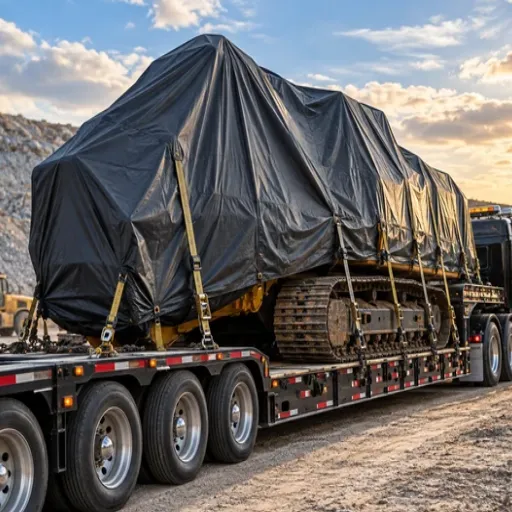
A flatbed tarp is not a load securement device. That is the direct answer, and it surprises a lot of drivers.
The federal cargo securement standard, 49 CFR 393.100, requires that cargo be secured so it does not leak, spill, blow, or fall from the vehicle, and that it be contained or immobilized so it cannot shift enough to affect stability or handling. The rule never names covers or tarps as a means of meeting it.
Three sections do the practical work:
- 393.100(b) and (c) set the general obligation: cargo must not escape the vehicle, and must not shift enough to destabilize it.
- 393.106(d) requires the aggregate working load limit of all tiedowns to be at least 50 percent of the cargo weight, where cargo is not blocked or fully contained by the vehicle structure.
- 393.110 sets minimum tiedown counts by article length and weight.
State guidance is explicit. The Michigan State Police commercial vehicle guidebook states that a secured tarp is not an acceptable substitute for load securement. The order is fixed: strap the load, then tarp it, and a tarped load can still be cited for inadequate securement. Read the source text directly: 49 CFR 393.100, 393.106, and 393.110.
Frequently Asked Questions
What size tarp do I need for a flatbed truck?
Finished width = deck width + (2 x load height) + tie-down overlap. An 8 ft 6 in deck under an 8 ft load needs about 24.5 ft before overlap, which is why 24×27 with an 8 ft drop is the standard lumber size.
What is the difference between a lumber tarp and a steel tarp?
A lumber tarp is larger, has an end flap to cover the butt ends of the stack, and typically runs a 6 to 8 ft drop. A steel tarp is four-sided with closed ends, no flap, and a 4 ft drop, because steel loads are low profile.
What is a tarp drop, and how do I choose one?
The drop is the length of fabric hanging down each side. Match it to load height: 4 ft under 4 ft, 6 ft for 4 to 6 ft, 8 ft for 6 to 8 ft, 10 ft for over-height loads.
How much does a flatbed tarp weigh?
A 24×27 at 18 oz carries about 81 lb of base fabric, roughly 85 to 95 lb finished. A 20×27 at 18 oz runs about 68 lb before hardware. Both are two-person objects.
What GSM is a flatbed truck tarp?
Daily flatbed duty generally calls for 610 to 750 GSM, which is 18 to 22 oz/yd2, on a 1000D or 1300D base fabric.
Is a tarp considered load securement?
No. 49 CFR 393.100 does not name covers as a securement device, and state guidance confirms a secured tarp is not a substitute for load securement.
Do flatbed loads have to be tarped by law?
Federal rules do not require tarping as such; they require that cargo not escape the vehicle and not shift dangerously. Tarping is usually a contract, receiver, or state requirement.
How long does a flatbed tarp last?
A PVC flatbed tarp in daily fleet service typically lasts 3 to 6 years, longer in occasional or static duty. Covers retired early usually failed at a hem or seam.
Conclusion
Flatbed truck tarps are specified from the load backward: the drop from load height, the construction from cargo type, the fabric from duty cycle, then confirmation that the load is secured independently of the cover.
Priya, a procurement lead for a Midwest carrier, rebuilt her tarp RFQ around exactly that list last year. She replaced a line reading “18 oz lumber tarps, 24×27, qty 80” with a sheet covering finished dimensions, drop, construction, base fabric denier, D-ring rows, grommet spacing and type, seam method, reinforcement points, and fire rating. Three of five suppliers came back with questions. The two that answered without hesitation are the two she still buys from. A supplier who can discuss your drop and your test data is a partner. One who quotes a weight and a price is selling rectangles.
For a fleet, dealer program, or OEM build, our engineering team returns a recommended cut, fabric weight, and hardware package with supporting test reports, and we produce a sample before you commit to volume. Request a custom flatbed tarp quote.
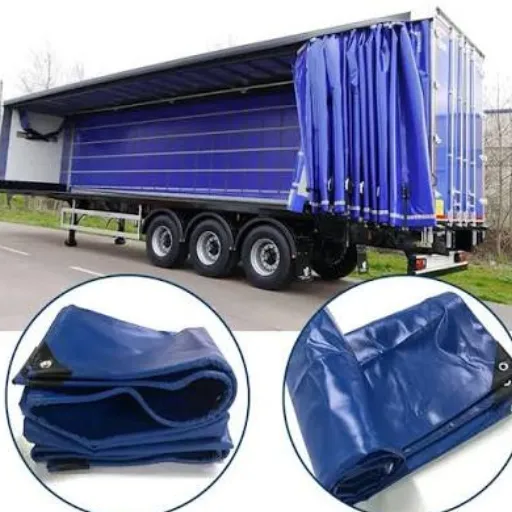
If your operation is moving toward side access rather than overhead tarping, the PVC tarpaulin truck side curtain guide covers that system end to end.