
Coated Fabric Testing: How Test Methods Work & How to Read the Results
Coated fabric testing results become useful for purchasing when you can connect each result to an identified sample, method, specimen direction and conditioning history. Matching numbers alone do not establish matching performance. Before comparing suppliers or batches, check that their reports describe the same test basis and address your agreed acceptance requirements.
This guide explains how to read that evidence. Start with the comparison worksheet below, then use the property map to identify questions for the supplier or laboratory. For broader material selection, see our PVC coated fabric specifications guide.
What a coated-fabric test result establishes
A coated fabric combines a substrate and a coating, with a bond between them. A useful assessment considers the properties relevant to the intended application, rather than treating one strength or weight figure as a complete description. Breaking force, tear resistance, coating adhesion and resistance to water penetration address different questions.
Keep three parts of the evidence separate:
- Test method: how the selected property is assessed, including the applicable procedure.
- Acceptance specification: the requirements agreed for the product and purchase.
- Test result: what was observed or measured on the identified specimens under the reported conditions.
A method reference alone does not provide your purchase acceptance limit. Equally, a result for sampled material does not establish the performance of every roll, a universal outdoor lifespan or a finished assembly’s safe working load. The sampling arrangement and application requirements still matter.
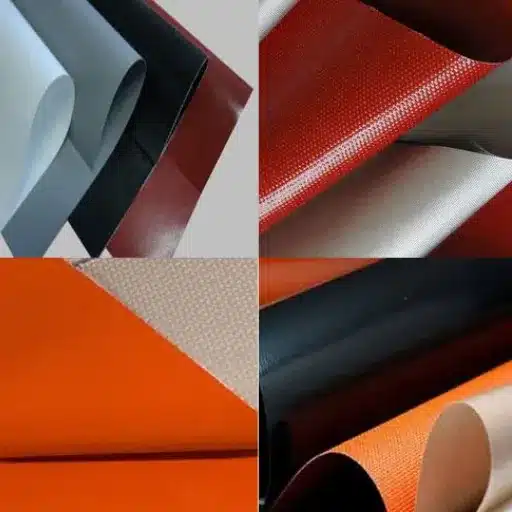
Compare these report fields before the numbers
Use this worksheet to review two reports side by side. It is a recommended buyer checklist, rather than a universal reporting template mandated by every test standard. A field may be in a referenced specification or attachment; ask for that document when it is needed to interpret the result.
| Field | What to record for each report | Action if different or missing |
|---|---|---|
| Product and sample identity | Product reference, declared construction, batch or roll reference, and sample identifier | Confirm which material was tested and its relationship to the proposed shipment. |
| Method and procedure | Standard number, edition and specific procedure, such as strip or grab | Request the complete reference before treating results as comparable. |
| Specimen direction | Reported warp/weft or machine/cross direction, with the test’s direction convention | Ask the laboratory what the label describes; do not infer a missing direction. |
| Preparation and conditioning | Dry, wet or aged state; conditioning atmosphere; relevant preparation and reported deviations | Clarify whether the specimens were prepared and conditioned on a common basis. |
| Geometry, units and endpoint | Applicable specimen dimensions, reported units, and the event or observation defining the result | Check both the unit and what was measured. Unit conversion cannot make different methods equivalent. |
| Sampling and result summary | Sample selection, specimen count, individual data where relevant, and whether the reported value is a mean, minimum or other defined result | Resolve differences in sampling and summary before ranking the figures. |
| Test date and laboratory | Report identifier, test date, issuing laboratory, and relevant accreditation scope when required | Confirm identity with the issuer and check scope through the accreditation body. |
| Acceptance requirement | Specification reference, revision and applicable limit or qualitative criterion | Identify the agreed requirement rather than adopting an unrelated supplier’s pass mark. |
Record a missing field as a question to resolve. It does not, by itself, establish that a result is false. A legitimate qualitative test may report an observation or pass/fail endpoint; ask for the basis appropriate to that method rather than demanding a numerical result from every test.
Keep method editions explicit
The ASTM D751-26 catalogue, with a July 17, 2026 update label, identifies the coated-fabric test-method edition. A reference to “ASTM D751” should still identify the edition and applicable procedure so the reader knows what was used. The catalogue’s edition status does not establish that a particular procedure changed or that every earlier report must be replaced.
ISO’s catalogues record the 2016 editions of ISO 1421 and ISO 4674-1 as confirmed in 2026. Confirmation keeps those editions current; it does not rename them as 2026 editions. Check the edition required by your agreement and resolve any mismatch before acceptance.
Match each property to the reported method
The following map describes published method scopes, rather than laboratory instructions. Obtain the applicable full standard for conducting a test. No generic pass mark applies across all coated fabrics and end uses.
| Buyer question | Scope-level reference | What to check before comparison |
|---|---|---|
| What mass per unit area was measured? | ISO 2286-2:2016 covers total, coating and substrate mass per unit area. | Identify which quantity is reported. Total GSM alone cannot show whether the coating or substrate contribution changed, or establish strength. |
| What breaking-force result is reported? | ISO 1421:2016 distinguishes Method 1, strip strength and elongation, from Method 2, grab strength only. | Match procedure, direction, conditions, dimensions and result summary. Use the tensile test results guide for the separate property topic. |
| Which tear method was used? | ISO 4674-1:2016 covers constant-rate tongue and trouser tear methods. | Identify the geometry and direction convention. Do not describe this reference as tongue/trapezoid or pool results from different tear methods. See the separate tear resistance guide. |
| How was coating adhesion assessed? | ISO 2411:2024 addresses coating adhesion. | Record the reported setup, specimen width, units and failure observations where applicable. Do not assume a universal peel angle or width from the standard’s title. |
| What water-penetration condition was assessed? | ISO 1420:2016 addresses coated-fabric resistance to water penetration at specified pressure and time. | Match pressure, duration and endpoint. Distinguish this result from the pressure reached during a rising-head test. |
Strip and grab results should not be treated as interchangeable or converted using a generic multiplier. The ISO 1421 scope also matters when reading elongation: its grab method covers strength only. A heading that says “tensile” leaves too much unanswered for a supplier comparison.
Similarly, a pressure held for a specified duration and a pressure reached at a leakage endpoint describe different test questions. Converting units does not resolve that difference. Ask which result your specification actually requires.
What to do when reports disagree
Work through the evidence before deciding that either report is incorrect:
- Confirm the sample relationship. Check whether the reports cover the same material reference, batch and sampling arrangement. A product-family report may serve a different purpose from shipment acceptance evidence.
- Align the method reference. Compare edition and procedure, including strip/grab or the named tear geometry.
- Align the test conditions. Review orientation, preparation, conditioning, dimensions and endpoint. Conditions can affect a result; do not assume the direction or size of an effect without evidence.
- Compare the summaries. Establish whether each figure is a mean, a minimum or another method-defined result. Ask for the supporting observations when needed.
- Ask the laboratory about the remaining difference. Request an explanation of applicable precision or uncertainty and whether testing on a common basis would help. Follow the agreed acceptance or dispute process.
Hypothetical example: Report A identifies a strip procedure, while report B labels its result only “tensile.” The next step is to ask which procedure B used. Choosing the higher figure would leave the comparison unresolved. No numerical conversion can replace the missing method information.
Where comparable testing is needed, agree the sample identity, method, preparation and acceptance basis before commissioning it. A third-party result does not automatically settle a contract dispute or explain a difference in sampling.
Read durability and application tests in context
An exposure duration or cycle count needs an assessment endpoint. For a weathering comparison, request the exposure conditions, material identity and the property or appearance assessed. Where retention is reported, check the initial result, the result after exposure and how the reported retention was calculated.
Q-Lab’s explanation of accelerated-weathering correlation, published August 22, 2022, explains why there is no universal conversion from chamber hours to years outdoors. An exposure result should not become a lifespan promise without an appropriate material-specific correlation.
For flexing or low-temperature comparisons, ask for the named method, applicable temperature or cycle conditions, specimen state and observation used to judge the outcome. A cycle count without the assessment criterion, or a temperature without the test procedure, leaves the buyer without a clear comparison basis. Select requirements for the intended use rather than borrowing a generic cold-temperature target.
Application-specific conformity questions belong alongside the relevant specification and market requirements. Our coated fabric standards guide covers that separate topic; a test-method number alone is insufficient evidence for a broad compliance claim.
Verify the evidence behind the document
Judge a certificate of analysis or test report by its contents and intended use. The document’s title does not establish whether it contains sufficient evidence for your purchase decision. Check its product reference, method information, results and connection to the relevant material.
Where the issuer offers a report-verification service, use it to check the report identifier. If accreditation is required, look up the laboratory through the relevant accreditation body’s directory and review the scope for the activity concerned. ILAC’s FAQs explain how to locate accredited laboratories and their scopes. A familiar laboratory name or logo alone does not establish the scope of a particular test or guarantee acceptance in every market.
Report age, rounded numbers or a superseded edition can prompt questions, but none alone proves fraud. Establish what the report claims to cover and what your agreement requires. Verification of the issuer also leaves a separate question: how does the tested sample relate to your batch?
For batch acceptance, ask how the sample and results connect to the delivered roll references. Keep this traceability question distinct from interpreting the measured property. See our production quality control guide for the broader production topic.
Questions buyers should resolve before acceptance
Can strip and grab results be compared directly?
Use a common procedure for a direct comparison. ISO 1421 identifies separate strip and grab methods, with different scope for elongation reporting. Do not substitute one result for the other using a general conversion factor.
What if only one direction is reported?
Ask which direction was tested, what that direction means under the method, and whether the agreed specification requires another result. Do not infer the missing value or assume that a single direction represents the whole material.
Is a certificate of analysis enough?
It depends on its contents and your agreed evidence requirements. Request missing method, sample or acceptance information where needed. A document called a test report also needs to be checked; its title is not an approval criterion.
Does a newer edition invalidate an earlier report?
A newer edition alone does not resolve contractual acceptability. Identify the edition used, the version required by the agreement and any applicable conformity requirements. Resolve the mismatch rather than silently relabelling the report.
What does laboratory accreditation establish?
Review accreditation for the relevant scope of activity. It does not, by itself, show that every delivered roll was tested, that a sample came from your batch, or that the product satisfies all market requirements.
Do chamber hours predict years outdoors?
There is no universal hours-to-years conversion. Read exposure conditions and assessed properties together, and ask for the basis of any claimed relationship to outdoor service.
Before ranking suppliers, align the coated fabric testing basis and record the unresolved fields. Accept material against the agreed specification and evidence requirements. To discuss your specification with LY TRUSTLINK, include the intended application, material reference and test requirements in your inquiry.