
Seam Technology: Sewing, Welding & Bonding Methods
The quality of tarpaulin stitches is a primary factor in how well the tarpaulins will serve for intended purposes. This is the reason why seam technology is one of the major industries manufacturing tarpaulins. Interrogating the history of how seams are created, built, tensioned and sealed it is clear that properly manufactured seams form the backbone of tarps in addition to making them more durable. The present write-up focuses on examining the modern technologies and methods of welding that convert tarpaulins into their components without seams. The implications of these breakthroughs for conventional manufacturing processes in the tarpaulin-making industry will be highlighted to these manufacturers and other stakeholders in the sector. Whether it is about industrial issues transportation or farming, one has to learn the science of seam technology in such a way that one can construct tarpaulins that are not only working but functioning correctly every day.
Introduction to Tarpaulin Seam Technology
What is Tarpaulin Seam Technology?
Tarpaulin seam technology includes the ways both methods and practices that enable the connection of tarpaulin sections together so as to produce a robust and weather-proof object. Such technology is important since the seams of any tarp tend to be the most vulnerable and cannot endure pressure, external factors, and rough usage while remaining solid without threats of damages to the material. Seam technology aims at strengthening, sealing, and tear protection.
Seam technology consists of many methods including heat welding, adhesive bonding and sewing, etc. Heat welding is among the most popular technologies. It includes the application of heat and pressure to join thermoplastic layers together in a perfect seam. The adhesive bonding type on the other hand uses industrial type of deep adhesives to bond layers in a robust manner. Needle and thread finishing may be useful in some cases; however, these require additional sealing measures as well to keep the stitches from leaking. Not all methods can be applied in all cases – it depends on the nature of the material, climatic conditions and the use of the tarpaulin.
The development of novel materials of tarpaulin impassionably’ seam technology, such as ultrasonic welding and more advanced polymeric coatings, has also been advanced. Those more new processes also offer more durability and can be tailored to a specific industry requirement like UV light, chemicals or fire requirements. Knowing which seam technology ticks all the boxes over and beyond the outer aspects of those gazebos manufacturing which I want to comprehend in this essay enhances that productivity.
Importance of Strong Seams in Heavy-Duty Tarpaulins
Heavy-duty taro colin manufacture mostly depends on the availability of strong seams, as far as performance and load bearing ability are considered. To join two pieces of material, they are fixed by seams and this is the most vulnerable area which must be able to withstand the force, water and other aspects without breaking down. In fact, good tarpaulins cannot be made from a single material. In this respect, even the seam technology and materials, that is, how are the seams and what materials are used to make the polyester or any other type of tarpaulin mean a lot.
It is critical that the edges sewn in the fabric outlast and resist adverse weather, for example, rain, wind, or exposure to industrial chemicals. Consider, for example, on a building construction or a truck when the tarpaulin will be constantly stressed but at the same time, serve to protect the materials or equipment stored beneath. Application of the right seam technology in the event of skin-weld seam or seam with reinforcement implies that the tarp will not fall apart or be destroyed in the end due to such forces. Researchers point out that the quality of the seam is what usually separates good tarpaulins from inferior ones.
Besides functioning as standard seam technology, advanced seam technology also serves to improve particular characteristics such as making the seams waterproof, fire etc. resistant as well as resistant to ultraviolet rays. This is facilitated by the completely airtight and seamless bond of the tissues achieved by ultrasonic welding, or the use of fabrics that have been glued by adhesives to enhance existing dovetailing. By use of seal enhancing techniques that are chosen carefully to fit the purpose of the heavy tarpolins, there the efficiency along with economy and safety of use is guaranteed in any commercial sector that utilizes it.
Overview of Tarpaulin Production Processes
Most manufacturers of tarps use polyester reinforced with high density or polyethylene woven fabric, which makes the tarpaulin both elastic and tear proof as well as lightweight. In many cases, the original raw fabrics are finished with the inclusion of PVC (polyvinyl chloride) or other sorts of coating materials for increased protection against water, chemical substances, and ultraviolet light.
Once the materials are ready the last process involved in manufacturing is lamination or coating. Lamination is the process of pressing two or more layers of different fabrics and films together in order to make a material that is stronger tensile-wise and services better in adverse climates. As an opposite of this method, there is also coating which protects a given fabric by simply applying a protection directly on it additionally. Each of these approaches has its own advantages and disadvantages but they both provide the superior characteristics such as water resistance, flameproof, and thickness-weight balance that is acceptable by below and above regulations of that certain area.
The last level within the process is the cutting, strengthening and finishing the tarpaulin according to its application requirements. The use of precision cutting gives the right measurements whilst reinforcement methods increases ease of use and structural integrity of the products which include heat sealing, reinforced hemming or even grommeting. The product is subjected to strict quality checks and conditions in all stages of the manufacture process to ensure that the final tarpaulin produced is ready for duty in the harshest conditions available.
Types of Seam Technologies
Heat Sealing: Efficiency and Quality in Tarpaulin Production
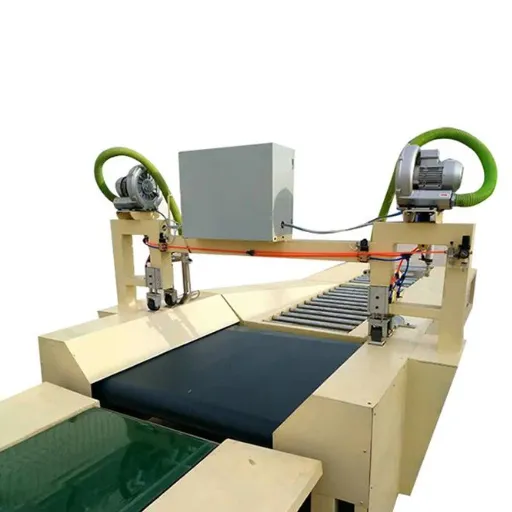
Have you ever wondered how tarpaulin manufacturers are able to produce such strong and long-lasting seams that do not leak, regardless of the weather? The secret lies in the use of heat-sealing technology. This advanced seam technology works by carefully heating and applying pressure to different layers of material enhancing this bond to the extent that it is almost impossible to tear the material without breaking the bond. By eliminating seams formed by stitches which has a tendency to wear out as a result of wear and the environment, this seam technology is very useful in enhancing the production of watertight and air tight products.
Nowadays, modern seam technology has made it possible to accurately regulate the temperature, pressure, and length of sealing so that the resulting seams are of optimal quality. Take impulse heat sealers or hot air welders as an example – both have become extremely popular and made it possible for production to adjust in accordance with the material that has to be sealed, e.g., polyethylene and PVC-coated fabrics. According to statistics, heat sealing seams are less likely to break than sewn, especially in the case of tension.
In addition, through the advancement of heat sealing machinery, production efficiency has been increased, allowing greater production rates with less manual intervention. An advantage of this automation is that it eliminates variation, a crucial requirement for industries using tarpaulins such as construction, transport and agricultural. Heat sealing helps in low cost operations and in extended operation in harsh environments by reducing material waste and improving the reliability of the seam technology use.
High-Frequency Welding: Applications and Benefits
A unique category of welding often referred to as high-frequency (HF) or radio-frequency (RF) welding is used to weld thermoplastic materials. Its principle of operation entails the use of electromagnetic power at a given range of frequencies. The material undergoing treatment is subjected to this field, and the molecules of the material begin to move, vibrate or heat up. This heat is concentrated on the surfaces thereby allowing them to melt and then fuse together on cooling.
One of the applications of HF welding is that it fits well for many purposes. For example, within the medical field. For instance, certain devices in the medical field such as blood bags, fluid reservoirs, and inflatable medical devices need to be precision welded and made with strong leak resistant seams are often made with high frequency welding. In such a design as an automobile, components that are supposed to be mounted in the vehicle interior such as car door panels, sun visors and even car side airbags are enhanced by this technology of high frequency welding. Finally, in the category of items and consumables that can exist in households or other establishments, seam technology should be capable of forming water tight and high strength seals around the products including inflatable pools, life jackets and flexible packaging.
A key benefit of zipper welding is its accuracy that helps to minimise by- products and enable reproduction even in tweezer volume processing. The seam technology improves the strength and dryness of the product making it last longer and also meet safety statutes. Also, since this technology does not use glue and it is self adhesive, it promotes green manufacturing by minimising use of materials and increasing recyclable welded surfaces. In conclusion, the versatility, speed, and dependability of seam technology has made it indispensable in a wide range of areas that require high performance results.
Sewing: Traditional Methods and Their Limitations
The use of needles and thread to join two or more pieces of fabric together has been used as a seam technology for the ages. The use of elastic viscous solutions is most common in cases of strong load bearing structures. This is a thin and fine needle suitable for visible seam work, patching and all the interesting skills of constructing garments can be made more beautiful by the introduction of these needles. In contrast, industrial diving became possible due to the invention of the sewing machine, as it made possible uniform stitches and greatly shortened the workwoman’s tasks.
Yet this seam technology is imperfect. Using thread as the connecting material implies the possible existence of weak spots in the structure, where the thread may fray, snap apart or the seams may give in during deformation or environmental conditions. Even though sewing as a method is employed, the materials can deform and fail because of extreme tension or dynamic loading. The alignment and the application of force must also be well executed for supramolecular structures to be formed, and this sometimes slows down or creates problems in quality control when mass production is involved.
One other important factor is the compatibility of different materials. The conventional sewing techniques may fail when it comes to joining materials which are not textile-based of fabrics with extraordinary characteristics such as waterproof laminations, coated materials or composites. This is especially true in cases where such industries require airtight or even watertight materials, since the act of stitching creates perforations by definition which would break the operational capability of the material. As such, although sewing is highly in-demand in many sectors, it also has its downsides, which calls for other techniques such as seam technology to correspond to the needs of newer and more sophisticated manufacturing.
Materials Used in Tarpaulin Seam Technologies

PVC and PE: Properties and Applications
One of the most unique characteristics of these polymers is that Polyvinyl Chloride (PVC) and Polyethylene (PE) possess characteristics and properties that make them the most widely used polymers in tarpaulin production. PVC is a well-known plastic material given its pliability and strength. When clearly necessary or used as an exterior facing, it holds up long in terms of wear and tear, thus preventing fading over a long duration under light and fire, as well as chemicals, for utility applications such as truck covers, industrial curtains and roofing membranes. This material can easily be welded with the help of high frequency welding, which creates strong and air tight seams that extend the life of the product and make it more dependable.
Other than that PE, a polymer featuring low density without compromising strength, is preferred for the reason that it is less expensive and friendly to the environment. In a similar approach, High-density and Low-density Polyethylenes are used for their specific properties, wherein the high-density polyethylene best supports, where there’s requirement for hard core tarpaulins with high strength in tension unlike when material is light weight in the case of the low density polyethylene. The hydrophobicity of the PE and the outstanding chemical stability enables its application in vegetative and building protection.
Taken altogether, these materials cater to the various levels of performance demand in the seam technology of tarpaulins, while also enhancing strength, flexibility, weather tightness by development of other concepts like polymer blends, or multi-layers laminates. With the given characteristics, it will be easy for the fabricators to make the best products for the most challenging market of industrial and commercial applications.
Choosing the Right Material for Different Seam Technologies
In order to select suitable material for tarpaulin seam technology, several factors need to be considered, including environmental factors, mechanical factors and material factors for the specific application. First of all, the working environment is to be considered. For instance, if the tarpaulin is expected to be continuously exposed to either UV rays or very harsh weather conditions, then an alternative high performance material such as PVC-coated or polyolefin laminated fabric would be advisable for use, given that these materials do not suffer from UV, water and temperature degradation over time.
After studying the requisite materials, I would turn focus on comprehension of the mechanical parameters required for the particular.material application. For instance, should the mechanical factor of seams concern any heavy load or pressure, such as in case of heavy duty industrial covers or transport covers, enhanced tear resistance materials will be required such as interweave reinforcements or toughness of HDPE materials. Further more the mode of seam technology used is common and in case where there is no heat welding, bonding or stitching, this will be taken into account when choosing material as some materials process differently than others. For example, PVC and thermoplastics such as TPU are suitable for sewing, sewing and heat welding as these material have suitable temperature to join other materials.
Finally, I would make it a point to incorporate cost benefit and environmental impact analysis in my processes. While high quality materials do ensure better finishes, it must be assessed how much they cost in terms of the life of the tarpaulin and its intended function. Additionally, I would consider examining substance using GREEN seam technology, which includes recycling growth or lower toxic emissions in this case. I would approach the evaluation of these issues consistently for the selection of the material in analysable local maximisation problems with a performance requirement satisfied but also the efficiency of operations and the environment.
Durability Considerations for Tarpaulin Fabrics
While assessing tarpaulin fabrics in terms of durability, there are several relevant aspects that should be considered to guarantee extended service life under different conditions. Tensile strength, tear resistance, UV stability and abrasion resistance are among these aspects. Tensile strength enables the holding of huge weights without elongating the fabric, while tear resistance helps curb extensive tearing in areas that have sharp or high tension points.
The stability of material under ultraviolet light is also an important consideration especially in applications in which the fabric is intended for use outdoors since sunlight is a major source of ultraviolet radiation which damages the fabric and fades the colors. Protective coats are often incorporated to increase protection against ultra-violet rays and the weather and this may include films of polyvinyl chloride (PVC) or even polyurethane. As most external traffic comes into contact with surfaces, wear and tearing is a concern especially when the fabric comes into constant contact with such surface or when it is subjected to forces especially mechanical.
Development of more durable commercial tarpaulins because of the advance in technology and enhanced materials such as very strong materials or thin sheets of polyolefin reinforced designs. Example of such tarpaulins comprises of cross-roll polyethylene which is very light with great tear and puncture resistance. Research have shown that there is improvement in extending the time of use of the tarpaulin from the detrimental effects of Ultraviolet light and the surrounding factors by the said layers containing a certain amount of nanoclay. It is already in general use and understanding that the applications of such technologies and their scaling up to the levels that are required for those specific according to the seam technology applications would be in any place operational at the same time.
Challenges in Tarpaulin Seam Production

Common Issues with Seam Durability
The problem of seams durability in tarp assembly still remains the main factor influencing the quality of the whole unit in challenging natural or man-made environments. The most common of these challenges is the failure of joints due to the minimal joining force. Factors such as bad heat welding, incorrect adhesive formulation or variations in the sealing process applied equipped, can all contribute to this. This becomes a major hurdle in applications which are overcrowded or subject to stretching or load conditions and the seams split open long before the expected service life. When functionality is critical such failures may cause leaks or structural collapses.
An additional concern is the poorer performance of seams when exposed to harsh environmental conditions. Changes in temperatures, sunlight exposure, and water ingress can wear away the adhesives or bonding lines. For instance, adhesive seams that are subjected to high temperatures for a long period of time will soften, and in some cases, they will degrade completely, thus reducing the load-bearing capacity of the seam. Likewise, in low temperature settings, adhesives may turn hard and brittle, causing further weakness in the seam. UV light is particularly notorious for enhancing oxidative processes in materials leading to atomic-bond breakages within both the fabric and the seam technology.
Seam destruction is often incorporated in the poor positioning or failure of laying tarpaulin during production. Even if the seam is something of a nuisance, or less disconcerting, there could be a lot of effort committed to one part easing it out whilst others remain uncompromised. These forces increase with time and are particularly hampering when subjected to constant working loads and extensive wear of elements. For such purposes, strict product control during production, use of modern bonding technologies, and appropriate material usage to withstand diverse conditions is highly recommended. It is the remedy for this problem and later manufacturing tarpaulin seams without difficulties across many varied interfaces and norms.
Technical Challenges with Welding Machines
Although welding equipment is extensively used in the industrial sector, there are numerous technological difficulties in its application that need to be addressed, otherwise productivity and product quality may decrease. The main system design challenge is thermal deformation of structures which occurs due to high temperature exposure, imposed on a detailed element, during the welding process. This can cause further weak points along seams, especially for precision machining applications. Material adaptability against damage is of particular concern in seam technology because it cannot be substituted in every material weld; if wrong techniques are used, the seam might not be strong enough or be completely welded up aufblasen.
In addition, the infrastructure demands the application of seam technology particularly, alloys and high strength composite materials, which are rather advanced, and more sophisticated welding techniques. Addition of automated and robotic equipment increases the level of production, and the challenges include precise control, programming, setting and adjusting of the system calibration. Most importantly the safety of operators has not been ignored because they always interact with heat, uv lights, as well as harmful fumes during the process which calls for strict safety measures and equipment.
Many of these challenges can be eliminated through long-term investments and continued research and enhancement of seam technology such as real time weld monitoring and adaptive control through machine learning approaches. With the integration of technology and training of operators, these problems can be managed to improve reliability and efficiency in welding activities.
Automation in Tarpaulin Production: Benefits and Drawbacks
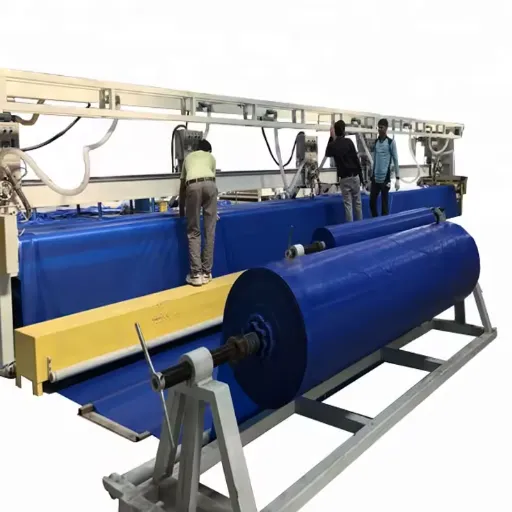
The introduction of industrial simplification and automation in the production of tarpaulin has made this industry simpler by enriching the processes, the tendency of man to err has also been decreased and the operational performance increased greatly. Integration of such equipment as automatic cutting and welding makes it possible to achieve precise dimensions, high products’ quality and less waste of the materials used. Apart from that seam technology eliminates the necessity to employ people manually thus reduces the overhead expenses and offers shorter leaves in between the orders to the advantage of heightened market competition.
However, the process of embracing automation does have its distinct challenges. Investing in state of the art equipment and information systems may be well out of reach of small and medium-sized organizations. In addition to this, proper incorporation and maintenance of such equipment or systems necessitates competent technicians, raising the increasing demand for workforce training and development strategies and programs. A significant drawback owing to automation is the lack of flexibility – mass production is arguably the main advantage of automation, however processes that require high customization or small volumes are better served through physical processes than automation.
To overcome these challenges and still enjoy the benefits with caveats, there is a need to find a fine line between acting reactivity and proactively. By making use of data analytics relevant to current issues and predictive maintenance, it is possible for manufacturing companies to maximize the automated process within minimal downtimes and still improve the effectiveness of production processes as well tarpaulin to be more cost effective.
Future Innovations in Tarpaulin Seam Technology
Sustainable Practices in Tarpaulin Manufacturing
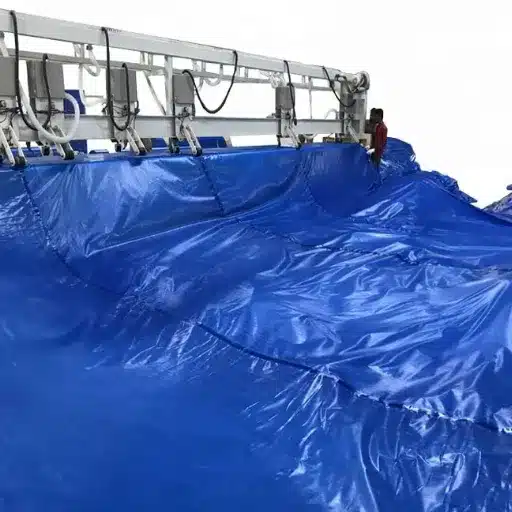
Environmental sustainability in tarpaulin production has increasingly become a focal point as the manufacturing sector continues to optimize operational processes. Furthermore, recycled materials and bio-based polymers are one of the ways to mitigate the impact of tarpaulin manufacture. Post-consumer plastics, or other polymer sources of natural origin, negate manufacturing impacts associated with the use of such virgin materials. Apart from relying on polymers of natural origin, there is a great consequence which is the reduction of pollution trough low-VOC (volatile organic compound) coatings thanks to the i n d e v e l o p m e nt of areadvances in chemical matter. Traditional or advanced/modern seam technology of waterproof canvas promotes causes of pollution during production or after.
Incorporating processes and technologies that reduce energy demand is one other important component of environmentally sound practices. Contemporary production facilities are skilled in incorporating clean energy technologies dampening so reliance on conventional power sources like hot oils. Thus, restructuring manufacturing operations and introducing effective seam technology can undertake a long way in curbing greenhouse gas emissions and promoting environmentally friendly processes. They The use of different water management techniques such as efficient closed-up recycling of water further increases the resource efficiency in the industry.
Finally, these blanket recycling works at the end of the item use have changed the approach of obtaining from ‘use’ to ‘re-use’. Manufacturers are targeting enhanced recycling systems and working with those using their products –window units which use tarpaulins to close the material cycle. These all prove how the industry is changing in line with sustainable policies as well as progressing in consumers: they want it and the industry will provide it but within limits of the law.
Emerging Technologies in Seam Sealing Machines
The advancements in seam technology are due to factors such as the need for how manufacturers can carry out their processes comfortably and precisely, as well as the growing concern for the environment while carrying out these processes. Enhancements such as ultrasonic sealing, laser-guided seam alignment, and advanced material compatibility, have set new benchmarks in the industry. As an illustration Ultrasonic sealing is a process that binds two materials using high-frequency vibrations and is an adhesive free process; this saves on waste while still managing to create a very strong durable seal. Also, recently introduced seam placement equipment with laser guiding systems achieves the finest precisions, offering significant material savings and improving the product’s inherent quality.
Moreover, the development of smart manufacturing and its inclusion of seam of sealing integration has led to an IoT traceability technology for use in sealing mills. Such systems offer predictive maintenance capabilities and allow operators to collect and analyze information in real time designed to optimize production processes. Instructions given by sophisticated algorithms, based on assessment of many factors, occur when efficiency of performance is evaluated, malfunctioning systems are indicated, and it becomes necessary to change individuals’ settings in order to avoid lumps in mass production, volume 1, 2, and 3.
Another prominent feature is related to improved material compatibility, as by now new generation machines can seamlessly and effectively work with more complicated and different materials such as composite or bio-based textile materials. The last few years have also been filled with designing highly innovative products which include nests, so called ‘bio-composite’ boards and there was however, a demand for the transition to occur more rapidly. These advances in turn explain a marked upgrading in seam technology when viewed from both modern manufacturing standards and ecology.
Predictions for the Future of Tarpaulin Production
The factors that will help determine the future of tarpaulin making include continued innovation in materials and manufacturing. One of the key trends already is the adoption of lightweight, strong fabrics that reduce bulk while withstanding extensive use traditional to tarpaulins. These special materials are expected to achieve optimal tear strength, resistance to UV light and water exclusion properties. On top of this, there has been a push towards hybrid, bio-derived or recycled components for tarpaulin making which sparked in light of the concerns of society towards preservation of the ecosystem and in particular towards initiatives of reducing the use of plastics and emissions.
The production of tarpaulins is bound to witness a transformation owing to the new trends of automation and digitalization of production. The introduction of modern machinery and artificial intelligence (AI) based manufacturing process controls is expected to increase the accuracy of the producing operations aiding operational improvements and reductions in material costs. The use of automated laser cut machines and seam technology, as well as CAD, will enhance the capacities of manufacturers who will be able to provide bespoke solutions enabling them to serve various markets such as the industrial, construction and interrupted retail markets. In addition, these new trends will eventually reduce the cost of production making it possible to make high-end environmentally friendly tarpaulins affordable to more people.
In the end , employing smart technologies in tarpaulins is a very promising practice. Their evolutions can include sensors or special skill that checks the state of the surrounding environment – temperature, the moisture level, or the level of stress. These “smart canvasses” may benefit sectors such as farming, cargo transport, and emergency services, with 5 proactive, and enhanced maintenance and operations, by offering real-time observations. With the entry of closed-loop economies and the tightening of eco-efficiency legislations as well, the future development of the tarpaulin manufacturing sector does not come without challenges and involves seam technology.
References
-
Types and Technical Application of Sewing Threads
This document discusses seam strength and the technical applications of sewing threads. -
A Closer Perspective of Processing and Properties of Swing Threads
This paper explores the technological advancements in thread processing and seam properties. - Click here to read more.
Frequently Asked Questions (FAQ)
Q: What do you mean by tarpaulin seam technology and why is it of significance?
A:Tarpaulin seam technology implies the techniques and tools used to connect tarp substances such as PVC, polyethylene or canvas into strong waterproof seams. The form of tarpaulin seam technology enables the covers, rio tarps and membranes performance to remain particularly easy; helping them with resistance, especially where there are seam angles, which are most of the time culprits in the tearing.
Q What is the difference between tarp welding and sewing when it comes to making firm seams?
A: A Tarp welding employs heat, ultrasonic, or RF energy to melt thermoplastic fabrics and join them to create fusion welds or welded seams. These seams are normally stringer and more waterproof as compared to sewn seams. Whereas sewing is convenient for some materials and much less time consuming, there is no need to drill tiny holes due to the use of welding tarps which has an even distribution of strength throughout the seam and this is why it is much more employed in the heavy-duty tarpaulin seam technology.
Q. Which welding procedures are often used in tarpaulin seam technology?
A: There are traditional ways: hot-air welding, hot wedge welding, ultrasonic welding and radio-frequency (RF) welding. This is because each application targets different types of materials and over a range of thicknesses too; hot-air and wedge welding works well for PVC coated fabrics, whilst ultrasonic only thins out thermal plastics, and RF welding finds its use in unique synthetic tarpaulin, with all the three providing solutions for satisfactory tarpaulin seam technology.
Q: How is a weld marc or seam in a tarpaulin checked?
A: Testing the quality of the products involves different checks namely inspecting the material and confirming it fuses uniformly, performing peel and shear tests to determine its strength, undertaking water resistance tests to achieve waterproofing as claimed, and performing accelerated weathering tests to check if the product will last for a long time. The regular inspection is a major aspect of tarpaulin seam technology as it assists in eliminating field problems and avoiding substandard wares.
Q: What are some of the typical challenges with tarp welding, and what strategies are there to combat such problems?
A: There is a broad range of typical problems because of the following situations: cold seam, material burnt, de-laminating of the seams, and irregular fusing. This includes making sure all machine parts have the appropriate fittings, making materials ready, cleaning the weld zones, and having the machines serviced every so often.
Q: Is the possibility of tarpaulin seam technology available for restoration in the field?
A: Yes, there are portable tarp welding tools and repair kits which facilitate field patch and seam repairs. Field tarp welding mainly involves the use of hot air or hand-held ultrasonic welding equipment for fast and strong fixes. Even though the strength of factory welded seams cannot be achieved during onsite patch works, sorting with the right and effective approach including materials used can assist until such a time when there will be permanent repairs in the absence of time bias.
Q: How do you select an appropriate seam technology on the basis of the material and coating?
A: Selection of the respective welding method depends on the chemistry of the material (PVC, PU, PE) and coating type. It is necessary to power weld PVC fabrics with hot air and wedge systems while polyethylene may require different settings. The basic knowledge of the properties of materials is important, talking about the seam technology for tarpaulins as there is a need to find the right welding process to create impermeable seams.