
Airbag Fabric Manufacturing Plant Cost: Equipment & ROI
An airbag fabric manufacturing plant costs roughly $2 million to $5 million at pilot scale, $10 million to $25 million at mid-scale, and $25 million to $60 million or more for a full OEM operation. Real-world integrated plants announced in 2024 through 2026 run from $48 million to $166 million, and equipment alone typically absorbs 50% to 70% of the total. Here is the manufacturer’s-eye breakdown of an airbag fabric manufacturing plant cost, with line-item equipment prices, operating spend, certification, and ROI math.
Between early 2025 and late 2026, three new airbag fabric plants were announced in Vietnam alone: a $48 million Kolon facility in Ho Chi Minh City, a $100 million Hyosung plant in Da Nang, and Autoliv’s $154 million operation. None of them started with a loom. Each started with a budget model, and that model is what most investors never see.
Agree: you already know airbag fabric is not commodity textile; a failed qualification can burn 18 to 36 months and millions of dollars. Promise: by the end of this guide you can estimate total capex for your target scale, map equipment to each process step, budget the hidden costs, and model payback with and without secured OEM contracts. Preview: we start with the process and the equipment behind it, move through cost by scale and real 2026 project data, then cover operating costs, certification, ROI, regional differences, and the build-versus-buy decision.
Reach LY TRUSTLINK for trusted airbag textiles combining quality, strength, and production expertise.
Key Takeaways
- A realistic airbag fabric manufacturing plant cost spans 2M−2M−5M (pilot), 10M−10M−25M (mid-scale), and 25M−25M−60M+ (full OEM), while integrated 2024-2026 projects landed at 48M−48M−166M.
- Equipment is the dominant line item at 50%-70% of total project cost, and the silicone coating line alone represents 40%-60% of machinery spend.
- Certification and qualification add a hidden 500K−500K−2M plus 18-36 months: IATF 16949, per-OEM qualification, and environmental permits.
- Working capital (15%-25% of annual revenue) is the most underestimated cost, driven by 90-120 day OEM payment terms and 60-90 days of raw material inventory.
- Payback runs 3-5 years at mid-scale and 2.5-4 years at OEM scale with secured contracts; break-even sits at 60%-70% utilization.
How Much Does an Airbag Fabric Manufacturing Plant Cost?

An airbag fabric manufacturing plant costs 2M−2M−5M for pilot scale, 10M−10M−25M for mid-scale, and 25M−25M−60M+ for full OEM scale before land, building, working capital, and certification. Equipment alone typically represents 50%-70% of the project, with 18-36 months of OEM qualification required before meaningful sales.
Those three tiers are the realistic planning bands, and they matter more than any single number. A pilot line can validate fabric and build an R&D customer base. A mid-scale plant can support one or two OEM qualifications. A full OEM operation needs three to five qualifications, secured contracts, and utilization near 85% to hit its payback target. Choose the tier before you price the equipment, because the tier determines the machine list.
| Scale | Investment | Capacity | What It Can Realistically Support |
|---|---|---|---|
| Pilot / R&D | 2M−2M−5M | 0.5-2M m²/yr | No OEM qualification; R&D customers; sample MOQs of 500- 1,000 m |
| Mid-scale | 10M−10M−25M | 5-15M m²/yr | 1-2 OEM qualifications; regional supply |
| Full OEM | 25M−25M−60M+ | 15-40M m²/yr | 3-5 OEM qualifications; secured contracts; ~85% utilization |
A common mistake is comparing against the headline project numbers and concluding the market is closed. It is not. The $48 million Kolon plant and the $166 million ZF plant are integrated operations with weaving, coating, and cushion production under one roof. An entry focused on a single process stage, coating or slitting, sits at the low end of the range. Start with the process you intend to run, not the projects you read about.
What You Are Actually Buying: The Process and Its Equipment
Airbag fabric moves through a defined chain before it becomes a cushion: PA66 yarn, weaving, silicone coating, slitting and inspection, and quality testing. Each stage has a distinct machine set and a distinct cost profile. If you are budgeting an airbag fabric manufacturing plant, map your capex to this chain rather than to a generic “factory” number.
PA66 Yarn: Spinning, Drawing, and Heat-Setting
The chain starts upstream with nylon 6,6 (polyamide 66) resin. Polymerization, melt spinning, drawing, and heat-setting convert resin into the high-tenacity yarn used in airbag fabric. Most new airbag fabric plants do not build this stage; they buy yarn from specialist suppliers. That decision matters, because yarn is the single largest cost in finished fabric, at 50% to 65%.
If you do build spinning in-house, you add polymerization and spinning lines, drawn-tower capacity, and a winding hall. That is a step-change in capex and a much longer learning curve. For most entrants, buying yarn at roughly $5,000 per ton is the pragmatic start. A mid-scale plant consuming 500 to 1,000 tons per year faces a $2.5M to $5M annual raw material bill before coating chemistry.
Weaving: Air-Jet Looms and Greige Fabric
Weaving converts yarn into greige fabric. Air-jet looms dominate because they run high pick rates with the dimensional consistency airbag permeability requires. Prices vary widely by source.
- Chinese air-jet looms: 14,000−14,000−19,000 per unit, with volume discounts at the top of that range
- European and Japanese looms (Dornier, Toyota, Picanol-class): 80,000−80,000−250,000+ per unit
- Jacquard option where needed: adds 5,000−5,000−15,000 per loom
A mid-scale weaving hall might run 40 to 80 looms. At Chinese machine prices that is 1.5Mto1.5Mto4M; at European or Japanese prices, 6Mto6Mto16M. The decision is not just cost. European and Japanese looms hold tension and shed less fiber, which buyers in the nylon airbag fabric buyers guide will tell you reduces rework on coated rolls.
Coating: Silicone Application Lines
Coating is where airbag fabric becomes airbag fabric. The silicone layer controls gas permeability so the cushion inflates in 20 to 40 milliseconds and holds pressure long enough to absorb an occupant. Coating lines are the biggest single machinery line item, typically 40% to 60% of total machinery investment.
| Scale | Coating Line Cost (equipment + installation) |
|---|---|
| Pilot | 600,000−600,000−1.8M |
| Mid-scale | 2.5M−2.5M−6M |
| Full OEM | 6M−6M−15M |
If coating is your planned process stage, the airbag coating line economics deserve their own model. Solvent-based silicone coating also triggers VOC emission permitting, which we cover in the certification section below. That line item is where budget overruns start.
Slitting, Rewinding, and Optical Inspection
Coated fabric leaves the line as wide rolls and must be slit to cushion panel widths, rewound, and inspected for defects before shipping. This stage is lower cost but not optional.
- Slitting and rewinding lines: 30,000−30,000−200,000
- Optical inspection systems: 100,000−100,000−300,000
Optical inspection matters more than its price suggests. Airbag cushion sewing is automated, and a single foreign particle or coating skip can trigger a rejection at the Tier-1 stage, far downstream and far more expensively than catching it on the line.
The Quality Laboratory
Every OEM-qualified airbag fabric producer runs an in-house lab. A dynamic permeability tester, the instrument that proves the coating controls airflow, costs 30,000 to 80,000 and is effectively non-negotiable for OEM qualification. A complete lab package runs 65,000 to 215,000.
The lab is not a compliance cost; it is a selling cost. Buyers qualifying a new airbag fabric source ask for tensile, tear, permeability, burst, and aging data before they approve anything. Our airbag material properties page shows the test set an OEM expects to see. Without the lab, you cannot produce that data, and without the data you cannot get the order.
Airbag Fabric Manufacturing Plant Cost by Scale
Pricing the whole plant is where most budget models go wrong, because they price the machine list and stop. Whether you model an airbag material manufacturing plant cost or the fabric-level figure, the tiers below are the realistic planning bands, not quotes. Land, building, utilities, working capital, and certification sit on top of every one of them.
Pilot / R&D Scale: 2M−2M−5M
A pilot line validates coating chemistry, builds sample rolls, and serves R&D and development customers. It typically runs one coating head, a narrow slitting line, and a starter lab. Sample MOQs of 500 to 1,000 meters are workable here. No OEM qualification is realistic at this scale, so revenue comes from development programs and non-automotive coated fabric.
Mid-Scale Commercial: 10M−10M−25M
A mid-scale plant adds multiple coating heads, a 40 to 80 loom weaving hall or sourced greige, slitting capacity, and a full lab. It can support one or two OEM qualifications at a time and serve regional Tier-1 customers. This is the tier where the cost structure in this guide starts to hold: 50% to 65% of finished fabric cost in yarn, 15% to 25% in coating.
Full OEM Scale: 25M−25M−60M+
A full OEM operation runs a large weaving hall, multiple high-capacity coating lines, integrated slitting and inspection, and the staffing to manage three to five simultaneous OEM qualifications. It also carries the largest working capital burden, because OEM payment terms run 90 to 120 days. Payback at this scale depends on secured contracts, not on the machine list. We model that in the ROI section below.
Real-World Investment Examples (2024-2026)
The most useful cost data in this industry comes from announced projects, because the sponsors publish scope and expected revenue. The table below consolidates the plants LY TRUSTLINK has verified since 2024.
| Project | Investment | Scope | Status |
|---|---|---|---|
| Kolon Industries, Ho Chi Minh City, Vietnam | ~$48-50M (70B KRW) | Weaving, processing, coating; fabric to cushion | Operations 2028; additional Autoliv supply contract signed December 2025 |
| HS Hyosung Quang Nam, Da Nang, Vietnam | $100M | 6,750 t/month including nylon airbag fabric | Construction Q1 2026; operations end-2026 |
| Autoliv, Cheyyar, India | ~$12M (Rs 100 crore) | Airbag assembly | 400+ jobs announced |
| Autoliv, Vietnam | $154M | 90,000 sqm; 2,000 employees | 2025 |
| ZF, Wuhan, China | ~$166.5M (EUR 150M) | 67,000 sqm; 1,200 employees | 2024 |
| Toyobo, Thailand | ~$90-100M (JPY 10B) | Airbag fabric | 2016-2020 |
Two patterns stand out. First, location clusters around the customer: Vietnam now hosts a dense airbag supply base because Autoliv and other Tier-1 suppliers operate there. Second, the plants that publish revenue targets anchor them to contracts. Kolon’s December 2025 deal with Autoliv, signed months after an April memorandum of understanding, underwrites the plant’s expected annual sales of about $34 million from 2030. The plant is not even running, and its first years of output are already committed.
That is the real lesson of the airbag textile market: qualification converts into revenue. Budget for the 18 to 36 months you will spend qualifying before your first OEM invoice, because that gap is where working capital and morale both get tested.
Operating Costs: What the Plant Spends Every Year
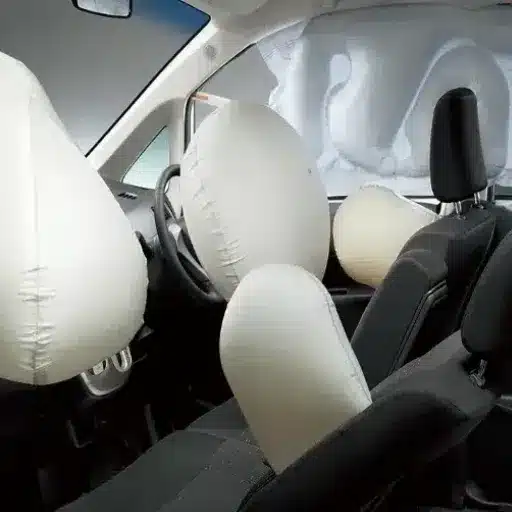
Capital is the number you raise. Operating cost is the number you live with. Both decide whether the plant survives the qualification period.
Raw Materials
Nylon 6,6 yarn at about $5,000 per ton is the dominant raw material, representing $1 to $3 per square meter. A Chinese airbag fabric producer’s financial filings show the shape of a mature operation: raw materials at roughly 47% of revenue, one-piece woven bag materials near 32%, other manufacturing costs at 4.6% to 7.3%, and R&D at 3% to 4.7%. That raw material share is why feedstock contracts, not equipment, set the floor on margin.
Energy and Climate Control
Coating lines are energy-intensive. A mid-scale plant can expect 200,000 to 500,000 per year in energy, with climate-controlled coating and slitting halls adding 50,000 to 150,000. Airbag coating tolerates little dust or humidity variation, so the environment is not a luxury; it is part of the process specification.
Labor
| Region | Monthly Labor Cost | Context |
|---|---|---|
| Vietnam | 250−250−400 | 2025-26 plant cluster; industrial-zone incentives |
| China | 800−800−1,200 | Mature airbag supply chain; feedstock access |
| Western Europe | $3,000+ | Proximity to OEMs; higher energy |
| North America | $3,000+ | Tariff-protected demand; high labor |
Labor is a real differentiator in the first five years, but it is a smaller lever than working capital or utilization. The 2026 project wave has already shifted airbag fabric production toward Vietnam for this reason, as the Hyosung and Kolon investments show.
Maintenance and Quality Systems
Plan 5% to 10% of equipment cost per year for maintenance, spare parts, and calibration. Coating lines have higher maintenance intensity than weaving halls. Quality systems add IATF surveillance audits at 10,000 to 25,000 per year on top of the certification costs below.
Working Capital: The Hidden Line
Working capital is the most underestimated cost in an airbag fabric manufacturing plant. OEM payment terms run 90 to 120 days, and raw material inventory must cover 60 to 90 days of production. For a mid-scale plant generating 15 M to 30 M per year, working capital ties up 2 M to 7 M before the first receivable is collected.
That number changes the feasibility picture for many investors. A plant that looks profitable at the margin level can fail because cash is frozen in receivables. Build the working capital line into the model before you commit to equipment. Work with LY TRUSTLINK for customized airbag fabric solutions built around performance.
Certification and Qualification: The Hidden 20%
An airbag fabric plant does not sell fabric to automakers just by building it. It sells through a qualification process that takes 18 to 36 months and costs more than most first-time budgets assume.
- IATF 16949: 30,000−30,000−100,000 to establish, 10,000−10,000−25,000 per year for surveillance audits, 12-18 months to certification.
- OEM qualification: 100,000−100,000−500,000 per automaker. Plants pursuing three to five qualifications, the realistic path to full-scale operation, face 500,000 to 2 million in testing, sample production, and engineering time.
- Environmental and safety permits: 50,000−50,000−200,000, with VOC emissions the flashpoint for solvent-based silicone coating operations.
A European Tier 1 program we reviewed illustrates the gap between budget and reality. The project opened at $8 million and closed at $18 million. The difference came from three lines no initial model included: coating automation at plus $3.5 million, qualification testing at plus $2 million, and working capital at plus $4.5 million. The plant director, a veteran we will call Pavel, described the original spreadsheet as “a price list, not a plan.”
That is the gap this guide exists to close. Certification is not overhead; it is the barrier that keeps new entrants out and the reason established producers hold their position. It is also why the car airbag fabric supplier guide is worth reading before you decide to build, because it shows the qualification burden from the buyer’s side.
Talking to an engineer about what qualification actually costs beats a spreadsheet. Our team runs coating and lamination lines daily and can give you realistic certification timelines for your application. Talk to our engineering team before you lock your budget.
Revenue, Margins, and ROI: When the Plant Pays Back
The global automotive airbag fabric market was valued at $3.25 billion in 2025 and is projected to grow at about 4.6% to $4.82 billion by 2034, according to Fortune Business Insights. The relevant number for a prospective plant operator is not the market size; it is the margin and payback structure.
| Metric | Typical Range |
|---|---|
| Gross margin, specialty / OPW fabric | 25%-35% |
| Gross margin, general textile (benchmark) | 12%-18% |
| Net profit margin, integrated operation | 12%-20% |
| Payback, mid-scale at 70% utilization | 3-5 years |
| Payback, OEM scale at 85% with secured contracts | 2.5-4 years |
| Break-even capacity utilization | 60%-70% |
Public filings from HMT New Materials, a Chinese airbag fabric producer, show what the model looks like when it works: 31% gross margin on one-piece woven fabric, 24% revenue growth, and 28% ROI on automated coating lines.
The sensitivity analysis is the part most investors skip, and it is the part that matters. The difference between 3-5 year payback and 2.5-4 year payback is secured OEM contracts and utilization near 85%. Below 60% utilization, the plant bleeds cash regardless of margin. Before you price a single loom, model utilization against your contract pipeline, not against market growth.
Where to Build in 2026: Regional Comparison
The 2024-2026 project wave makes the regional picture clearer than it has been in a decade. Vietnam is the current center of gravity for new airbag fabric capacity, with Kolon, Hyosung, and Autoliv all investing there. Labor costs of 250−250−400 per month and industrial-zone incentives combine with proximity to Tier-1 customers in the region.
China retains the deepest airbag supply chain and direct access to nylon 6,6 feedstock, at labor costs of 800−800−1,200 per month. Western Europe and North America remain viable for plants that sell into domestic OEM programs or tariff-protected demand, but labor and energy make them the highest-cost options.
The regional decision should follow the customer, not just the wage bill. Airbag fabric is qualified regionally, and shipping fabric across oceans to a Tier-1 plant you have not qualified with adds lead time and risk. Our automotive airbag fabric market page covers the regional supply chain in more depth.
The Risks Investors Underestimate
- Working capital traps: 90-120 day receivables plus 60-90 day inventory can consume 2M−2M−7M on a mid-scale plant before revenue turns positive.
- OEM concentration: one or two customers can drive 60% or more of revenue, and losing a qualification resets years of progress.
- Feedstock volatility: nylon 6,6 pricing tracks petrochemical feedstocks, and contract structures must cover the swing.
- Certification slippage: every qualification program can slip by months, extending the negative-cash period.
- Technology change: uncoated and one-piece woven (OPW) constructions are growing share, which changes the machine mix over the life of the plant. The OPW airbag fabric market shows the direction.
- Capital intensity: at 50%-70% of project cost in equipment, there is no soft landing if demand shifts.
None of these risks is a reason to avoid the business. They are reasons to budget them, and every one of them shows up in the operating cost and certification sections above.
Build or Buy: The Question Most New Entrants Skip
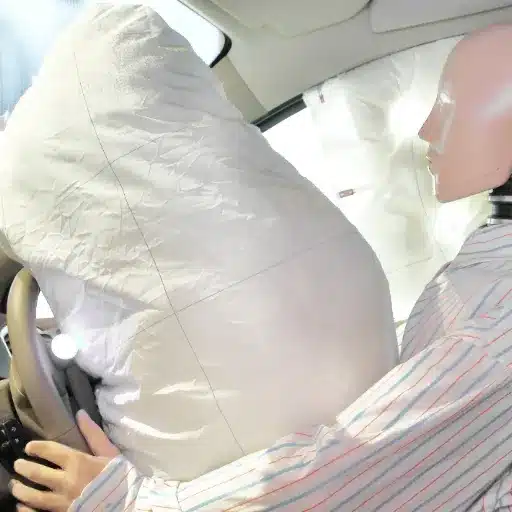
Every serious investor asks what the plant costs. Fewer ask whether they should build it at all, and that is the question with the bigger financial answer.
The math is straightforward. Building means 10 M to 60 M in capex, 18 to 36 months of qualification, a 60% to 70% break-even utilization, and a working capital burden of 15% to 25% of revenue. Buying from a qualified supplier means none of those, in exchange for a margin per square meter. For moderate or uncertain volumes, buying wins on cash and time every time.
When the procurement director at FleetPro, a European logistics operator, compared a $25 million plant against outsourcing to qualified suppliers, the decision took two days. The plant needed secured OEM contracts to hit its payback, and FleetPro did not have them. It bought fabric instead, spent the capex on fleet expansion, and re-evaluated the build decision once volume justified it. That is a valid outcome, and it is why this guide ends with a decision framework rather than a pitch.
| Consideration | Build | Buy from a Qualified Supplier |
|---|---|---|
| Upfront capex | 10M−10M−60M+ | None |
| Time to first revenue | 18-36 months (qualification) | Immediate, if the supplier is qualified |
| Break-even utilization | 60%-70% | Not applicable |
| Working capital burden | 15%-25% of revenue | Negotiated terms |
| Best when | You hold secured OEM contracts | Volume is moderate or uncertain |
If you decide to build, our airbag fabric product line and coating line expertise give you a realistic reference for what coated technical fabric costs to produce. If you decide to buy, the same pages show you the specification and test data a dependable supplier should hand over.
FAQ
How much does it cost to build an airbag factory?
A dedicated airbag fabric manufacturing plant costs 2M−2M−5M at pilot scale, 10M−10M−25M at mid-scale, and 25M−25M−60M+ for full OEM scale. Integrated 2024-2026 projects announced in Vietnam ran from 48 M to 154 M, and equipment represents 50%-70% of total project cost.
What equipment is needed to make airbag fabric?
The process requires PA66 yarn supply, air-jet looms for weaving, a silicone coating line, slitting and rewinding equipment, optical inspection, and a quality laboratory. The coating line is the largest machinery item at 40%-60% of machinery spend.
How much does an air-jet weaving machine cost?
Chinese air-jet looms run 14,000−14,000−19,000 per unit, while European and Japanese machines from suppliers such as Dornier and Toyota cost 80,000−80,000−250,000 or more. A mid-scale weaving hall of 40-80 looms spans 1.5M−1.5M−16M depending on machine source.
How long does it take to qualify as an airbag fabric supplier?
IATF 16949 certification takes 12-18 months, and each OEM qualification adds 18-36 months. A plant pursuing three to five OEM qualifications faces a total qualification cost of $ 500,000 to $ 2 million before meaningful sales.
What is the profit margin on airbag fabric?
Gross margins for specialty and one-piece woven airbag fabric run 25%-35%, against 12%-18% for general textiles. Net profit margins for integrated operations run 12%-20%, with payback of 3-5 years at mid-scale and 2.5-4 years at OEM scale with secured contracts.
Is airbag manufacturing profitable?
It can be, but profitability depends on secured OEM contracts and utilization above the 60%-70% break-even point. Working capital of 15%-25% of revenue and certification costs of 500K−500K−2M mean the plant must be modeled on contracts, not on market growth.
Conclusion
An airbag fabric manufacturing plant cost is not a single number; it is a tiered structure: 2M−2M−5M at pilot, 10M−10M−25M at mid-scale, and 25M−25M−60M+ at full OEM scale, with real integrated projects running higher. Equipment absorbs 50%-70% of the total; the coating line is the largest machinery item, and certification and working capital add the hidden layer most budgets miss.
The three decisions that decide the outcome are the process stage you run, the region you build in, and whether you hold secured OEM contracts. Qualifying for your first order takes 18-36 months, and below 60% utilization, the plant loses money regardless of margin. Model the plant on contracts, not on market forecasts.
If you are evaluating an airbag fabric manufacturing plant cost for your own program, our engineering team can give you realistic figures for coating line investment, qualification timelines, and the specification data buyers expect. Request a custom quote or review the airbag textile market outlook to see how new capacity is reshaping the supply chain. The suppliers who survive the qualification period with real contract visibility are the ones OEMs will qualify first.