
Stadium Membrane Installation: 10,000 SqM Architectural Project
There is no doubt that the modern architectural universe is still throwing remarkable innovations quite high, allowing for not only practical but also really nice looking buildings. The installation of a 10,000 square meter stadium membrane is one of the greatest and most interesting projects of the present millennium, for it unites engineering excellence with artistic brilliance. This article also plunges into the very complex procedure of the making of such a wondrous structure, presenting the different phases of the membrane—its design, manufacture and putting up—that all together not only improve the stadium’s strength but also its beauty.
In case you are a fan of architecture, a pro in the field, or just intrigued by the technicalities of futuristic design, this write-up will still reveal to you one of the wonders in the domain of modern construction.
Introduction to Stadium Membrane Structures
Overview of Membrane Structures in Sports
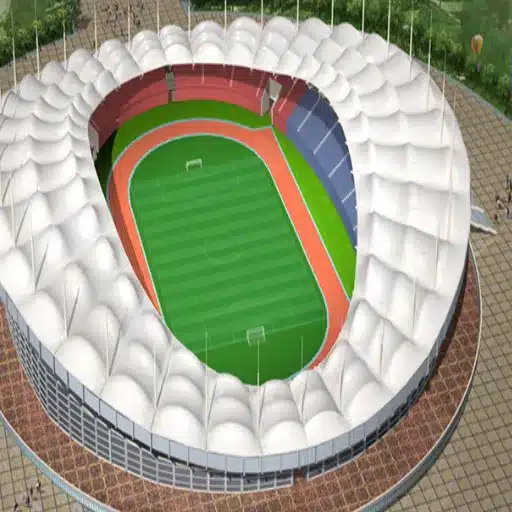
Membrane structures for sports stadiums are the state-of-the-art architectural techniques that integrate practicality, beauty, and environmental responsibility all at once, and to great extremes. These constructions consist of the very light and strong materials such as PVC-coated polyester and PTFE-coated fiberglass that together form air-tight and moisture-free roofs. The membrane systems are perfect for large-scale sports venues because they provide weather protection, allow natural light in, and have the best acoustical performance. Besides, the unique shape and the translucency of the membranes not only enhance the spectator experience but also the architectural appeal of modern stadiums.
One of the major advantages of membrane structures is their capacity to adapt to the most complex design requirements. They can cover huge areas without having any support columns, thus providing the entire audience with an unobstructed view. This particularity allows architects to form and plan very creatively, sometimes even the shapes that become the landmarks of a city’s skyline. Besides, membranes are light and strong at the same time, so that they consume less material and thus the overall cost of the construction is lower than with the conventional roofing.
The matter of sustainability also comes up and it is a very important gain. Membrane materials not only have the property of being UV resistant but are also recyclable which makes them fit for use in energy-efficient designs to mention, e.g., solar panels or energy-saving coatings. Thus, eco-friendly construction gets support through these structures that promote energy conservation while at the same time being easy to maintain. To sum up membrane structures at sports venues, they are technically perfect and at the same time a very modern design giving a joint display of engineering plus architecture.
Importance of Stadium Roof Design
The design of the stadium roof is a determining factor in the overall enhancement of the experience of spectators, athletes, and event organizers. A roof that is designed efficiently serves as a weather protector of the first kind and assures that the events are not only held but also enjoyed in case of rain, too strong sun, or any other unfavorable condition. The roofs of stadiums, which can be termed as comfort creators, help to keep the audience happy thus resulting in a bigger crowd for open-air events.
Moreover, the roof structures, if properly chosen, can excel in the event or at least the sound and lighting aspect significantly. Roofs are usually designed in a way that sound is dispersed evenly throughout the stadium, hence loud and clear audio coming from both concerts and sports. Good lighting included can not only make every corner of the venue bright but also give it an aesthetic appeal. These factors come into play positively to make the whole audience feel more involved and to give them a stronger memory of the event.
In terms of environment and operation, modern stadium roofs are environmentally sustainable. Some of them are completely green, using only eco-friendly materials, and incorporating features such as retractable mechanisms or giving the solar panels a place to stay as they depend on renewable energy. This not only lessens energy use but also enhances the roof’s multi-functionality and makes it very practical and at the same time friendly to the environment. Ultimately, stadium roof design is a vital factor that determines the balance between functionality and aesthetics in the long run supporting the company’s sustainability goals.
Types of Membrane Materials Used
In the field of stadium roofing, the attention is gradually turning towards the use of membrane materials. There are the primary membranes which are still the most commonly applied in stadium construction, such as PTFE, PVC and ETFE. Out of these membranes, some materials still stand out though they may not be as widely applied. They are described below in a concise manner:
PTFE (Polytetrafluoroethylene) Coated Fabric
One of the main advantages of PTFE-coated fabric is its exceptional durability and resistance against weather conditions. Plus, it is a non-stick and self-cleaning material, which further facilitates the reduction of maintenance. In addition to the mentioned properties, the transmission of sunlight through the fabric at a certain level of strength is also possible.
ETFE (Ethylene Tetrafluoroethylene) Film
ETFE is a very light yet strong film very often as a covering for contemporary stadium buildings. Its transparency imparts a great deal of natural light into space that benefits both the aesthetics and energy efficiency of the stadium. ETFE is also long-lasting against changing weather conditions, can be recycled and can be made in an inflatable form to build cushion panels that provide insulation characteristics by virtue of added thickness.
PVC (Polyvinyl Chloride) Coated Polyester Fabric
PVC-coated polyester is among the least expensive options available. It provides excellent adaptability and strength while being a fire, UV, and mold resistant material. Thus, this is a perfect choice for temporary or semi-permanent structures.
The choice of these materials depends on the characteristics of the stadium design like aesthetic appeal, budget limitations, and climate. Thanks to the progress in the field of material science, it is now possible to get the best and greenest performance from modern roofs of stadiums.
Benefits of Stadium Membranes
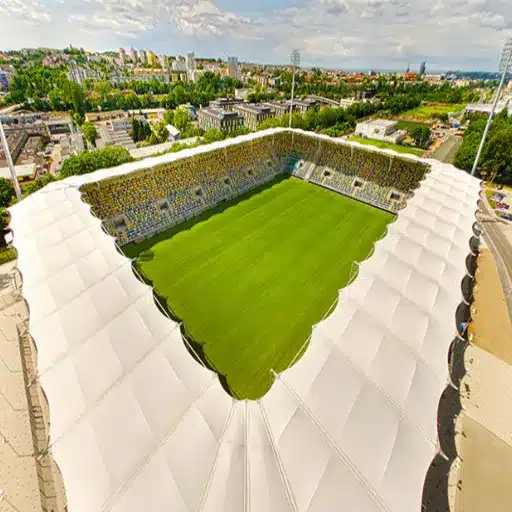
Enhanced Durability and Lightweight Design
The modern membranes used in stadiums present an exceptional mixture of increased strength and a light-weight design, making them suitable for large-scale architectural applications. These materials are produced in such a way that they can not only meet high performance standards but also possess a minimum weight which in turn allows for the creation of innovative and daring designs.
Key Performance Characteristics
🔧 High Tensile Strength
Membranes are constructed in such a way that they can endure great stress without being ripped apart and they can also resist tearing during the application of wind, snow, and other environmental forces.
🛡️ Environmental Resistance
The use of cutting-edge coatings on these membranes assures the protection from UV rays, extreme temperatures, and exposure to chemicals, which in turn extends their life.
⚖️ Light Weight Properties
When compared to traditional roofing materials like concrete or steel, membranes are very light and hence they do not impose a heavy load on the underlying structure which leads to efficient use of the materials in construction.
⏳ Longevity
A number of modern membranes possess a lifespan longer than 25-30 years, making them a cost-effective solution that does not require much maintenance.
⚡ Energy Efficiency
Such materials have the ability to reflect sunlight and so are less likely to absorb heat; thus, the indoor cooling costs are reduced and sustainable building practices are encouraged.
Stadium membranes combine these characteristics to provide the best solution for the architects and the engineers who want to meet both the functional and the aesthetic requirements.
Aesthetic Appeal of Membrane Structures
The membrane structures have an unusual marriage of functions and of visuals besides being the perfect choice in the case of modern architecture. Their attractiveness is in the fact that they can develop a very lightweight, flexible and at the same time very elegant, and stunning designs that can merge with different architectural styles.
💡 Design Excellence Features
- Dynamic and Sculptural Designs: Membrane structures give an artistic license to the architects, who can then, through their designs, create and innovate visually astonishing shapes, and thus, become the landmarks of architecture.
- Translucency and Natural Light: The natural light is diffused by the membranes on account of their translucent quality, hence the creation of bright and airy interiors, while there is a significant reduction in the artificial lighting requirement during the day.
- Customizability in Colors and Patterns: Membrane materials are very versatile, as they not just can be colored but also coated and printed with different patterns, which means that the designers will have limitless options in creating their unique and eye-catching designs.
- Seamless Integration with Surroundings: The buildings can be so designed that they will not only blend with the environment but will also create a smooth visual transition between the building and its surroundings.
- Enhanced Nighttime Ambiance: When nighttime comes, membrane structures become very entertaining as they are illuminated at night, which creates a beautiful visual effect and often makes them look like glowing artworks that attract attention even from faraway places.
Through merging of all these, membranes still keep an upper hand and are a go-to choice for designers who are after aesthetics and convenience on the same site.
Advantages of PTFE and ETFE in Stadium Applications
Installation Processes for Stadium Membranes

Step-by-Step Design and Fabrication
1
Initial Concept and Planning
This whole operation, first of all, sets out to identify the goals, requirements, and limits of the project. From the very beginning, architects and engineers start their teamwork by drawing the lines of a membrane structure that is in touch with the arts and meets the standards of being functional and not exceeding the environmental limits. Throughout this phase, site conditions, climate factors, and load-bearing requirements are thoroughly analyzed as well. Moreover, the use of advanced software and modeling tools not only helps to visualize the design but also enables the exploration of different configurations.
2
Material Selection
The selection of membrane materials like PTFE-coated fiberglass or ETFE films hinges on the requirements of the project. Durability, flexibility, and light transmission characteristics associated with eco-friendly properties are the main criteria for the selection of these materials that will eventually perform for a long time while causing less impact on the environment.
3
Structural Engineering and Analysis
The engineers’ task is to determine how safe and sound the design is by estimating wind, snow, and earthquake load factors, among others. The moment when the membrane can be said to be able to withstand different kinds of environmental stress comes at the end of this phase. To do so, finite element analysis tools become indispensable in the simulation of the real-world conditions and the fine-tuning of the design parameters.
4
Fabrication of Membrane Panels
The moment the design gets the green light, the next step is to set the membrane into panels in a factory where the environment is controlled. The cutting is pointed and the welding is thermal so the intended structure’s material gets its exclusive design just like a fit of custom-made clothes. Each panel is subjected to a quality control check to confirm that it is within the limits of strength and performance.
5
Structural Framework Construction
A supporting framework is constructed on the project site, often made of steel or aluminum. Such a framework gives the membrane not only the stability and support required for attaching it so firmly but also the overall thoroughness needed in the whole set-up. Components are prefabricated and installed on-site to smoothen the whole process of installation.
6
Membrane Installation
Membrane panels are carried to the site and are gently put on the already built-in supportive framework. The whole thing gets more precise through the use of different tensioning systems combined with anchoring techniques to make sure the membrane is stretched uniformly thereby resulting in the desired shape and structure stability.
7
Final Adjustments and Inspections
At the end of the process of installation, readjustments are made so that the membrane structure not only looks good but is also properly aligned and under the right amount of tension. A very thorough check-up is done in all aspects to make sure everything – stability, durability, and weather resistance – is fine. A performance test including wind and water resistance has the final say about the structure’s conformity with all design specifications.
8
Maintenance Guidelines and Handover
The client receives comprehensive maintenance schedules and instructions that allow the structure to be in top condition for years. The project gets an official handover for functional purposes and is additionally backed with warranties and support in case of any future needs.
The precise execution of every detail related to designing and fabricating the stadium membrane is guaranteed through this methodical approach, which heavily leans on sophisticated engineering and sustains environmentally friendly practices.
Assembly Techniques for Membrane Structures
Construction of membrane structures is a very careful procedure that combines high engineering and precision-focused methods. The first stage is usually to prepare a skeleton which is made up of light but tough materials like aluminum or steel that bear the membrane. Engineers, using tools like laser levels and surveying equipment, keep a watch over the whole installation process and, at the same time, help with alignment and stability. The skeleton is built in parts so that it can be transported easily and assembled fast on-site.
After the skeleton is ready, the membrane material is slowly connected. High-tension fabric membranes are made to possess the qualities of both being strong and being flexible irrespective of the changes of environmental conditions. Systems for tensioning, such as hydraulic and mechanical, are used to get the right tautness of the structure while making sure the material is not overstressed. This step is vital in the durability and aerodynamic characteristics of the membrane. Instead of the traditional welding, nowadays, seams are welded using advanced techniques like heat-sealing or high-frequency welding which leads to the elimination of potential weak points and the making of the structure waterproof and weather-resistant.
Quality control and testing are present in all the stages of assembly as a basic requirement. Before the structure is ready for use, load tests and wind resistance checks are carried out to verify safety and adherence to the building codes of the region. The process sustainability factor is taken care of by the use of recyclable materials and energy-efficient tools during the construction phase. By combining cutting-edge technology and eco-friendly practices, modern assembly methods not only deliver stunning and practical designs but also meet the standards set by the construction industry for being environmentally friendly.
Role of Steel Frames in Membrane Installation
Critical Functions of Steel Framework
🏗️ High Strength-to-Weight Ratio
Steel frames are well-known for their superior strength-to-weight ratio which makes it possible for them to hold great spans and at the same time their structure is light. This quality is extremely helpful in the case of large membrane installations where load reduction is of primary importance.
🔒 Corrosion Resistance
Contemporary steel frames are frequently treated or made using alloys specifically to improve their resistance to corrosion, and thereby increasing their longevity and reducing the cost of maintenance over time. This attribute makes steel the best choice for infrastructures that are to be built in severely affected environments.
🎨 Design Flexibility
The ductility of steel enables designers and engineers to work wonders when it comes to designing. This means that they can come up with complicated shapes and even customize the membrane structures based on the requirements of the project. Such flexibility encourages the design of buildings that are both great and efficient architecturally.
⚙️ Ease of Assembly and Disassembly
Steel frames are made off-site in sections and can then be simply put together or taken apart at the location which shortens the time needed for construction and labor expenses. This quality makes these frames appropriate for installations that are intended to be temporary as well as for those that are intended to last permanently.
💪 Load-Bearing Capacity
Superior load-bearing capability is one of the features that steel frames provide and they make sure that the membrane structure stays steady no matter how much snow or wind there might be on it. Such dependability guarantees the safety and usefulness of the installation throughout its life.
Challenges in Stadium Membrane Projects

Cost Considerations for Membrane Installation
When it comes to membrane installation for stadiums, the costs evaluation must take into account several important factors. The investment in the very beginning regarding membrane materials of top quality such as PTFE or ETFE can be very high considering its long-lasting nature and unique features. Furthermore, the manufacturing and alteration of these materials in order to suit certain design specifications contribute to the total cost. Precision engineering and skilled worker intervention are part of the installation process, which may vary in costs depending on how complex the structure is.
Maintenance and long-term performances are also major factors in cost evaluation. Even though today’s membranes are made to be low-maintenance, they still have to undergo cleaning, inspections, and very rarely, even repairs, from time to time. The purpose is to make sure they last long and look good. Besides, there are certain areas in which the installation and maintenance costs are both affected that the factors like climate conditions in the locality, the force of the wind, and the exposure to ultraviolet rays.
Nevertheless, all these costs do not set back the membrane structure benefits like energy efficiency, natural light diffusion, and designer’s creativity that often justify their cost in the projects of the scale of stadiums. With the right planning and professionals with experience, it is possible to cost optimize while getting a high-quality, sustainable installation.
Weather Resistance and Waterproofing Issues
Membrane structures are built to perform well in a range of extreme weather and nature conditions but the key to their sustainable life is proper design and selection of materials. The very best architectural fabrics like PTFE-coated fiberglass, PVC-coated polyester, and ETFE among others are selected because they can resist the sun’s UV rays and extreme temperatures, as well as water in form of heavy rains. These materials not only increase the buildings’ durability but also minimize the risks of decay resulting from prolonged exposure to environmental stressors. Moreover, regular inspections plus maintenance also act as a prevention measure against weather-related damage that could be more severe especially in high wind or heavy snow regions.
One more thing, waterproofing has to be guaranteed throughout the life cycle of a membrane structure, as poor protection against water could result in leaking in the interior area and a subsequent claim of long-term structural failure. Coatings for membranes have come through the roof as one of the causes of great water resistance and ensure that even the hardest rain will not be able to penetrate the surfaces. Besides, heat-welded seams, detailing placed outward around the connection points, and excellent drainage systems all contribute to keeping water that might cause the pooling or infiltrating of the areas around the membrane out. Thus, waterproofing issues can be sorted out in the design stages and the client could reap the benefits of these structures in terms of high functionality and long life.
More and more designers nowadays are working with weather performance analyses that take into account real-time weather data and modeling of the future. This is done in order to help the engineers to get the maximum value possible in terms of the load-bearing capacity of the structure and to make sure it goes well with the site conditions that are specific. Just as an illustration, wind tunnel tests along with computer simulations provide an avenue for very accurate evaluations regarding how membranes will react to wind, snow, or heat. Not only that, but these are also the same practices that cause the high resistance of membranes to bad weather and their overall dependability in various applications to be continuously improved along with the constant innovation in fabric technology.
Environmental Impact and Sustainability Concerns
Modern construction has to carefully consider the environmental impact of membrane structures. A lightweight nature combined with the efficient use of high-strength membranes gives these structures the inherent advantage of material cutbacks, so they are well reduced in number compared to the opened-up traditional constructions. This already amounts to a very small proportion of carbon emissions, thus they become a preferred option when it comes to the project’s environmental footprint reduction. Besides, the usage of such building materials as concrete and steel which are usually in lesser amounts can also be harvested less resource-extracted and less energy-demanded in manufacturing processes.
Sustainability gets further enhancement via the membrane materials’ recyclability. Material science has progressed to a level where it has given birth to membranes that are durable and also capable of being recycled after their life span. An example of this is that many manufacturers nowadays have PVC-coated or PTFE (polytetrafluoroethylene) membranes that can be either repurposed or processed for future use. The circular approach to material usage not only cuts down waste but also goes hand in hand with global efforts to set up sustainable construction practices.
Moreover, structures made of membranes usually are contributing to the energy efficiency of the whole construction. The ability of the membranes to be translucent allows for the penetration of daylight into the building, so the need to light artificially during daytime hours is much less. This characteristic partially accounts for energy conservation and cost reduction in the operation of the facility especially in the case of large applications like sports arenas or exhibition halls. If combined with membranes that have photovoltaic cells, it is already possible to make up for solar power directly through the structure, thus putting membranes into the category of innovative green design in the built environment. These advancements serve to highlight the significant role that membrane structures can play in the sustainability dialog while simultaneously responding to the issue of environment.
Future Trends in Stadium Membrane Technology
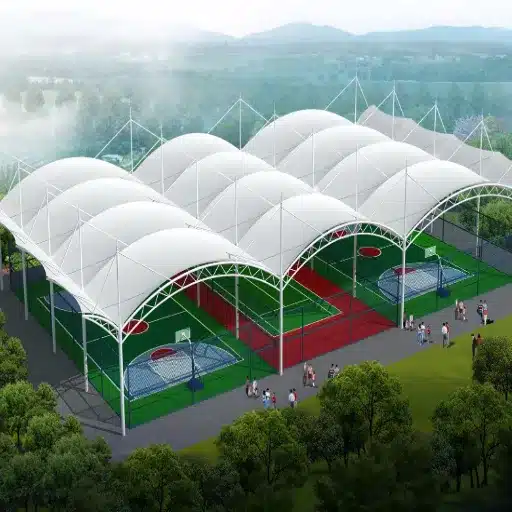
Advancements in Sustainable Membrane Materials
The research and development of sustainable materials for membrane structures is picking up pace very quickly and a global call for more eco-friendly building methods is supporting this. One of the trends worth mentioning is the use of bio-based polymers in membrane production, which leads to a decrease in the use of materials derived from petroleum. The sources of these polymers are renewable resources, including corn starch, sugarcane, or any other form of biomass, thus they are a more environment-friendly option. On top of this, bio-based materials are made to have the same performance features as traditional membranes, i.e. durability, weather resistance, and flexibility so that they are able to withstand the rigorous large scale architectural applications.
Besides this, a considerable invention is the improvement in the production process of membranes with regards to recycling and circularity. Manufacturers have started to implement the recycling of membranes at the end of their life cycle into their design strategies. For instance, completely polymer mono-material membranes do away with the issue of separating different materials and thus they automatically have an easier and more efficient recycling process. This change not only minimises the waste but also the material’s environmental footprint throughout its life cycle. Besides that, the development in coating technologies has resulted in the production of membranes with self-cleaning properties, so this has lessened the frequency of maintenance and further increased the lifespan of the material.
Moreover, the combination of the innovative technology with the membrane structures is also beginning to be a big trend. The systems, which using sensors placed within the membrane, can tell by monitoring environmental conditions, structural integrity, and energy consumption real-time. If such systems are coupled together with clean energy generation features like photovoltaic cell installation, they can not only yield the benefits of sustainability but also the technological advancements. No doubt, these progressions combine to create a real picture of tomorrow where the membrane technology will be not only a solution but also the front runner in contemporary architecture and sustainable design practices.
Smart Membrane Systems in Sports Architecture
Smart membrane systems have quickly become a game-changer in the sports architecture of today by fusing state-of-the-art technology with the most daring and creative of design concepts. The system to the fullest has taken the solar shading, regulation of temperature, and resistance to wind among others as the major benefits and it is featured in sports and stadiums built with smart membranes. Transparency or opacity of these can be changed by the stadiums depending on which one would be the most favorable for the natural light in the venue and how much less the lighting in the stadium would be contributing to the event or game lighting. Moreover, the sensing devices placed inside these membranes supply constant information about the environmental factors, crowds, and even the structural condition that is helpful in making sure the place is both safe and operating efficiently.
Their capabilities in energy sustainability support are also a great advantage. Smart membranes may contain flexible solar cells that are one hundred percent renewable and produce energy from the sun directly at the facility thus cutting down the carbon footprint of the facility significantly. The advanced materials utilized in the membranes also possess characteristics such as high strength, resistance to harsh weather, and lightweight which make the overall cost of maintenance lesser and at the same time they support the building’s long life. Such breakthroughs go hand in hand with the worldwide trend towards sustainability and show the potential of technology in altering the design and usability of sports infrastructure.
The smart membrane systems have flexibility and scalability to support their application from multi-purpose stadiums to smaller community sports centers which are thus a way of meeting both aesthetic and environmental requirements. Their characteristics of being energy-efficient, comfortable, and strong at the same time have made them a very important factor in the future of sports architecture not only in a particular region but globally.
Innovative Applications for Outdoor Membrane Structures
Outdoor membrane structures are really versatile, and they can be used in many different areas, so the ones with such qualities are widely regarded as most durable and eco-friendly. Among these applications, the most significant one is in the formation of the covered sports facilities, which include courts, pools, and stables for horses. The structures give a barrier against inclement weather that lasts and still can be said to be open and airy, implying that it is good for people to do physical activities. Furthermore, their weightless property is a great advantage; it translates to less and cheap materials for construction and hence, low impacts both on the environment and the economy.
Besides, membrane systems have found their way also into commercial areas like outdoor shopping, food courts, and exhibition pavilions. They present an envelope that is strikingly beautiful and functional while at the same time blowing up the existing architectural style as modern—improving visitor experience by providing shadow and cooling down the interior heat build-up.
Membrane structures used for canopies, amphitheaters, or transportation hubs are highly beneficial to public spaces and urban environments. Their effectiveness in energy use, which is associated with their capacity for drawing the light, makes them responsible ecologically. Currently, the development of new materials has advanced that it is already possible to combine solar panels and membranes making them sustainable and at the same time energy sources.
It is the innovative applications and material improvements that will steer the future of outdoor membrane structures, as these advancements will continue to unfold the design, cost-effectiveness, and environmental responsibility for both urban and recreational developments.
📚 References
-
MIT – Structural Roof Systems for Athletic Stadia: Discusses structural support methods for wide-span, column-free stadium roofs.
-
Harvard ADS – Nonlinear F.E. Analysis of Montreal Olympic Stadium Roof: Analyzes the pre-tensioned membrane and cable-stayed system of the Montreal Stadium roof.
Frequently Asked Questions (FAQ)
❓ What is a stadium membrane and how does it differ from other tensile membrane systems?
A stadium membrane consists of a roof membrane structure that is made particularly for stadiums and large sports venues, it is a type of tensile membrane typically composed of PTFE-coated fabric, PVC membrane, or PVDF tensile finishes. Due to the sizes and technical demands of stadiums that include wind and rain, crowd loads, and long spans associated with them, a stadium membrane has to be combined with a steel structure, truss, or cable systems for stability and to meet the higher technical requirements.
❓ What materials are commonly used in membrane structure stadium projects?
The list of the most common materials includes PTFE glass-fiber fabrics, PVC membrane textiles, and PVDF membranes. For support, high-performance fiber reinforcements and steel structures or cables are used. These materials have been selected for their durability, UV resistance, colour longevity, and the possibility of forming the iconic architectural shapes of the stadium while still being membranes’ outdoors and technical requirements for exposure.
❓ How do architects approach structure design for a stadium membrane roof?
Architects firstly come up with an architectural stadium concept giving the least of aesthetics versus function by taking into account sightlines, roof stadium coverage, and integrating with either prefab or custom-built truss and steel structure systems. The design process involves structural modeling of the tensile membrane’s behavior under loads, detailing cable systems and anchoring to ensure stability, selecting appropriate membrane material (PTFE, PVC, PVDF), and planning for maintenance, colour choices, and acoustic and lighting requirements.
❓ Can stadium membrane roofs withstand severe weather like heavy rain and wind?
Generally speaking, when the membranes are properly engineered, the roof structures can very effectively resist high wind and rain. The roof’s curvature causes the water to flow away from there, while at the same time, the roof’s components work (drainage and tensioning) to prevent ponding. The engineers use technical analysis to determine sizes for cables, trusses, and steel components such that stability against dynamic wind loads is ensured.
❓ Are stadium membrane structures suitable for different sports like soccer, football, and tennis?
Stadium membranes are widely accepted across sports and are used accordingly. The sport design of membrane structures includes soccer, football, and tennis venues. For smaller facilities like a roof over a tennis court, the designs would be relatively simple utilizing lightweight cables and PVC membranes, while large soccer stadiums would need complex trussing, steel structure, and PTFE solutions that span wide distances and give the iconic landmark of a stadium appearance.
❓ What maintenance is required for PTFE coated or PVC membrane stadium roofs?
The take care of and maintenance for PTFE and PVC membranes include first of all regular inspections of the fabric surface, secondly cleaning is done to keep the colour and translucence, third is checking the tensions of the systems and finally is inspecting the joints of steel structures, trusses, and cables. The high-performance coatings like PTFE and PVDF tensile treatments not only make dirt accumulation slow but also extend the life of the membrane roof and ensure performance through technical upkeep.
❓ How do membrane structures for outdoor stadiums achieve iconic architectural effects?
Iconic looks are achieved by the membrane structures from sculptural forms due to tensile behaviour of the membrane, use of translucent materials that create glowing effects at night, and the creative mixing of colour with layered fabrics. The architects come up with truss, cable, and structural steel that are expressive; thus, they are the ones that produce the unique roof stadium silhouettes which attract the spectators and are the reason why the venue is considered an architectural stadium landmark.
❓ What role do prefabrication and prefab components play in a stadium membrane roof project?
Prefab components reduce the time needed for the construction and simultaneously increase the level of quality control. Off-site production of prefabricated steel structure components, truss modules, and membrane panels will enable very accurate integration of cable anchors as well as attachment details. Consequently, this methodology will lead to shorter on-site erection time, reduction of disruption caused by the presence of busy stadium sites, and therefore, it is easier to attain the technical tolerances necessary to ensure the stability and performance of the final membrane roof.
Conclusion
Stadium membrane installations represent the pinnacle of modern architectural achievement, seamlessly blending engineering precision with aesthetic innovation. From the careful selection of materials like PTFE and ETFE to the meticulous installation processes, every aspect of these structures demonstrates humanity’s capacity to create functional art that serves both practical needs and environmental sustainability goals. As technology continues to advance and smart membrane systems become more prevalent, the future of sports architecture promises even more remarkable innovations that will redefine how we experience and interact with large-scale venues.