
Edge Reinforcement: Hem, Webbing & Reinforcement Options
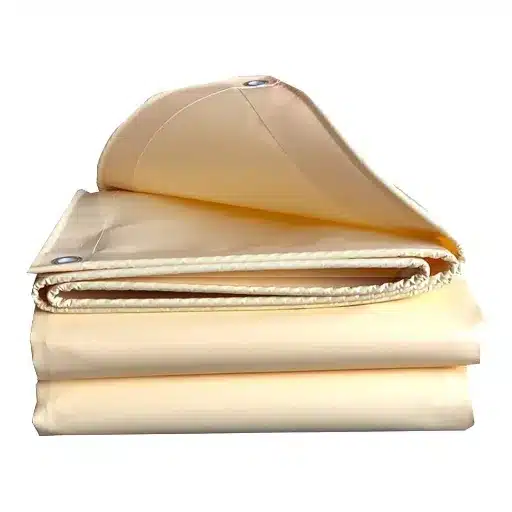
Toughness is of great importance when it comes to heavy-duty tarpaulins, and so is the dependability of their application specified. However, one critical element regarding tarpaulin design that is very much neglected and important at the same time is the provision of reinforcement or simply the design of the edges. This is as a result of the fact that most of the wear and tear on the tarp is at the edges, either due to wind shear, pull out, or weight of the load, making it necessary to strengthen the edges. This piece has closely examined different approaches to edge reinforcement including making hems, use of webbings, all to mentioning some other reinforcement methods. Whatever field you’re in that requires heavy-duty tarp be it construction, agriculture or any other, these tools will help you select the ideal tarp for that period and the purpose, and lengthen the useful life of the tarp.
Understanding Tarpaulin Edge Reinforcement
Importance of Reinforced Edges
It is a fact worthy of mention that reinforced edges of tarpaulins are necessary to the durability requirements of the material in certain application. The stress of wind, tension, or hauling is more severe on the edges of a tarp, so the greatest danger comes from those edges. Reinforcements are applied to all the weak points so that the tarp does not wear or tear with time and thereby loses its shape or protection function. This is bound to be expected because this serves the key purpose of tarpaulins in such areas as construction and agriculture which are oriented towards heavy usage.
Edge reinforcement prevents the tarp from collapsing under extreme conditions of heavy loads or strong winds. Factors such as double stitch, hem, or introduction of webbing enable the material to withstand ripping and tension. Their function also enhances the carrying strength of the tarpaulin, hence reducing the chances of shrinking its purpose in tying things or big spaces. This feature is an important aspect as far as effective protection of equipment, goods or crops is concerned.
Lastly, understanding that the use of edge reinforcement in tarpaulins should not be considered an unnecessary cost is important, as in the long run it proves to be an investment. A functional tarp that lasts for many years will automatically save the user the cost of frequently buying replacements. Moreover, this helps the user avoid or reduce inhibitive delays or occupation damages resulting from the collapse of the tarp in the middle of work. Therefore, with reinforced edges, it is more efficient and convenient for users to operate tarpaulins in highly demanding activities.
Common Applications of Reinforced Tarps
Reinforced tarps include a number of innovative uses, which account for their use across different sectors and settings. The first and most common way is in construction works where they serve the purpose of protecting tools, materials and sometimes work space from the elements present in the surrounding environment. The strength of the material and the heavy duty nature of the tarpaulin also makes them essential in protecting the equipment and staying within the limits of external work.
Furthermore, farmers also find an alternative use in the possession of such reinforced tarps. The reinforced tarps are placed on vegetables or hay bales, tractors, and agricultural implements to keep them well protected from any precipitation, wind, and extreme sunshine. They are covered for a temporary period and any reservoirs that contain water can be lined with such covers to minimize the distraction of farming activities.
Transportation and logistics on the other hand use extensive edge reinforcement tarpaulins in other settings. They cover the pool when not in use or protect cargo from water during transportation. These tarps also provide protection of the items being carried from one place to another without failure in any aspect of weather conditions or even distance.
Types of Heavy Duty Tarpaulin Materials
There are many different grades of tarpaulin for heavy-duty applications and they are produced from raw materials that are suitable for the type of application and section of the environment used. For example, the most commonly used materials are polyethylene, canvas and vinyl for their differing characteristics and benefits.
- Polyethylene or PE Tarps: This type of tarp is fabricated from HDPE or High Density Polyethylene which denotes that the tarp is strong and relatively light in weight as well as waterproof. The canvas is tough against tearing, protects against UV rays and water; therefore its most common application is outdoors, where it is used to protect construction projects, cover cars or tents, and use the tarps as temporary shelters.
- Canvas Tarps: Tarpaulins made from canvas, on the other hand, are breathable and flexible as they are made from either cotton or polyester. Their application is predominant where covering products that can benefit from ventilation such as machines or stored agricultural commodities is needed. Canvas tarps do not provide high levels of waterproofness, but they are very/well appreciated because they are wind resistant and sturdy in their application.
- Vinyl tarpaulin: Vinyl tarps, thanks to the use of polyvinyl chloride (PVC), are tough and durable. These products are good for heavy-duty work such as industrial covers, truck tanks and canopies, and environmental containment. They don’t get affected by the weather, chemicals, or abrasions – they continue to serve for a long time.
Each type of tarp caters to the demands of the industry and its applications, hence the materials to be selected based on the task at hand, weather exposure, and how long the material is supposed to be used.
Methods for Edge Reinforcement
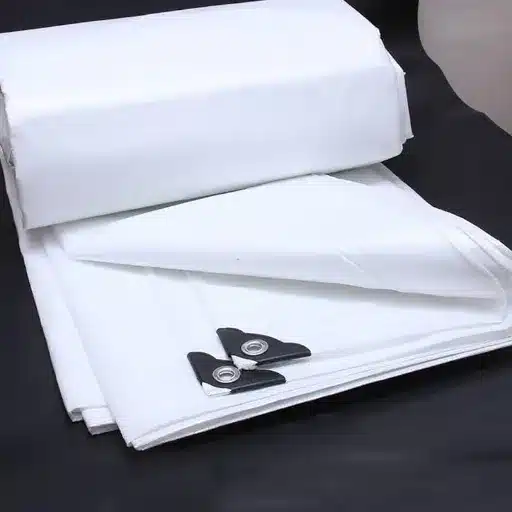
High-Frequency Welding Techniques
HF welding is a banning method particularly used in joining tarpaulin materials and edge reinforcement. This procedure takes the advantage of radio waves to the heat produced from an exterior source but to melt, splash and adhere plastics at a micro level without means of gluing or sewing thereof. This type of intercession allows for very strong and nearly invisible welds in which leakage will not be possible and its quality does not dilute as a result of weather conditions. This technique proves impractical where long lasting strength is important such as with industrial tarpaulins, lorry sheets, advertising boards etc.
High-frequency welding has one very useful benefit, due in large part to the fact that it can be used on PVC, polyurethane-coated fabrics as well as other thermoplastics used for making tarpaulins. Such a process allows manufacturers to form accurate and stable seams which in turn fortifies the entire tarp. High-frequency seam welding is useful in many other ways, mainly because seams also peel, tear and fray. Such seams are, therefore, very important in the context of adverse weather and industrial surroundings containing high levels of stress.
Development of technologies that ensure high frequency welding is sooner rather than later due to deployment complexity limitations. Additionally, advanced equipment can incorporate seam designs, allows for changes in welding speeds while keeping adjustments in quality control making every weld upto set industrial standards. This does not only enhance the level of reliability of the end product but also provides economic benefits in terms of material wastage and defects during manufacturing. A combination of effective welding applications and revolutionary designs and technologies enables this industry to create high performance covers for different uses.
Heat Sealing for Durability
Edge reinforcement is a significant aspect of making strong tarpaulins, enabling them to withstand the test of time under even the harshest conditions. This is achieved by using machines to heat and press thermoplastic components, resulting in strong materials that will not peel off with time. Better than the sewing method, heat-sealing does not leave stitches that allow the water in or destroy the structure years after. Structural joints made this way are not only strong but also ultraviolet resistant, heat resistant, chemical degradation proof and perfect for heavy duty uses.
Innovations in heat sealing modern technology include edge reinforcement and other extra features that succeed in making tarpaulins way stronger. For instance, multi-zone temperature as well as precision bonding technologies have brought about more even heat distribution. In terms of the functional efficiency of the material, it means that there are no weak areas that any way affect the performance of the material. Apart from that, some of the automated heat-sealing machines come with real-time monitoring systems for defects that may occur in production processes to enhance the quality of the products produced.
Heat sealing along with the latest high-technology materials such as reinforced polyethylene or polyvinyl chloride (PVC) enable manufacturers to develop tarpaulins that meet the harshest challenges in various industries such as agriculture and construction, transport, and others. High-frequency or ultrasonic welding technologies have expanded the capabilities of heat sealing, adding greater strength and accuracy to the final product. These developments in the application of heat-sealing techniques improve the strength of tarps as well as satisfy the ever-increasing need for trustworthy high-performance structures in many industries.
Rope-in-Hem Reinforcement
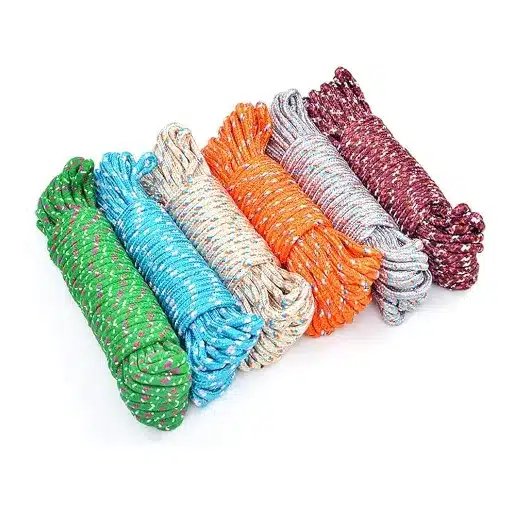
Rope-in-hem reinforcement is a popular technique for the manufacture of tarpaulins since it improves their quality and strength considerably. Basically, it entails enclosing a strong cord or rope in the edges of the tarpaulin and forming a strong margin around it. It is a technology which enhances the even distribution of the external forces across the tarp leading to a lesser risk of damage, especially in areas that experience high winds or heavy loads. Extreme conditions or demanding use made the rope-in-hem technology a necessity for those cases where tarpaulins can only withstand so much.
Rope-in-hem reinforcement provides much enhancement not only in terms of usage but also in keeping it functional for a long time. Among them is where tarpaulins are used for covering goods, as in the transport industry which often involves these items. Thanks to the edge reinforcement within the edges of the tarpaulin that includes boxing mechanisms, this option can be used for many occasions, more than one such tie-down round, or transported without losing shape. Further advancement has been attained with the use of new generation ropes for edge inclusion treatment, including high tenacity polyester or polypropylene ropes, which enhances its reliability against mechanical damage and deformation. it especially comes in handy in high mobility applications like trucking or freight in storage spaces.
Observing the modern state of affairs, the speed and quality of the manufacturing process of such advantageous edge reinforcement as rope-in-hem reinforcement have increased greatly owing to the progress of technologies in agglomerated automation combined with the development of accurate engineering. Modern machines allow embedding and sewing ropes into hems during sewing operations very fast with the same precision, which turns out to be very beneficial considering the occasion of worker’s fatigue who tends to make mistakes as he gets tired implement repetitive tasks. In addition to this, one of the aspects that manufacturers work on more than previous is creating a tarpaulin and reinforcement rope out of environmentally friendly materials. This latter part preserving durability in some respects means that the design and the making of the rope-in-hem reinforcement are further stages of evolution taking into account both because such modernity is required and the society’s welfare.
Material Specifications for Edge Reinforcement

Polyester Webbing Properties
The material polyester webbing, known for its high performance, serves the purpose of edge reinforcement with its great strength-durability combination. Stretching is also not synonymous with it, making it capable of holding its form and boundaries when the load varies or the weather changes. Furthermore, another advantage of polyester webbing is that it does not succumb to wear and tear or ultraviolet rays, this explains its application to surfaces that are exposed to the sun or other extreme environmental conditions. It does not easily absorb water which as well enhances the work pressure since, even in the presence of moisture or wetness, the material does not warp significantly over time.
Polyester webbing has the significant advantage of managing the contradicted features of flexibility and rigidity. Its course material is soft and helpful for effective and fast installation and application, and is also strong enough to hold the edges of the applied tarpaulin fabric and prevents any cuts, wears, and tears. There is also use of ropes that are in the form of inclusions which allow the edge reinforcement of the products in a homogeneous way. One may also use it for ease during production alongside PVC or PU coatings thus changing their characteristics and improving the performance of the product such as weatherproofing or flame retardant properties.
With its environmental advantages, using polyester webbing is consistent with the present agenda for sustainability. Apart from some companies which have introduced recycled polyester into their webbing, thereby lowering the carbon footprint during production. Also, thanks to the latest advancements in textile technology, it is now possible to manufacture thinner yet stronger polyester webbings hence saving the material and cutting on wastage. These changes integrate good efficiency with environmental protection. For this reason, polyester webbing is still mostly used, amazingly enough, in edge reinforcement in tarpaulin due to its environmental conduciveness.
UV-Resistant Threads
Products are often produced UV-resistant threads that greatly boost the durability of materials that they are them need to withstand harsh sunlight and other environmental conditions for long durations. Tending to minimize the effect of ultraviolet light on ordinary materials, these threads are manufactured to counter the effects of structural frailty, fading and any other weakness that the material may develop. Therefore, by making these threads in places where sharp objects such as tarpaulins cut the edges, outdoor seats, or materials that use marine applications, the performance of these products does not deteriorate with time even though IT has been left under the sun for long hours.
Innovative chemical engineering and fabrication processes facilitate the creation of highly efficient UV blocking yarns. Such yarns include polyester or PTFE (polytetrafluoroethylene) whose UV resilient properties are intrinsic or elevated through optimizations for this very purpose. Storey of nanocomposites seeks to design improved threads that would retain the same level of mechanical properties regardless application conditions. This enables extending some of the product’s lifetime and filtering out the number of replacements to be made and thus helps with regard to ecological implications.
Every business, in order to remain relevant, has to opt for the use of higher performance UV-resistant threads in the products they offer to the market so that such products which are designed to be used in the most adverse ecological conditions, do not destroy the end user and the end user finds them very useful. While the utility of undergone edge reinforcement is apparent in a wide range of relevant products, the ultraviolet light when excessive has the capacity of degrading the materials including their frames, or blankets that the all weather resistant material is constructed around.
Choosing Between PVC and Polyethylene
When working on a project which requires one to make a choice whether to use PVC (polyvinyl chloride) or polyethylene, it is significant to know their differences in terms of their characteristics, utilization, and effects. PVC is a man-made material, that is very long-lasting, strong to a point of not corroding and regularly applies to building constructions, plumbings, and electrical wiring – for insulations. It can be in a hard or soft state and has many uses. In contrast, polyethylene is known to be a lightweight flexible material and is, therefore, used in making most packages, containers as well as pipes. Furthermore, polyethylene is tough due to its chemical inertness and little water penetration. These two factors allow it to last for a very long period without getting damaged in many situations.
Analyzing the two alternatives from an ecological point of view, makes the choice between the two a non-trivial issue. PVC is known for its sustainability since it is one of the most durable plastics, however, its production and disposal are associated with substances, which might impact the ecology. Considering that PVC is difficult to recycle, problems with waste and pollution occur frequently. While polyethylene could be considered a tad better based on its simpler structures since polymers slow the recycling processes. Especially high-density polyethylene (HDPE), which regarding its impact on the environment during the cycle, is less opposed to working with PVC. It should be mentioned, however, that both substances are derived from crude oil and as such emphasize the need for eco-friendly practices and creative ways of reducing their edge reinforcement.
The choice, which is ultimate, should base on the specifics of each project. For example, if an application requires a material with a higher heat and mechanical resistance than the basic materials, then PVC might be the most suitable option. On the other hand, in case of light and flexible materials, plastic would be the best option. Alternatively, if the concern is with sustainability, it may be possible to use recycled content or bio-based materials in various forms of either material, which can lessen the impact to the environment, or at least, the product use. It is clear that by weighing their performance attributes against known or anticipated environmental impacts and target applications, industry players will make rational decisions without compromising on the two, as functionality and sustainability will not be in opposition.
Applications and Benefits of Reinforced Tarps

Construction Industry Use Cases
Within the building and construction industry, reinforced tarps are consistently used. This is as a result of their resilient nature and wide range of applications. In addition to these advantages, they are also quite economical. From these, 5, which will be further elaborated upon, are as follows:
- Scaffold Covers: Reinforcement covers are a common protection solution on sites during construction. That is to say that a framework’s tarpaulin is used in scaffolding to pin together the lateral edges of it. It prevents rain, wind or snow from affecting any activity at the site. Additionally, it does not only help to protect workers from loose objects debris and unsafe working conditions but also serves to promote the site safety.
- Cover for Roof: Reinforced waterproof tarp is also useful when renovating or doing emergency repairs for roofs. Such roof covers are crucial as they prevent any water damage to the facility or place under construction.
- Retaining Dust: Reinforced tarps are also applied in worksites where dust or any other particles can cause health or environmental problem. They are placed for containment. This helps ensure proper observance of safety measures. It also helps protect the air, environment and workers in the area.
- Protection of Materials: High-quality tarps are useful in covering raw construction materials like wood, cement bags, and a machine, protecting them from moisture, UV rays, and other external factors that may lower the quality of such materials.
- Protective covering of the ground: The reinforced tarps are also used to temporarily cover the ground when excavation or foundation works are in progress. In the process it preserves the top soil from being eroded, spilt contents are not washed over the place and workers do not litter the place unnecessarily.
This paper aims at defining the practicability and the many advantages of construction reinforced tarps in the field, in terms of efficiency, safety and edge reinforcement.
Logistics and Transportation Durability
In the field of logistics and transportation, using reinforced tarps is of vital importance, especially since they are expected to be particularly sturdy, and this is indeed the case. Let us look at five major advantage and applications of reinforced tarps employed in these areas:
- Object Covering: Reinforced tarpaulins incorporated in this mechanism safely cover the packages in place for shipment against adverse weather conditions, ensuring that the rain does not leak and the sun does not hurt, and the products are intact when they arrive.
- Cost of Resumed Attacks: Reinforced tarps, by employing protective measures such as weathershield and impact control stop all the bad things happening to the goods being transported. This helps the businesses dealing with it not incur any costs of repairing or replacing the goods after transportation.
- Enhancement of the Securement: Reinforced tarps, made of heavy duty material, and furnished with eyelets on the outer parts, ensures practical fastening of the mast, preventing it from sliding during transportation. This function is critical in regards to oversized object and items that do not have a definite shape.
- edge reinforcement: Built for heavy duty tasks, edge reinforcement tarps are particularly hard-wearing. As a result, they are most suitable for keeping what is being hauled intact within a period of time irrespective of weather conditions.
- Not Single Use and Economical: The existence of modern-day factors like cropper reinforced tarpaulins means one can use them for several runs before the need for purchasing new covers arises thus cuting down logistics costs for a given firm.
The described properties clearly reveal ways of dealing with load and expenditure rationalisation with the use of reinforced tarpaulins, proving that their application in modern transportation is necessary, if not essential; without them, cargo quality assurance and operations performance are greatly diminished.
Agricultural Tarpaulin Solutions
This product is mainly used to prevent the damage that crops, tools or animal enclosure can sustain due to unfriendly climatic conditions or pollution. The following carving provides a five counterpart-generic agricultural use of tarpaulin.
- Crop Protection Covers: This helps the paste problem, installing shading screen will reduce the temperature so the crops will not wither from the scorching sun, will protect from excessive rain, will be a barrier from prevailing winds and frost if climatic conditions require. Ie. crop covers with ultra violet light blockers aids with crop losses prevention by up to thirty percent with crops growing under houses with ventilating roofs in bright sunshine areas.
- Hay and Silage Covers: These tarp products serve to avoid the damaging dehydration of hay or silage that leads to its spoilage or molding. When waterproof silage tarpaulins are used, quality silage feed loss may be as low as 25% – 30%.
- Livestock Shelters: Here, agricultural tarpaulins serve as ceilings for some pop-up bunkers that protect the herds from the rain, snow and biting wind. It has been found that this kind of protection layer is beneficial for the animals because the body surface losses for women with coverage can go down to even 20 percent.
- Irrigation Pond Liners: Irrigation ponds will also require the installation of waterproof tarpaulins with edge reinforcement that will ensure that water stays inside the ponds as opposed to leaking to the surrounding soil even enabling a saving of 10- 15% of the total water used.
- Tarps for Covering Equipment:Tough tarps cover the farm machinery and tools keeping them free from rust, dirt, and weather conditions hence increasing their working life span and maintenance cost savings by 20%.
The various incorporation of the agricultural tarps shown above is thus a better and cheaper means of increasing fertilizer input, improving the yield, and protecting the capital for the employees in the farm.
Customizing Your Tarpaulin for Optimal Performance

Tailoring Edge Reinforcement for Specific Needs
One of the most important aspects of managing agricultural tarps that determines their efficiency in use and degree of longevity is the adequacy of the construction of the edge reinforcement of the sheet Material. The performance of a tarpaulin in a specific working environment may be improved and longer too, if the edges are adapted to specific requirements. Edge reinforcement of tarpaulins with double stitched hems, ropes embedded along the edges or heat-sealed stitches, among others aims at increasing the longevity of the tarp during conditions in which the taut tarp experiences tearing as such a condition uses heavy pressured windy such as seasons. This case is also of great use for tarps when one wishes to cover huge contraptions such as silos or even block winds in certain areas.
Notably, the performance also differs depending on the material used to edge reinforcement. For example, using rustproof grommets and hardwearing ropes means that the tarpaulin can be fastened tightly to the anchoring points without damaging its framework. The addition of elements such as UV coats and anti-fraying to the tarpaulin helps to resist the strain that is put on the framework while undergoing direct sunlight exposure, heavy rains accompanied by floods or occasional variations in temperatures among others. Such enhanced features also add strength making it difficult to disintegrate faster than it is designed to.
The cost of repair and replacements will also be controlled if the proper edge reinforcement is invested in. This is made possible by decreasing if not completely avoiding the explicit damage that is incurred. For instance, the farmer would have to evaluate the use of the tarpaulin, whether it is for coverage of crops, protection of feeds and other input or covers for machines within the farm and order designs that strengthen with loops, webbing or edges that are not easy to be worn out. Such modifications ensure that the tarp designs are fit for purpose and at the same time express the wider principles of sustainability, making them indispensable in modern agriculture.
Designing Heavy Duty Covers for Outdoor Use
Tough covers become a must-have wherever there come additional requirements to safeguard the equipment from adverse weather conditions, be it agriculture and agricultural products, construction, warehousingeven postpartumbag. In the process of developing such panels the stacking material is a key feature. Above all the choices of high-density polyethylene vinyl fabrics are very popular as they are resistance to UV water tearing as well as support extreme temperatures. The thickness which is what is commonly referred to as mils or GSM which grams per square meter usually is indicative on how well such covers can enhance resistant towards external conditions in that the thicker the stronger ensures covering.
The main idea was to create features that facilitate the use of the covers and increase their lifespan. Eyelets, edge reinforcement, and double-stitching for the edges are just a few measures that come with very high winds and pressure, trying to keep the covers in place. The covers can also have anti mildew or anti-fungal coatings which make them ideal for conditions that are moist or humid such that they do not get damaged within a short period. Lastly, covers have been innovatively made with options of having adjustable tie-down straps, zippers, or grommets depending on the cover application purpose and the frequency of acces required.
It should also be noted that adapting strong covers to particular circumstances is also important. For instance, those in the industrial sector may require covers that are fireproof for high-risk zones, whilst in the case of marine applications, corrosion resistance and salt tolerance are necessary. The inclusion of options such as different colours for branding purposes or camouflage purposes can be positively instrumental in improving the practical function. Through the use of varied designs and weather-resistant techniques, it can be concluded that heavy duty covers are essential in the protection of assets in many areas thus enabling cost effective safety measures over time.
References
-
Utah State University Digital Commons: Mentions the use of tarps in maintaining heat and moisture during experiments, with references to reinforcement.
Frequently Asked Questions (FAQ)
Q: What do you understand by the phrase tarpaulin edge reinforcement? Why is it so important?
A: tarpaulin edge reinforcement definition include additional materials, knotting or tools on the rim of a tarp to support weak spots and avoid tear; this is crucial in outdoor situations, which lengthen the term of the cover of the tarp from wear and tear and thus performance in active use is improved greatly.
Q: What is the most preferred material for a high quality tarpaulin edge reinforcement?
A: Most often heavy weight PVC coated synthetic fabric or Riveted Fabric Double Folded Hems are used for the high end look and feel; These material types are superior in the aspect of abrasion and suitable for use with many types of tarps such as pool covers or industrial tarpaulins.
Q: How the distance between grommets of the tarp impacts the performance of edging reinforcement in tarpaulin?
A: To distribute the force transition across the strengthened border in the right manner, grommets necessarily have to be spaced correctly as well so that one grommet does not have to withstand all of the forces while the others are protected, which should eliminate tear importance if possible; for dynamic or all-weather usage of tarpaulin and when tying down heavy load on the corner, it is quite better to have more grommets per unit length.
Q: Is tarpaulin edge reinforcement available with custom features?
A: Yes, features include but are not limited to extra strength on corners, the inclusion of webbing, modifying the grommet distances, use of breathable materials, a number of other materials including fabrics of choice and other variations that provide for a tarpaulin that is functional for custom and prolonged purposes.
Q: Does one know what kind of reinforcements will do best, when faced with the question of strengthening the corners of a tarpaulin?
A: ‘Stress’ points are the nightmares; they are in the corners, but triple stitch layering, corner plates or PVC corners can be useful and worth mentioning for the pool applications as well as any other venue that can sustain constant tension in the corners.
Q: Do mesh materials work for edge reinforcement when it comes to tarpaulins for ventilation purposes?
A: The use of mesh materials in reinforced edges is possible and effective as well. They may work as functional covers and come in handy for outdoor usage, especially where some drainage is needed or airflow is a must, yet waterproofing issues are best solved using heavy-duty reinforced hems.
Q: When should I go for a simple reinforced tarpaulin and when should I settle for a more expensive one?
A: A versatile outdoor reinforced tarpaulin should be preferred for performance that needs to adapt in various situations and for maximizing value for money; to be on the safe side, one should get the delicate tarpaulin that has a wide range of material types longevity, reinforced edges perimeter and specific distance for grommets.
Q: Maintaining tarpaulin edge reinforcement, what helps in achieving this?
A: Timely attention to the abrasions, some grommets are just cleaned when tightened, some wear and tear is repaired before it grows larger, all these measures maintain the goal of edge reinforcement ; there is place for the tarpaulin as none exists; there is care for it until it happens, proper instead of excess exposure to sunlight contributes to this also.