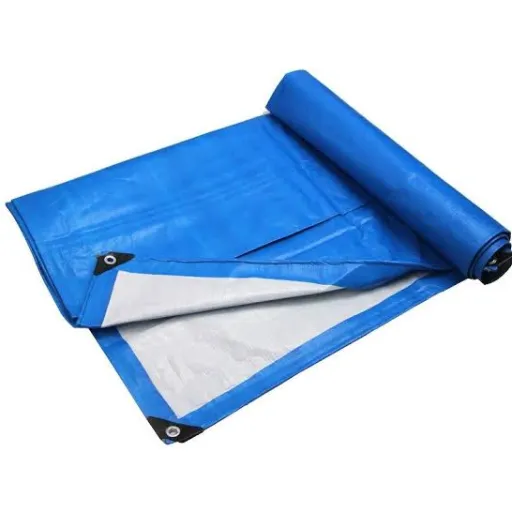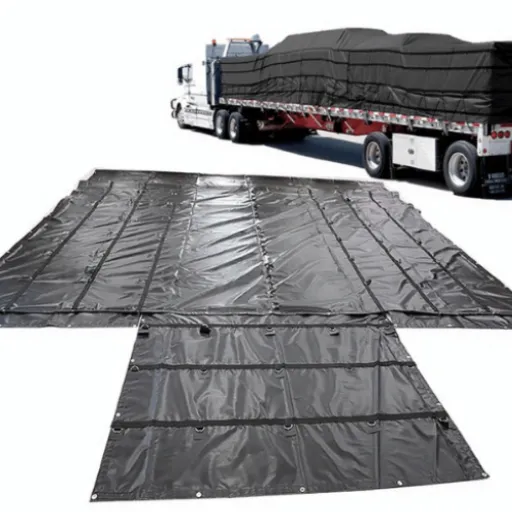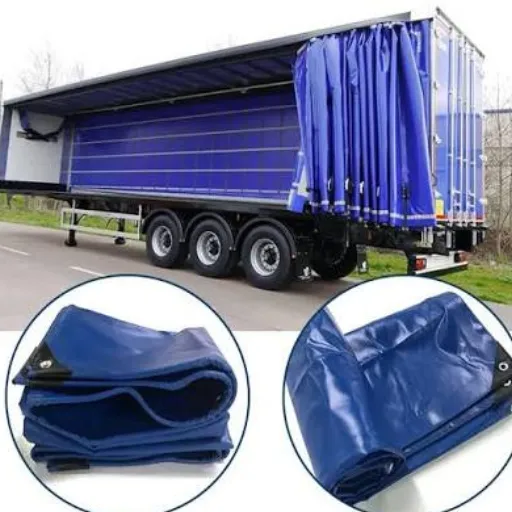

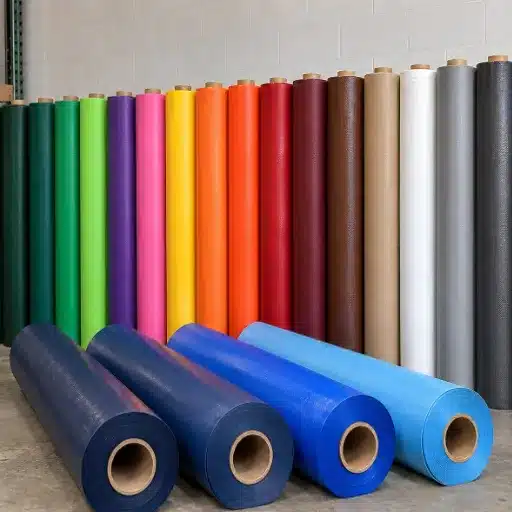
PVC Coated Fabric Price: Cost Drivers & TCO Guide
PVC coated fabric price is not one number. As an indicative 2026 reference for factory-direct supply at medium to large volume, PVC tarpaulin runs about 1.50 to 2.50 per square meter at 350 to 450 gsm, 2.50 to 4.50 per square meter at 500 to 650 gsm, 4.00 to 6.00 per square meter at 700 to 900 gsm, and 6.00 to 10.00 or more for premium engineered and membrane grades. Every band depends on the same variables: base scrim, total weight, coating chemistry, topcoat, width, volume, and delivery terms. A quote without those details is not a price; it is a guess.
Search “pvc coated fabric price” and you get two kinds of results, and both hide the number. A marketplace listing will quote “$0.80 per square meter” and tell you nothing about the width, the scrim denier, or the coating that price belongs to. A supplier’s “cost guide” will spend 2,500 words explaining why fabric costs what it costs, then send you to a contact form without stating a single figure. On a coating line the opposite is true: price is one of the most readable things about this material, because it is a spec sheet with a currency symbol attached.
We manufacture and batch-test PVC coated fabric on high-tenacity polyester scrims, and this guide is the pricing briefing we give to procurement managers, OEM buyers, and converters. By the end you can estimate a realistic budget band for your grade, decode the five priced components behind any quote, normalize per-meter, per-square-meter, and per-kilogram prices so you compare like for like, understand the volume and compliance premiums that move landed cost, and send an RFQ a coating line can actually quote. For the full construction and specification picture, start with our PVC coated fabric specifications guide.
Key Takeaways
- PVC coated fabric price is a spec sheet, not a single number. Indicative 2026 factory-direct bands run about 1.50to1.50to2.50/m² at 350 to 450 gsm, 2.50to2.50to4.50/m² at 500 to 650 gsm, and 4.00to4.00to6.00/m² at 700 to 900 gsm, before FR, compliance, and finishing premiums.
- Two “650 gsm” fabrics can differ 30 to 50 percent in price and in service life, because weight is only one of five priced components: scrim, coating weight, compound chemistry, topcoat, and width or finish.
- Compare on cost per year of service, not price per square meter. PVC at roughly 2 to 4 times the upfront cost of PE lasts 5 to 10 years against PE’s 1 to 3, with break-even around 18 to 30 months of continuous duty.
- Normalize every quote to $/m² of usable width before you compare. Per-meter pricing is meaningless without width, and per-kilogram pricing needs gsm and width to convert.
- Fire-retardant (NFPA 701) compounding commonly adds 15 to 30 percent; phthalate-free and lead-free compounds add about 10 to 20 percent; samples and short runs are priced for setup and calibration, not for the material.
How Much Does PVC Coated Fabric Cost? Quick Reference
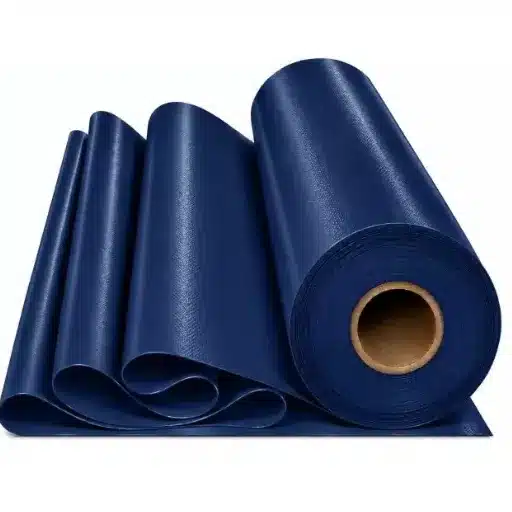
There is no single list price for PVC coated fabric. It is quoted to construction, volume, and delivery terms, and a responsible manufacturer will always confirm those before quoting. As a directional planning tool, the indicative factory-direct bands below reflect China export and comparable Asia supply at medium to large volume in 2026. Treat them as a budgeting range, verify them against current quotes for your exact spec, and remember that every price signals the construction behind it.
| Grade / Construction | Indicative Reference (2026, factory-direct, medium-large volume) |
|---|---|
| Light woven PVC-coated oxford, 300 to 600D | ~0.30to0.30to1.10 per linear meter on narrow ~1.5 m widths (a different product class; normalize before comparing) |
| PVC tarpaulin, 350 to 450 gsm | ~1.50to1.50to2.50/m² |
| PVC tarpaulin, 500 to 650 gsm | ~2.50to2.50to4.50/m² |
| PVC tarpaulin, 700 to 900 gsm | ~4.00to4.00to6.00/m² |
| Premium engineered / membrane grade | ~6.00to6.00to10.00+/m² |
| Compliance and finishing adders | FR (NFPA 701) commonly +15 to 30%; phthalate-free/lead-free +10 to 20%; PVDF topcoat premium; hemming, grommets, edge reinforcement +10 to 40% on finished goods |
The ranges are wide for a structural reason. Marketplace listings quote a raw gsm number with no construction disclosure, so two suppliers’ “650 gsm” can be genuinely different products. Lower-bound quotes usually mean a lighter recycled compound, a thin coating, or a cheaper scrim. Upper-bound quotes usually mean virgin resin, a high-tenacity polyester base, performance additives, and a protective topcoat. That gap is not margin inflation. It is the price of the spec stack explained in the next section.
One more comparison rule before we go deeper. Western retail and hobby roll prices often run 3 to 10 times factory-direct figures, because they include distributor handling, small-quantity margins, and single-roll logistics. If you are buying in volume for a commercial application, benchmark against factory-direct and wholesale references, not against a roll sold to a weekend DIY buyer. For raw-material context on why these numbers move, our North America PVC vinyl coated fabrics market report tracks resin volatility and regional supply.
What You Are Actually Paying For: The Spec Stack Behind the Price
Read any PVC coated fabric quote as a list of priced components. Five variables sit inside the number, and each one changes what the fabric will survive and how long it will last.
1. Base scrim and yarn. The woven polyester base carries the mechanical load. Yarn denier and thread count set the price floor: 250D and 500D yarns belong to light banners and liners, while 1000D x 1000D at 20 x 20 threads per inch is the truck and industrial standard, and 1000D x 1300D raises tear strength for aggressive duty. Virgin high-tenacity polyester costs more than recycled stock and delivers measurably more consistent strength. Two 650 gsm rolls can carry very different scrims underneath the same total weight.
2. Total weight and coating weight. GSM is the sum of scrim plus coating. A larger coating share means more compound is consumed on the line, and compound is the largest raw-material cost in the product. This is why weight is the single biggest price driver and also never the whole story.
3. PVC compound chemistry. The plasticized PVC that makes the fabric waterproof and flexible is itself a recipe. Virgin resin costs more than recycled and behaves more predictably. The plasticizer, typically DINP or DOTP, represents roughly 25 to 35 percent of compound cost, and switching to non-phthalate, phthalate-free chemistry adds about 10 to 20 percent. Filler such as calcium carbonate lowers cost per kilo but degrades flex and UV life at high loading, so a “cheap” compound is usually a heavily filled one. UV stabilizers, flame retardants, anti-mildew agents, and cold-flex plasticizers are all priced line items, not free features.
4. Topcoat. A gloss or matte lacquer protects print. A PVDF topcoat adds cleanability and a longer design life against UV and graffiti. Each topcoat layer adds cost and adds service life, which is the trade you are actually buying.
5. Width, roll length, and finishing. Non-standard widths and extra-long rolls incur splicing, roughly 5 to 8 percent edge-overlap loss, and a slower line speed, all of which raise cost per usable square meter. Hems, grommets, edge reinforcement, and printed surfaces on finished goods add 10 to 40 percent over base material.
The phrase that captures all of this: the price is the spec. A coating line does not sell “PVC coated fabric.” It sells a specific scrim, coated to a specific weight with a specific compound, finished with a specific topcoat, on a specific width. Every one of those choices has a price.
Nadia is a purchasing manager at a curtain converter. In January she asked three suppliers for a quote on “650 gsm PVC coated fabric.” The three numbers came back at 3.20,3.20,4.15, and $4.90 per square meter, and on paper they were the same product. When she asked for construction details, the differences surfaced. The low quote used a 500D scrim with a heavily filled recycled compound and no topcoat. The middle quote used a 1000D scrim, virgin resin, and a standard UV topcoat. The high quote added a PVDF topcoat and a tighter weave for dimensional stability in sliding curtain systems. All three were legitimately “650 gsm.” Two of them were not the same product, and the cheapest one would not have survived a curtain’s flex cycles. She bought the middle spec and saved nothing in the first year but a great deal by the fourth.
The coated-versus-laminated distinction also affects cost. A knife-coated fabric applies liquid PVC directly to the scrim, which can build coating weight efficiently. A film-laminated fabric bonds a pre-formed PVC film to the base, which gives a different surface and adhesion character but uses the material differently on the line. The construction choice changes price and performance, and we summarize the difference in our guide to laminated fabric construction.
Need a reference number for a specific construction, not a range? Our engineering team quotes to spec and will send a production-line sample plus batch test data before you commit. Request a custom quote.
Price Per Meter vs Per Square Meter vs Per Kilogram: Normalize the Quote
Buyers get tripped up by units more than by any other pricing issue, because suppliers quote in whatever unit makes their listing look best. Per-meter pricing is meaningless without the fabric width. Per-kilogram pricing requires gsm and width to convert into something usable. Per-square-meter pricing is the closest to an apples-to-apples unit, but only when the construction matches.
The conversion math is straightforward:
- Per square meter from per linear meter: price per linear meter ÷ fabric width in meters. A 0.62/mfabricon1.5mwidthisabout0.62/mfabricon1.5mwidthisabout0.41/m². A 2.80/mfabricon3.2mwidthisabout2.80/mfabricon3.2mwidthisabout0.88/m².
- Kilograms per roll: roll length (m) × width (m) × gsm ÷ 1,000. A 100 m roll, 3.2 m wide, at 650 gsm weighs 100 × 3.2 × 0.65 = 208 kg.
- Per square meter from per kilogram: (/kg×gsm)÷1,000.At/kg×gsm)÷1,000.At2.50/kg and 650 gsm, that is about $1.63/m² of fabric weight, before any finishing.
Here is the trap in real life. A buyer scanning a marketplace sees “$0.62 per meter” on a light woven Oxford and files it as cheaper than a tarpaulin quoted at “$2.80 per square meter.” The Oxford is on a 1.5 m width, which makes it about $0.41/m². But it is also a 300 to 600D lightweight class, not a heavy PVC tarpaulin, so it is a different product in the first place. On paper, per meter, the wrong fabric always looks cheaper. The number only becomes comparable after you convert to $/m² at usable width and line up the construction. We walk through when each of these materials is the right call in our PVC vs PE tarpaulin comparison.
The second trap is the “cheap per meter” listing on a narrow consumer roll. A 1.35 m wide banner fabric priced per meter and a 3.2 m wide truck tarp priced per meter look close until you realize one gives you less than half the coverage per meter of roll. Always ask three questions of any quote: what width, what total gsm, and what does that gsm contain? If the supplier cannot answer, the quote is not comparable to anything.
What Moves the Price? GSM, Volume, Compliance & Landed Cost
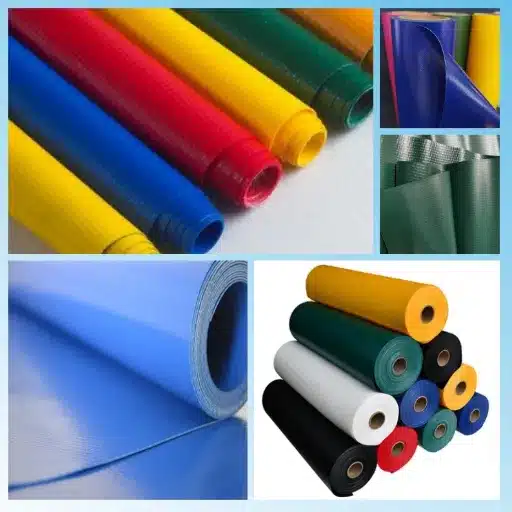
Beyond construction, four commercial forces move the number: volume, compliance, customization, and the cost of getting the goods to your dock.
Volume and MOQ Tiers
Price per square meter falls as order size rises, because setup, calibration, color matching, and finishing costs spread across more meters. A useful way to think about tiers:
| Order Type | Indicative Quantity | Pricing Reality |
|---|---|---|
| Prototype / sample | 50 to 200 m | Highest $/m²; priced for setup, calibration, color and finish cost, not for the material |
| Small production | 500 to 2,000 m | Moderate; color locked, some setup amortized |
| Full production | 5,000+ m | Best rate; one locked specification, full setup amortization |
A sample order is not a preview of production pricing. When a prototype 200 m run quotes at nearly double the per-square-meter rate of a 5,000 m run, that is the cost of setting up the line and matching your color, not the supplier padding the material. The lesson cuts both ways: never budget a full production run from a sample price, and never judge a supplier’s production competitiveness from a sample quote.
Compliance and Certification Premiums
Certification is a priced line item. Fire-retardant compounding to NFPA 701, which the NFPA 701 standard governs for flame propagation of textiles, commonly adds 15 to 30 percent to material cost because the FR additives are genuinely expensive and are tested batch by batch. Phthalate-free and lead-free compounds for children’s, inflatable, and CPSIA-sensitive uses add about 10 to 20 percent. REACH and RoHS documentation, PVDF topcoats, and cold-flex grades each carry their own adder. These are not padding. In a regulated application, the FR line item is the difference between passing and failing a site-safety audit, and the phthalate-free line item is the difference between selling into the EU and being stopped at the border.
Customization Adders
Custom colors and RAL matching, printable topcoats, grommets, hemmed edges, and reinforced corners are all fabrication labor on top of base material. Expect finished-goods customization to add 10 to 40 percent over the raw roll price. It is usually the right money to spend, but it belongs in the budget as a separate line, not folded silently into a per-square-meter number.
Landed Cost and Incoterms
The price on the quote is rarely the price at your dock. Under Incoterms 2020 rules, an EXW quote excludes freight and export handling, FOB includes loading but not ocean freight or insurance, CIF includes freight and insurance to port, and DDP includes delivery to your door with duty paid. The gap between EXW and DDP on a container-load order can be substantial once ocean freight, marine insurance, import duty, and inland haulage are added. U.S. buyers should also check the tariff schedule, because PVC fabric duties and the USMCA rules-of-origin position change landed cost for shipments routed from different countries. Ask each supplier to quote the same Incoterm so you compare total cost, not just FOB.
Raw Material Volatility
Finally, the largest uncontrollable input: PVC resin tracks petrochemical feedstocks, and resin prices have swung 15 to 30 percent within single fiscal years since 2020. Plasticizers add another layer of volatility on top. A quote is a snapshot in time, which is why a price article can give you bands and a manufacturer can give you a number, but only a current quote to your spec, your volume, and your Incoterm can tell you what you will actually pay this quarter.
Request a quote for PVC coated fabric from LY TRUSTLINK.
PVC vs PE: Is PVC Coated Fabric “Expensive”?
On a raw price-per-square-meter basis, yes, PVC coated fabric is expensive relative to polyethylene. The comparison changes when you count how long each material lasts and how many times you replace it.
| Material | Upfront (indicative) | Service Life | Failure / Replacement Pattern |
|---|---|---|---|
| PE / HDPE tarp | ~0.50to0.50to1.50/m² | 1 to 3 years; truck duty often 6 to 18 months | Replaced 3 to 4 times in a 7-year window; UV and seam failure; cannot weld a fully waterproof seam |
| PVC coated polyester | ~2.50to2.50to8.00/m² | 5 to 10 years | Replaced 0 to 1 times in the same window; weldable seams; repairable in the field |
The premium is engineering, not markup. PVC coated fabric carries a high-tenacity polyester scrim that PE does not have, so tensile and tear performance are in a different class. It is welded, not stitched, into waterproof seams. It holds UV stabilizers and flame retardants that keep it serviceable outdoors for years. None of that shows up in a $/m² comparison, and all of it shows up in a cost-per-year comparison.
Do the math over seven years. PE at $1.00/m², replaced four times, costs $4.00/m² in material alone, plus four rounds of installation labor and four windows of unprotected assets. PVC at $5.00/m², installed once, costs $5.00/m² total, and by year three the PVC installation has already broken even.
This is why the fleet-grade guides converge on an 18 to 30 month break-even for continuous-duty applications. Our vinyl tarp vs poly tarp buyer’s guide runs the same comparison in depth for tarpaulin buyers.
Marco manages equipment storage for a construction firm in a high-UV region. For years he bought PE covers at about $0.90/m² because the line item looked responsible next to PVC at $4.50/m². Every cover failed inside two seasons. Over seven years he replaced them three times, spending close to $3.60/m² on material and losing coverage every time a cheap cover split during a storm. When he finally moved to a 750 GSM PVC grade, the first cover was still in service at the end of year three. He spent more per square meter in year one and less per year of protection in every year since.
The honest caveat matters for credibility. PE genuinely wins for short-term and light-duty work: a single-event cover, a one-season job, a layer thrown over equipment for a few weeks. When the duty is short, buying the long-life material is over-specification. When the duty is continuous, buying the cheap material is over-payment. Match the material to the duty cycle, and buy on cost per year of service rather than cost per square meter. The lifespan data behind these service-life ranges is covered in our tarpaulin lifespan guide.
Total Cost of Ownership: The Real Price of a Specification
Total cost of ownership (TCO) is the only honest way to compare fabrics, because it captures the full stream of cost: initial material, installation or fabrication, maintenance, replacement cycles, and the risk cost of failure. Downtime is the part most buyers forget. A cargo exposure incident, a failed cover over expensive equipment, or an inflatable that splits during an event costs far more than the fabric that failed.
A directional example shows the shape of the math. Consider a 20-truck logistics operation covering flatbeds, comparing annual PE replacement against a 750 GSM PVC grade on a five-year horizon. At roughly $360 per truck per year in PE material, the operation spends about $36,000 over five years and never accumulates a durable asset; covers are replaced every season. At roughly $228 per truck per year when the PE annual cost is spread across a PVC cover that lasts the full period, the operation spends about $22,800 over five years, roughly 35 percent less, and its covers are still serviceable at the end. Weight that against the fact that PVC carries a higher upfront number, and the procurement decision reverses.
The engineered-upgrade case is even clearer. In curtain and heavy-freight duty, moving from a 650 gsm standard grade to a 900 gsm engineered grade can add about 35 percent to unit cost while roughly doubling the replacement interval, which cuts cost per year by roughly 20 percent or more. Up-specification pays when the duty is severe, and over-specification wastes money when it is not, which is why the grade decision belongs to the engineer who knows the duty. For the fleet-specific version of this analysis, our PVC coated fabric for truck tarpaulins walks through side-curtain and flatbed economics in detail.
How to Compare PVC Coated Fabric Quotes & Write an RFQ
A price is only comparable when the construction behind it is comparable. Use this checklist to put every quote on the same footing before you decide.
- Line up the construction. Confirm total gsm and tolerance, base scrim denier and weave, coating weight and adhesion, topcoat type, and width and roll length. If two quotes do not specify the same scrim and topcoat, they are not the same product.
- Normalize to $/m² of usable width. Convert every per-meter and per-kilogram quote before comparing. The math is in the section above.
- Separate material from fabrication. Ask for the roll-goods price and the finished-goods price as separate lines so you can see what you are paying for fabrication.
- Request the batch test report. Price means nothing next to unverified construction. Ask for tensile in warp and weft per ASTM D751 or EN ISO 1421, tear resistance, and coating adhesion per ISO 2411, with measured numbers and a report date.
- Confirm compliance line items. If you need FR, phthalate-free, REACH, or PVDF, ask for each as a quoted adder with the supporting certificate, not as a vague “compliant” claim.
- Ask about volume tiers on the same spec. A 5,000 m price on your exact construction tells you more than a sample price. Confirm the quantity at which the rate changes.
- Request a pre-production sample. A physical sample from the production line, weighed and measured, catches most spec mismatches before they become a container problem.
- Confirm the Incoterm. Get every supplier quoting the same delivery term so you compare total cost, and add freight, duty, and inland handling to build your landed cost.
A supplier that cannot answer what scrim is under the gsm, cannot produce a batch test report, or will not state which resin and plasticizer the compound uses is quoting you opacity. In coated fabric, opacity is a cost. The pricing transparency that a real coating-line manufacturer can offer is the same transparency you should demand of the roll you buy. We publish directional bands and quote to verified construction; our custom PVC coated fabric manufacturing and OEM order process starts with a spec, not a sales pitch.
PVC Coated Fabric Price: Frequently Asked Questions
What is the price of PVC coated fabric per square meter?
As an indicative 2026 factory-direct reference at medium to large volume, expect roughly 1.50 to 2.50/m² at 350 to 450 gsm, 2.50 to 4.50/m² at 500 to 650 gsm, and 4.00 to 6.00/m² at 700 to 900 gsm. Confirm to your construction, volume, and Incoterm before budgeting.
How much does PVC coated fabric cost per kg?
Bulk PVC-coated polyester commonly runs about 2.10to2.10to5.00/kg depending on specification and volume. To convert to $/m², multiply by the gsm and divide by 1,000. A quote per kg still requires gsm and width to be usable.
Why is PVC coated fabric more expensive than PE tarp?
PVC carries a high-tenacity polyester scrim, a heavier engineered coating, performance additives, and a weldable waterproof seam. PE has none of those. On a cost-per-year basis PVC often wins at 18 to 30 months of continuous duty because PE is replaced several times in the same window.
What determines the price of PVC coated fabric?
Five components: base scrim (denier and weave), total weight and coating weight, PVC compound chemistry (resin, plasticizer, filler, additives), topcoat, and width or finishing. Volume, compliance premiums, customization, freight, and Incoterms move the landed cost on top.
Is higher GSM PVC fabric more expensive?
Generally yes, because more coating means more compound consumed. But GSM is only one variable. A lighter fabric on a premium scrim can cost more than a heavier fabric on a cheap scrim, so compare the full construction rather than weight alone.
What is the MOQ for PVC coated fabric?
Indicatively, prototypes run 50 to 200 m at the highest per-square-meter price, small production runs 500 to 2,000 m, and full production starts around 5,000 m at the best rate. MOQs vary by manufacturer, construction, and color.
How do I compare PVC fabric quotes from different suppliers?
Normalize every quote to $/m² of usable width, then line up the construction: gsm, scrim denier, coating weight, topcoat, and roll length. Ask each supplier for a batch test report and the same Incoterm so the numbers are actually comparable.
Does fire-retardant PVC fabric cost more?
Yes. NFPA 701-compliant compounding commonly adds 15 to 30 percent to material cost because FR additives are expensive and tested batch by batch. For regulated applications it is a necessary line item, not optional padding.
Conclusion
PVC coated fabric price is not a mystery, and it is not a single number. It is a spec sheet you can read: scrim, coating weight, compound chemistry, topcoat, width, volume, and delivery terms all sit inside the figure, and two “650 gsm” fabrics can differ by 30 to 50 percent in price and service life because they are different products wearing the same weight label.
Buy the way an engineer specifies rather than the way a listing is written. Normalize every quote to $/m² of usable width, compare equivalent construction, request the batch test report, and separate material from fabrication. Then run the comparison that actually matters: cost per year of service, not cost per square meter. PE looks cheaper until it is replaced three times while the PVC installation is still on its first cover. The price of PVC coated fabric is only “expensive” when you measure it against the wrong unit and the wrong duty cycle.
We manufacture and batch-test PVC coated fabric on high-tenacity polyester scrims, and we publish directional reference bands rather than hiding prices behind a contact form. Send us your specification, your volume, and your delivery terms, and we will quote the construction you actually need, with a pre-production sample and batch test data before you commit. Talk to an engineer or request a custom quote to start. The price you verify against your own duty is the price that will hold up in year three.