
Types of Coated Fabrics: PVC vs PU vs Silicone | Guide
The main types of coated fabrics used across industry are PVC coated fabric, polyurethane (PU/TPU) coated fabric, silicone coated fabric, and PTFE (fluoropolymer) coated fabric, with acrylic and rubber coatings as supporting options. None of them is universally best. PVC is the industrial workhorse, chosen where waterproof, RF-weldable, abrasion-resistant, cost-effective construction matters. PU wins where light weight, flexibility, and breathability matter more than raw ruggedness. Silicone and PTFE are the specialist high-performance coatings, selected for heat, UV longevity, chemical inertness, and cleanability at a higher cost.
Search the phrase “types of coated fabrics” and most of the web answers in hand-feel: PU is soft, PVC is stiff, silicone is heat-proof. None of that tells a procurement manager which coating to specify for a tarpaulin that will sit on a truck for five years, an inflatable that has to hold air at a welded seam, or a membrane that must survive a decade of UV. Coating choice is the single biggest driver of how long a fabric lasts in the field, yet the comparison content that ranks for this query almost never quotes a specification.
This guide is written by a coating-line manufacturer rather than a fabric directory. It treats the main coated fabric types as engineered systems of base fabric, polymer, compound, and coating weight, compares them on real dimensions instead of texture, gives you an application-to-coating matrix that covers tarpaulins, truck curtains, inflatables, architectural membranes, marine and pool covers, banners, and doors, and separates coating chemistry from construction method. If you also want the full taxonomy of coating types, methods, and industries, our existing guide to how coated fabrics are made and where they are used covers that ground in depth. This article focuses on the decision: which coating should you specify, and why.
Key Takeaways
- The main types of coated fabrics are PVC, polyurethane (PU/TPU), silicone, and PTFE coated textiles, with acrylic and rubber as supporting chemistries.
- Choose by specification, not hand-feel: PVC wins where waterproof, weldable, abrasion-resistant ruggedness matters; PU wins on light weight and breathability; silicone and PTFE win on heat, UV, and chemical longevity.
- Coating weight, base scrim, compound, and topcoat set real performance. Two fabrics made from the same polymer can differ meaningfully in service life if the spec stack differs.
- Weldability often decides the shortlist. RF-weldable PVC and TPU produce airtight seams for inflatables and covers, while silicone and PTFE typically need adhesive, taped, or mechanically joined seams.
- Compliance is part of the coating decision. NFPA 701 flame retardancy, phthalate-free and lead-free compounding, and REACH documentation are priced, specifiable options rather than fixed properties.
What Are Coated Fabrics?
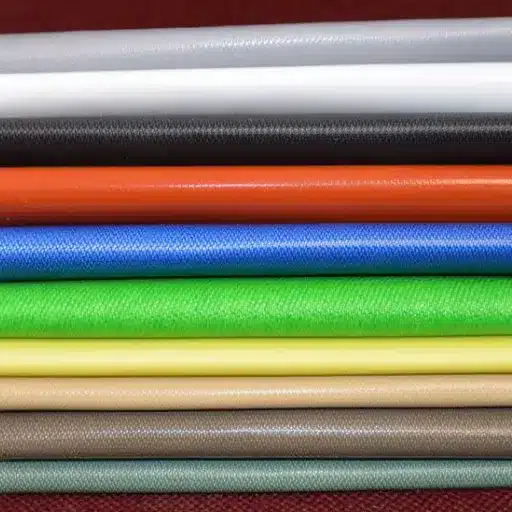
A coated fabric is a textile substrate, usually a woven, knitted, or nonwoven fabric, to which a polymer layer is applied to add waterproofing, UV and chemical resistance, flame retardancy, airtightness, or cleanability. The polymer layer, called the coating, is what a buyer usually names when they say “PVC fabric” or “silicone fabric,” but it is only one part of the product.
Three classification axes are worth keeping straight. First, coating chemistry, meaning the polymer family itself, which is what this guide compares. Second, coating method, meaning how the polymer is applied, for example knife coating, dip coating, roll coating, transfer coating, calendering, or extrusion. Third, substrate and end-use, meaning the base fabric underneath and the application it serves. The chemistry axis comes first because it is the axis a buyer chooses. The method axis matters mostly because it explains why one coating behaves differently on the line from another, and we cover it later.
For a full catalog of the coating types, the methods that produce them, and the industries that use them, the types, methods, and applications overview is the companion reading. In this guide we stay on the selection problem, and we keep every comparison value directional and indicative. Coated fabric is quoted to a specification, and no table replaces your own batch test report.
The Main Types of Coated Fabrics, by Coating Polymer
Four polymer families do the heavy lifting in industrial and commercial coated fabrics. The most widely used textile coating chemistries are acrylic (PA), polyurethane (PU), and PVC, with silicone and PTFE reserved for high-performance uses where their cost is justified. For protective and structural fabrics, the comparison that matters is between PVC, PU/TPU, silicone, and PTFE, with acrylic and rubber as the supporting cast.
PVC Coated Fabric: The Industrial Workhorse
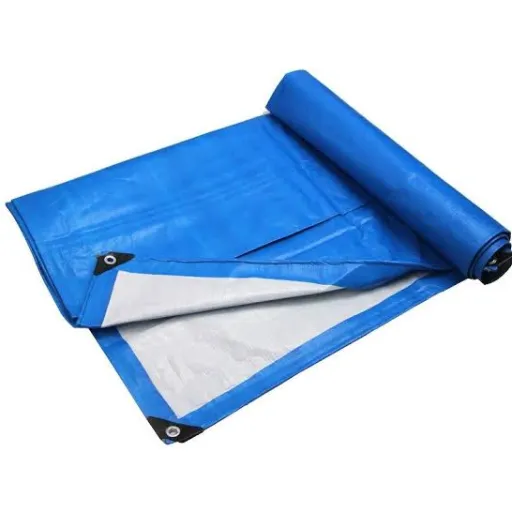
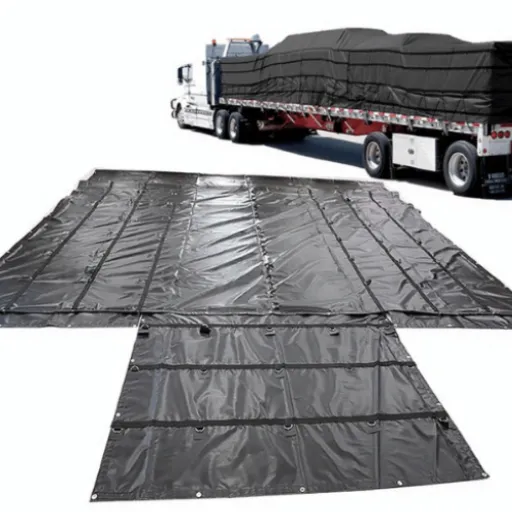
PVC coated fabric is built by applying plasticized PVC, usually as a paste or plastisol, onto a woven base, most often high-tenacity polyester. Heavy-duty tarpaulin constructions typically run 400 to 900 or more gsm total weight, where total weight is the sum of the scrim and the coating. The PVC layer makes the fabric fully waterproof, and because it can be joined by radio-frequency or hot-air welding, the seams can be made just as airtight as the panel. That weldability is the property most competitors never mention, and it is the reason PVC dominates tarpaulins, truck side curtains, and inflatable structures.
The operating limits are equally specific. PVC is a plasticized polymer, so its temperature window depends on the plasticizer system. Standard grades soften around 80 C and begin to degrade or discolor near 130 C, which rules PVC out for extreme-heat duty. Cold-flex compounds hold pliability well below freezing, which is what makes PVC tarpaulin serviceable in winter trucking and cold climates. With UV stabilizers in the compound and an optional PVDF topcoat, PVC tarpaulin commonly serves 5 to 10 years outdoors. Against oil and many chemicals it performs well, though aggressive solvents and fuels need a test before you spec it.
The honest answer to a recurring objection: PVC is not inherently toxic. A cheap, heavily filled recycled compound is a different product from virgin resin compounded phthalate-free and lead-free for children’s, food-contact, or CPSIA-sensitive uses. The difference lives in the compound recipe, and it is covered in our guide to PVC compound formulation and additives. If your application raises a regulatory question, specify the compound rather than rejecting the polymer.
Polyurethane (PU / TPU) Coated Fabric: Light, Flexible, Breathable
Polyurethane coated fabric applies a PU or thermoplastic polyurethane (TPU) layer to a polyester or nylon base. PU coatings can be made very thin and light, and they have a genuine property that PVC lacks: breathability. Microporous or hydrophilic PU formulations allow moisture vapor to pass while blocking liquid water, which is why PU is the default for rainwear, breathable outdoor gear, and lightweight air and water containment.
That breathability is valuable in apparel and a liability in an industrial cover. For a heavy-duty tarpaulin or truck curtain you usually want the opposite of moisture permeability; you want a sealed barrier. So PU’s flagship selling point does not transfer to the tarpaulin buyer. PU and TPU fabrics also run at higher cost than PVC at an equivalent level of ruggedness, and they carry two outdoor failure risks that need engineering attention. The first is hydrolysis, where humid heat attacks the polymer over time. The second is UV sensitivity, where prolonged sun exposure degrades the coating unless it is stabilized.
A marina equipment supplier we worked with learned the hydrolysis lesson the expensive way. It had specified a lightweight PU-coated fabric for a series of dock covers because the material looked excellent on paper: soft, flexible, and waterproof. In service the covers faced warm, humid coastal conditions through two summers, and the coating began to lose adhesion and surface integrity well before the expected life. A properly stabilized or PVC-specified alternative would have survived the environment. The takeaway is not that PU is a bad coating. It is an excellent coating for light, flexible, breathable applications such as bladders, sports equipment, and apparel. It is simply not the first choice for long-life outdoor covers in hot, humid climates.
Silicone Coated Fabric: Heat and Weather Specialist
Silicone coated fabric applies a polysiloxane coating, most often over woven fiberglass or nylon. Its defining strength is an exceptionally wide continuous-use temperature range, from deep cold to several hundred degrees, combined with very high resistance to UV, ozone, and weathering and a chemically inert surface. Silicone does not age the way plasticized polymers do, which is why it appears in airbags, aerospace thermal protection, high-temperature ducting, and architectural canopies.
Silicone has one engineering weakness that buyers rarely hear about, and it is not heat. It is joining. Silicone surfaces are difficult to weld or bond reliably, so seams typically rely on adhesive, tape, or mechanical methods rather than the RF welding that makes PVC and TPU seams airtight. For an inflatable structure that must hold pressure at every seam, that limitation is disqualifying regardless of silicone’s excellent UV record. Where silicone wins is the application that stresses temperature, weather, or chemical resistance and can tolerate its seam method. Coated airbag and aerospace fabrics are covered on our airbag fabric page.
PTFE / Fluoropolymer Coated Fabric: The Long-Life Membrane
PTFE coated fabric, in its architectural form, coats a woven fiberglass substrate with PTFE. The result has very high tensile strength with minimal stress relaxation and creep, which makes it the long-life benchmark for permanent tensile structures such as stadium roofs and atrium canopies. PTFE-coated fiberglass is rated for decades of service, shrugs off UV, is highly chemical resistant, and its non-stick, self-cleaning surface keeps it white without aggressive maintenance. The cost is premium, typically several times that of a PVC architectural membrane.
The selection trade in architecture is usually between PTFE on fiberglass and PVC with a PVDF topcoat. PTFE buys design life and self-cleaning performance for a permanent structure. PVC buys a lower upfront cost with a shorter but still long service life, and it is easier to weld on site. Both are legitimate tensile structure membranes; the right choice depends on whether the client is buying for 10 years or for 30.
Acrylic, Rubber, and Specialty Coating Types
Two supporting chemistries deserve a mention. Acrylic (PA) coating is transparent, resists yellowing, and is inexpensive, which suits umbrellas, lightweight rainwear, and down-proof shell fabrics, but it is light-duty only and not a contender for industrial covers. Rubber coatings, whether natural, neoprene, or synthetic, are calendered or spread onto fabric for weather, oil, and abrasion resistance, and they remain the classic choice in hosing, belting, and industrial waterproofing. Specialty coatings add engineered functions such as intumescent flame retardancy, conductivity, antimicrobial behavior, or phase-change thermal management, and they are specified by function rather than by family.
Want to compare coatings on your actual application rather than a generic chart? Our engineers work from your duty cycle, environment, and joining method, and they will quote to a specification. Start that conversation.
Types of Coated Fabrics Compared: Side-by-Side Specification Table
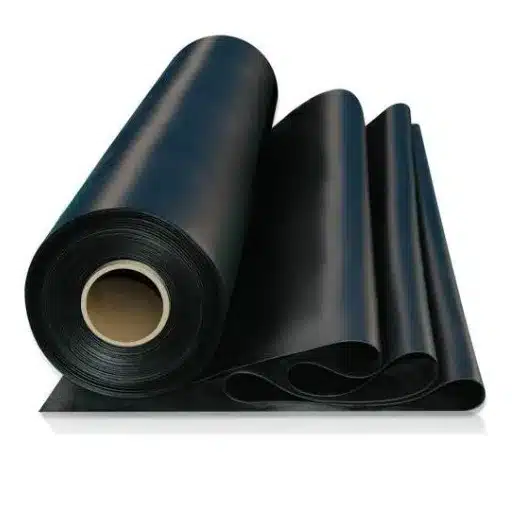
The table below is the reason a coating comparison needs a manufacturer’s input. Every value is directional and indicative, meant for shortlisting rather than for final specification. Confirm the numbers against your own batch test report and the supplier’s data sheet before you commit, because coated fabric is quoted to a specification, not to a category.
| Property | PVC on polyester | PU / TPU | Silicone | PTFE on fiberglass |
|---|---|---|---|---|
| Typical total weight | 400 to 900+ gsm for tarps and inflatables | 150 to 600 gsm; built light | Varies widely by substrate | 600 to 1,500+ gsm structural |
| Water resistance | High; fully waterproof when seams welded | High as a barrier; microporous grades pass vapor | High | High; non-porous surface |
| Breathability / vapor transfer | Low | Medium to high (microporous / hydrophilic) | Low | Low |
| Operating temperature range | About -30 to +70 C typical; cold-flex grades lower; softens near 80 C | About -40 to +80 C, hydrolysis and UV dependent | Very wide, roughly -60 to +200 C and beyond | Very wide, roughly -70 to +260 C continuous |
| UV / weathering resistance | Good with stabilizers; PVDF topcoat extends life | Fair to good; more UV-sensitive unless stabilized | Excellent | Excellent; self-cleaning surface |
| Chemical / oil resistance | Good; test against aggressive solvents and fuels | Good; vulnerable to hydrolysis in humid heat | Excellent; inert surface | Excellent; broad chemical resistance |
| Weldability (RF / heat) | Excellent; airtight RF and hot-air seams | TPU welds well; PU more limited | Poor; adhesive, tape, or mechanical seams | Limited; specialized joining, not RF |
| Abrasion and flex | High | High for its weight | Moderate | Moderate |
| Relative cost index | 1 (baseline) | About 1.5 to 2x at equivalent ruggedness | About 2 to 3x | Premium, roughly 3 to 6x |
| Typical outdoor service life | 5 to 10 years | Shorter unless protected | 10 to 15+ years | 25+ years (architectural benchmark) |
| Primary applications | Tarpaulins, truck curtains, inflatables, covers | Apparel, bladders, sports, lightweight tents | Airbags, aerospace, high-temp ducting, canopies | Permanent tensile structures, membranes |
Read the table the way an engineer reads a data sheet: choose on the two or three rows your application actually stresses. If your product sits outdoors for years, weight the UV and service-life rows. If it must hold air at a seam, weight the weldability row first, and no other row can rescue a coating that cannot be joined. If the fabric will face heat or chemicals, weight the temperature and chemical rows. There is no best coating overall, only the best coating for your loading and environment.
For the construction-axis companion to this chemistry comparison, our guide to coated vs laminated fabric explains the difference between applying a polymer directly onto a fabric and bonding a pre-formed film to it, which is a separate decision from which polymer to use.
How to Choose: Application-to-Coating Decision Matrix
Use this matrix to shortlist a coating family for a new product. Find your application row, read the first-choice coating, and treat the why column as the engineering justification. Then confirm the shortlist against the specification table above and your own duty cycle.
| Application | First-choice coating | Why |
|---|---|---|
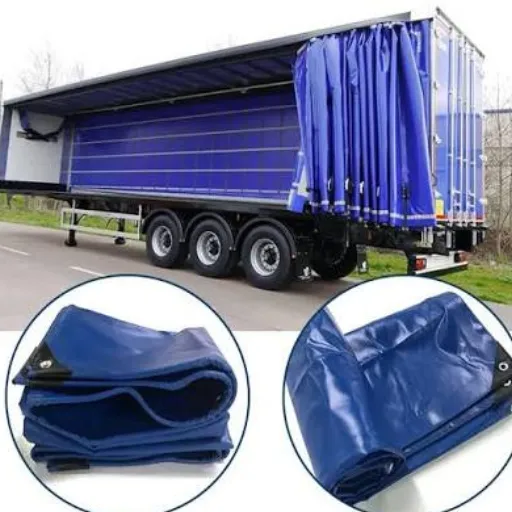
| Heavy tarpaulins and truck side curtains | PVC-coated polyester | Waterproof, RF-weldable seams, high abrasion resistance, best cost per year of service. See PVC tarpaulin and truck side curtain fabric. |
| Inflatable structures, bounce houses, slides, boats | PVC or TPU | Airtight RF-welded seams are mandatory, and both weld cleanly. Phthalate-free and lead-free compounds are available for safety-sensitive use. See PVC inflatable fabric. |
| Permanent architectural and tensile membranes | PTFE-fiberglass for long life; PVC with PVDF topcoat for cost | PTFE delivers decades of service and self-cleaning; PVC is lower cost and easier to join. See tensile structure membranes. |
| Temporary canopies, event tents, awnings | PVC-coated polyester | Lower cost than PTFE, weldable, weather-resistant, and available in flame-retardant compounds. |
| Marine covers, boat and pool protection | PVC for saltwater and UV duty; PU where light and breathable | PVC handles sun and saltwater over multiple seasons; PU is the light, flexible option for short-life or vented applications. |
| Agricultural covers, silage, pond and aquaculture liners | PVC or reinforced PE | PVC gives long-term containment with weldable seams; reinforced PE is the short-life, low-cost option. See aquaculture liner fabric. |
| Airbags, high-temperature and aerospace duty | Silicone or PU-coated nylon | Silicone handles heat and chemical exposure; PU-coated nylon is light and high-strength for deployment fabrics. |
| High-speed doors and industrial curtains | PVC for flex and cold-crack; TPU for specific duty | PVC flexes repeatedly, resists cold cracking, and welds into clean edges. See PVC fabric for high-speed doors. |
| Banners, signs, and graphics | PVC flex and blockout material | Dimensionally stable, printable, weldable, and weather-resistant. See PVC flex banner material. |
| Apparel and lightweight outdoor gear | PU (breathable) | Moisture-vapor permeability and light weight are the job; cost and outdoor-aging trade-offs are acceptable. |
Elena manages a fleet operation that covers flatbed loads in a high-UV region. For years she bought a cheaper polyethylene film on price per square meter, and every cover degraded inside two seasons. When she moved to a PVC-coated polyester grade at roughly twice the upfront figure, the first cover was still in service at the end of year three, and her cost per year of protection had dropped. That is the PVC value story for continuous outdoor duty, and it is why the tarpaulin row of this matrix does not change with fashion.
The credible caveat is just as important. When does a non-PVC coating genuinely win? Silicone wins for heat, ozone, and chemical exposure. PTFE wins for multi-decade structural life. PU wins for light weight and breathability. When none of those is your dominant stress, PVC is usually the higher-value answer, not because we manufacture it but because the specification table says so. And in genuinely light, short-life duty, the long-life material is over-specification. Match the coating to the duty cycle and buy on cost per year.
Coated vs Laminated: Two Ways to Add a Polymer Layer
Coating and lamination both add a polymer layer, and buyers use the terms interchangeably, but they are different constructions. In a coated fabric, the polymer is applied directly to the substrate, for example as a knife-applied paste or a calendered sheet. In a laminated fabric, a pre-formed film is bonded to the base with heat or adhesive, as when a PVC film is laminated onto a scrim. The two routes produce different adhesion character, surface feel, and cost, and each suits different products.
Why it matters for your specification: if you compare two suppliers quoting the same polymer and total weight, one may be coating and the other laminating, and they will not behave identically in the field or on your converting line. When you need the distinction spelled out, our laminated fabric construction guide walks through it, and our PVC-laminated fabric content covers the film-on-scrim case in detail. The short rule is to name the construction method in your specification, not just the polymer and gsm.
Which Manufacturing Process Produces Which Coating?
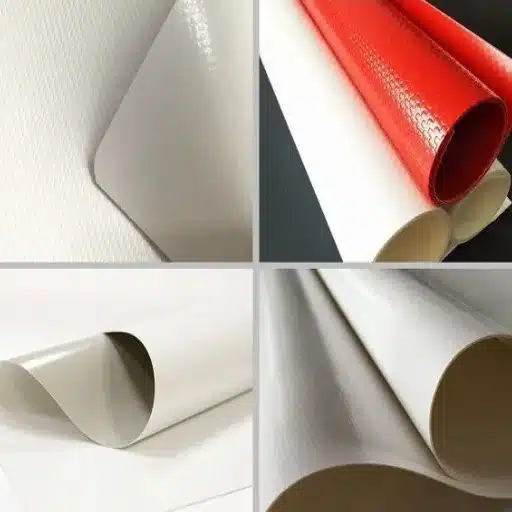
The process that applies the polymer is usually a consequence of the polymer and the product. Knife coating, also called direct coating, spreads a liquid PVC or PU paste onto the fabric with a blade and is the standard route for heavy PVC tarpaulin. Dip coating passes the fabric through a polymer bath and suits lightweight finishes. Roll or gravure coating applies a thin, controlled layer and suits precise low-weight coatings. Transfer coating casts a PU film onto release paper and then bonds it to the fabric, which is why PU fabrics often have a smooth, uniform surface. Calendering presses a pre-mixed polymer sheet onto the fabric and is common for PVC sheeting. Extrusion lays down a molten polymer film and is used where a thick, uniform layer is required.
The practical takeaway is short. When a supplier tells you a fabric is knife-coated, calendered, or transfer-coated, they are telling you something real about its surface, adhesion, and economics, not just its process. Our knife coating process and extrusion coating and lamination pages explain the two ends of that spectrum in detail.
Compliance, Safety, and Sustainability by Coating Type
Coating chemistry is a compliance decision, not just a performance one, and it is increasingly the first filter in regulated industries.
Flame retardancy is a specified property rather than an inherent one. PVC compounds can be formulated to meet NFPA 701 for flame propagation of textiles and films, which is why event tents, industrial curtains, and public structures are commonly specified in flame-retardant PVC. The NFPA 701 standard is the relevant reference, and we produce it as a priced, batch-tested option. Fire-retardant compounding is covered on our fire-retardant tarpaulin page.
Chemical compliance follows the application. For children’s products and commercial inflatables, phthalate-free and lead-free PVC compounding addresses the concerns behind CPSIA and REACH. For export into the EU, REACH documentation is often a gate requirement rather than a nice-to-have, and the same is true for RoHS-sensitive uses. The European Chemicals Agency’s REACH explainer is the authoritative starting point for what the regulation actually requires. PU carries its own caveat in that hydrolysis and UV sensitivity are degradation risks, not compliance ones. Silicone’s chemical inertness is an advantage in food and medical contact. PTFE’s long structural life is itself a sustainability argument, because the longest-lasting membrane is the one that never needs replacing.
End of life matters too. PVC tarpaulin is increasingly recyclable through dedicated programs, and water-based and low-VOC compounding options reduce process impact. Our recyclable coated fabric options page details the current state of tarpaulin recycling, and it is worth asking any supplier how their coating is compounded and whether it can be reclaimed.
Types of Coated Fabrics: Frequently Asked Questions
What are the different types of coated fabrics?
The main types of coated fabrics are PVC coated, polyurethane (PU/TPU) coated, silicone coated, and PTFE (fluoropolymer) coated textiles. Acrylic and rubber coatings are the other common families. They are grouped by the polymer applied to the base fabric, and each polymer family brings different waterproofing, temperature, UV, chemical, and joining behavior.
What is the most common fabric coating?
PVC and polyurethane are the most widely used textile coating chemistries, alongside acrylic. PVC is the most common coating for industrial and commercial products such as tarpaulins, truck curtains, inflatables, and covers, because it is waterproof, weldable into airtight seams, and cost-effective at scale. PU dominates where light weight and breathability are the priority.
Is PVC or PU coating more durable outdoors?
For long outdoor service, PVC is generally more durable, provided it is compounded with UV stabilizers and given a protective topcoat where needed. PVC tarpaulin commonly serves 5 to 10 years outdoors. PU is more sensitive to UV and to hydrolysis in warm, humid climates, so it usually needs stabilization and protection to reach a comparable life.
What is silicone coated fabric used for?
Silicone coated fabric is used where heat, UV, ozone, and chemical resistance matter most. Typical applications include airbags, aerospace thermal protection, high-temperature ducting and expansion joints, architectural canopies, and gaskets. Its main limitation is joining, because silicone is difficult to weld and usually requires adhesive, tape, or mechanical seams.
What is PTFE coated fiberglass used for?
PTFE coated woven fiberglass is the long-life benchmark for permanent tensile structures such as stadium roofs, atrium canopies, and architectural membranes. Its high tensile strength, minimal creep, decades-long service life, and self-cleaning surface justify its premium cost where the structure is expected to last 25 years or more.
What is the difference between coated and laminated fabric?
A coated fabric has polymer applied directly to the substrate, such as a knife-applied PVC paste. A laminated fabric has a pre-formed film bonded to the base with heat or adhesive. The two constructions differ in adhesion, surface character, and cost, so a specification should name the construction method as well as the polymer and total weight.
Which coating is best for a tarpaulin?
For a heavy-duty tarpaulin, PVC-coated polyester is the standard first choice. It is fully waterproof, joins by RF or hot-air welding into durable seams, resists abrasion and UV when correctly compounded, and delivers the best cost per year of service. PE film is the short-life, low-cost alternative for light or temporary duty.
Does PVC coated fabric contain phthalates or lead?
It can, but it does not have to. A cheap recycled compound may contain phthalate plasticizers and other additives of concern. Virgin resin compounded phthalate-free and lead-free is a different product, and it is the specification used for children’s products, food-contact, and CPSIA or REACH-sensitive applications. Ask the supplier which compound your fabric uses.
Are coated fabrics recyclable?
PVC coated fabric is increasingly reclaimable through dedicated tarpaulin and vinyl recycling programs, and water-based and low-VOC compounding reduces process impact. Recyclability depends on the polymer, the compound, and the local reclaim infrastructure, so it should be confirmed with the supplier rather than assumed.
Connect with LY TRUSTLINK for customized PVC coated fabric.
Conclusion
The main types of coated fabrics are PVC, PU/TPU, silicone, and PTFE, with acrylic and rubber as the supporting families. No coating is best in the abstract. PVC is the industrial workhorse for waterproof, weldable, cost-effective ruggedness. PU is the answer when light weight and breathability are the job. Silicone and PTFE earn their premium where heat, UV longevity, and chemical inertness dominate. Choose on the specification rows your application actually stresses, on weldability for anything that must hold air, and on cost per year of service rather than price per square meter. Then apply the compliance lens, because flame retardancy, phthalate-free compounding, and chemical documentation are part of the coating decision.
LY TRUSTLINK manufactures and batch-tests coated fabrics across every family in this matrix, on high-tenacity polyester and nylon scrims, to your weight, compound, topcoat, and certification requirements. Every roll leaves the line with tensile, tear, coating adhesion, and weathering checks behind it, and the process is described on our quality control page.
The most direct next step is a conversation with an engineer who will spec from your duty cycle rather than a category name. Talk to our engineering team about your coated fabric specification, or request a custom sample from the production line with its batch test data. A coating is a spec sheet with a fabric attached.