
Truck Tarpaulin Maintenance: A Fleet Care Schedule
Truck tarpaulin maintenance, often called truck tarp maintenance, is a five-interval routine: a pre-trip walk-around, a monthly inspection, a quarterly wash and hardware check, seasonal preparation, and an annual repair-or-retire review. Fleets that run those intervals replace covers less often and lose fewer loads to preventable failures.
A tarp rarely fails without warning. It fails after months of small signals: a chalky panel, an elongated grommet, a seam lifting at one corner. None of those signals stops a truck. That’s why they get ignored.
Most fleets inspect tarps informally. One driver checks straps, another checks edges, and nobody records what changed. The pattern only becomes visible when a cover fails on the road.
This guide gives you a schedule, the pass and fail criteria to make it consistent, and a repair-or-replace framework based on cost rather than appearance. For the wider procurement picture, see the complete truck tarpaulin fleet guide.
If you’re replacing covers this season, send us the tarp type, dimensions, and failure pattern. We’ll recommend a fabric and a finished size. Request a replacement tarp quote.
Key Takeaways
- Truck tarpaulin maintenance runs on five intervals: pre-trip, monthly, quarterly, seasonal, and annual.
- Failures concentrate at edges, grommets, seams, and fold lines, so those four zones deserve most of the inspection time.
- Cleaning is a chemistry problem. pH-neutral soap and full drying protect the coating; solvents and trapped moisture destroy it.
- Repair only sound fabric. Tape is temporary, adhesive patches suit small damage, and heat welding is the strongest PVC repair.
- UV stabilization, coating adhesion, and edge reinforcement reduce maintenance more than any cleaning routine.
Why Truck Tarpaulins Fail
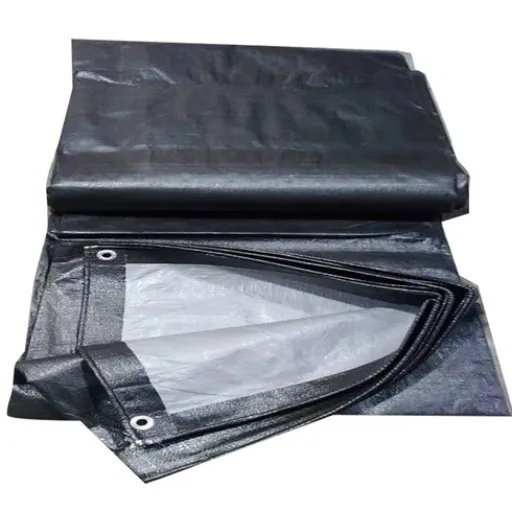
Truck tarpaulins fail where load and flex concentrate: edges, grommets, seams, and fold lines. The middle of a panel is usually the last part to go.
Edges and hems. Wind flutter works the perimeter. The hem abrades against trailer hardware, and UV exposure is highest at the exposed edge.
Grommets and D-rings. Every tie-down concentrates force into a small area. Loose tension and sharp hardware elongate the hole. Once it tears out, the repair is a reinforced patch, not a new eyelet in the same hole.
Seams and welds. Weak adhesion, contaminated surfaces, or UV-degraded thread cause failure. A lifted seam lets water into the scrim.
Fold lines and roller contact. Dump and roll-off covers flex at the same lines every cycle. Grit in the fold acts like sandpaper, and plasticizer loss makes the fold crack instead of flex.
Four mechanisms drive those failures. UV breaks polymer chains, so the surface chalks and loses tensile strength. A non-stabilized polyethylene cover can lose more than half its tensile strength in 12 months of direct sun.
Plasticizer migration pulls the flexibility out of PVC, leaving a tacky surface that stiffens and cracks. Abrasion removes coating until water reaches the scrim, and moisture plus organic soil feeds mildew.
In practice, maintenance can remove soil, restore tension, replace hardware, and close small damage. It can’t restore a coating worn to the scrim, a seam that has failed across panels, or a fabric embrittled by UV. It also can’t restore a load rating. A repair that hides end-of-life damage is deferred replacement with a safety risk attached. Partner with LY TRUSTLINK today.
| Failure mode | Visible sign | Root cause | Response | Replace when |
|---|---|---|---|---|
| Edge fray | Frayed hem, exposed reinforcement | Wind, abrasion, UV | Trim and reinforce | Reinforcement exposed along most of the edge |
| Grommet tear-out | Elongated hole, missing eyelet | Point loading, loose tension | Reinforced patch with new eyelet | Multiple torn grommets in one panel |
| Seam peel | Lifted weld or stitch line | Weak adhesion, contamination | Clean and reseal, or patch | Seam failure across multiple panels |
| Fold crack | Cracks along a fold | Flex fatigue, plasticizer loss | Patch and change fold position | Cracks through the coating |
| Chalking | White powder, color fade | UV degradation | Clean, inspect tensile | Brittle fabric, cracks when flexed |
| Coating wear | Thin or shiny patches | Abrasion | Patch if local | Coating worn to scrim |
The Truck Tarpaulin Maintenance Schedule
A truck tarpaulin maintenance schedule works when it fits the work. Five intervals cover the year.
Before every trip. Check attachment points, tension, edge flap, visible tears, and load coverage. This isn’t a detailed inspection. It’s a check that the cover will stay on and contain the load.
Monthly. Check fabric, coating, seams, grommets, hardware, rollers, buckles, and straps. It takes 15 to 30 minutes per trailer. Record the result. One elongated grommet is wear; six on the same trailer is a tension problem.
Quarterly. Wash, dry, inspect hardware, and reset tension. Lubricate only what the manufacturer specifies. Solvent-based lubricants can attack the coating.
Seasonal. Winter: rinse salt from the underside and folds, and check cold-crack ratings before the first freeze. However, a cover rated to -10°C isn’t a cover for a -30°C route. Summer: check chalking, stiffness, and heat damage. Keep hot-mix covers off the load while the truck waits at the plant.
Annual. Review repair history, cost per year, remaining coating, and seam condition. Decide whether the cover stays in service, moves to a lower-duty role, or retires.
A composite example: Dana manages 40 flatbed trailers in a salt-belt region. Her spring inspection found elongated grommets on 11 trailers and stiff lower edges on six.
The fix wasn’t a new tarp order. It was a salt-rinse step at every wash, a grommet reinforcement specification on the next order, and a tension check on the monthly route. Grommet failures dropped to two trailers the following spring. Partner with LY TRUSTLINK today.
| Interval | Task | Owner | Pass or fail | Record |
|---|---|---|---|---|
| Pre-trip | Attachments, tension, edge flap, tears, coverage | Driver | Cover contains the load and stays attached | Exception only |
| Monthly | Fabric, coating, seams, grommets, hardware, rollers, buckles, straps | Shop lead | Pass, monitor, repair, or retire per checklist | Per trailer |
| Quarterly | Wash, dry, hardware service, tension reset | Shop lead | Hardware moves freely, tension is even | Per trailer |
| Seasonal | Salt rinse, cold-crack check, UV and heat check | Shop lead | No cracking, chalking, or corrosion | Seasonal log |
| Annual | Repair history, cost per year, coating and seam condition | Operations manager | Keep, reassign, or retire | Annual review |
Storage and Seasonal Care
Truck tarp storage is part of maintenance. A cover stored wet loses more life in one off-season than in a year of road use.
Roll rather than fold. Fold lines become wear lines; if you must fold, vary the positions. Store clean, dry, and off a concrete floor, in a ventilated space out of direct sun.
Label each cover by trailer and record its repair history. Rotate stock so older covers aren’t stored indefinitely.
For long-term preservation, see tarpaulin storage best practices.
Truck Tarp Inspection Checklist
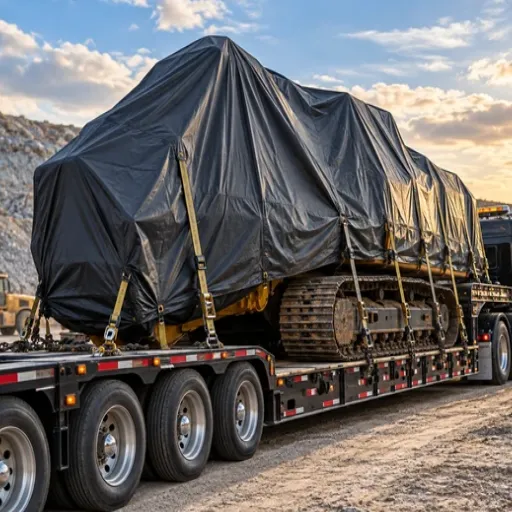
An inspection is only useful if two people would make the same call.
Fabric and coating. Look for chalking, fade, tackiness, stiffness, cracks, and thin spots. Fold a clean corner back on itself: sound material springs back, degraded material cracks or keeps a white crease. Pour water on the surface: it should bead, not darken or seep through.
Seams, hems, and edges. Check for lifted seams, peel, stitch pull, frayed hems, and exposed reinforcement. One lifted seam can be resealed. Multiple lifted seams mean the cover is near retirement.
Grommets and tie-downs. Check for elongation, tear-out, corrosion, and strap wear. LY specifies 50 to 100 cm spacing, with 50 cm preferred for highway use.
Side curtains. Side curtain maintenance starts with tension and documentation. Check buckle tension, webbing wear, roller alignment, tracking, and label visibility. A load-rated curtain is part of a restraint system.
A patch restores appearance; it doesn’t restore a rating. UK guidance distinguishes standard, L-rated, and XL-rated curtains, and fitting an XL curtain to an L-rated vehicle doesn’t make the vehicle XL.
Australia’s NHVR says fabric color or a supplier logo can’t establish a rating. Only the label and documentation can. For specifications, see our truck side curtain guide.
Dump and roll-off. Check roller alignment, cross-bar pocket condition, spring tension, motor and switch function, and tarp-to-roller fit.
Retire the cover when any of these are true:
- The coating has cracked to the scrim.
- Seams have failed across panels.
- The surface is sticky or chalky.
- Grommets have torn out in multiple places.
- The same zone has needed a third repair in one season.
- The cover no longer contains the load.
How to Clean a Truck Tarpaulin
Truck tarp cleaning is a chemistry problem before it’s a scrubbing problem. The coating fails first, and the wrong cleaner removes the plasticizer that keeps it flexible.
- Brush off dry grit.
- Rinse loose soil.
- Wash with pH-neutral soap in lukewarm water; let it dwell about five minutes.
- Scrub with a soft brush, one square meter at a time; rinse each panel.
- Rinse twice, until the runoff runs clear.
- Dry both sides completely.
Don’t use acetone, MEK, THF, paint thinner, or mineral spirits. They dissolve PVC. Don’t use ammonia, strong alkalis, abrasives, wax, oil, or full-strength bleach. Don’t machine wash or tumble dry.
Pressure washing is conditional: wide fan, low pressure, at least 50 cm from the surface, never at seams, hems, or grommets.
Truck soils need specific handling. Rinse diesel and hydraulic fluid immediately; these soils pull plasticizer and leave a tacky surface. Remove asphalt while it’s cool and avoid solvent.
Rinse road salt from the underside and folds, because salt holds moisture against fabric and hardware. Soot comes off with mild detergent.
Mildew feeds on organic soil, so remove that first. A vinegar dilution of one part white vinegar to four parts water is a common field mix. Peroxide-based removers are another option. Bleach is restricted: no more than 10%, spot use, brief contact, immediate rinse, never on a seam or hem.
For the full contaminant-by-contaminant method, see cleaning PVC-coated fabric.
Truck Tarp Repair or Replace?
Truck tarp lifespan is set by coating condition, not calendar age. Repair when the damage is local and the fabric is sound. Replace when the damage is a symptom of a larger failure.
Repairable: clean tears and slits, small punctures, local abrasion, a torn grommet in sound fabric, and a single failed seam. The fabric around the damage must pass the flex and water tests.
End-of-life: coating worn to the scrim, widespread seam failure, UV-embrittled fabric, mildew through the weave, and repeated failure in the same zone.
Tape is temporary. It breaks down under UV and moisture and leaves residue that makes a proper repair harder.
Adhesive patches suit PVC and canvas. Overlap at least 2 inches (5 cm) on every side, round the corners, and press from the center outward. Most adhesives work best between 50°F and 80°F (10°C to 27°C). Follow the cure time.
Heat welding is the strongest PVC repair, and a shop job. It needs clean, dry surfaces and controlled heat and pressure. A field heat gun without temperature control is more likely to distort the coating than to restore it.
Sewing suits canvas and certain heavy-duty applications. Use UV-resistant thread and seal the stitch holes.
The cost test: cost per year = (repair cost + downtime) ÷ months of remaining service. Compare that with replacement cost ÷ expected remaining life. If the repair number is higher, replace.
A composite example: Victor runs 12 dump trucks on aggregate and asphalt. His crew replaced covers twice a season and blamed the fabric.
The actual pattern was roller misalignment on four trucks and standard vinyl on asphalt. After aligning the rollers, moving asphalt trucks to a heat-rated cover, and adding a fold-line check, the fleet moved to one replacement cycle per year. Cost per load fell even though the covers cost more per unit.
| Damage | Repair option | Expected outcome | Replace if |
|---|---|---|---|
| Clean tear under 6 in | Adhesive patch or heat weld | Strong, waterproof | Fabric around it fails flex test |
| Puncture | Reinforced patch | Good for low-stress areas | Coating is thin around the hole |
| Torn grommet | Reinforced patch with new eyelet | Restores attachment | Multiple grommets torn |
| Single seam lift | Clean and reseal | Good if caught early | Seams failing elsewhere |
| Fold crack | Patch and change fold | Slows progression | Cracks through coating |
| Mildew through weave | Clean and dry | Cosmetic if surface only | Mildew in the scrim |
Maintenance by Truck Tarp Type
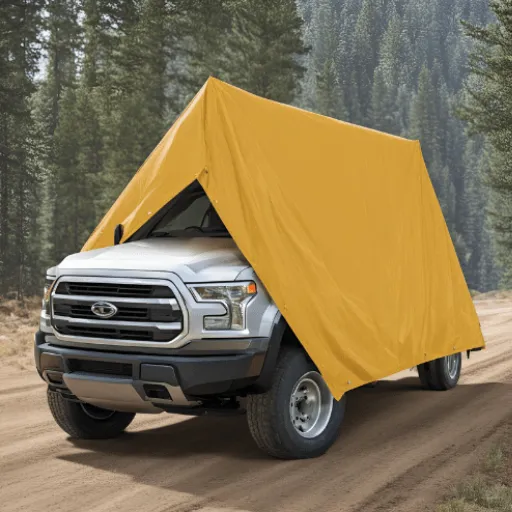
The truck tarpaulin maintenance schedule is shared. The wear points aren’t.
Flatbed lumber and steel. Wear at corners, D-rings, drop edges, and flap abrasion points. Inspect D-rings and corner patches first.
Dump and roll-off. Wear at the roller, fold lines, cross-bar pocket, hem, and loader contact points. Check roller alignment and pocket condition monthly.
Side curtains. Wear at buckles, tensioners, rollers, the bottom hem, and load contact points. Check tension, tracking, and rating documentation.
Mesh. Wear at edges, grommets, and UV-exposed yarn. Rinse fines from the weave and repair edge damage early, because mesh tears propagate quickly.
Specify Truck Tarpaulins for Lower Upkeep
Truck tarpaulin maintenance is cheaper when the cover is specified for the duty.
UV stabilization. It’s the single specification change that most affects outdoor life. Ask for the UV package and test basis. UV aging is commonly reported to ASTM G154 or ISO 4892.
Coating adhesion and tear strength. Adhesion determines whether a heat-welded repair holds; LY specifies a minimum of 100 N/5 cm. Tear strength determines whether a small tear stays small; above 600 N is a reasonable floor for heavy-duty truck covers. See heavy-duty truck tarpaulin specifications.
Edge and grommet reinforcement. Rope-reinforced hems, reinforced grommet patches, and 50 cm spacing for highway use reduce the two most common failure points.
The compliance record. Keep the spec sheet, batch test reports, and repair history with the asset. Under 49 CFR 393.100, cargo must be secured so it can’t leak, spill, blow, or fall.
The rule sets an outcome and doesn’t name a tarp; states add cover requirements. The DVSA guidance makes the same distinction for UK operators: the cover is part of a system, and the system carries the rating.
This is a summary, not legal advice. For the full picture, see truck tarp regulations.
A composite example: Priya manages 18 curtain-side trailers. A driver damaged a curtain and the shop proposed a patch.
The curtain carried a load rating, and the patch would have restored appearance without restoring the rating. The assessor recommended replacement and documented the decision. The cost was higher; the liability exposure was lower. Contact LY TRUSTLINK!
Frequently Asked Questions
How often should you inspect a truck tarp?
Inspect before every trip with a two-minute walk-around, monthly with a detailed check, quarterly with a wash and hardware service, and annually with a repair-or-retire review.
How do you maintain a truck tarp?
Run the five intervals, record the monthly and quarterly results, and fix small damage before it grows. The schedule matters more than any single cleaning product.
How do you clean a truck tarp?
Brush off dry grit, rinse, wash with pH-neutral soap in lukewarm water, scrub with a soft brush one square meter at a time, rinse twice, and dry both sides completely.
Can you pressure wash a truck tarp?
Only with a wide fan, low pressure, and at least 50 cm of distance. Never aim the jet at seams, hems, or grommets. Damage can appear weeks later.
How long does a truck tarp last?
A PVC truck tarp lasts about 3 to 6 years in daily fleet use and 5 to 10 years with occasional use. PE covers last about 1 to 2 years. Duty, climate, and maintenance move both ranges.
When should you replace a truck tarp?
Replace when the coating has cracked to the scrim, seams have failed across panels, the surface is sticky or chalky, or grommets have torn out in multiple places. Also replace the cover if it no longer contains the load.
How do you store a truck tarp?
Clean and dry it completely, roll rather than fold, and store it off the floor in a cool, dry, ventilated space out of direct sun. Label it and rotate stock.
Do truck tarps need to be DOT compliant?
Federal rules set an outcome: cargo must not leak, spill, blow, or fall. The rule doesn’t name a tarp. States add cover requirements, so check the rule for your route and load.
Conclusion
Truck tarpaulin maintenance comes down to four decisions. Inspect on a schedule, clean without stripping the coating, repair only sound fabric, and replace when the coating or seam has failed.
The schedule is the easy part. The harder part is making the same call twice. Pass and fail criteria, a repair history, and a cost test turn maintenance from a series of opinions into a record you can act on.
If your fleet keeps replacing covers in the same zone, the cover may not be the problem. The specification, the hardware, or the wash routine may be.
Send us the tarp type, dimensions, and failure pattern. We’ll tell you what the fabric has to do, what we can certify, and what we cannot. Request a replacement tarp quote or talk to an engineer before the next cover fails mid-quarter.