
Custom Inflatable Fabric Manufacturer: A Buyer’s Guide
A custom inflatable fabric manufacturer produces PVC-coated or laminated fabric in roll form to your specification. It does not make finished inflatables. That distinction decides who controls the design, who owns the compliance file, and what you should demand before paying a deposit.
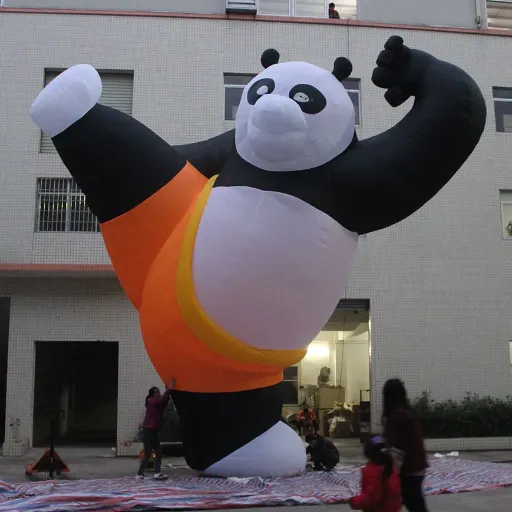
Search the phrase and most of the first page sells finished products: bouncy castles, mascots, water slides. A buyer we will call Tomas spent a week with mascot makers before learning none sold fabric.
You already know the material matters more than the brochure. What you need is a way to tell a mill from a trading desk, a list of what custom changes, and a sample path that catches drift.
Key Takeaways
- A fabric manufacturer sells roll goods to a written spec. A custom inflatable manufacturer sells finished units. Confirm which one you are talking to before sharing drawings.
- Seven variables are genuinely customizable: scrim, weight, coating system, width, color, surface additives, and roll format.
- A custom run is proven in three stages: A4 swatch, custom sample, then a production-line sample with lot test data.
- MOQ and cost are driven more by color, width, coating formulation, and testing than by GSM alone.
- A certificate is not evidence unless it is in the supplier’s own name, covers your construction, and matches your lot.
Fabric Manufacturer or Inflatable Manufacturer?
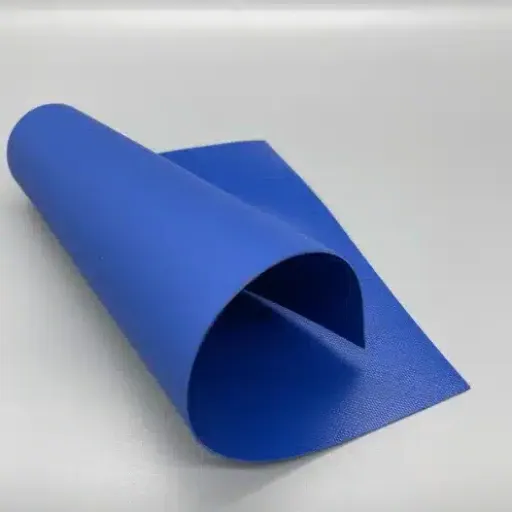
Both appear in the same results and call themselves custom manufacturers. They sell different things. The label matters because an inflatable fabric supplier can be a mill, a converter, or a trading desk that never touches a coating line.
A fabric mill sells roll goods: coated polyester or nylon at a stated weight, width, color, and finish. The buyer cuts, prints, and welds it into a product. A finished-inflatable maker sells the product itself, including design, cutting, welding, and blowers.
| Decision | Fabric manufacturer | Finished-inflatable maker |
|---|---|---|
| Design ownership | Yours; the mill builds to your spec | Shared or theirs, by contract |
| Tooling | Coating line, scrim, roll width | Cutting dies, weld fixtures, blowers |
| Compliance file | Material test data and fabric certificates | Finished-product conformity file |
| MOQ | Linear or square meters | Finished units |
| Sample path | Swatch, custom sample, production-line sample | Prototype unit, then production run |
Liability follows the split. If you build your own inflatable, the finished-product file stays with you, and the mill supplies material that meets a written spec plus the data. If you buy finished units, the maker carries that file. LY TRUSTLINK supplies coated fabric, not finished inflatables.
Already have a spec sheet? for a feasibility review.
What a Custom Inflatable Fabric Manufacturer Actually Customizes
In a coating plant, custom means seven variables. Buyers asking for a PVC inflatable ODM service usually negotiate three variables hardest: scrim, weight, and coating.
| Variable | Typical range | What it changes |
|---|---|---|
| Base scrim | 250D to 1000D, woven | Tensile and tear strength under pressure |
| Finished weight | 300 to 1,500 GSM | Stiffness, puncture resistance, weld settings |
| Coating system | PVC, PVC-laminated, TPU | Airtightness, weld method, cold flexibility |
| Width | Standard to 3.2 m; wider by arrangement | Panel count, seam length, cutting waste |
| Color | Pantone or RAL matched | Minimum run size, lead time, batch matching |
| Surface and additives | Gloss, matte, embossed; UV, FR, anti-mildew, anti-static | Grip, printability, outdoor life, fire performance |
| Roll format | Roll length, core size, splice policy | Handling, machine feed, end-of-roll waste |
The variables that change performance
Three of these decide whether the fabric survives its first season.
The scrim carries the load. A 1000D weave spreads stress across more yarn, so seams see lower strain per thread. A heavy coating on a light scrim still fails at the seam.
Coating distribution decides airtightness and weld strength. A thick coat on one face and a thin one on the other can hit the GSM target and fail a peel test. Ask for coating weight per face.
The FR package interacts with coating chemistry. Additives that meet a flammability test can change flexibility, color, and weld behavior, so test the finished construction.
What is not custom
Physics does not negotiate. A 300 GSM scrim will not feel like 1,200 GSM, and fire retardancy changes the formulation.
For the band-by-band breakdown, see our .
From Brief to First Lot: How a Custom Run Works
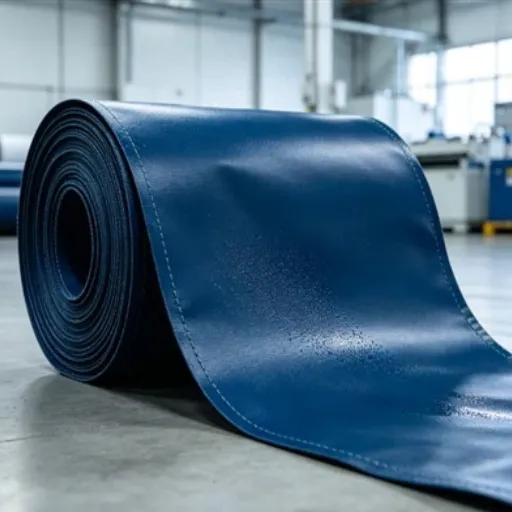
A custom run reaches first lot in five stages. Skip one and the container can match the swatch in color but miss it in weight.
- Brief. You state application, weight, width, color, weld method, and market.
- Feasibility. The mill checks scrim, coating line, and additives against those targets.
- Sample ladder. You approve an A4 swatch, custom sample, then production-line sample.
- First lot. The line runs your specification, and the mill tests the batch before release.
- Batch release. Test data, retained samples, and packing details ship with the order.
The three-sample ladder
Most buyers stop at the A4 swatch, the most expensive place.
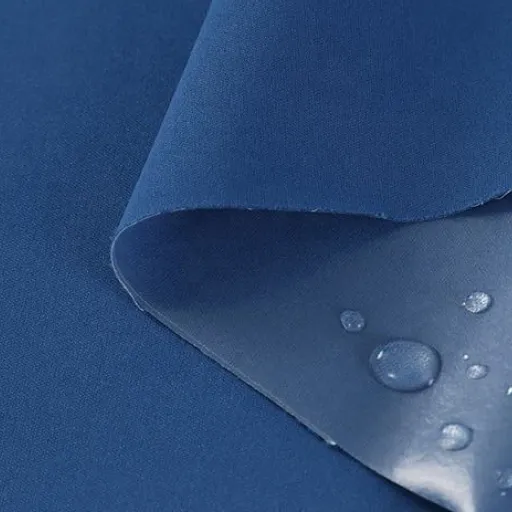
An A4 swatch confirms color, hand-feel, and surface. It comes from a library or a previous run, so it does not prove your construction.
A custom sample of 1 to 2 meters confirms the coating and scrim combination. You can weld, weigh, and check it, but it may not use production line settings.
A production-line sample comes from the actual run before the full quantity ships. It catches drift in weight, width, coating distribution, and color. Ask for it in writing, and make the first lot conditional on approval.
Ready to test the material instead of the brochure? before you commit to a container.
What to test on each sample
Weigh a known area and compare it with the target and tolerance. Measure thickness at several points, not one.
Weld the sample the way you will weld production, by high-frequency or hot-air welding, then pull the seam after cooling. A seam that peels on a sample will peel faster on a machine at speed. For inflatables, weld a small chamber and watch the seam under pressure.
The product page states that A4 swatches ship in 2 to 3 business days. Prototypes take 2 to 3 weeks. Stock orders ship in 7 to 10 business days, and custom production runs 15 to 25 business days. Rush production is 5 to 7 business days at a 20% surcharge.
Consider a buyer we will call Elena, who runs product development for an advertising-inflatable brand in Europe. She approved an A4 swatch and received a first lot 30 GSM under target and 40 mm narrow, with a weld that failed at the seam.
She added a production-line sample and a lot-release clause tied to measured weight and width. The next lot passed. This is an illustrative scenario, not an LY customer.
This factory tour shows a PVC/TPO coating line. It is not our facility, by design. Need reliable PVC-coated materials? Connect with LY TRUSTLINK.
How to Verify a Custom Inflatable Fabric Manufacturer Before You Pay a Deposit
Entity and factory evidence
Start with the business license and its scope. The registered activity should include coated fabric manufacturing, not only trading. Match the registered address to the quote.
Ask for a live video walkthrough, not a photo gallery. A real PVC inflatable fabric manufacturer shows the coating line, scrim store, and test bench in one call. Ask which lines will run your order; a plant that outsources coating cannot answer.
Certificates and test reports
A certificate is evidence only when four things line up: the supplier’s legal name, the standard, the scope, and the date.
Check the name first: a report issued to another company proves nothing. A 550 GSM certificate does not cover a 900 GSM fabric with a different FR package. Then check the date and lot, and ask for the batch report tied to your lot.
LY TRUSTLINK lists NFPA 701, REACH, RoHS, CPSIA, ASTM F963, DIN 4102 B1/B2, and ISO 9001 as options available on request. Those are options, not guarantees, so confirm the certificate, scope, and test date. Our explains how batch testing is handled before release.
Batch traceability and retained samples
Ask how the mill links a roll to its batch. A lot number is a start; a retained sample held by both sides turns a dispute into a measurement.
| Claim | Evidence to request | A weak answer sounds like |
|---|---|---|
| “We can make any GSM” | Achievable band and tolerance, per construction | “Any weight is possible” |
| “Fire retardant” | Report naming the standard and construction | “Our material is fireproof” |
| “UV stabilized” | Additive package and weathering method | “It lasts for years in the sun” |
| “ISO 9001 factory” | Certificate in the supplier’s name, with scope | A logo on a website |
| “Custom color” | Pantone or RAL policy and minimum run | “Any color you want” |
| “Fast lead time” | Written window and what starts the clock | “Usually two weeks” |
Our covers the fields that make answers comparable. Fill it in before you request quotes.
Red flags
- A specification with no tolerance attached.
- A certificate issued to a different company or construction.
- No confirmation of maximum width, which decides your seam count.
- No production-line sample before the full run.
MOQ, Lead Time, and What Actually Drives Cost
The product page states a custom MOQ of 3,000 m², a stock MOQ of 500 m², and samples of 10 to 50 m. Treat those as a starting point, not a rule.
Color is usually the largest lever. A custom Pantone match requires cleaning the line and holding the remainder; a stock color runs alongside other orders. Width is second: a non-standard width leaves unusable trim, and the mill prices the whole web.
Scrim and coating formulation come next. A special yarn or FR package may require a minimum purchase that dwarfs the coating order.
To lower MOQ, choose a stock scrim and color, one width, one production window, and a pilot quantity first.
GSM is the visible cost number, but it is rarely the biggest difference. Fire-retardant additives, custom color, width yield loss, test reports, and packaging often move the price more.
The unit basis is the other trap: quotes use per kilogram, per square meter, or per linear meter. A per-kilogram quote looks cheaper until you convert it using the actual GSM and width.
Consider a buyer we will call Daniel, who runs a US rental-fleet shop. He compared a per-kilogram quote with a per-square-meter quote and picked the former. After converting with actual weight and width, the cheaper quote was 18% more per panel. The walks through the same conversion.
The Failure Modes a Contract Should Cover
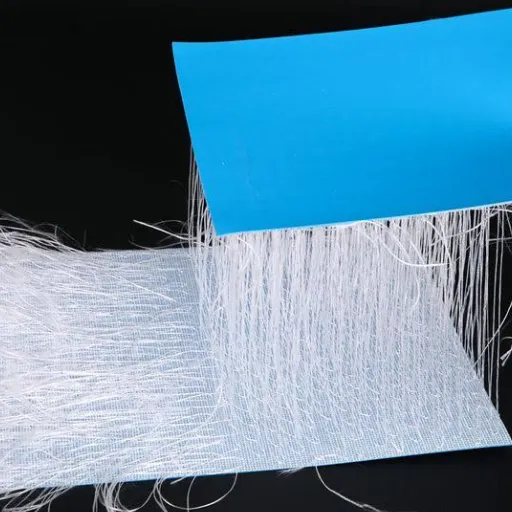
Most custom-fabric disputes come from a short list. Each has a preventive clause.
| Failure mode | What the clause should say |
|---|---|
| Weight drift | Target GSM plus tolerance, test method, sample size, reject rule |
| Width shortfall | Minimum usable width after trimming, with allowance |
| Color drift | Approved standard, light source, numeric color difference limit |
| Coating adhesion | Peel target, test method, sampling frequency per roll |
| Fire-retardant loss | Standard, construction tested, re-test trigger if formulation changes |
| Pilot-to-production gap | First-article approval, retained samples, hold point before release |
Why “we can make any specification” is not a tolerance
A specification without a tolerance is a wish. If the order says 650 GSM and nothing else, a 610 GSM roll may be technically compliant. If it says 650 GSM plus or minus 3%, measured by a stated method on a stated sample size, the argument disappears.
Write the method into the order: weight by area, thickness at five points, width after trimming, peel by an agreed standard. Then name the sampling plan and the remedy if a lot fails.
The standards boundary
covers inflatable play equipment for children 14 and under, focused on bouncing and sliding. It governs the finished equipment, not the roll goods. A fabric mill can support your file with material data, but it cannot certify your bouncer.
is a fire-test-method standard for flame propagation in textiles and films. The result depends on coating weight, scrim, seams, and additives. A passing result on a flat sample does not transfer automatically to a welded assembly.
For children’s products in the US, restricts eight phthalates to 0.1% in accessible parts of toys and child care articles. That obligation sits with the product. The mill supplies formulation data and test reports that support it.
The mill supplies evidence; the equipment maker owns the conformity file.
Frequently Asked Questions
What is a custom inflatable fabric manufacturer?
The term describes a mill that makes PVC-coated or laminated fabric in roll form to a buyer’s specification. It supplies material, not finished inflatables. The buyer handles design, cutting, welding, and product compliance.
Can I order custom inflatable fabric in small quantities?
Sometimes, but small runs of custom PVC inflatable fabric cost more per meter. The product page states a custom MOQ of 3,000 m², a stock MOQ of 500 m², and samples of 10 to 50 m. A stock scrim, stock color, and one width lower the minimum fastest.
How long does a custom inflatable fabric run take?
The product page states 2 to 3 weeks for prototypes and 15 to 25 business days for custom production. Stock orders run 7 to 10 business days, and rush production is quoted at 5 to 7 business days with a 20% surcharge.
What certifications should I ask a manufacturer for?
Ask for the certificate in the supplier’s own name, with the standard, scope, and date, plus the batch report for your lot. Common options include NFPA 701, REACH, RoHS, CPSIA, ASTM F963, DIN 4102 B1/B2, and ISO 9001. Confirm which apply to your construction.
How do I verify that a custom inflatable fabric manufacturer is a real factory?
Check the license scope for coating or laminating, match the registered address to the quotation, ask for a live walkthrough of the production line, and request a production-line sample with batch data. A trading desk can forward documents. It cannot show you the line.
Is PVC or TPU better for a custom inflatable fabric?
PVC is the lower-cost standard for most inflatables, with strong weldability and many finishes. TPU costs more but offers better cold flexibility and avoids chlorinated plasticizers, which matters in some markets. Choose by weld process, temperature range, and destination market.
Conclusion
The phrase “custom inflatable fabric manufacturer” hides two businesses. A fabric mill sells roll goods to a written spec. A finished-inflatable maker sells a product. Decide which one you need before the first call.
From there, the sequence is repeatable. Define the seven variables. Run the three-sample ladder. Ask for evidence in the supplier’s own name.
Then convert every quote to the same unit basis. Write tolerances, test methods, and a lot-release hold point into the order. None of that requires a special relationship; it requires a specification you can defend and a sample you can hold.
LY TRUSTLINK has made coated fabric in Linyi since 2005, with calendering, laminating, coating, and printing under one roof. If you are sourcing custom inflatable fabric for your own production, with your weight, width, color, and destination market.