
Airtight Fabric for Inflatables: PVC, TPU and Nylon Grades
Airtight fabric for inflatables is a coated or laminated composite in which a continuous polymer layer provides the air barrier and a woven scrim carries the load. PVC-coated polyester covers most commercial work at 490 to 900 GSM. TPU-coated polyester or nylon is specified where panel mass matters, and PU-coated ripstop nylon suits light-pressure work only. What separates a fabric that holds air from one that leaks is coating continuity and seam quality, not fabric weight.
That distinction, however, is where most specifying goes wrong. A buyer compares quotes, sees 610 GSM on two documents, and assumes the two materials will behave the same way. On a dry bounce house they might.
On a 3.5 PSI boat tube or a 15 PSI drop-stitch panel, they will not. The number on the quote describes weight. It says nothing about whether the coating is continuous.
Tomas, a procurement engineer for a Spanish rental operator, learned the difference on a valve rather than a panel. He had specified the same 610 GSM fabric for three seasons. Then two units started losing about 2 PSI overnight.
The fabric passed every flat-sample check his supplier ran. The leak was a welded valve flange with a cold spot in the weld, on the fourth unit of a batch. Nothing in the material specification would have caught it.
This guide covers what airtight means in practice, which families hold which pressures, and how retention is tested. It also covers where leaks start, and the four numbers to put in an inquiry so a supplier’s answer can be checked. Request a tailored quote for your PVC inflatable fabric project.
Key Takeaways
- Airtightness comes from coating continuity and welded seams. Heavier fabric is not automatically tighter.
- 490 to 650 GSM covers light covers, bounce houses and dry inflatables. Slides and structures run 650 to 900 GSM. Boat tubes run 850 to 1,450 GSM.
- A flat-sample permeability result (ASTM D737 or ISO 9237) does not prove a finished chamber will hold pressure.
- Specify inflation pressure, hold duration, temperature control and acceptance tolerance. A chamber that “passes” without those four numbers has not been tested.
Airtight Fabric for Inflatables: What “Airtight” Actually Means
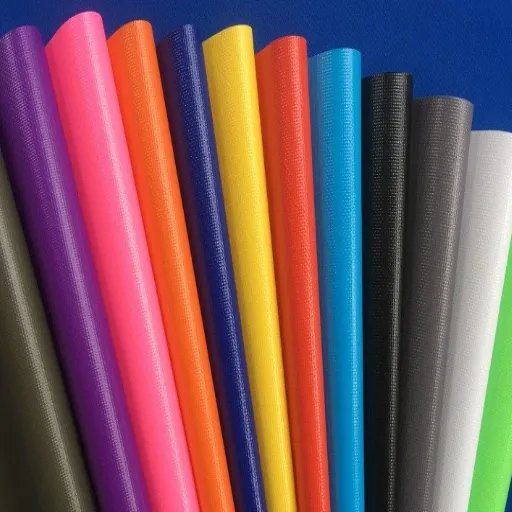
Airtight isn’t a single property, and it isn’t a yes-or-no answer. Air leaves a coated fabric through three routes. It goes through the coating itself, through openings where the coating is incomplete, and through joints where panels, valves and edges are joined.
Only the first route is a fabric property. The other two are process properties, and in service they account for most of the pressure lost.
This matters when you write a specification. A supplier can sell you a roll with excellent permeability numbers and still deliver a finished inflatable that deflates overnight, because the roll was never the whole question. A supplier who understands the distinction will ask what pressure you run, how you weld, and what valve you fit before quoting.
Which materials are actually airtight
Four material families cover nearly all commercial inflatable work. The bands below follow the specification ranges we build to.
| Material | Typical finished weight | Pressure and duty it suits | What to watch |
|---|---|---|---|
| PVC-coated polyester | 490 to 650 GSM (15 to 20 oz) | Dry inflatables, bounce houses, light covers | Coating on one face only; plasticizer that migrates and stiffens with age |
| PVC-coated polyester, heavy | 650 to 900 GSM (20 to 28 oz) | Water slides, wet and dry combos, air structures | Seam overlap and weld window; weight alone does not fix a weak weld |
| PVC-coated polyester, marine | 850 to 1,450 GSM (25 to 42 oz) | Boat tubes and RIBs at 2.5 to 3.5 PSI | Abrasion at contact points; valve flange construction |
| TPU-coated polyester or nylon | Lighter band, supplied to order | Where panel mass and cold flex matter | Narrower weld window; higher material cost per square metre |
| PVC drop stitch | Two coated skins plus internal linking yarn | Flat panels from 15 PSI to 25 PSI | Specify by target pressure, not by GSM |
| PU-coated ripstop nylon | Light | Kites, low-pressure air structures, prototypes | Not a pressure fabric; seam sealing decides everything |
Read the table from the pressure column, not the weight column. A 550 GSM airtight PVC fabric on a 1000D scrim holds a bounce house at about 0.5 PSI with margin. The same weight in a drop-stitch construction is a different product at 15 PSI, and a 550 GSM PU-coated nylon is a different product again.
Heavy duty airtight fabric for inflatables is the marine band in practice: 850 to 1,450 GSM, with an abrasion-resistant face and a reinforced valve flange. It is also the band where airtight fabric for inflatable boats is decided, because a tube at 3 PSI punishes a thin coating and a weak weld equally.
For buyers who search for airtight material rather than a named polymer, the answer is the same set of four families. What changes is which column you read first.
If your application sits between two rows, send us the working pressure and the weld method and our engineering team will recommend a grade. Full bands by application are in our .
Why thickness does not predict air retention
A thicker coating isn’t a tighter coating. Air moves through gaps in the polymer film, at pinholes, and along yarns that the coating didn’t fully encapsulate. A 0.9 mm fabric with an incomplete coating leaks faster than a 0.55 mm fabric with a continuous one. The millimetre figure won’t tell you which one you’re holding.
On a flat sample, the difference is measurable. We specify air permeability below 0.05 cm³/cm²/s at 20 mbar for inflatable-grade fabric. Commodity material often sits at 0.15 to 0.30 on the same test.
That is a three to six fold spread at the same nominal weight. As a result, the weight on a quotation is a poor proxy for the property you care about.
Our airbag line makes the same point with different numbers. There, coated fabric is specified below 1 L/dm²/min under DIN 53887 or ISO 9237, with premium grades under 0.5. Permeability must also stay within 5 percent across the full fabric width.
Width uniformity is the figure most inflatable buyers never ask for, and it is the one that predicts whether panel two behaves like panel one. See for the process side.
How airtightness is actually tested
Two test families get confused constantly. They answer different questions, and a report that names one cannot be read as if it named the other.
| Method | What it measures | What it establishes | What it cannot establish |
|---|---|---|---|
| Air permeability of a flat specimen, typically at 125 Pa differential | Whether the coating on that sample is continuous | Whether a welded chamber holds pressure | |
| The same property under the international protocol, at 100 Pa for apparel and 200 Pa for industrial fabric | Comparability between suppliers using one method | Finished-article retention | |
| Pressure decay on a finished chamber | Pressure loss over a hold period at a stated starting pressure | Seam, valve and panel performance together | Fabric permeability in isolation |
| ASTM D6476 and ASTM D7559 | Dynamic permeability and pressure decay in inflatable restraint fabrics | Behaviour at high differential pressure | Direct transfer to a 0.5 PSI bounce house |
Both permeability methods are steady-flow tests on a flat piece of cloth. Neither one touches a seam. That isn’t a criticism of the methods, it’s a limit on what a buyer can conclude from them. The test that predicts field behaviour is pressure decay on the assembled article, and it’s the one least often quoted in a quotation pack.
When a supplier says a batch of airtight fabric for inflatables has passed, ask which of the four methods produced that result. The name of the test is as informative as the number.
We run a 24-hour hold at 1.25 to 1.5 times working pressure on finished chambers, with acceptance agreed against the customer’s tolerance. On seam samples we hold 1.5 times operating pressure for 24 hours to a 5 percent loss limit, then inspect the weld. For the full method, including sample preparation and how to read a report, see .
Where leaks start, and why it is usually not the fabric
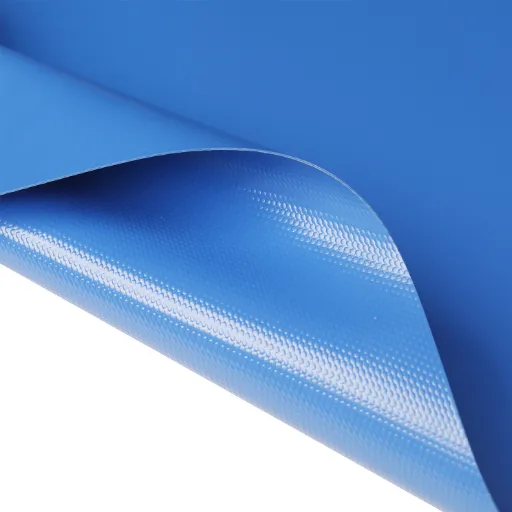
Pressure loss clusters at interfaces. Four causes account for most of it, and they appear roughly in this order.
- Valve flanges. A welded flange distributes stress into the panel. A glued flange concentrates it. Cold spots in the weld appear at the flange edge, which is where Tomas’s two units failed.
- Seams. Under-welded joints, contamination on the surface before welding, or insufficient overlap. A seam that looks continuous can still have a thin section.
- Pinholes. Coating defects, needle damage from handling, or a sharp fold creased in storage.
- Cut edges. Exposed scrim wicks air along the yarn if the edge is not sealed or turned into a weld.
Nadia, an importer in Rotterdam, ran a return analysis across four containers and found that 61 of 74 leak claims traced to valve bases and seam ends. The panels were sound. Her fix wasn’t a heavier fabric. It was a valve specification and a weld parameter sheet, both written into the purchase order.
That is the practical lesson. If an inflatable is losing air, the fabric is the last place to look, not the first. Request a tailored quote for your PVC inflatable fabric project.
What to ask a supplier before you order
A specification without an acceptance criterion is a description, not a requirement. Four fields turn it into one. Write them into the inquiry and see whether the answer comes back with numbers.
| Field | What to specify | Why it decides the answer |
|---|---|---|
| Inflation pressure | The multiple of working pressure, for example 1.5 times | Defines the stress the chamber sees during the test |
| Hold duration | 24 hours is the common production check | Short holds hide slow leaks through seams and valves |
| Temperature control | Record ambient temperature and allow the chamber to equilibrate | A warm afternoon raises pressure and can mask a leak |
| Acceptance tolerance | A stated permitted drop, for example 5 percent | Converts “passed” into a number you can compare |
Add a flat-sample permeability figure if you are qualifying a new mill, and ask for the width uniformity result alongside it. A supplier who answers all five without hesitation is a supplier who tests. A supplier who replies “zero leakage” has told you nothing you can hold them to.
Request a production-line sample and run the decay test yourself before you commit to volume. Our routes sample requests to the engineering team.
PVC, TPU and Nylon: Choosing an Airtight Fabric for Inflatables
The polymer choice is narrower than the marketing suggests, and it usually follows from three inputs: working pressure, panel size, and how the product will be welded and repaired.
PVC-coated polyester is the default for commercial inflatables. It welds predictably at high frequency, tolerates heavy coating weights, and repairs with a patch and vinyl adhesive in the field.
Its weakness is plasticizer. Over years of UV and heat, plasticizer migrates, the coating stiffens, and flex cracking starts at fold lines. That is a time-and-exposure effect, so it matters most on permanently sited units.
TPU-coated fabric is specified where panel mass matters, where cold flex is critical, and where the product will be heat-welded in a narrow window. It carries no plasticizer, so the stiffening failure mode does not apply. It costs more per square metre and demands tighter process control. We supply TPU on request against a stated pressure and weld method rather than as a catalogue default.
PU-coated ripstop nylon sits outside the pressure conversation. It’s a light-barrier material for kites, low-pressure air structures and prototypes, and it depends almost entirely on seam sealing to hold anything at all.
For a side-by-side on the two polymers that compete in commercial work, see .
Seams and Welding Decide the Result

An airtight roll is a raw material. An airtight product is a welded assembly, and the weld is where the specification either holds or fails.
Radio frequency welding fuses the coating through the thickness of the joint under pressure, producing a bond close to the strength of the parent fabric. Hot-air welding is more tolerant of contour and thickness variation, but it depends on speed, temperature and roller pressure staying inside a narrow band. Neither method forgives a contaminated surface. Wiping the weld zone before joining is the cheapest quality intervention in the plant.
Specify the method, the overlap, and the inspection. Then ask for a peel result on a production sample rather than a laboratory coupon. Our covers seam types and the failure modes behind each method.
Frequently Asked Questions
What is the most airtight fabric for inflatables?
PVC-coated polyester in the 650 to 900 GSM band is the most airtight option for commercial pressure work, because heavier coating weights allow a thicker continuous film. For a given weight, TPU-coated fabric generally returns better air retention than PVC, which is why it is specified where panel mass is constrained.
Is PVC or TPU more airtight?
TPU is more airtight per unit of coating weight, and it avoids the plasticizer migration that stiffens PVC over years of UV exposure. PVC remains the better choice for heavy commercial units. It welds at high frequency with a wide process window, takes abrasion well at high coating weights, and repairs easily in the field.
Does thicker fabric hold air better?
No. Coating continuity and pinhole count decide air retention, not calliper. A 0.9 mm fabric with an incomplete coating leaks faster than a 0.55 mm fabric with a continuous one. Ask for air permeability at a stated pressure, and ask for the uniformity figure across the roll width.
Can sewn fabric be made airtight?
No. Every needle hole is a leak path, and no coating applied afterwards seals a stitch line reliably under pressure. Inflatables must be welded, by radio frequency or hot air. Taped seams are a compromise for low-pressure work, not a substitute for a weld.
How long should a commercial inflatable hold air?
Specify a decay tolerance rather than a duration. A 24-hour hold at 1.25 to 1.5 times working pressure with no drop beyond an agreed tolerance is a check you can write into the order and repeat on delivery. A duration figure such as “holds air for 30 days” cannot be verified against a batch.
How do you ensure the material is safe for children’s products like bounce houses?
Inflatables for children are specified against toy safety rules, not just fabric performance. For the United States that means and the phthalate limits in CPSIA 16 CFR 1307. For the European Union it means EN 71-1 for mechanical hazards and EN 71-3 for migration of certain elements.
We supply phthalate-free and heavy-metal-compliant formulations and hold the supporting test reports against the order. See for the formulation detail.
What is the minimum order quantity for inflatable fabric?
Our published terms for inflatable fabric are a 3,000 m² minimum for custom specifications, 500 m² for stock specifications, and samples from 10 to 50 m. Custom weight, width, colour and coating are built to the order, and prototype samples typically run two to three weeks. Send your specification to the engineering team for a confirmed figure against your line.
Conclusion
Airtight fabric for inflatables is specified from four inputs, and none of them is the weight on the quotation. Working pressure sets the material family. Coating continuity sets whether the roll is tight.
Weld method and valve construction set whether the finished chamber stays that way. And the acceptance criterion sets whether you can prove any of it after delivery.
Put those four into the next inquiry: pressure, duration, temperature, tolerance. Add a permeability figure and a width uniformity result if you’re qualifying a new mill. Then test a production sample before the first container ships.
That is how you buy airtight fabric for inflatables you can stand behind. A supplier who can discuss the decay curve is a partner. One who answers “zero leakage” is selling a claim.
Our engineering team reviews the application, recommends the grade and weld method, and sends samples from the production line before volume is committed. .