
How to Clean PVC Coated Fabric (and What Never to Use)
To clean PVC coated fabric safely, remove loose debris while it is dry, rinse with clean water, wash with a pH-neutral soap in lukewarm water using a soft brush, rinse until the runoff runs clear, and air dry the fabric completely before you fold or store it. Never use acetone, MEK, paint thinner, ammonia, full-strength bleach, abrasive pads, or a pressure washer. Those agents attack the plasticizer that keeps the coating flexible, and stripped plasticizer is what actually destroys the fabric.
Most cleaning guides stop there and never explain why. That missing “why” is the whole problem.
A fleet operator we worked with learned it the hard way. His curtain panels were stained with diesel and road grime, so he bought a strong alkaline degreaser and scrubbed them down in the yard. The stains lifted in minutes, and he was pleased with the result.
By the end of that season the curtains were stiff at every fold. The coating had gone chalky where he had scrubbed hardest, and two seams had started to pull apart. The road did not do that to his curtains. The cleaner did.
Key Takeaways
- The cleaner usually fails the fabric, not the dirt. Flexible PVC is a rigid polymer softened by a plasticizer that is not chemically bonded to it, so solvents, alkalis, and oxidising bleaches can pull that plasticizer out and leave the coating brittle.
- A pH-neutral soap in lukewarm water with a soft brush is the safest general cleaner. Hot water softens the coating and stresses the welds.
- Bleach is conditional, not banned. Dilute to about 10%, use it only for mildew, spot-test first, and never use it on a topcoated fabric without the maker’s written approval.
- Match the cleaner to the contaminant and to the application. Road salt, pool chlorine, fertiliser, and bird droppings should be rinsed off on contact, not scrubbed off later.
- Clean and prepare a surface before any repair. Oil, plasticizer bloom, and UV chalk prevent welds and patches from bonding, which is why so many repairs fail twice.
Why Cleaning PVC Coated Fabric Is a Chemistry Problem, Not a Scrubbing Problem
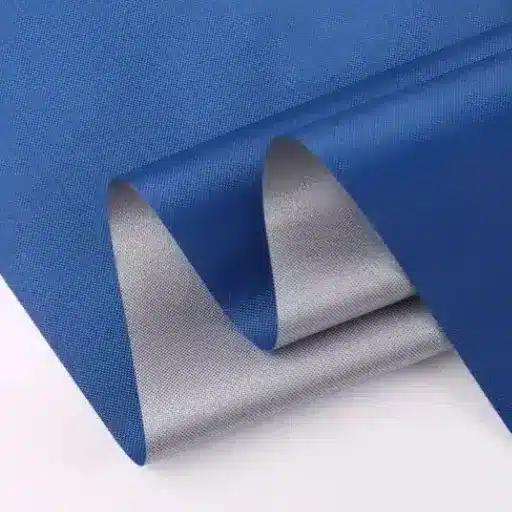
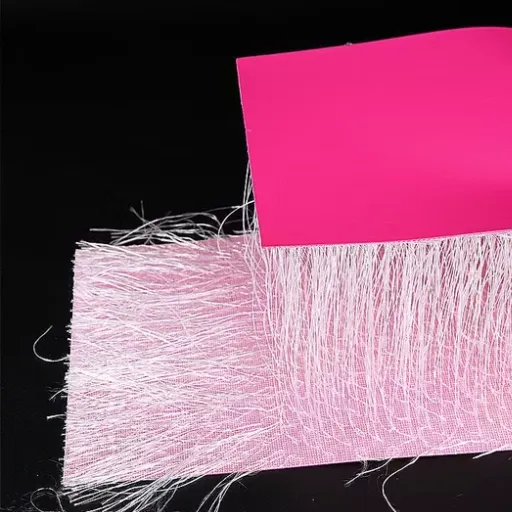
PVC coated fabric is a composite. A woven high-tenacity polyester scrim carries the mechanical load, and a plasticized PVC coating supplies waterproofing, UV protection, and weldability. If you want the full construction breakdown, our guide to how coated fabrics are made covers the coating and lamination processes in detail.
The part that matters for cleaning is this: flexible PVC is a rigid polymer made soft by an additive. Pure PVC is hard and glassy. To turn it into a flexible coating, manufacturers blend in a plasticizer, and that plasticizer is not chemically bonded to the PVC chain.
It sits between the polymer molecules and keeps them sliding past one another, which is what makes the coating drape, fold, and flex without cracking. How the PVC compound and its plasticizer system are formulated determines how much of that plasticizer there is to lose.
Because it is not bonded, it can leave.
Solvents, strongly alkaline products, ammonia, oxidising bleaches, oils, and wax polishes either dissolve the plasticizer out of the coating or react with it. Each cleaning cycle with an aggressive product removes a little more. The coating then stiffens, cracks at the folds where flexing stress concentrates, and eventually separates from the scrim underneath. That is flex-crack resistance failing, and it is the failure mode a harsh cleaner accelerates.
That chain of failure is well documented in the technical literature. James Dunlop Textiles describes how alkaline cleaning solutions react with the plasticizer and extract it, “therefore making it brittle and stiff.” HCE’s medical and furniture vinyl guidance reaches the same conclusion from a different direction, warning that repeated chemical bleaches, solvents, and abrasive cleaners cause “the removal of the plasticiser of the PVC compound, which will result in hardening and subsequent cracking.” Pat Products states it in a single line worth memorising: an aggressive cleaning regime can age a fabric faster than the weather does.
The Criterion Behind Every “Don’t Use This” Rule
Ask four questions about any cleaning product, including one that is not on our list:
- Is it a solvent?
- Is it strongly alkaline or strongly acidic?
- Is it an oxidiser?
- Is it abrasive or oily?
If the answer to any of them is yes, keep it away from PVC coated fabric. That is the entire logic behind the avoid list further down, and it lets you judge an unlabelled product yourself instead of guessing. The same four categories sit at the centre of IVK Europe’s guideline for handling PVC-coated polyester fabrics, the industry reference for which agent classes are treated as harmful.
What a Sticky Surface Is Telling You
If a coating feels tacky or sticks to itself in storage, that is not a manufacturing defect. It is plasticizer that has migrated to the surface, and it is an early warning. It usually means the fabric has been running hot, under-ventilated, or exposed to aggressive chemistry. Treat it as a maintenance signal and inspect the coating for flex-cracking before the situation gets worse.
The Base Method: Six Steps That Are Safe on Any PVC Coated Fabric
This is the sequence to fall back on when you are unsure. It is gentle enough for any PVC coated fabric and effective against the great majority of ordinary soiling.
- Remove loose debris while dry. Brush or sweep off sand, dried mud, and grit before any water touches the surface. This matters more than most people think: once grit is wet, scrubbing drags it across the coating and abrades the surface.
- Rinse with clean water. A hose or a bucket loosens dust and salt without mechanical effort.
- Wash with a pH-neutral soap in lukewarm water. A few drops of mild dish soap or a neutral detergent is enough. Hot water softens the coating and stresses the welds, so keep it lukewarm.
- Agitate with a soft tool. A soft-bristle brush, sponge, or microfibre cloth. Never a scouring pad, steel wool, or a stiff deck brush.
- Rinse until the runoff is clear. Residual soap attracts soil and holds moisture against the coating, so rinse generously.
- Air dry completely. Both faces, plus hems and folds, before the fabric is folded, rolled, or stacked.
Four parameters decide whether any clean is safe: water temperature (lukewarm, never hot), agent pH (neutral), contact time (a few minutes, and never let the solution dry on the surface), and mechanical action (soft tool, no abrasion). Competitor guides rarely state these four, yet they matter more than the choice of brand.
If you want the full supplies checklist and the material-by-material walkthrough, our tarpaulin cleaning methods guide covers that step by step. What follows here is the part that guide does not cover: what each agent does to the polymer.
Need a care sheet for a specific coating? Our engineers will confirm which cleaning agents are approved for your coating and topcoat, and supply the maintenance documentation that goes with it. Talk to our technical team.
What to Clean PVC Coated Fabric With, and What to Avoid
Every agent below is judged against the same question: what does it do to the plasticizer and the topcoat?
| Agent | Verdict | Why |
|---|---|---|
| Clean water | Safe | No chemical interaction with the coating. |
| pH-neutral, non-ionic soap or mild dish soap | Safe | Lifts soil without reacting with the plasticizer. |
| Soft-bristle brush, sponge, microfibre | Safe | Removes soil without abrading the coating surface. |
| White vinegar, diluted about 1:3 | Caution | Effective on mildew; keep contact brief and rinse thoroughly. |
| Isopropyl alcohol, spot use only | Caution | Lifts sap and grease; can dull a topcoat with prolonged contact. |
| Oxygen-based (peroxide) mildew remover | Caution | Bleach-free alternative; still needs a spot test and a full rinse. |
| Diluted bleach, about 10% or less | Caution | See the five-condition rule below. Never routine. |
| Acetone, MEK, THF, paint thinner, mineral spirits | Avoid | Solvents dissolve and extract the PVC plasticizer system. |
| Ammonia and caustic or strongly alkaline cleaners | Avoid | React directly with the plasticizer; a common cause of embrittlement. |
| Full-strength bleach and strong oxidisers | Avoid | Embrittle the coating and attack its colour. |
| Abrasive powders, scouring pads, steel wool | Avoid | Scratch and thin the coating, exposing the scrim. |
| Wax and oil polishes | Avoid | Strip the protective topcoat and attract soil. |
| Pressure washer | Avoid | Damages coating, welds, and grommets; drives water into seams. |
| Washing machine | Avoid | The agitator destroys the coating and tears out hardware. |
One clarification on the last two rows. A pressure washer is not automatically fatal, but it is a tool with no margin for error on a coated fabric. If your maker’s method permits it at all, it is from at least 50 cm with a wide spray and never at the seams. Machine washing is a straightforward no.
For the material-property counterpart to this list, our page on chemical resistance covers what the coating itself can tolerate in service.
Can You Use Bleach on PVC Coated Fabric?
This is the question the internet answers both ways, and it is worth settling properly.
Half the guides on the first page of Google say never use bleach on PVC coated fabric. The other half prescribe a 1:2, 1:4, or 1:10 bleach solution for mildew. Both groups are talking about different situations, and neither one says so. Read them together and you are left with no usable answer.
Here is the rule. Sodium hypochlorite is alkaline, and it is an oxidiser, so it does two of the four things on our avoid list at once. It reacts with the plasticizer the way an alkaline detergent does, and it attacks the coating surface and its colour.
Risky is not the same as banned, though. Bleach must clear five conditions:
- The fabric is plain plasticized PVC without a lacquer or PVDF topcoat.
- The problem is genuine mildew or microbial growth, not ordinary dirt.
- The product is diluted to around 10% household bleach or less.
- Contact is brief, on a spot-tested hidden area, followed by an immediate rinse.
- It is an occasional remediation, never a routine sanitising step.
If any of those five fails, use an oxygen-based mildew remover or a diluted vinegar solution instead. The Dickson and Saint Clair maintenance guides reach the same place from the technical side: chlorinated water or bleach on PVC coated polyester is acceptable only at around 10% concentration, and only for surface moulds.
Three things stay non-negotiable regardless. Never use bleach at full strength. Never use it on a topcoated fabric without the maker’s written approval, because the topcoat is what gives that fabric its dirt-shedding behaviour and bleach will cost you that benefit. And never default to bleach on a food-contact surface, a children’s play surface, or an aquaculture liner. For those, follow the application protocols below and the requirements of your local health authority.
Cleaning by Contaminant: The Compatibility Framework
Most guides tell you to use mild soap for everything, which is fine until the contamination is not mild. Here is what to do with the specific substances that coated fabric actually meets in service.
| Contaminant | First move | Agent | Caution |
|---|---|---|---|
| Mud, clay, dust | Brush off dry, then rinse | pH-neutral soap, 2 to 5 minutes | Do not let grit abrade the coating |
| Grease, oil, diesel, hydraulic fluid | Blot, do not spread | Undiluted mild dish soap or a maker-approved degreaser | Solvent degreasers extract plasticizer; use only with maker approval |
| Asphalt or bitumen | Chill and lift mechanically | Maker-approved cleaner for residue | Never solvent-wash a coated surface |
| Tree sap | Do not scrape | Isopropyl alcohol on a cloth | Brief contact, then wash with soap and water immediately |
| Bird droppings | Rinse immediately | Mild soap if residue remains | Acidic; etches the coating if left to bake on |
| Mildew and mould | Brush off dry first | Vinegar 1:3 or oxygen-based remover | Apply the bleach rule above; dry fully afterwards |
| Algae and biofilm | Mild soap and soft brush | Bright sun after cleaning helps | Recurring growth means the fabric stays wet too long |
| Fertiliser, agricultural spray, road salt | Rinse immediately with clean water | Mild soap only if residue persists | Deposition is the risk, so rinse on contact |
| Rust staining | Identify the metal source first | Mild acidic remover only with maker approval | Often cosmetic; check grommets and hardware |
| Pool chlorine and salt water | Fresh-water rinse after exposure | Occasional mild soap | Never let it dry on the surface |
| Food and drink spills | Warm soapy water | pH-neutral soap | Full rinse and dry; child-safe agents only |
Notice how much of this table is about timing rather than chemistry. The contaminants that do real damage, salt, chlorine, fertiliser, and bird droppings, are the ones where the first move is simply to rinse them off before they sit. Our mold prevention guide goes deeper on the mildew case if that is your recurring problem.
Cleaning by Application: The Same Fabric, Different Rules
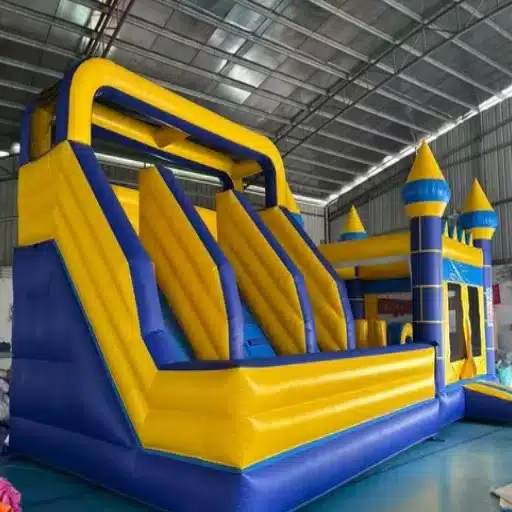
A truck curtain and a bounce house are both PVC coated fabric, but they meet completely different contamination and completely different constraints. Cleaning guidance that ignores the application is only half useful.
Truck Side Curtains and Flatbed Tarps
Diesel, hydraulic fluid, asphalt, road salt, and exhaust soot are the routine contaminants here. Quarterly cleaning is a reasonable baseline, but salt and fuel should be rinsed on contact rather than scrubbed off at the end of the quarter. Road salt is the underrated one: rinse it away instead of working it into the coating, because the plasticizer matrix is exactly what keeps the panel flexible at -20 °C. You can find the material-selection side of this in our PVC coated fabric for truck tarpaulins guide, and the full fleet programme in our maintenance guide for fleet managers.
Inflatables, Bounce Houses, and Sports Covers
These are child-contact and skin-contact surfaces, so the default is pH-neutral soap and water, thorough rinsing, and complete drying. Disinfection, when a health authority or operator requires it, should follow that authority’s protocol rather than a generic internet recipe. The seams and drop-stitch channels trap water, so dry them deliberately rather than letting a folded unit sit damp. Our PVC coated fabric for sports equipment guide covers the material specifications for this category.
Tents and Architectural Membranes
Topcoat matters most here. Many architectural membranes carry a PVDF or lacquer topcoat, and that topcoat is what produces the dirt-shedding, self-cleaning behaviour the membrane is specified for. Anything that attacks the topcoat costs you the entire benefit, so mild agents are not just caution here, they are mandatory. In humid climates the recurring problem is algae and biofilm rather than grease, and in-situ cleaning is a programme with a re-tensioning check, not a one-off wash. See our tensile structure membrane page for the product side.
Marine, Pool, and Aquaculture Liners
Salt and biofilm dominate, and aquaculture adds ammonia to the list. The cleaning regime has to be compatible with the water and the stock, not just the fabric, which means no residue and nothing that will harm what lives in the tank. Rinse with fresh water after every exposure. Our aquaculture tarpaulin specifications guide and pool liner pages cover the material requirements.
Banners and Printed Fabric
On printed or lacquered fabric, the printed face is the fragile face. Mild agents only, and never solvent-wipe an image. This applies across our PVC flex banner range.
How Often Should You Clean PVC Coated Fabric?
Clean on condition, not on a calendar. A quarterly baseline suits most industrial fabric, but a fixed schedule will always be wrong somewhere: too often for a cover that lives under a roof, and far too seldom for a curtain that sees road salt every week.
Beyond the baseline, there are exposures that need a rinse immediately, with no schedule involved: salt water, pool chlorine, fertiliser, agricultural spray, animal waste, fuel, and bird droppings. Treat these as rinse-on-contact events.
Two triggers define a deep clean. The first is seasonal storage, which is the point where residual soil and moisture do the most damage over the longest period. The second is immediately before any repair, for reasons covered below.
Every cleaning decision should also come out of the same inspection. Fifteen minutes per item is enough to check seam integrity, coating condition, eyelets and reinforcement, tension, and contamination build-up. It is the same discipline that lets a fleet catch a failing panel before it fails in service. Our tarpaulin maintenance guide covers the wider programme if you want to build the full calendar.
One last caution: do not clean more often than the fabric needs. Repeated cleaning is itself an exposure, and a coating that is washed hard every month will age faster than one that is washed properly twice a year.
Drying and Storage: Where Most Coating Damage Actually Happens
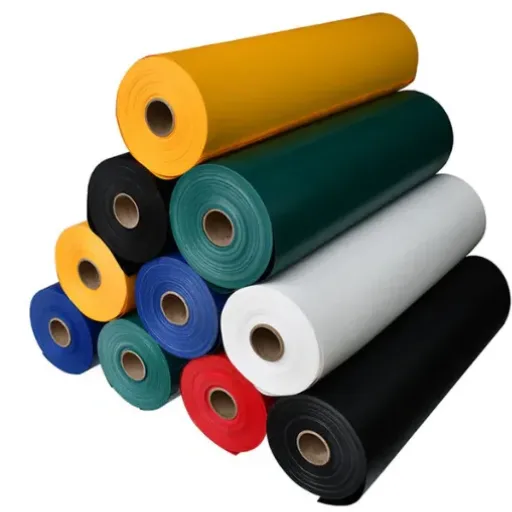
More coated fabric is ruined by how it is stored than by how it is cleaned.
Air dry both faces, in shade, until the hems and folds are dry and not just the broad panels. Never use hot air, heaters, or blowers. Never fold, roll, or stack a tarp while it is still damp, because trapped moisture drives mildew and puts stress creases into a coating that is at its most vulnerable when wet.
When you do store heavy PVC fabric, roll it where practical, or use broad loose folds and vary the fold lines so the same crease is not beaten into the same place every cycle. Keep it off sharp edges, metal hardware, fuels, and solvents, and protect grommets and D-rings from rubbing against the coating. Our tarpaulin storage guide has the full method.
Clean Before You Repair: The Rule Nobody Tells You
Here is the insight that saves the most money, and it almost never gets published.
A weld or an adhesive patch will not bond reliably to a contaminated surface. Oil, plasticizer bloom, UV chalk, and old adhesive residue all sit between the new material and the old, and they defeat the bond. The technical name for what the operator is seeing is coating adhesion loss. When an operator tells you a patch failed twice with good adhesive, the adhesive was almost certainly never the problem. The surface was.
The preparation rule is straightforward. Abrade the area lightly, wipe it with isopropyl alcohol, let it flash dry completely, apply a primer if your maker specifies one, and only then bond or weld. One safety note that matters more than the rest: never bring a hot-air tool near a wet adhesive or an unflashed solvent. Trapped solvent causes bubbles, and the combination is a fire risk.
Field repair also depends on the surface being sound. Solvent bonding and PVC contact adhesives reach a fraction of the joint strength that thermal or RF welding achieves, so a field patch is a repair of convenience, not a permanent seam.
We keep the full repair procedure separate, including patch sizing, hot-air versus RF welding, and joint-strength expectations, on our tarpaulin repair and tear repair pages. If a weld has already let go rather than the base fabric, our seam failure analysis explains why.
What the Wrong Cleaning Regime Costs You
Treat cleaning as a cost line and you will optimise it badly. Treat it as the thing that protects your replacement interval and the maths changes.
Correct care preserves coating adhesion and flexibility, and those two properties are what delay replacement. A documented quarterly inspection routine, roughly fifteen minutes per trailer, has been shown to extend a fleet’s average side-curtain replacement interval materially, on the order of 3.2 to 5.8 years in one fleet’s experience; our PVC truck side curtain care and replacement data is the source. That is a care-programme return, not a cosmetic benefit, and it dwarfs the cost of the soap.
The reverse is equally true. An aggressive regime with the wrong agent ages the fabric faster than the weather does, so over-cleaning with a strong product is a cost rather than a saving. Our coated fabric cost analysis puts the total-cost-of-ownership frame around these decisions, and our failure analysis collection covers the failure modes that a better care regime prevents.
If you are upgrading or replacing fabric rather than maintaining it, our PVC coated fabric specifications guide is the right place to start.
Frequently Asked Questions
What is the best thing to clean PVC coated fabric with?
A pH-neutral, non-ionic soap or mild dish soap diluted in lukewarm water, applied with a soft-bristle brush or microfibre cloth. It lifts ordinary soil without reacting with the plasticizer that keeps the coating flexible. Rinse until the runoff runs clear.
What should you never use on PVC coated fabric?
Acetone, MEK, THF, paint thinner, mineral spirits, and other hydrocarbon solvents; ammonia and strongly alkaline or caustic cleaners; full-strength bleach; abrasive powders and scouring pads; wax and oil polishes; pressure washers; and washing machines. Each either extracts plasticizer, attacks the topcoat, or physically abrades the coating.
Can you use bleach on PVC coated fabric?
Only under five conditions: plain PVC without a topcoat, genuine mildew rather than dirt, diluted to about 10% or less, brief contact on a spot-tested area with an immediate rinse, and occasional use only. If any condition fails, use an oxygen-based mildew remover or diluted vinegar instead.
Does vinegar damage PVC coated fabric?
Diluted white vinegar, around one part to three parts water, is a reasonable mildew treatment when contact is brief and you rinse thoroughly afterwards. Leaving vinegar on the surface, or using it routinely as a general cleaner, is not advisable because it is acidic.
Is dish soap safe for PVC coated fabric?
Mild, pH-neutral dish soap is the safest everyday option. Avoid dish products with added degreasers, bleach, or abrasives, because those additives are what cause the damage rather than the soap base.
Can you pressure wash PVC coated fabric?
Generally no. High pressure damages the coating, drives water into seams, and stresses grommets. If your fabric maker’s method permits it, that means a wide spray from at least 50 cm and never directly at a seam.
Can you machine wash PVC coated fabric?
No. The agitator destroys the coating and can tear out grommets and hardware. Coated fabric is washed by hand in place or laid flat.
Why does PVC coated fabric get sticky?
A tacky surface means plasticizer has migrated to the surface of the coating. It is an early maintenance warning rather than a defect, and it usually signals heat, poor ventilation, or exposure to aggressive chemistry. Inspect the coating for flex-cracking.
How often should you clean PVC coated fabric?
Quarterly is a sensible baseline for industrial fabric, adjusted for exposure. Rinse salt water, pool chlorine, fertiliser, and animal waste on contact, and add a deep clean before seasonal storage and before any repair.
Do you need to clean PVC coated fabric before repairing it?
Yes, and this step is what most failed repairs get wrong. Abrade lightly, wipe with isopropyl alcohol, let it dry fully, prime if specified, and then bond or weld. Oil, plasticizer bloom, and UV chalk will stop a patch or weld from holding.
Conclusion
Cleaning PVC coated fabric is a chemistry exercise, not a scrubbing exercise. The coating is a plasticized polymer, so the cleaner you choose, not the effort you apply, is what determines how long the fabric lasts. Clean gently and often, rinse salt, chlorine, fertiliser, and animal waste on contact rather than later, and judge any unlisted product by four questions: is it a solvent, is it alkaline or acidic, is it an oxidiser, is it abrasive or oily.
Settle the bleach question with the five-condition rule rather than the internet’s contradiction. Dry the fabric fully, store it rolled or loosely folded with the fold lines varied, and always clean and prepare a surface before you repair it. Those habits protect the properties that actually decide the replacement interval.
If you are unsure which agents are approved for a specific coating or topcoat, ask before you clean. Our engineering team will confirm the approved cleaning agents for your material, supply the care and maintenance documentation, and provide samples for testing. Talk to an engineer and we will match the guidance to your application rather than to a generic rule of thumb.