
PVC Fabric for Inflatable Boats: Specs & Sourcing Guide
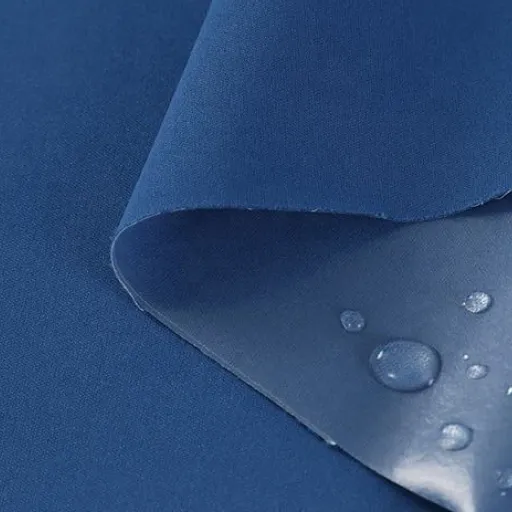
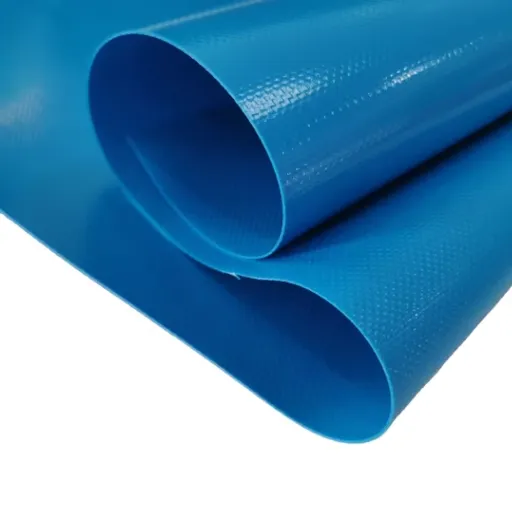
PVC fabric for inflatable boats is a polyester scrim, usually 1000D to 1100 dtex, coated on both faces with PVC to a finished weight of roughly 850 to 1,500 GSM and a calliper of 0.7 to 1.4 mm, then heat-welded into tubes. The grade that suits a given boat is set by tube diameter, working pressure and UV exposure, not by the word “marine” printed on the roll.
Marek buys tube fabric for a RIB builder outside Gdansk. Last spring he ordered 1,100 GSM “marine grade” PVC from a new mill, and nearly half the welds peeled at test pressure.
The roll weighed 1,030 GSM, and the coating ran thinner on one face than the other, so it sat outside his welding window. Nothing on the invoice was false. The specification had never been written down.
That gap is the whole problem. Most pages about PVC fabric for inflatable boats are written for someone buying a patch kit, not someone writing a purchase order.
Key Takeaways
- Boat tube fabric is specified by base cloth, coating weight and calliper: 850 to 1,500 GSM at 0.7 to 1.4 mm for most boats, dinghies down to 630 GSM.
- “Marine grade” is a marketing term. ISO 6185 certifies the boat, not the roll.
- PVC wins on welded seams, repair speed, weight and cost. Hypalon wins on UV, heat and chemicals, at two to three times the price.
- A roll can pass visual inspection and still fail at 18 PSI, so write tolerance, adhesion, seam strength and UV hours into the order.
What PVC Fabric for Inflatable Boats Actually Is
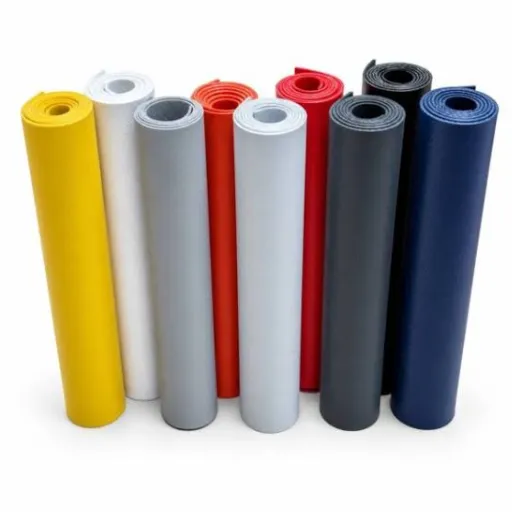
A boat tube fabric is a composite. A woven base cloth carries the mechanical load, and a PVC coating on both faces supplies the air barrier plus the surface that gets welded. Neither half works alone: an uncoated scrim leaks, and a coating thick enough to hold pressure without reinforcement would be heavy and weak in tear. The base cloth is almost always high-tenacity polyester in a 23×23 to 30×30 weave, at 1000D or 1100 dtex.
Scrim, Coating and the 70/30 Split
On a heavy boat fabric, roughly 70% of the finished weight sits in the coating and 30% in the scrim. Two rolls can both read 1,100 GSM while carrying very different amounts of yarn, so ask for both numbers; coating weight alone describes the cheaper half.
Coated Versus Laminated, and Which One Welds Into a Tube
Coated fabric spreads PVC paste onto the scrim and cures it, so the polymer penetrates the weave and anchors mechanically. Laminated fabric bonds a finished film to the scrim with adhesive, giving a smoother face and better print quality. A well-penetrated coating fuses into the yarn structure when welded; a laminate depends on the film-to-scrim bond surviving heat and pressure. If a supplier quotes laminated material for tubes, ask for seam strength after welding, not the film’s own tensile.
Specifying tube fabric for a production boat? Our engineering team matches coating weight and calliper to your tube diameter and test pressure, and sends samples from the production run. .
PVC Inflatable Boat Fabric Specifications by Boat Class
Boat class is the fastest route to a fabric grade, because the class sets tube diameter and working pressure, and those two set the load the fabric carries. ISO 6185 splits inflatable boats by engine power, and that split tracks fabric weight closely enough to start from.
The Specification Table
| Boat class | Typical length and power | Tube Ø | Working pressure | Base cloth | Fabric weight | Calliper | Seam method |
|---|---|---|---|---|---|---|---|
| Dinghy and tender | 2.4 to 3.5 m, up to 4.5 kW (ISO 6185-1) | 0.35 to 0.45 m | 2.0 to 2.5 PSI | 1000D, 23×23 | 630 to 850 GSM | 0.7 to 0.9 mm | Hot-air or RF weld |
| Sport RIB | 3.5 to 6 m, 4.5 to 15 kW (ISO 6185-2) | 0.40 to 0.50 m | 2.5 to 3.0 PSI | 1100 dtex, 23×23 | 850 to 1,100 GSM | 0.9 to 1.1 mm | RF weld |
| Commercial RIB | 6 to 8 m, 15 kW and up (ISO 6185-3) | 0.45 to 0.55 m | 2.5 to 3.5 PSI | 1100 dtex, 23×23 to 30×30 | 1,100 to 1,300 GSM | 1.0 to 1.2 mm | RF weld, taped seams |
| Rescue and military | 6 to 8 m and up, 15 kW and up | 0.50 to 0.60 m | 3.0 to 3.5 PSI | 1100 dtex, 30×30 | 1,250 to 1,450 GSM | 1.2 to 1.4 mm | RF weld, taped and tested |
Tube diameters and pressures vary by builder, so treat these bands as ranges and confirm them against the tube drawing before you fix a weight.
Why 1100 Dtex Became the Marine Default
1100 dtex polyester is the most common boat tube yarn because it does three jobs at once. It carries enough load for a 3.5 PSI tube without a second layer, folds into a seam without a bulge that traps air, and keeps a 6 m boat’s tubes within a two-person lift. Heavier yarns exist: a 1670 dtex scrim appears in large commercial tubes where abrasion outranks handling weight. The full matrix sits in our guide to .
Weight Tolerance: Why Plus or Minus 5 GSM Decides Whether a Weld Holds
A boat builder we work with took delivery of a 2,000 m batch specified at 610 GSM plus or minus 5. The roll tickets showed a spread from 585 to 632 GSM. Every roll passed visual inspection, and the first pressure test at 18 PSI put seams from the lightest rolls into failure.
The mill had held plus or minus 10 GSM, the industry norm, written nowhere in the contract. Plus or minus 5 GSM is the premium standard and the cheapest clause you can add to an order.
Bring your inflatable fabric requirements to LY TRUSTLINK.
PVC vs Hypalon vs TPU for Inflatable Boats
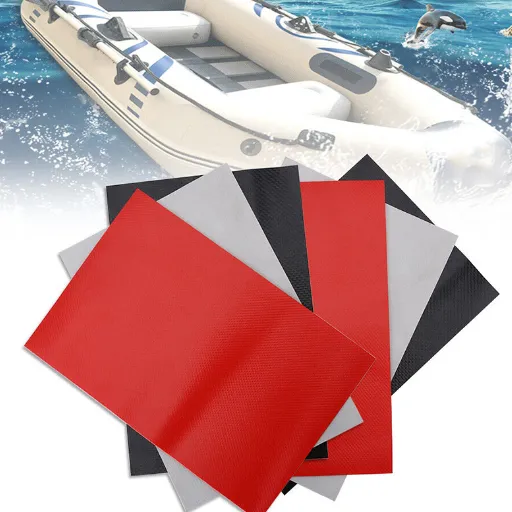
Three materials cover almost the whole market, and each is the right answer under different conditions. A supplier who says one wins everywhere is selling, not specifying.
Where PVC Wins
PVC takes welded seams. Two PVC surfaces heated and pressed fuse into one continuous membrane, with no adhesive and no cure time, and a well-set RF weld reaches a high proportion of the parent fabric’s strength. That drives faster production, fewer process variables, and a tube that repairs in the field with a patch and a heat source. PVC is also lighter than CSM at the same strength and the lowest-cost of the three.
Where Hypalon Wins, and What the Name Means Since 2010
Hypalon is chlorosulfonated polyethylene, CSM, applied over a polyester or nylon base with a neoprene tie layer. Its seams are glued rather than welded, which is skilled work with a cure time, and a butted double-taped seam is slow to build.
What you buy with that cost is resistance. Hypalon holds up better under sustained UV, higher ambient heat and chemical exposure, and published service-life ranges for CSM run well beyond PVC’s. It’s the right choice for military, expedition and long-deployment use.
DuPont stopped producing Hypalon resin in 2010, so the word is now generic for CSM fabric, with ORCA as the reference product, and the material costs two to three times what PVC does. For seam practice, Polymarine’s is the best repair-side reference.
When TPU Is the Right Answer
Thermoplastic polyurethane welds like PVC, weighs less, resists abrasion and folding better, and has no plasticiser to migrate. It suits packable boats, air decks and drop-stitch constructions where stowed volume matters more than unit cost. It also costs more and has a narrower supplier base, which is why it hasn’t displaced PVC in volume production. We cover the trade-off in .
How to Specify PVC Boat Fabric in an RFQ
An RFQ for PVC fabric for inflatable boats that names a weight and a colour gets you a roll. One that names seven measured properties gets you a material you can build a certified boat from.
The Seven Fields to Write Into the Order
| # | Field | What to write | Test method |
|---|---|---|---|
| 1 | Base cloth | 1000D or 1100 dtex, 23×23 to 30×30 weave | Roll ticket |
| 2 | Coating weight and calliper | GSM and mm, each with a tolerance (±5 GSM premium) | ASTM D751 mass and dimensions |
| 3 | Breaking strength | N/5cm, warp and weft separately | ASTM D751 §11 or ISO 1421 |
| 4 | Tear resistance | N, warp and weft, tongue geometry named | ASTM D751 §31 or ISO 4674 |
| 5 | Coating adhesion | N/5cm, minimum | ASTM D751 §50 to 53 or ISO 2411 |
| 6 | Seam strength after welding | Percentage of parent fabric, at a stated weld setting | ASTM D751 §71 to 76 |
| 7 | UV exposure and colourfastness | Hours, retained strength, colour shift as Delta E | ISO 4892-2 and ISO 105-B02 |
Field three separates real quotes from optimistic ones. Published product data from mills in this category runs from roughly 1,800 N/5cm warp at 630 GSM to about 4,000 N/5cm at 1,200 GSM, with weft 10 to 20% lower. A quote giving one tensile number without warp, weft and method isn’t a specification. Field five is the quiet one: adhesion of 150 to 180 N/5cm is what stops a tube delaminating at a fold line after two seasons.
What ISO 6185 Does and Does Not Cover
ISO 6185 runs in four parts: Part 1 up to 4.5 kW, Part 2 from 4.5 to 15 kW, Part 3 for 15 kW and above with a hull under 8 m, and Part 4 for boats of 8 to 24 m. Part 3 assigns design categories B, C and D, with no category A.
The distinction that matters: ISO 6185 certifies the boat, not the roll. No mill holds ISO 6185 certification, because the standard tests a finished craft for buoyancy, stability and load. The supplier’s job is to give the builder the measured data behind the builder’s compliance file. The standard is published by , and field six matters more than any certificate a supplier can print.
Questions to Ask Before You Place the Order
- Minimum order per colour? Colour changes carry their own minimum and setup cost.
- Usable roll width after edge trim? A 1.5 m roll trimmed 30 mm per edge changes your cutting plan.
- Colour repeatability: which Pantone or RAL reference, and what Delta E on a repeat order?
- Batch traceability: roll ticket, plus a retained sample held by both sides?
- Test reports: which ship, and are they in the mill’s own name against your lot?
- Repeat-order lead time? That second number is what your production plan depends on.
The method framework sits in , worth reading once before your first RFQ.
Failure Modes in Service, and How to Specify Against Them
PVC fabric for inflatable boats fails in a few predictable ways, and each has a specification answer.
UV Exposure and Plasticiser Migration
Ultraviolet light breaks the polymer chains in PVC, and the plasticisers that keep the material flexible migrate toward the surface as it ages. The sequence is tackiness, then a chalky bloom, then stiffening at the fold lines, then cracking.
Two specifications slow it. A UV stabiliser package in the coating compound, not a surface treatment, buys time. A topcoat buys more: acrylic is cost-effective, and PVDF resists chalking longer.
A topcoated fabric is often the difference between a ten-year tube and a five-year one. Our notes on cover the test basis.
<!– IMAGE: Plasticiser migration sequence, four photographs from new to chalked. Alt: “PVC boat fabric showing plasticiser migration and chalking after UV exposure” –>
Seam Failure at Transom and Baffle Joints
Tomas runs a charter fleet of nine RIBs out of Split. Two lost pressure at the transom cone in their third season, both on the same seam, both left inflated on a mooring through August. The welds had not failed outright. They had crept a few millimetres a year until the seam width fell below what the pressure needed.
Seam creep is a process problem as much as a material one. Weld width, temperature, roller pressure and cooling rate all move the result, and a seam adequate at 2.5 PSI can be marginal at 3.5. Baffle joints concentrate the same load in a smaller area. Specify seam strength as a percentage of parent fabric, at your working pressure.
Abrasion, Fuel and Saltwater
Beaching wears the keel line and lower tube, where 1,100 GSM becomes 700 GSM in two seasons of shingle. An abrasion patch at the wear points costs little at build time. Fuel spills soften PVC at the filler neck, so a fuel-resistant grade belongs in the specification for any boat with an inboard tank. Start your next inflatable fabric project with LY TRUSTLINK.
How PVC Boat Fabric Is Joined and Repaired
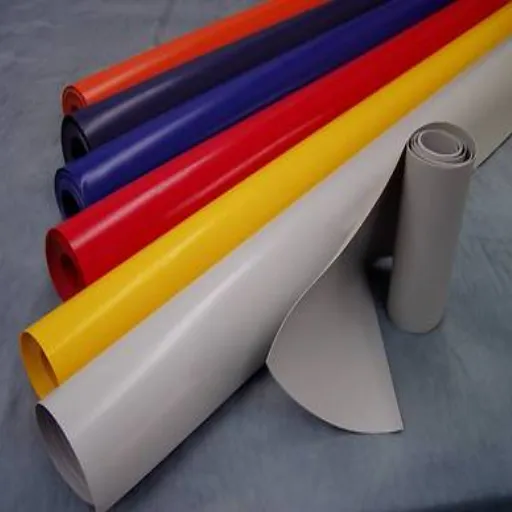
Welding is why PVC dominates volume boat production, and repair is why owners prefer it.
RF and Hot-Air Welding: What to Control
Radio-frequency welding fuses two PVC surfaces by exciting the polymer molecules in a high-frequency field, under pressure, in seconds. Hot-air welding heats the surfaces and rolls them together: slower, portable, and better suited to field repair.
Four variables decide the result: interface temperature, dwell time, roller pressure and cooling under load. Cooling is the step most often cut short, and a seam released while still soft creeps for the rest of its life. Our guide to covers the settings.
Repair: Why PVC Is Easier Than Hypalon
A PVC tube repairs with a solvent wipe, a patch of the same material and solvent adhesive or heat, and can be reinflated within the hour. Hypalon needs a two-part CSM adhesive, abrasion of both surfaces and an overnight cure. Both hold; one can be done on a beach.
For what the airtightness test actually measures, see .
Frequently Asked Questions
What is the best PVC fabric for inflatable boats?
It depends on the boat class. Commercial RIBs generally run 1,100 to 1,200 GSM on a 1100 dtex scrim, sport boats and tenders 850 to 1,000 GSM, and dinghies 630 to 850 GSM. Ask for weight, scrim, adhesion and tolerance together.
How thick should PVC fabric be for an inflatable boat?
0.7 to 0.9 mm suits sport boats and tenders, 0.9 to 1.2 mm suits commercial RIBs, and 1.2 to 1.4 mm is the heavy professional range. Calliper follows weight, so specify GSM and tolerance first, then confirm the thickness that comes with it.
Is PVC or Hypalon better for inflatable boats?
Hypalon lasts longer in sustained sun, heat and chemical exposure, which is why military and expedition boats still use it. PVC wins on welded seams, repair speed, weight and cost, which is why most recreational and commercial fleets use it. The answer depends on deployment, not material prestige.
How long does PVC inflatable boat fabric last?
Published ranges put consumer PVC at five to ten years and premium PVC with a UV topcoat at ten to twelve. Hypalon ranges run longer, with sources disagreeing on the upper bound. Storage, sun exposure and inflation pressure move the number more than the brand does.
Can PVC boat fabric be repaired?
Yes, and it is the easiest of the three to repair. A solvent wipe, a patch of the same fabric and solvent adhesive or heat will bond a patch you can inflate the same day. Hypalon takes a two-part adhesive and a controlled cure.
What GSM is marine-grade PVC fabric?
There’s no standard answer, because “marine grade” isn’t a defined term. The working range is 850 to 1,200 GSM for most RIBs and 1,250 to 1,500 GSM for heavy professional use. Ask for the test data behind the label rather than the label.
Conclusion
Boat tube fabric is a specification purchase, and the specification is short enough to write down: a base cloth, a coating weight with a tolerance, a calliper, an adhesion figure, a seam strength and a UV package.
A rescue-boat builder in northern Europe moved its inshore line from CSM to PVC two years ago, not because PVC is better in the sun, but because welded seams cut build time and field repair stopped needing an overnight cure. They closed the UV gap with a PVDF topcoat and wrote the exposure hours into the order. That’s what specifying looks like: a concession, a decision and a number.
PVC fabric for inflatable boats rewards buyers who put numbers in the RFQ. If you are sourcing tube fabric for a new model or replacing a supplier who has drifted, send us your tube drawing and test pressure. We will return a recommended weight, calliper and welding window, with samples before you commit to a batch. .