
Inflatable Tent Fabric: PVC, TPU & Oxford Spec Guide
Inflatable tent fabric is usually a PVC-coated polyester scrim of 650–900 GSM for the shell, with a heavier airtight grade for load-bearing air beams. TPU is the better beam material when the tent will be packed below −20 °C; PU-coated Oxford is the better shell when packed weight matters more than service life. What decides performance is not the GSM alone. It is four numbers: finished weight with tolerance, coating adhesion, seam peel and pressure hold, and the fire test method.
A tent can pass a flat-sample waterproof test and still fail at a seam. Marta runs a rental fleet in northern Germany.
She bought 650 GSM PVC for a winter event programme, checked the hydrostatic head, and approved the roll. At −8 °C, the seam tape cracked along two roof panels. The fabric was dry. The joint wasn’t.
Most buyers compare GSM because it is the number on the quote. That number can’t tell you whether the coating is continuous or whether the seam will hold pressure. This guide separates the tent into its components and turns the specification into an acceptance sheet you can send to a supplier. If you are specifying a tent now, before you request quotes.
Key Takeaways
- Specify the tent as three components: shell, air beam and floor. One GSM number can’t cover all three.
- For commercial inflatable tents, 650–900 GSM on a 1000D × 23×23 base is the working band; 0.60–0.90 mm covers most of it.
- Weight tolerance is a specification, not a detail. ±10 GSM is the industry norm; premium supply holds ±5 GSM.
- Air beams typically run 4–8 PSI. The valve marking, not the brochure, is the operating limit.
- Fire compliance needs the method and specimen weight, not just “NFPA 701”. Method 2 is the tent, tarp and membrane method above 700 g/m².
What Inflatable Tent Fabric Has to Do
An inflatable tent isn’t one fabric doing one job. It’s a shell, an air frame, a floor and a set of joints. Each part fails differently, so each needs its own line in the purchase order.
The shell keeps rain, wind and UV out, and has to fold and pack without cracking. The beam carries the structure and holds pressure, so its job is air retention and creep resistance, not just strength. The floor takes boots, chairs, ground contact and repeated folding on the same crease. Valves and seams cause most pressure losses, which is why the acceptance test belongs on the finished chamber, not only on a flat sample.
Table 1: Component jobs and what to specify
| Component | Dominant property | Typical construction | Spec to write |
|---|---|---|---|
| Shell | Water resistance, UV, fire, flexibility | 650–900 GSM PVC-coated polyester, 1000D × 23×23 | GSM ± tolerance, hydrostatic head, fire method, cold-fold |
| Air beam | Air retention, creep resistance, seam strength | 800–1,000 GSM PVC, 1000D, 0.75–1.00 mm | Pressure rating, seam peel, 24 h hold, valve flange |
| Floor | Abrasion, puncture, hydrostatic head | 650–900 GSM PVC or 500 GSM PE-laminated mesh | Abrasion cycles, hydrostatic head, weld overlap |
| Valve and seam | Leak-free joint | RF-welded flange, hot-air seam | Peel strength, 1.5× pressure hold, batch trace |
is built on this component logic. The product page gives the application bands; this article gives the acceptance criteria.
Inflatable Tent Fabric Weight and Denier by Tent Class
The right weight depends on how the tent is used, not on how large it is. A 6-person rental tent erected 40 times a season needs different fabric from a 2-person backpacking tent carried for a weekend.
Table 2: Spec bands by tent class
| Tent class | Shell fabric | Beam fabric | Thickness | Fire and compliance |
|---|---|---|---|---|
| Backpacking air tent | 210D–600D Oxford, PU 3,000 mm, 210–320 GSM | TPU 0.30–0.50 mm or PVC 500–650 GSM | 0.35–0.55 mm | CPAI-84 / ASTM F3431 (US camping) |
| Family and glamping | 650–800 GSM PVC, 1000D | 800–900 GSM PVC | 0.60–0.75 mm | NFPA 701 Method 2, EN 13501-1 |
| Commercial event and rental | 750–900 GSM PVC, 1000D × 23×23 | 850–1,000 GSM PVC | 0.75–0.90 mm | NFPA 701 Method 2, EN 13501-1 B-s1,d0 |
| Medical, relief and military | 850–1,100 GSM PVC, 1000D–1300D | 900–1,100 GSM PVC | 0.70–0.90 mm | NFPA 701, EN 13501-1, cold-fold |
The commercial row is the band we build to for tents and event structures. The camping and military rows are market-typical ranges. Service life depends on UV, use and repair; our estimate for commercial event structures is 5–8 years.
Denier, base cloth and thickness together
Denier describes the yarn, not the fabric. A 1000D scrim at 650 GSM has coarser yarns and fewer weave intersections than a 500D scrim at the same weight, so it usually resists tear propagation better. Specify the base cloth, yarn count and ends and picks, not just the finished GSM. In a 650 GSM fabric, the scrim is often 200–300 GSM and the rest is PVC, plasticizer and additives, so two suppliers can quote the same weight and deliver different performance.
Thickness tracks hand and weld behaviour better than weight alone. Our specification maps 490–550 GSM to 0.45–0.50 mm, 550–650 GSM to 0.50–0.60 mm, 650–780 GSM to 0.60–0.75 mm, 780–900 GSM to 0.75–0.90 mm, and 900–1,450 GSM to 0.90–1.40 mm.
At 610 GSM on a 1000D × 23×23 base, our published tensile range is 2,200–2,500 N/5cm, with tear at 280–320 N. At 650 GSM the range rises to 2,500–2,800 N/5cm, with tear at 320–380 N. Those numbers only mean something when the test method is stated. ISO 1421 strip and grab tests are not interchangeable, and a tensile figure without a method is a number, not a specification.
The batch tolerance that decides whether the tent holds pressure
An order isn’t complete until it states a tolerance. The industry norm is ±10 GSM; premium supply holds ±5 GSM. On a 610 GSM order, a ±10 GSM band allows 600–620 GSM. A batch outside that band should be rejected before cutting.
Our specifications guide documents a batch that ranged from 585 to 632 GSM against a 610 GSM specification. It passed a visual check, then failed pressure testing at 18 PSI, and the affected beams were scrapped. The cost was not the fabric. It was the welded labour, test time and delayed delivery.
That is the case for writing “610 GSM ± 5 GSM” into the purchase order and asking for the batch report before shipment. It is also the case for before you trade weight for cost.
Air-Beam Pressure and Air Retention
For inflatable tent fabric, published tent specifications put the working range at roughly 4–8 PSI, though some brands allow up to 12 PSI.
- Lanco AZF: 0.30 bar (4.4 PSI) for 35 cm beams
- Berghaus Air Shelter: 4–7 PSI
- Zempire: 7–12 PSI
- Vango AirBeam: 7 PSI
The spread reflects beam diameter, fabric stiffness, valve design and wind and snow load.
The operating limit is the figure marked on the valve or in the manual. Pressure also moves with temperature: a tent inflated to 7 PSI on a warm afternoon can drop several PSI overnight, and a black beam in direct sun can rise again. A pressure relief valve and a written PSI range belong in the specification.
Air retention is a coating and seam property
Our inflatable-grade PVC targets permeability below 0.05 cm³/cm²/s at 20 mbar. Commodity fabric can sit at 0.15–0.30, a three- to six-fold difference. The test is run on a flat sample, so it describes the coating, not the finished beam.
Finished beams leak at seams, valve flanges and patch edges far more often than through the coating. A 24-hour hold test at 1.25–1.5× working pressure is the practical check. For seam samples, we test at 1.5× operating pressure for 24 hours and require less than 5% loss.
Low-pressure tents are not high-pressure shelters
Do not compare a camping air tent with a high-pressure airbeam shelter. Recreational tents run at 4–8 PSI, and professional low-pressure frames cluster around 0.3 bar, about 4.4 PSI.
High-pressure military and medical shelters can run at 4–8 bar, which is 60–120 PSI, with a different fabric, seam and valve architecture. A pressure figure without the class of structure isn’t usable.
Want a second opinion on your beam specification? .
PVC vs TPU vs Oxford: Which Tent Fabric to Specify
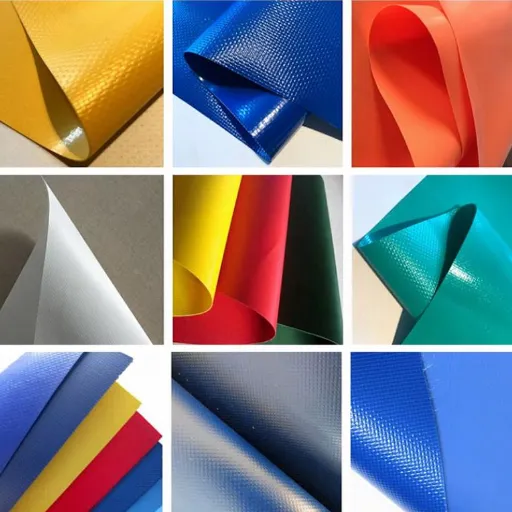
PVC-coated polyester is the commercial default because it welds reliably, accepts fire-retardant formulations, repairs easily and costs less than TPU. It is also heavy, and standard grades stiffen around −5 °C. Cold-grade PVC extends the range, but it doesn’t match TPU at the same weight.
TPU is typically 25–40% lighter at equal beam duty and stays flexible to −20 °C or below. It welds by RF or hot air, but the weld window is narrower. It costs more, and fewer fire-retardant systems are proven at scale. For a tent packed frozen and carried, TPU is often the right beam material.
Oxford is a woven polyester or nylon shell, usually 210D–600D, coated with PU at 2,000–5,000 mm hydrostatic head. It is light, packs small and suits camping shells. It isn’t an airtight beam fabric on its own. An Oxford shell usually needs a TPU or PVC beam, or a separate bladder.
Table 4: Material decision
| Criterion | PVC-coated polyester | TPU-coated polyester or nylon | PU-coated Oxford |
|---|---|---|---|
| Cost per m² | Lowest | Higher, often 40–100% depending on grade | Low to medium |
| Weldability | HF, hot air, hot wedge; wide window | RF and hot air; narrower window | Sewn; seam tape or sealant |
| Cold flexibility | Stiffens near −5 °C; cold grades to −30/−40 °C | Flexible to −20/−30 °C | Moderate |
| Weight | Heavy | 25–40% lighter at equal beam duty | Light |
| Fire retardancy | Well-established FR formulations | Possible, fewer proven systems | Possible, depends on coating |
| Repair | PVC glue, patch, re-weld | TPU patch, re-weld | Sewn patch, seam tape |
| Best use | Rental, event, fixed install, marine | Cold-weather glamping, backpacking beams | Camping shells, light event walls |
The honest version: no single inflatable tent fabric wins every comparison. If your tent will be packed at −20 °C and carried, TPU is the better beam. If it will be erected by a crew 30 times a season, repaired on site and stored in a container, PVC is the better commercial choice.
For a closer comparison of the two shell materials, see . For coating versus lamination, see .
Ingrid runs a glamping site in northern Norway. Her first tents used PVC beams. At −25 °C two developed pinholes at the valve flange during setup.
She switched to TPU beams inside an Oxford shell. Material cost rose by about 18%, but the cracked-beam claims stopped.
Fire, Seam and Compliance: What to Put in the Order
Fire compliance is where a generic “NFPA 701” line on inflatable tent fabric causes the most trouble. NFPA 701 has two test methods. Method 2 is the method the standard scopes to tents, tarps, awnings and membrane structures, and it applies to materials above 700 g/m². A 650 GSM fabric may need a different method or specimen set.
The report must name the method and the specimen weight. “Passed NFPA 701” without those two details isn’t a specification. The scope is on the .
For Europe, EN 13501-1 classifies reaction to fire from A1 to F, with smoke classes s1–s3 and droplet classes d0–d2. A B-s1,d0 result is common for treated tent fabric, but the class belongs to the exact tested construction. Change the coating weight and the classification may not carry over. The explains the structure.
For recreational camping tents sold in the US, is the current specification and revises CPAI-84 for that application. Some US states still reference CPAI-84, and Canada’s 2024 Tents Regulations point to CAN/CGSB-182.1. EN 14960 is inflatable play equipment, not a tent standard. Do not accept it as fire compliance for a tent.
Welding and seam acceptance
PVC tent panels are joined by RF welding, hot-air welding or hot-wedge welding. RF at 27.12 MHz with 2–5 second cycles suits large flat panels and volume production. Hot air reaches up to 750 °C at 1–24 m/min, which suits long linear seams and on-site repair. Material above 1.2 mm may have weaker hot-air peel strength, so thick beams need a process trial.
Valve flanges, D-rings and anchor patches are the highest-risk joints. We weld anchor D-rings at 1.5× standard seam width. A patch wide enough to spread load is cheaper than a field failure.
Two tests belong in the order. A 180° peel test on a production seam sample, and a pressure-hold test at 1.5× working pressure for 24 hours with less than 5% loss. Both should run on the production line, not only in a lab. For more on weld methods, see .
The RFQ Acceptance Sheet
An RFQ for inflatable tent fabric should fit on one page. If a supplier can’t answer these fields with numbers, the quote isn’t comparable to another supplier’s quote.
Table 5: RFQ acceptance sheet
| Field | Example value | Why it matters |
|---|---|---|
| Base cloth | 1000D × 1000D, 23 × 23 | Sets strength and tear |
| Finished weight | 700 GSM ± 5 GSM | Controls coating and pressure performance |
| Thickness | 0.65 mm ± 0.03 mm | Controls hand, weld window and weight |
| Coating sides | Double-sided PVC | Air retention and abrasion |
| Adhesion | ≥ 70 N/5cm, DIN 53357 | Prevents delamination at seams |
| Tensile | ≥ 2,500 N/5cm warp and weft, ISO 1421 | Structural margin |
| Tear | ≥ 320 N, ISO 4674 | Puncture and tear propagation |
| Hydrostatic head | ≥ 3,000 mm shell; ≥ 5,000 mm floor | Water resistance |
| Air permeability | < 0.05 cm³/cm²/s at 20 mbar | Beam retention |
| Seam peel | ≥ 80 N/5cm, 180° | Weld quality |
| Pressure hold | 1.5× working pressure, 24 h, < 5% loss | Finished-chamber acceptance |
| Fire | NFPA 701 Method 2 at tested GSM, or EN 13501-1 B-s1,d0 | Market compliance |
| UV | 500 h ISO 4892, ≥ 80% tensile retention | Outdoor life |
| Colour | ΔE ≤ 2 against approved standard | Brand consistency |
| Traceability | Batch number on roll and report | Claim handling |
A clause you can paste into an inquiry:
Fabric to be 700 GSM ± 5 GSM, 1000D × 1000D, 23 × 23, double-sided PVC, adhesion ≥ 70 N/5cm per DIN 53357, seam peel ≥ 80 N/5cm, and finished-chamber pressure hold at 1.5× working pressure for 24 hours with ≤ 5% loss. Supply batch test reports with each roll.
A usable test report has the supplier’s name, batch number, fabric construction, test method, specimen weight, result and date. It should be traceable to the roll you received, not to a generic product code. Our covers tensile, tear, adhesion, hydrostatic head, cold-fold and UV ageing, and the page explains how to read the results.
If a batch fails, reject it before cutting. If it has already been cut, quarantine the finished units and test a finished chamber, not a flat sample. Record the batch number and failure mode.
Sourcing Inflatable Tent Fabric from LY TRUSTLINK
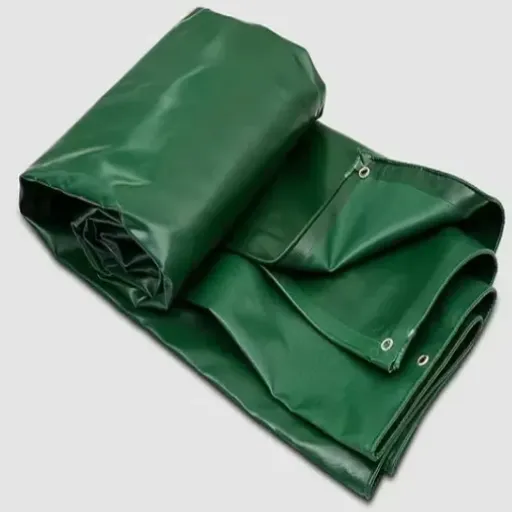
We manufacture PVC-coated polyester for tents and inflatable structures in the 650–900 GSM band, on 1000D scrims, with double-sided coating and optional fire-retardant formulations. Standard roll width is up to 3.2 m, with custom widths by arrangement. Premium batches hold ±5 GSM; the industry norm is ±10 GSM. Our published data at 650 GSM is 2,500–2,800 N/5cm tensile, 320–380 N tear, 70–100 N adhesion for premium supply, and air permeability below 0.05 cm³/cm²/s at 20 mbar.
Fire and chemical compliance options include NFPA 701, EN 13501-1, DIN 4102 B1/B2, REACH and RoHS. These are configured by project and confirmed on the order; certificates and test reports are available on request. We don’t claim a standard until the report for the relevant construction is on file.
For custom orders, the minimum is 3,000 m²; standard stock starts at 500 m². Samples run 10–50 m, and A4 swatches are available. Stock lead time is 7–10 business days, custom is 15–25, and rush is 5–7 at a 20% surcharge.
If you need tent fabric that is specified rather than guessed, . If you are still choosing between constructions, read the and the guide to before you write the RFQ.
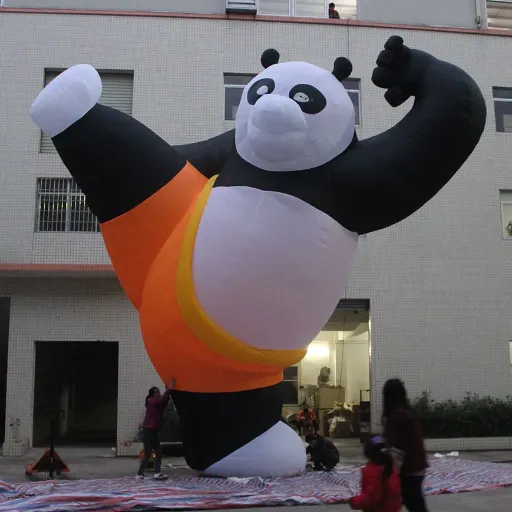
Third-party fabrication example: a custom captive-air PVC shelter. It is not an LY TRUSTLINK product.
Frequently Asked Questions
What fabric is used for inflatable tents?
Most commercial inflatable tents use PVC-coated polyester in the 650–900 GSM range on a 1000D scrim, with a heavier airtight grade for the beams. Lightweight camping air tents often use 210D–600D PU-coated Oxford for the shell and TPU or PVC for the beams. Packed weight, cold exposure, fire requirements and erection frequency decide.
Is PVC or TPU better for inflatable tent fabric?
PVC is better for rental, event and fixed-installation tents: lower cost, reliable welding, proven fire-retardant systems and easy repair. TPU is better for cold-weather and backpacking tents because it is 25–40% lighter at equal beam duty and stays flexible below −20 °C. The use case decides.
How thick should inflatable tent fabric be?
Commercial tent shells usually run 0.60–0.90 mm, roughly 650–900 GSM in PVC-coated polyester. Family tents sit around 0.60–0.75 mm; rental and event tents around 0.75–0.90 mm. Specify thickness with a tolerance, because hand, weld window and packed weight depend on it.
What pressure do inflatable tent air beams run at?
Most recreational and commercial air tents run at roughly 4–8 PSI, though some brands specify up to 12 PSI. Professional low-pressure frames often run around 0.3 bar, about 4.4 PSI. High-pressure military and medical shelters are a different class, at 4–8 bar. Follow the figure marked on the valve or in the manual.
Does inflatable tent fabric need to be fire retardant?
It depends on the market and use. Event, rental and public-occupancy tents usually need a documented classification, such as NFPA 701 Method 2 or EN 13501-1. US camping tents fall under ASTM F3431, which revises CPAI-84. Ask for the report, method and specimen weight, not just the standard number.
How long does an inflatable tent last?
For commercial event structures, our estimate is 5–8 years, depending on UV exposure, erection frequency, cleaning, storage and repair. Camping tents typically have shorter lives. A UV-stabilized fabric with a documented 500-hour test and a proper repair kit will outlast a cheaper fabric.
Conclusion
Inflatable tent fabric is a system, not a single roll. The shell needs water resistance, UV stability and fire compliance. The beam needs air retention, creep resistance and a seam that holds pressure. The floor needs abrasion resistance, and the valve and seam need a tested joint.
The four numbers that make the specification usable are finished weight with tolerance, coating adhesion, seam peel and pressure hold, and the fire method with specimen weight. Add the base cloth, thickness, width and batch traceability, and you have an RFQ a supplier can answer precisely.
PVC remains the right commercial choice for most rental and event tents. TPU is right when the tent will be packed cold and carried. Oxford is right when weight matters most, with a TPU or PVC beam to carry the pressure.
If you are sourcing inflatable tent fabric, . We will review the specification and quote a sample for weld testing.