
Custom Truck Tarps: How Panel Width Sets Fit & Life
Custom truck tarps are built from panels of coated fabric welded into one cover, and your supplier’s roll width decides how many panels and seams that cover carries. A 24 ft tarp made from a 1.6 m roll has four welded seams. The same 24 ft tarp made from a 5 m roll has one.
Both can carry identical size, weight and colour on the purchase order. They are not the same product, and the difference shows up in year three when one of them starts splitting along a seam.
Most buyers specify size, GSM and colour, then discover the variable that governs service life was never on the form. This guide covers how custom truck tarps are actually mapped into panels, why roll width is the specification nobody requests, and how to write an order that survives contact with a highway.
Key Takeaways
- Panel count is set by the supplier’s roll width, not by your drawing: a 24 ft cover needs five panels on a 1.6 m roll and two on a 5 m roll.
- Every welded seam is a line at roughly 80% of parent-fabric strength, so fewer seams means fewer places for the cover to fail.
- Specify finished dimensions, never cut dimensions. LY TRUSTLINK publishes a cutting tolerance of plus or minus 2%.
- Ask every supplier for their roll width before comparing quotes. A fabricator limited to narrow rolls cannot build a low-seam cover at any price.
- Custom orders typically run 500 to 5,000 square metres, with sample panels in 2 to 3 weeks and bulk production in 4 to 8 weeks.
What “Custom” Actually Means for a Truck Tarp
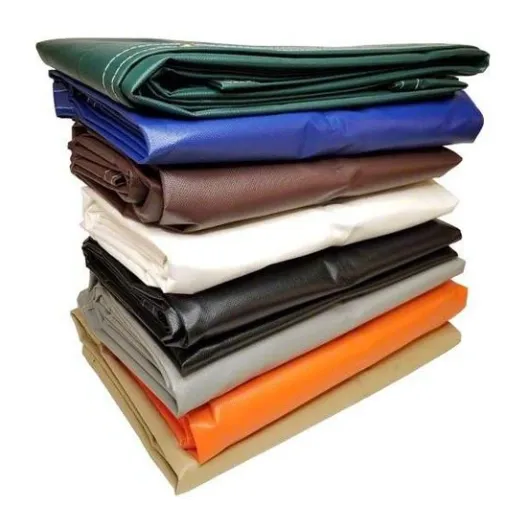
A custom truck tarp is not a stock size pulled from a rack. It is a fabrication drawing, and six things on that drawing are genuinely variable: finished dimensions, fabric weight, base cloth, seam method, hardware layout, and finish.
Everything else is a choice between options the manufacturer already stocks. Colour is a coating batch decision. Fire rating is an additive package. Print is a lacquer and ink system chosen before coating, not after.
The distinction matters at the quoting stage. A supplier who treats custom as “we cut it to your size” is selling you a rectangle. A supplier who treats it as a drawing will ask where the seams fall, and that question is the whole subject of this article.
For the wider procurement picture, including cargo types and fleet selection logic, the complete truck tarpaulin guide covers the ground this page does not. Here we stay on the drawing.
Why Custom Truck Tarps Have Seams (And Why the Count Matters)
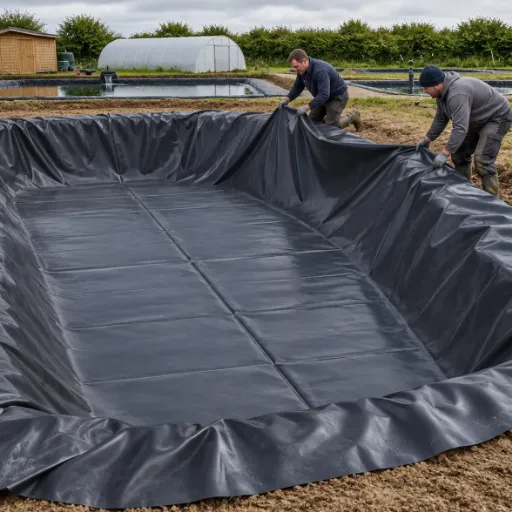
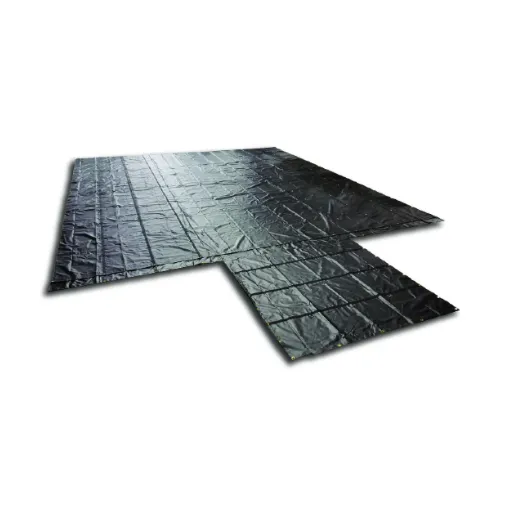
Coated fabric arrives on a roll with a fixed width and a continuous length. To build a cover, you cut pieces to the finished length and weld them side by side until you reach the finished width. The seams therefore run the length of the tarp, and their number is a straight function of two numbers: finished width divided by roll width.
Custom truck tarps have seams because no roll is wide enough to cover a loaded flatbed in one piece. How many seams you get is a supplier capability question, and it is answered before anyone quotes a price.
Here is the arithmetic, using LY TRUSTLINK’s published range of 1.5 m to 5 m and above:
| Finished width | 1.6 m roll | 2.5 m roll | 3.2 m roll | 5 m roll |
|---|---|---|---|---|
| 16 ft (4.88 m) | 4 panels / 3 seams | 2 / 1 | 2 / 1 | 1 / 0 seams |
| 20 ft (6.10 m) | 4 panels / 3 seams | 3 / 2 | 2 / 1 | 2 / 1 seam |
| 24 ft (7.32 m) | 5 panels / 4 seams | 3 / 2 | 3 / 2 | 2 / 1 seam |
Read the 24 ft row across. Five panels and four seams on narrow fabric. Two panels and one seam on wide fabric. The buyer pays for the same square metres either way.
Why a Seam Is the Weak Point
A welded seam is not as strong as the fabric around it. LY TRUSTLINK’s guidance on seam strength acceptance criteria sets the target at 80% of parent-fabric strength, measured on the finished cover rather than the roll. ASTM D751 is the reference method for measuring seam strength on coated fabrics. A seam that tests at 55% effectively reduces the whole panel to that value.
Four seams is four lines where the cover is 20% weaker, and they sit in the same direction as the wind load. That is the mechanism behind most in-service failures, which is why how welded seams fail in service is worth reading before you approve a sample.
Placement matters as much as count. A seam landing on a high-wear corner, a rub rail or a banding contact point will fail earlier than one on a flat panel. A supplier who can choose between two panel layouts can move a seam off the wear point. A supplier locked to a narrow roll often cannot.
Talk to an engineer about your panel layout. Send a dimensioned drawing and we will tell you where the seams will fall, and whether a different roll width removes one.
Roll Width Is the Specification Nobody Asks For
No competitor page on this subject publishes a roll width. That is not an oversight. It is the number that separates a coating plant from a cut-and-sew shop.
A fabricator with a 1.6 m stenter cannot offer a two-panel 24 ft cover at any price, because the machine that applies the coating determines the maximum fabric width. Widening that line is a capital decision, not a scheduling one.
So ask the question early: what is your maximum roll width, and where will the seams fall on my finished cover? The answer tells you what kind of supplier you are talking to before you discuss price. LY TRUSTLINK manufactures to 1.5 m and above, up to 5 m and wider, which is what makes a two-panel 24 ft cover possible.
Measuring a Custom Truck Tarp: Cut Size vs Finished Size
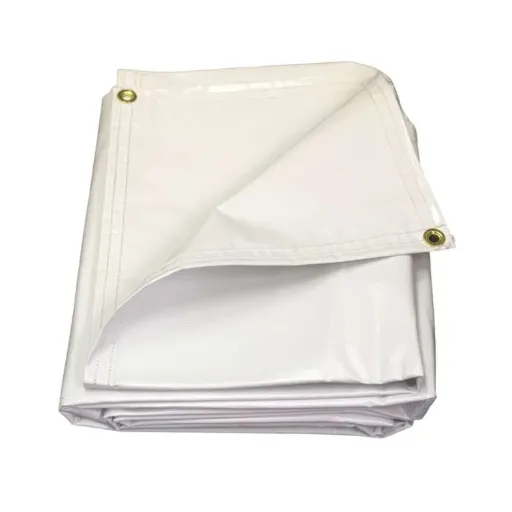
Send these six fields and you have a specification. Leave any of them out and you have a conversation.
- Finished length, width and drop, in millimetres or inches, stated as finished.
- Finished-size tolerance you will accept, and the supplier’s cutting tolerance.
- Fabric weight in GSM or oz/yd², with the permitted range rather than a single figure.
- Base cloth denier and construction.
- Hardware layout: grommet type and spacing, D-ring rows, reinforcement points.
- Compliance documents required, by standard and by batch.
The most common error sits in the first field. Cut size is not finished size. Hemming, welding and hardware consume material, so a cover cut to your stated dimensions arrives undersized. LY TRUSTLINK publishes a cutting tolerance of plus or minus 2%, which is the figure to hold a supplier to.
The second most common error is measuring the rectangle instead of the interface. A cover has to seat on something: rails, rub rails, winches, stake pockets. A replacement curtain that misses on keder diameter by 2 mm will not seat at all, whatever its GSM. For flatbed work, the flatbed tarp sizes and drops reference covers how drop height relates to load height.
A dimensioned drawing beats a paragraph of description every time. Sketch the cover flat, mark the drop on both sides, note where hardware sits, and write the finished dimensions on the drawing. Suppliers quote drawings accurately and prose approximately.
Specifying Fabric, Hardware, and Finish
Fabric weight is the specification buyers reach for first, and it is the one most often reduced to a single number that hides more than it reveals.
Specify a band, not a point. “610 GSM” at minus 5% is a different product from 610 GSM nominal, and both are defensible under the same label. The same applies to base cloth: 1000D at 20 by 20 threads per inch is the truck standard, and a 500D scrim under the same GSM is a lighter, cheaper fabric wearing the same weight.
Hardware is where custom covers diverge fastest. Grommet type, spacing, D-ring rows and reinforcement patches all change cost and wind performance together. LY TRUSTLINK’s standard grommet spacing is 600 mm, tightened for high-wind service.
Grommet material matters on exposure. Brass and stainless resist corrosion on coastal and winter routes; untreated steel does not. The grommet spacing and installation guide covers the detail.
Seam method closes the loop. Radio-frequency welding and hot-air bonding fuse the coating itself, while stitching leaves needle holes that water finds. Radio-frequency welding is the process that produces a molecular bond rather than an adhesive one. Specify which method, and ask for the weld parameters alongside the sample.
Branding, Logos, and Fleet Livery
A branded cover is a coating decision before it is a print decision. Tell the supplier the tarp will carry a logo before the fabric is coated, so the surface lacquer and ink system are matched to the print.
Specify brand colours to RAL or Pantone so the cover matches the cab and the depot livery. Use inks rated for multi-year exterior exposure, because a graphic that fades in eighteen months outlives its usefulness long before the fabric wears out. And check that the print survives folding, since a flatbed tarp spends most of its life folded.
MOQ, Sampling, and Lead Time for Custom Orders
Custom truck tarps are a production run, not a warehouse pick. The commercial terms follow from that, and they are worth knowing before you shortlist suppliers.
| Item | LY TRUSTLINK standard |
|---|---|
| Minimum order | 500 to 5,000 m², depending on complexity |
| Prototype quantities | Available below the standard MOQ |
| Sample panels | 2 to 3 weeks after spec approval |
| Bulk production | 4 to 8 weeks |
| Ocean freight | 2 to 4 weeks |
| Air freight | 3 to 7 days |
Two things drive MOQ up: a non-standard coating formulation and a custom print run. Both require a setup that has to be amortised across the order, which is why a prototype quantity costs more per square metre than a container load.
The deliverable at the sample stage is not a photograph. It is a panel with its test data: tensile, tear, coating adhesion, hydrostatic head, and seam peel or shear, run on the batch that will make your order. Where a fleet or receiver requires fire performance, specify a construction meeting NFPA 701 and hold the certificate with the report. Ask for the report before you approve, because approval without data is approval of a colour.
How to Write a Custom Truck Tarp RFQ
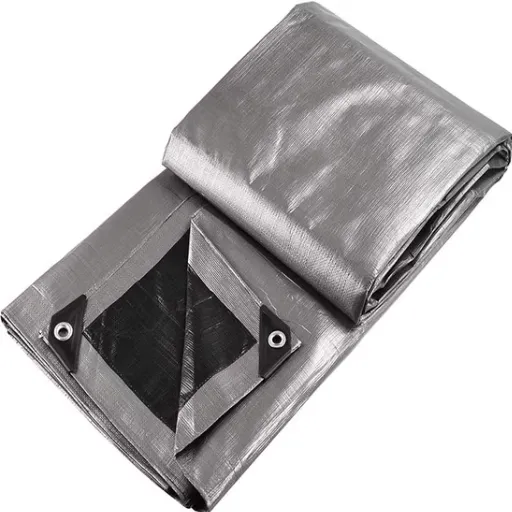
Here is what a complete request looks like for a fleet standardising on 24 by 27 lumber covers with an 8 ft drop, in 18 oz fabric.
| Field | Entry |
|---|---|
| Finished size | 24 ft x 27 ft, 8 ft drop, finished dimensions |
| Tolerance | Plus or minus 2% on cut; confirm finished-size tolerance |
| Fabric | 18 oz (approximately 610 GSM), 1000D x 1000D, tolerance stated |
| Construction | Two drops with end flap, 3 D-ring rows per side |
| Hardware | Stainless grommets at 600 mm centres, reinforced corners |
| Seam | RF-welded, seams off high-wear corners |
| Roll width | Confirm maximum width and resulting panel count |
| Compliance | Batch test report, NFPA 701 certificate if required |
| Quantity | 40 covers, first article sample before bulk |
| Delivery | FOB terms and required arrival window |
Two lines in that table do most of the work. The roll width line forces the supplier to commit to a panel count, and the seam placement line tells you whether they read it. A supplier who answers both has an engineering function. A supplier who answers neither is quoting you a price for a word.
Compare what comes back against the specification, not against other quotes. Two prices for “24 by 27, 18 oz” can differ by 30% and both be honest if the panel counts differ.
Request a sample order. We produce a panel from your production batch and ship it with the test report attached, so approval rests on measured numbers rather than a swatch.
Frequently Asked Questions
How do I order custom truck tarps?
Send a dimensioned drawing with finished length, width and drop, plus fabric weight, hardware layout and any compliance requirement. Ask for the supplier’s roll width and panel count before you ask for a price.
What measurements do I need for a custom tarp?
Finished length, finished width, drop on each side, and the interface dimensions your cover must seat on. State finished sizes, not cut sizes, and include a tolerance.
What is the minimum order for custom truck tarps?
At LY TRUSTLINK, standard custom orders run from 500 to 5,000 square metres depending on complexity. Prototype and sample quantities can go below that floor.
Why do custom tarps have seams?
Because coated fabric comes on a roll of fixed width. Panels are cut to length and welded side by side until the cover reaches its finished width, so seam count equals finished width divided by roll width.
How many panels should a truck tarp have?
As few as the roll width allows. A 24 ft cover can be built with five panels on 1.6 m fabric or two panels on 5 m fabric. Fewer panels means fewer seams, and seams are the weakest line in the cover.
Can you make a truck tarp in any size?
Within the practical limits of roll width and handling weight, yes. Very large covers become difficult to deploy, which is why long loads are often split into a three-piece set rather than one cover.
How long does a custom truck tarp take to make?
Sample panels typically take 2 to 3 weeks after specification approval. Bulk production runs 4 to 8 weeks, with ocean freight adding 2 to 4 weeks.
Can I get my logo printed on a truck tarp?
Yes, and the print decision belongs before coating, not after. Specify brand colours to RAL or Pantone and use inks rated for multi-year exterior exposure.
Conclusion
Custom truck tarps are a fabrication drawing before they are a product, and the drawing has one variable most buyers never specify. Roll width sets panel count. Panel count sets seam count. Seam count sets how many lines at 80% strength your cover carries into service.
Three habits prevent most of the failures this article describes. Ask for the roll width and the resulting panel count before you discuss price. Specify finished dimensions and hold the supplier to a stated tolerance. Approve a sample on its test data, not its appearance.
The rest is arithmetic you can check yourself, which is the point. A procurement manager who can count panels can tell a coating plant from a cut-and-sew shop in one email.
If you are specifying custom truck tarps for a fleet, send us the drawing. Our custom tarpaulin manufacturing capabilities cover 1.5 m to 5 m and wider roll widths, 500 to 900 GSM fabric, RF-welded construction, and batch testing to ISO 9001 and NFPA 701. We will tell you where the seams fall, and whether a wider roll removes one.