
Automotive Airbag Fabric Market: Materials & Manufacturers (2026)
The airbag fabric market in automobile industry was proved to be a potential valuation up to USD 4.5 billion that may escalate to USD 6.8 billion by 2030. This growth is bound to some extent by stringent safety requirements and the increased use of silicone-coated nylon 66 design. Procurement officers and material engineers in Tier 1 automotive suppliers have to grapple with the issue of choosing the most appropriate airbag fabric or the perfect balance of tensile performance, coating formulations and the sustainability of supply over the long run.
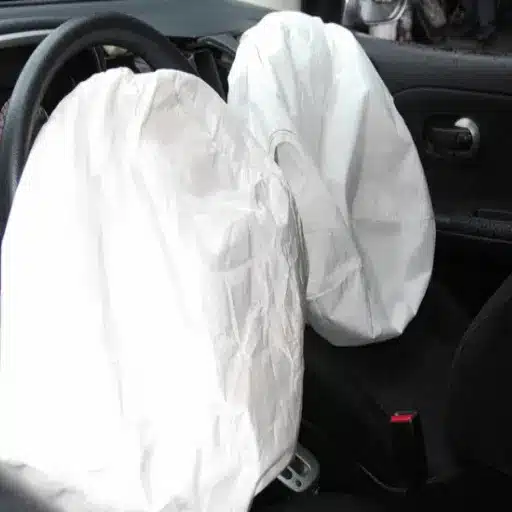
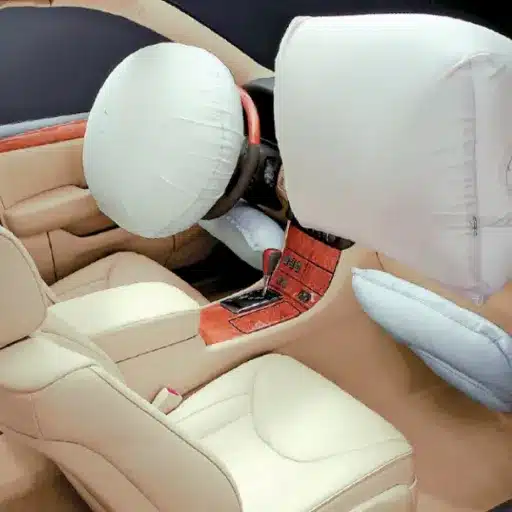
It is a known fact that airbags are deployed almost instantaneously. However, few people think of the earlier phase of fabric engineering that determines whether the deployment process will be successful. The material that actually makes up the airbags which is necessary is not an ordinary consumer textile. It is an other engineered item which has to under go thermal shock, instant gas pressure changes, and rutting or cracking over a minimum period of fifteen years exposure. If you have any questions or need further assistance, don’t hesitate to get in touch with us.
This post reviews the materials, the processes, and the people involved. We start with the patent. Next I will move on to testing and lastly the manufacturing process of the Hysteresis material.
Key Takeaways
- The global automotive airbag fabric market is projected to grow from USD 4.5 billion (2025) to USD 6.8 billion (2030) at 5.5–7.2% CAGR
- Nylon 66 (420D–630D) with silicone coating dominates due to superior heat resistance and permeability control
- One Piece Woven (OPW) technology is the fastest-growing segment, eliminating seams and reducing assembly labor
- Hyosung, Toyobo, and Toray lead fabric manufacturing; Autoliv, ZF, and Joyson dominate Tier 1 integration
- Supplier qualification requires IATF 16949 certification, PPAP submission, and OEM-specific material approval processes
When it comes to comparing suppliers across different industries and in particular technological fabrics for engineers, the award of the contract being the reviewing criterion. The draw on a ruler reflects the quality of the paper, only. What is even more important is to make sure that suppliers reproduce and document the same specifications over and over again. Beyond collecting the data, traceability must be established because none of the engineering changes will be incorporated except during the next shutdown. It boils down to one thing –timeliness of delivery, interlocutors, and information, which tends to justify the distinction between a supply chain partner and outright supplier.
What Is Airbag Fabric? Material Science & Key Specifications

In a vehicular crash, the airbag fabric serves as a specialized fabric in which the for explosive material and pressurized gas expansion are oriented with a view to breaking up enforcement of rifling coefficients in a normal set of operations. Normal to the airbag fabric must be a set of coefficients for composite layers that are completely different from the mechanical properties than the adhesion at rest or under conditions of severe push-out.
Nylon 66: The Dominant Base Material
Nylon 66 accounts for approximately 75–80% of all airbag fabric by volume. The material is selected for its high melting point (approximately 265°C), excellent tensile strength, and proven track record in safety-critical applications.
Typical specifications for automotive airbag base fabric include:
- Denier: 420D–630D
- Fabric weight: 180–300 gsm
- Weave structure: Plain or twill weave with 40–60 ends per inch
- Tensile strength: 200–400 N/5cm in the warp direction
Nylon 6 is not often used except in ‘cheaper’ application, a case in the automobile industry where polyamide 6 is employed despite having a low melting point (around 220°C) and poor retention into greater thermal stability demanded in making airbags for high-performance passenger cars particularly. Polyester, strong and resistant to UV radiation as they are, cannot be used for gas containers in airbags deployed by some means; they have serious drawbacks.
Coating Technologies
The base nylon fabric is almost always coated to control gas permeability and protect the yarns from hot gas erosion during inflation.
Silicone coating now represents over 70% of the coated airbag fabric market, up from approximately 55% in 2018. Silicone offers distinct advantages:
- Superior heat resistance (stable to 250°C+)
- Lower coating weight for equivalent permeability performance
- Better flexibility at low temperatures
- Reduced volatile organic compound (VOC) emissions during processing
There is a decreasing use of Neoprene for car interiors especially the bulkier kind intended for commercial trucks and high-performance vehicles. The reason behind this is the increase in weight, the lower quality of the heat capabilities and the greater complexity required to recycle it.
Lately, use of uncoated fabrics has been noticed in certain OPW applications particularly those where proper weave density is enough for gas retention. Such applications have however not yet replaced coated fabrics as regards frontal and side airbags.
Critical Performance Requirements
The fabric of airbags is subjected to a highly stringent set of quality of standards that goes behind the usual tests used for textiles.
The first requirement is tensile strength, which is set at a certain level. Specifically, the fabric in the machine direction must be able to bear 200 to 400 N/5cm in order to resist any pressure that might arise during gas expansion. Any weaker spots in the fabric can caused it to either be ripped off or have the gas redirected without allowing it to inflate the air bag at the assemblies supposed place.
Next, Permeability is another area of concern. The fabrics used should not allow for any bursts of air over the gas outlet that will not allow the assembly to inflate due to high gas pressure for over about 20-40 milliseconds. Permeability is given in liters per square centimeter per second (L/cm²/s) and is specified by the particular OEM.
Another factor of upmost importance is the fabric’s resistance of high temperatures. In some moments, the temperatures of the inflation gas can increase up to 300°C-500°C. The fabric cannot be allowd to soften or release any particles that can be harmful to the occupants under these conditions.
Packaging of different products is very vital. The materials needed to package products have to be able to develop folds or cracks in cases where they must be compressed for transportation. This is because the coating will be more vulnerable to ruptures without impairment of stiffness than a rigid structure. If you have any questions or need further assistance, don’t hesitate to get in touch with us.
Snacks usually fills in the afternoon, before the end of the work day. When Elena joined the procurement team she was based in a mid sized European Tier 1 supplier in 2023, she was given her first assignment as a professional in the realm of procurement. Her first assignment was to carry out an evaluation of a producer of the second source airbag fabric. Although the original supplier had continuously met the quality expectations for a period of eight years, the concentration risk of the supplier was of much concern in her engineering director. Elena soon came upon a critical fact that the other companies were a specific audience here. The document that had to be worked on had gently cramped style which contained forty seven pages of text. This concerned quite a broad range – from denier of yarn elasticity to specifics of silicone coating including the coating’s surface energy, changes and conditions, particularly under which strength aqueous adhesives perform well. Every such client, regardless of the turn – VW, Stellantis or a new EV company situated in the Eastern Europe – elaborated their own zigzag patterns and edge tensile forces. She also understood how strength of the fabric could be determined out of the test results. Replacing a new material with an old supplier under the existing approval, on the other hand, was the bigger of the two challenges since this consisted of sampling, and submitting PPAP and one year field testing before the production order was placed.
Automotive Airbag Fabric Market Overview
Market Size & Growth
The global automotive airbag fabric market was valued at approximately USD 4.5–5.1 billion in 2025, according to industry market research. The market is projected to grow at a compound annual growth rate (CAGR) of 5.5–7.2%, reaching USD 6.5–7.8 billion by 2030.
Growth is underpinned by several structural factors:
- Mandated airbag inclusion in entry-level vehicles across India, Southeast Asia, and Latin America
- Increasing airbag count per vehicle (from 2–3 in economy cars to 8–12 in premium segments)
- New airbag types, including external pedestrian protection systems
- Replacement demand from aging vehicle fleets in developed markets
Market Segmentation
In the realm of the fabrics under consideration, waterproof silicon coated fabric apparently is the most popular and nurtures the fastest inclination. As for neoprene-coated fabric, its usability in passenger vehicles is decreasing, but it remains acceptable for general automobiles and heavy-duty equipment, whose cost components and chemical properties come under scrutiny.
As far as airbag loom technology is concerned, the most common devices still comprise driver and passenger frontal airbags, but trends such as promising ADAS-based advance have fostered growth in outshoring of side curtain airbags [8–10% CAGR]. SafeNet production for side curtains covers larger parts and more often is done in the form of OPW technology to avoid possible leaks in the seams.
Within the classification of vehicles, the majority share belongs to passenger vehicles-approximately 72 percent. Diagram of commercial vehicles is comparatively smaller but remain stable because of the prolonged usage and the duty nature of the vehicles in terms of the requirements. If you have any questions or need further assistance, don’t hesitate to get in touch with us.
Regional Breakdown
Among the global regions, Asia-Pacific, consumes more, with 42-45% of the global share of demand, largely driven by the high vehicle production in the market in countries such as China, Japan, South Korea and India. China, on its own, has a vehicle production share of about 28%, at high speeds of the infiltration of the airbags into domestic-market cars.
Another 28% is taken up by Europe, which exhibits higher numbers of airbags per vehicle, strong safety laws (ECE R94/R95), and high premium brand vehicle manufacturers with complex airbag systems.
In the case of North America, specifically 20% of the total demand occurs. North American vehicles exhibit very high levels of airbag fitment but rear growth in terms of airbag installations compared to Asia-Pacific.
The remaining share of demand as a whole from regions from the rest of the world such as Latin America, Middle East and Africa, contributes 7-8% range. Here, these markets are expected to grow more rapidly than the developed areas is mainly due to the further increase in the vehicle ownership rate and the increased levels of safety related legal compliance. We’re here to help! Feel free to contact our team for more information or support.
Key Manufacturers & Supply Chain

Fabric Manufacturers
There is a high degree of concentration within the upstream airbag fabric supply chain due to the presence of such textile empires located in Asia that specialize in high performance artificial weaving or fibrous coating.
The leading supplier to the global market is considered to be Hyosung (South Korea). Hyosung supplies most of the major Tier 1 integrators in the world. In the technical fibers division, the company’s polyamide 66 texture production capabilities are capable of weaving different deniers with various coating options, with a particular focus on OPW incorporation.
The next highest ranking position goes to Toyobo (Japan), mainly regarding the Japanese OEM supply chain. Casting technology has come a long way from traditional gravure to advanced silicone in Toyobo’s case. This firm has also worked on material reduction in the thin film area in that it is lighter to manage than conventional films.
Toray Industries (Japan) is able to set a free standard in quality management by using the already existing production capacity of nylon 66 polymer in nylon 66 polymerization. Vertical integration is an increasing value in the global nylons business as differentiation of raw materials becomes more stark.
At the top of the ranking Kolon Industries (South Korea) and Asahi Kasei (Japan) both have a very significant presence in the region and are aggressively expanding toward the international market. Have inquiries? Reach out to us, and we’ll be happy to assist you with any concerns.
Tier 1 System Integrators
It is a rare occurrence that textile companies selling fabrics meant to produce airbags professionally work with car producers. Most of them sell to the Tier 1 and Tier 2, 3 and sometimes 4 manufacturers. Latha After that, airbags generally pass to the companies traditionally known as the automobile assemblers, the most important and the most relevant among these being the companies that assemble the steering wheels, dashboards, and further – the airbags.
Autoliv (Sweden) is the largest global supplier in such regard, the company holding around 40% of the airbag module market share. Autoliv has an excessive list of fabrics used all of which are sourced from specific suppliers and probably the most importantly all other fabrics go through the same rigorous test.
Zf Friedrichshafen (Dirland), which is also an innovation, ranks second with the Zf Lifec division second with the stage OEM and T2 customers in Europe and North America.
Joyson Safety Systems (China) – having grown dramatically through a combination of taking over a number of other companies and the subsequent address of the costs – is now prompting the international QMS implementation.
Toyota Boshoku and others are located at the Toyota Group and its affiliated suppliers (Regional multiline systems supply TGS, PPO, etc.) and hence support their strong market share positions.
OEM Relationships & Supplier Qualification
Incorporating an airbag fabric in the value chain of the automobile industry is not only about the capabilities that we bring into the supply chain. There is another additional requirement which is compliance to the quality management standards IATF 16949 and also fulfill the conditions of successful running an OEM program by conducting Production Part Approval Process (PPAP).
The qualification timeline typically spans 12–18 months. It includes:
- Initial material sample submission and laboratory testing
- Dynamic deployment testing at multiple temperature extremes
- Environmental aging studies (thermal cycling, humidity, UV exposure)
- Statistical process control (SPC) documentation for weaving and coating lines
- On-site manufacturing process audits
- Full PPAP submission (Level 3 or higher, depending on OEM requirements)
Once approved, suppliers face ongoing surveillance audits, lot-by-lot certification requirements, and zero-defect performance expectations. A single quality escape can trigger immediate production holds and months of remediation. Reach out to LY TRUSTLINK and discover professional solutions designed to help your business grow with confidence and efficiency.
Technology Trends Shaping the Airbag Fabric Market
The automotive airbag fabric market is evolving rapidly as OEMs and Tier 1 suppliers respond to new safety architectures, lightweighting mandates, and sustainability requirements.
Lightweighting & Downgauging
Minimizing weight is of paramount importance in the development of modern means of transport. The usage of airbag fabric in vehicles accounts for a small proportion of material used, nevertheless, light weight and strength stand as a major factor pushing the manufacturers to opt for thinner material.
The predominant goal is one of the better solutions in engineering and materials science: decrease of fabric weight without reduction of fabric performance, or strategic modification of the material gauging process in two words downgauging. Within 180–220 gsm, paper — based on the current research, is present in frontal airbags instead of paper weighing 250–300 gsm. The problem lies in ensuring the new and slimmer fabric does not interfere with the means of the deployment or better the foldability of airbags or even enough thermal properties or heat dissipation to meet some concerns.
Shift to Silicone Coating
The progression from employing neoprene as a coating material to using silicon in the coatings and parts for commercial vehicles have advanced and it is now possible. The properties and advantages of silicon are convincingly better as it facilitates, in various ways, high temperature performance, cold flexibility and ease of processing.
Typically, SIN coated fabrics arc d 10-15% more expensive than NEOPRENE in terms of purchasing costs. Such cases show that in most situations, silicon is far much cheaper. As low fabric or coating weights are done which are suitable for the purchase and sewing operations and better recyclability of waste can be realized.
One Piece Woven (OPW) Technology
When producing an airbag, the Woven airbag fabric is created as a one-piece fabric instead of numerous panels that are cut and sown together. OPW removes crease around outside borders, which used to be an issue especially in areas of high tension – when an airbag is deployed – also, is beneficial in reducing the work done towards the module.
The share of OPW volume increase is positive and stands at 8-10% per year in comparison with the overall volume obvious, this is faster than market increase. Such type of fabric utilizes special weaving equipment, which can be able to do threedimensional fabrics integrated with special zones for breaterbing of air. The application of the technology is mainly dictated by the side curtain airbags where they have a big area with complicated boundary effect and hence seamless construction is most effective. Looking for a dependable business partner? Get in touch with LY TRUSTLINK for responsive communication and customized service solutions.
New Airbag Types
One of the most rapidly advancing categories is the side curtain airbags which are now included in almost every class of vehicles all over the world. They occupy large fabric areas, and their functionality is very useful in situations where cars are equipped with them and the curtain is enclosed within the roof rails for an extended period.
Another new classification is the external airbags, which are meant to protect pedestrians or bicyclists during an accident. It is essential that the fabric used possess good UV and weather resistance because the units are fitted on the surface of the vehicle.
Apart from standard front airbag units like in the current cases, implementation of rear-seat airbags and center-console airbags in accords and other examples of high-class vehicles will be another new application and urge development of more space-efficient, richer-in-fold, and wave-like silicon-air spring configurations circuits with the display.
Smart Airbags & ADAS Integration
There have been important shifts in the way airbags function since the implementation of the Advanced Driver Assistance Systems. Most of the airbags now come equipped with a multi-stage inflators and sensor-driven deployment algorithms that are capable of adjusting the inflation force as per the occupant size, seating position and the severity of the accident.
The existence of such advanced airbags therefore means that the expectations from the supplier of the fabric, would also become more stringent. This is by virtue of the fact that a fabric batch that has a slightly higher permeability may be just fine in a typical single-stage inflation system and yet not satisfy the very critical pressure curve that a mordern multi-stage airbag engine requires.
LY TRUSTLINK welcomes inquiries from global clients seeking innovative products and long-term cooperation opportunities. Contact us today for more details.
Sustainability Initiatives
By targeting vehicle manufacturers and the appropriate regulatory measures, the Directive 2000/53/EC of the European Parliament and the Council of September 18, 2000 on end-of life vehicles, as it was amended last on June 20, 2006, a chapter focusing on airbag recycling has been conceived in Europe. There is not an achievement yet since pyrotechnic inflators, mixed material modules, and coated fabrics still require expert handling.
In some way, some area of today’s scientific research solutions lies in bio-based nylon 66 starters, and such formulas are also in use in the production of adhesives. However, that’s not the case for all chemical inventions and marketing as companies prefer such products instead. Other possibilities have been attempted such as mechanical circulations that take back nylon back to its raw form after production scrap.
Nevertheless, the environmental sustainability of airbag fabric has almost no any place despite the fact that its exact purpose is not safety. In any case, recycled or bio-based products tend to be less utilized on the grounds of there is no original equipment manufacturer that will accept a product that offers slight probability of the safety system failing.
In 2024, a North American Tier 1 supplier experienced major damages due to a costly recall in case of a series of side curtain airbags that were of unsatisfactory quality in terms of air permeability after a release of the airbag during bench testing. The leading cause of the problem was a change in coating viscosity which occurred at the textile factory during the particularly hot summer. That the supplier had had the problem was indeed known since the process control charts showed that the measurements were off, but the resilience aspect in the charts was greater. The result was that the Tier 1 supplier had to extend approximately USD 2.3 million owing to warranty claims, rework, and OEM penalties. The onsequence of the events was also that, the fabric supplier was not to take part in bidding for new programs for six months. This reasoning is especially relevant to those who are involved in procurement, process control and the specification of materials for example.
At LY TRUSTLINK, we are committed to delivering quality support and efficient cooperation for customers around the world — reach out to us anytime.
Testing Standards & Quality Requirements
Global Standards
There are a range of requirements that the technical fabric must meet for it to be considered acceptable for airbag use, including international, territorial and industry applied standards.
The ISO 12097 Defines basic testing standards for airbag unit parts, for example- fabric tensile strength, seam retention and artificial weathering. In other cases, relevant documents on testing can be difficult to find provided by SAE Technical Standards Committee.
Regional regulations include:
- FMVSS 208 (US Federal Motor Vehicle Safety Standard)
- ECE R94 and R95 (European Economic Commission regulations)
- GB/T standards (China national standards for automotive safety)
These regulations specify deployment performance outcomes — occupant injury metrics, deployment timing, and suppression criteria — but leave the material-level specifications to OEM engineering teams.
Fabric-Specific Testing
Fabric integration and Tier 1 integrators also use in-house facilities to conduct a substantial variety of tests beyond the usual bounds.
Tensile and tear tests are the main tests that encompass testing strength of the fabric in warp, weft, and bias directions. These tests are performed under varying conditions including at different temperatures (from -35 to +85 degrees Celcius) to determine the impact of low temperature hardness and thermal effects respectively.
With these phenomena in mind, fabric samples undergo heat so as to calculate the distress data allied to long term operation of a vehicle from the heat aged sample so as to be representative of a 15 years lifetime of a vehicle.
There are no transformer box type modules that are impervious to the external environment and, as such, the strength of seams should be given priority in design Of these, those that use sewn seams are the most critical. If the seam is not properly reinforced, the thread, or more correctly, the lines are too easily put at a risk of breakage due to deployment forces acting on them.
Checking the breathability efficiency is accomplished by applying an air permeability test procedure using an air flow system calibrated to the said flowrates of an OEM fabric structure. The slightest discrepancy can be sufficient to make the concentration of forces most disadvantageously distributed that testing deployment fails.
LY TRUSTLINK welcomes inquiries from global clients seeking innovative products and long-term cooperation opportunities. Contact us today for more details.
OEM-Specific Protocols
Among all car manufacturing companies, the most important thing is still to comply with the industry standards set at the minimum level. Quick, General Motors, Hyundai publish and Toyota – These general engineering standards are yarn sourcing, weaving process, setting the appropriate coating, testing finished fabric etc.
Approval of a vendor is specific to the original equipment manufacturer. If a company is approved as a supplier of fabric for Toyota production, it will not mean nor lead to the company being approved as a supplier of the fabric for a Volkswagen. It is so written that all the OEMs have their in house audit processes coordinated alongside the PPAP depending on what is suitable.
Procurement & Supplier Considerations
Total Cost of Ownership
Airbag fabrics, the material used in production, will only last for a few square meters and as such the cost for these or any fabric like strong woven tarp that there is one can find cost-preventing maintenance schemes can be taken as direct. The total cost of any fabric investment is the cost of but dating back to its intended usage, which essentially covers all phases of the project, including marketing measures, well as others: design, production, valuation, etc.
Airbag fabric are made of fibers made of polymer resin or specifically nylon 6,6. Nylon 66 chip costs can be influenced by variations in Benzene and Adipic acid prices. Contracts for the long term supply with the price adjustment clause are mostly normal.
Chemical costs for coatings starts from the price of silicone oil and how many substances it has been mixed with. Working with high drag, fancy coatings with high volatile organic components will require you to fork out a little more than the cheap coatings.
Yield percentage of processing is important. It is possible to change the manufactured structure or resin. The resin is the polymer that binds the fibres together unlike in more advanced composites.
The costs of keeping inventory and logistics grow. In general, airbag fabric, is manufactured in Asia-Pacific milling facility, done in rolls, and then shipped to the Americas. Plants on average need between 8-12 weeks to process everything which calls for the initial storage.
Supply Chain Risk Factors
There are multiple areas of potential risk in the airbag fabric supply chain that should be taken into account.
The geographical risk: Most of the high-quality airbag fabric is produced in South Korea, Japan, and China. Consequently supply chain risks may originate from regional disruptions be it logistical, geopolitical or environmental.
Vendors’ business model: Many Tier 1 integrators run a limited number of suppliers for each OEM program as it is more effective than using all possible out of the integrated ones causing high existence costs. This advantageous strategy can become however a risk if the only outsourced supplier has any challenge to do with same such quality or even capacity related issues.
Industry cyclicality risks: Airbag fabric demand lags closely any changes in the production of vehicles. Reduced automotive output caused by economic downturns results in immediate pullback in demand and adverse pricing effect.
Custom Specification Capability
Not all airbag programs use standard fabric specifications. New vehicle architectures — especially electric vehicles with different dashboard geometries and steering column designs — may require custom fabric engineering.
Procurement managers should assess whether potential fabric suppliers offer:
- Custom denier and weave density development
- Prototype sampling within 4–6 weeks
- Engineering support for permeability tuning
- Small-batch production for low-volume vehicle programs
- Full PPAP documentation and traceability
Companies with strong weaving and coating research and development facilities within their organization, expedite the process of designing new materials when working with unique specifications— particularly in customization stages.
For companies involved in the development of protective textiles in automotive, construction and other industrial sectors, the principles remain the same. These principles include the material fabrication technique, the coating employed for polymerization and the relevant quality assurance certificates irrespective of whether the module to be manufactured is an air bag or a truck tarpaulin of the highest quality possible. If your application is geared toward the production of technical fabrics, and you need the linear measurements accurately defined, such that the manufacturing process is accommodated from start to finish with an in-depth design assistance and controlled production of the orders with the proper compliance of aerospace custom issues, please contact our designers.
Conclusion
The market of automobile safety bags has grown smoothly, however there is more to opportunities than just the numbers. It is of great importance to offer the inner technical idea to the product development managers and the process engineers because it is at this stage that the portfolio of the appropriate fabric by the comprehensive analysis may be adopted.
Nylon 66 with silica coating is the most preferred material for all technical matters reasons being its good heat resistivity, high tensile strength, and process reliable. Consequently, One Piece Woven technology has come to the rescue since it eliminates the use of sewn patterns and reduces the need of assembling the components any longer. Moreover, it is clear that the advent of smart airbag systems with the associated increased requirement on the airbag expulsion rate will re-shape traditional quality control regulations as they will be rendered less effective.
Among the suppliers who will succeed in this trade are those that will not simply label airbag fabric as a mere a textile raw material but rather as an advanced machinery part. This means that they should be able to maintain consistent process controls, as well as clarity in the documentations and in tech tips.
In the case that the suppliers being accessed are to be in the automotive airbag fabricmarket, or related technical fabric market areas, the primary document should be the design document. Ask for tensile behavior, quality standards and performance-cum-adoption details, some details of coating, besides the NIL cost of products. This is the part where the building of confidence actually starts. If you have any questions or need further assistance, don’t hesitate to get in touch with us.