
Coated Fabric vs Laminated Fabric: Industrial Selection Guide
A coated fabric has its polymer applied as a liquid that penetrates and fuses into the base weave, so coating and fabric become one material. A laminated fabric has a pre-made film bonded to the surface with heat, pressure, and adhesive, so the film and the fabric stay separate layers joined by a bond line. Both are waterproof. Both are sold under the same product names. They are not the same product.
If you have compared coated fabric vs laminated fabric advice and come away more confused, you are not alone. Most of the pages that rank for this question are written by manufacturers who run exactly one of the two processes, so each one argues that its own construction is the better choice. Some suppliers even contradict their own published claims.
This guide takes a different position. LY TRUSTLINK runs both knife-coating and lamination lines, so we have no reason to steer you toward one method. Instead, we will show you how each construction is built, how each one fails, how they compare on adhesion, tear strength, waterproofness, weldability, and cost, and how to choose for a specific application. You will also learn how to tell the two apart and what to ask any supplier before you buy.
Key Takeaways
- A coated fabric fuses liquid polymer into the weave; a laminated fabric bonds a pre-made film onto it. The construction, not the polymer, decides how each one fails.
- Coated fabrics resist delamination because the coating penetrates the yarns. Laminated fabrics fail by the film separating unless the peel bond is specified and tested.
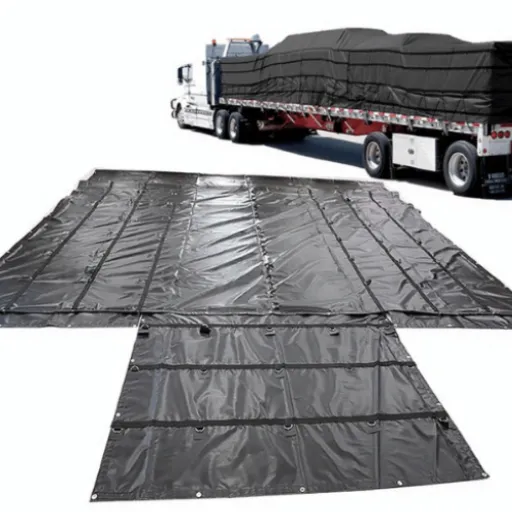
- Knife-coated PVC is the long-life choice for heavy-duty truck covers and industrial tarpaulins. Film lamination is a lighter, lower-cost option for temporary and budget-sensitive duty.
- Weldability is decided by construction as much as polymer. Both PVC constructions weld, but peel strength on a laminate is the number that predicts whether a welded panel stays together.
- Ask for the peel value (ISO 2411) and the scrim specification. A datasheet without a peel number is a claim, not a specification.
What Is a Coated Fabric?
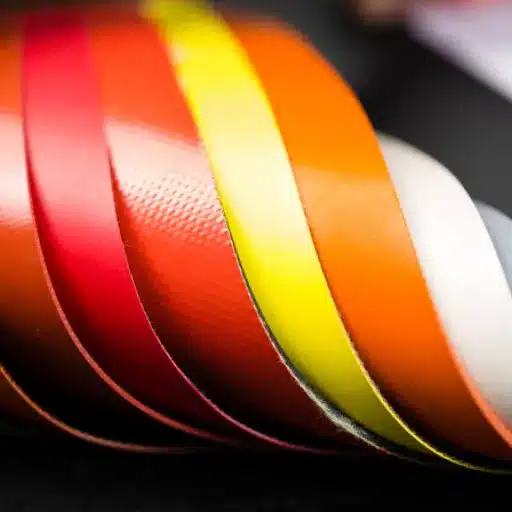
A coated fabric is a textile to which a polymer is applied as a liquid or paste that penetrates and fuses into the yarns. The polymer is spread onto the base fabric by knife-over-roll, dip, spray, or calender, then cured or fused so it locks into the weave. The result is a single integrated material rather than a stack of layers.
That integration is the defining property. Because the polymer reaches into the yarn structure, the coating and the fabric share a mechanical bond, and it takes real force to separate them. A knife-coated PVC tarpaulin is the everyday example: liquid plastisol is spread across a high-tenacity polyester scrim, fused in an oven, and cooled into one continuous sheet. For the full specification range, our PVC coated fabric specifications guide covers weights, compounds, and test values.
One distinction matters more than any other, and it is the source of most confusion in this comparison. A structural knife-coat or calender coat is not the same as a thin cosmetic surface finish. A light surface coating applied for color, hand-feel, or water repellency offers little protection and wears through quickly. A heavy knife-coat engineered as the waterproofing and abrasion layer is a different product entirely.
When a page tells you that “coated fabric is less durable,” it usually means the thin cosmetic finish. It rarely means a properly specified structural coat.
The polymer itself can be PVC, polyurethane, silicone, or PTFE, and that choice is a separate decision from the construction method. For the polymer comparison, see our guide to the main types of coated fabrics, and for the process in detail, our page on the knife coating process.
Shortlisting constructions for a live project? Our engineers will quote a coated and a laminated option against the same specification so you can compare them on your own duty cycle. Explore our coated fabric range.
What Is a Laminated Fabric?
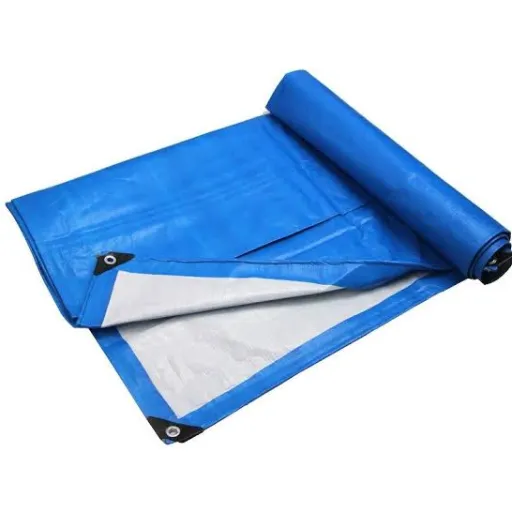
A laminated fabric is a textile to which a pre-made polymer film is bonded using heat, pressure, and an adhesive or tie layer. The film arrives fully formed, and the manufacturing step joins it to the base. The finished material is a layered composite, usually described as a film, scrim, film sandwich, where each layer keeps its own identity.
The film brings two clear advantages. It is a continuous barrier, so it blocks water and air very effectively, and it gives a smooth, uniform face that prints and cleans well. That is why laminates appear in inflatables, bladders, medical fabrics, and printed banners, where a consistent surface and a dependable barrier are the priorities.
The layer that holds it together is the one buyers overlook. In a laminate, ultimate performance depends on the bond between film and fabric, measured as peel or coating adhesion strength. A strong bond produces a durable panel. A weak bond produces a film that lifts at the edges, pulls at a welded seam, or separates after a few seasons of flexing and weather. This is why peel strength is the parameter to demand on a laminated fabric, and why a laminate is only as good as the adhesive system behind it.
For a full definition and the engineering differences in detail, our guide to what laminated fabric is covers the construction, and our laminated fabric range and PVC-laminated fabric pages cover the product formats. For a neutral industry definition of the two processes, Weston Manufacturing’s explainer on coated versus laminated fabric is a useful third-party reference.
Coated Fabric vs Laminated Fabric: Key Differences Compared
The quickest way to see the difference is to line the two constructions up side by side. The table below compares them on the dimensions that decide real-world performance. Treat every value as directional and indicative, because both constructions span a wide quality range and the specification on your datasheet always governs.
| Property | Coated (knife-coated) | Laminated (film) |
|---|---|---|
| Construction | Liquid polymer applied to and fused into the weave | Pre-made film bonded to the fabric with heat and adhesive |
| Layer structure | One integrated, monolithic material | Multi-layer film, scrim, film sandwich |
| Dominant failure mode | Coating wears through to the scrim | Film delaminates from the fabric |
| Adhesion / peel | High; polymer anchored in the yarns | Depends entirely on the bond; specify ISO 2411 peel |
| Waterproofness | Fully waterproof when seams are welded | Continuous film barrier; excellent airtightness |
| Airtightness | High with welded seams | Very high; favored for inflatables and bladders |
| Surface and print | Matte to semi-gloss; texturised by the weave | Smooth, uniform, glossy; strong for printing |
| Flexibility and cold flex | Generally more flexible; cold-flex compounds available | Stiffer; premium low-temp grades reduce cold cracking |
| Weldability | Excellent; RF and hot-air welding into airtight seams | PVC and TPU films weld well if the bond is sound |
| Typical weight | Heavier; 500 to 900+ gsm for heavy-duty tarps | Lighter; often 10 to 14 oz equivalent and up |
| Relative cost index | Higher upfront, better cost per year of service | Lower upfront, shorter service life |
| Typical service life | Longer for heavy-duty outdoor duty | Shorter for budget and temporary duty |
Read this table the way an engineer reads a datasheet. Choose on the two or three rows your application actually stresses. If the product sits outdoors for years, weight the failure mode and service-life rows. If it must hold air or water at a seam, weight adhesion and airtightness first, because no other property rescues a bond that fails. If it is a printed banner, weight the surface row. The construction that wins depends on the job, not on the category.
Marcus, an inflatable manufacturer, learned the adhesion lesson on a single order. He specified a cheaper film-laminated fabric for a run of sealed air slides because the swatch looked smooth and the price was right. The panels welded cleanly, but six months into service the film began lifting along the high-flex weld lines on units that ran daily.
The failure was not the film and not the welder. The laminate had been supplied without a specified peel value, and the bond was not built for the load. A coated fabric, or a correctly specified laminate, would have held. The lesson is that the construction must match the failure mode the application creates. Explore durable PVC coated fabric options with LY TRUSTLINK.
Coated Fabric vs Laminated Fabric: The Engineering Differences
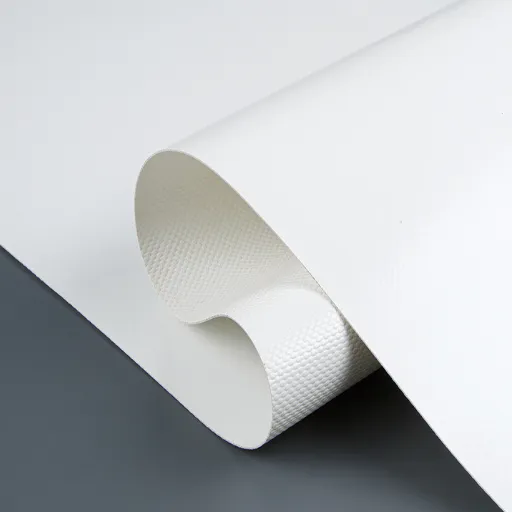
The comparison table answers “what is the difference.” This section answers “why it matters,” because the four differences below decide which construction survives your product’s real duty cycle.
Adhesion and Bonding
In a coated fabric, the polymer penetrates the weave and anchors mechanically into the yarns, so the bond is distributed through the fabric structure. Peel resistance is high, and the coating is difficult to lift. In a laminated fabric, adhesion is a designed bond line between two finished surfaces, and its strength depends on the adhesive, the surface treatment, and the process control. That makes the laminate’s peel value the single most important number on its datasheet.
The practical rule follows directly. If a supplier cannot show you a peel or adhesion result, the laminate is unproven. Ask for the figure, normally quoted in newtons per 5 cm under ISO 2411, and compare it against the flex and tension your product will see. A high peel value is not a marketing feature. It is the difference between a cover that lasts and one that sheds its film.
Failure Modes: Delamination vs Wear-Through
The two constructions fail in opposite ways, and knowing this is the fastest way to choose between them. A laminated fabric fails by delamination: the film separates from the base fabric under cyclic flexing, heat, chemical exposure, or an abrasion edge catching the film. By contrast, a coated fabric fails by wear-through: the coating abrades or weathers thin until the scrim is exposed and the barrier is breached.
Both failures are manageable if you specify against them. For a laminate, specify and test peel strength and keep the film away from scraping edges. For a coat, specify coating weight and abrasion performance, because a heavier, well-compounded coat takes far longer to wear through. The scrim underneath matters in both cases, which is why we publish tensile and tear data on our quality control page and test every batch.
Tear Strength, Durability, and Lifespan
This is where the market gets loud and contradictory, so it is worth stating plainly: the construction method does not by itself decide how long a fabric lasts. The base scrim, the compound recipe, the UV package, and the process control decide that. A heavy knife-coated PVC on high-tenacity polyester and a high-peel laminate on the same scrim can both serve for years, and a weak version of either can fail in one.
However, what the construction changes is the failure mode, not the guarantee. When buyers compare a Chinese-manufacturer coated tarp against a film-laminated one and get opposite answers about which lasts longer, they are usually comparing a structural knife-coat against a budget laminate, or the reverse. Compare like for like, and read the tensile strength and tear figures rather than the label. Then frame the decision as cost per year of service, not price per square meter. Our guide to coated fabric price and total cost of ownership works through that math.
Waterproofness, Airtightness, and Weldability
Both constructions can be fully waterproof, but they earn it differently. A laminated film is a continuous barrier, so it delivers airtightness naturally and is often the better choice for inflatables and bladders where holding pressure matters. A coated fabric becomes airtight at the seams through welding, and a well-welded coated PVC panel is watertight and airtight across the join.
That brings in weldability, which is decided by polymer and construction together. PVC and TPU weld cleanly by RF or hot-air welding, which is why both coated and laminated PVC products are common in inflatables and covers. Silicone, by contrast, does not weld well and needs adhesive or taped seams, a limitation that disqualifies it for pressure-holding products regardless of its UV record. Whichever construction you choose, confirm the seam method before you commit. Our tarpaulin welding page covers RF and hot-air joining in detail.
Flexibility, Cold Performance, and Weight
Coated PVC generally flexes more easily and folds without cracking, and cold-flex compounds keep it pliable below freezing, which is why coated fabric dominates winter trucking and high-fold applications. Laminated fabric tends to be stiffer and, in severe cold, can crack unless it is formulated for low temperature. The flip side is weight: laminates are usually lighter, which suits products where handling weight and cost matter more than maximum ruggedness.
Which Should You Specify? Coated Fabric vs Laminated Fabric by Application
With the differences clear, the decision usually comes down to a short list of applications. Use the matrix below to shortlist a construction for a new product, then confirm it against your own duty cycle and a sample test.
| Application | Recommended construction | Why |
|---|---|---|
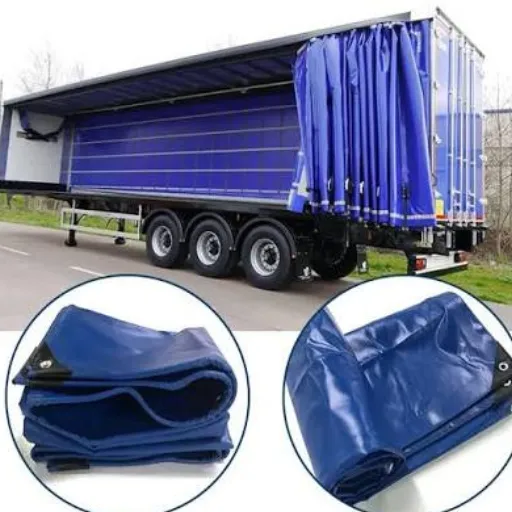
| Truck side curtains and fleet covers | Knife-coated PVC | Abrasion resistance, repeated flex, cold-crack performance, and welded seams. See PVC coated fabric for truck side curtains. |
| Heavy industrial, construction, and mining covers | Knife-coated PVC | Withstands abrasion, tension, and long outdoor exposure, with the best cost per year. |
| Inflatables, bounce houses, slides, air and water bladders | Coated PVC or TPU; high-peel laminates only | RF-welded airtight seams are mandatory. Where a laminate is used, peel strength must be specified. See fabric for inflatables. |
| Marine, boat, and pool covers | Coated PVC for UV and saltwater duty; premium laminates for print and light weight | Coated PVC handles sun and saltwater over multiple seasons with welded seams. |
| Temporary shelters, event tents, and light covers | Film-laminated PVC | Light, low-cost, and fully waterproof for moderate-duty and short-life use, with the delamination caveat understood. |
| Banners, signs, and printed graphics | Smooth laminates and coated print PVC | A uniform film face prints cleanly; heavier coated stocks resist weather and abuse. |
| Architectural and tensile membranes | Coated PVC with PVDF topcoat, or PTFE-fiberglass | Coated construction welds on site and delivers long structural life. |
| High-speed doors and industrial curtains | Knife-coated PVC; TPU for specific duty | Repeated flex and cold performance are the governing stresses. |
The honest caveat matters as much as the recommendations. Film lamination genuinely wins when you need a uniform barrier, a smooth print surface, and airtightness at a controlled weight and cost. Knife-coating genuinely wins when you need abrasion resistance, repeated flex, delamination resistance, and the longest life per dollar. When neither dominates, choose on the two stresses your product will see most, not on the label a supplier prefers.
That is also where LY TRUSTLINK’s position helps you. Because we run both lines, we can quote a coated and a laminated version of the same product against one specification and let the numbers decide. If you are weighing the two for a specific product, request samples of both constructions and test them against your own flex, load, and climate.
PVC Coated vs PVC Laminated Tarpaulin
Most “coated versus laminated” confusion in the tarpaulin market traces to a single pair of products: PVC coated and PVC laminated. Both use the same polymer, so buyers reasonably assume they behave the same way. They do not, because the construction still decides how each one fails. The table below isolates the difference for PVC tarpaulin specifically.
| Question | PVC coated tarpaulin | PVC laminated tarpaulin |
|---|---|---|
| How the PVC is applied | Liquid plastisol knife-coated or calendered into the scrim, then fused | Pre-made PVC film bonded to the scrim with heat and adhesive |
| Where the strength comes from | Fused coating plus the scrim working as one body | The bond line holding the film to the scrim |
| Typical failure | Coating abrades thin over years of use | Film lifts or separates at flex lines and edges |
| Peel / adhesion expectation | High and consistent; coating is anchored in the yarns | Variable; must be specified and tested to ISO 2411 |
| Best fit | Heavy-duty truck covers, industrial and mining tarps, long-outdoor duty | Temporary covers, event and budget tarps, print and light duty |
| Cost profile | Higher upfront, lower cost per year | Lower upfront, shorter service life |
The practical read is simple. If two PVC tarpaulins look and feel similar but one is much cheaper, the cheaper one is usually a laminate with an unspecified bond. That is not automatically wrong for light or short-term duty, but it is the wrong way to cover a fleet for years. Our PVC coated fabric price guide explains how to compare the two on cost per year of service rather than price per square meter.
How to Tell Coated from Laminated Fabric and Verify a Supplier
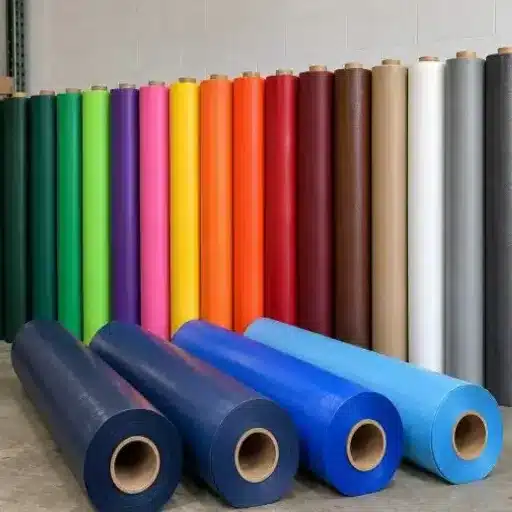
Once you know what to look for, the two constructions are not hard to separate, and the check takes a minute on a swatch.
- Weight and heft. Coated fabric is usually heavier for the same coverage because the coating is fused in at a higher weight. A very light, smooth sheet on a heavy-sounding application is a clue that it is laminated.
- Surface. A laminate face is smooth and glossy like a film. A coated face is more matte or texturised by the weave under the coating.
- Edges and backing. On a laminate, a cut edge can show the film as a distinct layer with the scrim visible between. A coating tends to look continuous with the fabric.
- The corner peel test. On a scrap piece, work a fingernail or blade under the surface at a corner. A laminate may lift as a film; a coating resists and tears rather than peeling cleanly.
- Print surface. Sharp, high-resolution print usually points to a laminate or a print-grade coated stock.
The more important skill is verifying a supplier before you buy, because the words “coated” and “laminated” are used loosely in the market. Ask for the numbers, not the adjectives. A short procurement checklist covers it:
- Peel or coating adhesion, quoted under ISO 2411 in N/5 cm.
- Tear and tensile strength, to ISO 4674 or ASTM D751.
- Hydrostatic head, the waterproofness figure, to ISO 811 or AATCC 127.
- Cold-crack and flex performance, to ISO 7854, if the product sees cold or repeated folding.
- Coating weight or film thickness, plus the scrim specification (denier and weave).
- Flame retardancy to NFPA 701 if the application requires it, and chemical compliance such as REACH for export markets.
Ask whether the fabric is coated or laminated, then ask for the peel number and the scrim spec. A supplier who can answer both is a supplier you can specify with. A supplier who cannot is describing, not engineering. For the wider construction comparison, our guide to woven vs laminated fabric is a useful companion once you have settled the coated versus laminated question.
Frequently Asked Questions
What is the difference between coated and laminated fabric?
A coated fabric has its polymer applied as a liquid that penetrates and fuses into the weave, producing one integrated material. A laminated fabric has a pre-made film bonded to the surface with heat, pressure, and adhesive, producing a layered composite. The coating resists delamination; the laminate depends on its peel bond.
Is laminated fabric waterproof?
Yes. A pre-formed film is a continuous barrier, so a laminated fabric is fully waterproof and often the more airtight of the two. The caveat is the bond. A laminate is only waterproof for as long as the film stays attached, which is why the peel value matters so much.
Does laminated fabric delaminate or peel?
It can, if the bond is weak or the fabric is abused by flexing, heat, chemicals, or a scraping edge. Delamination is the characteristic failure of a poor laminate, just as wear-through is the characteristic failure of a poor coating. Specify and test peel strength to prevent it.
Which lasts longer, coated or laminated fabric?
It depends on the specification, not the label. A heavy knife-coated PVC on a high-tenacity scrim generally delivers the longest life for heavy-duty outdoor duty, while a budget laminate is shorter-lived. Compare like-for-like on scrim, compound, and peel, then decide on cost per year.
Is a coated tarp better than a laminated tarp?
For heavy-duty, long-life duty such as truck covers and industrial tarpaulins, a knife-coated tarp is usually the better value because it resists abrasion and delamination. For temporary, light, or budget-sensitive use, a laminated tarp is a reasonable choice and costs less. Match the construction to the duty.
How can I tell if a fabric is coated or laminated?
Check the weight, the surface, and the cut edge. A laminate is lighter and smoother with a film that can appear as a distinct layer at the edge. A coating is more matte or texturised and continuous with the fabric. A corner peel test on a scrap piece confirms it.
What is the most important specification for a laminated fabric?
Peel or coating adhesion strength, measured to ISO 2411. It is the number that predicts whether the film will stay bonded through flexing, tension, and weather. A laminate datasheet without a peel value is not yet a specification.
Can both constructions be welded?
Yes, where the polymer welds. PVC and TPU, whether coated or laminated, join by RF and hot-air welding into airtight seams. Silicone does not weld well and needs adhesive or taped seams. For pressure-holding products, the seam method can decide the material choice before anything else.
Conclusion
The coated fabric vs laminated fabric decision is not a contest between good and bad. Both are valid ways to build a technical textile, and the right choice is set by how your product will be used. A coated fabric fuses its polymer into the weave and resists delamination, which makes it the durable, long-life option for heavy-duty truck covers, industrial tarpaulins, and demanding outdoor duty. A laminated fabric bonds a film to the surface and offers a smooth, airtight barrier at lower weight and cost, which suits inflatables, printed fabrics, and temporary covers where the bond is specified and tested.
Whichever construction you lean toward, the deciding factors are the same. Compare the two on adhesion, failure mode, tear, waterproofness, weldability, flexibility, and cost per year. Name the construction in your specification, not just the polymer and the weight. Then demand the numbers: a peel value under ISO 2411, a scrim specification, and tear and hydrostatic-head results. A datasheet without those numbers is a claim, not a specification.
LY TRUSTLINK manufactures and batch-tests both constructions on the same quality system, in virgin-grade PVC and high-tenacity polyester, to your weight, compound, and certification requirements. That is why we can answer the coated versus laminated question without a bias toward one line.
The most direct next step is a conversation with an engineer who will spec from your duty cycle rather than a product name. Talk to our engineering team about your coated versus laminated specification, or request a sample of each construction with its batch test data. A fabric is a spec sheet with a weave attached. Specify it like one.