
Airbag Textile Market 2026: Size, Share & Forecast
The global airbag textile market is projected to grow from roughly 1.2–1.5 billion in 2024 to between 2.4 billion and 3.4 billion by the mid-2030s, with most analysts landing on a 4.6% to 6.1% compound annual growth rate. That range sounds wide because research firms define “airbag textile” differently; some count only woven fabric, others include coated fabric, and a few fold in cushion-cut components. For procurement teams and Tier-1 buyers, the important number is not the exact midpoint. It is the steady demand pull created by stricter crash regulations, multi-airbag penetration, and the shift toward one-piece woven (OPW) curtain designs.
If you are sourcing airbag fabric in 2026, you already know the real problem: most reports on the airbag fabric market are paywalled teasers with no specification data, no pricing bands, and no guidance on how to qualify a new supplier. This article reconciles the leading forecasts, maps the airbag textile market by material and application, and adds the manufacturer-side detail that procurement teams need, denier ranges, coating add-ons, permeability targets, MOQ norms, and IATF 16949 qualification timelines. Contact LY TRUSTLINK for reliable airbag fabric solutions engineered for safety and consistency.
Key Takeaways
- The airbag textile market is expanding at 4.6%–6.1% CAGR, driven by safety regulations and multi-airbag systems.
- Nylon 66 still dominates with 75–80% of fabric volume, but PET is the fastest-growing material segment.
- OPW (One-Piece Woven) fabric is the fastest-growing construction type, with CAGR often exceeding 9%.
- Asia-Pacific leads regional demand, but supplier qualification timelines of 12–18 months create global supply-chain risk.
- Buyers should evaluate airbag fabric on permeability, tensile strength, coating uniformity, and batch consistency, not price per square meter alone.
What Is Airbag Textile?
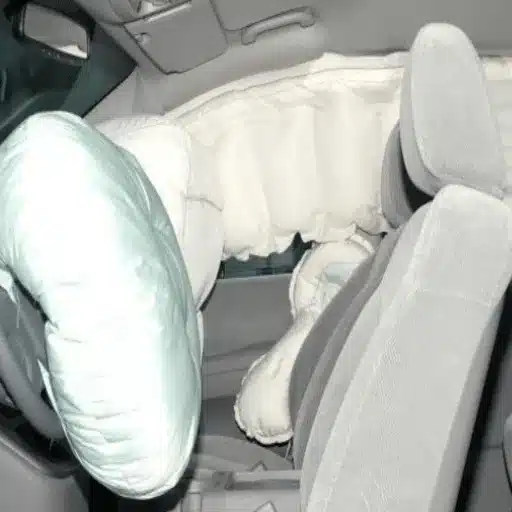
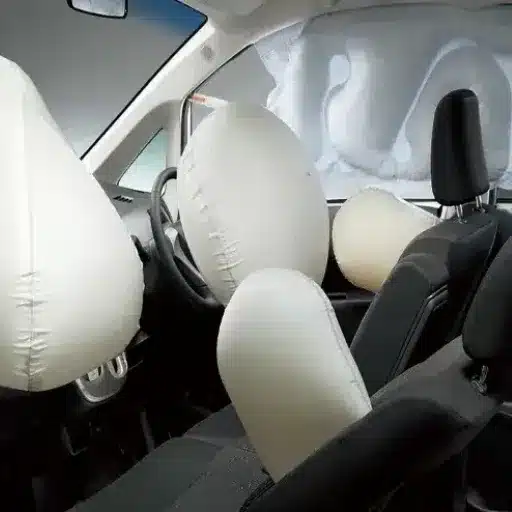
Airbag textile is a high-tenacity woven fabric, usually Nylon 66 or polyester, engineered to deploy in 20–40 milliseconds while withstanding gas-inflator temperatures that can exceed 300°C. The fabric must control permeability so the bag inflates fast enough to cushion an occupant, yet not so fast that it ruptures or deflates before the crash pulse ends.
In industry usage, “airbag textile” and “airbag fabric” are often interchangeable. Some suppliers reserve “textile” for the uncoated or greige woven state and “fabric” for the coated, finished roll. For buyers, the distinction matters mainly in specifications: a greige textile has one set of test values, while a silicone-coated fabric has another. Our what airbag fabric is made of guide breaks down the material-by-material differences in more detail.
Airbag Textile Market Size & Growth Forecast (2024–2035)
Why Forecasts Vary So Widely
The airbag textile market divides cleanly into four layers of value. Understanding the difference is essential when you compare one forecast to another.
- Woven airbag textile only: fabric rolls before coating or cutting.
- Coated airbag fabric: textile plus silicone or neoprene coating.
- Airbag fabric module value: textile, coating, cutting, sewing, and folding into a cushion.
- Airbag system value: fabric plus inflator, module housing, and integration.
The automotive airbag fabric market produces the widest range of estimates because some reports include coated fabric, cushion conversion, and even module assembly, while others stop at the woven roll. For a deeper look at the automotive segment specifically, see our automotive airbag fabric market analysis. The table below reconciles the most commonly cited forecasts so you can match each figure to its scope.
| Source | Scope | 2024/2025 Size | 2033/2035 Size | CAGR |
|---|---|---|---|---|
| Market Research Future | Global airbag textile | $1.24B (2024) | $2.37B (2035) | 6.1% |
| Fortune Business Insights | Automotive airbag fabric | $3.25B (2025) | — | — |
| Persistence Market Research | Airbag fabrics | $3.4B (2026) | — | 4.6% (2026–2033) |
| Strategic Market Research | Automotive airbag fabric | $1.5B (2024) | $2.6B (2030) | 9.5% |
| Verified Market Reports | OPW airbag fabric | $1.2B (2024) | $2.5B (2033) | 9.5% |
The safest planning assumption is a mid-single-digit CAGR for the total market, with OPW and high-performance segments growing faster than flat-woven commodity fabric.
CAGR Drivers
Four forces are pulling demand upward:
- Regulatory mandates: FMVSS 208 in the United States, ECE R94/R95 in Europe, and GB standards in China continue to expand the number of required airbags per vehicle.
- Multi-airbag penetration: An estimated 61% of new passenger vehicles globally are expected to integrate multi-airbag systems by 2026.
- Electric vehicle platforms: EVs often use different packaging and sensor layouts, creating demand for new cushion shapes and external pedestrian-protection airbags.
- Emerging-market vehicle production: China, India, and Southeast Asia are adding volume while also tightening local safety standards.
Market Segmentation
By Material
Nylon 66 remains the default choice for airbag fabric. It accounts for approximately 75–80% of volume because it combines high tenacity, good heat resistance, and controlled elongation. Typical airbag-grade Nylon 66 runs 420D–630D, with tensile strength in the range of 200–300 N/5cm depending on weave density and finish.
Polyester (PET) is the fastest-growing material segment. It costs less than Nylon 66 and performs well in lower-temperature deployments, but it has a lower melting point and higher stiffness. PET is gaining share in curtain and knee airbags where thermal exposure is less severe. For a deeper comparison, see our nylon airbag fabric buyer’s guide.
Aramid holds a niche position in high-performance or racing applications where maximum heat resistance justifies the cost premium.
By Fabric Construction
Flat-woven fabric is cut and sewn into cushions. It is cost-effective for front driver and passenger airbags where shapes are relatively simple.
OPW (One-Piece Woven) fabric is woven into a three-dimensional bag shape, eliminating seams along the inflation zone. OPW dominates curtain and side-airbag designs because it delivers lower and more consistent permeability. The OPW airbag fabric market alone is forecast to grow from roughly 1.2 billion in 2024 to 2.5 billion by 2033. Our OPW airbag fabric market article covers the technology and competitive dynamics in detail.
By Coating Type
Silicone coating represents more than 70% of the coated airbag fabric market. It provides heat resistance, controlled gas permeability, and soft hand feel. Coating add-on is typically 30–60 g/m² depending on the deployment requirements.
Neoprene was common in older designs but has lost share to silicone due to weight and outgassing concerns. Uncoated or low-coating fabrics are the fastest-growing sub-segment in some forecasts, driven by cost reduction and sustainability goals.
Our airbag textile treatment and silicone-coated airbag fabric guides explain how coating choice affects permeability, aging, and recyclability.
By Application
Front airbags still consume the largest share of fabric by area, but side, curtain, and knee airbags are growing faster. External pedestrian airbags remain a small niche today, but Euro NCAP pedestrian-protection scoring could make them a meaningful segment by 2030.
Talk to LY TRUSTLINK for high-performance airbag fabrics tailored to your requirements.
Regional Airbag Textile Market Analysis
Asia-Pacific
Asia-Pacific accounts for the largest share of global airbag textile demand, estimates range from 42% to 56% depending on scope. China is the key growth engine, with automotive airbag fabric demand projected to grow at roughly 8.8% CAGR. Korea and Japan house major fabric suppliers including Hyosung, Kolon, Toray, and Toyobo, giving the region a dense supplier base.
North America
North American demand is regulation-driven through FMVSS 208 and reinforced by the dominance of Autoliv, ZF, and Joyson Safety Systems module operations in the region. The supply chain is mature, but post-Takata dual-sourcing requirements have increased procurement complexity.
Europe
Europe combines high airbag penetration with strict sustainability regulation. The EU End-of-Life Vehicle (ELV) directive is pushing suppliers toward recyclable materials and lighter coatings. Euro NCAP ratings also encourage advanced side and pedestrian-protection systems.
Rest of World
Mexico, Brazil, South Africa, and India are growth corridors as local vehicle production expands and safety standards tighten. These markets often import fabric or module components rather than producing them domestically.
Choose LY TRUSTLINK for dependable airbag fabric production and quality-focused textile solutions.
Key Manufacturers & Competitive Landscape
The airbag textile industry is concentrated among a small group of global fabric makers and an even smaller group of Tier-1 module integrators. Understanding where each player sits in the value chain helps buyers map risk and identify the right point of contact for a new program.
Airbag Fabric Manufacturers
The largest airbag textile manufacturers control the bulk of global capacity. Leading woven and coated fabric producers include:
- Hyosung/Global Safety Textiles (GST): Claims roughly 32% of the global OPW market and supplies major module makers including Autoliv, ZF, and Joyson.
- Toray Industries: Major supplier of Nylon 66 and PET airbag fabrics across Asia and North America.
- Toyobo: Long-established Japanese supplier with strong positions in high-tenacity polyester.
- Kolon Industries: Korean producer with integrated weaving and coating capabilities.
- Teijin: Focuses on high-performance aramid and advanced Nylon solutions.
- Milliken, Porcher Industries, Safety Components, HMT: Regional specialists and niche suppliers.
Tier-1 Module Integrators
Fabric makers sell to Tier-1 module integrators, not directly to OEMs in most cases. Autoliv holds roughly 40% of global airbag module share, followed by ZF, Joyson Safety Systems, Toyoda Gosei, and Hyundai Mobis.
Supplier Qualification Reality
Entering the airbag fabric supply chain is not a quick sale. Buyers typically require:
- IATF 16949 certification.
- Production Part Approval Process (PPAP) submission.
- Fabric-level testing to OEM-specific protocols.
- A qualification timeline of 12–18 months.
After the Takata recall, dual-sourcing has become the norm for most high-volume programs. That protects OEMs but also means fabric suppliers must prove not only technical capability but also capacity stability and geographic redundancy.
Our car airbag fabric supplier guide outlines the audit and qualification steps buyers should use when evaluating a new supplier.
Raw Materials & Supply Chain Dynamics
Nylon 66 Feedstock Exposure
Nylon 66 starts with adiponitrile, a chemical with limited global production capacity. When adiponitrile supply tightens, Nylon 66 chip and yarn prices move quickly. Airbag fabric buyers should monitor feedstock indices and build price-adjustment clauses into long-term contracts. Our airbag material properties guide provides the full property table buyers use when comparing Nylon 66, PET, and aramid for a specific deployment.
Coating Chemicals
Silicone rubber for airbag coating is supplied by a handful of specialty chemical producers. Quality variation in silicone emulsion can cause coating-weight inconsistency, which directly affects permeability. Incoming QA on coating lots is essential.
Lead Times, MOQs, and Inventory Norms
Standard airbag fabric lead times range from 8 to 16 weeks depending on denier, coating, and order volume. Minimum order quantities typically start at one loom run, often 3,000–10,000 meters, though suppliers may offer smaller R&D lots for qualification. Just-in-time delivery is common for Tier-1 module makers, so fabric suppliers must maintain buffer inventory and reliable logistics.
For a detailed look at production investment, see our airbag fabric manufacturing plant cost analysis.
Mini-Story: The Cost of a Single Specification Change
When a Tier-1 module buyer in North America switched from a 470D Nylon 66 to a lighter 420D fabric to save weight, the initial price per square meter dropped by 8%. Six months later, the buyer saw a 3% increase in cushion-to-cushion permeability variation. The module maker had to slow its cutting line and add 100% permeability checks. The “savings” were erased by line downtime and added QA labor. The lesson: airbag fabric sourcing is a total-cost problem, not a unit-price problem.
Technology Trends Reshaping Demand
Lightweighting & Downgauging
OEMs want lighter vehicles, and every gram counts. Airbag fabric producers are responding with lower-denier yarns, thinner coatings, and optimized weave densities. The challenge is to reduce weight without sacrificing burst strength or permeability consistency.
Uncoated and Low-Coating Fabric Growth
Uncoated fabrics eliminate coating weight and chemical usage, supporting sustainability targets. They work best in applications with moderate thermal exposure and predictable deployment geometry. The trade-off is tighter process control during weaving and finishing.
OPW and Curtain-Airbag Expansion
Curtain airbags require the lowest permeability of any in-vehicle airbag because they must remain inflated longer during a rollover event. OPW construction naturally reduces seam leakage, which is why it has become the default for curtain designs.
EV-Specific and Pedestrian Airbags
Electric vehicles place airbags in new locations, under the dashboard, in the roof liner, and externally for pedestrian protection. External pedestrian airbags must withstand weather, UV, and road debris before deploying instantly. The textile requirements are fundamentally different from cabin-mounted bags.
Smart Textiles and Sensor Integration
Some development programs are embedding pressure or capacitive sensors directly into airbag fabric to enable adaptive deployment. This is not yet mainstream, but it could reshape material specifications in the next decade.
Talk to LY TRUSTLINK for high-performance airbag fabrics tailored to your requirements.
Regulations & Testing Standards Driving the Market
Global Regulatory Framework
- FMVSS 208: U.S. regulation governing occupant crash protection, including airbag performance.
- ECE R94/R95: European regulations for front and side-impact protection.
- GB 11551 / GB 20071: Chinese standards for occupant protection in frontal and side impacts.
These regulations determine how many airbags a vehicle needs, how quickly they must deploy, and how they must perform in offset, side-pole, and rollover tests.
Fabric-Level Test Methods
Airbag fabric is tested for:
- Permeability: Measured in L/dm²/min at specified pressure differentials.
- Burst strength: Pressure required to rupture the fabric.
- Tensile and tear strength: Force at break in warp and weft directions.
- Seam strength: For sewn cushions, the weakest link in the system.
- Thermal aging: Performance after heat exposure simulating 10–15 years of vehicle life.
- Deployment simulation: Full-scale tests using production inflators.
How Regulation Translates to Fabric Demand
When a regulation adds a side-curtain requirement, vehicle production does not just need one more bag. It needs more coated fabric area, often in OPW construction, with lower permeability than a front driver bag. That is why regulatory shifts create step-changes in fabric demand rather than linear growth.
Sustainability & Recycling Outlook
Sustainability is becoming a procurement criterion, not just a marketing talking point. Autoliv has announced programs to produce airbag cushions from 100% recycled PET. Toray and Teijin are developing recycled Nylon 66 and aramid options. The challenge is validating that recycled feedstock meets the same tenacity, thermal stability, and aging requirements as virgin material.
The EU ELV directive is also pushing automakers to design for disassembly and recycling. Airbag cushions that use mixed materials, Nylon 66 fabric, silicone coating, metal inflator, are difficult to recycle. Mono-material or low-coating designs may become preferred over time. Reach LY TRUSTLINK for trusted airbag textiles combining quality, strength, and production expertise.
Procurement Guide: Buying Airbag Textile in 2026
Specification Checklist
Before requesting a quote, define these parameters:
- Material: Nylon 66, PET, or aramid.
- Denier: 420D, 470D, 630D, or custom.
- Weave: Plain, twill, or OPW.
- Coating: Silicone, neoprene, uncoated; coating add-on in g/m².
- Permeability target: Range in L/dm²/min.
- Width: Roll width to match your cutting equipment.
- Tensile/tear strength: Minimum values in warp and weft.
- Aging requirements: Thermal, humidity, UV if exposed.
- Certifications: IATF 16949, material test reports, PPAP level.
Pricing Bands per m²
Pricing varies widely by material, coating, volume, and qualification status. As a rough guide:
- Standard Nylon 66 flat-woven, silicone-coated: 2.50–2.50–4.50/m² at volume.
- OPW Nylon 66 curtain fabric: 4.00–4.00–7.00/m² depending on complexity.
- PET flat-woven: 10–20% below comparable Nylon 66.
- Aramid or specialized formulations: $8.00+/m².
These are indicative ranges for planning. Actual pricing depends on annual volume, width, finishing requirements, and contract structure.
Qualification Steps
A typical sourcing process looks like this:
- RFQ and technical review: Share specifications and target volumes.
- Sample submission: Receive A-sample fabric for lab testing.
- B-sample cushion builds: Cut, sew or weave OPW, and deploy in OEM tests.
- PPAP approval: Complete production part approval process.
- Production ramp: Start with limited volumes and expand as quality proves stable.
Risk Mitigation
- Dual source: Qualify two fabric suppliers for any high-volume program.
- Incoming QA: Test permeability, coating weight, and tensile strength on every lot.
- Batch traceability: Ensure yarn lot, coating batch, and roll ID are recorded.
- Capacity audits: Verify your supplier has loom and coating-line capacity for forecasted volumes.
For buyers ready to evaluate specific industrial airbag fabric specifications, our airbag fabric product page lists the base constructions and performance ranges we supply.
Mini-Story: The 14-Month Qualification
A European module maker needed a second source for curtain airbag fabric after its primary supplier announced a plant consolidation. The procurement team issued an RFQ to three suppliers, selected one based on lab samples, and began PPAP. The process took 14 months: six months for lab testing, four months for cushion builds and deployment trials, and four months for production validation. The buyer later said the only thing that would have shortened the timeline was starting six months earlier. In airbag fabric, there is no fast track for safety-critical qualification.
Contact LY TRUSTLINK for reliable airbag fabric solutions engineered for safety and consistency.
FAQ
What is airbag fabric made of?
Airbag fabric is typically made from high-tenacity Nylon 66 or polyester yarn, woven into a tight, low-permeability construction and often coated with silicone for heat resistance and controlled gas retention.
What is OPW airbag fabric?
OPW stands for One-Piece Woven. It is a three-dimensional woven structure shaped like the finished airbag cushion, eliminating side seams and reducing permeability variation. OPW is widely used in curtain and side airbags.
How much does airbag fabric cost?
Standard silicone-coated Nylon 66 flat-woven fabric typically ranges from 2.50–2.50–4.50/m² at volume, while OPW curtain fabric ranges from 4.00–4.00–7.00/m². Pricing depends on denier, coating, width, and annual volume.
How strong is airbag fabric?
Airbag-grade Nylon 66 fabric commonly delivers tensile strength of 200–300 N/5cm and burst strength high enough to withstand deployment pressures generated by pyrotechnic or hybrid inflators.
What coating is used on airbags?
Silicone is the most common coating, representing over 70% of coated airbag fabric. Neoprene is used in some older or specialized designs, and uncoated fabrics are growing for cost and sustainability reasons.
How long must an airbag fabric last?
Airbag fabric must remain deployable for the vehicle’s lifetime, typically 10–15 years. Accelerated aging tests simulate this period through heat, humidity, and thermal cycling.
Who are the largest airbag fabric manufacturers?
The largest airbag fabric manufacturers include Hyosung/Global Safety Textiles, Toray Industries, Toyobo, Kolon Industries, Teijin, Milliken, Porcher Industries, and Safety Components.
What is the difference between Nylon 6 and Nylon 66 in airbags?
Nylon 66 has a higher melting point, better tensile strength, and lower moisture absorption than Nylon 6, making it the preferred material for airbag fabric despite its higher cost.
Work with LY TRUSTLINK for customized airbag fabric solutions built around performance.
Airbag Textile Market Outlook to 2035
The airbag textile market is not a commodity fabric market. It is a safety-critical supply chain where material specifications, testing protocols, and qualification discipline determine whether a supplier earns a long-term place in an OEM program.
Over the next decade, growth will come from three directions: regulatory expansion in emerging markets, continued adoption of OPW and curtain systems, and pressure to reduce weight and environmental impact. Buyers who treat airbag fabric as a total-cost sourcing decision, evaluating permeability consistency, batch stability, and supply-chain redundancy, will avoid the hidden costs that appear when a “cheaper” fabric disrupts module production.
At LY TRUSTLINK, we supply industrial airbag fabric specifications engineered for controlled permeability, thermal stability, and repeatable lot-to-lot performance. If you are qualifying a new airbag fabric supplier or need a custom construction for an upcoming program, contact our engineering team to review your specification and sample requirements.