
PVC Coated Fabric for Sports Equipment: Selection & Compliance Guide
PVC coated fabric for sports equipment is specified on two axes, not one: the weight and construction that survive constant contact, and the chemistry that makes the material safe to be touched. A gym mat cover, a wall pad, a training bag, and a protective cover live against skin and sweat for their entire service life. In a facility, no other coated-fabric product does.
That single fact changes both what you order and what you have to document. Sports equipment fabric is bought like a heavy tarpaulin and used like a garment, and most specification sheets never close the gap.
Dana took over facilities at a nine-court indoor sports complex and issued her first capital request: 240 replacement wall pads and 60 new mat covers. The order went to the lowest compliant bid, 18 oz PVC coated polyester, waterproof, anti-mildew, delivered in five weeks.
Two seasons later the covers carried a faint mildew smell in the high-humidity hall. Three seams had delaminated along the fold line, and the insurer’s inspector asked for a flame certificate and a phthalate report that nobody had ever requested. The fabric met the specification sheet. The specification sheet had simply never asked the two questions this application turns on.
This guide closes that gap. It maps a sport and a component to a fabric weight and finish, separates the compliance regimes buyers routinely confuse, and shows which performance requirements the fabric actually carries and which belong to the foam core underneath. For base construction and generic specification theory, the PVC coated fabric specifications guide is the hub.
Key Takeaways
- Sports equipment fabric is a body-contact material. It has a chemistry specification (lead, phthalates, antimicrobials) and a friction specification, neither of which appears on a standard tarpaulin data sheet.
- “EPA-compliant” is not a fabric certification. EPA registration applies to the antimicrobial additive under FIFRA, while lead and phthalate limits come from CPSIA. They are different regimes with different documents.
- Ask for an 8P phthalate report, not 6P. A report showing only the traditional six phthalates can fail current review.
- The fabric does not provide shock absorption. Impact attenuation belongs to the foam core and the floor system, governed by ASTM F2772 in the US and DIN 18032-2 or EN 14904 in Europe.
- Weight bands are a starting point, not a specification. A weight quoted without a stated application is not a number you can buy against.
Have a live specification in front of you? Send the sport, the component, and the destination market, and our engineering team will return a weight band, a finish, and the document list for that combination. Start the conversation.
Why Sports Equipment Fabric Is Not a Smaller Tarpaulin
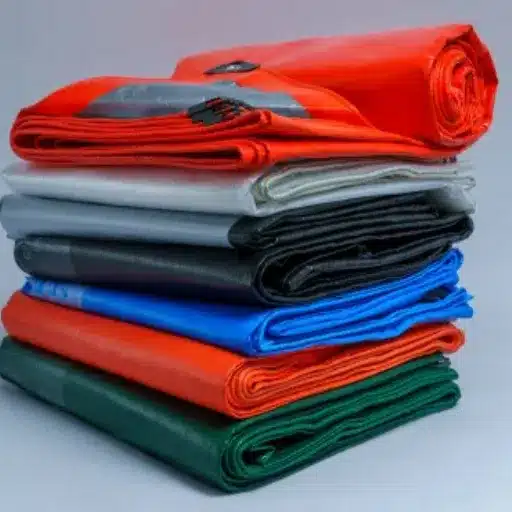
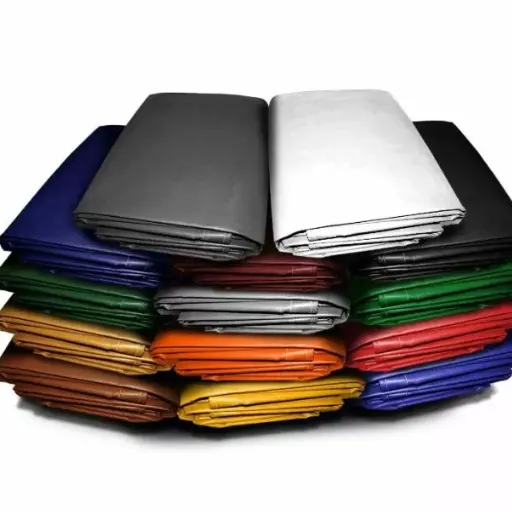
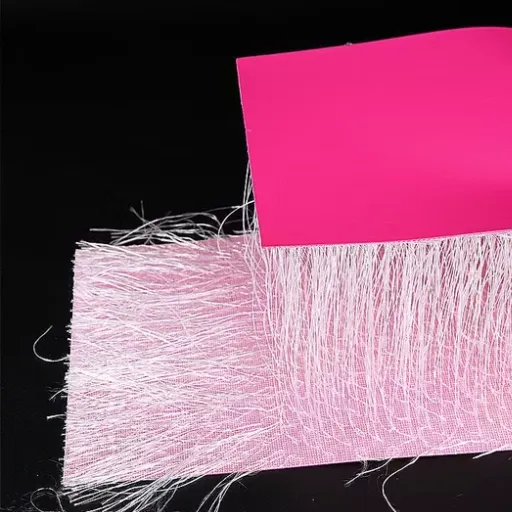
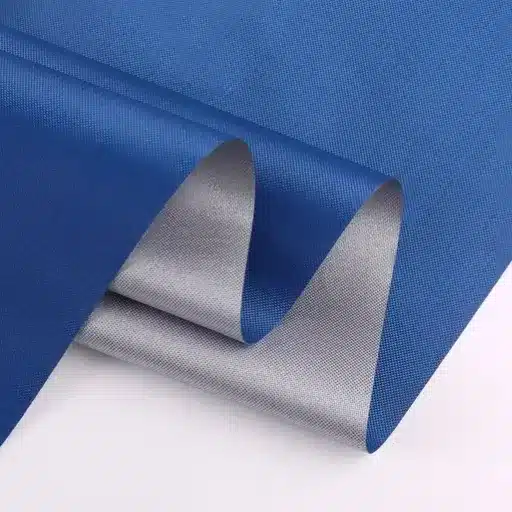
Sports equipment fabric is a PVC-coated high-tenacity polyester, commonly in the 500 to 750 gsm range, welded or sewn into covers that sit over a foam core. The fabric supplies the wear surface, the waterproofing, and the hygiene barrier; the foam supplies the impact attenuation.
Because the material touches people, its performance splits into two families that a tarpaulin specification ignores entirely.
- Contact chemistry. What can migrate or leach against skin and sweat: lead, phthalate plasticizers, restricted substances, and the antimicrobial additives used to keep the surface hygienic. This is a formulation decision made in the PVC compound, not a coating applied at the end of the line.
- Contact performance. How the material behaves under constant friction, sweat, and handling: abrasion resistance, surface slip coefficient, hygiene performance under humidity, and flame behaviour in an indoor venue.
Every failure in Dana’s complex traces back to one of those two families. The mildew smell was a hygiene specification that was written as an adjective rather than a test method. The delaminated seams were a bond specification that nobody tied to the fold cycle. The missing flame certificate and phthalate report were a compliance set that the bid never asked for.
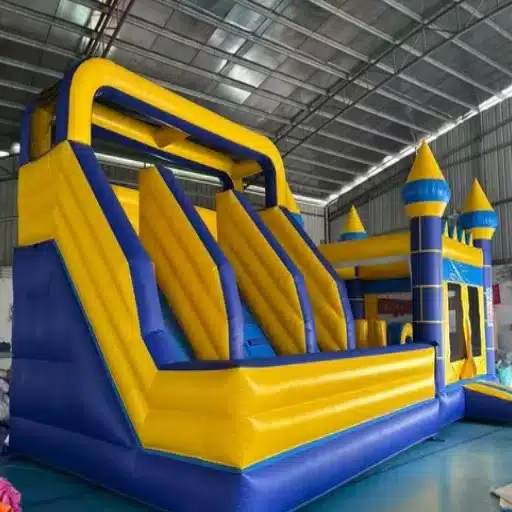
Two boundaries are worth stating plainly before we go further. Structure specifications for air-filled equipment, including air tracks, inflatable games, and drop-stitch mats, live in our coated fabric for inflatables hub, because airtightness, RF-welded chambers, and device-safety standards such as ASTM F2374 and EN 14960 are a different engineering problem. And the question of which certification your market legally requires is covered in our coated fabric standards guide; this article tells you what the material has to do.
PVC Coated Fabric for Sports Equipment: Weight and Construction
Weight bands in this sector are quoted loosely, and the looseness costs buyers money. Suppliers advertise 500 to 750 gsm “for gym,” 650 to 1,100 gsm “for anti-fungal sports,” and 16 to 18 oz “for pads,” often for overlapping end uses. A weight without a stated application isn’t a specification you can buy against.
The table below is a starting point, not a rule. The real driver is the load the cover sees and how often it is handled, which is why a rolled wrestling mat and a fixed wall pad with the same weight requirement fail in completely different places.
| Application | Typical weight band | Base construction | Surface finish | Dominant failure mode |
|---|---|---|---|---|
| Gym mats and floor covers | ~500 to 700 gsm | 500D to 1000D polyester scrim | Matte or fine-textured | Abrasion through the coating; seam split at the fold |
| Wall padding and protective padding | ~600 to 900 gsm | 500D to 1000D over closed-cell foam | Matte | Puncture at the cover edge; delamination at the foam interface |
| Wrestling, judo, and gymnastics covers | ~450 to 700 gsm (0.45 to 0.55 mm) | 500D to 1000D | Fine texture or embossed | Surface slip when wet; seam peel under repeated rolling |
| Training bags and weighted equipment | ~750 gsm and above | 1000D × 1000D | Matte | Hydrostatic and abrasion stress at high fill weights |
| Protective and equipment covers | ~450 to 650 gsm | 500D to 1000D | Matte | UV and cold-crack failure at the fold |
| PVC mesh barriers and windscreens | ~180 to 450 gsm | Vinyl-coated polyester mesh | Open weave | Wind-load tear-out at eyelets; UV embrittlement |
| Heavy-duty venue fabric | 750 to 1,100 gsm | 1000D and above | Matte | Load-dependent; routed to venue membrane design |
Gym Mats, Floor Covers & Equipment Covers
A PVC coated fabric for gym mats is a wear surface first and a waterproofing layer second. It takes foot traffic, dropped equipment, and repeated rolling, and in a busy facility it is cleaned more often than any other coated fabric on the site.
Specify the backing according to how the mat is installed. A free-laid mat needs a gripping or embossed back so it doesn’t creep across the floor. A mechanically fixed mat can use a smoother back, because the fixation carries the shear.
Wall Padding & Protective Padding
Wall padding is a laminated assembly: cover fabric bonded over closed-cell polyethylene, commonly at 25 to 30 kg/m³, or higher-density chip foam where more shock absorption is required. The cover has to tolerate the compression cycle of the foam beneath it without separating at the interface.
The 16 to 18 oz class, roughly 540 to 610 gsm, has been the incumbent specification for pads, dummies, and impact training equipment for years. It is a sensible default and a poor ceiling; the edge detail, not the weight, is usually what fails first.
Wrestling, Judo & Gymnastics Covers
These mats are rolled and unrolled constantly, which puts the stress on the seam rather than the panel. A welded seam that holds under static load can still peel after a hundred roll cycles, so specify the seam method and the weld parameters as part of the fabric specification, not as a manufacturing afterthought.
Wet slip is the other recurring complaint. A fine-textured or embossed face gives the athlete grip that a smooth calendered finish does not.
Training Bags, Weighted Equipment & Functional Gear
Weighted training bags carry the highest fill load in the category. This is where the argument for a welded rather than sewn seam is strongest, and where a 750 gsm fabric on a 1000D × 1000D scrim is a realistic starting point rather than an upsell.
Inflatable Sports Structures
Air tracks, inflatable games, and drop-stitch mats are sports equipment, but their governing specifications are not the ones in this article. Airtightness, chamber construction, and device safety under ASTM F2374 and EN 14960 belong to the inflatable fabric specifications guide, and the drop-stitch page covers the air-filled mat construction specifically.
The Compliance Stack: CPSIA, Phthalates, REACH, Prop 65 and “EPA-Compliant”
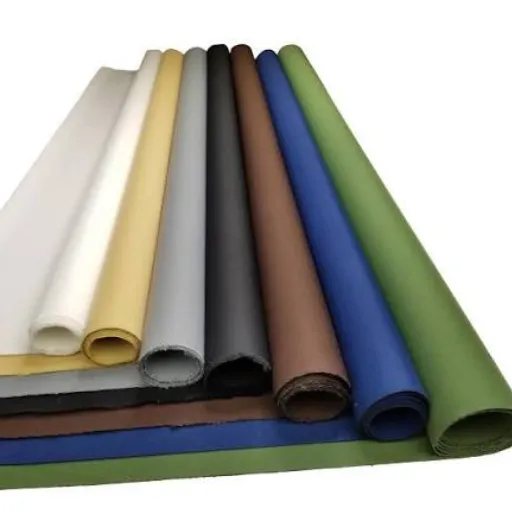
The buyer’s real question is simple: is this safe for people to train on? The answer requires a taxonomy, because the terms used in this market describe four different regulatory systems that are routinely treated as one.
Lead and Phthalates Under CPSIA
Under the Consumer Product Safety Improvement Act, lead in accessible components of a children’s product is capped at 100 ppm, with third-party testing generally required. Surface-coating limits are quoted lower in some guidance, so confirm the figure that applies to your component.
Phthalates are restricted to 0.1% each for eight substances. Three are permanently banned under section 108(a): DEHP, DBP, and BBP. Five more were added under 16 CFR 1307: DINP, DIBP, DPENP, DHEXP, and DCHP. The regulatory text is published in 16 CFR 1252.1, and it is worth reading the primary source rather than a supplier summary.
This creates a genuine document trap. A supplier returning a phthalate report showing only the traditional 6P set is not necessarily selling a non-compliant fabric, but the report cannot demonstrate compliance with the current eight-phthalate list. Ask for 8P, and read the report against the substance list rather than the headline result.
Phthalate content is a plasticizer formulation decision. A phthalate-free plasticizer system is specified when the compound is written, which is why the lead-free, phthalate-free PVC formulation page and the compounding guide are the right places to understand where the compliance is actually designed in.
What “EPA-Compliant” Actually Means for Coated Fabric
Here’s the correction that most of this market needs, and it is what stands behind any claim of EPA compliant PVC coated fabric. There is no EPA certification for PVC coated fabric. The EPA doesn’t certify fabrics, and a supplier claiming “EPA-compliant material” is using a phrase that has no regulatory definition.
What is EPA-regulated is the antimicrobial additive. Antimicrobial agents are registered as pesticides under the Federal Insecticide, Fungicide, and Rodenticide Act, and each registration covers specific uses. The Advanced Textiles Association’s announcement of a CPSIA-compliant sports vinyl is the origin of this language in the sports sector: an 18 oz PVC-coated vinyl with an EPA-registered antimicrobial agent, positioned for floor mats, wall pads, and child development shapes. Antimicrobial actives used in coated fabric, vinyl floor coverings, mats, and tarpaulins are registered with the EPA under specific numbers for those uses.
Why this matters to a buyer is practical, not pedantic. An EPA registration number is a statement about the additive’s approved use, not a blanket safety clearance for the finished fabric. If a supplier leads with “EPA-compliant,” ask three questions: which additive, what registration number, and does the registration cover the end use you are buying for. If the answer is vague, the claim is decoration.
REACH, RoHS, PAHS and California Prop 65
These are market-specific substance restrictions, and the same fabric can satisfy one market’s requirements while failing another’s. Rather than maintaining several formulations for several destinations, the efficient position is to build one compound that clears the strictest market you serve. Which regime applies to your product and destination is a standard-selection question, and the coated fabric standards guide works through it.
The Document Pack to Request Before You Order
Ask for these before the purchase order, not after the first complaint.
- 8P phthalate report against the current eight-substance list
- Lead content report for accessible components
- Children’s Product Certificate where the product is in scope as a children’s product
- REACH, RoHS, or PAHS statements as your market requires
- AATCC 30 or ASTM G21 for anti-fungal performance
- AATCC 100 for anti-bacterial performance
- ASTM D3884 for abrasion resistance
- NFPA 701, DIN 4102 B1, or BS 1892-3 for flame performance
- A batch test report against named methods
Being handed a report and being able to read it are different skills, and our guide to coated fabric testing covers how to read a report in the right order and how to spot one that has been recycled from an old lot.
Ready to check a specification against the right document set? Our engineering team will walk through a compliance pack for your application and market. Talk to an engineer.
Contact Performance: Abrasion, Slip, Strength and Flame
Chemistry makes the material safe to touch. These properties make it survive being touched, and they are where a sports specification diverges most sharply from a tarpaulin one.
Abrasion Resistance: The Number That Predicts Cover Life
Taber abrasion to ASTM D3884 is the industry reference for coated fabric wear, with Martindale to ASTM D4966 as the alternative. The result is a cycle count, and that number means nothing without the wheel and load condition attached to it. A figure quoted without its test condition is not comparable to anything.
For a real reference point, an anti-slip coated fabric specified for athletic equipment and glove reinforcement is quoted at around 1,000 cycles under an H-18 wheel at 1,000 g. Treat that as a market reference rather than a target, and read our abrasion resistance page for how the test is run.
Anti-Slip and Surface Finish
Textured finishes are produced in the coating line, which makes an anti-slip PVC coated fabric a specification rather than an accessory. Pebble, diamond, and grass-like emboss patterns are all standard options, and the choice is driven by the surface an athlete actually contacts.
There’s a safety rule here that the market states too rarely. A smooth coated cover on a wet gym floor is a hazard. So is a smooth cover on a walked-on field conversion surface.
Specify a textured face on any surface an athlete stands on, and a gripping back on any mat that isn’t mechanically fixed. Skipping this to save cost on the coating line trades a small unit saving against an injury risk.
Tensile, Tear, Adhesion, and Seam Strength
For padded equipment the seam is the weak point, not the panel. The bulk numbers look reassuring while the weld or stitch line quietly concentrates the stress, which is why mat covers and high-fill training bags should use RF-welded or hot-air bonded seams rather than stitched-only construction.
Report each property per direction, warp and weft, and name the method. Our property pages on tensile strength, tear resistance, and coating adhesion cover the method-level detail.
Flame Retardancy for Indoor Venues
Indoor sports halls drive flame requirements in a way outdoor applications never do. The standards named by equipment suppliers include NFPA 701 and the CA Fire Marshal and UL 300 language used in US mat specifications, DIN 4102 B1 and BS 1892-3 in Europe, and E-84 Class A for the most demanding interiors.
Flame performance is a formulation decision, and it interacts with the plasticizer and antimicrobial systems already in the compound. It is not a spray applied after coating. Our fire-retardant coated fabric page covers the formulation side, and the standards guide covers which classification your venue requires.
Where Impact Attenuation Actually Lives
This is the point worth reading twice. The fabric does not provide shock absorption.
Buyers routinely specify a heavier cover expecting it to make the mat safer, then discover the system still fails its performance requirement. The cover is the wear and hygiene surface. Impact attenuation belongs to the foam core and the floor or ground system beneath it, and the governing numbers sit with that system:
- ASTM F2772 covers athletic performance properties of indoor sports floor systems: force reduction of at least 10%, vertical deformation capped at 3.5 mm for synthetic surfaces and 5.0 mm for wood, ball rebound of at least 90%, and a sliding coefficient between 80 and 110, with shock-absorption classes C1 through C5.
- DIN 18032-2 and EN 14904 are the European framework for the same properties. The ISP Germany standards overview is a useful plain-language summary of how they relate.
- ASTM F1292 covers impact attenuation within playground use zones, which is relevant to fall-height protection around equipment, not to mat covers.
Getting this distinction right protects you twice. It keeps a specification honest, and it prevents a facility from believing a heavier cover has addressed a safety requirement that was never about fabric in the first place. Our batch quality control process is where the fabric-side claims are verified and traceable to your roll.
Hygiene: Making a Mat Cover That Stays Clean
A sports mat cover is the highest-touch, highest-sweat coated fabric in a building. Hygiene is an engineering requirement here, not a marketing adjective.
Anti-Fungal and Anti-Bacterial Treatments
For anti-fungal PVC sports fabric, ask for test methods, not claims. AATCC 30 and ASTM G21 cover fungal resistance. AATCC 100 covers antibacterial efficacy. A specification that says “anti-mildew” without one of those method names behind it has no measured result to point at.
Mould and mildew are the failure mode that facilities notice first, because the symptom is smell rather than a broken product. In a humid hall the cover can be structurally sound and still unusable.
Additive Permanence: Compound Versus Surface
There is a real difference between an antimicrobial additive locked into the PVC compound and a topical treatment applied to the finished surface. The topical migrates off under repeated cleaning, and the durability claim quietly expires while the specification sheet still reads the same.
Specify the mechanism as well as the claim. Request the method and the report, and confirm whether the treatment is integral to the compound or applied afterwards.
Cleaning Without Destroying the Coating
Here’s the conflict nobody states. The aggressive disinfectants a facility escalates to in order to satisfy its hygiene policy are often the same chemistry that attacks the plasticizer in the coating. The cover passes its hygiene inspection and cracks at the fold within a season.
The fix is to specify the cleaning chemistry the cover is validated against and then follow a regime, rather than reacting to a problem with whatever is strongest on the shelf. Our chemical resistance page covers coating compatibility, and the UV resistance page matters for covers used outdoors or semi-outdoors.
If a project involves routine disinfection or poolside and aquatic environments, say so at the specification stage. Application context is what lets an engineering team build the cleaning regime into the material choice.
Specifying and Sourcing Sports Equipment Fabric
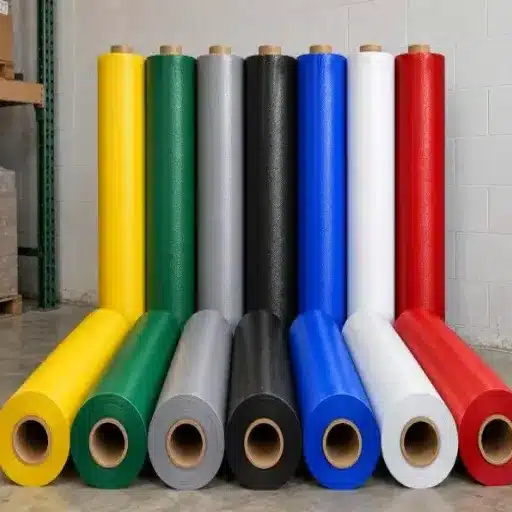
A working RFQ for this category carries more items than a tarpaulin RFQ, because the compliance set is longer and the finish matters as much as the weight.
- Sport and component: mat cover, wall pad, training bag, equipment cover, or barrier
- Weight band and base construction: denier and yarn count, not just GSM
- Coating system and finish: matte, fine texture, pebble, or diamond emboss
- Colour and decoration method: plain, rotogravure print, or screen print
- Seam method: RF-welded, hot-air bonded, or sewn
- Compliance set for the destination market: the document pack above
- Test reports required per batch: named methods, not categories
- Roll width, length, and tolerance
- MOQ, sample lead time, and production lead time
One structural reality governs how you use this list. Supplier claims are cheap and batch documents are evidence, so the specification only has value if it is tied to paperwork. That is why the standards guide and the testing guide sit alongside this one.
Marcus runs a gym equipment brand that sells wall pads and functional training bags into North America. His first production run used a 600 gsm cover at a competitive price and shipped without incident for eight months.
Then a retailer asked for the phthalate documentation behind the children’s product claim. The mill’s report covered six phthalates rather than eight. The material had not changed and no customer had complained. The document had simply never been requested, and the order sat in customs until a compliant lot could be produced and tested.
Marcus now writes the document pack into the purchase order, before price is discussed.
For non-standard weights, emboss patterns, or a specific compliance combination, custom coated fabric manufacturing starts from the application and works back to the specification, rather than adapting a standard roll and hoping the document set follows.
Want a material recommendation for a specific sport and component? Send us the application, the destination market, and the handling cycle, and our engineering team will come back with a weight band, a finish, and the report list. Start a custom order.
FAQ
What fabric is used for gym mats?
Gym mats use a PVC-coated high-tenacity polyester cover, commonly in the 500 to 700 gsm range, over a closed-cell foam core. The fabric supplies the wear surface, hygiene barrier, and waterproofing, while the foam core supplies the impact attenuation. Mat covers are usually 500D to 1000D scrim with a matte or fine-textured finish.
What GSM PVC coated fabric do I need for gym mats, wall padding, and training bags?
As a starting point: roughly 500 to 700 gsm for mat and floor covers, 600 to 900 gsm for wall and protective padding, and 750 gsm and above for weighted training bags. These are indicative bands only. The load the cover carries and how often it is handled matter more than the sport’s name, so confirm the figure against your application.
Is PVC coated fabric safe for sports equipment and children’s gyms?
Safety here is a chemistry specification rather than a material property. Under CPSIA, lead in accessible components of a children’s product is capped at 100 ppm and eight phthalates are limited to 0.1% each. A compliant fabric is produced from a lead-free, phthalate-free plasticizer system, and the proof is a test report rather than a claim.
What does “EPA-compliant” mean for PVC coated fabric?
It does not mean the fabric is EPA certified, because the EPA does not certify fabrics. EPA registration applies to the antimicrobial additive, which is registered as a pesticide under FIFRA with specific approved uses. Ask for the additive name, the registration number, and confirmation that the registration covers your end use.
Which phthalates are banned, and why does a 6P report fail an 8P review?
Three phthalates are permanently banned under CPSIA section 108(a): DEHP, DBP, and BBP. Five more were added under 16 CFR 1307: DINP, DIBP, DPENP, DHEXP, and DCHP. All eight are limited to 0.1% each. A report covering only the traditional six substances cannot demonstrate compliance with the current list, so request 8P.
Does the mat fabric provide shock absorption?
No. The fabric is the wear and hygiene surface. Shock absorption belongs to the foam core and the floor or ground system, measured under ASTM F2772 in the US and DIN 18032-2 or EN 14904 in Europe. Specifying a heavier cover does not change the impact performance of the system.
Is PVC coated fabric anti-slip?
It can be, if the coating line produces a textured or embossed surface. Pebble, diamond, and grass-like emboss patterns are standard options. A smooth coated cover on a wet surface is a slip hazard, so specify a textured face wherever an athlete stands, and a gripping back on any mat that is not mechanically fixed.
How is sports mat fabric kept hygienic, and how do I clean it?
Hygiene starts with an antimicrobial additive locked into the PVC compound rather than a topical surface treatment, validated by AATCC 30 or ASTM G21 for fungal resistance and AATCC 100 for antibacterial performance. For cleaning, use the chemistry the cover was validated against. Aggressive disinfectants can attack the plasticizer and cause the coating to crack at the fold.
What is the difference between PVC sports flooring and coated fabric for sports equipment?
They are different product classes. PVC sports flooring is an installed multi-layer sheet, typically 1.5 to 4 mm thick, engineered to meet floor performance standards. Coated fabric for sports equipment is the cover fabric in mats, pads, bags, and protective covers. A flooring specification will not describe a mat cover, and the reverse is also true.
What tests and reports should I request from a sports fabric supplier?
Ask for an 8P phthalate report, a lead content report, a Children’s Product Certificate where the product is in scope, REACH or RoHS statements for your market, AATCC 30 or ASTM G21, AATCC 100, ASTM D3884 abrasion, an applicable flame standard such as NFPA 701 or DIN 4102 B1, and a batch test report against named methods.
Conclusion
PVC coated fabric for sports equipment is a body-contact material, and that reframes the specification. It carries a chemistry requirement and a friction requirement, not just a weight and a waterproofing claim.
Five things are worth carrying into the next order. Specify by application rather than by weight band alone. Separate the compliance regimes, and remember that EPA registration covers the antimicrobial additive while CPSIA covers lead and phthalates. Ask for 8P, not 6P. Tie the flame, abrasion, and hygiene requirements to named test methods. And keep the shock-absorption claim where it belongs, with the foam core and the floor system rather than the cover.
The fabric is the part of a sports mat that a facility touches every day, cleans every week, and replaces when the seams give out. Specifying it against the tests that predict those failures is what separates a cover that lasts from one that becomes a line item again in two seasons.
If you’re specifying gym mats, wall padding, training bags, or protective covers, our engineering team can supply the weight band, finish, and document pack for your application and market, or produce a sample for your own evaluation first. Request a specification and compliance pack or start your custom order.